Federico Frigerio: The Face of Como

There is one architect in particular whom we should credit more than any other for influencing the way Como looks today. He is Federico Frigerio (1873-1959) who moved to Como soon after graduating from the Politecnico di Milano in 1896. He then worked incessantly from 1897 until 1945 producing or renovating many of the most significant buildings in the city’s historical centre. His influence on how the centre looks to this day is immense but, for all that, he remains relatively unknown. 

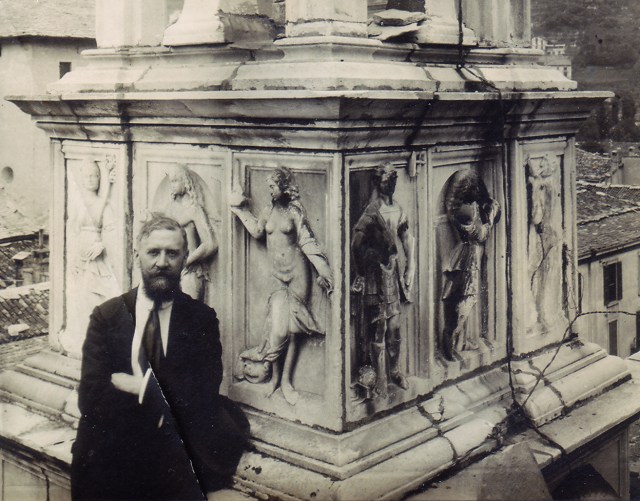
Federico Frigerio in front of the cathedral in Piazza Duomo

In terms of fame, Frigerio has undoubtedly been eclipsed by his contemporary Giuseppe Terragni, the rationalist architect of the Casa del Fascio. Terragni’s legacy is perhaps more immediately visible due to its revolutionary nature and its contrast with the predominant ‘eclectic’ style of the day. Frigerio was as revolutionary as Terragni in terms of technique and also adopted contemporary aspects of style but only those that respected tradition or sat unobtrusively within their immediate environment. 

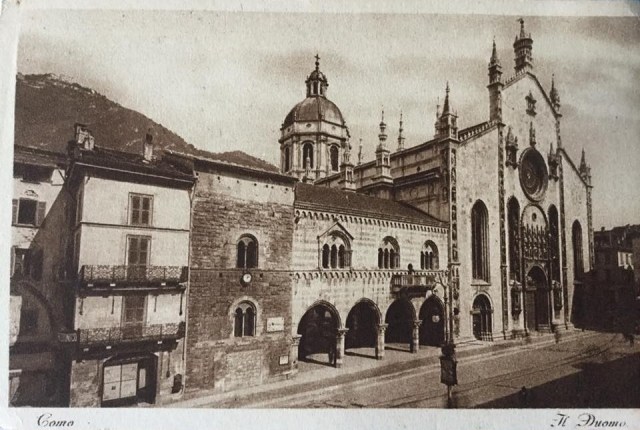
Piazza Duomo and Piazza Grimoldi before Frigerio’s vision of clearing the old buildings backing on to Piazza Grimoldi and thus freeing up the Broletto (and restoring its bell tower) and opening up the view to Chiesa San Giacomo.

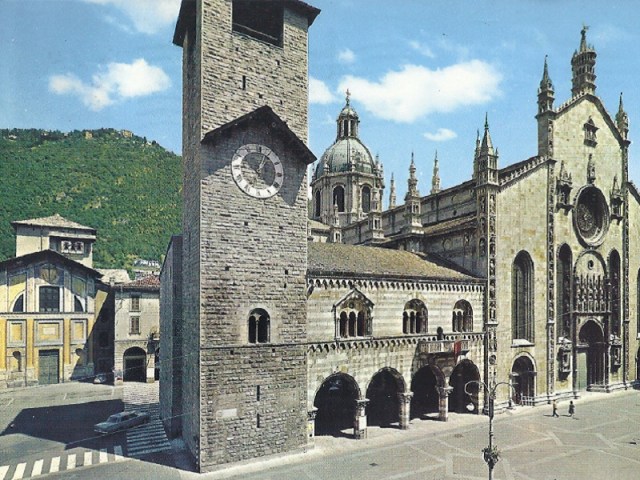
Piazza Duomo and Piazza Grimoldi

The way we see Piazza Duomo and the attached Piazza Grimoldi today is mostly thanks to Federico Frigerio. The illustration below marks each of his changes and interventions.
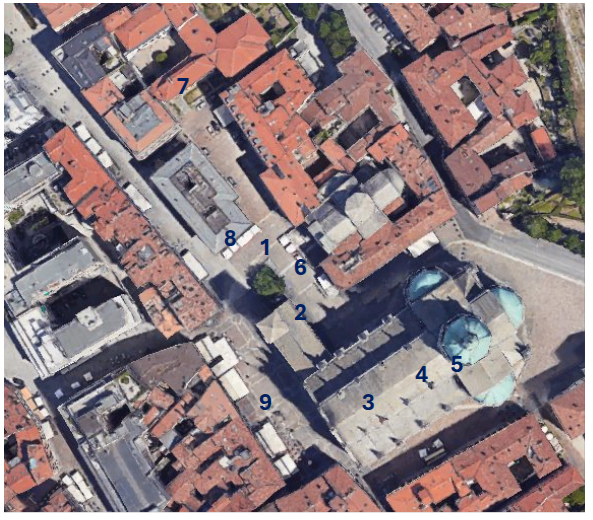
See below for the list of Frigerio’s interventions in Piazza Duomo and Grimoldi.

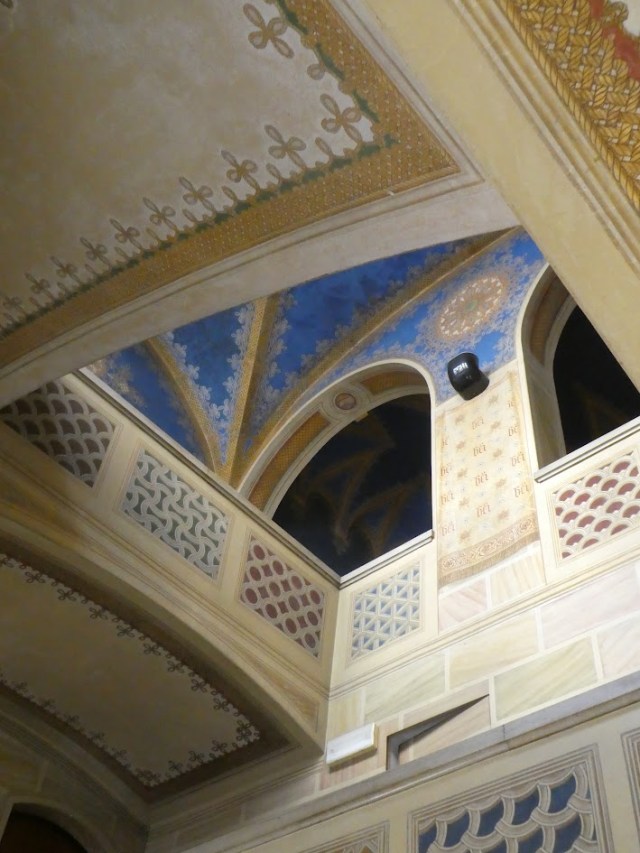
Frigerio’s greatest impact on the face of the city is at its heart – in Piazza Duomo. Over the years he personally transformed it and the accompanying Piazza Grimoldi. No. 1 – He opened up Piazza Grimoldi by pulling down the buildings attached to the Broletto. No. 2 – He then set about restoring the Bell Tower of the Broletto, ridding it of all non original features. No. 3 – He saved the Rose Window on the facade of the cathedral which was bowing out and threatened to collapse, putting at risk the whole of the cathedral’s facade. No. 4 – Along with other restoration inside the cathedral, he arranged for the hanging of the large Flemish tapestries down both sides of the nave.  No. 5 – He restored the cupola of the cathedral following a fire in 1935, again returning it to its original design. No. 6 – He redesigned the facade of the Chiesa di San Giacomo.  No. 7 – He worked on the interior courtyard of the Bishop’s Palace relocating stonework from the demolished monastery of San Giovanni Pedemonte and then redesigning the front of the palace in 1940. No. 8 – He designed the Banca Commerciale Italiana (later Cariplo Bank and now Emporio Armani) in a neo-renaissance Tuscan style in 1923 with building work completed in 1927. No. 9 – He redesigned the Caffé Bottegone in Liberty style.

Caffé Bottegone

Caffè Bottegone, now the Cafè Da Pietro

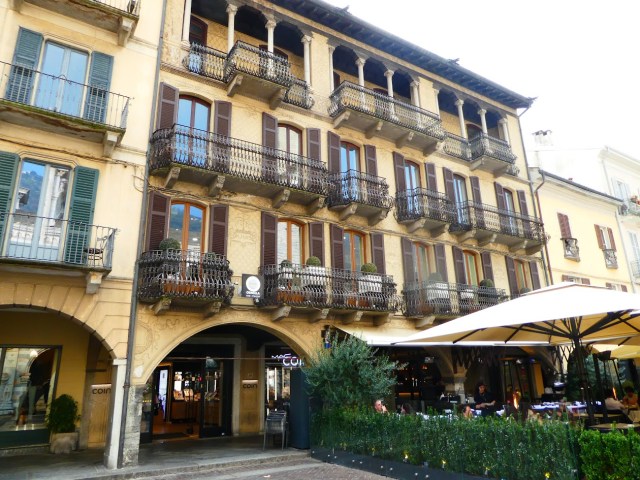
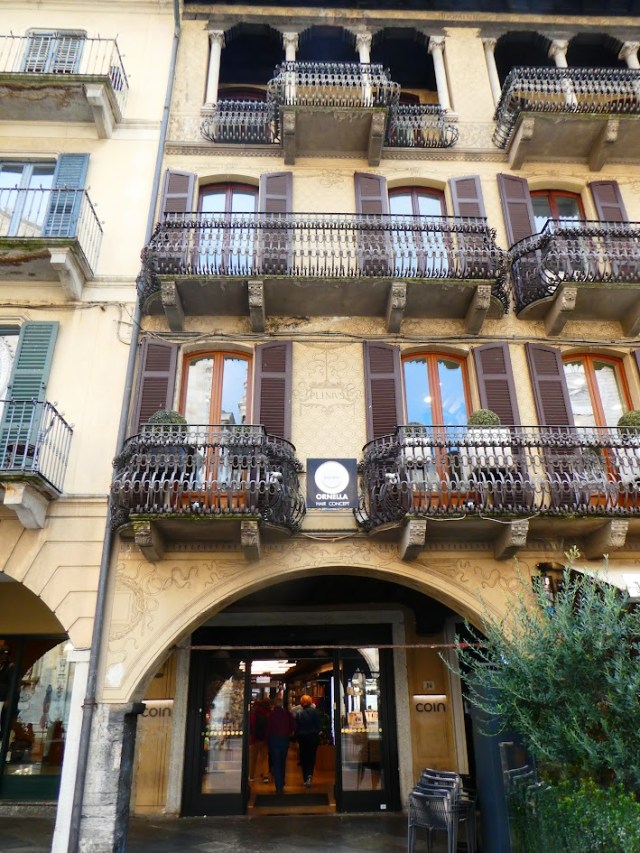
The design in 1905 of the Caffé Bottegone (now spanning the entrance to Coin and the Cafè da Pietro in Piazza Duomo) is a great example of Frigerio’s ability to innovate in harmony with tradition. The modernity of his structure in the city’s principal piazza was a statement of Como’s growing confidence in facing the future. It was immediately adopted as a gathering for the city’s artists and writers. His continuation of the portico seen through the ground floor arches integrated the building with its more elderly neighbours whilst its Liberty styling on the floors above marked its modernity. It is just one example of his ability to combine innovation with tradition – a trade mark skill he would deploy in many other instances across the city in the coming years.

Caffè Bottegone – the arches of the portico provide continuity whilst the Liberty styling above showed modernity and innovatuion.

For the last seven or eight years, the ex-Banca Commerciale Italiana has remained closed ever since Cariplo closed its doors. Recently it has reopened as the new site for Emporio Armani which has now moved out of Piazza Cavour. Its the sort of shop that provides a generous floor space for each article on sale, signalling the fact that prices are high. The interior has undergone a total restoration of Frigerio’s original decorations and, fortunately, the staff are happy to see people enter purely to view them in their splendour without any other obligation. 

Staicase inside the ex-Banca Commerciale Italiana


The Politeama and Tempio Voltiano

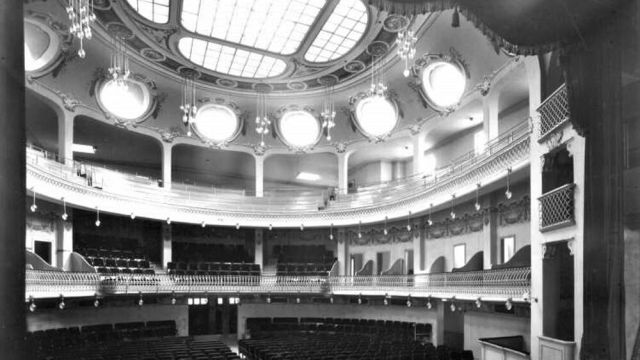
Beyond the ‘Centro Storico’ there are two particular structures for which Frigerio is justifiably renowned. The Politeama, facing on to the Piazza Cacciatori delle Alpi, was built in 1909 and was the first building in Como to be constructed with reinforced concrete – a technique that had only been recently developed. Unfortunately the Politeama has been left closed since 2005 and both its interior and exterior require extensive renovation. It was, however, a revolutionary building in its day designed to provide a venue for popular entertainment including cinema and for housing exhibitions. It also contained a hotel and a restaurant.  The building is owned by the town council who would like to find partners prepared to fund its restoration. An original photo of the interior shows just how splendid the building was at its inauguration.

The interior of the Politeama

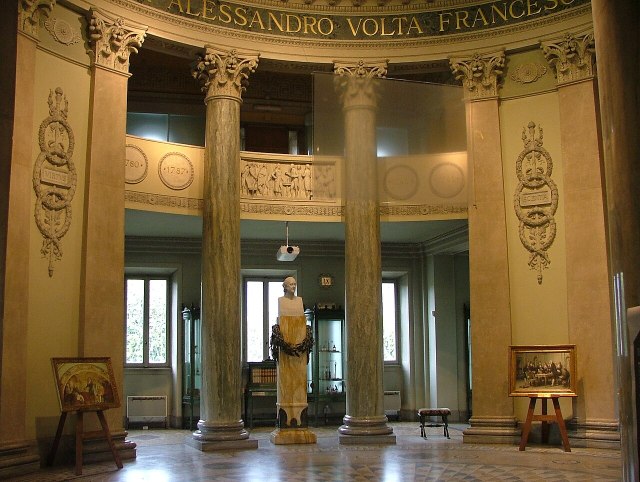
Two structures, both close to each other, dominate Como’s western section of the lakefront . One is Giuseppe Terragni’s War Memorial (1931-2) and the other is Federico Frigerio’s Tempio Voltiano (1925-8).  The Tempio Voltiano was conceived to honour the work of Como’s most famous son, the scientist Alessandro Volta. It was financed by a local entrepreneur, Francesco Somaini, as a memorial to celebrate the centenary of Volta’s death in 1827. The heart of Frigerio’s design is neo-classical with the addition of various external decorative features which had become his trade mark. He is said to have taken inspiration from Rome’s Pantheon as an appropriate model for the commemoration of a famous figure such as Volta. It houses various artefacts associated with Volta’s research into electricity and the development of batteries.

Interior of the Tempio Voltiano

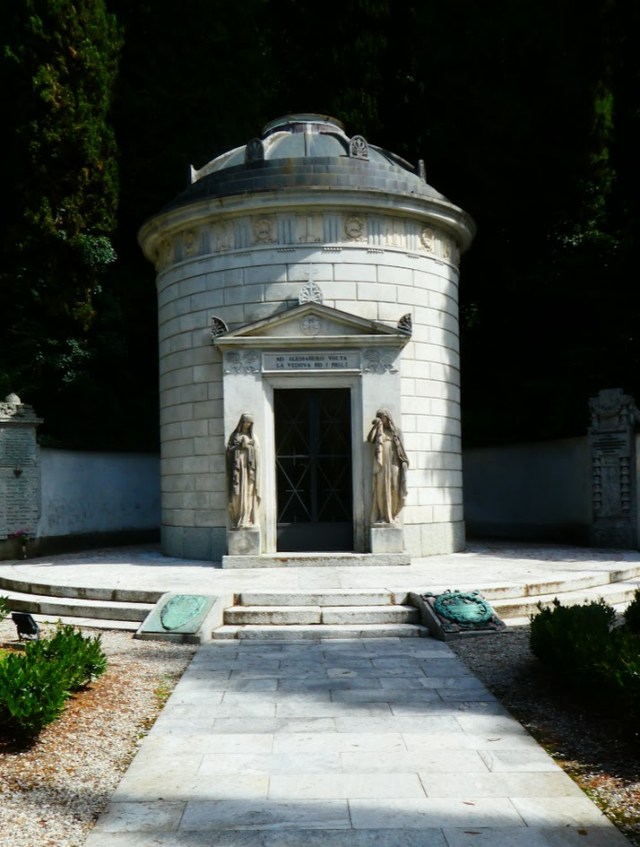
As with the Politeama, Frigerio used reinforced concrete at the heart of the building’s structure which may explain why it lacks a degree of delicacy in its proportions that are commonly associated with neoclassical design. This heaviness is evident when compared with another neoclassical structure dedicated to Volta – his funereal vault in the cemetery at Camnago Volta. 

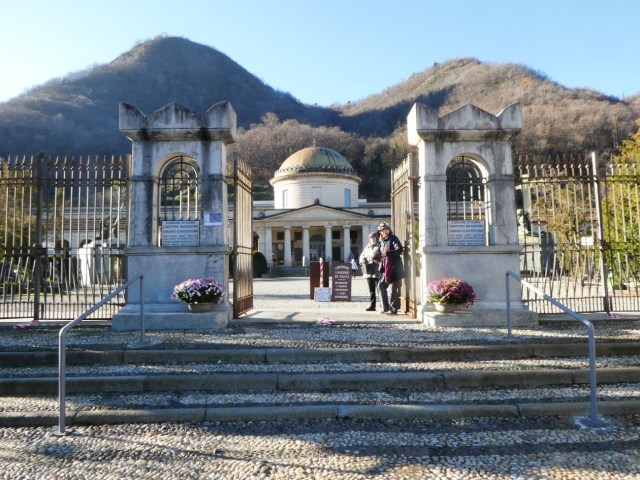
Volta’s tomb in Camnago Volta. Designed kikn 1831 by Melchiorre Nosetti

A Federico Frigerio Itinerary

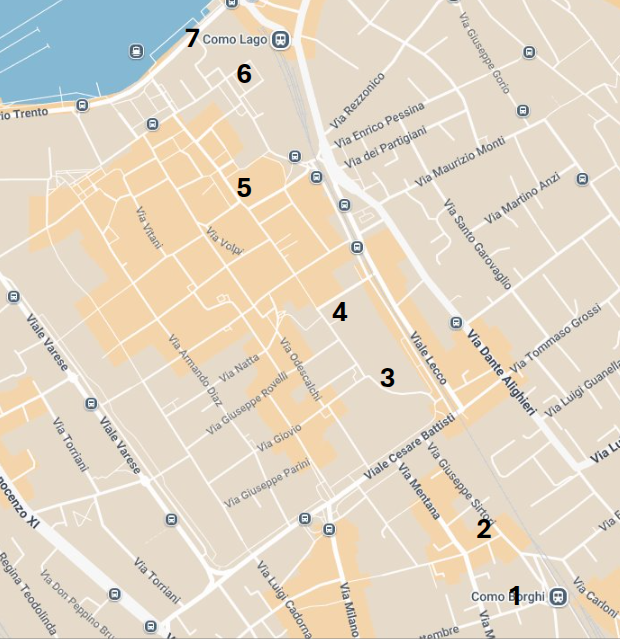
Frigerio’s influence on the face of Como is almost all around us given his works of restoration, architectural design and external and interior decoration. But the following itinerary would give a good indication of the range and quality of his influence on his adopted city. The itinerary starts off opposite the Como Borghi train station and continues northwards to finish in front of the Palace Hotel on Como’s lakefront.

A Federico Frigerio Itinerary starting from Como Borghi to the Palace Hotel

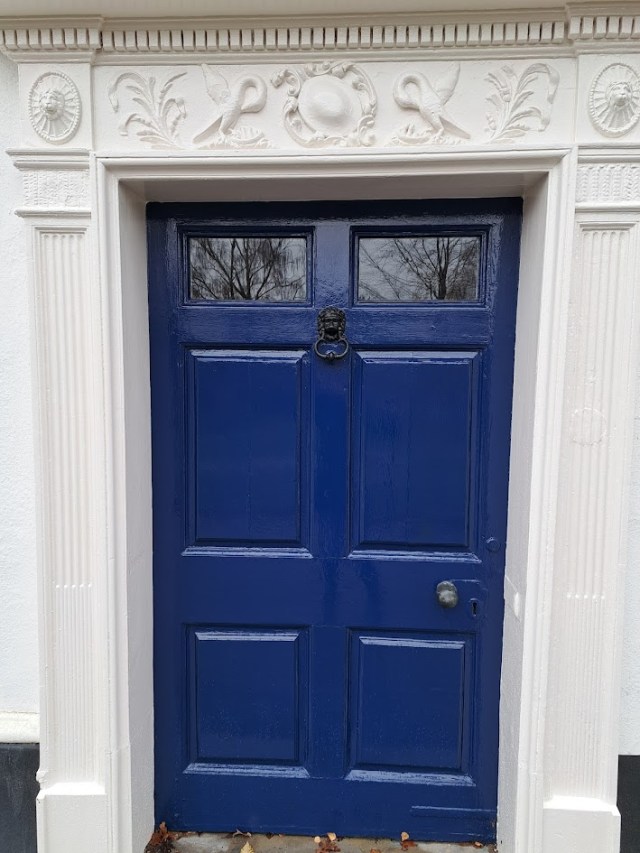
No. 1 – Frigerio was the architect of the Casa Cattaneo (1910) in Piazzale Gerbetto opposite Como Borghi railway station.  No. 2 – He designed the school ‘Magistri Cumacini’ in 1945 on the corner of Via Sirtori and Via Giulini. No. 3 – He was responsible for the presentation of the series of archeological remains in the Museo Archeologico (which unfortunately is still closed due to work on restoration). He was also responsible for the study and excavation of the Roman Porta Praetoria, close to the Porta Torre and in the basement of the Liceo Scientifico Alessandra Volta. No. 4 – He designed the building that now houses the Ufficio Postale on Via Vittorio Emanuele on the corner with Via Pertini. Originally this was the site of the Società Banacaria Italiana. No. 5 – Piazza Duomo and Piazza Grimoldi. See the account above of the various works by Frigerio in this principal piazza at the heart of the old town. No. 6 – Turn off Piazza Roma on the corner of the Just Art Cafè down Via Rodari to view Frigerio’s own home at the end of the street on the right. No. 7 – One of his first commissions was designing the exterior decoration of the Hotel Palace (then called Hotel Plinius). He also designed the interior and exterior decoration of the adjacent Albergo Terminus.

The doorway to the home of Federico Frigerio in Via Rodari

This is by no means a complete list of Frigerio’s work in Como but will hopefully give an idea of the quality and quantity of his various commissions. He perhaps more than anyone else over the last 200 years has had the greatest impact on the face of the city’s centre. His eclectic style may not be to everyone’s taste but it is hard to deny that his transformation of Piazza Duomo was a massive improvement. Along with these changes and the addition of the delightful Caffé Bottegone, he gave the city the confident face to confront its touristic future, and to celebrate its cultural past.

Tempio Voltiano, designed by Federico Frigerio and constructed from 1925 to 1928

Further Reading

Best source of further information on Federico Frigerio is local author Fabio Cani’s book ‘Federico Frigerio: Il lato tradizionale del nuovo‘. Published by Nodo Libri 2015. 

Como Companion has articles on Giuseppe Terragni and the other rationalist architects as follows: Como’s Rationalist Architecture 1: Around the Stadium and Como’s Internationally Renowned Urban Visionary.

Como’s potential for cultural tourism is explored in Como: The Potential for Cultural Tourism.


Posted in Architecture, Art, Culture, History, Itineraries, People, Places of interest, Uncategorized | Tagged , , | 2 Comments

Como’s Twin-Tailed Mermaids

The symbol of a twin-tailed mermaid can be seen on a number of Como’s buildings, most clearly on the keystone of the doorway into No. 16 Via Odescalchi. The same symbol can be seen above the rear doorway of the Basilica San Fedele and, in more decorous fashion, on the walls of the Cathedral and within the town’s main cemetery. The design is of a very particular type of mermaid – one with two tails, and its origins and significance are far from clear although the figure, undoubtedly feminine, has a name – the Melusina.

The Melusina on the keystone above the doorway to Via Odescalchi, 16

Keystone Carvings in Como

Our Melusina in Via Odescalchi is carved into the keystone of the arch surrounding the principal doorway to the urban villa (or palazzo). Its purpose would have been very similar to the mezuzahs pinned to the lintels of Jewish homes to protect the inhabitants from evil. The Melusina would have been supposed to offer a similar protection as well as bringing prosperity and even fertility to the household. The Via Odescalchi keystone also includes what has been defined as a masonic symbol at its base symbolising liberty.

Crest of Adamo del Pero iabove the entrance to his palazzo at No. 6 Via Adamo del Pero

Most other keystone carvings in the city depict the heraldic crest of the resident family. The clearest of these is found in Via Adamo del Pero above the entrance way to Del Pero’s home. The family crest depicts a series of pears as befits his family name. 

Other crests exist above doorways on both sides of  Via Balestra and above the entrance to Palazzo Odescalchi on Via Rodari but are so worn with age that it is impossible to make out their designs. These all date from the Renaissance period and adorn doorways decorated in contrasting bands of Varenna and Musso marble, as was quite commonly used on many of Como’s Renaissance palazzi. The more recent crest above the doorway of the bar at the theatre end of Via Porta shows an anchor and the staff of Mercury – a caduceus-  leading to the idea that the householder was a merchant involved in shipping on the lake.
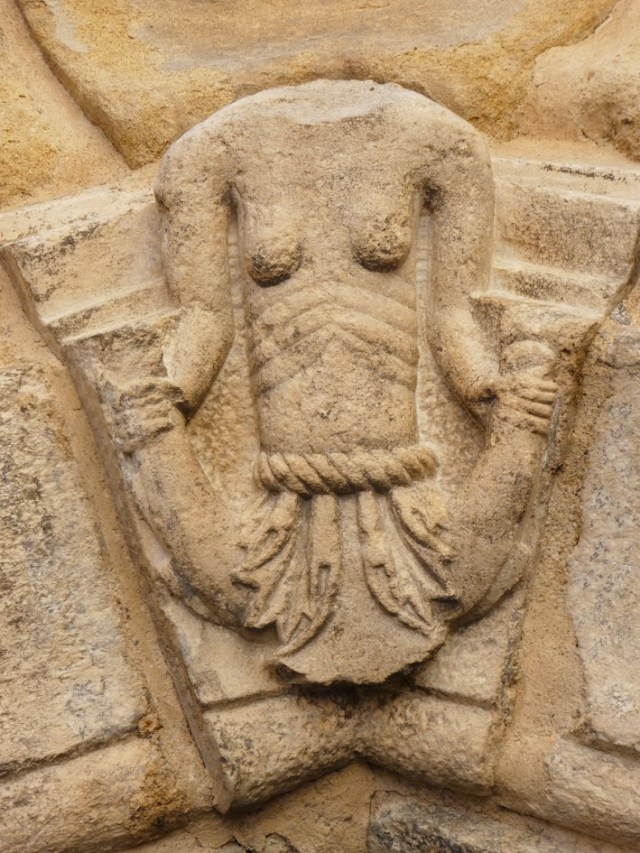
Decorative Melusinas on Como’s Cathedral. Left, on the southern wall, centre and right on the Porta della Rana.

Elsewhere Como’s melusinas are placed on religious buildings with those on the cathedral appearing less suggestive and more decorative. The two carved on the Porta della Rana, the work of Tommaso and Jacopo Rodari c. 1507, are more decorative (and decorous) renderings of the earlier medieval symbol. The carvings of the Rodari brothers on the cathedral combine both religious and mythological symbols, as in the case of the Melusina on the Porta della Rana  who displays her wings but not her bifurcated tale. In all these cases, they are more bowdlerized versions than the older San Fedele’s melusina.

Melusina on the keystone above the doorway to Basilica San Fedele on Via Vittorio Emanuele.

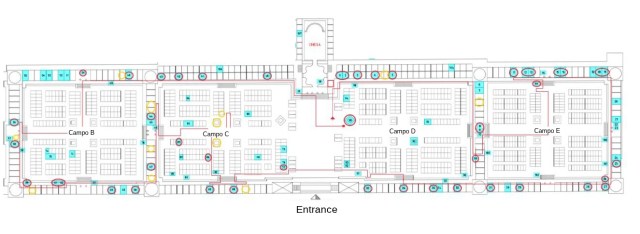
The most recent Melusinas can be found in the Cimitero Monumentale on the western borders of the town. The cemetery was built from 1811 in the neoclassical style with two wings opening up right and left of the main entrance. Both wings form an arcade with a series of symbols displayed at the apex of each arch. One of these symbols is that of the Melusina represented in a simplified form to make best use of her symmetry to create a circle from her twin tails. She also holds what looks like fruit in her hands, possibly in line with her association with fertility and prosperity but, in the cemetery’s case, not longevity. 

Melusina in the Cimitero Monumentale

Perhaps the best known contemporary use of the Melusina is in the ubiquitous logo of the American coffee chain, Starbucks. The founders of Starbucks took the company name from a character in Herman Melville’s novel, Moby Dick. In line with the novel’s blend of reality and myth, they adopted the Melusina as their company logo. After the original iteration in 1971, the logo has gone through a series of modifications which initially stressed the symmetrical qualities of the design before gradually divesting her of her legs. No doubt the designers behind this evolution presented sound marketing arguments for her bowdlerisation (in that she now reveals nothing of her lower body) but maybe they were also concerned over the potential ‘inappropriateness’ of the twin tailed maiden. If so, this was not a concern to the Catholic church in the 1500s although the Protestant leader of the Reformation, Martin Luther, is said to have denounced the Melusina as an agent of the devil. 

Top left, the original 1971 logo. Top right, 1987 version. Bottom right, 1992. Bottom left, present day.

Melusina’s Origins

The Melusina and the myths that surround her were formed in ancient history as part of  a magical world of mermaids, water sprites and forest nymphs. She may well have been identified with possessing some form of sexual power facilitating fertility and procreation. By placing her image above a household entrance, she may have been called upon to provide the inhabitants with a degree of protection from malign spirits as well as a boost to their libido. 

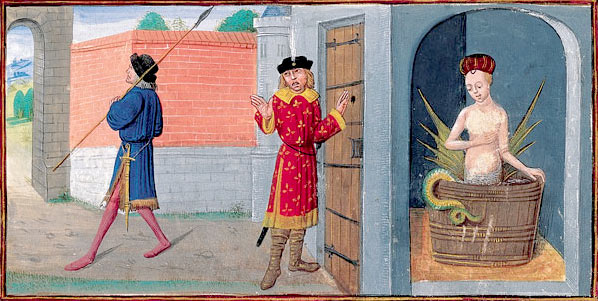
The first appearance  of Melusina in literature came out of late 14th and early 15th century France. As a British Library blog reports, she was born out of that period when mythological or magical accounts intersected with attempts at historical reporting. The story teller was Jean D’Arras who compiled a series of tales from around 1382 to 1394 called ‘spinning yarns’ in that they were said to be  told by ladies as they collectively sat around their spinning wheels. In his account Melusine (as known in France) was the daughter of the King of Scotland and his fairy wife. She fell out with her father and entombed him within a mountain. As payback, the King’s fairy wife condemned Melusine to turn into a serpent from the waist down – but only each Saturday. 

Melusine depicted by Julius Hubner, 1844. Here we see Raymond spying on Melusine on a Saturday when she was transformed into a mermaid.

Thus her fable was born out of Celtic and Gallo-Roman mythology and promulgated under the Plantagenet thiefdom over Western France and the British Isles. The heart of her influence was in the region of Poitiers. It is here she is said to have won the heart of a poor but noble gentleman called Raymond, Lord of Forez in Poitou. He stumbled across Melusine in a forest as she combed her golden tresses, dressed in a flowing white gown and sat beside a fountain. Enchanted by her beauty, he naturally fell immediately in love. She agreed to their marriage on the one condition that he allowed her to remain totally secluded every Saturday and he was not to make any attempt to see her then.

As a result of this marriage, the Poitou region began to prosper with forests cleared and land cultivated. Cities grew and castles were built including her own, the Castle of Lusignan. To this prosperity Melusine also brought fertility bearing ten sons to Raymond. Some of these became Kings and others became tyrants and some gained fame for exploits during the Crusades.

All of this mostly good fortune came to an end the moment Raymond could not resist seeing what Melusine did every Saturday. Spying on her through a keyhole, he saw her lower body transformed into a serpent. Later he could not help berate her by calling her ‘Serpent’. At this point Melusine developed wings and flew away.  
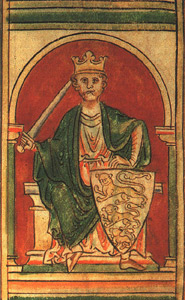
The tale comes with a number of embellishments resulting from her ‘mixed race’ heritage in being half fairy and half human. But her lasting significance is in her fertility and her capacity to bring prosperity to Raymond’s family and to the region around Poitou.

Another interesting fable mixing mythology with early historical accounts and also including mentions of the Crusades was the 14th century account of Richard Coer de Lyon, a magical telling of the life of this Plantagenet King of Western France and England. In this version, King Richard’s father, Henry II, does not marry Eleanor of Acquitaine but someone called Cassodorien, the daughter of the King of Antioch. They have three children, namely Richard (the later King), John (responsible for Magna Carta) and a daughter named Topyas.  History records Richard’s exploits and also those of bad King John but Topyas is never mentioned because she was whisked away by her mother who sprouted wings and took to flight when she was forced one day to sit through an entire Mass. 

The Melusine myth has intrigued musicians and authors throughout the centuries.Cécile McLorin Salvant at The Met Cloisters: Mélusine | MetLiveArts

The Melusine myth became well established in medieval times across France, Germany, Luxembourg and Cyprus with a number of embellishments and variations but with some commonality relating to her ability to bring prosperity. The myth has fuelled many creative endeavours over the centuries up to our own days with the most recent perhaps being the work of the French American jazz singer Cécile McLorin Salvant.

Melusina in Venice and Moltrasio

Orio and Melusina lived in Sotoportego dei Preti in Venice. Touching the heart-shaped stone above the entrance is said to bring good luck.

The Venetian version has Melusina starting life as a mermaid who gets caught up in the nets of a local fisherman called Orio. She was of course both beautiful and captivating resulting in the two falling in love and Melusina promising to give up her sea life, tuck away her tail and live as a normal human being at least for everyday of the week except Saturday. Needless to say the young man was supposed not to witness this weekly metamorphosis but he did. However the weekly curse was cured when the two married and subsequently went on to live happily together with their three children until Melusina died a natural death. Following on from her death, Orio continued to find his home and children miraculously well cared for whenever he returned from work. At least until one day he returned home early to see a snake on the floor of his kitchen. He killed the snake out of fear for his children. From that point on, the house was never tidy on his return home and Orio came to realise that he had inadvertently killed the serpent spirit of his dead wife. 

The Moltrasio version of the Melusina myth

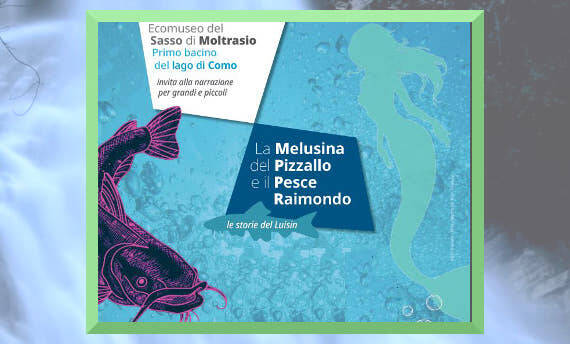
The Eco-Museo of Moltrasio recently held a story telling event around the town where they enacted their own local version of the Melusina myth but with some radical differences. The setting for the drama was no longer a fountain in the middle of a forest but the lovely waterfall on the southern edge of the town – the Cascata Cam. Moltrasio’s Melusina is saved by a local fisherman called Luisin (similar to the name of Melusina’s Castle of Lusignan). He was out fishing for trout in the pool of the waterfall but instead caught a massive catfish called Raimondo (the original Melusina’s husband) who had previously swallowed Melusina alive. Luisin thus managed to free Melusina from the spell that kept her entrapped inside Raimondo.  


Posted in Art, Culture, Folklore, History, Places of interest, Uncategorized | Tagged , , , , , , , , , , , , , , , , , | 1 Comment

Beyond the City Walls: Via Milano

Via Milano looking south with the bell tower of San Bartolomeo in the background

Given the charms of Como’s historical centre and the attractions of the lake, there may seem little reason for residents and visitors alike to venture beyond the city walls. But a stroll down Via Milano offers a fascinating  and enlivening experience – one that could even be economically worthwhile. Via Milano is a mixed environment, with shops, cafes, restaurants, residences appealing to a broad range of tastes and budgets.  In contrast, the historic centre’s commercial interests are becoming focussed on a closely defined and restricted range of customers. This ‘exclusivity’ is directed primarily at visitors rather than residents. Its ‘econocentric’ development in shops, housing and food is heading towards creating a living museum – beautiful but soulless. A trip down Via Milano is so stimulating because it has all that the historical centre is losing – variety, choice, contrasts, vitality and diversity. It is alive and energising. If the historic centre can be symbolised as a beautiful quiet Monet-style lily pond, then Via Milano is a fast flowing trout stream! 

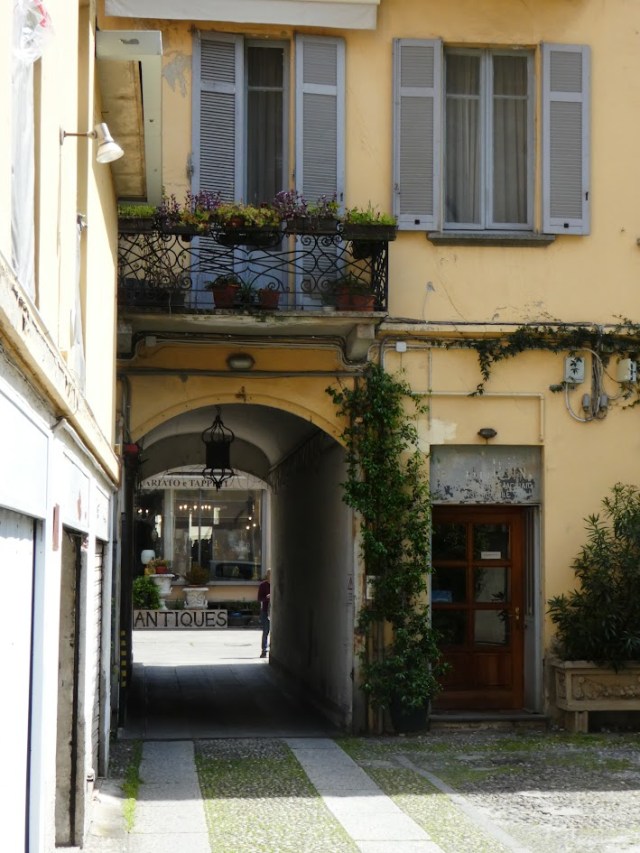
The eastern side of Via Milano is characterised by deep courtyards extending up to 100 metres back. This one houses an antiques shop at its base.

Just Taking a Stroll

You do not need an ostensible reason for visiting Via Milano. Just going for a stroll is cause enough since there is much to appreciate in just walking up the street and diving down any of the alleys or into one of the many courtyards. I recommend starting by walking up the east side under the porticos of the Le Due Corti Hotel.

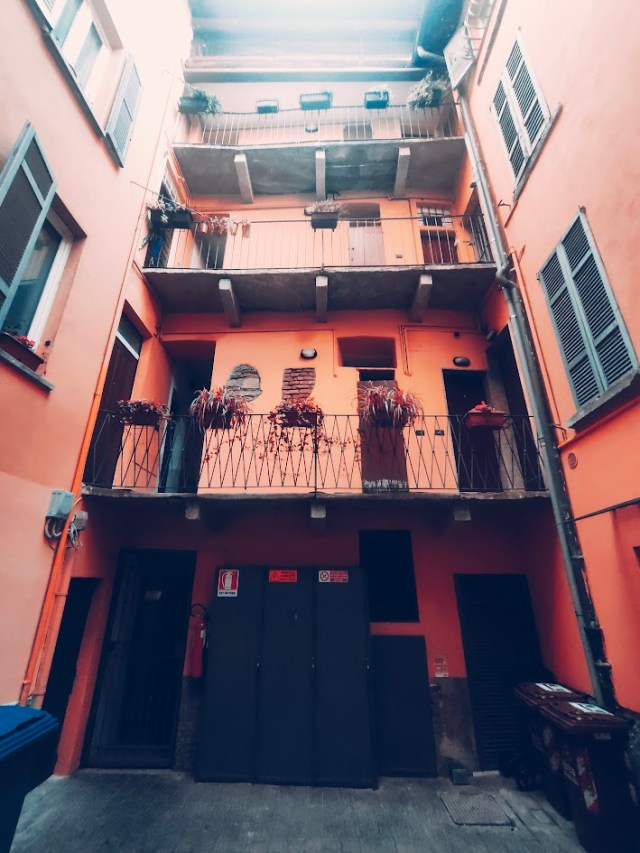
Casa di Ringhiera – traditional workers and artisan housing, Via Milano

Most of the building on this side is as old as in the historic centre but the absence of any grand urban villas or palazzi allows space for more humble residences including traditional ‘case di ringhiera’ characterised by balconies (ringhiera) shared by inhabitants. In the past these apartments would also have shared a single outside toilet placed at the end of each balcony. Many of the courtyards extend back almost 100 metres. 

The northern end of Via Milano, the porticos below Le Due Corti Hotel

Via Milano’s urban environment is, like most of the city, in a state of constant evolution, but one that presently seems to be keeping modernity and tradition in fine balance. Whilst some of the older buildings are going through radical renovation and will undoubtedly go on the market at a high price, there are many others that remain more affordable. Rents for commercial properties are lower than in the historical centre and lower still for those found within the courtyards.

BLUE – shops, RED – Restaurants, YELLOW – history, GREEN – strolling

This means that some of the older commercial establishments are not being forced into closure but new independent units can afford to start up. A specialist independent wine and spirits outlet such as Enoteca CM Vini, located down a courtyard linking Via Milano with Via Cadorna, can afford to sacrifice passing footfall in exchange for a cheaper rent – and then rely on developing a reputation for quality of service to attract and retain their customer base. This is not to say that the same principles are not applied in the historic centre. – but not by all. There are those whose clientele are mainly transitory who have realised that quality is optional. They only need to promise without needing to deliver. 

A stroll down Via Milano is in itself rewarding but there are more definite reasons for visiting either for shopping, eating or absorbing aspects of local history, as I hope to show.

Visiting to Shop 

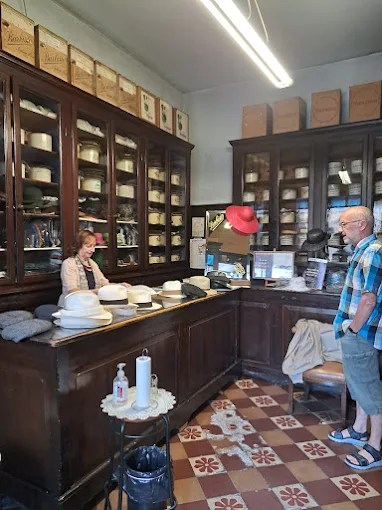
The interior of the Cappelleria Rossini – a shop founded in 1897 and entirely dedicated to the sale of hats.

The shops down Via Milano are a true mix, with a number of  traditional and long established establishments such as the bread shop ‘Ul Pan de Com’ established in 1927, the Cappelleria Rossini in 1897 or Bogani art supplies in 1933. Yet there are also a number of much newer establishments such as the Enoteca CM Vini already mentioned or the singularly esoteric Japanese import emporium, Shin Crazy Comics. 

For clothing, another branch of the ubiquitous upmarket Tessabit chain stands alongside the traditional less glamorous but certainly more practical and economic Zio Ghelfi, whose exterior is a reminder of the look of Italian high streets in the 60s or 70s.  

Take a break from window shopping by stepping into the café-bar called Trani for a coffee in elegant surroundings.

Interior of the Trani Caffé specialising ikn products from Puglia

They specialise in pastries and other goods from Puglia and, as a relatively recent startup, bear witness to Via Milano’s capacity to allow independent commercial enterprises to establish themselves alongside their longer term neighbours. If Trani does not attract you there are a good number of alternative cafés along the street to tempt you in.

Zio Ghelfi, old style clothing shop alongside Tessabit.

Visiting to Eat

There are sound reasons for visiting Via Milano just to eat. Whilst the lake front may offer a very tempting location, few of the restaurants offer quality at an acceptable price. Via Milano offers economy and, its particular advantage, diversity. Whilst fixed price ‘Menu del Giorno’ deals are hard to find in the centre, they can readily be found along Via Milano. For example, the Ristorante Paradise has a range of midday formula on offer for those looking for traditional Italian cuisine or pizza. 

Ristorante Pizzeria Paradise – not pretty but

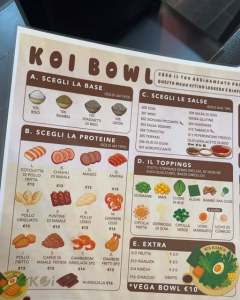
Koi Ramen, the only Japanese restaurant in Como specialising in ramen noodle bowls, offers midday menus all served in their Hello Kitty style dining area – or even deliverable within the historic centre.  Alongside this restaurant and the Shin Crazy Comics store, there is yet another Japanese establishment, Panfuwa, offering sweet and savoury soufflé pancakes.

Advice at Koi Ramen on how to put together your ramen dish.

Traditional Italian dishes are served at the Enoteca 84 or at the nearby more upmarket Trattoria L’Antica on Via Cadorna.

For those visiting Como on a strict budget I would recommend they take full advantage of whatever breakfast is available if staying at a Bed and Breakfast, then strolling up Via Milano at midday for a Menu del Giorno of their choice. They might again return to Via Milano in the evening for an aperitif at Bar Tulipe where the cocktails are served with a selection of snacks described most frequently in the online reviews as ‘abundant’ (12 euros for lunch and 9 euros for ‘apericena’). 

The diversity in the offer on Via Milano increases the further south you walk, particularly once you cross over the traffic lights beyond San Bartolomeo Church. Here you will find the Taj Mahal and Kashmir restaurants, and at the top end of the street near San Rocco there is a Nigerian restaurant called Jollof Lake Como run by the very welcoming Linda. As she states, her restaurant is the only Nigerian restaurant between Milan and Como.

Jollof Lake Como, run by Linda offering Nigerian and West African cuisine.

Visiting the Past 

Francesco Capiaghi, ‘After the surrender 22nd March 1848

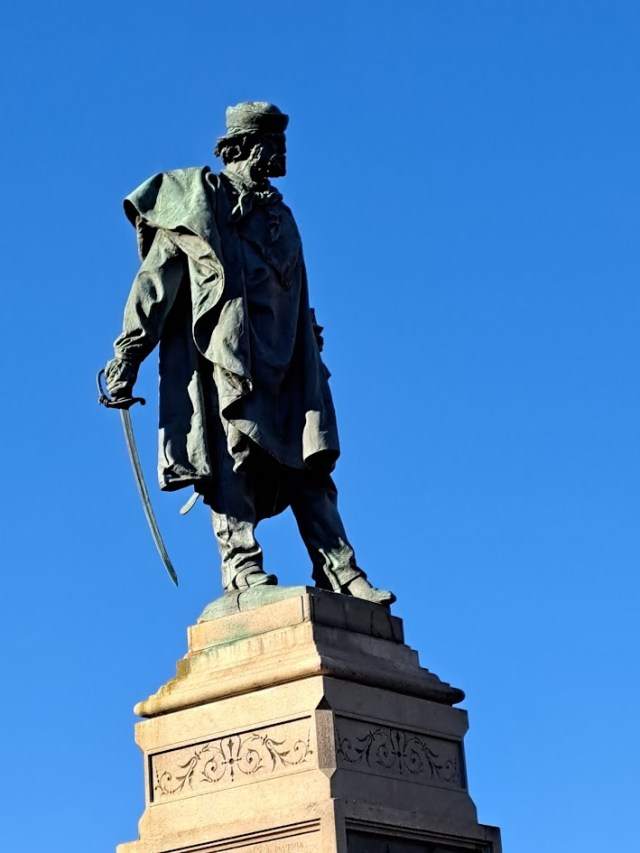
If strolling just beyond the Porta Torre at  Piazza Vittoria, back on 22nd March 1848,  we would have witnessed the surrender of the Austrian garrison to the committee that had organised the patriotic revolt in Como – the so-called Cinque Giornate (5 Days). Scenes from that surrender ceremony are depicted in the bronze panels around the base of the statue of Garibaldi in the middle of the piazza. Como’s rebellion was repeated also in Milan and Brescia but did not result in any lasting independence for Lombardy. 

Via Giulini, the trattoria used to treat citizens wounded in the Austrian attacks on 21st March 1848

The day before the surrender, the 21st March 1848, the Austrians had broken out of their barracks and gave chase to the Como citizens up the length of Via Milano. Many civilians were injured and taken for treatment to the restaurant subsequently named the Trattoria di Soccorso on Via Giulini, more recently named L’Ultimo Caffé. This trattoria was still functioning up to three or four years ago but now lies vacant awaiting a fresh reincarnation. 

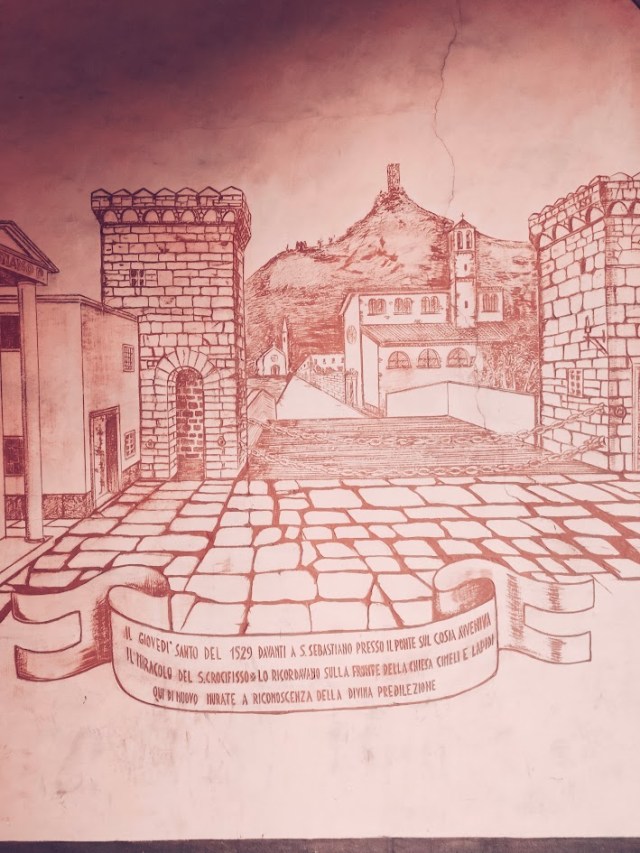
Mural within the court of the San Bartolomeo Church depicting the scene of the Anello del Miracolo. The scene is looking south across the bridge crossing the River Cosia with the Convent of Santa Clara on the right (no longer present) and the demolished church of Saint Protasio in the distance.

At the bottom end of the road, when we reach the Church of San Bartolomeo, we arrive at another site of historical (or mythological) interest. On the 25th March 1529, the annual Holy Thursday procession carrying the ancient crucifix housed in the Santuario del Santissimo Crocifisso in Viale Varese was halted at the bridge over the Cosia just south of San Bartolomeo. Further progress out of town to the Convent of Santa Clara (now just the name of a bus stop) was barred by a thick chain placed there by the Spanish authorities. Its purpose was to prevent French cavalry from crossing the river from the south to attack the city. The guards refused to remove the chain and merely suggested that the procession could proceed by ducking under. As the crucifix was lowered, it seemed to cause the chain’s housing in the pillars to shatter and thus allow the procession to continue unimpeded. 

The Anello del Miracolo attached to a pillar on the outside of San Bartolomeo.

This supposed miracle went to reinforce the local population’s belief in the special powers of the crucifix in protecting the city. The Santuario S.S. Crocifisso in Viale Varese, which still houses the crucifix, became the site of a cult that gained adherence across Lombardy and the Canton Ticino that persists to this day. The crucifix was further adorned with a golden crown in a ceremony conducted by Milan’s Archbishop Schuster on 17th June 1945 giving thanks to the power of the Crucifix in saving Como from any effective bombardment during the war. (See also the cult of Saint Barbara who was also credited with the same power.)

Conclusion

@Comocomera, 19th century view looking north towards the city centre from outside SAn Bartolomeo

Via Milano’s commercial establishments do seem particularly friendly and welcoming, possibly because they are flattered by the effort any visitors have made to take themselves beyond the historic centre. I believe that effort is well worthwhile, not just because of the variety on offer on Via Milano but because of its contrasting vitality and atmosphere with the historic centre. Its balance of innovation and tradition reinforced by its diversity tend to highlight what the historic centre risks losing in its evolution towards a living museum. Urban environments are of course in a state of continual change but right now Via Milano seems in a more healthy condition than Como’s historic centre suffering under the pressure of increasing real estate and rental values.  Some might argue that this increase in wealth has at least allowed for the renovation of a number of the old palazzi in the centre and this is adding to its overall aesthetic attraction, but these new residential units are destined for use by a transitory population who will only go to reinforce the trend towards a one market economy. Finally, to strain even further the stream and pond metaphor, the lily pond will undoubtedly continue to appear increasingly pretty but the still waters may atrophy unless charged with the clean fresh waters from its neighbouring chalk stream tributary.  Viva Via Milano!

Further Reading

Read  Como – Its Role in the Birth of a Nation for an account of Como’s Cinque Giornate.

Posted in Architecture, Culture, Food, History, Itineraries, Places of interest, Restaurants, Shopping, Uncategorized | Tagged , , , , , , , , , , , , , , , , , , | Leave a comment

Garibaldi, the Battle of San Fermo and his Como Bride

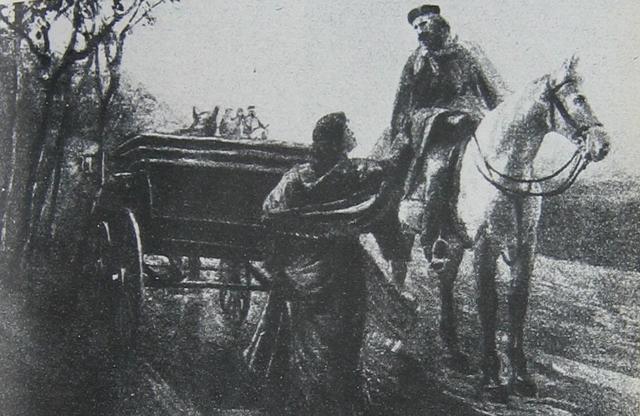
Garibaldi first met his future second wife when she, as a young girl of 18, had crossed enemy lines to ask him to direct his army to Como.

In May 1859, Giuseppe Garibaldi launched what would become known as the Second Italian War of Independence. He had formed the Cacciatori delle Alpi, a small army thanks to a decree issued by the Royal House of Savoy in Piedmont. On May 23rd 1859, he and his army crossed the border into Lombardy which was  at the time territory under Imperial Austrian rule.  He immediately liberated the town of Sesto Calende at the base of Lake Maggiore but then suffered a setback when attempting to take Laveno. He then turned back towards Varese. As he approached the city, he encountered a girl travelling by cart in the company of a young priest. This meeting was to lead to a doomed romance, a failed marriage and a scandal that divided the aristocratic families of Como over the following two decades until Garibaldi’s second marriage was finally annulled.

The Villa Raimondi in Fino Mornasco

Giuseppina Raimondi was the illegitimate but recognised daughter of the Marquis Giorgio Raimondi, a fervent patriot in the cause of national independence – a cause to which she too was totally committed. So much so that she had volunteered to carry a message to Garibaldi asking him to liberate Como as soon as possible due to the imminent threat of the Austrians sacking the city.  At considerable risk to herself and her companion, she had crossed enemy lines to deliver her message safely. Garibaldi was struck by both the spirit and beauty of this courageous and committed young girl in that she strongly reminded him of his first wife, the much loved Anita who had died ten years previously. He penned a reply for Giuseppina to carry back dated Robarello, 26th May 1859 stating:

‘I am facing the enemy in Varese; I think I will attack them this evening. Send the fearful and their families out of the city but retain the virile population, sound our anthems and ring out the bells so that with our two companies we will put up every possible resistance.’

To Giuseppina he said,”Tell them to stand firm and resist until tomorrow. In the meantime, go up into the mountains and to Ca’Merlata. Tomorrow I will be in Como with my Cacciatori delle Alpi.”

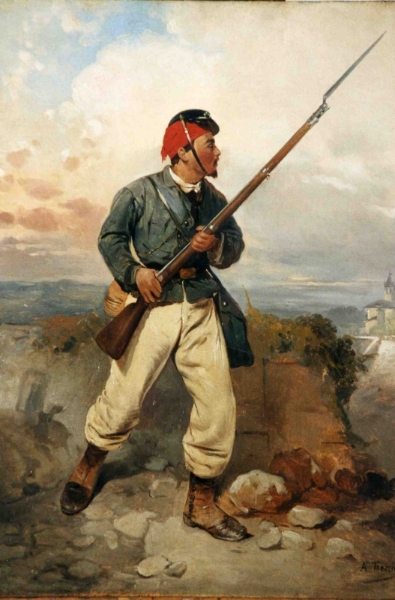
Trezzini sergeant in the cacciatori degli apli

Sergeant in the Cacciatori degli Alpi, attributed to A. Trezzini

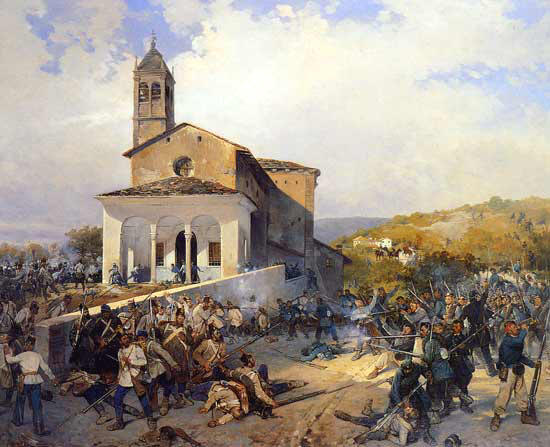
The next day the Cacciatori delle Alpi fought their successful battle against the Austrian regiments at San Fermo, on the edge of Como. He and his troops descended the Valfresca to enter the town that evening. He stayed the night at the home of a local aristocrat and officer, Pietro Rovelli, leaving at 3.00 in the morning to continue his march. But he would soon be returning to Como in search of the beautiful young girl he had encountered the day before battle with the single intention of making her his bride.

Painting San Fermo Battle Angelo Trezzini

Painting of the battle scene, Battle of San Fermo by Angelo Trezzini who was himself a soldier in Garibaldi’s Cacciatori delle Alpi.

The Marquis Giorgio Raimondi and Giuseppina

The Raimondis were a long established aristocratic family. They were first noted in Como back in the 12th century and subsequently increased their financial and commercial power throughout the 15th century. By the 16th century they had become part of the ruling elite of the city taking their place in the so-called Decurion of city rulers. Giorgio’s ancestor Gian Battista Raimondi had been granted the title of Marquis by the Austrian Empress Maria Teresa back in 1745 – a title granted to the first born of the family in perpetuity. Giorgio Raimondi, Giuseppina’s father, had an Odescalchi as an uncle, and on the death in 1824  of Innocenzo Odescalchi, he inherited Villa Olmo in Como and the Villa Raimondi in Fino Mornasco. The family could thus add these two villas to those they also owned in Birago, Gironico, and Minoprio. 

Early photograph of Giuseppina Raimondi and Garibaldi

Giorgio was a fervent patriot who had taken an active part in the local rebellion against the Austrians in 1848 – the so-called ‘5 Giornate’ that led to the surrender of the Austrian garrison. For this he was forced to exile himself and family in Switzerland where in 1849 he bought another villa in Mezzana. Giuseppina had become accustomed to smuggle arms and literature in support of the patriot cause from Mezzana down to Como. It was on one of these missions that she volunteered to carry the message over to Garibaldi.

Giuseppina was born on 17th March 1841, as one of Giorgio’s five illegitimate children. Giuseppe Garibaldi would have been 34 years old at the time. She and her other siblings were all recognised by Giorgio although her mother is recorded as unknown on her birth certificate. Her title of Marchioness was granted or used purely out of respect and not due to rights. 

Unrequited Love

Garibaldi retained the image of that courageous young girl who had crossed enemy lines so effectively in order to persuade him to liberate Como from Austrian oppression. He returned to Como in June 1859 determined to woo his new found love. Giuseppina was not or never would be in love with Garibaldi. She was often described as beautiful whilst he may well have been the most heroic contemporary figure in Italy but he was no  ‘bell’uomo’ at 52 with his bowed legs, long hair and straggly beard. She rejects his proposal of marriage and sees him leave Como in July on a steam boat for the Valtellina. 

Garibaldi recalled this period of unrequited love as follows in an unpublished section of his Memoirs included in Giacomo Emilio Curatulo’s book ‘Garibaldi e Le Donne’ (1913): 

I, I  have already said, had been struck, as if by a vision, at the first sight of that dear creature, and her image had been engraved in my heart in indelible characters, on the day in which she appeared to me by the woods, leading her cart and  accompanied by a priest who was a family friend.

I had not been able to conceal, in the few visits to the pleasant Villa Olmo, the interest that she inspired in me; and in the only favourable moment for a demonstration, met at the Hotel dell’Angelo, in the port of Como on the shore of the lake, where kneeling, I kissed that beautiful hand and exclaimed: “Oh, I want to belong to you in any way!”

Those words seemed not to have achieved their goal, and I almost despaired of having inspired what I felt in my heart.

He described another occasion when invited by the Marquis Raimondi and his daughter to go fishing at night on Lake Como:

‘I flattered myself to be spending a happy night in the company of the woman of my soul; but it seemed to me that this resolution was not to the liking of the beautiful girl. This distressed me; and strong in my pride and dignity as a man, which I never lacked in such circumstances, I decided to forget that angel!

The Dashing Young Officer

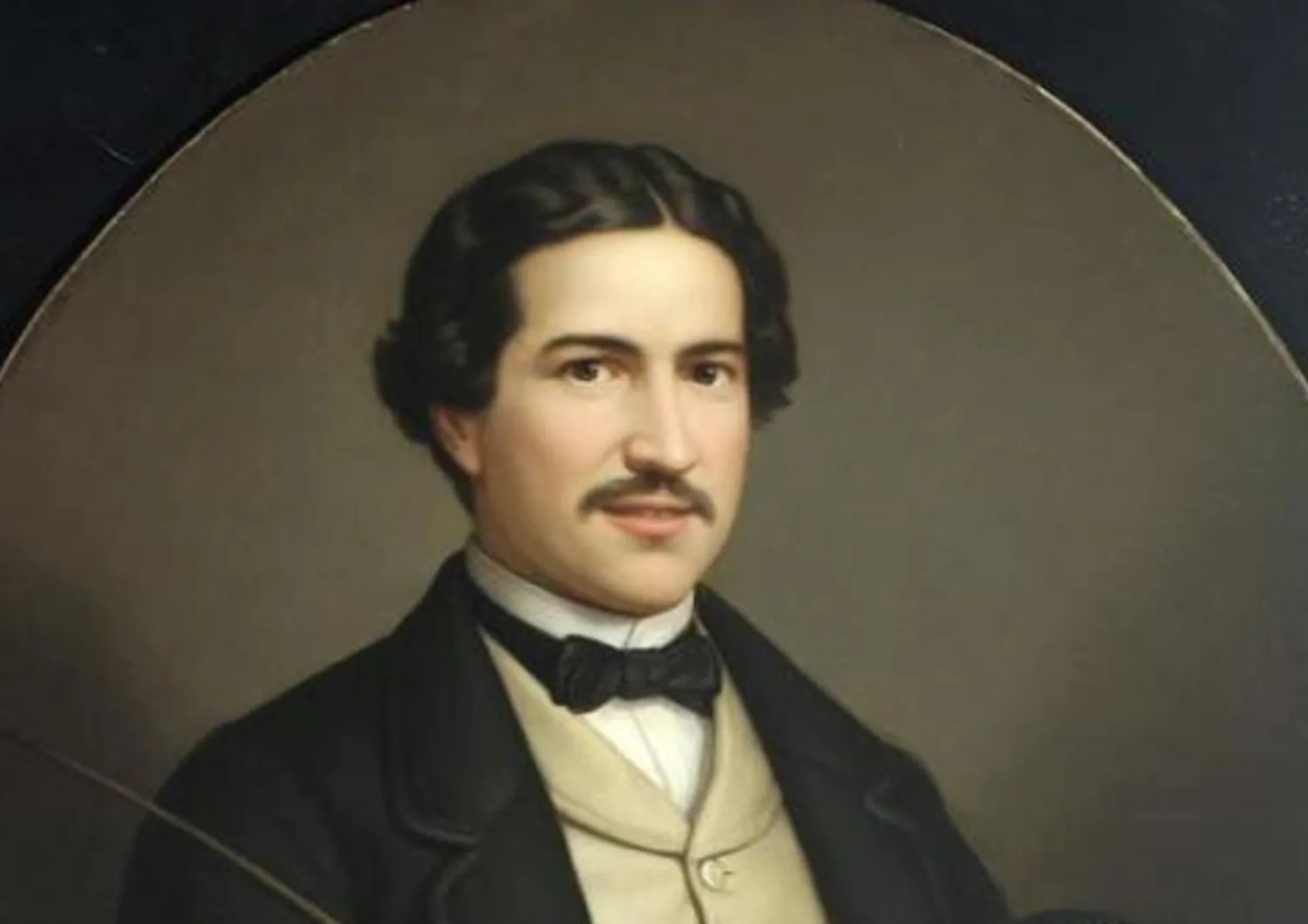
Luigi Caroli, Giuseppina’s actual love

Giuseppina’s affections lay elsewhere far distant from the Hero of Italy. She was in love with a dashing young officer in the regular army, the 25 year old Gigio (Luigi) Caroli. Caroli came from a wealthy family based in Bergamo who had made their money from silk weaving. The two youngsters had first met in Milan and had developed a strong affection for each other. 

However the Marquis Giorgio Raimondi was strongly in favour of seeing his daughter marry Italy’s great hero once he was aware of Garibaldi’s obsessive love for Giuseppina. He and the Raimondi family would gain a lot from such a union including a guaranteed seat for himself in the national senate of a soon to be unified Kingdom of Italy. Parental pressure was such that Gigio must have decided there was no future for him together with Giuseppina as a  young couple. Whilst still retaining a strong regard for Giuseppina, but confronted with the indomitable will of her father, he broke off their affair.

The Marriage

The chapel in tthe park of the Villa Raimondi in Fino where Giuseppina and Garibaldi were married.

On the break up with Gigio, a devastated Giuseppina lost all will to resist her family pressure. So on November 28th 1859, and in response to numerous proposals of marriage from Garibaldi, she wrote to him acquiescing to his wishes. 

On receiving this news, Garibaldi set off immediately for Villa Raimondi in Fino to verify that all was as he had hoped and sent the following somewhat contradictory letter in reply:

30 November 1859

Adorable Giuseppina, I am torn by two feelings that trouble me in an inconceivable way: love and duty! I love you with all my soul, I would give what remains of this tormented life to be yours for just one moment! My duty forbids me to be yours!.. To make you, whom I idolize, mine.

I have a plebeian woman on the island and from that woman I have a little girl. This would be the least obstacle because I can’t love her anymore and would not tell her I do!

By joining you, beautiful girl, I would go back on that characteristic of sacrifice to which I can attribute a good part of my popularity and which I appreciate. And which I may still need in order to fight for the Fatherland, when Italian affairs still call me to lead soldiers into battle where it might be said of Garibaldi: he has sold himself to fortune … And divorced himself from the people to whom he had  so often boasted of wanting to serve until death.

That I am poor – your angelic and generous heart has already forgiven me. But the fact that I am of an older age to yours, and in not too good health – is a strong obstacle, and one which I must not allow your indulgent sympathy to observe. Soon perhaps I will no longer be a fit companion of florid beauty – I will be reduced to burdening you “living a desperate life! Or killing myself! Because I certainly couldn’t cope with your repulsion!”  Reply to me immediately! I am in a state that cannot be waited on …Do not be angry,  for God’s sake, with who loves you so much! But allow me to distance myself from you with your esteem, your friendship and the consciousness of having done my duty. Yours for life and whatever happens! G. Garibaldi

Needless to say, Marquis Giorgio Raimondi did not allow these scruples to interfere with the plans, although Garibaldi had identified at least one source of potential hostility to the marriage. Some Garibaldi supporters feared that his marriage to such a young bride would deflect him from his planned invasion of  Sicily to complete the unification of the entire country. But Giuseppina was a committed patriot and would have been in full support.

Yet there was another person, very close to home, who was not at all happy about the marriage. This was Pietro Rovelli from another of Como’s long established aristocratic families who had provided Garibaldi with overnight accommodation following the victory at San Fermo six months previously. For now he keeps his opposition hidden as the plans for the marriage proceed.

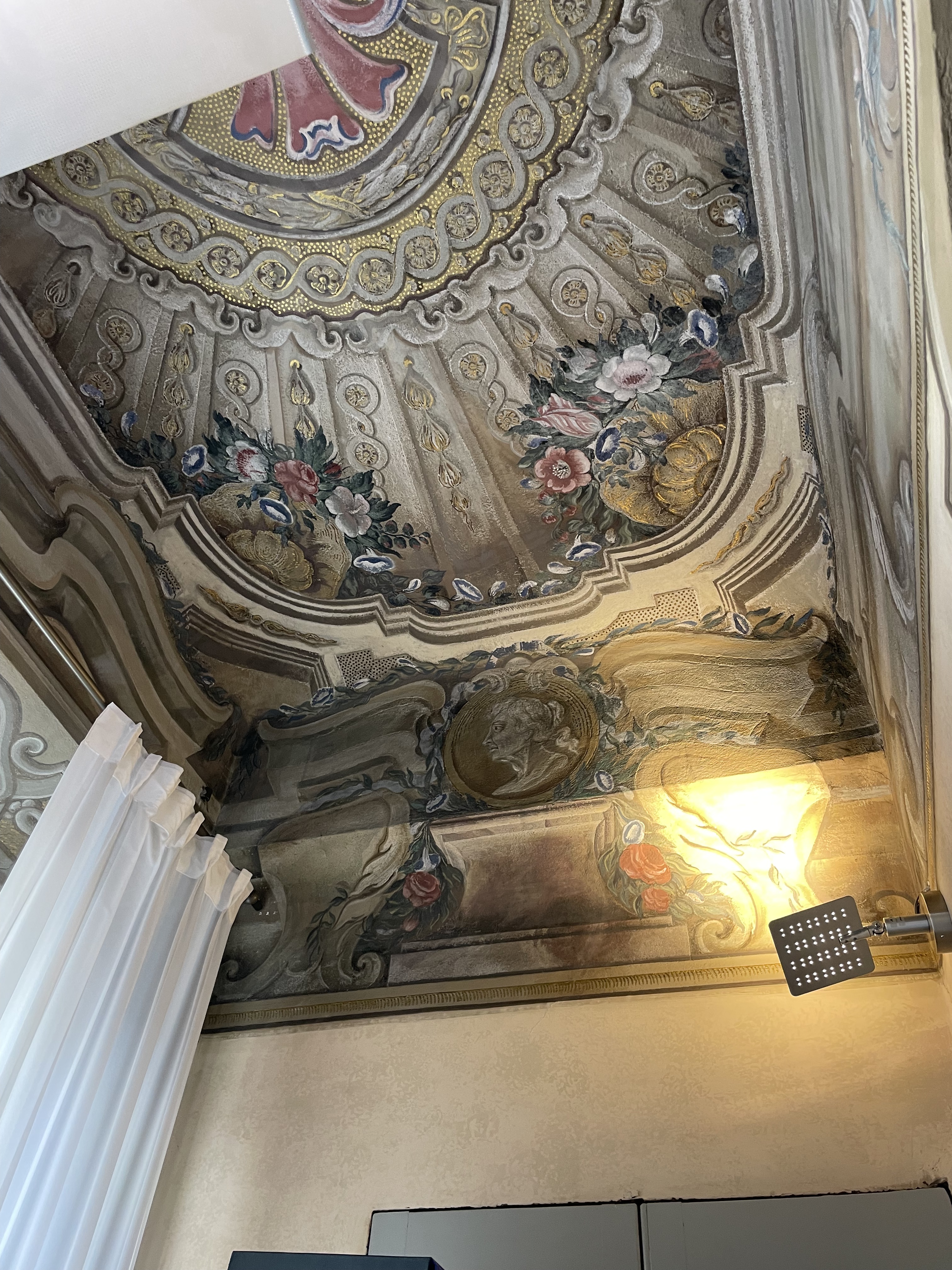
The decorated ceiling of the bedroom in the Palazzo Olginati Rovelli at No. 56, Piazza Volta where Garibaldi spent the night on May 27th 1859 after the successful Battle of San Fermo

In the meantime Marquis Giorgio Raimondi is totally delighted by having Garibaldi as his house guest in the Villa Raimondi from the start of December. But the General has a riding accident when out with Giuseppina on the 8th and  is confined to bed with a serious injury to his knee. Pietro Rovelli, in his role as Captain of the Como National Guard, pays him a courtesy call on the 18th to pay homage to Italy’s greatest hero. He does not express any of his misgivings about the marriage at the time.

On 1st January 1860, Garibaldi is recalled back briefly to the Royal House of Savoy in Turin and it is now Giuseppina’s turn to be confined to bed suffering from typhoid. Finally, with Giuseppina on the road to recovery, the marriage date is fixed for the 24th for it to take place in the chapel within the grounds of the villa in Fino. Invitations are sent out to over 200 guests but few are able to fit in the chapel itself to witness the ceremony. And so few get to witness the drama that unfurls at the end of the service as the newlyweds step out of the chapel.

The Separation

As Garibaldi steps out from the chapel with his bride, one of his soldiers rides up to deliver a note to him in person. The note, written anonymously, denounces Giuseppina for infidelity and betrayal of Garibaldi due to an ongoing carnal affair with Luigi Caroli. Garibaldi’s reaction was immediate and turning to his young bride he shouted, “Signora, you are a whore!”. She in turn replied,”I thought I had given myself to a hero, but you act just like a common soldier.”  Thus their relationship ended. Giuseppina left to stay in the Raimondi family’s villa in Como, the Villa Olmo, whilst Garibaldi returned to the Villa Raimondi before later leaving for Milan and Turin. The two would never see each other again.

The marriage would be deemed ‘ratified but not consummated’ and Garibaldi would seek its immediate annulment but he only finally managed to achieve this twenty years later.

No doubt Giuseppina would have preferred to have been at the altar with her young dashing officer but he had renounced her as a result of the pressure and ambitions of the Raimondi clan. She in her desperation had conceded to her father’s wishes, and although not in love with Garibaldi, was resigned to the future marked out for her by these two elder men. But who had written the damaging note and why? Suspicion then and later fell on Pietro Rovelli, who, as cousin to Giuseppina, had been invited by her to attend the ill-fated ceremony.

Pietro Rovelli

Palazzo Vietti Rovelli at No. 54 Piazza Volta on the left and Palazzo Olginati Rovelli at No. 56 on the right. Both buildings were owned by the Olginati family during the 17th century.

Pietro Rovelli was, similar to the Raimondis, a member of a long established aristocratic family with a recorded presence in Como from the 1400s. He too bore the title of Marquis which had been conferred to the family by the Austrian Emperor Charles VI, father of the more famous Maria Teresa. He too was a patriot albeit with a less visible role during the ‘Cinque Giornate’ rebellion in 1848 but did have a distinguished military career fighting alongside Garibaldi. He was born in July 1817 and thus 42 years old at the time of his cousin Giuseppina’s wedding. 

Chapel and gardens in Fino Mornasco

His relationship with the Raimondis was not strong in spite of family connections. His early military career had been lacklustre whilst serving in the Austrian army. He only managed to reach the rank of corporal after a full eight years of service which ended in 1844. He was also considerably less wealthy than the Raimondis. He had been responsible for administering some of the Raimondi family affairs but had been sacked for ineffectiveness. He saw developing a strong relationship with Garibaldi as the way to further his fortunes. 

Rovelli never admitted to authoring the letter that provoked the immediate collapse of Garibaldi’s second marriage. But in all his later accounts of the period, he managed to scandalise the reputation of Giuseppina and provoked a vendetta dividing the Raimondi and Rovelli families. 

He started off by suggesting that the atmosphere at the actual wedding was as at a funeral with no sense of celebration. He reports that immediately after the service, but before Garibaldi had read the anonymous note, Giuseppina had taken off her wedding ring to swap it with one given her by Caroli.

The ‘Torre dell’amore’ on the periphery of the Villa Raimondi in Fino where it is alleged Giuseppina met with Gigio Caroli on the night before her marriage to Garibaldi.

He then went on to state how he had spent the entire night prior to the wedding patrolling the grounds of the Villa Raimondi to prevent Gigio Caroli from visiting Giuseppina. He claimed that he had failed and that the young lovers had met in the park in the so-called ‘Torre dell’amore’. To give fuel to Rovelli’s accusations was the fact that Giuseppina had admitted at the beginning of January that she was pregnant. But she never stated by whom. 

Rovelli himself sought to justify himself in accounts to Garibaldi and other members of his entourage. The following is one of his accounts of his actions the day after the wedding. 

I immediately left that house with a broken heart. The next day, in Como, I was called on by Colonel Deidery, who told me and confided in me that he had followed like a bloodhound the trip to Como of Donna Giuseppina who had used as a pretext for her trip that she had some shopping to do, while, from letters intercepted at Camerlata, he knew it was for a meeting with Caroli at Olmo (Palazzo Raimondi) in Como; having been able to ascertain that Donna Giuseppina went alone to the Santa Teresa Barracks with Mr. Mancini, another of her lovers, and that she left after some time accompanied by the same, who, bidding him farewell, left to go to Olmo in the company of Caroli. 

The following day, there was a message from a Raimondi servant, who was to take me immediately to Olmo, where Donna Giuseppina needed to speak to me.

When I went there, I found her with her mother, and as soon as I was close to her, she insulted me with the most basic insults, and it seemed like the fury of Inferno, who wanted to tear me to pieces, telling me that the General had abandoned her because of my denunciations, and that I would pay the price for such infamy.

I didn’t let myself be surprised, although I was shocked by what I heard, adding that if Deidery had said I was the author of her misfortune, whether true or not, it would have been justified.

I immediately took the railway to Milan and found myself in Cucciago with the General, who had come from Fino, and in Milan I apologized to him for not having warned him of the bad situation in which he had fallen, and he obliged me, on my honour, to testify what was within my knowledge, on the questions that were asked of me.

Shortly afterwards, everywhere there was much talk and numerous assertions of Giuseppina’s already advanced pregnancy, attributed to Caroli (with whom shortly afterwards Giuseppina left for Switzerland, it being disclosed that a few months later she had been relieved of a child).

I kept silent about every fact relating to these scandalous events, because I was made to promise so by Garibaldi ‘

The above is an extract from  Rovelli’s memoirs passed on by him  to Garibaldi towards the end of 1860 and published in 1909 by his great grandson in a collection entitled ‘Luci ed ombre sul drammo di Fino’. 

The Aftermath

Giorgio Raimondi inherited Villa Olmo in Como on the death of Innocenzo Odescalchi in 1824. It was just one of the numerous villas owned by the Raimondi family at the height of their fortunes.

As Rovelli reported in the extract above, Giuseppina left the family home in Fino to take up residence for a few days in Villa Olmo where she was joined by Gigio Caroli. The general population was scandalised by the treatment of Italy’s greatest hero and shunned both Giuseppina and the rest of her family. 

The world around the Marquis Giorgio Raimondi collapsed as he and his family were socially marginalised. Giuseppina’s sister complained how she could no longer attend any of the society balls down in Milan. The Marquis had to denounce any possibility of being elected to the Royal Senate when war ended in 1861 in spite of his years of active dedication and financial contributions to the patriotic cause. He lived on isolated from Como’s other aristocratic families until he died in 1882, in the same year as the death of Garibaldi.

The gardens of the Villa Raimondi in Gironico. Giuseppina came to live here on her return to Como

Giuseppina and Gigio left Villa Olmo together shortly after the scandal broke heading for Paris via Lugano and Zurich. However their relationship did not last and they separated in June or July of the same year. Giuseppina returned to Como but was ordered by Giorgio to live away from Fino in another of the family villas in Gironico. 

Giuseppe Garibaldi and Francesca Armosino, his third wife.

Garibaldi had sought an annulment of his marriage to Giuseppina from the day following the ceremony under the legal definition of a marriage ‘rato e non consumato’ (ratified and not consumed). However it took him twenty years to achieve the annulment. He had become increasingly anxious to get the divorce so as  to marry Francesca Armosino and thus legitimise their two surviving children, Clelia born in 1867 and Manlio born in 1873. He turned to the press in his campaign to achieve the annulment asking them to publish scurulous accusations against Giuseppina of incest and other excesses, as follows: 

“Illustrious director of the Secolo di Milano, please publish: Mrs. Giuseppina Raimondi, transgressing against me in order to cover up her defamatory behavior in the eyes of public opinion, is today with a manifesto of innocence, she must remember that she wrote to me to go and free her while I was embarking from Genoa for Caprera. It was probably to remove her from the incestuous state with her father of the various lovers and her state of pregnancy over time in which she impudently deceived me. I have sufficient proof of her crimes and I will produce them when the time comes.”

The newspapers refused to publish this recognising that they would immediately face court action brought by Giorgio Raimondi for defamation of character.

The Villa Raimondi in Minoprio where Giuseppina married Lodovico Mancini

The annulment was in any case granted in 1879 allowing Garibaldi to marry his Francesca and for Giuseppina to marry Lodovico Mancini. It was perhaps only fitting that Giuseppina, who had always been a consistent and dedicated patriot,  should marry another patriot with a distinguished military record fighting alongside Garibaldi whom he considered a close friend.  They were married on 21st June 1879 in a civil ceremony at another of the Raimondi villas in Minoprio. He went on to live until October 1912 with Giuseppina dying six years later at the age of 77 at yet another of the Raimondi villas in Birago.

The Villa Raimondi in Birago where Giuseppina went to live her last years.

As for the other players in our lakeside scandal, Gigio Caroli, his brother Bernardo and a close friend Carlo Ceresa were all denied permission to join Garibaldi on his mission to conquer Sicily later in 1860, Instead Gigio joined a force of Garibaldini that went out to support the Polish War for Independence from Russia. He was taken prisoner during a battle near Cracow in May 1863 and then sent as prisoner to Siberia where he died two years later. 

Conclusion

The scandal that broke over the Raimondi family arose from Giuseppina bowing to the pressure from her  father to accept the proposal from Italy’s almost sanctified hero of the Risorgimento. The malicious intervention of Pietro Rovelli caused that marriage to fail. Was that failure in the long run for the best? At least Giuseppina and Garibaldi independently were later to find future happiness. 

Perhaps the principal  victim was the Marquis Giorgio Raimondi, the patriarch who had pressured his daughter into accepting the marriage proposal out of personal pride and ambition. 

Maybe some would suggest that both Giuseppina and Caroli should have stood their ground and resisted Raimondi pressure. But once one of them, Gigio, caved in, Giuseppina’s own resistance was mortally weakened, and the seeds of the ensuing tragedy duly sown.  I leave the last words on this to Giacomo Curatulo from his book ‘Garibaldi e le donne.

“What storm must not have stirred in the heart of the young patriot who, remaining faithful to her Caroli, resisting all the vanity and flattery of the offer of love from a man like Garibaldi; then suddenly abandoned by the man of her heart, in the throes of despair due to the disillusionment she suffered, pressed by paternal authority and under the dominion of one of those psychological states which, without resorting to repugnant accusations, explain many things, she decides on her fate and writes to the man she doesn’t love, but by whom she knows she is loved, to make her his?”

The plaque honouring the life of Giuseppina Raimondi at Birago.

Acknowledgments

Information for this article has come principally from Garibaldi, verità nascoste alla storia by  Arduino Francescucci, Vincenzo Amore.

Further Reading

There is another article in Como Companion describing the Battle of San Fermo in greater detail to be found at San Fermo to Como – in the footsteps of Garibaldi

The frescoes and the interior of both the Palazzo Vietti Rovelli and Palazzo Olginati Rovelli, both in Piazza Volta, are described in Como’s Hidden Gems – Palazzo Rusca, Palazzo Olginati Rovelli and Palazzo Vietti Rovelli

Como was one of three Lombardy cities that rose in rebellion against Austrian rule in 1848 – the European Year of Revolutions (including the Chartists in Great Britain). The ‘Cinque Giornate’ are described in Como – Its Role in the Birth of a Nation

Posted in Events, History, People, Places of interest, Uncategorized | Tagged , , , , , , , , , , | Leave a comment

Lake Como and the Grand Tour

Panorama of the Como leg of Lake Como, ca 1850

The Grand Tour was initially a key part of the finishing education for upper class Englishmen intended to acquaint them with the classical world and its rediscovery through the Italian Renaissance. Interest in the classics declined at the turn of the nineteenth century as the influence of Romanticism grew. And so Lake Como became an increasingly popular destination for those seeking the ‘sublimity’ of its dramatic landscape. Throughout the century a distinguished list of international writers, artists and musicians recorded and published accounts of their visit to the lake. Excerpts from twenty of these accounts have now been translated into Italian and published by Edizioni Sentierodeisogni with the title ‘Lago di Como Grand Tour’. This book serves as a great reminder of our cultural heritage and of what lies at the heart of the lake’s ongoing appeal to the ever increasing number of visitors from abroad. Here below is a brief selection of some of the entries in this fascinating collection.

The Poets

The first excerpt in the collection is taken from the father of Romanticism, William Wordsworth, in his  Descriptive Sketches, first published in 1793 with a final edition in 1836. This poem describes his journey over the Alps and along the banks of our lake undertaken in 1790. From its total of 670 lines of rhyming couplets, 70 are dedicated to the lake, with 30 of them posted below:

More pleased, my foot the hidden margin roves

Of Como, bosomed deep in chestnut groves.

No meadows thrown between, the giddy steeps

Tower, bare or sylvan, from the narrow deeps.

To towns, whose shades of no rude noise complain,

From ringing team apart and grating wain

To flat-roofed towns, that touch the water’s bound,

Or lurk in woody sunless glens profound,

Or, from the bending rocks, obtrusive cling,

And o’er the whitened wave their shadows fling

The pathway leads, as round the steeps it twines;

And Silence loves its purple roof of vines.

The loitering traveler hence, at evening, sees

From rock-hewn steps the sail between the trees;

Or marks, ‘mid opening cliffs, fair dark-eyed maids

Tend the small harvest of their garden glades;

Or stops the solemn mountain-shades to view

Stretch o’er the pictured mirror broad and blue,

And track the yellow lights from steep to steep,

As up the opposing hills they slowly creep.

Aloft, here, half a village shines, arrayed

In golden light; half hides itself in shade:

While, from amid the darkened roofs, the spire,

Restlessly flashing, seems to mount like fire: 0

There, all unshaded, blazing forests throw

Rich golden verdure on the lake below.

Slow glides the sail along the illumined shore,

And steals into the shade the lazy oar;

Soft bosoms breathe around contagious sighs,

And amorous music on the water dies.

The edition of the Critical Review published in August 1793, is somewhat scathing of Wordsworth’s style, and whilst stating that his lines on Como are some of the best, the reviewer clearly dislikes the overall effect stating ‘his lines are often harsh and prosaic; his images ill-chosen, and his descriptions feeble and insipid.’ The author of the article in the Monthly Review published in October 1793 is even more critical as he opines: ‘More descriptive poetry! Have we not yet enough? Must eternal changes be rung on uplands and lowlands, and nodding forests, and brooding clouds, and cells, and dells, and dingles?’ Possibly a response shared by generations of future schoolchildren!

Como engraved by Samuel Prout 1839

Other poets sufficiently enchanted by the lake to attempt to capture its charm  include Samuel Rogers, a contemporary of Wordsworth, and Henry Wadsworth Longfellow, who became enamoured of Cadenabbia during his stay in 1868. In a letter to a friend and colleague, James T. Field, he states:

‘I last wrote to you from Lugano. From that pleasant place we moved to another even more pleasant; namely Cadenabbia on Lake Como. That was Italy as suggestive as Italy can be when it tries. The weather was delightful, neither too hot or too cold but delightfully temperate with all the necessary elements for creating an ideal climate. One did not see or feel any insects! And a gentle current of air rose and fell on the lake, no more than needed to make a small breeze. No road goes to Cadenabbia, only a footpath that follows the lake front, between it and numerous villas… It has been difficult to leave here. Arriving here just for the night we stayed for a week.’

Mary Shelley’s first trip to Italy in the company of her husband and young children was to end tragically with the deaths of her husband and her second and third child. Back in April 1818, and well before her husband’s death in 1822, the Shelleys were planning their stay at the Villa Pliniana, outside of Torno. It was then almost a ruin but one located magnificently on the lakeside, in almost constant shade and with its famous stream cascading intermittently though its structure. The Grand Tour collection includes a letter sent by Percy Shelley to his friend Lord Byron, then in Venice, inviting his fellow poet to stay with the couple. He writes: ‘If you have never seen this delightful and sublime scenario, I think it would be worth your while. Would you like to spend a few weeks with us? Our way of living remains the same as you will remember it when we were in Geneva, and the spot we have chosen (the Villa Pliniana) is isolated and surrounded by magnificent landscape, with the lake at our feet. ‘

Villa Pliniana, now a luxury hotel

Mary Shelley would later return to Italy and to Lake Como in 1840 in the company of her only surviving child when she spent considerable time in Cadenabbia. (Our article entitled  Holidaying on Lake Como: In the Footsteps of Mary Shelley describes her stay in detail.)

The Novelists, Essayists and Assorted Writers

As would be expected most of the other entries in the collection are from established authors and include Gustave Flaubert, Mark Twain, Henry James, Edith Warton, August Strindberg and Franz Kafka.

Isola Comacina by Sophia Hawthorne, 1839. Note her fanciful edition of a Roman temple in Sala Comacina

There is also an entry for the author of ‘The Scarlet Letter’, Nathaniel Hawthorne who came to appreciate Lake Como through a couple of paintings created and gifted to him as an engagement present by his fianceé Sophia Amelia Peabody in 1840. Neither Nathaniel nor his wife had ever or would ever visit Lake Como but the two paintings – one of Menaggio and the other of Tremezzina taking in Bellagio and Isola Comacina – took pride of place in their matrimonial home ‘The Old Manse’ in Concord, Massachusetts. They are currently on show at the nearby Peabody Essex Museum.

Sophia Hawthorne, Villa Menaggio 1840

Here is an excerpt from his letter to Sophia dated January 24th 1840 on receipt of the two paintings:

Ownest Dove,

Your letter came this forenoon, announcing the advent of the pictures; so I came home as soon as I possibly could—and there was the package! I naturally trembled as I undid it, so eager was I to behold them. Dearissima, there never was anything so lovely and precious in this world. They are perfect. So soon as the dust and smoke of my fire had evaporated, I put them on the mantelpiece, and sat a long time before them with clasped hands, gazing, and gazing, and gazing, and painting a fac-simile of them in my heart, in whose most sacred chamber they shall keep a place forever and ever. Belovedest, I was not long in finding out the Dove in the Menaggio. In fact, she was the very first object that my eyes rested on, when I uncovered the picture. She flew straightway into my heart—and yet she remains just where you placed her. Dearest, if it had not been for your strict injunctions that nobody nor anything should touch the pictures, I do believe that my lips would have touched that naughty Sophie Hawthorne, as she stands on the bridge. Do you think the perverse little damsel would have vanished beneath my kiss? What a misfortune would that have been to her poor lover!—to find that he kissed away his mistress. But, at worst, she would have remained on my lips. However, I shall refrain from all endearments, till you tell me that a kiss may be hazarded without fear of her taking it in ill part and absenting herself without leave.

One year later (1841) Friedrich Engels, Karl Marx’s collaborator and co-author of ‘The Communist Manifesto’, recorded his visit to Lake Como under the pseudonym Friedrich Oswald in an article entitled ‘Lombardische Streifzuege’. He followed the route of the Via Francigena Renana down from Coira (Chur) to Chiavenna. He contrasts the drama of the gorge of the Via Mala as the Rhine cuts a vertiginous passage through the rocks from the heights of Splugen with the warm, and fertile valley of Chiavenna: In his words as he nears Chiavenna:

‘Finally the valley opens up and, turning a curve, one sees rising ahead the tower of Chiavenna (Claewn in German), one of the main cities in the Valtellina. Chiavenna is already a completely Italian city, with its tall houses and narrow streets, where in every corner one hears colourful interjections in Lombard dialect. 

Whilst we were dedicating our attention to an Italian dinner washed down with a Veltliner (Engels seemed particularly appreciative of this particular wine variety), the sun disappeared behind the Rhaetian Alps. We then climbed aboard an Austrian carriage going to Lake Como with an Italian driver and and a carabiniere as escort…..Later we crossed a green area of vineyards, with vine runners trailing over pergolas and the tops of mulberry trees. The warm italian air led me to recognise, ever increasingly, the charm of a land and nature still unknown but long dreamed about: a charm that ran through my body as a sweet shiver, whilst my spirit kept returning to all the extraordinary beauty on offer to my gaze. And so, full of happiness, I fell asleep.’

Available on Amazon.it

Those wishing to trace the route taken by Engels from Coira to Como can follow the Guide to the Via Francigena Renana published by Iubilantes.

Lady Morgan, born 1781 in Ireland to a Catholic father and a Protestant mother, became a renowned author, a champion of women’s emancipation  and supporter of national independence movements including support for revolutionary France and Italian liberation from Austrian rule. Her travelogue on Italy was published in three volumes in 1821. Her volumes on Italy aimed to go beyond a travel guide to ‘contribute to the regeneration of a country oppressed by foreign occupation’ as of course, was her native Ireland. Thirty pages of her travelogue are dedicated to Como. She reported on a city of narrow, run-down malodorous streets, of a population kept in thrall of religious superstition and a local economy throttled by alien restrictions. 

Como, 1850 Engraving by Giuseppe Elena

Chapter IX of Italy, Volume 1 (1821) is dedicated in its entirety to a description of Como. She introduces the chapter with an astute and still highly relevant paragraph on the city’s geo-political significance: 

‘Above all the Northern districts of Italy, Como, its lake, its city, and its mountains, seem pre-eminently distinguished by historical interest. The natural beauty of its scenery, its border position on the frontiers of states varying in clime, language, and soil, early rescued this Eden of Lombardy from obscurity, and rendered its magnificent solitudes the sites of many contests, and the witnesses of many crimes.’

While almost all other travellers seem entirely focussed on the glory of the landscape, Lady Morgan adds perceptive commentary on the political and economic realities of what is essentially an Austrian dominated garrison town. Once reading her account of the numerous barracks, the strict curfews and the atmosphere of espionage and observation imposed by its ‘imperial masters’, you come to more readily appreciate the significance of Como’s acts of rebellion later in the nineteenth century such as the ‘5 Giornate’ in 1848, with the subsequent surrender of the Austrian garrison in Piazza Vittoria and Garibaldi’s victory at the Battle of San Fermo in 1859. And as for the ongoing series of ‘contests and crimes’, it’s far from accidental that Lake Como would ‘witness’ the executions that brought an end to the nazifascist conflict in 1945.

On the local economy, Lady Morgan states: ‘The principal resources of this ‘Regia Città’ are the manufacture of a little silk and cotton (carried on under every restriction that can check its success) and the adventurous enterprises of smuggling, by far the most prospering and profitable of its ways and means.’  Silk production was to grow immensely in importance as the century progressed (and following liberation from Austrian rule) such that silk finishing is still as important to the local economy today as is tourism. As for smuggling, that remained a constant right into the 1970s and 80s, when a day trip to the lake from Milan would often include the purchase of a carton of contraband cigarettes. 

The charm and beauty of Lake Como, from Careno

But, notwithstanding the socio-political issues, even Lady Morgan could appreciate the glories of the local landscape: ‘But whatever the internal defects of Como, however gloomy its streets and noxious its atmosphere, the moment that one of the little boats which crowd its tiny port is entered, and pushed from the shore, the city gradually becomes a feature of peculiar beauty in one of the loveliest scenes ever designed by nature.’

Canova’s Cupid and Psyche in Villa Carlotta

An appreciation of Canova’s ‘Psyche Revived by Cupid’s Kiss’ in Villa Carlotta led the author of Madame Bovary into an ardent embrace of the statue, as recorded in his Notes de Voyages published in 1910.  Flaubert shared Liszt’s love of Bellagio and in this was preceded by Mark Twain who wrote his account of his stay on Lake Como in ‘The Innocents Abroad or the New Pilgrims’ Progress’ published in 1869. The translation into Italian of the Mark Twain excerpts, for inclusion in this current collection, was done under instruction of their teacher Laura Gornati by pupils of Class 4F of the Istituto Vanoni di Menaggio. Another American visitor to the same area of the lake was Henry James who included his account of up to forty years of visits to Italy in ‘Italian Hours’ published in 1909.

The novel by Alexei Tolstoy set in and around Como

The collection includes an excerpt from ‘The Vampire’ – a gothic melodrama set in Como and written in 1841 by Alexei Tolstoy, an ancestor of the more famous Russian author, Leo Tolstoy. Alexei truly loved Italy and Lake Como. He was said to have come to Como to undertake a course of treatment called ampelo or grape therapy designed to rid the body of toxins and cure cardiovascular issues. His treatment centre was in Tavernola between Como and Cernobbio. The area was covered in vineyards in his time. Apart from following this strange course of treatment which involved eating copious quantities of grapes, he had time to fall in love with Peppina, the daughter of one of the guardians of Villa Olmo. Both the villa and Peppina feature in Tolstoy’s novella. 

Cernobbio’s vineyard. One of the few remaining vineyards near to Como.

The famous Nobel laureate Albert Einstein was another visitor to the lake in the company of his fianceé Mileva Maric who recorded their trip in 1901 in a series of letters to her friend, Helene Savic. Albert was staying with family in Milan and Mileva was studying in Zurich when they met up on 5th May 1901 at Como’s San Giovanni station, from where they journeyed up the lake taking in the key resorts. During their holiday, Mileva became pregnant and their child was then born at the end of January or start of February 1902 but was immediately entrusted to Mileva’s friend, Helene. From that point on, the life and fate of Albert and Mileva’s child was a mystery with the likeliest outcome being its adoption by Helene and a change of name. Like many others before her, Mileva and Albert were impressed by Villa Carlotta:

‘At Cadenabbia we stayed for a while and visited Villa Carlotta. I don’t know how to describe to you the splendour we found everywhere. You know, some of Canova’s works are displayed there and there is a beautiful garden that remains in my heart, no less because it is forbidden to pick a single flower. It was the most splendid spring when we visited and we could not have imagined that the day after we would be riding a sledge in a whirl of snow.’

Einstein was later famously to refuse an invitation to come to Como, six years after being awarded the Nobel Prize for Physics, to attend the gathering of Nobel prizewinners in 1927 organised to celebrate the centenary of the death of Alessandro Volta. His gesture was made in opposition to the Fascist government of Benito Mussolini. He did however visit the Tempio Voltiano in 1933,  shortly before his emigration to the United States, to honour Como’s most famous son.

The gathering of Nobel prizewinnners and physicists at the 1927 Congresso dei Fisici which Einstein did not attend in opposition to the fascist regime.

The other authors included in this collection are August Strindberg, Edith Warton, Franz Kafka, Stefan Zweig and Hermann Hesse. The collection has been put together by Pietro Berra, a local poet and journalist responsible for editing the cultural supplement of the local paper ‘La Provincia’. He has been ably assisted by professional translators as well as, in the case of Mark Twain, local schoolchildren. Pietro Berra has previously worked with local schools in translating and publishing Mary Shelley’s account of her second stay in Italy in the company of her one surviving child.  

Acknowledgments

Thanks are due to Pietro Berra for his initiative in researching and publishing this collection of extracts from this rich variety of famous visitors. He is responsible for a number of other initiatives which go to make evident the historical cultural links of our territory. These include establishing the Lake Como Poetry Way and its Little Free Libraries.

This article is based on material available in Lago di Como Grand Tour, edited by Pietro Berra and published by Edizioni Sentiero dei sogni.

Other material and initiatives written, edited or organised by Pietro Berra are described in www.sentierodeisogni.it

References

The entire test of Wordsworth’s Descriptive Sketches can be found at archive.org as can Lady Morgan’s Italy Volumes 1 – 3.

Further Reading

An account of Mary Shelley’s second stay on Lake Como can be found at Holidaying on Lake Como: In the Footsteps of Mary Shelley.  This article is also based on material published by Pietro Berra.

More information on the ancient route across the Alps known as the Via Francigena Renana is available from Iubilantes’s site.

Posted in Culture, History, Uncategorized | Tagged , , | 4 Comments

Moltrasio’s stone and its ‘Ecomuseo’

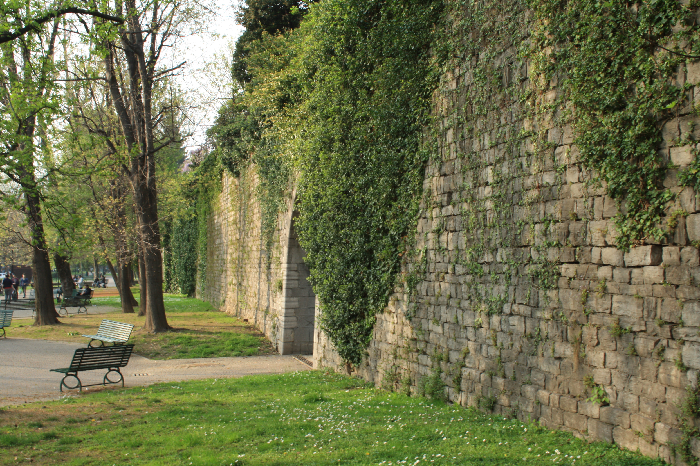
Moltrasio stone was used to construct the Roman walls and the currently standing Barbarossa walls built in the 1200s

Moltrasio stone was the dominant building material used in and around Como from Roman days until the turn of the twentieth century. It is found at the heart of most buildings even if some may have then be adorned with a veneer of render or a dressing of Musso and Varenna marble.

Doorway to the villa opposite the Prefettura on Via Volta showing the use of black and white keystones around the entrance way, rendering on the walls and Moltrasio stone underneath.

Nothing more characterises the appearance of a town than the type of building materials used in their construction. Think of UK cities like the granite of Edinburgh or those Cotswold villages with their warm shades of sandstone. Or contrast the ancient russet brickwork in the centre of cities like Parma or Mantova in the Val Padana with the grey stone of the villages along the shores of Lake Como. And this local characteristic extends beyond the village centres through the lengths of dry stone walls supporting ancient terracing.  

What Is Moltrasio Stone

Strata of Moltrasio stone over the border in the Parco delle Gole della Breggia

Moltrasio stone is a sedimentary rock formed over many years from deposits on the ancient sea bed. These strata of limestone, some containing fossils of ammonites or other sea creatures, are ideal for quarrying since they can be relatively easily cut into blocks for construction. Scientifically known as the Moltrasio Formation, the rocks were mostly developed in the Lower or Middle Sinemurian stage of the Lower Jurassic, as a result of tectonic changes impacting shallow water deposits on the south western edge of the Alps. The formation extends into the Canton Ticino in Switzerland and up to the area of Lake Lugano.

Sentee di Sort – Ex-limestone quarries above Moltrasio.

Moltrasio stone is therefore not only found in Moltrasio. It was quarried on both sides of the Como leg of the lake up to Argegno on the western side and Lezzeno on the east, but the area where the rock is best formed for use in construction is around Moltrasio and Carate on the west and between Torno and Nesso on the east. The quarries around Moltrasio and Carate are no longer exploited with the only remaining excavation taking place at Careno by the company called Gandola Srl

In the Villages

Palanzo, village of stone

If visiting a village such as Palanzo above the lake shore in Faggetto Lario, you will be hard pressed to find more than a handful of buildings built or faced with any other material. The same goes for the medieval centres of most other villages sitting just behind the shoreline along the length of the lake. Alongside the preservation of ancient street patterns and paths, the use of Moltrasio stone ensures a remarkable uniformity in the form and feel of these ancient communities. However these are locations where the majority of visitors are less likely to venture being attracted for the most part to the shores of the lake itself where the bourgeoisie and aristocrats had built their stylishly designed sumptuous villas rigorously rendered in painted stucco. Take a town like Blevio for example, with its row of wealthy ‘stuccoed’ residences overlooking the lake and its series of bare stone districts strung out above. 

In Como 

Via Vitani, the only remaining part of the medieval quarter known as Cortisella with villas in Moltrasio stone and one dressed in corresponding shades of Musso and Varenna marble.

The most obvious and visible Moltrasio stone structures in Como are the city walls and their defensive towers. Less visible below street level are the Roman baths built with Moltrasio stone. A walk down Via Vitani (the oldest street in Como) will give you an idea of how ubiquitous Moltrasio stone would have been in medieval Como. But more prestigious materials were required for structures like the Duomo with its mosaic of coloured marbles.  As also on the Broletto and surrounding the entrance ways into the aristocratic villas where the contrasting colours of Musso (white/light grey) and Varenna (black/dark grey) marble give a banding or chequered effect. While most of the city’s aristocratic villas were faced with a layer of stucco, the more prosaic Moltrasio stone remains at the heart of their construction.  

Print by Gian Luigi Uboldi featuring the city’s main structures of architectural interest.

Only in relatively recent times has stone been replaced by reinforced concrete, first introduced in Como by local architect Federico Frigerio in the construction of the Politeama in 1920. 

In the country

Palanzo when all the terraces were intensively cultivated. The decline in agriculture has transformed the hillsides around the lake since the 1940s.

The hillsides surrounding the lake would have looked very differently a mere eighty years ago before the major migration from the land to the towns after the last world war. Then the miles of terracing were constructed and maintained to maximise the acreage of productive agricultural  land. And those terraces were (and are still) held in place by dry stone walls made from Moltrasio stone. Although some of these terrace walls are no longer clearly visible from a distance, they remain in place as a characteristic feature of our landscape. Their maintenance is not only vital for ensuring ongoing access to  hillside walks and paths but also for preserving a key element of the local heritage. There is always the risk that the knowledge and skills required for dry stone walling get lost over time, and so we should praise the work of voluntary associations such as Miledù, based in Civiglio, who are committed to passing on the necessary skills to future generations and to playing their part in maintaining the countryside. 

Volunteers from Miledù working on dry stone walls.

Sentee di Sort

This pathway linking Rovenna above Cernobbio to Moltrasio passes one of the largest of the old Moltrasio quarries. Sentee di Sort translates roughly from Como dialect into ‘path of the terraces’.  Apart from offering delightful views over the lake, it also lets you see the extent of the old workings and the paths, obviously made of Moltrasio stone, laid down to transport the rock down to the town for onward shipment on the lake. 

Motrasio – Cascata di Cam

Moltrasio represents itself as a town of water and stone and you will appreciate both these aspects by following the Sentee di Sort by turning off to the left on your arrival in Moltrasio to take in the waterfall known as the Cascata di Cam. 

Moltrasio’s Stone Ecological Museum (Ecomuseo del Sasso)

Poster advertising one of the presentations organised by the Ecomuseo di Sasso di Moltrasio

We have already noted in a previous article how active Moltrasio’s local residents are in their  ‘Pro-loco’ association in promoting the attractions of their delightful small town. They have now gone one step further in seeking to preserve knowledge and awareness of their local culture by forming the so-called ‘Ecomuseo del Sasso di Moltrasio’. An ‘Ecomuseo’ is not a traditional museum enclosed within four walls. Instead its a virtual reality animated by a voluntary association which aims to study, conserve, present and spread knowledge of their local artistic, social and cultural patrimony. Look out for notices on their Facebook page advertising their meetings and tours to this end. Without a physical heart, it is primarily the enthusiasm and commitment of its local volunteers that makes an Ecomuseo a reality.  And Moltrasio’s residents are particularly active in promoting the attractions of their town. 

Members of Pro Moltrasio demonstrating the traditional techniques for quarrying Moltrasio stone at the old quarry in Cavirolo during a FAI Open Day

Moltrasio is a fine example of a town where the full range of tourist facilities and attractions are available. At the top end of the market, the Villa Passalacqua is perhaps the most luxurious hotel on the lake with the Hotel Imperiale also seeking to cater to the lake’s image of an exclusive playground for the rich. But there still remain more affordable and accessible  family hotels such as the Posta, of the type of establishment traditionally available to visitors over the past years. However those visitors  who are prepared to make the climb up the steep set of stairs away from the shore will discover so much more within this medieval town of stone and water.

The flower beds at the side of the Broletto in Como are lined with Moltrasio stone quarried in Careno by Gandola Srl. They use modern techniques of extraction and finish to meet a variety of needs.

Further Information

More information on current quarrying can be found at Gandola’s website.

Follow this link for the Ecumuseo del Sasso di Moltrasio’s Facebook page.

Miledù is a social cooperative engaged in a number of activities in support of sustainable tourism and preservation of local rural culture. Visit their site for more information.

Good food at acceptable prices can be found at the Cooperativa Moltrasina

Further Reading

We have featured Moltrasio in the following articles:

Moltrasio: The Power of Civic Pride 

Moltrasio: The Power of Civic Pride

The Sentee di Sort is described in greater detail in Sentee di Sort (From Rovenna to Moltrasio).

We have also described two other walks that start or finish at Moltrasio: 

Carate Urio to Moltrasio via Rifugio Bugone.

From Laglio to Moltrasio

Moltrasio dream


Posted in Architecture, Culture, History, Lake, Places of interest, Sustainability, Walks | Tagged , , , , , , , , , , | 1 Comment

Escaping the Holocaust: Hiding from Home in Varese

This article describes first hand testimony of life as an Italian Jew following  Mussolini’s return to power on the occupation of Northern and Central Italy by the Nazis. It is Como Companion’s contribution to honouring the 80th Anniversary of the Red Army’s liberation of Auschwitz-Birkenau on 27th January 1945, 

Alessandro’s place of refuge was Villa Pavia in Induno Olona which had Varese’s Sacro Monte and Campo dei Fiori in the background.

Our protagonist was Alessandro De Daninos, a wealthy financier based in Milan and employed as a director of the RAS Insurance company. He was married to Teresa whose full name was Thèrese Thieron de Monclin and was not of Jewish heritage. They had two children defined as mixed race and brought up in the Catholic faith named Ruggero and Iolanda. A previous daughter, Maria Pia, had died in childhood. In 1942 Alessandro (aged 65 at the time) and his family left their home in Milan to avoid the dangers of allied bombing and rented part of a property in Cernobbio – a town that was becoming overcrowded with other so-called ‘sfollati’ (refugees) from Milan.  

Alessandro’s grandfather, also called Alessandro, had co-founded the RAS insurance company in Trieste in 1838.

Alessandro De Daninos could not have been more integrated into Italian society, even claiming the title of Knight of the Order of the Iron Crown granted in perpetuity to his grandfather in February 1880  who was the co-founder and later, director of the Trieste-based insurance company – RAS (Riunione Adriatica di Sicurtà). RAS now forms part of the Allianz group. 

Heraldic crest of the De Daninos family, 

Alessandro started his diary in January 1942 at the moment when the family was establishing itself in the rented property in Cernobbio.  Early entries reveal how Alessandro was concerned to get his children officially classified as non-Jewish on the strength of his mixed marriage and the children’s adherence to the catholic religion. For this he consulted various lawyers expert in the ‘definition of race’ and in the interpretation of the fascist laws introduced in 1938.  Many of the other entries in 1942 refer to his bids to establish some new insurance companies designed to become part of the RAS group, as well as references to his social contacts within the world of theatre and cinema. In other words, he was having to deal with the complexity of the racist laws introduced by Mussolini but was not at this stage unduly concerned about the future of his family beyond the common need to move out of Milan to avoid the danger of allied bombing. 

We pick up a selection of his entries from October 1942, when the family had already moved to rented accommodation in Cernobbio.

18th October, 1942

It has been like a spring day. I left the house without a coat. Iolanda went for the first time to play football with her friend, Ada Fargion.

NOTE: The Fargions were a Jewish family who owned a large villa in Cernobbio. The father, Eugenio, worked as an engineer for Aeroplani Caproni, an industry critical to the fascist war effort. His work took him often into Switzerland – this access was to prove a lifesaver for him and his immediate family in a year’s time following the Nazi occupation.

11th November, 1942

Gradually we have transported our entire wardrobe and everything possible to Cernobbio: it is a difficult undertaking but one suggested by prudence. Cernobbio has been repopulated as it was last September and fortunately the days are delightful, sunny and mild so as not to create the pressing and problematic need for heating.  The alarms these days are continuous and if not worrying, they paralyze life and block all activity.  At Villa d’Este – reopened regularly with restaurant service – there are a number of friends: the Guida, the Greco, the Scola.

NOTE:  Alessandro at this stage faced no limitation on his ability to work or to be recompensed for it in spite of the Racial Laws of 1938.  He was probably able to apply for a dispensation from the fascist Ministry of the Interior who, at this stage, allowed for the definition of so-called ‘discriminati’ – those Italian Jews granted an exception from the Racial laws on grounds such as previous military or state service. The De Daninos family were in a privileged position due to wealth and social contacts, enabling them to request and be granted this exception.

11th January 1943

Despite my predictions, it was good not to have enrolled Ruggero at the Como Institute because the director’s naivety was too evident: in fact the young Beppi Fargion who had been accepted with reservation at the scientific high school recently abandoned his application since it was rejected by the Ministry of Education. We will see the profit of private lessons!

NOTE: Children of Jewish parentage were forbidden to attend state schools under the 1938 legislation. Alessandro was clearly concerned about providing some solution for his children’s education. He cites the example of Beppi Fargion, the son of Eugenio Fargion, the owner of the Villa Fargion in Cernobbio. As mentioned, Eugenio Fargion worked for the company Aeroplani Caproni with factories in Milan and Switzerland. He, his wife Alma and children, Mario (aka Beppe) and Annamaria, (aka Ada), escaped Italy in September 1943 and were housed in Switzerland by Giovanni Battista Caproni himself. Eugenio’s villa in Cernobbio was immediately sequestered by the German SS and known from that time as the Villa Carminati. This villa became an administrative headquarters and detention centre for the Border Police under Josef Voetterl. Eugenio’s sister and husband were guests at the Villa Fargion in the summer of 1943 and Eugenio had implored them to join him in escaping to Switzerland. They were not as convinced of the dangers under the recently established Nazi occupation (September 1943) and so returned to their home in Ferrara. They were subsequently arrested, placed in the same convoy as Primo Levi to Auschwitz and were both executed immediately on their arrival there on the 26th February 1944. 

Villa Fargion now known as Villa Carminati

Back in January 1943, prior to the Nazi occupation, it would have been hard to have foreseen the future full fanatical vindictiveness of the Nazifascist regime. 

3rd August 1943 

(Following the fall of Mussolini on July 25th but before the Nazi occupation in September) Some friends and collaborators wanted to show their sympathy by sending me verbal and written wishes and wishes for the reoccupation of my position as director: such as Cav.  Damioli, Mr. Palmiotta, Miss Isabella Mancini, the magistrate  Mazzufferi etc. I believe that these are early wishes because the racial laws exist in full for now although a certain tolerance is observed in the newspapers with the resumption of references to Jewish people and with the publication of obituaries of Jewish people. 

NOTE: This brief period from July 25th (the fall of Mussolini and the establishment of the Badoglio government)  to September 8th (publication of the Italian Armistice) had been one of relief that the war appeared over and the forces of fascism defeated. This initial euphoria soon dissipated following the Nazi occupation. The Badoglio government were slow to repeal the 1938 Racial Laws because they did not want to appear to the Nazis as anti-German before they had secured a peace agreement with the allies. The Nazis were not fooled for a moment over the loyalty of their previous ally and used this period to prepare for a full-scale occupation of Italy. Even after the Nazi occupation, the official Italian government only revoked the racial laws as late as January 1944, completing the process later in June. In contrast the allies had repealed all racial laws within the liberated zone in a decree passed in Palermo on 12th July 1943. 

Using stereotypical caricature, this Nazifascist poster summarises the restrictions imposed by Mussolini’s 1938 Race Laws.

25th September 1943

An entire month of anxieties, fears and worries has passed, the progressive spread of the German occupation and the continuous spreading of catastrophic rumors of kidnappings, murders and attackers has shocked all minds and exasperated souls. Unfortunately the situation worsened after the shameful collapse of the army which caused many soldiers to flee clandestinely up the mountains to which many Jews were added, in turn scared and fearful of being caught and even shot. This fate was reserved for my old friend Tullio Masserani arrested in his villa in Stresa together with his sister Olga, I don’t know under what charge. 

For a month I have been in doubt about what action to take while still thinking that having always lived correctly and conscientiously, I wouldn’t know why I should be beaten or imprisoned just because of race. On the other hand, the cycle of my life is over and since my loved ones, being Catholic from birth, should be immune from any racial revenge, for now I don’t feel like abandoning them in a situation that I would certainly consider difficult for them…. If adverse fate wants to strike me, I have so much faith and stoicism to face it with serene tranquility and painful calm, because the thought of an uncorrupted conscience would support me! Escaping abroad, facing an uncertain future, lasting a month or a year without secure financial support and leaving my family abandoned, would be more painful for me than the sacrifice of my life.

NOTE: Alessandro had perhaps never been a practicing Jew by faith and, like many others, had sought to get his children defined as catholic with the assistance of the clergy as a means of protecting them from discrimination. However we have already noted how this was insufficient in protecting Ruggero from school exclusion.  

22nd November,  1943

I’m back from the old Bidino! (His parental home in the Villa Pavia in Indono Olona in the Province of Varese) To hide from possible German searches on two occasions, I spent a fortnight at the Bidino where Marcella’s (his maternal aunt) generous hospitality welcomed me and granted me a peaceful stay with every comfort.  After many years once again I traveled through the places of my peaceful childhood, the ancient Sancassano which was the patient creation of my poor mother…. Will I go back?

NOTE: Having decided he would not seek refuge in Switzerland, he decided to spend time at his old parental home in Induno Olona. He had declared he was of Jewish heritage in the Census of 1938 and, whilst regretting his honesty at that point, recognised that the nazifascists would be seeking him out in Cernobbio. Why? Because Alessandro, in  a decree passed on 18th November 1943, was classified an enemy of the state to face immediate incarceration in a concentration camp. The Mussolini government issued a bulletin on the 30th November to all police forces confirming that “All Jews, including those previously exempt, of whatever nationality, must immediately be detained in concentration camps. All their goods, property and furniture, are to be seized awaiting confiscation by the state. All those born from mixed marriages who may previously have been considered Aryan are to be placed under police surveillance.”

From the start of the Nazi occupation, many Jews alongside antifascists, disbanded members of the Royal Army and escaped prisoners of war had attempted to flee into Switzerland. Overall 6,000 Jews found refuge in Switzerland between 1943 and 1945.  Of these 3,800 were Italian and 1,700 were either foreign or stateless migrants who had previously sought refuge in Italy from persecution elsewhere in Nazi occupied Europe. However not all Jews seeking safety in Switzerland were accepted until their right to asylum to avoid racial persecution was finally granted in 1944. Those turned back at the border faced immediate arrest and deportation to Nazi labour and extermination camps.

The main crossing from Como into Switzerland was at Ponte Chiasso.

4th January, 1944

Today marks one month since my stay in this delightful Bidino (Villa Pavia) due to Marcella’s immeasurable hospitality and where I took refuge in this very sad moment of my life, in which it seems that my entire short future of existence is fading away due to the wickedness of men! I am here at the Bidino in the refuge of our distant childhood, where the love of our poor grandfather Arnoldo, the subsequent affectionate care of my uncle Angelo in those last years of his widowhood, the sacred fire of conservation on the part of Marcella have created a paradise of memories and of tranquility!  I have the only torturous pain of being far from my loved ones, from Teresa to whom I have handed over the responsibility of all our common interests for which she provides with diligence and meticulous care: from my adored children who fortunately do not yet know how to evaluate the terrible unknown that overlooks their future life and which is an unfortunate thorn in my heart and a source of remorse for a possible – but honest – inadvertence!  (He is referring to his honest declaration of his ethnicity in the 1938 Census).  So far, my refusal to leave Italy to meet my dark destiny in Switzerland hasn’t done me much harm: God  wish it would be the same later: even my voluntary removal from Cernobbio and from my beloved loved ones has so far yielded no fruit, as no one has come looking for me either in Milan or in Cernobbio and the much feared arrest in a camp concentration  has not yet come true: but for how long?

NOTE: From September 1943 the Nazis in the area around Como had as their principal objective an obsessive and pathological search for Jews. Their search was assisted by the paramilitary organisations of the Mussolini state and its local administration who willingly handed over to the German Command the lists of Jews maintained by the local authorities. 

A letter from Joseph Voetterl to the Prefect of the Province of Como confirming the latter’s right to proceed with the sequester of property and goods belonging to Giuseppe and Guglielmo Levi following their arrest and imprisonment in Milan for the crime of being Jewish. Josef Voetterl occupied the Villa Carminati sequestered from Eugenio Fargion.

Even the smallest hint of humanity shown by the fascist state in initially excluding those over 70 from arrest and deportation was extinguished by the SS Commander of North Western Italy, Walter Rauff. He insisted on the arrest of even those over 70, the ill, those of mixed race or of anyone previously considered aryan due to religious conversion. Walter Rauff was himself arrested by the Americans on 30th April 1945 in Milan’s Hotel Regina. However he subsequently escaped detention and used the Odessa organisation to flee to South America. He managed to avoid extradition to face trial for war crimes and died in Chile in 1984.

Walter Rauff, SS Commander of North West Italy, fled to Chile where attempts to extradite him to face trial for war crimes failed.

18th April, 1944

I have been here in Cernobbio again for a few days, among my loved ones, in the continuity of this life of fears and uncertainties which constitute a real torture, aggravated by Teresa’s anxieties due to the immediate and threatening behavior of the old owner of the villa who at every moment, encouraged by her friends and from the lady-in-waiting Artali, threatens to send us away. Yesterday for the first time in many months I went to Milan, leaving home – like a criminal – at six in the morning and returning in the dark following the Cernobbio-Como route on foot. On the way by train I only met Boffre with whom I exchanged a few gentle words. In Milan I only met Reiser who I greeted. I took two flowers to the cemetery, accepted a call to the Finance Authority for the property tax and after breakfast I paid a visit to the new parish priest of the Church of S. Trinità, whose parish house was so damaged by the incursion of August ’43: his name is Don Natale Brunella and is a very nice and intelligent prelate who understands the unfortunate situation of these tragic hours and that I hope will be able to help me in complying with a good work.  Here in Cernobbio on April 24th my friend Nuti came to visit me and bring me a bundle of news about Minerva, Italica and Reunion. (Various Insurance companies that Alessandro had been spending time in 1942 seeking to establish.) Tomorrow morning, very promptly, April 29th, I will take the train to Varese once again: I will redo my exile to get away from Cernobbio where too many acquaintances could betray my inappropriate presence! I spent 15 cold days, because frankly the temperature wasn’t kind to me. I had the comfort of my children but the continuous segregation in this august dining room was not pleasant to me: and all this so as not to show myself to our housewife “witch” on whose head sufficient curses will never fall.

NOTE: Whenever Alessandro returned to Cernobbio he could only occupy the dining room of their lodgings so that the landlady would not be aware of his presence. He was certain that she would have denounced his presence to the nazifascist authorities if she became aware that he was there.

9th May, 1944

The days pass in the constant anxieties of my desolate friend and in the constant thought of my children and my Teresa far away and of their doubtful future! If only I would have put everything I own in Teresa’s name and I would have saved my entire fortune!  I torture myself and reproach myself for this act of lack of foresight in me, despite having provided for so many things in this unfortunate period of war! On the alphabetical list of the Jews of Milan that the kindness of my friend Nuti gave me to view, I do not seem to find some names of friends and acquaintances who have thus avoided all the sad consequences of this publication.  I wonder how it was and how much I regret not having also avoided reporting myself in conflict with the provisions of the law, which, not followed by others, have been their fortune because they were never prosecuted or punished! May we be assisted by the confidence that at least this 1944 is the last year of tribulation and that the defeat of the Germans still gives our souls that much desired and dreamed of peace!

NOTE: Here Alessandro regrets his previous honesty in declaring his Jewish heritage on the 1938 Census. 

Como in the foreground and Cernobbio on the left hand side of the lake

1st June, 1943

I left the Bidino again – my hospitable hideout – to return to Cernobbio with my loved ones! This journey is both anguish and a great joy for me!  Anguish, because I feel the fearful tremor of Teresa who fears the masked wickedness of the “witch” capable of revealing my presence: joy of spending a few hours with my children and seeing that quiet serenity in them – especially now, after having passed exams, which I am unable to find in myself, even in these days in which everyone’s hearts are agitated and boiling in feverish anticipation of the Anglo-American entry into Rome. But when, how will it happen? Unfortunately, my pessimism does not abandon me and the length of this winter war, which has already spread six months beyond the common and familiar predictions, seems annexed and revocable to me, frightened before my eyes!

Alessandro’s last entry in his diary was dated 5th September 1944 and followed a raid on the Villa Pavia in Induno Olona by fascist army officers. It is assumed they were following up on a denunciation made by an acquaintance or a visitor to the family of the presence of Alessandro. However he was not there at the time of the raid. His diary was seized and handed over to the Prefect of Varese and so came to be stored in Varese’s Archivio di Stato. 

We do not know what happened to Alessandro after 5th September 1944. He does not appear in the database of those who escaped to Switzerland. His death is recorded as being in 1953 or 1954 at the age of 76 or 77. One way or another he and his children were survivors in spite of his honesty in declaring his Jewish heritage back in that fateful census of 1938. Many others of his acquaintance such as members of the Foa, Morpurgo and Fargion families were less fortunate. 

Acknowledgments

This article is based on extracts from “Un inedito memoriale di un ebreo milanese rifugiato ad Induno Olona durante la II Guerra Mondiale”, introduced and edited by Paolo Pietrosanti and available in PDF format from academia.edu

Further Reading

More details about the sequestration of Villa Fargion and the Nazi presence in Cernobbio is available at Wartime Occupation of Cernobbio

Further background on the Nazifascist persecution of Jews in the Como area is available in Como to Chiasso – Trying to Escape the Holocaust

Other articles describing aspects of the Jewish persecution within Como Province include: Como Remembers the HolocaustHeroism and Disaster in the Vallassina – Holocaust Memorial Day, January 27thComo’s ‘Viaggi della Salvezza’ – In Memory of the HolocaustComo to Auschwitz on Convoy 8

Cernobbio’s garden of Remembrance


Posted in crime, History, People, Uncategorized | Tagged , , , , , , , , , , , , , , | 2 Comments

Saint Barbara at Como

Saint Barbara at Como

Saint Barbara shown with the Castello Baradello in the distance behind her left shoulder and the Porta Torre on her right. By an unknown Lombardy artist dated 1945.

Saint Barbara is one of those early female victims of the Catholic and Orthodox churches who owe their martyrdom to the initial resistance of Byzantium to the spread of Christianity.  She is said to have been born in 273 CE in Nicomedia (now known as Izmit) close to Constantinople and known as Barbara because she was in Roman terms a ‘barbarian’, simply meaning a non-Roman. The legends of her origin and history are varied and confusing and this has detracted from her official status as a saint within the Catholic Church. But this has done nothing to reduce the cult associated with her name or the fact that she is still remembered in Como beyond 1945 to the present day.  

The Saint Barbara Story

Saint_Barbara._Etching._Wellcome_V0031659

An etching made of the unfinished image of Saint Barbara by Jan van Eyck, 1437. It shows her in front of the tower being built by her father to imprison her to keep her away from unwanted suitors. Note the three windows requested by Barbara as a symbol of her devotion to Christianity.

The legend goes that Barbara’s father, Dioscorus, had planned for her to marry the prefect of Nicomedia but she refused. Her father, livid with anger at his daughter’s intransigence, had her arrested and sentenced to death for adopting Christianity. Her response was to break up all the pagan effigies in her father’s house and escape to the forest. However she was caught and imprisoned in the fortress of Nicomedia. The fortress subsequently caught fire yet Barbara stepped out of the flames uninjured. Her trial was set for December 2nd, 290CE where she called on her father and all those present to turn away from paganism – a call that resulted in torture and execution on December 4th.  Her own father wielded the sword that beheaded his daughter but he in turn was immediately struck dead by a bolt of lightning. 

From out of this legend, the cult developed whereby Barbara was called upon in defence against lightning, fire and sudden death. Her fortitude and resistance to her father’s demands  in the face of torture was perceived as the saintly embodiment of the faith and courage  to face danger. She was particularly called upon for protection against fire, cannons and explosives. To this day, the Italian army’s name for an armoury is a ‘Santa Barbara’. Just as the Venetian fleet  in the Middle Ages flew pennants with the image of Saint Barbara as protection against the explosion of their onboard munitions, so the modern Italian navy also refer to an onboard munition store as a ‘Santa Barbara’. 

(Venice) Naval standard of the Venetian navy with Saint Barbara - Museo Correr

Naval standard of the Venetian navy with Saint Barbara.

Barbara’s courage in facing up to danger meant that she was sought to grant protection to those doing dangerous jobs, such as soldiers, miners and in particular, fire fighters. She is the patron saint of firefighters in both France and Italy.

Fire fighters

vescovo-vigili-del-fuoco-comandante-1024x576

Cardinal Oscar Cantoni in the company of the Commander of the Como Vigili del Fuoco, Antonio Pugliano at the service in the Church of San Giuseppe on 4th December commemorating the Fire Service and Saint Barbara.

Each 4th of December, on Barbara’s saints day, Como Province’s firefighters hold a service of thanksgiving to their patron saint. This takes place in the church closest to their Como headquarters on the edge of town in Via Valleggio. This year the service was conducted by Como’s Cardinal Oscar Cantoni in the company of the Fire Service Commander, Antonio Pugliano. Fire fighters are quite rightly held in high regard for those qualities attributed to Saint Barbara – that is their capacity to face danger with courage and serenity. 

Stained glass San Giuseppe

The church of San Giuseppe was built from 1963-5. It contains some interesting modern stained glass.

Back in 1935 the qualities of the local fire service were put to their most severe test when the cupola of the cathedral caught fire on the night of September 27th. It was not an easy fire to extinguish being so high up within such a complex structure. And in fact it took the fire service some time and a number of attempts before they were able to extinguish the flames before they spread to damage other parts of the building. They succeeded in ensuring Como avoided a Notre Dame moment. The citations for their bravery after the event commended them for “courage, zeal and self-denial” – the very same qualities associated with Saint Barbara.

The table below shows the activities of the modern day  provincial fire service – activities ranging from the saving of life to the rescuing of trapped animals.  The figures are for the number of emergency calls made per category of activity over the year from November 2023 to the end of October 2024.

Emergency Calls Total
Fires and explosions 761
Road accidents and victim rescue 544
Other road activity e.g. removing debris 704
People search and rescue, accidents at work 1211
Gas escape 199
Landslides and natural disasters 344
Rescue and recovery of animals 285
Water damage 413
Rescue from water 38
Various other types of help and assistance 1060
TOTAL 5559

Munitions and bombardment

While we do not know the artist of the Como Saint Barbara, we do know the date it was painted – 1945. And it is not too fanciful to suggest that it may have been commissioned to give thanks for the fact that Como avoided any serious allied bombardment during the war. The allies pursued a policy of intense bombardment of lines of communication, military stores and fuel deposits across all of occupied Italy with Milan suffering particularly badly. The whole area in Como from the Stadio Sinigaglia, the Aeroclub and in Cernobbio from Villa Erba up to Maslianico on the Swiss border was used as storage for military equipment, fuel and various exports to and imports from Germany. Yet the city suffered no significant bomb damage. Believers may well have put this down to the intervention of Saint Barbara but realistically the cause was the allies’ fear of bombs falling on nearby Switzerland. It was the city’s proximity to the border that made it relatively immune to aerial attack. 

la polveriera

The Polveriera (Munitions Factory) located safely away from habitation outside of Albate in the Valbasca. It was bombed in 1942 but has subsequently been restored as a bar and café open at weekends.

There was however one exception. In 1942, the allies bombed but did not seriously damage the munitions factory built in 1940 in the Valbasca – out in the countryside beyond Albate. Maybe Saint Barbara was looking out that day since by chance the site was housing hardly any arms or explosives at the time. The Polveriera survived and has now been restored as a bar and cafe with facilities for walkers and cyclists out enjoying this southern most part of the Parco Spina Verde.

Sentry box

The Sentry Box at the Polveriera is the only remaining evidence of its former use as a military establishment.

Elsewhere in the Province, Saint Barbara was less attentive – particularly on the night of 30th September 1944 when twelve allied bombers passed over Erba in two waves with a  Nazi fuel store as their target. They returned the following day with eighteen bombers to complete their mission causing seventy seven civilian deaths over the two days. 

Saint Barbara’s iconography

medallion santa barbara

Medallion depicting Saint Barbara with the two symbols of martyrdom – the palm frond and the crown.

One factor leading to Saint Barbara’s misfortune was that she was renowned for her beauty. Thus all images of her attempt to portray a beautiful young woman. Her beauty led her appalling father, Dioscuro, to build a tower in which to imprison her and keep her safe from all unapproved suitors. Barbara insisted that the tower should have three windows at its top to symbolise the Holy Trinity. When her father learnt of this devotion to Christianity he set about killing her but Barbara miraculously escaped just by passing through the walls, only then to face capture, torture and eventual execution. 

oplus_34

Detail of the painting of Saint Barbara showing the Porta Torre with its third window on the top storey.

Our Como picture shows Barbara with the tower of the Castello Baradello in the distance over her left shoulder and the Porta Torre over her right. The Porta Torre has the requisite third window on its upper storey in keeping with the Barbara cult.

Barbara is also often depicted holding a golden chalice in her right hand. This is a relatively common Catholic symbol of redemption as used in communion. She is almost always depicted as holding a palm frond in her left hand as the symbol of martyrdom. She may also be shown wearing a crown to symbolise her privileged status as a martyr within the pantheon of saints. Many images show her with a cannon at her feet since she is credited with both protecting those manning armories and working in munitions and those on the receiving end of bombardment and explosion. 

st-barbara

Image from the Royal New Zealand Army Ordnance Corps who adopted Barabara as ttheir patron saint. This image includes a sword as used for her execution and a book under the golden chalice to commemorate her love of learning.

The belief in her capacity to command fire, either by providing protection from it or directing it towards her adversaries, arose because the fire lit to torment her during her period of torture was inexplicably and automatically extinguished. The lightning bolt that struck her father the moment after he had killed his daughter is also referred to as a bolt of fire. However fire does not feature in many representations of Barbara. 

One of the more famous portrayals of Barbara is by Raphael who  depicted her on the left side of the Sistine Madonna. She is seen looking down on the two putti  at the base of the painting who have become stars in their own right. A corner of a tower can be seen over Barbara’s left shoulder. 

788px-RAFAEL_-_Madonna_Sixtina_(Gemäldegalerie_Alter_Meister,_Dresden,_1513-14._Óleo_sobre_lienzo,_265_x_196_cm)

The Sistine Madonna by Raphael with Saint Barbara looking down on the now-famous putti. She is shown with the corner of a tower seen behind her.

Acknowledgments

The painting of Saint Barbara at Como is on display in the Basilica San Fedele as part of an exhibition entitled Capolavori Nascosti that runs until 6th January 2025.

Posted in Art, Culture, Folklore, History, Uncategorized | Tagged , , , , , , , , , , , , , , | Leave a comment

Como’s Christmas Spirits

polar bears

Como Città dei Balocchi 2024 – Polar bears sing and cavort on the walls of the Teatro Sociale

The lake and territory of Como seem increasingly to be lending themselves to commercial ‘branding’ with a number of products trading on some perceived local quality. The product range extends beyond football (Como 1907) and clothing (e.g. Breva e Tivan Republik) to include a selection of alcoholic drinks. These are ripe to be tried out over the holiday period and we will take a closer look at them later.  But firstly let’s look at  the city of Como itself and how it is projecting a Christmas spirit.

Como’s Spirit of Christmas

san fedele

Basilica di San Fedele

Over the last two years Como has suffered a commercially disappointing winter holiday season. The main cause for this was the lack of illuminations normally organised by ‘Città dei Balocchi’ (City of Toys) – a consortium of local trading interests. Back in 2022 they decided to break with a long established tradition by not bidding for the contract to provide the city’s Spirit of Christmas. Rumours suggested this was due to disagreements with the city’s newly appointed mayor, Alessandro Rapinese. Como’s loss was Cernobbio’s gain with Città dei Balocchi  and their illuminations camping out in the park of Cernobbio’s Villa Erba over the last two years. The neighbouring provincial capital of Lecco took advantage of this absence, boosting its winter appeal by lighting up the city while Como remained dark and drab. 

But all is well this year as Città dei Balocchi are back with all the favourite seasonal ingredients including ice skating in Piazza Cavour, the Christmas market, the traditional carousel, and of course, the illuminations.  This year there is even a musical accompaniment for those strolling the main shopping street with Perry Como and other crooners singing how Como is ‘beginning to look a lot like Christmas’. 

broleto

The Broleto in Piazza Duomo

The last full year that Città dei Balocchi adorned the city was in 2019, prior to the two years when Covid closed down everything. And compared with then, this year’s show is more restrained. This may be just as well since success in 2019 brought its own problems. The streets in the old town became so full that the city council had to instigate a one way system for pedestrians and place controls on the numbers allowed into Piazza Duomo. And truth be told, the illuminations had become a bit too Disneylike for the cultural sensibilities of many residents. 

museo civico

The Museo Civico in Piazza Medaglie D’Oro

Back to now, the traditional carousel has moved location again starting off in Piazza Volta back in 2019,  then beside the Teatro Sociale last year and now this year placed in the shadow of the austere edifice of Porta Torre. The Christmas market is contained within the piazza that fronts onto the old Banca D’Italia. Thankfully the ice skating rink has returned from last year’s exile on the far edge of the lake gardens to its preferred location in Piazza Cavour.

porta torre

The carousel below the Porta Torre

Como Whisky, Gin and Other Spirits

talking trees

The talking and singing trees in the gardens of Villa Erba Christmas 2023.

Moving on from Como’s spirit of Christmas to its Christmas spirits, there are now a few liquors that trade on their close association with Como and the lake. One of these is Tivan Whisky, named after the lake wind that blows south from the Valtellina in the morning, heralding good weather. It is a 100% barley single malt that comes in two varieties – Sera aged in acacia casks and Lago aged in oak beer barrels. Their advertising copy on http://tivanwhisky is in the hyperbolic style that seems a standard feature of all of the publicity for our selected products, as in:

“When a gentle breeze descends from the majestic peaks of Valtellina and caresses the timelessly beautiful landscapes of Lake Como, TIVAN is born.” 

Absolute nonsense but it’s the price at over €100 a bottle that is most likely to put you off. If still undeterred Tivan can be bought at Soldati  – the large wine store in Tavernerio on the south-eastern edge of Como,  

rivo-and-sloe-gin

Rivo Foraged Gin and Rivo Sloe Gin

Rivo gin is ‘Lake Como’s magic in a bottle’ so it must share some of the qualities that gave birth to Tivan. However it is more realistically priced and its flavour is actually influenced by the herbs foraged from the hillsides bordering the lake. They too can reach hyperbolic peaks in their publicity as in:

“The mountains, the wind, the water. We distilled the essence of Lake Como to create a gin worthy of this very special place.”

But they can at least be forgiven some purple passages because; a) they really do include herbs foraged from the hillside to flavour the distillation, b) the price is in line with other artisan gins at about €35 and c) I can vouch that it tastes good. It has also won a number of accolades in global trade competitions. It is readily available in many of the local wine stores in Como, including at Gustosè on Via Rusconi.

Rivo also produce an ‘amaro’ (bitters)  that breaks free from their gin’s local associations to include twenty different herbs collected from the twenty different regions of Italy.  Hence its name ‘Venti’.

Gustosè

Gustosè on Via Rusconi stock local products including Rivo Gin and Amaro Seta as well as selling various liquors from the barrel

There is a Como-inspired amaro liquor called Seta (Silk) so called because its main ingredient is mulberries. The silk cocoons were produced by caterpillars chomping away on mulberry leaves. Mulberry trees used to be everywhere when Como still spun and weaved silk. It is still an important local industry (equivalent in value to tourism) but spinning and weaving are done elsewhere leaving Como firms to specialise in silk printing and finishing.   

amaro-seta

Amaro Seta with its silk foulard, inspired by Como’s historical local industry

Amaro Seta can also be trusted to indulge in extraordinary flights of fantasy in its publicity material as in:

“Amaro Seta is a story that celebrates the uniqueness of a territory. A story in which ancient popular traditions merge with the most prestigious industrial legacies. The memory of a landscape enriched by centuries-old mulberry trees and the scent of their precious fruits….. The unmistakable soul of Amaro Seta lives in the skilful processing of mulberries, a tree sacred to the Como silk industry, whose leaves constitute the silkworm’s only nourishment. When the soft and delicate taste of this precious fruit meets the clear and firm notes of saffron and bitter orange, a unique bitter with a refined flavor is born. The balanced and elegant tones of Amaro Seta escape any attempt at classification: sweet but not excessive, decisive but not overbearing, Amaro Seta is the amaro that goes over the top.”

Amaro Seta can also be bought at Gustosè alongside many other local products.

Nero di Como finishes off our range of local liquors uniting honey from around our lake with liquorice from Calabria and rum from the Caribbean. This results in a dark, thick and sweet concoction whose origins are colourfully explained as follows: 

nero di como image

The anonymous bon viveur sampling his concoction

‘The history of Nero di Como is intertwined between bright nocturnal parties and the discovery of a surprising recipe, the result of the union of the sweet flavors of the lake and the aromas of unknown exotic spices. It all began with the curiosity and intuition of an entrepreneur from Como who made his fortune at the time of great trade with overseas colonies. He was a world traveler always looking for fine products, such as coffee, tea, spices, cocoa and sugar, to offer to his prestigious customers. When he returned from travels he reopened the halls of his villa on Lake Como to his friends and every evening he gave life to sumptuous receptions that lasted all night, with music and laughter that echoed in the large villa until dawn. The host loved sharing with his guests the new flavors and distant aromas he discovered.”

It’s a pity that this mysterious entrepreneur and his sumptuous villa remain unidentified since he seemed the very embodiment of  ‘Lake Como lifestyle’.  Never mind, presumably the suggestion is that we can also participate in this lifestyle by sipping nonchalantly on a glass of the black stuff as dawn breaks over the lake. 

Conclusion

Breva e TivanThe Christmas light show, ice rink, market  and all associated activities run up until January 6th. Most of the liquors can be purchased online in addition to where else is mentioned. 

Click on the following to link to their website: Tivan, Rivo Gin, Amaro Seta, Nero di Como.

Como Companion wishes all readers and subscribers a wonderful, relaxing holiday season with a chance for all to enjoy the company of friends and family and to eat and drink in excellent company. 

Further Reading

Como 1907: The Mouse and the Lake explores some aspects on how the football club is being marketed.

For those wanting to know more about the trade winds, the Breva and Tivano, and the lake transport which depended on them, read Lake Como: The 19th Century Super Highway

oplus_2

Ice skating in Piazza Cavour

Posted in Events, industry, Lake, silk, Uncategorized | Tagged , , , , , , , , , , , , , , , | Leave a comment

Como’s Hidden Gems – Palazzo Rusca, Palazzo Olginati Rovelli and Palazzo Vietti Rovelli

oplus_2

Courtyard of the Palazzo Rusca in Via Rusconi

The Como branch of the Fondo per l’Ambiente Italiano (better known as FAI) has been very active this year in giving the public occasional access to some of Como’s many hidden gems. Recently, under the general title of ‘Segrete Stanze’ (Secret Rooms) we have been able to visit three sites each with rooms decorated with important frescoes commissioned by their aristocratic owners in the 17th century. They are the so-called Sala Bianchi in Palazzo Rusca on Via Rusconi and rooms within the two adjacent palazzi on the north side of Piazza Volta, namely Palazzo Olginati Rovelli and Palazzo Vietti Rovelli.  Out of a generous sense of public duty, the FAI were given permission to open up these rooms by their current institutional owners.

oplus_2

Fresco in the Basilica San Fedele, Como depicting the Madonna with San Sebastiano on her right and San Rocco on her left. The general population,in the 17th century suffering from famine, poverty and the threat of plague would pray to San Sebastiano to protect them from the plague, and to San Rocco for those already infected to cure them from the plague.

The significant frescoes in all three of these sites were commissioned in the 17th century when Como was under the domination of the Spanish. It was a time of intense insecurity initiated by the threat of Protestantism spreading down the Valtellina from the Swiss cantons. Once neutralised, the Spanish still had to contend with ongoing wars against the French which were mirrored in a variety of local proxy conflicts. The general population became increasingly impoverished by the high levels of taxation imposed to finance the wars. This in turn caused famine and reduced resistance to waves of plague that swept down from the north. The poor were the most susceptible to plague lacking the funds to maintain the nutrition or hygiene needed as defence.  

oplus_2

Palazzo Vietti Rovelli at No. 54 Piazza Volta on the left and Palazzo Olginati Rovelli at No. 56 on the right. Both buildings were owned by the Olginati family during the 17th century.

But this was also the era of the Baroque – an explosion of artistic expression revolutionising the interior and exterior decoration of both civil and religious buildings. As the local historian Ettore Maria Peron has stated ‘ the more the people suffered from famine and plague, the more the rich who governed them decorated their palaces with gold and art as a way to display their power.’ And our three palazzi were occupied by those in power.

Palazzo Rusca and the Sala Bianchi

oplus_34

Pope Innocenzo XI – Benedetto Odescalchi. The Sala Bianchi in Palazzo Rusca celebrates his election as Pope

Palazzo Rusca in Via Rusconi 27 is one of the city’s finest examples of an aristocratic residence. The Rusca family occupied the site from 1514 until it passed into the hands of the Marquis Innocenzo Odescalchi in 1786. The Ruscas were one of the most influential and significant families on the local military, civil and religious scene. 

On the first floor of the palace, to the left on climbing the monumental staircase, is the main reception room of the palace known as the Sala Bianchi due to the large fresco painted over the entire vaulted ceiling by the Como painter Pietro Bianchi, nicknamed Il Bustino (since his family was originally from Busto Arsizio).  

The subject of the fresco is the Exaltation of the Pontificate of Pope Innocent XI  (Benedetto Odescalchi) and is dated as being painted in the last decade of the seventeenth century. Bianchi was active as a painter from around 1680 until he died in 1725. He worked for the Odescalchi family contributing decorations to the Odescalchi residences in Via Rodari, Como and Fino Mornasco. His work can also be seen in the Palazzo Imbonati in Cavallasca.

central image

The central image of the bare-breasted woman representing the Church and Faith holding up the papal cross.

The fact that the Palazzo Rusca contains a fresco celebrating the Odescalchi shows how the Ruscas had very close political and family links with the Pope’s family. Four of the Rusca brothers had profited from gaining powerful political positions over the second half of the seventeenth century thanks to the patronage of the Odescalchi. The brother who is the most likely to have commissioned the work by Pietro Bianchi was Antonio Rusca who became one of the most powerful of the aristocratic class governing Como society. He became the Cavalry Captain of the Ferrara Legion, an administrator of the Sant’Anna Hospital,  a decurion (a title derived from Latin for a cavalry officer with the contemporary meaning of a city council leader) from 1674 and the prefect overseeing the building of Como Cathedral from 1689. 

oplus_2The fresco itself is made up of two parts with a central representation of twenty two figures painted against a background of a cloudy sky in pastel tones and a painted balustrade running along the entire perimeter, embellished with plants, bronze statues, festoons, medallions and heraldic coats of arms. 
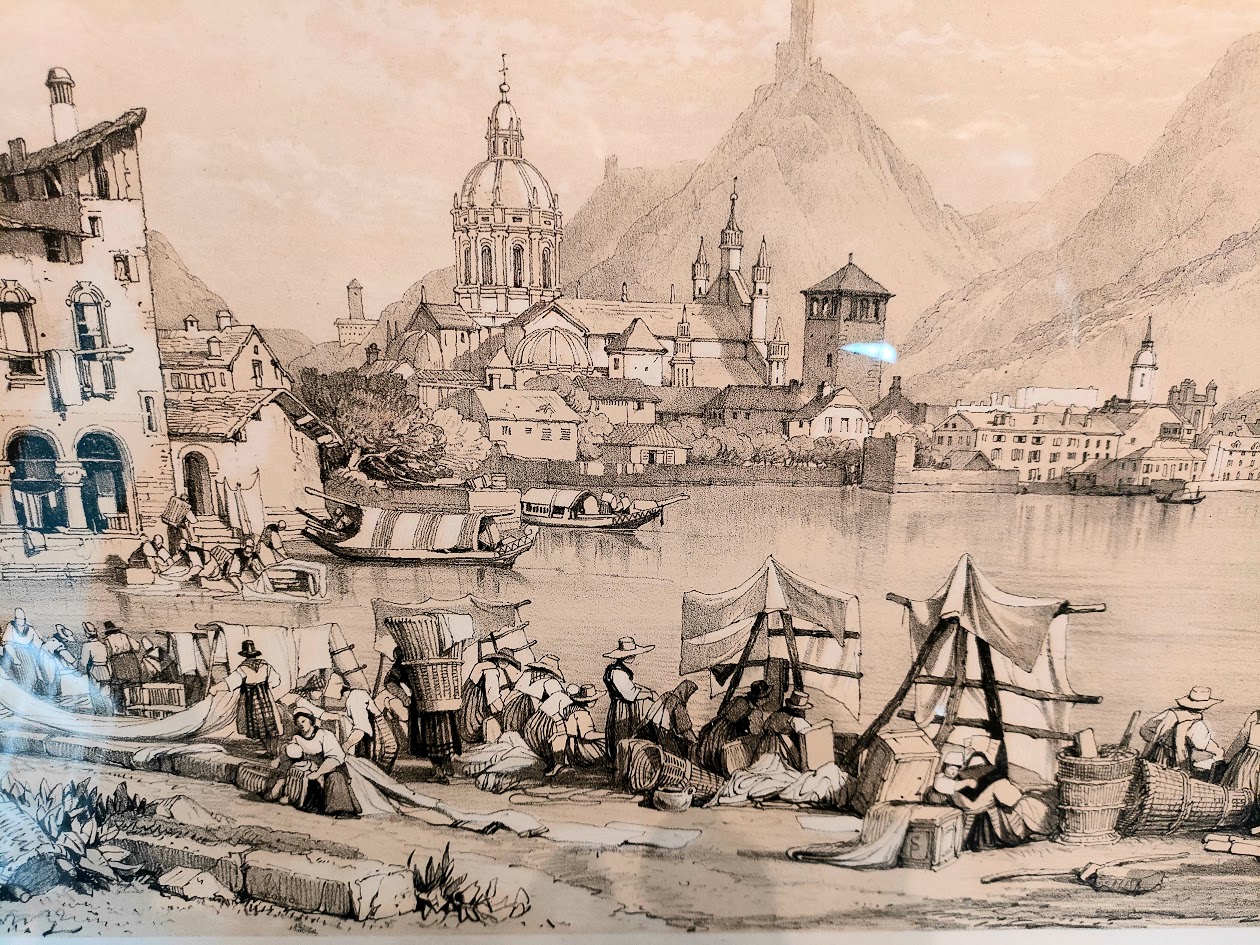
detail church and faith

Detail of the figure of Church and Faith holding up the Papal Cross with putti delivering the Papal Crown

The main image in the centre of the ceiling represents the Church and Faith personified in the form of a bare-breasted woman in a blue robe and starry mantle. She is placed on a cloud holding a three-armed papal cross and receiving the pontifical tiara from two flying cherubs. At her feet there is a celestial globe and two naked bearded men crowned with laurel. The one on the right holds a stone tablet as a symbol of Law and Justice and a cornucopia. The one on the left also holds a cornucopia which is overflowing with gold coins as a symbol of Innocence. 
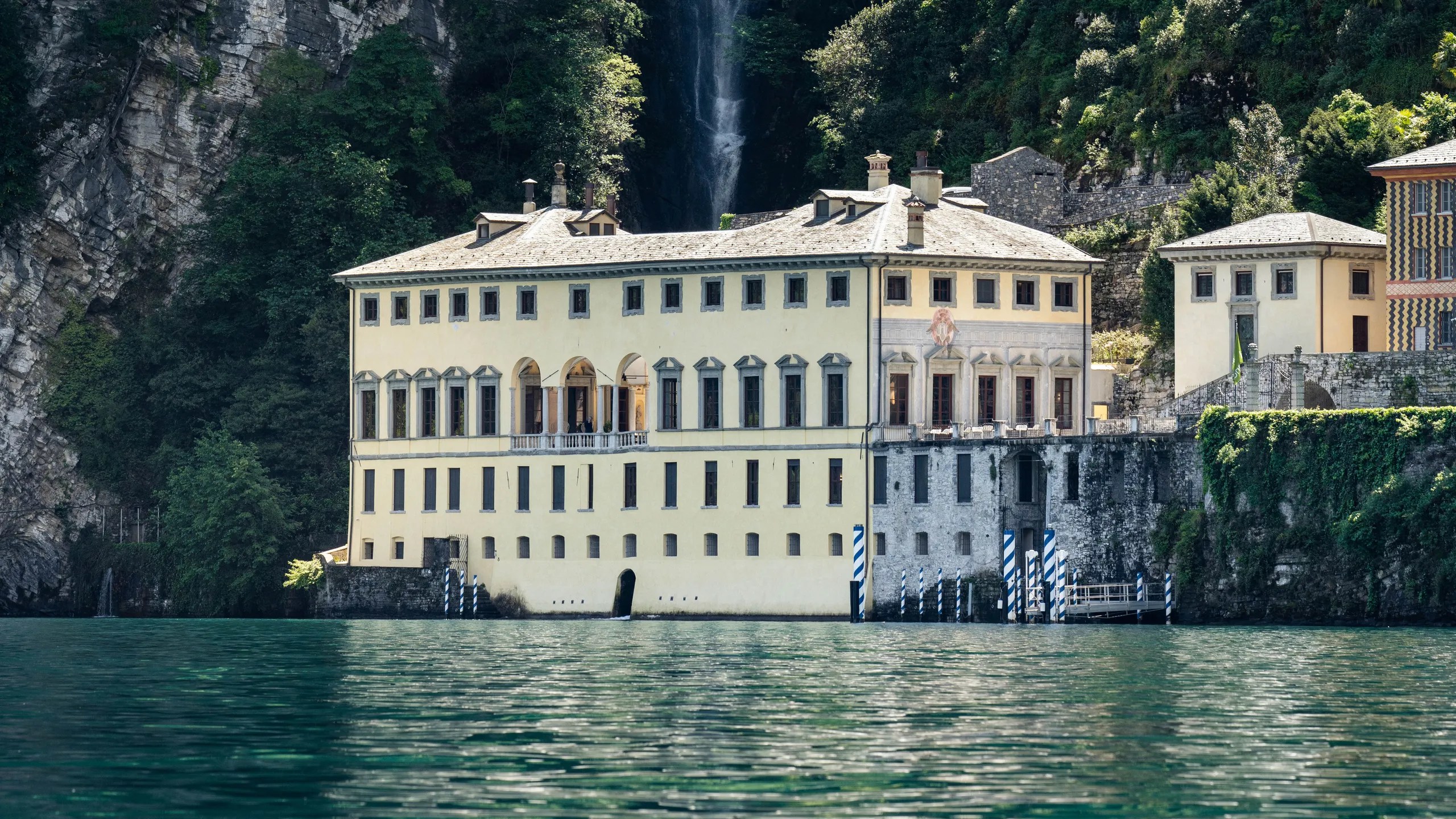
oplus_34

North west corner balustrade with medallion depicting Hercules defeating the Nemean lion.

Along the painted balustrade, the monochrome coat of arms of the Rusca family dominates the four sides, namely a crowned eagle with spread wings, a leopard lion flanked by six butcher’s broom leaves, all on oblique red and silver bands. 

The four corners each have a  circular monochrome medallion surrounded by cherubs, eagles and lions, and surmounted by shells with busts of male figures. The medallion in the north east corner represents the Torment of Prometheus – an eagle gnawing at the liver of the giant who dared to steal fire from the gods. The north west has Hercules defeating the Nemean Lion. The medallion in the south west corner is slightly damaged but portrays Perseus freeing Andromeda. The south-east medallion shows a scene that has not been identified in which a warrior faces a gryphon with his shield in hand. 

Palazzo Vietti Rovelli

oplus_2

Palazzo Vietti Olginati, the Water Room fresco attributed to Pietro Bianchi

This palazzo is on the north side of Piazza Volta, at number 54, alongside its sister building – the Palazzo Olginati Rovelli at number 56 and on the corner of Via Cairoli. The relatively plain and modest exteriors of both buildings bely the beauty of the decoration to be found inside. The frescoed rooms on the first floor of both buildings are true hidden gems. Both buildings were owned by the Olginati family throughout the 17th century when the main frescoes were commissioned.

The aristocratic Olginati family held positions of power within Como’s ruling city council (the decurional body) since as early as 1449. Twelve family members came to hold that position by 1796. Dr. Alessandro Olginati (1575-1656)  was in possession of the Palazzo Vietti Rovelli from at least 1641. He was a jurist who was voted onto the city council as decurion in 1645. The properties were passed on to his son, Giambattista (1619-1704) who was the authorised head (procurer) of the ancient Sant’Anna Hospital and who was also elected a decurion on the city’s governing council in 1664. Either father or son would have commissioned the frescoes still visible and in good condition today. 

olginati family

The Olginati family in the 17th century

The frescoed rooms in both buildings are all on the first floor. The artwork in one room of Number 54 (Vietti Rovelli) is attributed to Pietro Bianchi – the same artist responsible for the Sala Bianchi in the Palazzo Rusca. The art in the second room and in the decorated corridor is attributed to Francesco Torchio, an architect by training. These attributions have been made by Prof. Tiziano Ramagnano (FAI representative for Como) on the basis of stylistic similarities with other works in and around Como.

The Water Room

This is the room overlooking Piazza Volta with the frescoed frieze attributed by Tiziano Ramagnano to Pietro Bianchi, active between around 1680 and March 1725 (the year of his death)  in Como, the Valtellina, Chiavenna and Canton Ticino.  The frieze consists of four frames made up of architectural structures and cherubs in various poses. Within each frame there are four scenes all depicting marine themes.  Starting from the south wall facing on to the piazza, Neptune is depicted commanding two white horses. On the west wall there is Neptune’s wife, Amphitrite, being pulled on a shell-shaped chariot by a sea monster.  On the north wall Jupiter is escorted by an eagle reaching out to his daughter Venus travelling on the back of a sea monster. The east wall shows Arion escorted by Cupid and lying on a dolphin. 

oplus_2

Arion escorted by Cupid

The Hall of Telemons

The frescoed frieze in this room has been attributed to Francesco Torchio who also decorated the palace’s corridor. It boasts a richly decorated ceiling crossed by a massive beam which seems to be supported by a pair of chained bronze Atlas figures or Telemons (supporters). They are kneeling on leftover plinths, while a bag of sand realistically dampens the load on their exhausted shoulders. The frieze, starting from the two Telamons, develops symmetrically with views of contemporary sixteenth-seventeenth century wine-coloured buildings, similar in colour and thick hatching to those in Palazzo Odescalchi on Via Rodari. 

oplus_34

One of the Telemons kneeling on a broken plinth and seemingly supporting the central beam to the ceiling

At the end of each festoon hangs a medallion, also in bronze, with faces of men crowned with laurels.  In the squares near the four corners – in the centre of eight fake golden grates, all leaves and spirals,  – the emblems of the Olginati coat of arms stand out alternately: two lion’s branches crossed to form a St. Andrew’s cross and a single-headed eagle with spread wings.

oplus_2

Architectural scene in the frescoed frieze in the corridor.

Palazzo Olginati Rovelli

Palazzo Olginati-Rovelli at Number 56 on the corner with Via Cairoli has the honour of being an asset of the Italian Historic Houses Association (ADSI). This is because Giuseppe Garibaldi spent the night there following his victory over the Austrians in San Fermo on the 27th May 1859. So, in addition to the frescoed reception room – the hall – overlooking Piazza Volta, visitors can also taken in the richly decorated bedroom and antechamber which hosted the general for one night. 

The Hall

The frescoed frieze in the hall dates back to the start of the 18th century with decoration in the late-Baroque or Rococo style. The frieze shows one scene on each of the long sides of the room and two scenes in each of the short sides. All scenes are framed by elaborate architectural trompe l’oeil structures embellished with scrolls, ribbons and floral motifs. It was common for separate artists to work on such friezes with one taking responsibility for the architectural framing and another for the figurative depictions. 

salvatore 2

Dido viewing the departure of Aeneas

It is believed that the artist responsible for the figurative aspects was Salvatore Bianchi who originated from Velate in the Province of Varese.  He lived between 1653 and 1727 and  was active from 1674 in Turin, Asti, Varese, Bergamo, Novara, Sondrio and Busto Arsizio, as well as in Como. 

Starting from the long-sided south wall facing on to Piazza Volta, the scene depicted shows Perseus freeing Andromeda chained to a rock. The two scenes on the short-sided west wall show within the left frame an unidentifiable woman holding a chalice. The right frame depicts Judith with the severed head of Holofernes. The single scene on the north wall has Dido looking out on Aeneas’s departure. The two scenes on the east wall are of Cleopatra bitten by an asp and the death of Lucretia.

salvatore 1

Perseus freeing Andromeda chained to a rock

The selection of these scenes is by no means random with all dealing with one or other aspect of female fate. Those on the east wall display suicide deaths of two women  from Roman history, Cleopatra in 30 BCE and Lucretia in 509 BCE.  The long sides facing north and south have scenes from Greek or Roman mythology with the arrival of one lover (Perseus) and the escape of another (Aeneas).  On the short west side there is the unidentifiable subject and Judith from the Bible. 

salvatore 3

Cleopatra bitten by an asp

Garibaldi’s Bedchamber

The decoration in the antechamber and the actual bedroom  – which is little more than an alcove – is contemporary to when Garibaldi spent the night there on the night of the 27th and 28th May 1859. It is very elaborate but cannot be attributable to any particular artist and isn’t in itself as interesting as the historical association of the room.  The room overlooks Via Cairoli. Garibaldi spent the night there as the guest of Pietro Rovelli (1817-1889) after the general’s victory over the Austians up the hill in San Fermo. After that victory he descended down into Como with his army, the Cacciatori delle Alpi, following the Valfresca and entering Como at the Porta Sala – now renamed Piazza Cacciatori delle Alpi. He would have entered Piazza Volta along the Contrada di Porta Sala subsequently renamed Via Garibaldi in his honour. 

garibaldi 1

The decorated ceiling to Garibaldi’s antechamber

He arrived in Como at 10.00pm and, having stayed the night in the Palazzo Olginati-Rovelli, left early at 3.00am in the direction of Camerlata. He returned again to Como that same year in December staying on for his marriage to the 18 year old Marchesina Giuseppina Raimondi at Fino Mornasco on 24th January 1860.  Following the ceremony , a mere two hours later, Garibaldi received an anonymous note informing him of Giuseppina’s prior relationship with two of his own Garibaldians causing him to seek an immediate annulment of the marriage. It is suggested that Pietro Rovelli was the actual author of the note being himself jealous of Giuseppina’s relation with the general. 

garibaldi-giuseppina-770x480

Early photograph of Giuseppina Raimondi and Garibaldi

Garibaldi made happier return visits to Como in 1862 to celebrate the third anniversary of his victory at San Fermo and again in 1866 to stay at the Palazzo Olginati in Piazza Medaglie d’Oro to prepare for the Third War of Independence.

group photo Olginati Rovelli

Members of the Como International Club in the Water Room on a guided tour of the Palazzo Olginati Rovelli in the company of Prof. Tizziano Ramagnano and the FAI

Acknowledgments

Many thanks are due to the Como branch of FAI and in particular to Prof. Tiziano Ramagnano for gaining access to these three (and other) beautiful sites and to the highly informative commentary provided during the site visits by Tiziano himself. FAI are also to be congratulated for reaching out to the English speaking immigrant community by linking up with the Como International Club in organising particular viewings with bilingual commentary for their members.

More information about the Como branch of FAI is available from https://fondoambiente.it/luoghi/rete-fai/delegazione-fai-di-como

Information about how to join the Como International Club is available from https://www.comointernationalclub.it/

Thanks are also due to the institutions who allowed access to the sites mentioned in this article out of a recognition of their civic duty to share awareness of and access to the cultural heritage for which they are the current custodians. They are the Consiglio Notarile who occupy the Sala Bianchi in Palazzo Rusca, Allianz who occupy the frescoed rooms within the Palazzo Vietti Rovelli and who have also contributed to the restoration of the frescoes within their offices and to Fineco who occupy the frescoed rooms within Palazzo Olgiati Rovelli. 

Further Reading

Other articles in the series of Hidden Gems  and Baroque art in Como can be found at:

Como’s Hidden Gems – The Sala Recchi

Early Lombardy Baroque: Fratelli Recchi

Como and Early Lombardy Baroque

Stucco and Scagliola – Two of Como’s Baroque Specialities

The following is an article about Como’s Pope – Benedetto Odescalchi – Como’s Pope and other Odescalchi

putti

Putti in the Sala Bianchi

Posted in Art, Culture, History, People, Places of interest, Uncategorized | Tagged , , , , , , , , , , , , , , , , , | 2 Comments