The Queen of England’s Como Court

villa d'este

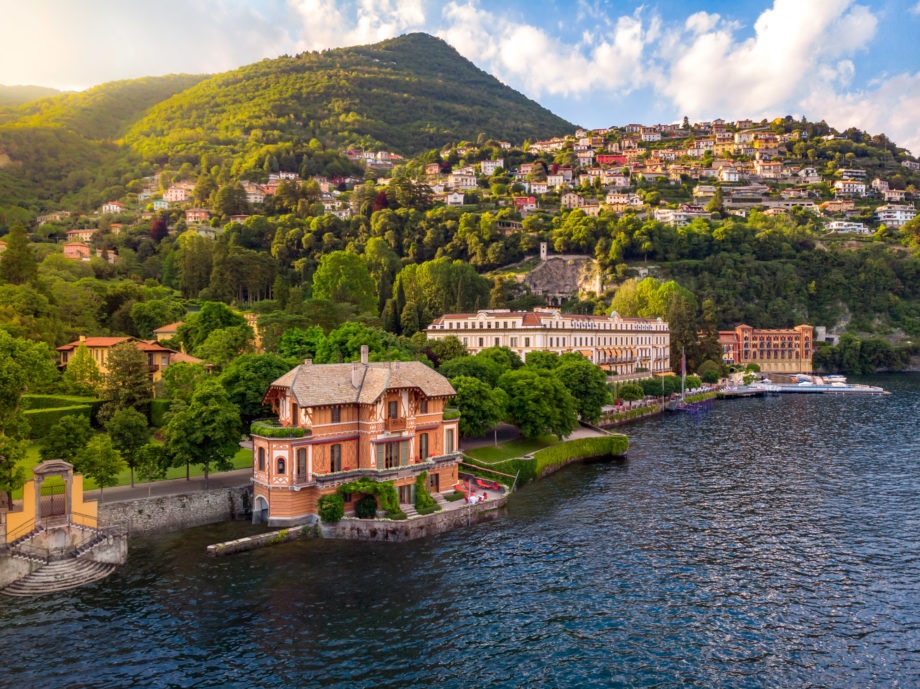
Images of the Villa D’Este at Cernobbio at the time of Princess Caroline of Brunswick

On 16th July 1815 Princess Caroline of Brunswick – the wife of the heir to the throne of Great Britain, Northern Ireland and Hanover – purchased the Villa D’Este on the lakefront in Cernobbio, a small town just outside of Como itself. Here she set up her court and established a base for subsequent travels around the Mediterranean. She spent prolonged periods at Cernobbio over the next two years until her debts forced her into selling the villa. She continued to stay there albeit for shorter periods until the end of 1819. The Princess had launched herself on a self-imposed exile in a bid to exercise more freedom of expression and find more happiness away from the oppressive atmosphere of her estranged husband’s court. She returned to Britain on the death of her father-in-law George III in the hope of securing a better financial settlement due to her new status of Queen. She had always planned on returning to Italy but she died following a sudden illness shortly after. The Villa D’Este subsequently went on to become one of the world’s most luxurious hotels.

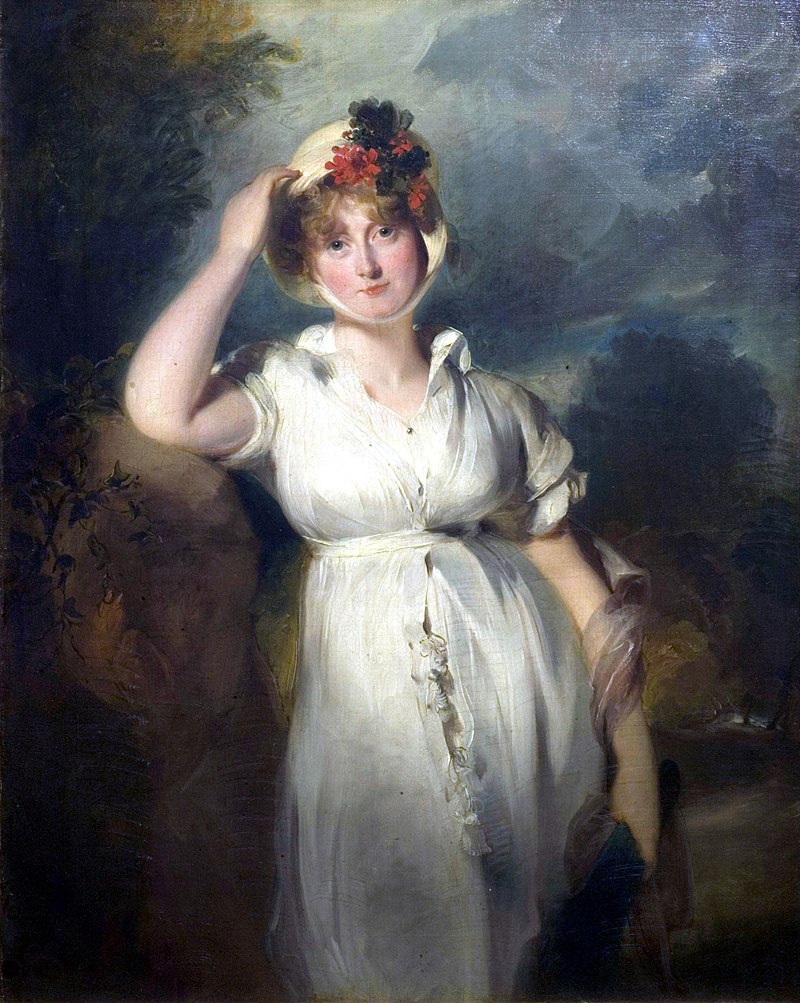
Caroline,_Princess_of_Wales,_1798_by_Sir_Thomas_Lawrence

Sir Thomas Lawrence’s portrait of Princess Caroline, 1798. Sir Thomas painted a number of Caroline’s portraits and was alleged to have been her lover.

Caroline’s failed marriage

george-iv-marriage

Prince George marries Princess Caroline of Brunswick

Caroline initially considered her betrothal to her cousin Prince George as an escape from her highly restricted upbringing in the suffocatingly dull household of the Duchy of Brunswick. However she was unaware of the spoilt, weak and shamefully self-indulgent character of her husband-to-be. The fact that she was met off the boat from Calais in Dover by Lady Jersey, Prince George’s principal mistress at the time, gave her a foretaste of what was to come. Neither bride nor groom were physically attracted to each other with Prince George collapsing drunk on his wedding night unable to face the ordeal of the night ahead of him. However, in spite of apparently only managing intercourse on three occasions, Caroline did become pregnant giving birth to a baby girl, Princess Charlotte, on 7th January 1796.

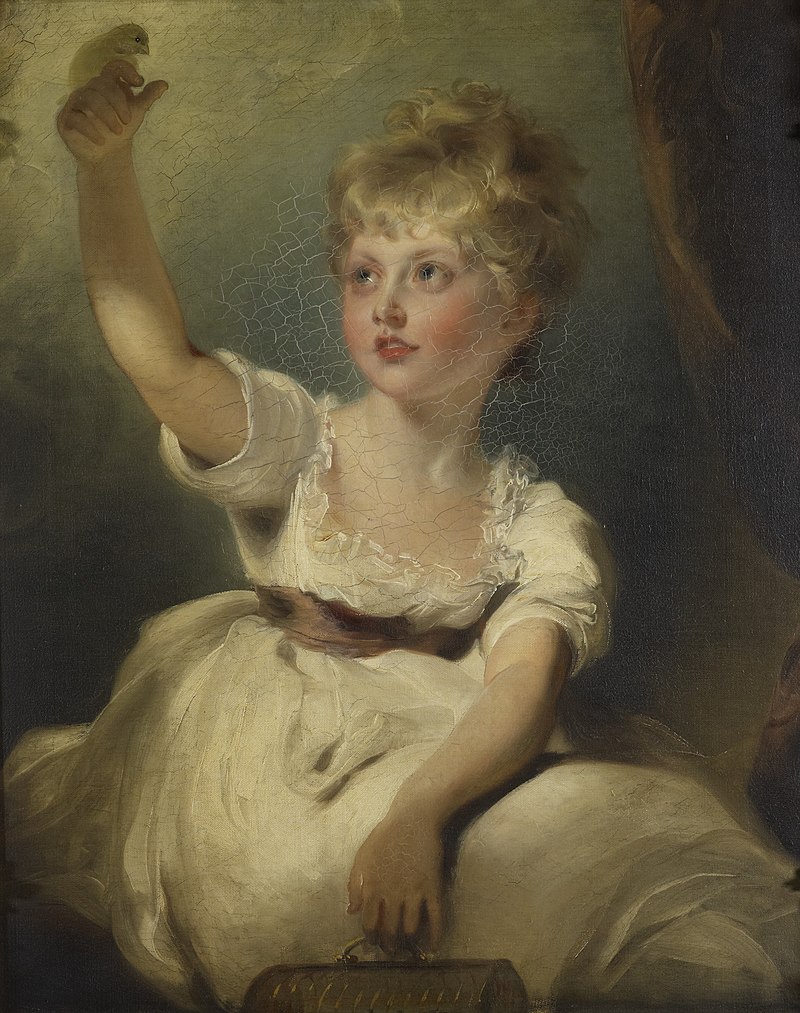
800px-Princess_Charlotte_of_Wales_by_Sir_Thomas_Lawrence

Princess Charlotte, the daughter of Princess Caroline and Prince George, painted as a young girl by Sir Thomas Lawrence. Princess Charlotte spent years forcefully separated from her mother. She died tragically young in 1817 from complications following child birth. Prince George failed to inform his wife of their daughter’s death.

The relationship very soon broke down in its entirety with Prince George continuing his series of infatuations while also insisting that his favourite, Lady Jersey, act as Princess Caroline’s main lady-in-waiting. He was singularly unpopular in the country at large representing as he did the worst of aristocratic arrogance. Caroline was conversely very popular and would remain so in the general public’s estimation throughout the various scandals and vicissitudes of her life until just before her untimely death in 1821. George developed a seething hatred for his wife stating how he would ‘rather see loads of vipers crawling over my victuals than sit at the same table with her.’ He was adamant in keeping Caroline away from his royal court at Carlton House.  Yet he also sought to limit and control her household so as to prevent Caroline from establishing a powerful rival court. This rivalry and hatred spawned associated intrigues and legal contests that dominated the royal couple’s lives until Caroline’s death. The relationship also dominated the political life of the times fuelling rivalry between Whigs and Tories but more dramatically, stoking the emotions born out of the French Revolution for reform, republicanism and popular revolution.

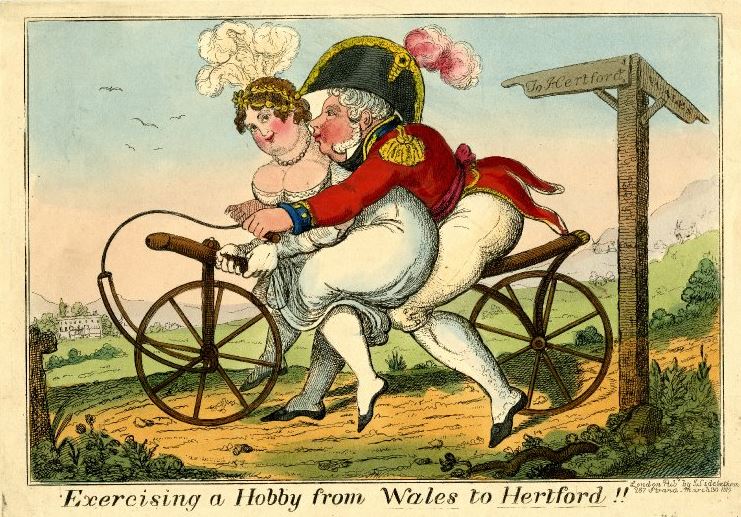
Manchester-Square-24 (1)

Prince George was very unpopular in the country due to his various excesses. In a period of vitriolic political cartooning, his obesity and habits were a gift to cartoonists such as Gilray or Cruikshank.

Her London Households

Princess Caroline was never going to take subordination and bullying from the Prince without a fight. She declared her intention to enjoy her own freedom as expressed in this formal letter to the Prince:

‘I have been two and a half years in this house [Carlton House]. You have treated me neither as your wife, nor as the mother of your child, nor as the Princess of Wales. I advise you that from this moment I have nothing more to say to you and that I regard myself as being no longer subject to your orders.’

Further arguments continued between the Princess and Prince as, in keeping with her declaration,  she sought increasing independence and he, while happy to keep her out of his company, sought to retain control over her behaviour and finances. 

Kensington_Palace

Kensington Palace, London where Princess Caroline briefly lived before leaving for Italy. This was also to be the home of the other fated royal Princess Diana.

Caroline’s estranged household in London would frequently move but one of the more constant and popular locations was Blackheath where she lived from 1796 until 1813 when she started to spend more time in Kensington Palace.  Blackheath was a sufficient distance from the royal court to allow Caroline some scope in determining the company she wished to keep. The countryside also meant those spies sent down by the Prince to gather compromising evidence of moral turpitude could more easily be identified. But the Prince still exercised control on who served as ladies-in-waiting and both where and who looked after Caroline’s daughter, Princess Charlotte.

lord-george-byron-con-il-costume-albanese-riproduzione-di-thomas-phillis-1835-national-portrait-gallery-londra__f5425c4a_800x1246

Lord Byron in Albanian national costume.

Among her regular guests was the court painter Sir Thomas Lawrence with whom she was alleged to have had an affair. Literary guests included Lord Byron and Sir Walter Scott. It was also rumoured that she had an affair with George Canning, the young Tory politician who went on to have an illustrious career in spite of being hated by Prince George and who resigned his post towards the end of Caroline’s life in 1820 in sympathy with the way the Princess had been treated by Parliament. He later went on to become Prime Minister.

Caroline developed a more serious, possibly adulterous, relationship in 1813 when she took up singing lessons from a handsome Italian musician, Pietro Sapio. The Prince sent a spy out to seek evidence of adultery without success. The affair ended after a year when Sapio and his elderly parents left for Paris. Caroline remained friends with the entire Sapio family and invited them over to Lake Como three years later by when she had established a much more open and long lasting relationship with a dashing Italian beau. 

The Delicate Investigation

the green bag

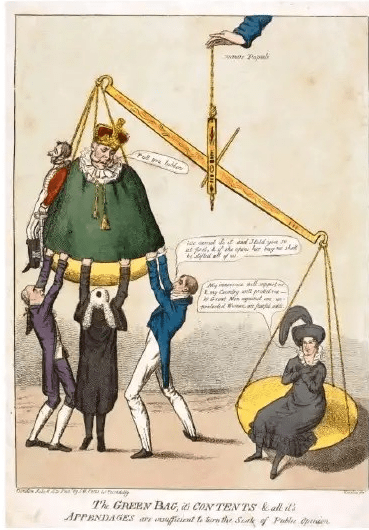
The Green Bag was the name given to the folder of evidence gathered by George’s spies to present to the government and subsequently the court in a bid to prove Caroline guilty of adultery, and thus, high treason.

In spite of the Prince’s own numerous infidelities, he was intent on gaining a divorce or formal separation from Caroline on the basis of her adultery. He therefore set in motion an investigation in May 1806 into the Princess’s moral behaviour. This became known as the Delicate Investigation and would initially remain secret to all those who had not sworn an oath and also to the Princess herself. If proven, the Princess’s adultery would result in a charge of high treason both for her and her partner. High treason still carried the death sentence although that was never likely to form any eventual outcome as it would have provoked immediate revolt amongst the population at large who wholeheartedly took the Princess’s side, irrespective of any moral failings on her part. Needless to say, the Prince’s own serial and open adultery did not face any legal challenge.

The allegations put together by spies and allies of the Prince  were finally made public and brought to the Cabinet for consideration. The politicians wanted little to do with this issue since they recognised that the breakdown in the royal relationship was becoming an increasingly political matter with Whigs and Radicals supporting the Princess fuelled by the sympathies of an entirely disenfranchised and potentially revolutionary public. Ever since the French Revolution, Britain’s ruling class had become nervous of popular sentiment and, particularly in London, they lived in growing fear of the mob.  The cabinet was therefore happy to reject all of the accusations against the Princess – a solution much favoured by George III who had always been critical of his son and supportive of the Princess.

Escape on the Grand Tour

On the initial but illusory first ending of the Napoleonic Wars in 1814, the Princess expressed a desire to travel on the continent – to take the Grand Tour. Parliament had recently increased her allowance and so, with travel across France and in all the other territories previously under Napoleonic rule now open, she decided on her travel companions and left forthwith for Calais. Prince George was happy to see her leave the country but also ensured he had spies accompanying her travels in the hope they could provide evidence for divorce.

Empress_Marie_Louise_of_the_French

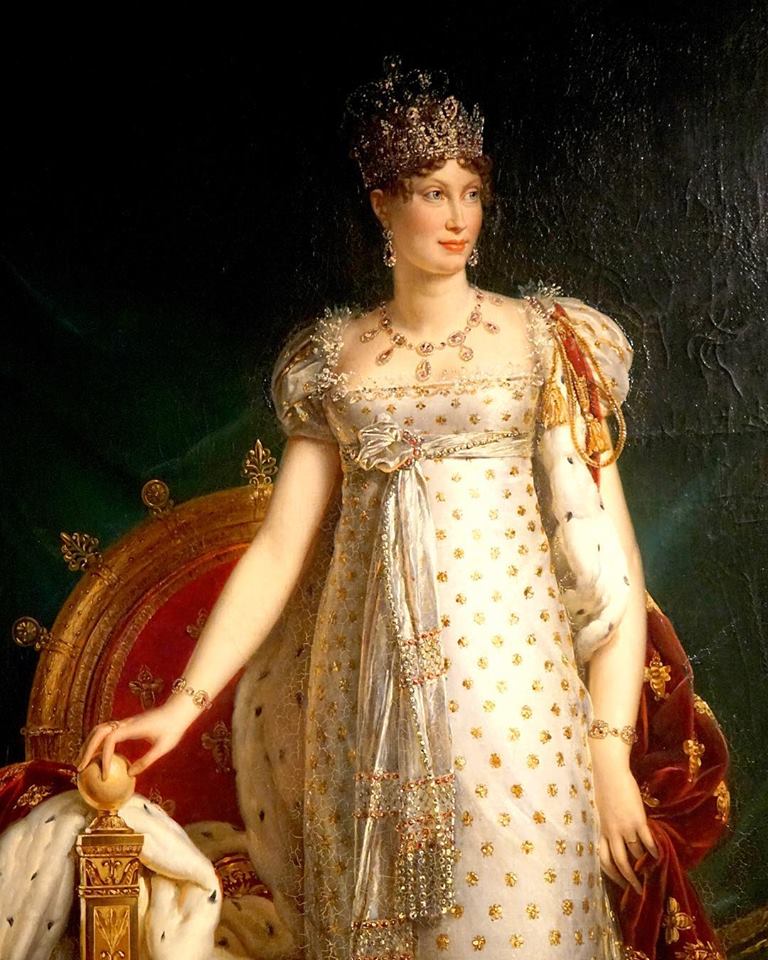
Empress Marie Louise, Napoleon’s second wife, met with Princess Caroline in Berne when Napoleon was imprisoned on the island of Elba.

Her sense of relief to be away from the stultifying atmosphere of accusation, open espionage and control soon went to her head on arrival in Switzerland. Normally the regular Grand Tour pause in Geneva was intended to give a final inoculation of Protestant ethics before travellers faced the perceived temptations of Catholic corruption over the Alps. Reports back from the Prince’s spies told of Caroline dancing naked to the waist in Geneva and consorting in Berne with Napoleon’s second wife, the Empress Marie Louise. the daughter of the Emperor of Austria. Neither of these estranged wives mentioned their husbands. Her open admiration of Napoleon throughout her time abroad was a cause of irritation and consternation to aristocrats and Tory politicians back over the Channel.

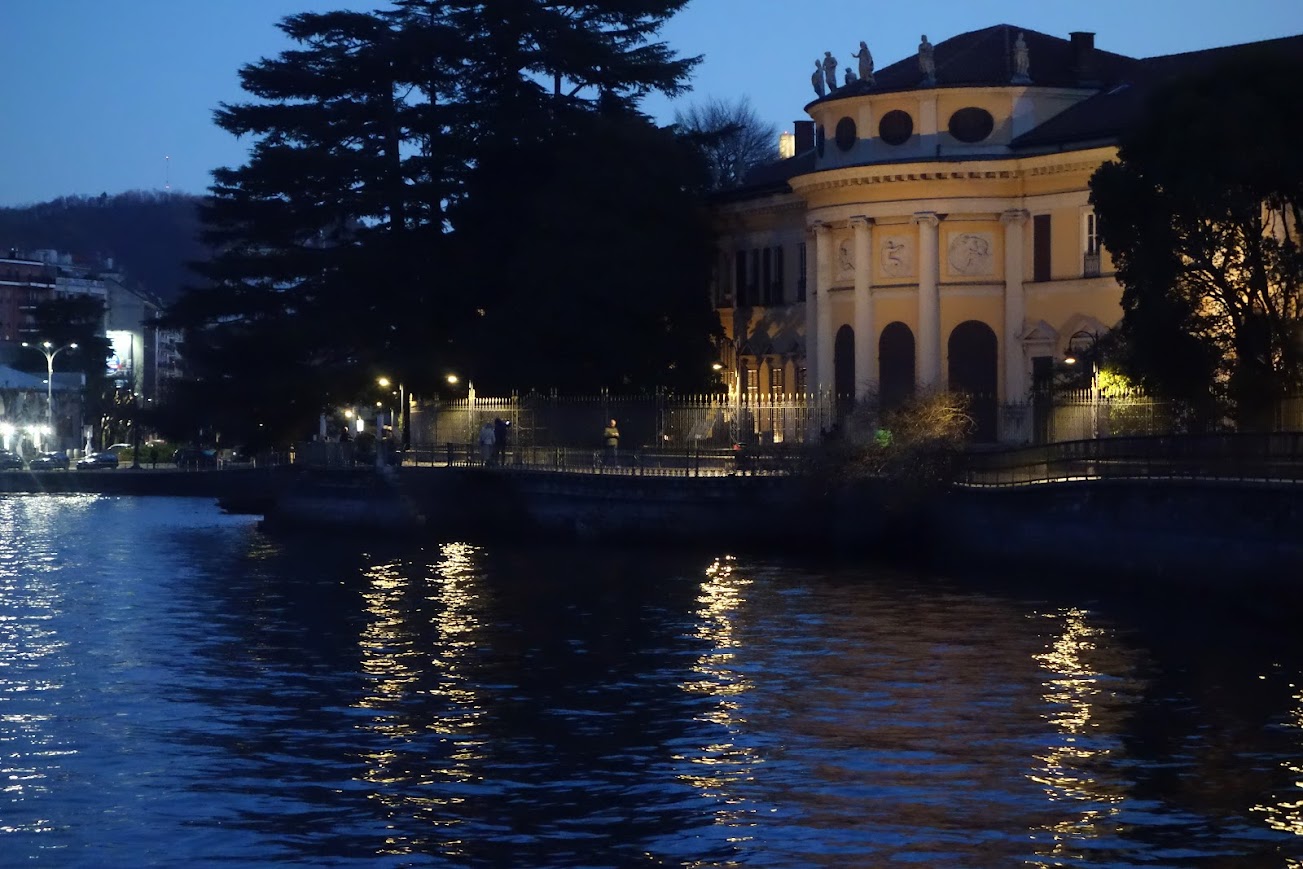
On reaching Italy, Princess Caroline took an immediate liking to Lake Como. She first stayed at the lake in October 1814 taking up residence in the Villa Saporiti on Como’s lakefront. This villa, often referred to as La Rotonda, was known at the time as Villa Villani after Eleonora Villani who commissioned its construction in 1790. It may have amused Caroline that Napoleon himself was a guest here seventeen years prior to her visit.  She used her time at the Villa Saporiti to negotiate the purchase of the Villa D’Este in Cernobbio.

Villa Saporiti

The Villa Saporiti on Como’s lakefront.

The Villa D’Este’s Backstory

Villa D'Este

The Villa D’Este and gardens with the reproductions of the fortifications captured by General Pino during Napoleon’s campaign in Spain. They were commissioned by the General’s wife, the Contessa Calderara Pino.

The Villa D’Este was originally known as the Villa Garovo, named after the mountain stream that runs through its grounds having flowed down from Monte Bisbino to Rovenna and on through the beautiful Giardino della Valle to enter the lake. It was built for Cardinal Tolomeo Gallio in 1568. In 1806 the villa was inherited by Vittoria Peluso who went on to marry Conte Domenico Pino, the Italian General in Napoleon’s army who had achieved great success during Napoleon’s campaigns in Spain. Vittoria Peluso had the series of false fortifications built on the upper slopes of the villa’s exterior gardens as reproductions of the Spanish forts of Hostarlich and Gerona in Catalonia captured by her illustrious husband. On Napoleon’s defeat in Northern Italy and the return of Lombardy under Austrian domination, the General and his wife accepted retirement and gracious exile to their lakeside home in Cernobbio.

Princess Caroline at Como

pergami and como

Satirical cartoon of Caroline’s lover, Pergami, riding to hell on the back of a goat with the Villa D’Este in the background

Princess Caroline completed the purchase of the Villa Garovo in 1815 and renamed it the Villa D’Este after the branch of her ancestors who back in the 11th century left Bavaria to establish the Este dynasty in Ferrara. She may or may not  have been aware that there was a secret patriotic society of so-called Este cells vowed to overthrow Austrian rule. Caroline’s actions could not help to be interpreted politically in this period of heightened political turmoil but she seems to have been respectful to all rulers on her travels including the re-established Austrians in Lombardy and equally to the Napoleonic Court in Naples or the Muslim Sultans in Tunisia. As long as the local courts paid tribute to her royal status she in turn would remain respectful of them irrespective of their political outlook. 

Princess Caroline travelled extensively during her time abroad but the Villa D’Este would remain her principal address for the next two years. She went on to sell the Villa in 1817 due to shortage of funds but she continued to make return visits to Cernobbio but of shorter duration for the following two years. During her period of ownership of the villa she financed the building of a road from the Villa del Grumello on the outskirts of Como to Cernobbio, thus earning herself the gratitude of the local population. Prior to this investment, the villa could only be accessed from the lake. Apart from an extensive programme of decoration and refurbishment of the villa, she also commissioned the building of a new wing and a small theatre. 

villa del grumello

The Villa del Grumello on the northern outskirts of Como was the summer residence of Giambattista Giovio who had died two years prior to Princess Caroline’s arrival. She commissioned the building of a road from this villa to Cernobbio.

The villa’s payroll included a caretaker, three footmen, cooks, local boatmen, carriers, blacksmiths, laundresses, woodmen, tailors, hairdressers, butchers, bakers, and candlestick makers all coming from Cernobbio, Como or the surrounding villages, thus providing even more reason for the local population to be grateful for the Princess’s patronage.

The Princess herself was delighted with her new home writing in a letter that ‘I have now settled myself in a most beautiful grotto upon the Lac of Como. The place is romantic, superb…I have seven barges with boats….grand cascades, fountains in abundance, all possible fruit trees.

Her Royal Court in Como

On arrival in Italy, Princess Caroline not only acquired the Villa D’Este but also a tall handsome servant and lover, the thirty-year old Bartolomeo Pergami. Pergami had served General Domenico Pino during his Russian campaign and had also acted as courier to the General’s wife, the previous owner of the Villa D’Este. Pergami remained faithful to Caroline for the rest of her life and was amply rewarded for doing so. Caroline even bought Pergami a baronial title so as to elevate him into the ranks of nobility and thus allow him to accompany her within the rigidly class conscious European courtly circles. Pergami introduced other members of his family to assist in running the Villa D’Este estate such that the Princess’s own court gradually became almost exclusively Italian.

teatro sociale

The building of the Teatro Sociale in 1811 reflected the growing influence and wealth of the upper bourgeoisie in Como and its active intellectual life in the late Enlightenment period.

She launched her court in Cernobbio with a grand reception held on 24th August 1815 with invitations sent out under the name of Caroline D’Este. She then established herself within the social and intellectual life of Como which was going through a particularly rich period at the time. Regular visitors to the court included the scientist Alessandro Volta and his follower Professor Pietro Configliacchi who lived in the nearby Villa Sucota. Her court physician was a local doctor called Mocchetti who was also a renowned art expert. Mocchetti accompanied the Princess on her travels around the rest of Italy providing her with an informed commentary on the treasures she visited. She also patronised a young poet of arguable merit called Bernardo Bellini who had described the Princess as ‘the most exquisite flower of the Este stock.’ Here is his equally florid poetic tribute to the Villa D’Este:

Where Lario, laughingest of lakes,

Mirror for Pliny’s cradle makes,

The sun-tipped towers to her breast she takes,

Beloved of Love and the Mother of Love,

Whilst hills bedecked with bosky woods

Surround the silvery solitudes,

And day, in gladsomest of moods,

Smiles from the heavens above.

Caroline would undoubtedly have been aware of the recently deceased  local historian and intellectual Giambattista Giovio – the travelling companion of Volta, and father-in-law to Italy’s Byron, Ugo Foscolo. Giovio’s summer residence was the nearby Villa del Grumello. She would also have visited Como’s Teatro Sociale, built in 1811, as well as being in regular contact with  the Austrian Governors of both Como and Milan.

caroline-and-bartolomeo_pergami_in_the_bath

Both Princess Caroline and Bartolomeo Pergami offered rich inspiration for the cartoonists back in London.

She was accompanied throughout her Grand Tour by Willy Austin, whom she had adopted from a family living in Deptford when Willy was a mere three months old. He attended school in Como at the Collegio Gallio – a school founded by the same Cardinal Tolomeo Gallio who had also commissioned the building of the Villa D’Este.

The Milan Commission

The villa also hosted Baron Ompteda who had been insinuated into Caroline’s court by the Austrian Emperor with the express purpose of spying on Caroline in order to provide sufficient proof of adultery to pass on to Prince George back in London. George had not let up in his efforts to gain a divorce from his wife.

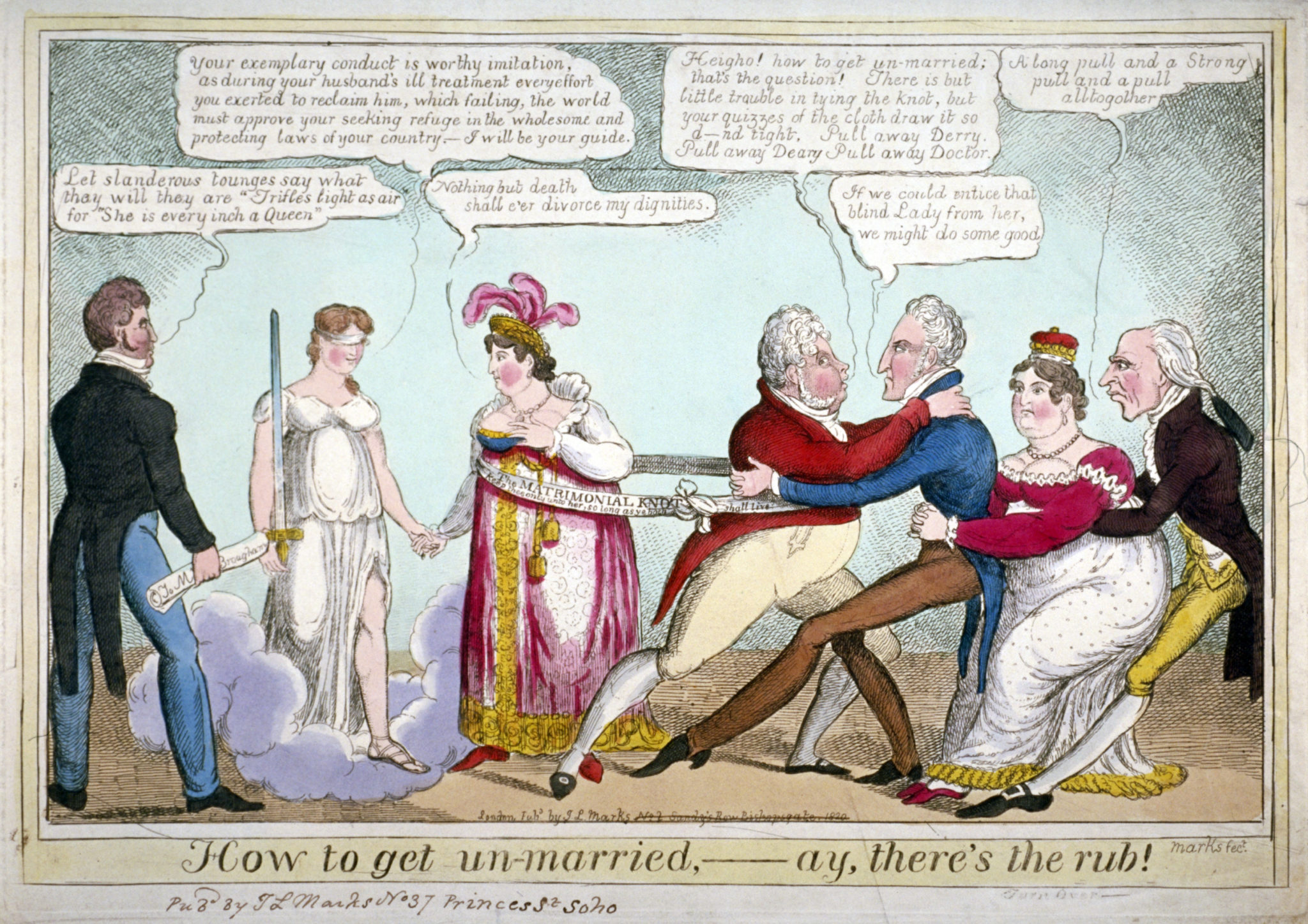
'How to get un-married, ay, there's the rub!', 1820. Artist: JL Marks

‘How to get un-married, ay, there’s the rub!’, 1820. George IV and Queen Caroline are tied back to back; the Queen’s hand is held by the figure of Justice; Lord Brougham stands on the left; the King is pulled by Viscount Castlereagh, Lady Conyngham, and Sidmouth. The cartoon refers to George IV’s attempt to dissolve his marriage to Caroline after his accession to the throne. (Photo by Guildhall Library & Art Gallery/Heritage Images/Getty Images)

Prince George sent out to Italy two British aristocrats to establish a secret investigation into Caroline’s behaviour that came to be called the Milan Commission. Their task was to gather as much evidence of the Princess’s infidelity to put before the British courts through contacts such as Ompteda and others. Ompteda had managed to get Caroline’s German stableman Moritz Crede to steal a set of keys to the royal bedroom but no incriminating evidence was forthcoming. Following this incident, Caroline petitioned the Como authorities to provide a party of soldiers to stand guard over the villa. Unfortunately fights then broke out between these soldiers and the villa’s servants. Numerous attempts were also made to extract incriminating statements from Caroline’s staff without immediate result. In fact for a number of years the various members of the royal household exploited the expenses on offer by the Commission for travel and accommodation in Milan – and later still, to appear as witnesses in the English courts.

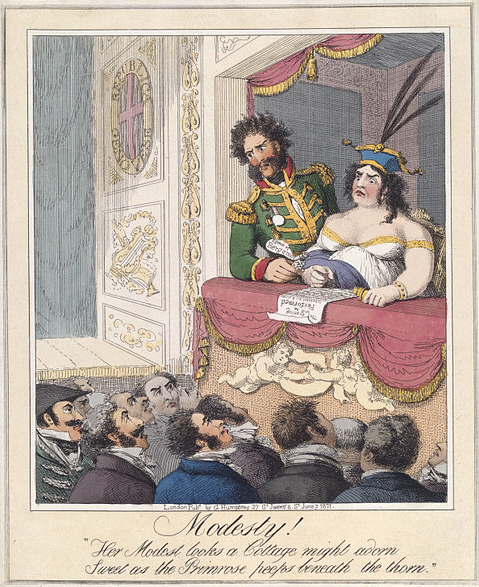
Modesty_1821This intense spying and insinuation of immorality poisoned the atmosphere for Caroline and also brought about a deterioration in her reputation with the local community. Caroline’s own indiscretions did not help as when she replied to a question about her audience with the Pope by stating that all will be visible in nine month’s time. At one stage Cernobbio’s local priest delivered a sermon advising that mothers should not allow their daughters go near the foreign Princess’s villa. 

A certain Antonio Augustoni of Chiasso wrote to Baron Pergami in December 1818 complaining of the Milan Commission, ‘For some days past, there have been people here, lurking about, and running from one person to another with questions….they have even found those who have dared to tell untruths….the most respectable of them are but porters and watermen.

Escape to Pesaro

Villa-Caprile-Queen-Caroline

Villa Caprile, Pesaro – the house Princess Caroline bought and settled in safe away from the spies and intrigues of Milan, Como and the Villa D’Este

The constant spying, the changing attitudes of the locals and ongoing financial issues finally forced Caroline to abandon her visits to Como and Cernobbio. Instead she, Baron Pergami and their immediate inner circle moved to Pesaro on the Adriatic coast. Here she was free of the influence of the Milan Commission in a town where the presence of any potential spies was more immediately obvious. And here she remained until the death of King George III meant that she was now Queen of Britain and the House of Hanover. Her intention now was to return to London and claim an enhanced allowance as the Queen. 

Return to Britain

caroline returns

Queen Caroline returns to Britain and is perceived as standing up for the Radicals and reform. She retained her popularity until the King’s coronation.

The Queen had always hoped that her return to England would be temporary. The government had always hoped she would stay abroad knowing that her presence would only further stoke the spirit of rebellion and demands for parliamentary reform. The London Mob cheered the Queen’s procession into London seeing her as their champion against the establishment. George IV saw her return as the opportunity to bring her to trial on charges of adultery using the spurious evidence gained from her former employees at the Villa D’Este by the Milan Commission. 

image(1)

A souvenir jug produced by the Queen’s supporters at the time of her trial for adultery in the House of Lords.

The government did everything possible to avoid a trial but could not prevent it going ahead in the House of Lords. The Queen was well represented for her defence but she had also asked that the Como lawyer, Avvocato Giuseppe Marocco be granted a visa to allow him to aid her defence. The dubious quality of the witnesses produced by the prosecution and the doubtful methods employed by the Milan Commission to extract their evidence meant the Queen was exonerated and deemed innocent. The London Mob became ever more incensed during and after the trial attacking numerous members of the government or stoning their residences. The loyalty of some of the troops could also not be relied upon. It seemed as if Caroline had unintentionally provoked a revolutionary situation.

image(7)

Sir-Thomas-Lawrence-painting-of-King-George-IV

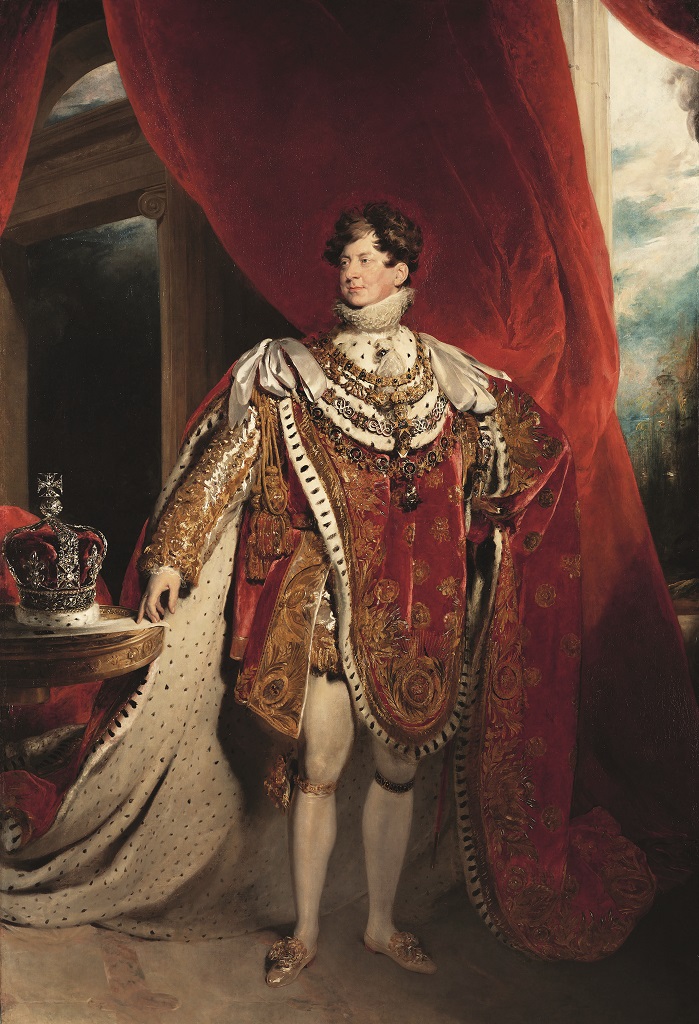
Sir Thomas Lawrence, George IV (1762-1830), 1821. The glory of the Coronation service and the procession which followed it won over the hearts of the London Mob against Queen Caroline.
Credit: Royal Collection Trust / (c) Her Majesty Queen Elizabeth II 2019

However the fickleness of the London Mob was to show itself at the King’s coronation in July 1821. George IV was adamant that Caroline should not attend. She was determined to be recognised as the Queen and to take her allotted space within the ceremony. However all entrances to Westminster Abbey were barred to her in spite of her appeals of ‘Let me pass; I am your Queen.

The London Mob seemed to have been seduced by the grandness of the coronation ceremony and the glories of the royal procession. They perceived Caroline’s attempts at gaining entry to the abbey as undignified and pathetic. This rapid change in the mob’s sentiments revealed their lack of political sophistication; the reformist politicians, keen on stressing their respectability, never did want to associate themselves with unruly behaviour. The Queen no longer had any allies or moral support within the country.

It was a mere three weeks after the King’s coronation when Caroline was taken ill, rapidly declined and died. 

Further Reading

Flora Fraser’s ‘The Unruly Queen – The Life of Queen Caroline’ proved invaluable in researching this article. Her book is not only well written and highly informative about the life of Caroline but also provides insights into the atmosphere and attitudes of the time that are hard to find in standard politico-economic histories.

Posted in Culture, Gardens, History, Lake, People | Tagged , , , , , , , , , , , , , , | 2 Comments

Water Taxis and Lake Como’s Vaporina

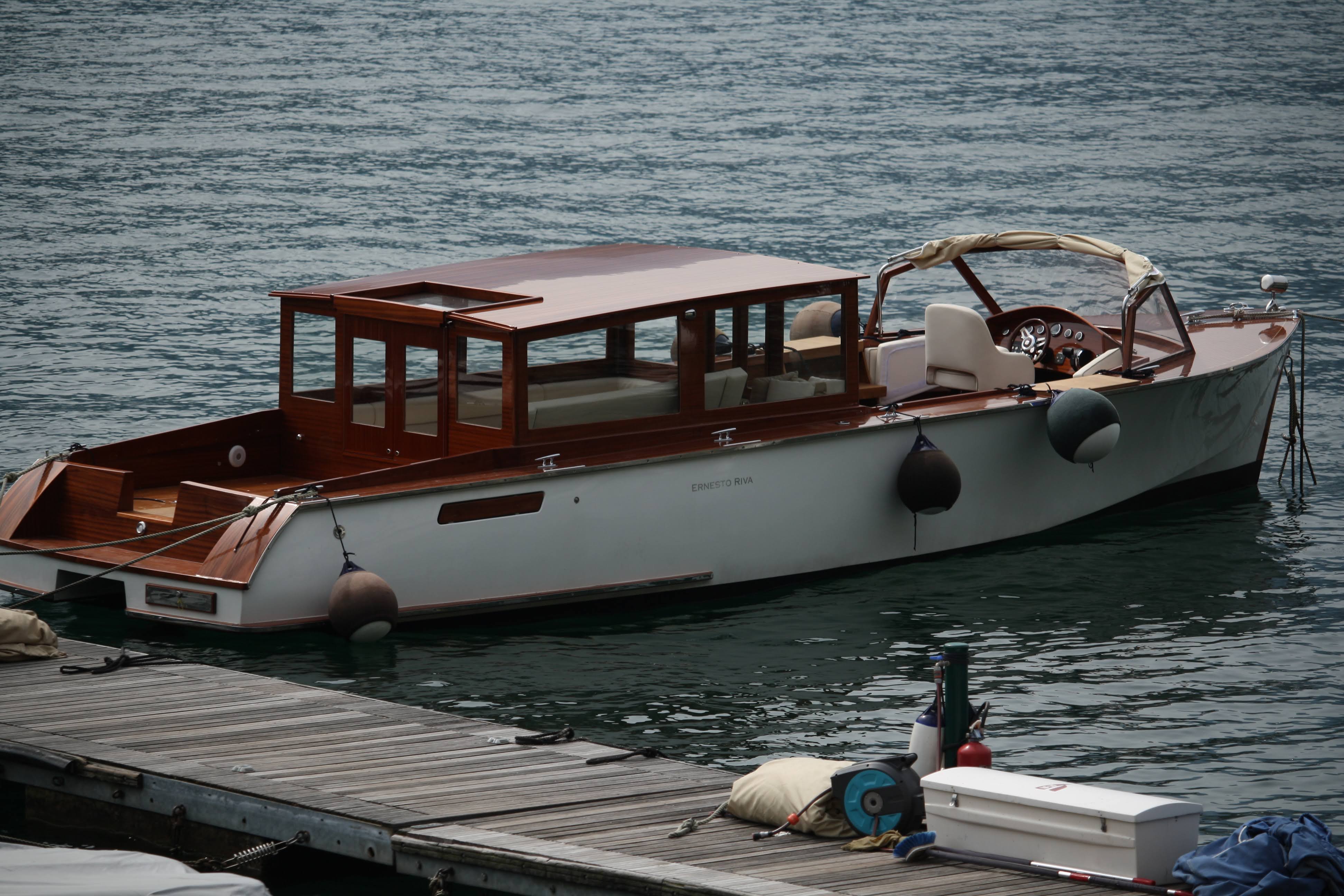
vaporina

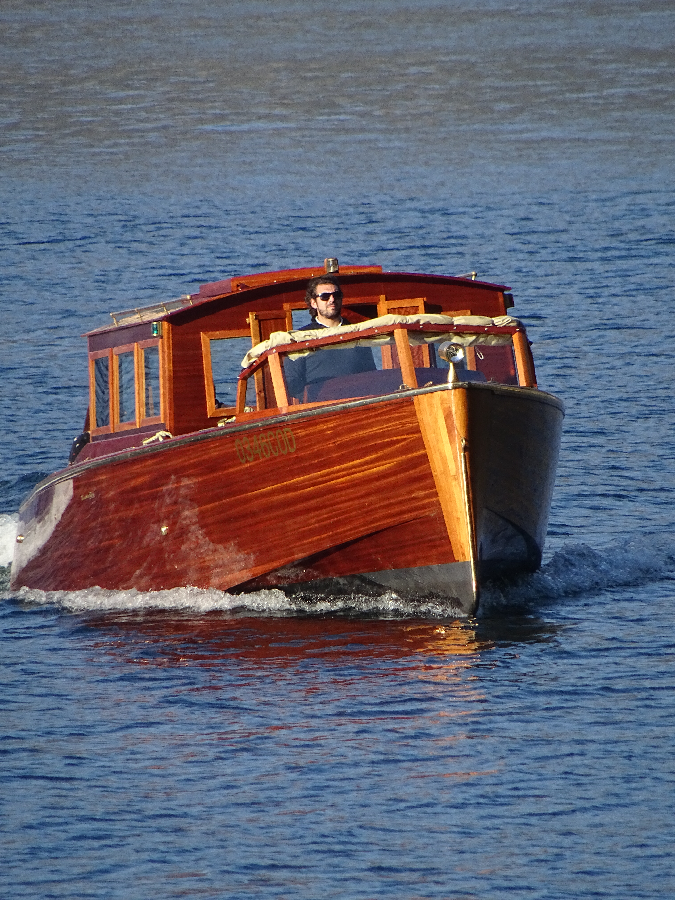
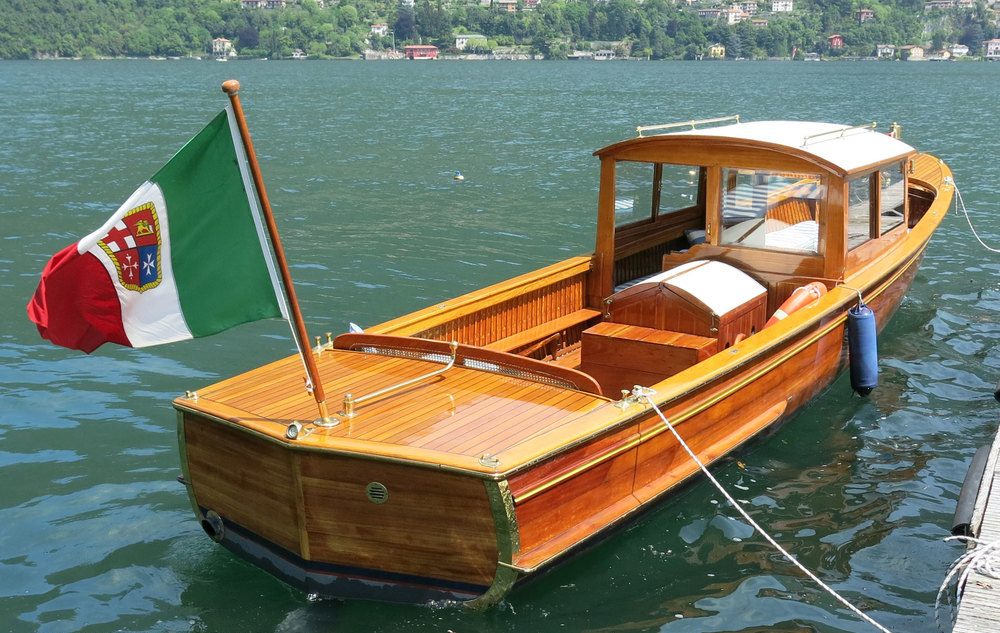
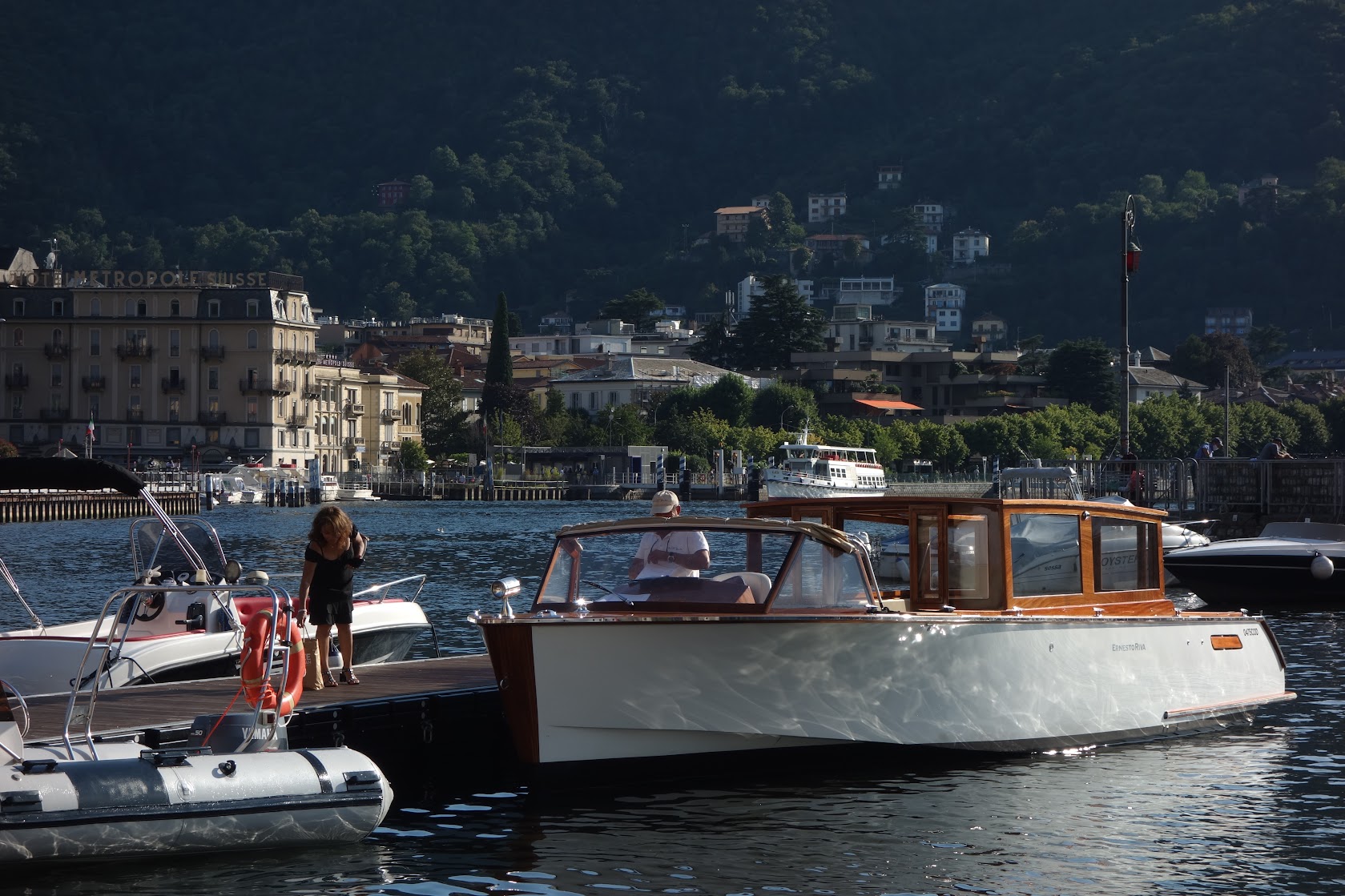
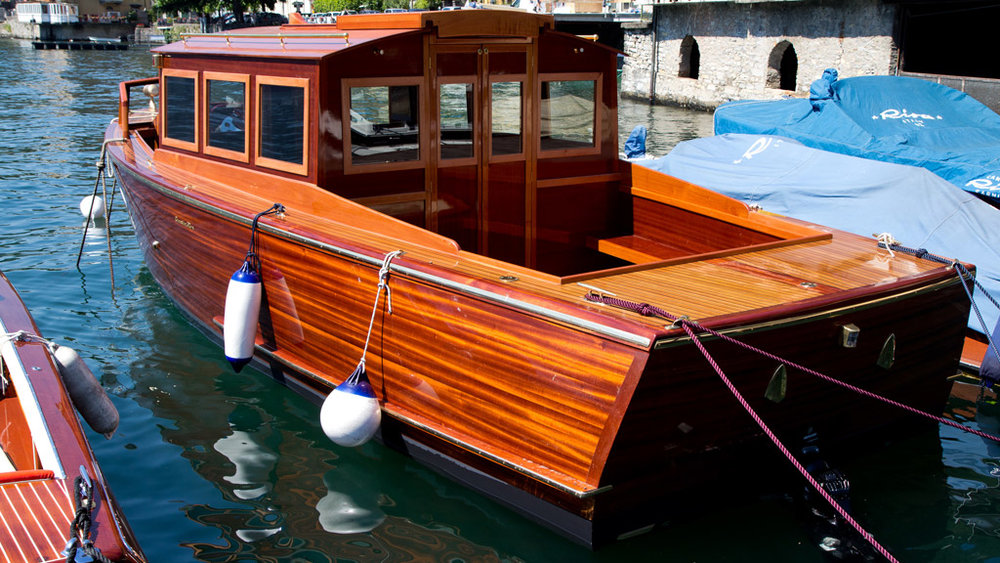
The distinctive profile and ergonomic design of Cantiere Ernesto Riva’s Vaporina built for the Hotel Il Sereno.

A ride in a water taxi on Lake Como,  either taken out of necessity or convenience, is a pleasure in itself. Water taxis go far beyond their evident practicality by offering comfort (with added extras if requested) and inimitable style. Yet while the style of these boats has long been dominated by Venetian design, Lake Como is in the process of re-establishing its own brand of boat  – the Vaporina – which retains all the appeal  of stylistic travel but adds ergonomic design specifically adapted to our lake’s aquatic environment. These boats are all constructed by the Cantiere Ernesto Riva in their workshop at Maslianico. 

Venetian Style

buzzing around

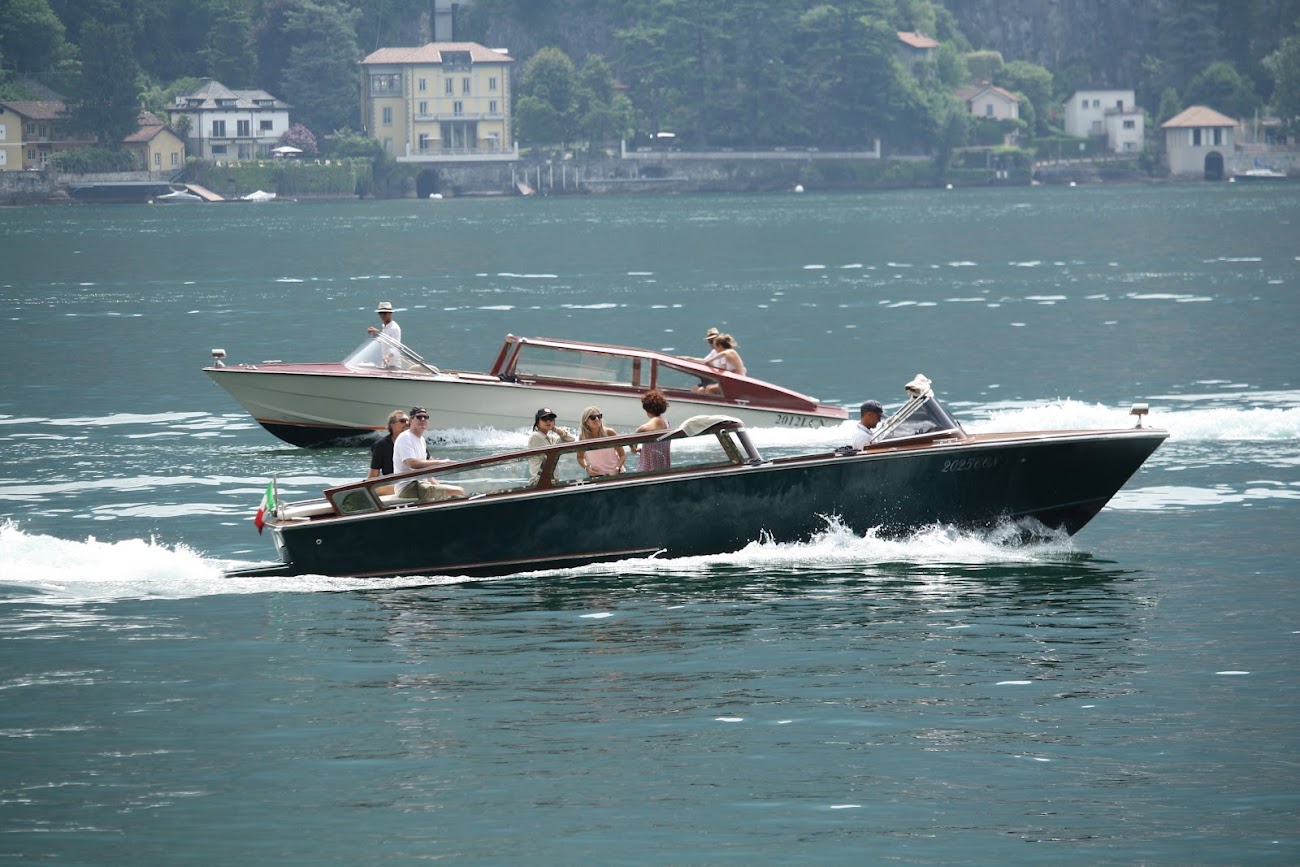
Two venetian-style water taxis cross paths in the waters off Laglio.

Venetian water taxis have developed iconic style status and have over the last eighty years have become more beautiful and ever more luxurious. Clearly Venice requires a fleet of efficient and comfortable water taxis given that the traditional gondola may well be the symbol of Venice itself but can hardly whisk you down the Grand Canal, over to the Lido or back to Marco Polo airport in time for tea. Venetian boatyards such as Serenella, Cucchini and Tagliapietra dominate the market and have gained international success by maintaining high standards of artisan craft and continual innovation. 

venice water taxi

Sleek and stylish, the Venetian water taxi has become a symbol of La Serenissima

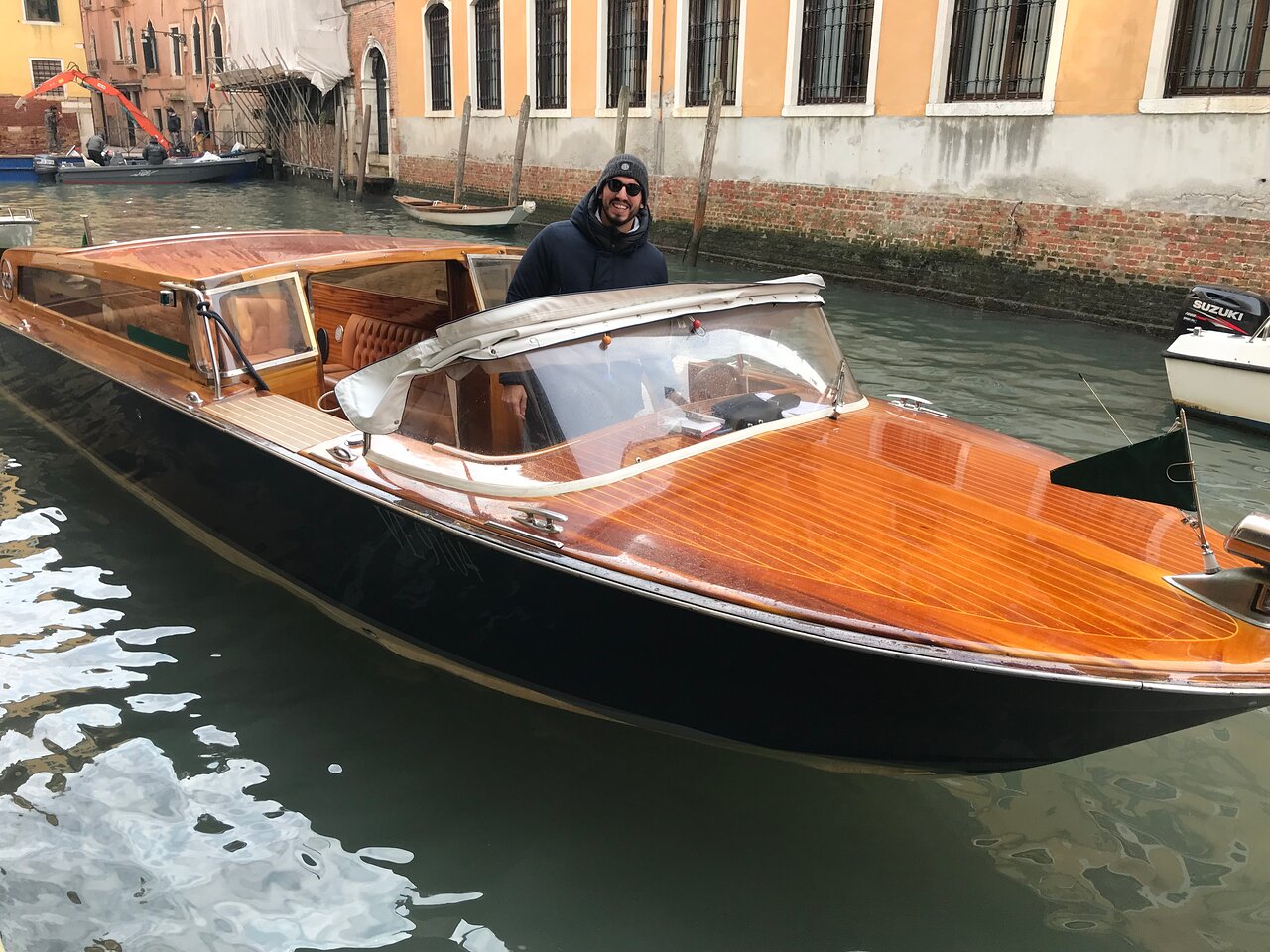
So it is no surprise that most of the water taxi companies operating on Lake Como also deploy these Venetian-style water taxis. The experience they offer the passenger is thrilling with the enclosed sleek deck-house giving shelter from rain or spray and the rear seating free for those who want to feel the fresh wind on the face, to have an unimpeded view of the lakeside or for gazing up onto a starlit sky. Yet, great as these boats are, they were designed for travel on canals and over the Venetian lagoon and not over the deep and sometimes choppy waters of Lake Como buffeted as it is by its two winds, the Breva and Tivano.

vaporina and primo bacino

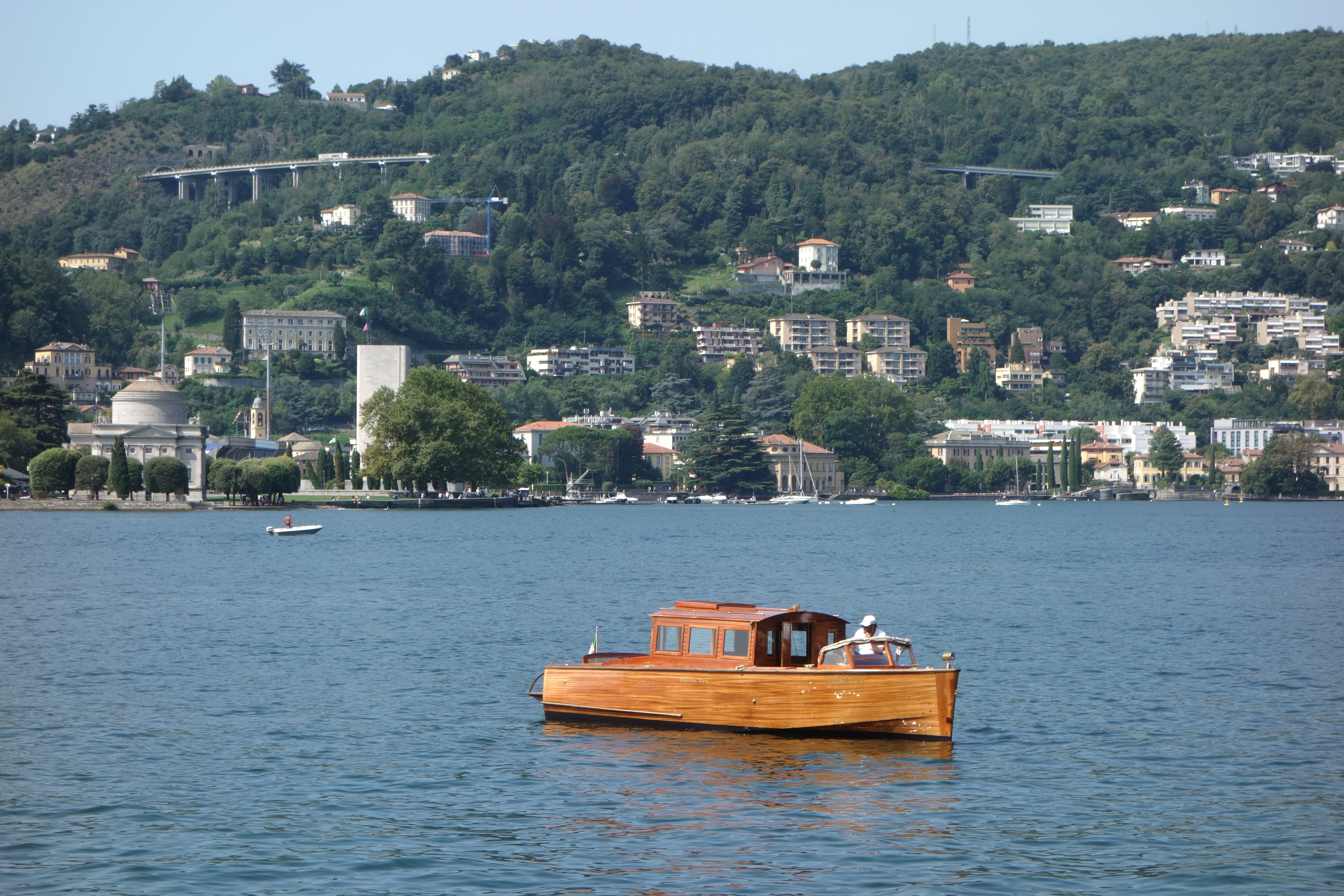
Vaporina takes time out with Como’s Villa Olmo in the background. The Vaporina’s profile is unique and readily identifiable when on the lake.

It was therefore only a question of time before one of the many long-established boatyards on Lake Como put their mind to designing a water taxi in line with local tradition and suited to local conditions. It was the oldest of the lake’s boatyards, Cantiere Ernesto Riva, who came up with the idea of redefining fin de siecle boats called Vaporine to modern needs and tastes.

The Vaporina’s Ancestors

museo-paesaggio-lago-di-como-03

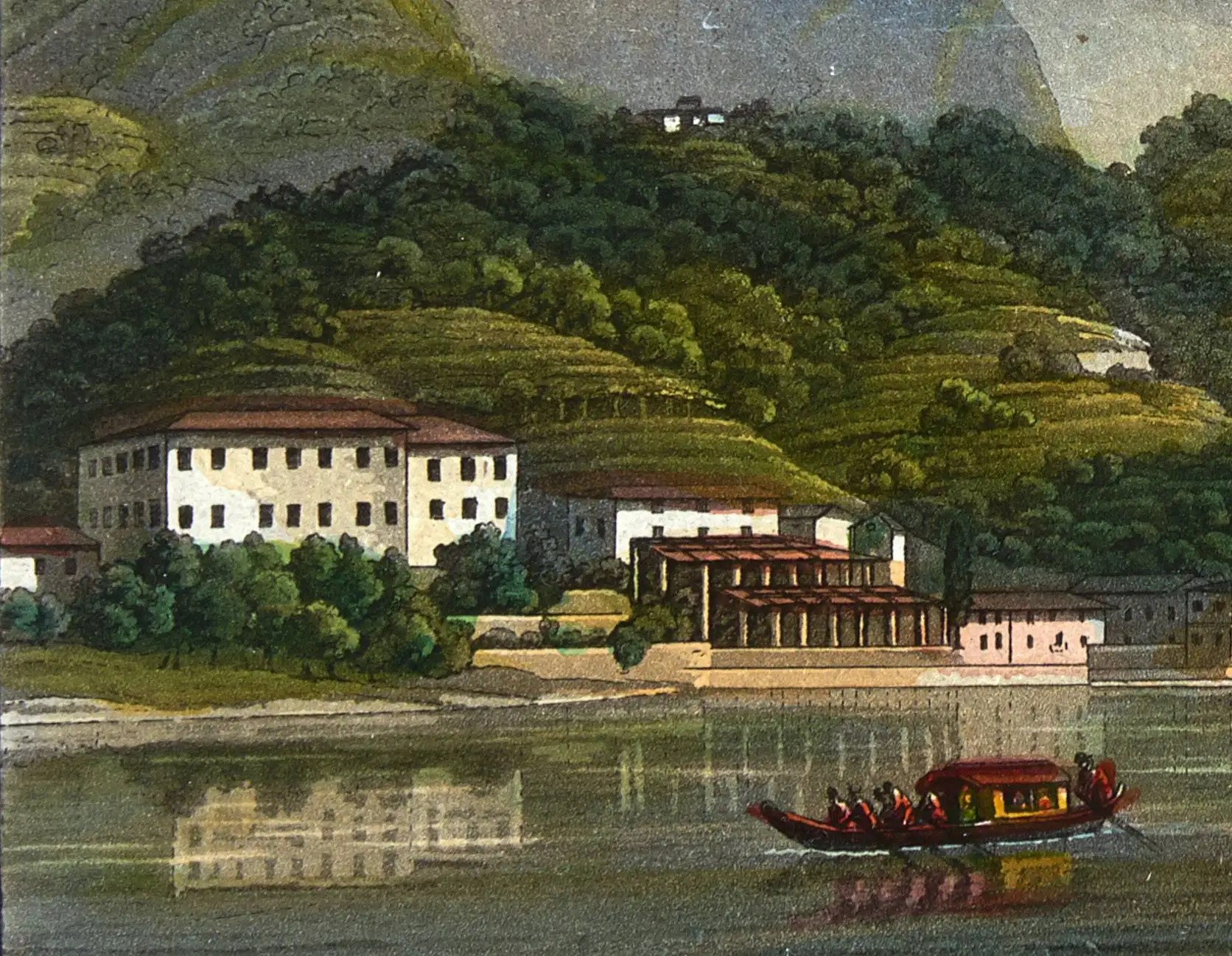
Depiction of an early luxury gondola on Lake Como

Travellers by road around the Como leg of the lake in summer might appreciate how important or even preferable it can be to travel instead by boat. After all it wasn’t until 1876 when Torno, a very near neighbouring town, was actually connected by road to Como. Torno then had to wait until 1911 to have a road going north to Bellagio. Neither of these roads was tarmacked until the 1950s. Water taxis were then as much a necessity as a luxury.  Wealthy residents could however afford to pay for the labour needed to power their own luxury boats  which for most of their time remained moored as an adornment to the private docks in front of their lakeside villas.

inglesina dulcinea

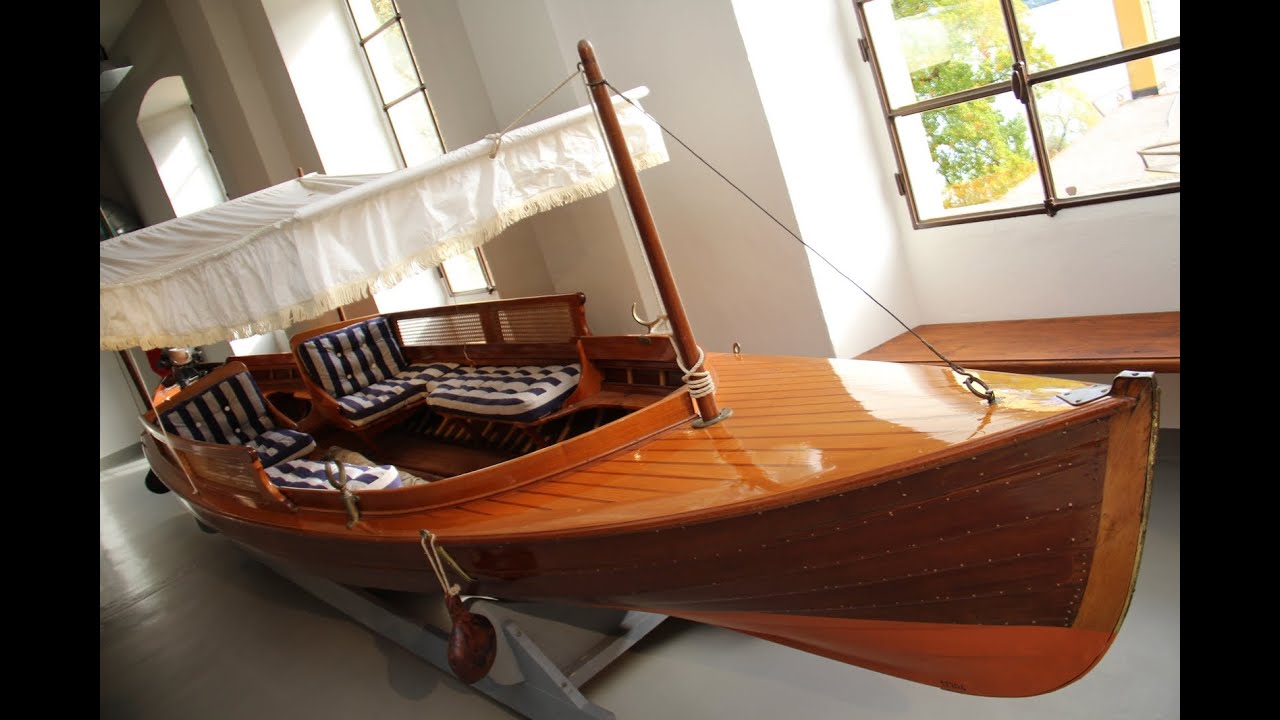
The ‘Dulcinea’ now on display at the Museo Barca Lariana in Pianello del Lario. This boat, built by Cantiere Taroni in 1920 modified the traditional Inglesina design to allow for an early outboard motor although most were man-powered.

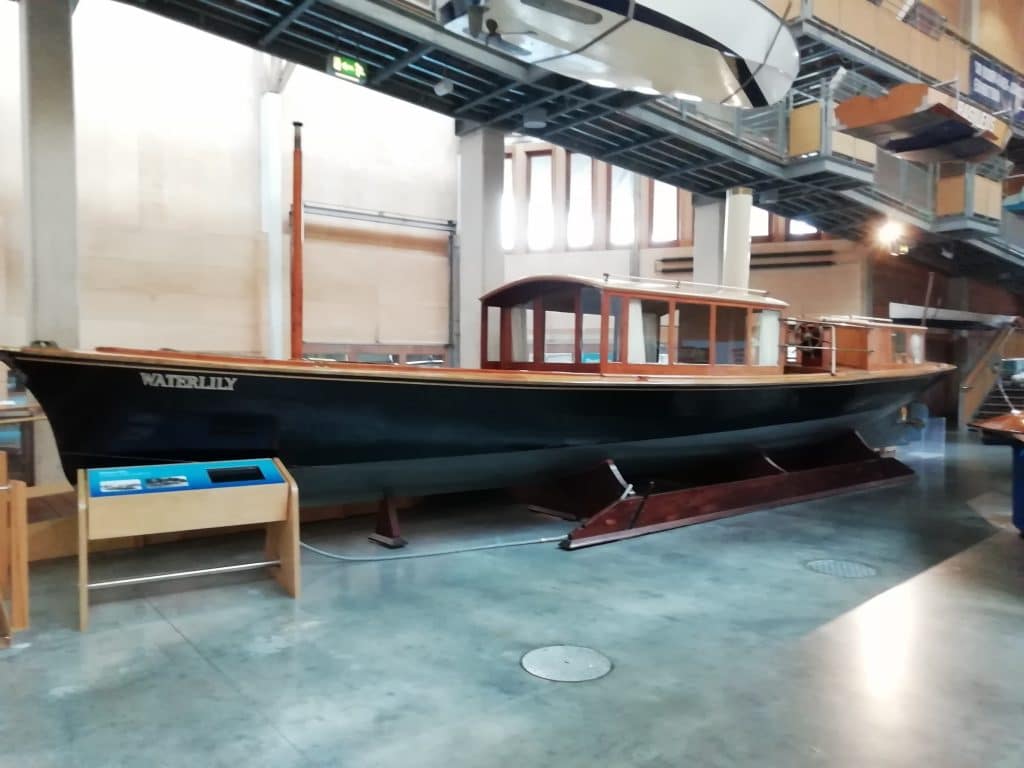
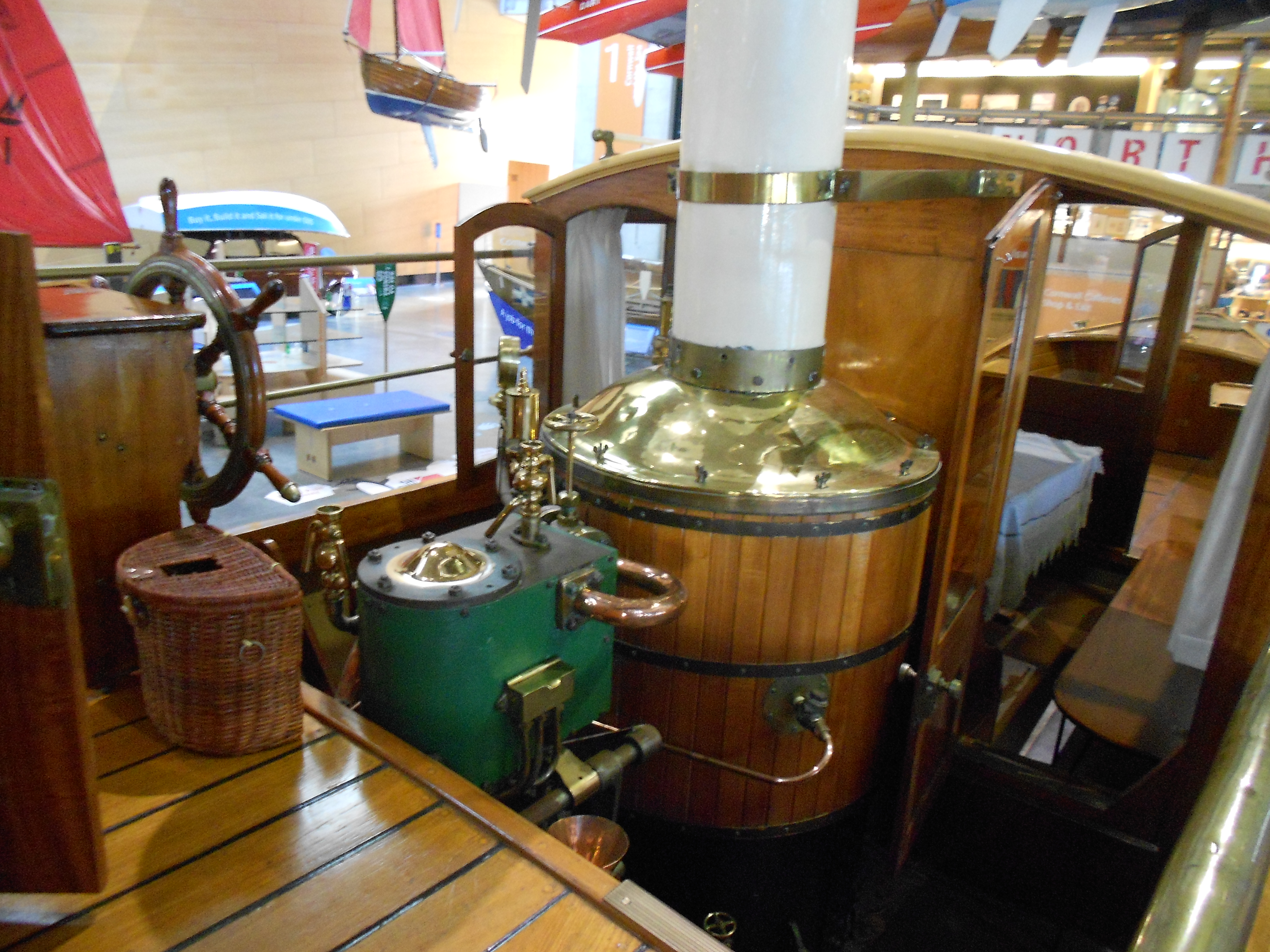
The most common form of man-powered water taxi in the 1800s was the ‘Inglesina’, so called due to its derivation from the pleasure boats deployed on the River Thames. Most of the boatyards on Lake Como built Inglesine either for private customers or to add to the fleet of boats used as taxis to ferry residents and visitors around the lake. The Inglesina Dulcinea was built in 1920 by the Cantiere Taroni in Carate Urio and on display at the Boat Museum in Pianello del Lario. (Cantiere Taroni are now based on Lake Maggiore in Stresa.) This hybrid model, designed to be either motor driven or man powered,  shows some of the design origins of the Vaporina. However the original Vaporinas were, as their name suggests, steam powered and again it was the River Thames that provided the inspiration for Lake Como’s boat builders.  One surviving example of an English ‘Vaporina’ is the Waterlily which was renovated back in 1977. It was constructed in 1866 by the Thornycroft Boatyards for the use of the Thornycroft family themselves and was converted from steam to a petrol motor in 1919. 

Waterlilly Thames Launch 1866

Waterlily, built by Thornycroft in 1866. One of the first steam powered Thames launches.

Waterlily Steam Engine

Waterlily was renovated back in the 1970s and had her original steam engine re-installed. Steam engines were heavy, put strain on the boat’s wooden hulls and were of course also quite dirty.

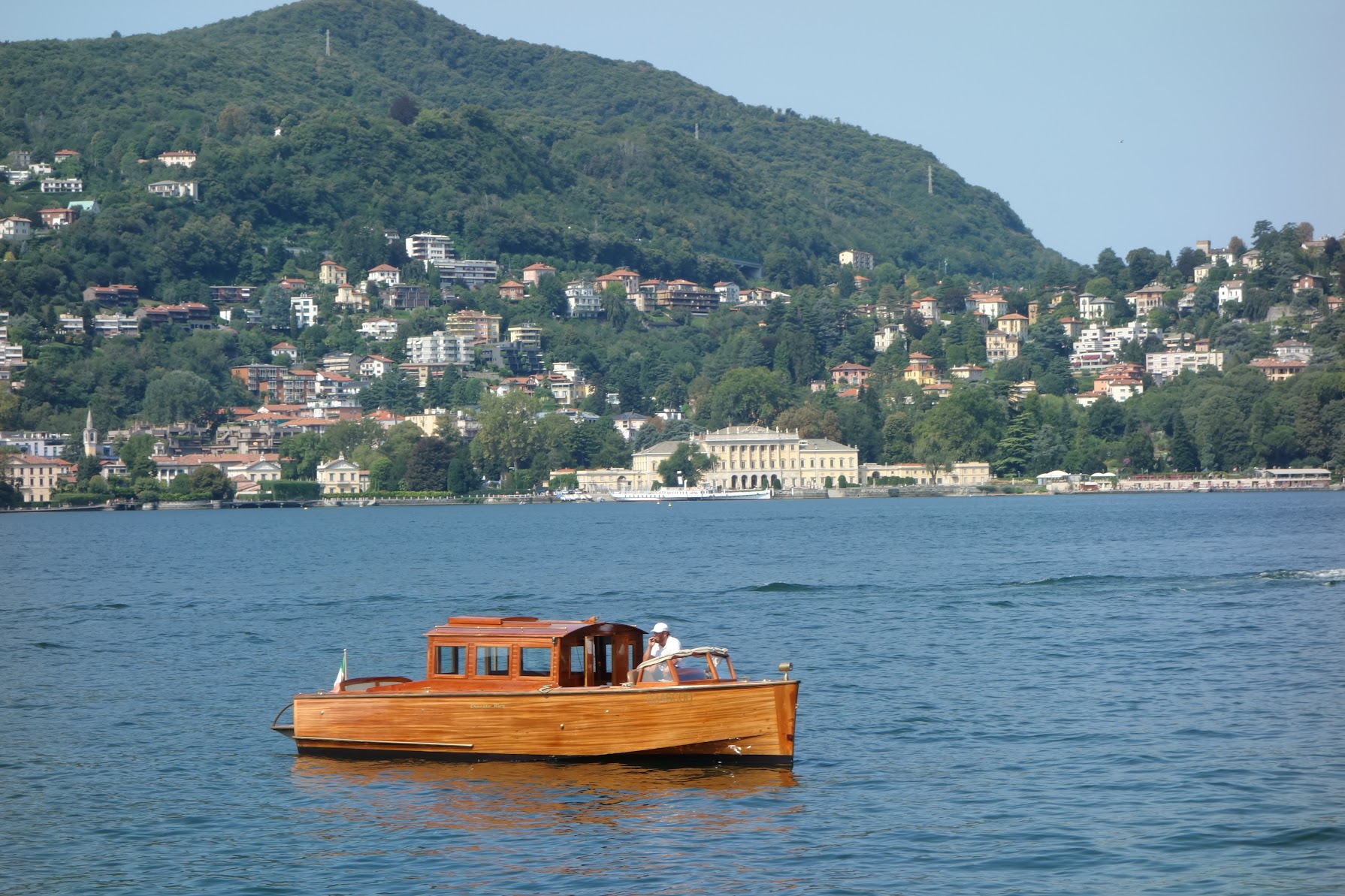
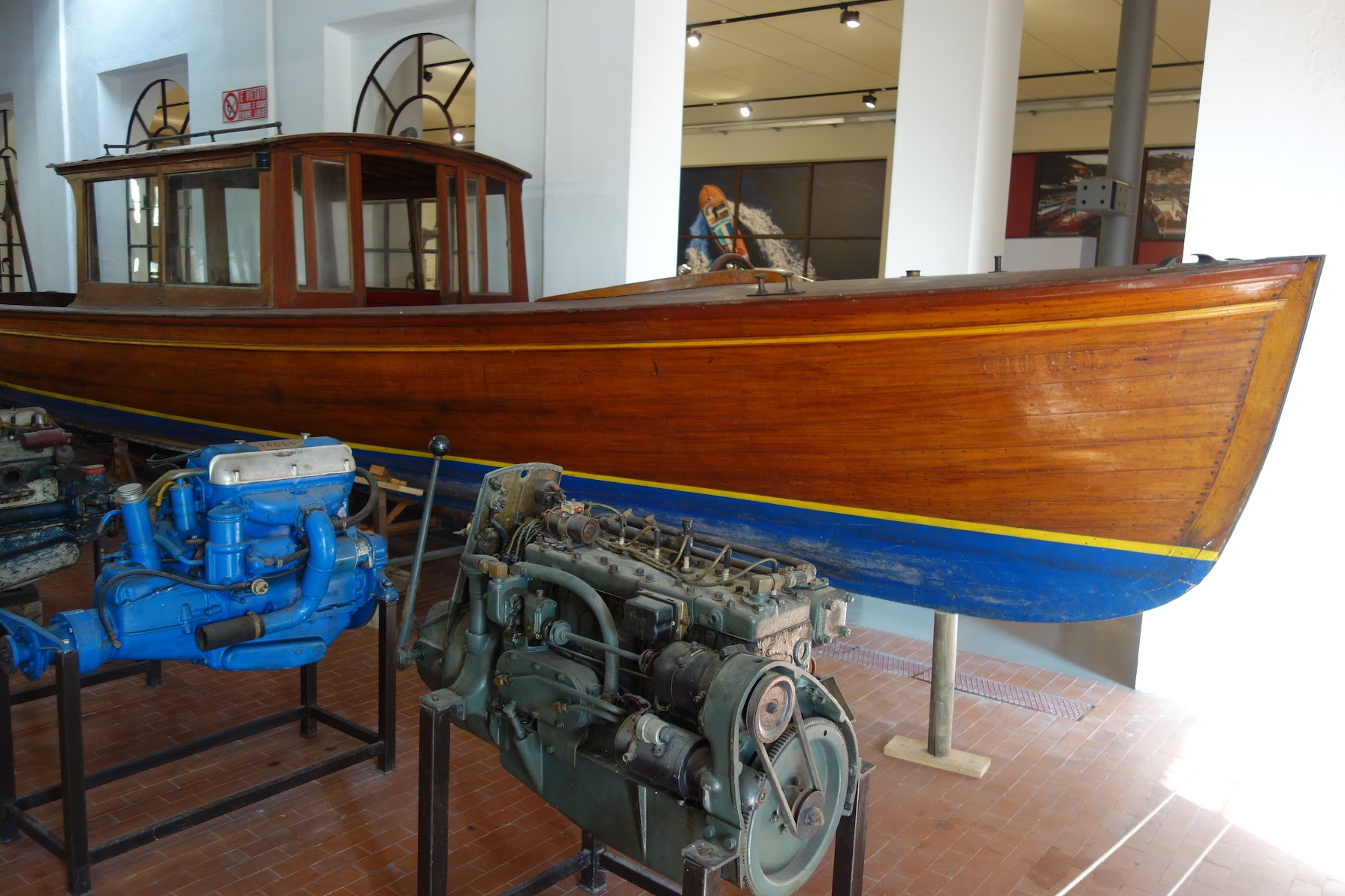
Throughout the early twentieth century the basic shape of the Vaporina became the standard form for boats intended for a limited number of passengers. The Boat Museum in Pianello have a number of examples including the ‘Quo Vadiz’ built in 1925 by the Cantiere Taroni. This boat was originally located by Villa Carlotta in use as a water taxi for the general public. It later passed into the hands of Oscar Kiss Maerth, a textile tycoon who acquired Villa Passalacqua in Moltrasio in the 1970s. There he moored the ‘Quo Vadiz’ and an earlier Vaporina the ‘Lario’ also built by the Cantiere Taroni in 1903 and now also housed in the Pianello Museum. Villa Passalacqua has recently reopened as a super luxury hotel and will no doubt soon be commissioning its own Vaporina to transport its guests if only to keep up with its prestigious neighbour, the Hotel Villa D’Este in Cernobbio, which has a Vaporina built by the local Cranchi boatyard in 1960.  None of these 20th century boats were powered by steam but the name Vaporina has stuck as identifying a particular style of boat of a certain dimension and common profile. 

vaporina quo vadiz museo

The ‘Quo Vadiz’ was built by Cantiere Taroni in 1925 and went into service as a water taxi near to Villa Carlotta. It then was purchased for use at Moltrasio’s Villa Passalacqua. It is now on display at the Museo Barca Lariana.

Cantiere Ernesto Riva

There is one boatyard on Lake Como, actually the oldest one, which has made a speciality of renovating and re-introducing Vaporinas on the lake. That is the Cantiere Ernesto Riva, established back in 1771 in Laglio where they still retain offices but with their main workshop now in Maslianico.  Ernesto Riva restored the Vaporina Laura, built in 1908 and operated by Barindelli Taxi boats (a company still providing a water taxi and boat hire service in Bellagio) both for transporting tourists but also for assisting in the movement of contraband goods from Switzerland. 

Vaporina Laura

Cantiere Ernesto Riva renovated the Vaporina Laura

Looking at Laura, we can see the cockpit in the stern is similar to that of the Inglesina Dulcinea while the deck-house is derived from Waterlily which in turn is reminiscent of the luxury man-powered gondolas of the 18th century. 

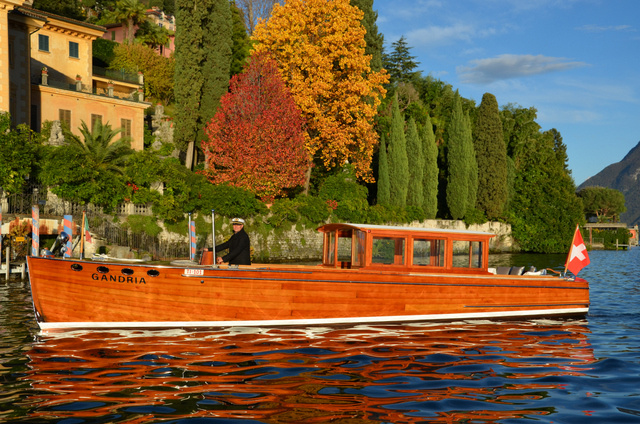
Il restauro di Gandria, un trasporto passeggeri del 1948

Cantiere Ernesta Riva completed renovation of the 1948 Vaporina Gandria back in 2013.

In 2013 the Ernesto Riva boatyard restored a larger Vaporina, the Gandria, constructed in 1948 and named after the town on Lake Lugano where it was in service. All of this recent experience meant the boatyard was more than qualified to take on a prestigious commission when approached by the owners of the Villa Pliniana in Torno. They wanted a water taxi for the use of their guests at the Villa Pliniana and for their nearby hotel then under construction, Il Sereno.

Como Style and Practicality – the New Vaporina

IlSerenoHotel_PatriciaUrquiola_cPatricia-Parinejad_2979_LOW-1024x682

Staircase of the hotel Il Sereno whose interior and exterior were designed by Patricia Urquiola who also designed the interior of the Vaporina’s deck-house.

Il Sereno exudes luxury and style built using traditional materials of wood and stone but offering wide open vistas over lake and mountain. The interior and exterior design was entrusted to Patricia Urquiola who made best use of the hotel’s idyllic location. While the hotel’s design pays reference to the traditions of local construction, its design is uncompromisingly modern, So whilst we can readily appreciate the commissioning of a boat constructed out of wood by artisans like Cantiere Ernesto Riva, we might wonder why they approved a seemingly retro design. I believe they wished to retain all the past associations with the lake, particularly those of style and luxury, but to redefine them in a boat that applies the latest technology to ensure a practical and ergonomic design –  a small reflection in part of the hotel’s own design brief. They wanted a boat  (and a hotel) that could become as iconic of Lake Como as those sleek water taxis have become for Venice.  It makes perfect sense that Patricia Urquiola should be asked to complete her brief by also designing the interior of the Vaporina’s deckhouse.

Bertorello

Professor Bertorello

Apart from the interior of the deckhouse, the Vaporina was designed by Professor Carlo Bertorello, a naval architect with more than 40 years experience who is currently an academic teaching and researching ship design at the Federico II University in Naples.  A first glance at the boat’s profile shows it has more in common with Waterlily, Laura or Gandria than in any of the sleek Venetian launches. It stands taller, appears broader with its squared deck-house making an immediate visual impact.  The wheelhouse is at the front,  reminiscent of the early days of chauffeur-driven cars where the driver remained open to the elements. The cockpit at the back provides open air seating for guests.

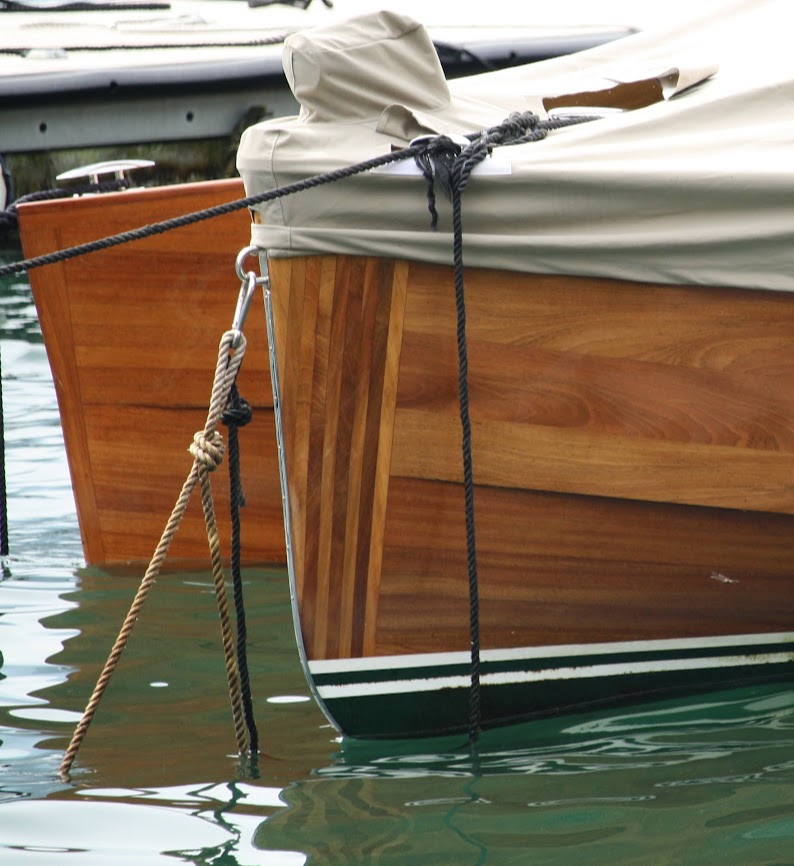
vaporina woodwork

This detail of the Vaporina’s prow shows the quality and beauty of the workmanship in wood – mahogany and Oregon cedar.

But its what cannot be seen that makes the Vaporina so innovative. Based on  the studies of Professor Bertorello and the knowledge and expertise of the boatyard, the hull has been built slightly twisted so as best to cut through the typically short wavelengths found on our lake. 

This adaption means the Vaporina does not require the same degree of power to drive it through the water as do other boats. It does so creating less spray with a reduced wake which makes the ride more comfortable and quiet. The comparison of the reduced wake and the calmer waves arriving to shore with those of a Venetian launch travelling at the same speed is remarkable and can only be good news for the environment.

The Vaporina may look a little retro but its ergonomic design creates less turbulence, is quieter and more energy efficient. As a result, although the original Vaporina was powered by diesel, they quickly went on to take advantage of the design’s ergonomic efficiency to build other models entirely powered by electricity – the Elettra. 

elettra

Elettra – the latest Vaporina from Cantiere Ernesto Riva, entirely powered by electricity.

Further Innovation

A novelty this year for Il Sereno’s guests is to take a gourmet hamper prepared in the hotel’s kitchens for an outing on a newly-renovated Inglesina – also from the Ernesto Riva boatyard.  Here is how the ‘Inglesina’ experience has been advertised:

New for 2022, the Inglesina is a beautiful rowing boat built right on Lake Como in the 1930s for English tourists, according to the characteristics of the Thames boats, by Daniele Riva’s great-grandfather, who built the other boats of Il Sereno a mano. This classic and elegant boat – later used in a hotel in St Moritz for 30 years, on Lake Varese in the 60s and near the island of Cypresses – then returns to its native land. The guests of Il Sereno Lago di Como will thus be able to enjoy a romantic trip lulled by the waters of the most famous lake in Italy, also pampered by a luxury picnic, designed by Chef Lenzi and proposed in an elegant basket handmade by the Milanese boutique Larusmiani.

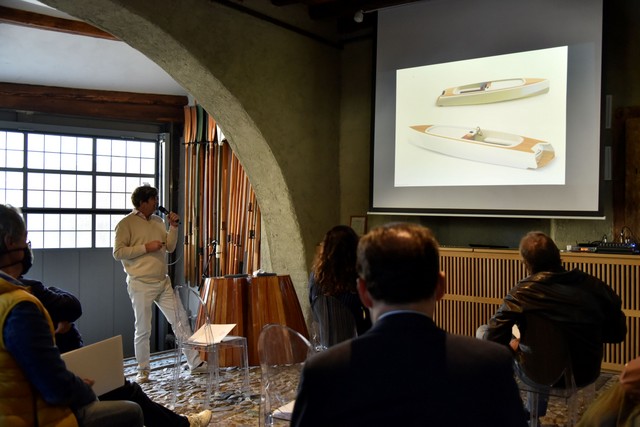
While the yard continues the manufacture or renovation of traditional boats like the Inglesina or the Lucia, they have not halted their programme of innovation. Their latest high-tech project is done in collaboration with Mani Frers, the German yacht designer. It is a 7 metre electric powered E-Commuter. 

German_Mani_Frers

Mani Frers presenting his E-Commuter project at the Laglio yard of Ernesto Riva

Conclusion

The name Vaporina has been adopted for a style of boat which is developing into a Lake Como native. Design elements may have been borrowed over the years from various sources but Lake Como’s modern day Vaporina has been designed to meet the very specific hydrological characteristics of our lake. The Venetian style taxis are undoubtedly elegant but the Vaporina has that more imposing profile which makes her stand out no matter how far from shore. She can also travel as fast as the Venetians if asked but why would you want to rush your time aboard her. 

Much of the success of the Vaporina must also be put down to the skills and experience of the Cantiere Ernesto Riva. Back in the early part of the 20th century the Cantiere Taroni, then based in Carate Urio,  may have led the field in the building and design of these water taxis. But when Taroni moved to Stresa they left the field open to Ernesto Riva and their current director, Daniele Riva, to build boats custom designed for Lake Como’s waters. It was also their  foresight to remain committed to wooden construction when many others were moving over exclusively to fibreglass.  This meant that all the necessary skills were in place to allow them to undertake prestigious renovation projects like Gandria. In turn they could then apply these skills to further innovative design such as the Vaporina and beyond.

Further Information

Como Classic Boats are the rental arm of the Cantiere Ernesto Riva. Contact them to hire one of the beautiful boats from their fleet. They are based in Laglio at the old boatyard site. Contact them via info@comoclassicboats.com or on +39 327 74 62 571.

Tours of Cantiere Ernesto Riva’s production site in Maslianico and yard in Laglio can be booked via https://ciceroexperience.com/it/experience/cantiere-riva-lago-di-como

There are a number of water taxi companies operating on the lake. Go to our page Boat Hire and Water Taxis for more information.

More details about the luxury hotel Il Sereno are available on their website and also that of Studio Urquiola.
More details about the Cantiere Ernesto Riva are available on their website. 

For anyone interested in the tradion of boat building on Lake Como, a visit to the Museo Barca Lariana is highly recommended.

Further Reading

Boat building is one of the primary artisan skills around the lake and Lake Como’s boatyards have won worldwide acclaim for their products as well as having picked up numerous trophies and awards. We have written two previous articles about them with Lake Como’s Boatyards: The Champions  focussing on successes in power boat and sail boat racing and Lake Como’s Boatyards: Luxury Boats  giving a more general view of luxury boat production through the centuries.

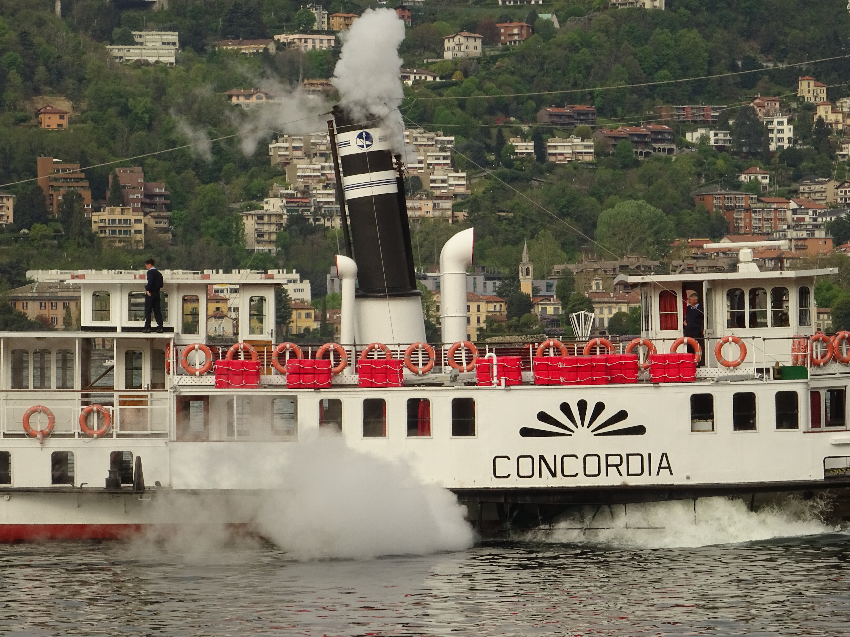
‘Concordia’ is the last remaining fully renovated steam passenger ship in active service since 1926 on the lake. This article goes into its history with photos of its elegant interior and exterior. Check the website of Navigazione Laghi for details of when she is in service or if they are reintroducing Sunday evening mini-cruises with aperitif.

Concordia

Posted in Architecture, History, industry, Lake, Places of interest | Tagged , , , , , , , , , , , , , | 5 Comments

Moltrasio: The Power of Civic Pride

moltrasio

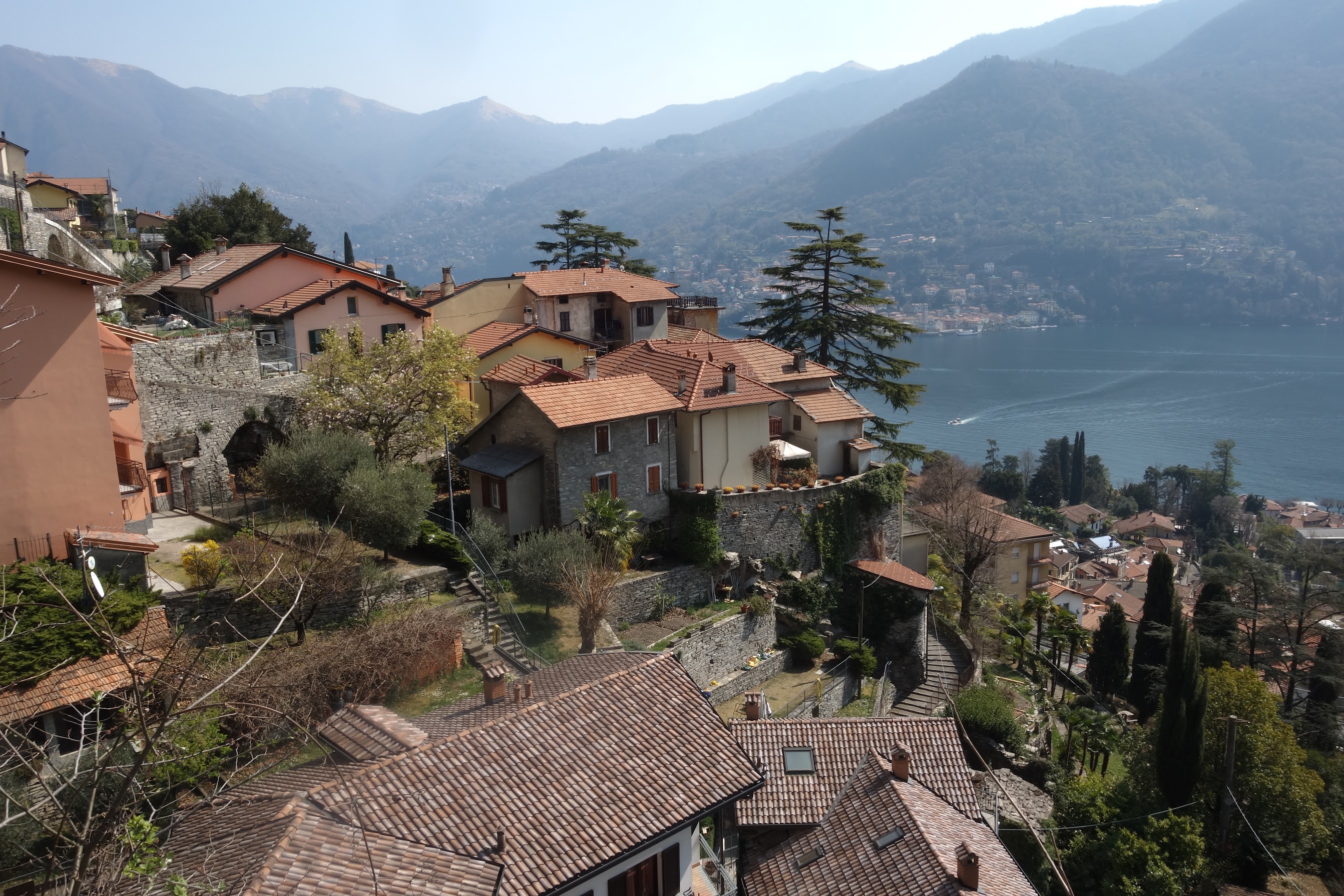
Moltrasio – from top to bottom

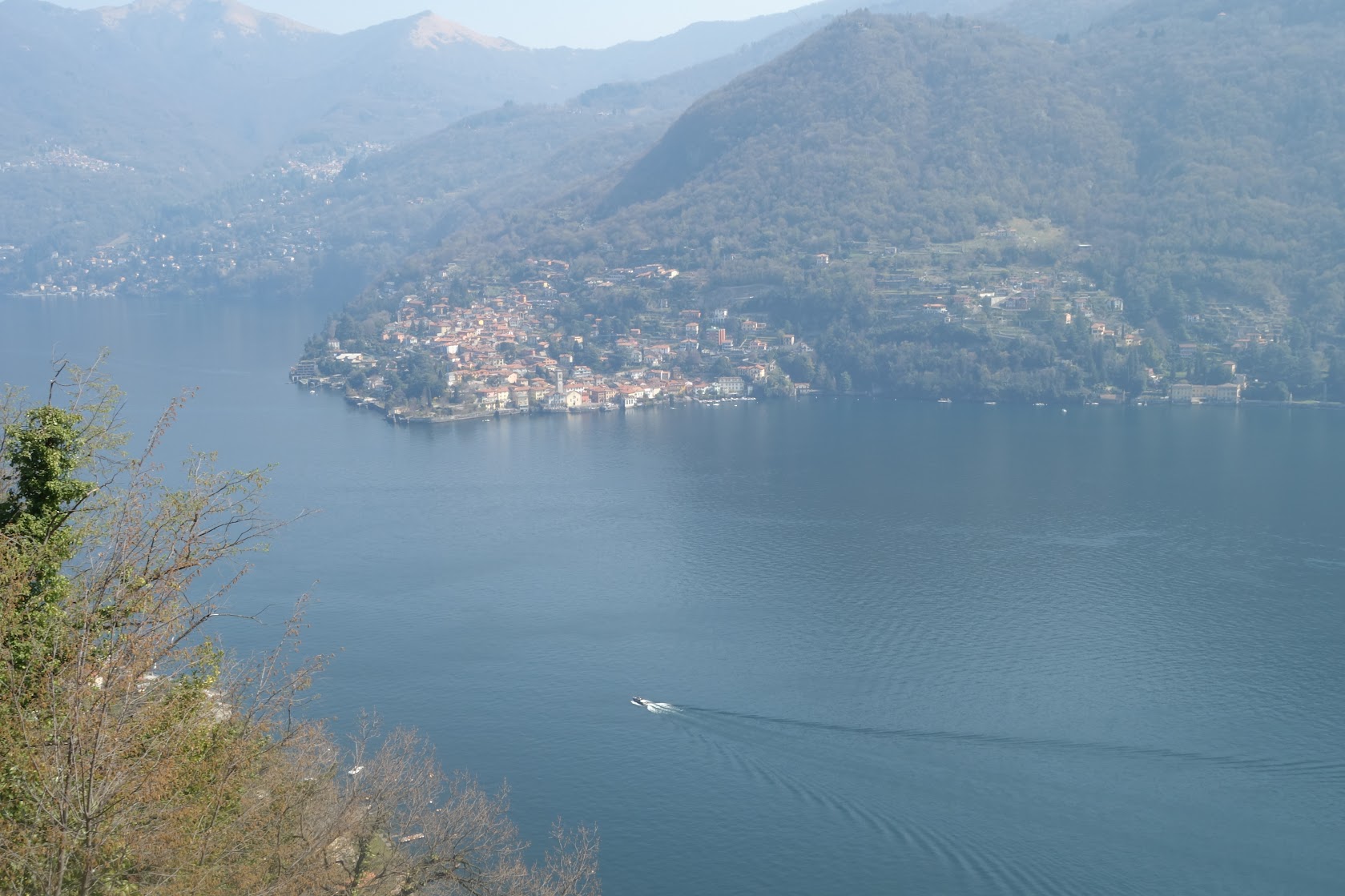
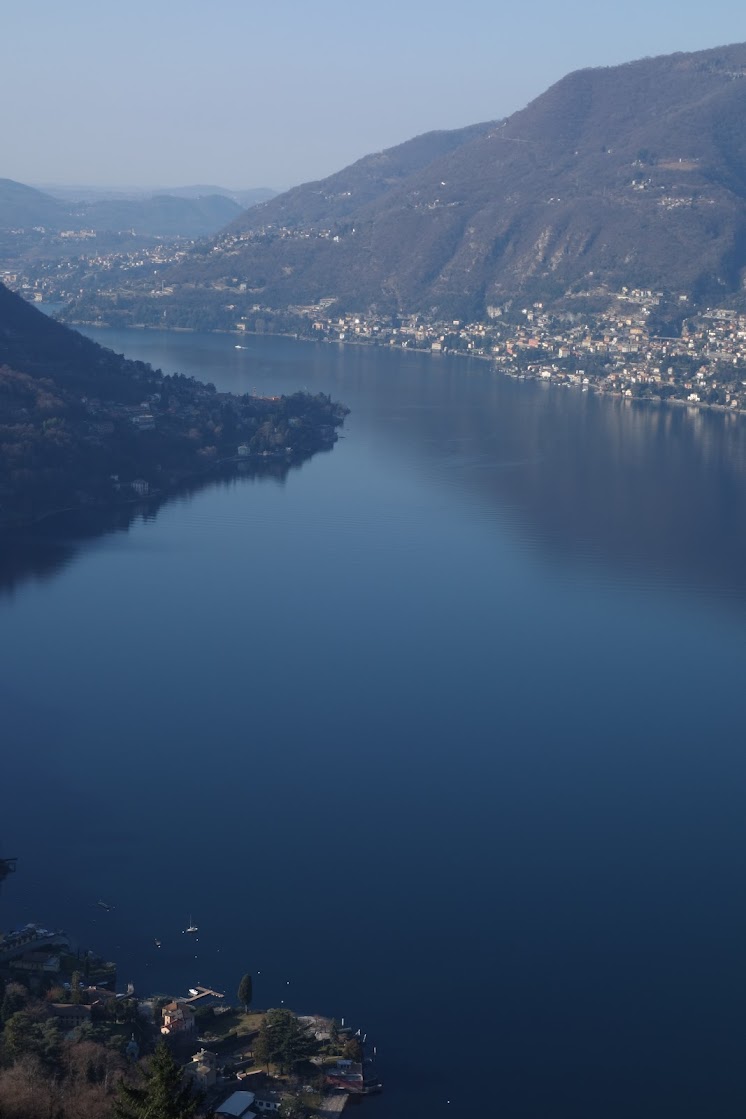
Moltrasio is a small town on the western shores of Lake Como 10 kilometres north of Como itself. It nestles within a valley carved out by two mountain streams, the Pizzalo and Arbusel,  which come together at the town’s centre.

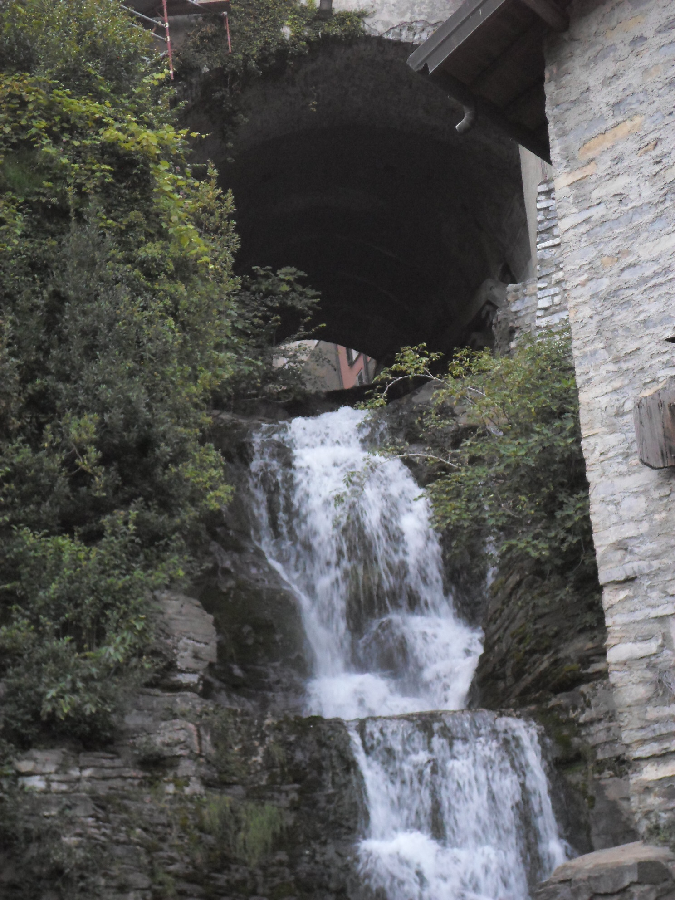
arbusell

The Arbusel is the second of Moltrasio’s mountain streams which cascades down through the centre of the town where it joins the Pizzallo to then flow into the lake.

The town lies on the old Roman Via Regina that ran from Cremona to Chiavenna via Milan. The same road also formed the later medieval Via Francigena Renana, a route from Rome that crossed the Alps into Northern Europe by the Splugen Pass. A roman bridge, known locally as the Ponte del Pasett, still stands where the Via Regina crosses the Pizzallo. With a mere population of 1,600 people, but with an abundance of cultural, architectural and archaeological interest, Moltrasio plays way above its weight in the welcome it extends to all visitors.  

So many communities on the lake are vying with each other to attract the attention of visitors. Bellagio is undoubtedly the winner and clearly justifies its title of jewel of the lake. Bellagio is a beautiful town but to my mind, its attractions stop there. Moltrasio is not so perfectly groomed as Bellagio but its charms are more varied;  its atmosphere is more relaxed and its welcome more sincere. Bellagio’s combination of exclusivity and magnet for day trippers runs the risk of it becoming a living museum or a rich man’s ghetto like Portofino. Moltrasio runs no such risk – it is a living community of all ages and, what is more, a proud community committed to the well-being of their town.

Pro Moltrasio

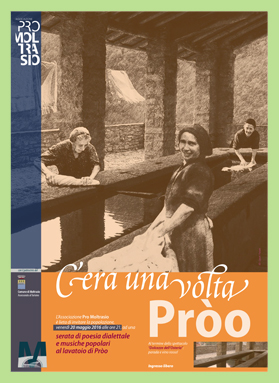
lavatoia

Just one of the many publications by Pro Moltrasio promoting local tourism. The association also provides bi-lingual information boards at all of the sites of historical, cultural or archaeological interest.

The work and commitment of voluntary associations is of primary importance in supporting the quality of everyday life in Italy – maybe more so here than in other developed countries due to the limited funds, functions and efficiency of state organisations.  ‘Pro-Loco’ associations that promote the social, cultural and economic life of their communities thrive in many small towns. Moltrasio is fortunate to have a particularly active ‘Pro-loco’ working to attract sustainable tourism to the town. They have achieved some considerable success and can boast a great bi-lingual website that provides visitors with a mass of information and suggestions on what to see and visit. 

The recent success of the FAI Open Day in Moltrasio is just one illustration of this group’s effectiveness. FAI (the Fondo per l’Ambiente Italiano) is an equivalent organisation to the United Kingdom’s National Trust. Their bi-annual Open Days offer the general public the opportunity to visit sites of special cultural or historic interest guided by local experts. The latest FAI weekend was on the 26th and 27th March and in the case of Moltrasio, there was no specific villa on show but the whole town itself. Over the weekend groups of up to 15 people departed every 15 minutes from Piazza San Rocco alongside the Imbarcadero on a round tour of the town taking about two hours. This called upon a mass of volunteers to either guide the groups around the town or to provide information at any of the key points of interest along the route. 

Stone and Water

cascata Pizzallo

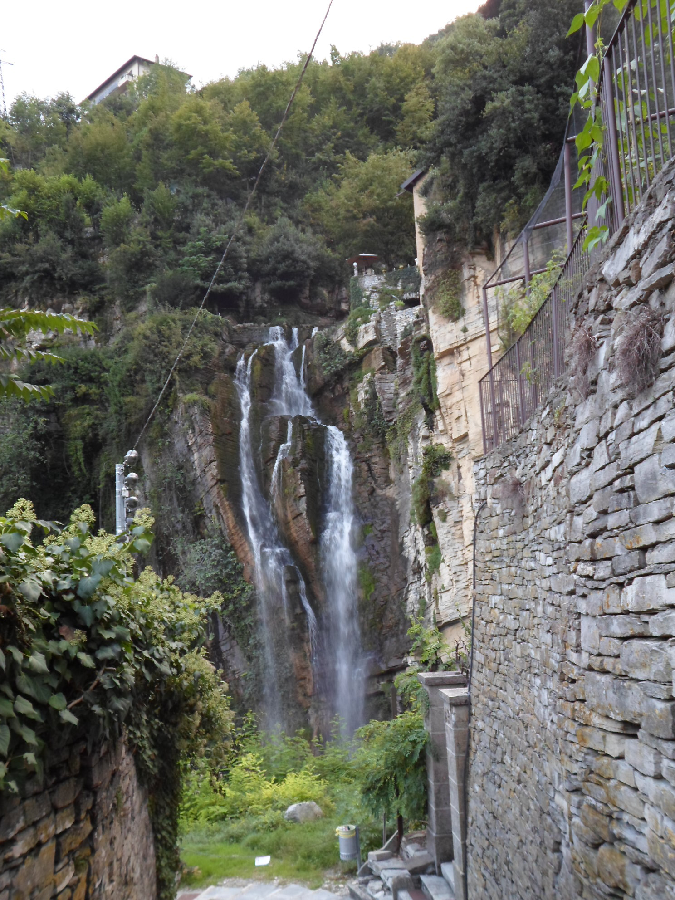
The Cascata Pizzallo visible from the main road from Como to Argegno

Even those driving through Moltrasio on the direct road (rather than the lakeside route) to Argegno will notice the massive waterfall alongside the viaduct that goes over the heads of the houses below. This is the Cascata Pizzallo named after one of the town’s two main mountain streams. Further down in the town, the waters of the other stream, the Arbusel, tumble down precipitously toward the lake. Moltrasio in the past made good use of these streams to power up to eleven separate mills. 

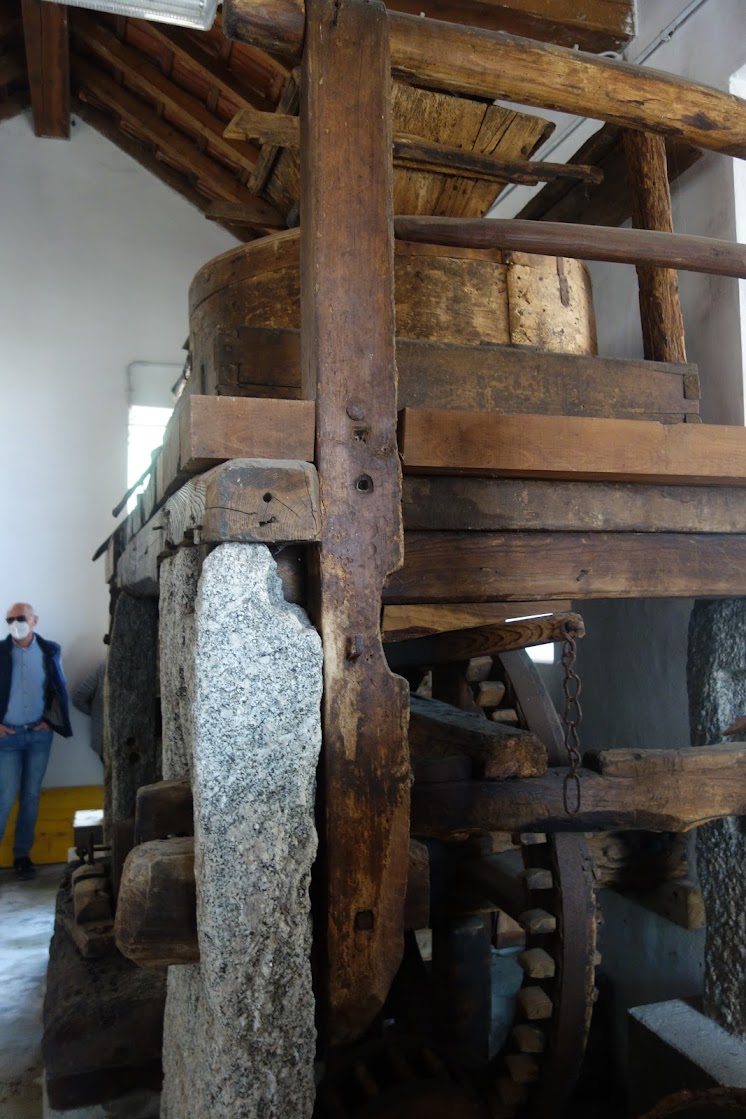
old mill

The workings from one of the old mills now transferred and preserved in a building near to the Cascata di Cam. The mill stone is made from granite – not the natural stone of Moltrasio but brought down to the area by glaciation from the Valtellina.
Moltrasio’s other gift of nature is stone. Moltrasio stone is used in construction all across Lake Como. It is a hard sedimentary rock that is relatively easy to separate out into slabs of differing thickness. It is the stone used in Como’s city walls, in the terracing that covered the hillsides around the lake, in numerous buildings and with the waste shards used to pave the old mule tracks and mountain paths. 
sentee di sort

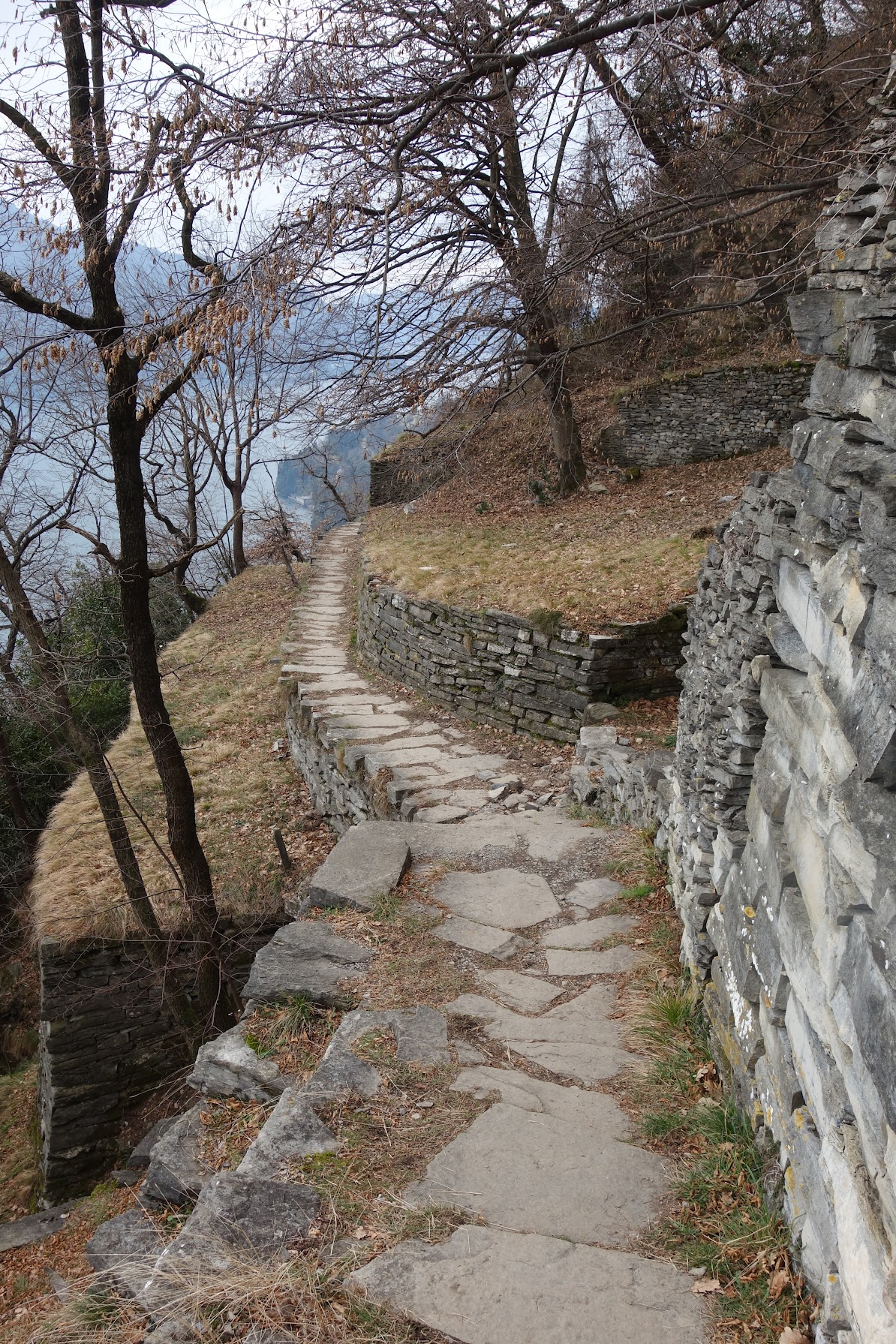
The Sentee di Sort is a path that links Moltrasio to Rovenna above Cernobbio. The path here is made from slabs of Moltrasio stone as are the walls of the terraces. The path passes some of the now disused stone quarries.

The mountain path that links Moltrasio to Rovenna above Cernobbio  – the Sentee di Sort – takes you past many of the old quarries. The old ways of working stone were demonstrated on the FAI Open Day by Pro-Moltrasio members at the disused quarry at Cavirolo. Householders whose properties backed on to the mountainside would also have profited from their location to quarry the stone in their back gardens and use it either for their own building or for the use of others. 

From Stone and Water to Food and Culture

Stone and water provided the basis for Moltrasio’s economy in years past to which must be added the profits made during the romantic era of smuggling with the Swiss border running right by the Rifugio Bugone above the town. It has also been a popular tourist destination for many years with visitors from Como and beyond coming out in the summer months to enjoy an ice cream at La Vecchina right by the Imbarcadero. 

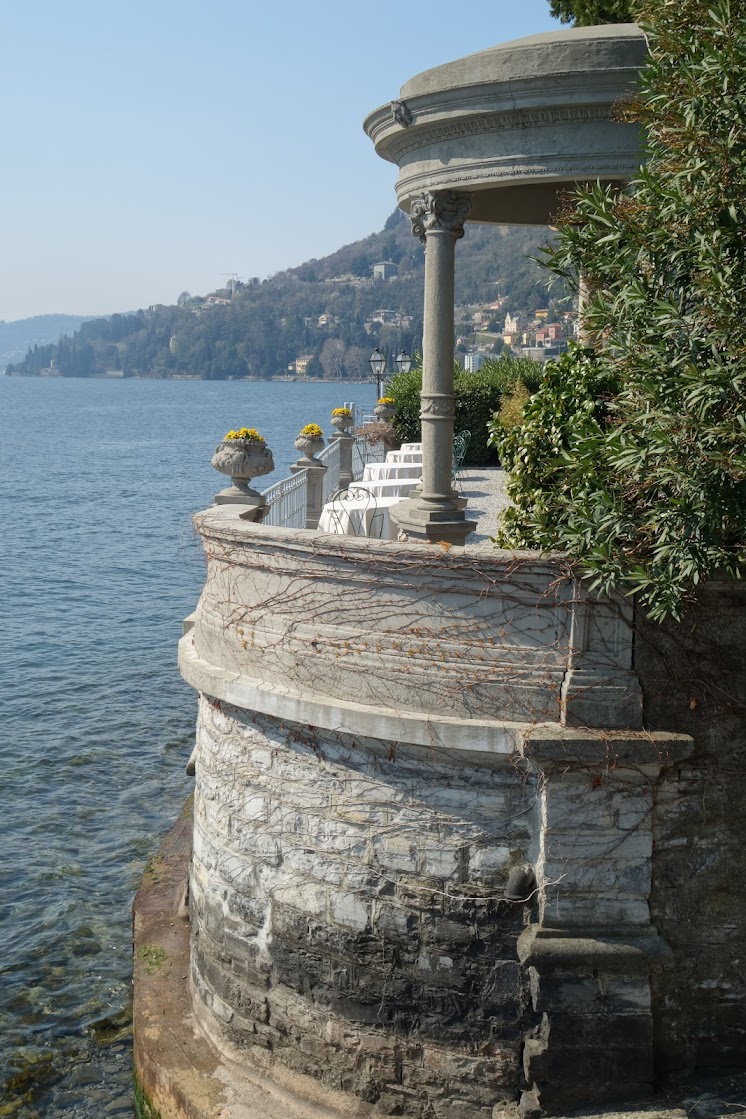
The range of dining options in Moltrasio matches the range of its social classes – and as elsewhere on the lake, the town’s social strata tend to follow the geographical layout. So, you can dine in exclusive and more costly circumstances on the lakefront itself at the Ristorante Imperialino with its magnificent terrace directly on the lake or move up the valley to dine equally well but in more modest surroundings and at less cost in the long-established co-operative La Moltrasina just behind the town’s main church. 

fine dining

The terrace of the Ristorante Imperialino on the lakefront.

The Moltrasina co-operative was established in the 1900s with the aim of providing food and wine to the town’s residents at reasonable cost. It, like the Association Pro-Moltrasio, is a living example of the civic pride of Moltrasio’s citizens in that the co-operative still boasts over 280 active members still committed to its original aims. It continues to provide a social and cultural centre for the locals as well as being open to everyone to come and eat well at a modest price.

If you are looking to try out genuine local cuisine you can also head for the Crotto Val Durino to eat missoltini, risotto di pesce persico or the gut-busting cazuela when the season is right. 

For those prepared to climb up to the summit of the mountain behind the town, you will also satisfy the appetite gained by eating at the Rifugio Bugone – a former border guard post with an honourable history during the war of assisting Jews, ex Prisoners of war and others escape the fascist state to reach safety in Switzerland.

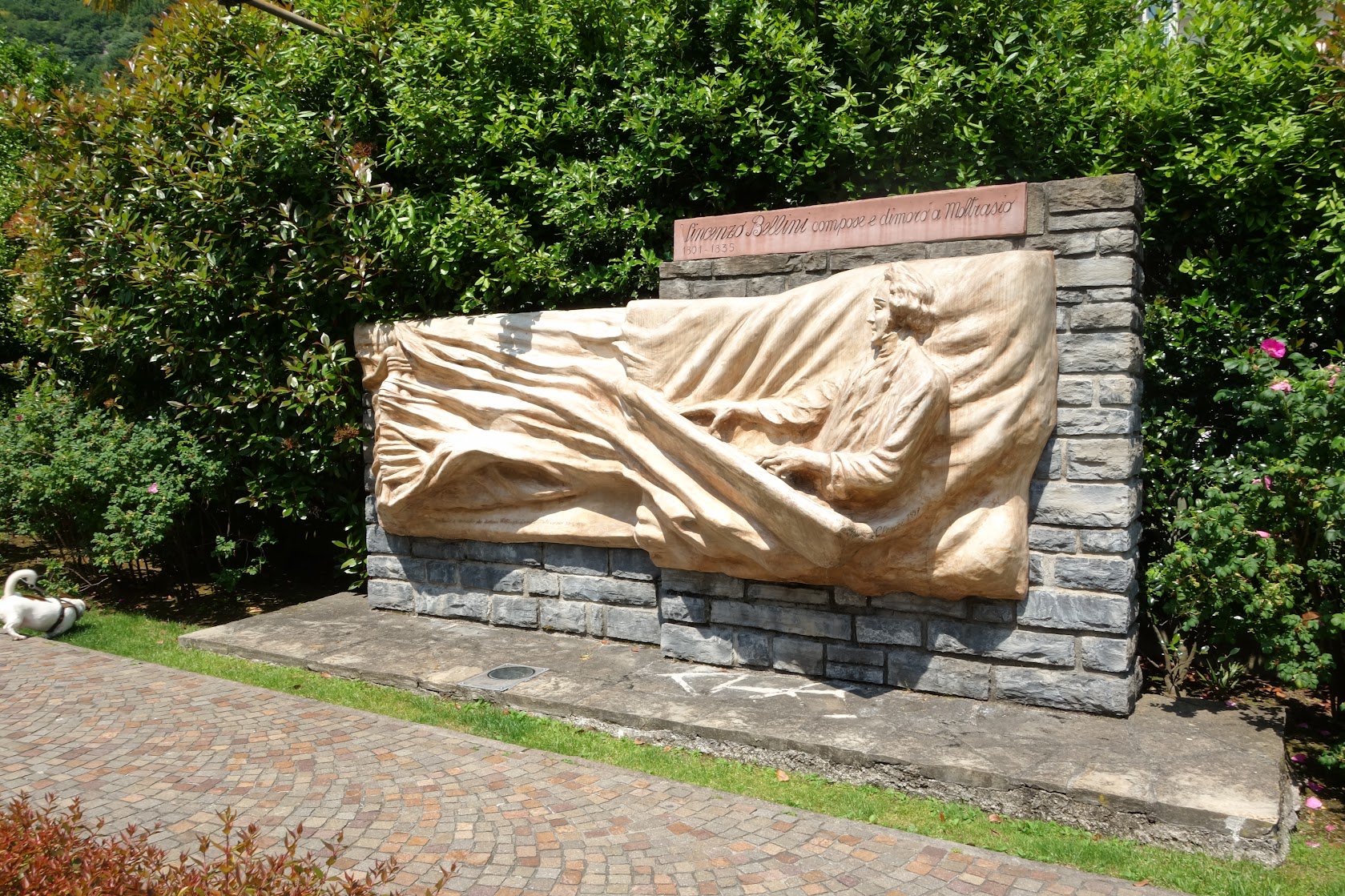
bellini memorial

The memorial to Vincenzo Bellini by local artist Massimo Clerici. Bellini lived in Moltrasio from 1829 to 1833, a period in which he composed many of his best known operas.

Two sculptures by local artist Massimo Clerici on the lakefront highlight Moltrasio’s cultural connections with its star visitor being Vincenzo Bellini who lived on and off in Moltrasio with his lover, Giuditta Cantù, from 1829 to 1833 either in the Villa Salterio Ecker rented by her or as a guest at the nearby Villa Passalacqua. Bellini’s muse, Giuditta Pasta for whom he wrote Norma, lived across the water in Torno.  

The other sculpture was erected more recently in 2019 to honour the memory of Virgilio Ranzato, the so-called Italian king of operetta. He also spent years living in Moltrasio to where he returned shortly before his death in 1937.  

Villas

villa passalaqua

The Villa Passalacqua is due to open as a luxury hotel in June this year. Its terraced gardens descend down to the lakefront.

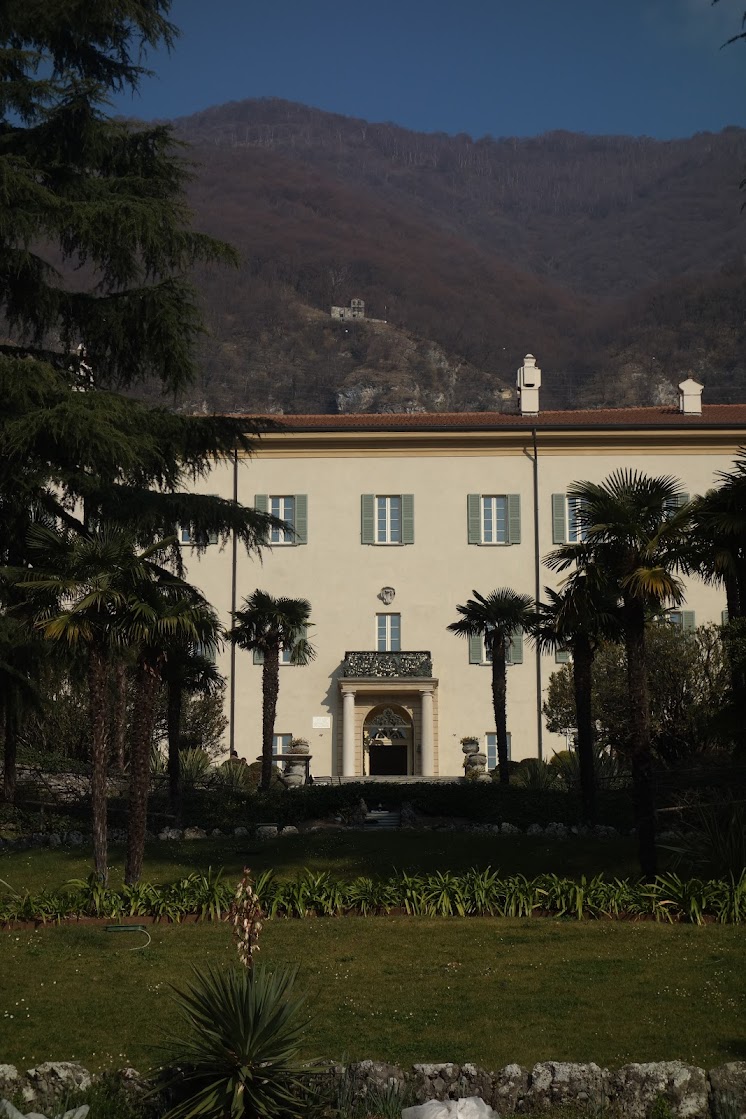
The lakefront at Moltrasio is as beautiful as anywhere else on the lake and a number of wealthy aristocrats or industrialists in the past have built and renovated villas along its shores. The largest and most impressive of all is the Villa Passalacqua, a neo-classical structure first erected by the Papal Odescalchi family in the late 1600s on the grounds of a former monastery. It subsequently took its current name once purchased by Count Andrea Lucini Passalacqua in 1787.

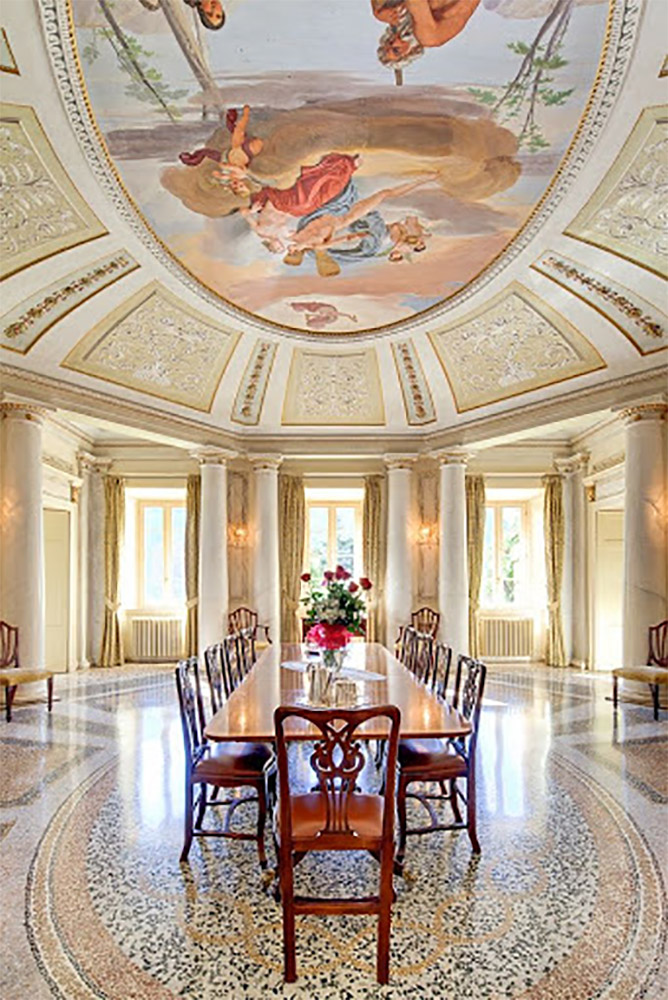
interno villa passalacqua

The Villa Passalacqua

The villa is on a level with the heart of the town above the lake but with an extensive terraced garden that goes right down to the lakefront.  It had a varied history throughout the twentieth century even being occupied for some time immediately after the last war by the British Secret Service. In 2021 it came under auction and was purchased by the De Santis family. De Santis has been renovating the villa and will reopen it as a deluxe hotel with its doors due to open in June (2022). De Santis is also the owner of another of the most luxurious hotels on Lake Como, the Grand Hotel di Tremezzo. The lobby of the villa boasts a sculpture at the bottom of the grand staircase by Auguste Rodin and many of the rooms on the piano nobile have frescoes by Andrea Appiani.

Illustrious Visitors

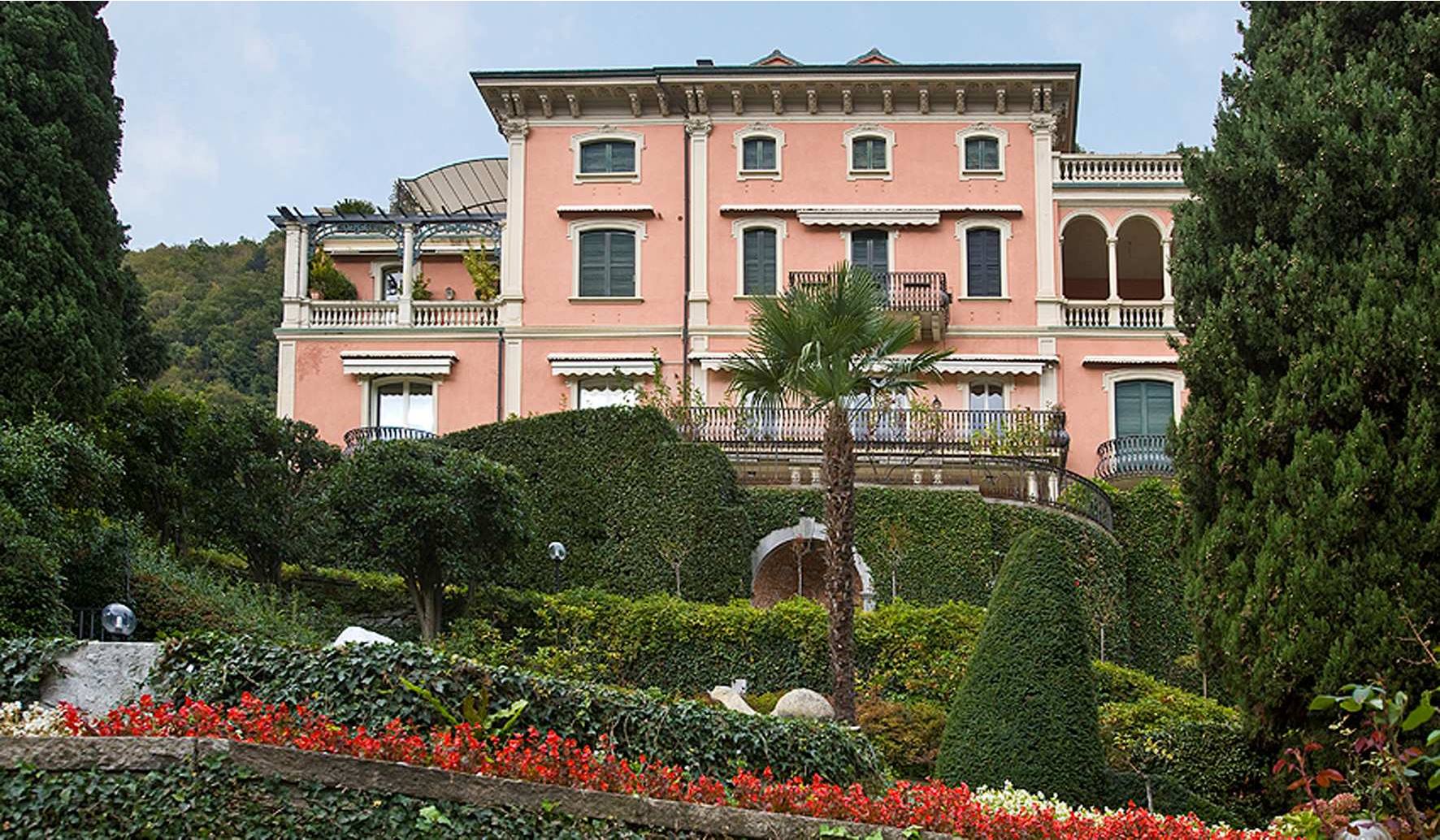
In addition to Vincenzo Bellini staying at the Villa Salterio Ecker, we should mention Gianni Versace who bought the Villa Fontanelle also on the lakefront. Napoleon was said to have spent some time at the Villa Passalacqua and more recently, Winston Churchill came to stay in Moltrasio after his election defeat in 1946 at the Villa Donegani – now known as the Villa La Rosa.

villa donegani

Villa Donegani, now known as Villa La Rosa where Winston Churchill stayed in the summer of 1946

Churchill’s visit to Lake Como has subsequently caused a mass of speculation as to his motives for the stay. Some historians and believers in the Churchill-Mussolini correspondence conspiracy (far too complicated to touch on here) believe he was trying to track down copies of these letters to prevent any disclosures. The Villa Donegani was occupied at the time by the British Army while the British were aiding its owner, the industrialist and director of what was to become Montedison, Guido Donegani, in avoiding arrest for corroborating with Mussolini’s fascist regime. An apartment in the Villa La Rosa is available for holiday rentals so current day visitors can, if they choose, follow in Churchill’s footsteps.

Conclusion

Pro loco quarries

Members of Pro Moltrasio demonstrating the traditional techniques for quarrying Moltrasio stone at the old quarry in Cavirolo during the FAI Open Days in March.

There are a number of excellent reasons for visiting Moltrasio and a look at the bilingual Pro Moltrasio website outlines much better than here what there is to see and do. Above all else, it is the pride taken by the locals in their promotional work which deserves recognition given how they have so helpfully set about making  so much information available to those wishing to visit. But for me what makes Moltrasio such a pleasure to visit is the sense that this is a living community determined to optimise the present and ensure the future for its inhabitants of all ages. 

View to Torno

A view from the top of Moltrasio over to Torno. In the past, Moltrasio and Torno were vowed enemies and Torno sacked the town back in 1522.

Their civic pride shows itself in many small ways, in the quality of the signposting of the different attractions, in their willingness to staff open days with so many volunteers and in the way they all seem to take care of their local environment. One very telling piece of evidence of this civic pride was that Moltrasio suffered no serious damage resulting from the massive rainfall that fell last July which caused mountain streams to surge downhill with destructive force. Whole buildings were destroyed in nearby Laglio by the force of the rocks and detritus brought down where two mountain streams converge. But in Moltrasio, where two equally forceful torrents converge, there was no damage and the ancient Roman bridge over the Pizzallo remained untouched. The difference was down to the fact that the Moltrasio inhabitants have always ensured they keep their water courses clean and free of rubble and their woods cleared of broken trunks and branches. Such commitment paid off then and will continue to pay off into the future as Moltrasio presents itself proudly to the world.

madonna del latte

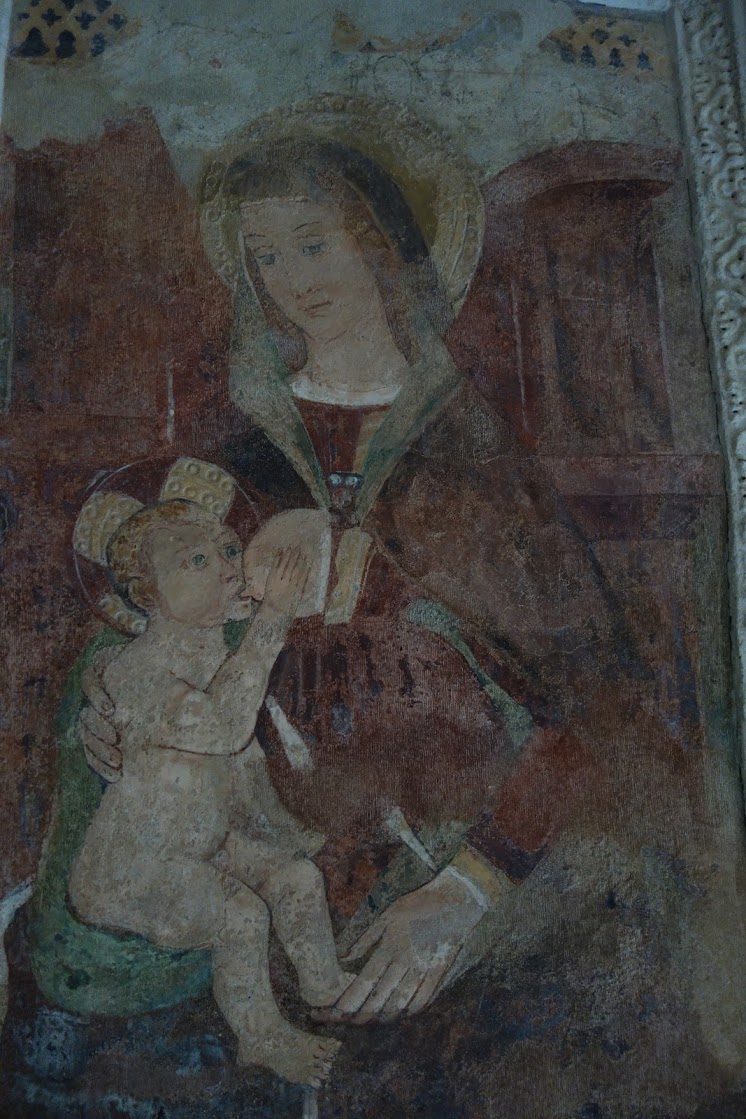
The Romanesque Church of St. Agata contains some early frescoes including this example of the Madonna del Latte. This image can be found repeated in a number of ancient churches around Lake Como and was venerated to encourage fertility.

Further Reading

Moltrasio has featured in a variety of Como Companion’s previous articles.

For walks, try out Sentee di Sort as well as the route from Carate Urio to Moltrasio via the Rifugio Bugone. 

The heroism and sacrifice of some members of the Guardia di Finanza assisting Jews and others to gain safety during the war in neighbouring Switzerland is described in Como’s ‘Viaggi della Salvezza’ – In Memory of the Holocaust.

Moltrasio even features as the setting of a famous turn of the 20th century true crime in our account of the Trunk Murder.

Moltrasio’s lido is an excellent spot for swimming in the lake. A look at our data on the quality of the water for bathing in the lake confirms the positive record for this beach over the last few years.

Posted in Architecture, Art, Culture, Food, History, Itineraries, Lake, Places of interest, Walks | Tagged , , , , , , , , , , , , | 3 Comments

‘James Bond’ Returns to Lake Como

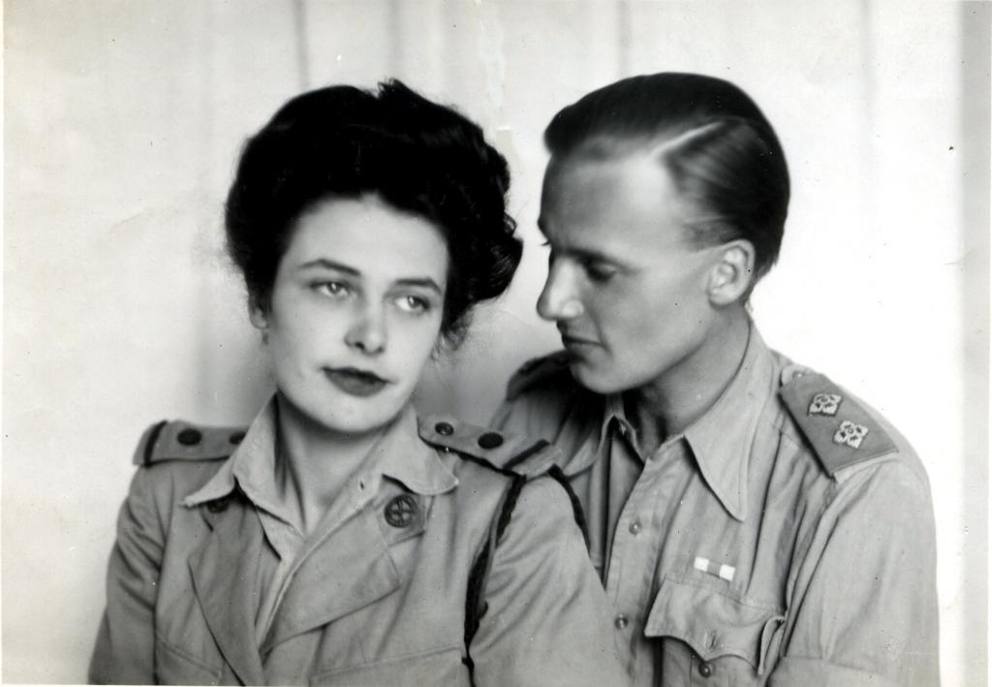
Dick and Christine Mallaby

Dick Mallaby with his wife, Christine

Back in June 2021 we recounted the exploits of Dick Mallaby, a British secret agent who, on being parachuted into Lake Como and immediately arrested, went on to provide the only communication channel available for those negotiating the Italian Armistice in September 1943.

Faggeto Lario

Dick Mallaby parachuted into Lake Como around 2.00am on August 14th 1943 in the area of the lake shown in this photo between Faggeto Lario in the foreground and Carate Urio on the further bank. He was detected immediately and arrested.

He then spent most of the remaining war years in a training role but he had not seen the last of Lake Como. Dick was an agent of  the British Secret Operations Executive (SOE) reporting to its boss in Bern, Jock McCaffery. The Americans also had their own secret organisation based in Bern known as the Office of Strategic Services (OSS) headed by Allen Dulles. 

Although desperate to undertake another mission behind enemy lines, McCaffery was concerned that Dick would be too readily recognisable in Italy due to the fame of his former exploits. However, come February 1945, when allied victory was almost guaranteed, SOE relented and sent him once again to Lake Como.  It initially appeared as if fortune was going to be no kinder on this occasion than in 1943. He was almost immediately arrested and again carted off to Como to be interrogated by Paolo Porta, the fanatical Head of the local Brigate Nere, who  was to face execution with other fascist leaders on the lakefront in Dongo just over two months later. Dick was able to keep good luck on his side as he managed, truthfully or otherwise, to pose as a potential go-between in secret peace negotiations between the fascist authorities and the local heads of the allied Secret Services based in Bern, Switzerland. Once again Dick Mallaby found himself an active participant in another crucial moment of diplomatic intrigue.

The Mission

alla_scoperta_della_val_cavargna

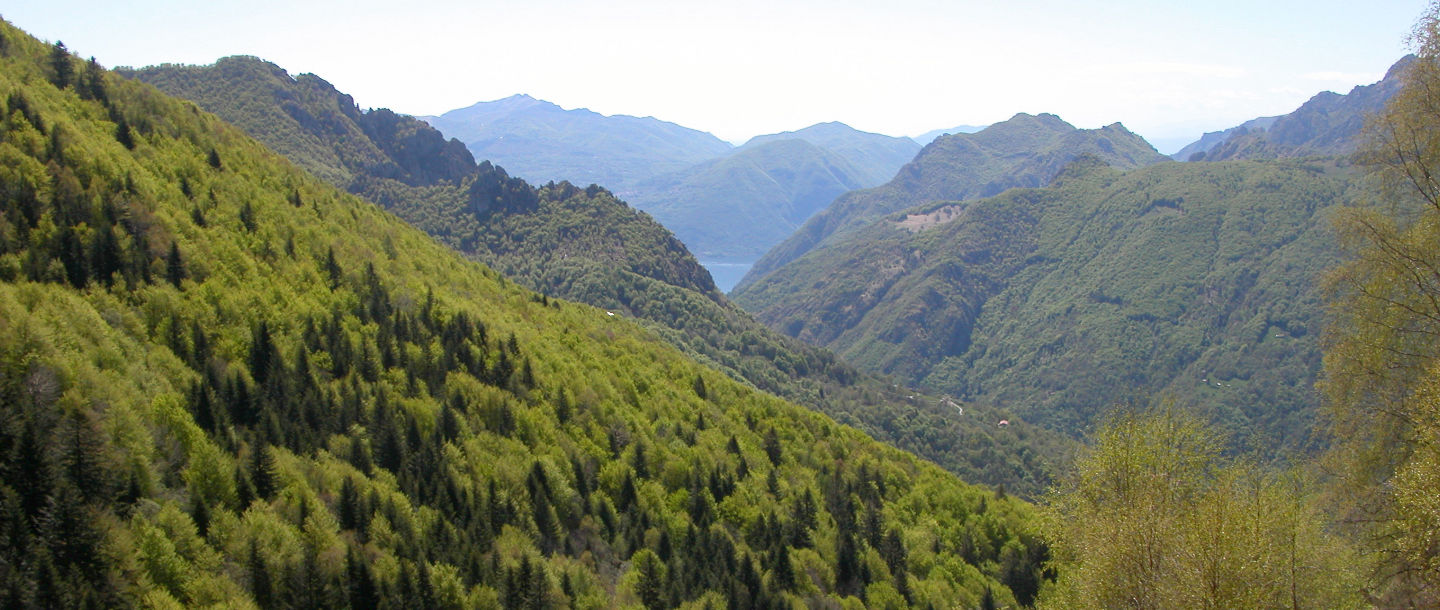
The Val Cavargna above Carlazzo with Lake Como in the distance

The ‘official’ purpose of Dick Mallaby’s second trip into enemy-occupied Italy was for him to meet up with the Catholic forces of resistance – the Fiamme Verdi partisans operating principally in the Province of Brescia. He was accompanied on his mission by three Italians. They were a radio operator with the code name of Anselmo and two Catholic priests, Don Mario Zanin and Don Giovanni Barbareschi. Both priests were closely linked to the Fiamme Verdi. 

fiamme verdi

British SOE preferred supporting catholic Fiamme Verdi to other communist groups

The party of four met up at the British Embassy in Lugano on February 13th and made their clandestine crossing into Italy to the north east so as to descend the Val Cavargna. They spent the night of the 14th in a mountain hut outside of Carlazzo and on the next day crossed Lake Como from Menaggio to Varenna. There they failed to make contact with someone due to help their ongoing journey and so hitched a ride down the lake to Lecco. 

mallaby route (1)

Dick’s route on his 2nd mission started at Point 1, descended the Val Cavargna (2), overnighted in Carlazzo (3) before crossing the lake at Menaggio (4) to Varenna (5). They moved on to Lecco (6) where they were arrested with Dick being taken to Como (7). He would later return at the end of his mission to stay overnight in the Villa Carminati/Locatelli in Cernobbio before crossing to Chiasso.

According to the young priest Don Barbareschi, the group had taken his advice to change their destination to Milan so they could all meet up with Milan’s Archbishop, Cardinal Schuster. Don Barbareschi was in fact Cardinal Schuster’s trusted go-between who had been aiding secret negotiations between the Catholic church with the support of the Fiamme Verdi and the heads of Mussolini’s puppet state through the offices of the British SOE in Bern. Schuster was seeking to arrange for the peaceful surrender of the Italian fascists in exchange for their promise to cease fighting and not destroy any of the civil and industrial infrastructure. Since Don Barbareschi was also highly trusted by Jock McCaffery, the SOE Head in Bern, there is every good reason to believe that Mallaby’s mission was always intended to support Cardinal Schuster and use the radio operator Anselmo to facilitate communications between Milan and the British in Switzerland. 

lecco lakefront

The lakefront at Lecco

At Lecco, the four members of the party went into a bar and, according to Dick Mallaby, the two priests began to attract unwanted attention to themselves through some injudicious and easily overheard comments. The police duly arrived and, although their identity documents passed scrutiny, suspicions were aroused by the fact that all four had given the same address in Milan as their residence – the address given was the actual Milan residence of Don Barbareschi. All four were arrested and initially detained in Lecco. Don Mario Zanin managed to take advantage of confusion during an air strike to escape and seek shelter in a nearby seminary. Dick Mallaby was separated from the remaining two and transported to face interrogation by Paolo Porta in Como.

Dick Mallaby becomes Captain Richard Tucker

epoca casa del fascio

The Casa del Fascio in Como where Dick would have been interrogated by Paolo Porta

All captured enemy secret agents faced summary execution on arrest. Agents were trained to use whatever means they could when captured to prolong their lives short of giving away critical information in a bid to play for time to organise some form of rescue. One way to prolong interrogation was to provide false information that would need to be checked assuming of course this did not compromise any actual plans. While advised to be imaginative in their stories, they were also told to keep to verifiable facts wherever possible. Dick Mallaby’s inventiveness and imagination would now be put to the test.

Rodolfo_Graziani_1940_(Retouched)

Rodolfo Graziani, Head of Mussolini’s armed forces under Nazi occupation

He told Paolo Porta that he was on a secret commission on behalf of the Allied Military Commander in Italy, General Alexander. To give some credence that he would be authorised for such a mission he promoted himself to Captain giving his name as Richard Tucker. He stated his message from General Alexander was intended for none other than Rodolfo Graziani, Head of Mussolini’s armed forces. He would not reveal the content of his message to any other except to say that it involved a possible peace proposal. Dick Mallaby would have been fully briefed on the political situation at that time where it was obvious that both the Germans and leaders of the Italian fascist regime were considering how to prepare themselves for defeat. I believe it is also highly likely that his original mission was to facilitate further negotiations initiated by Cardinal Schuster with the British SOE. However he may not have been on a mission directed by General Alexander. In any case, Paolo Porta was impressed and invited Dick to stay overnight at the officers’ mess before being taken down to Milan on the 16th February to meet with the overall Commander of the fascist Brigate Nere – Brigadier General Edouardo Facdouelle.

All seemed to be going well for Dick aka Captain Richard Tucker as he shared a convivial lunch with the Brigadier and to quote his biographer his ‘equally cordial daughter’. Dick explained how he could only convey General Alexander’s proposal directly to Rodolfo Graziani and no-one else. Facdouelle then accompanies Dick to Graziani’s headquarters but Graziani refuses to meet with him explaining through Facdouelle that he was worried that the Germans would learn about the hearing. Instead Graziani orders Dick to be taken to the headquarters of the fascist state’s secret services known as the Servizio Informazioni Difesa (SID) in Volta Mantovana to be interrogated by Colonello Candeloro De Leo who headed the organisation. 

On the 18th February Dick faced his interrogation with De Leo, a man with a fearsome reputation as a skilful  interrogator and the head of one of the more effective of the fascist state’s organisations. Dick knew at this stage, following Graziani’s refusal to get involved, that he would have to divulge the presumably fictitious proposal from General Alexander. He duly presented a five point plan for a peaceful surrender aimed to  protect Italian infrastructure from German sabotage  and ensure no partisan reprisals against Italian fascist forces, backed up by Allied military intervention wherever needed. He added that he himself would need to return to Switzerland to procure a radio transmitter so that he could return with it to facilitate all further communications between the two parties. De Leo passed on this plan to Graziani the next day, February 19th. Graziani duly informed the German SS of everything Captain Tucker had to propose.

Lake Garda

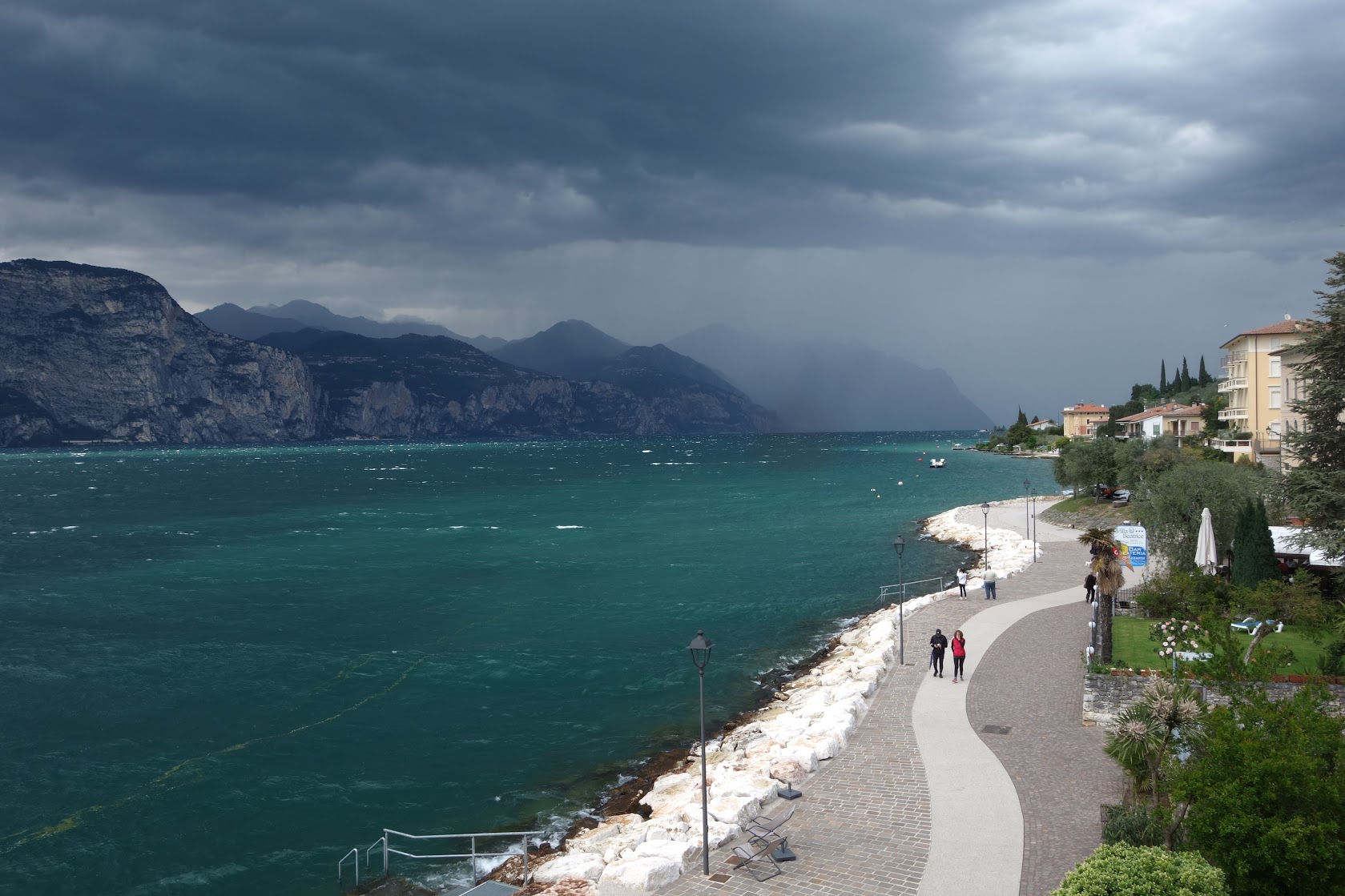
A storm gathers over Lake Garda

Dick Mallaby Meets the German High Command

Karl Wolff

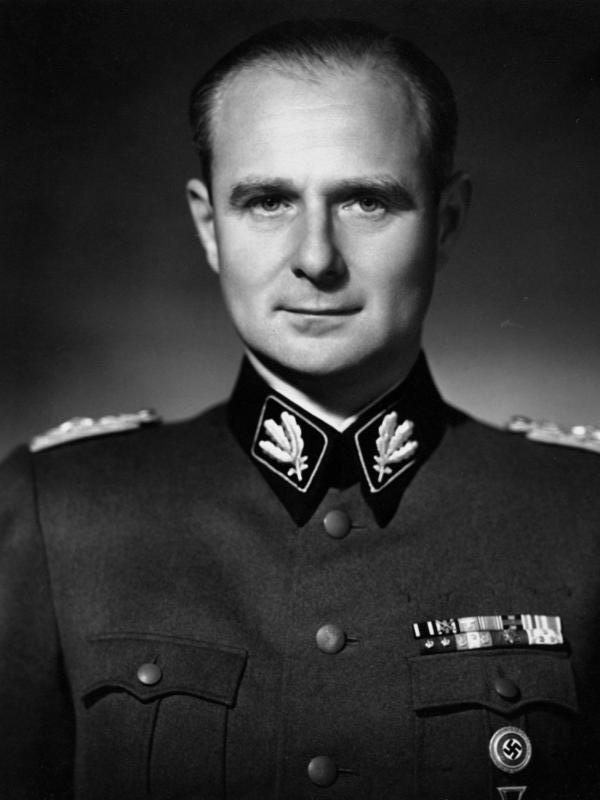
Karl Wolff, SS-Gruppenführer

Once De Leo had concluded his amiable interrogation, Dick was told to pack his bags and accompany a Captain in the German SS waiting for him in the hall of the villa housing the Italian SID. Needless to say, this turn of events caused him severe worry which only increased on finding himself transferred to the headquarters of the German SS’s intelligence arm, the SD, in the Palazzo delle Assicurazione in Verona.

He now spent a week facing numerous and rigorous interrogation sessions but no torture.  His interrogators had introduced themselves as not as gullible or as credulous as their Italian counterparts. But Dick had by now bought himself sufficient time to consolidate and embellish his story. Try as they might his interrogators could not uncover any inconsistencies between the various statements recorded.  

On the 26th February he was transferred to a luxurious villa in Fasano on Lake Garda where he was introduced to SS-Obergruppenfuhrer and General of the Waffen SS, Karl Wolff, the Supreme Commander of all SS forces in Italy – the man responsible for the deportation of Jews to Nazi death camps and for the vicious anti-partisan campaign across occupied Italian territory.  Having convinced all others so far of his sincerity, Dick Mallaby now managed to convince the most powerful representative in Italy of the Nazi regime that he really was Captain Richard Tucker and that he genuinely came with a peace proposal from General Alexander. He also repeated the need for him to return to Switzerland and to return with a radio transmitter as he had originally explained to De Leo.

villa carminati

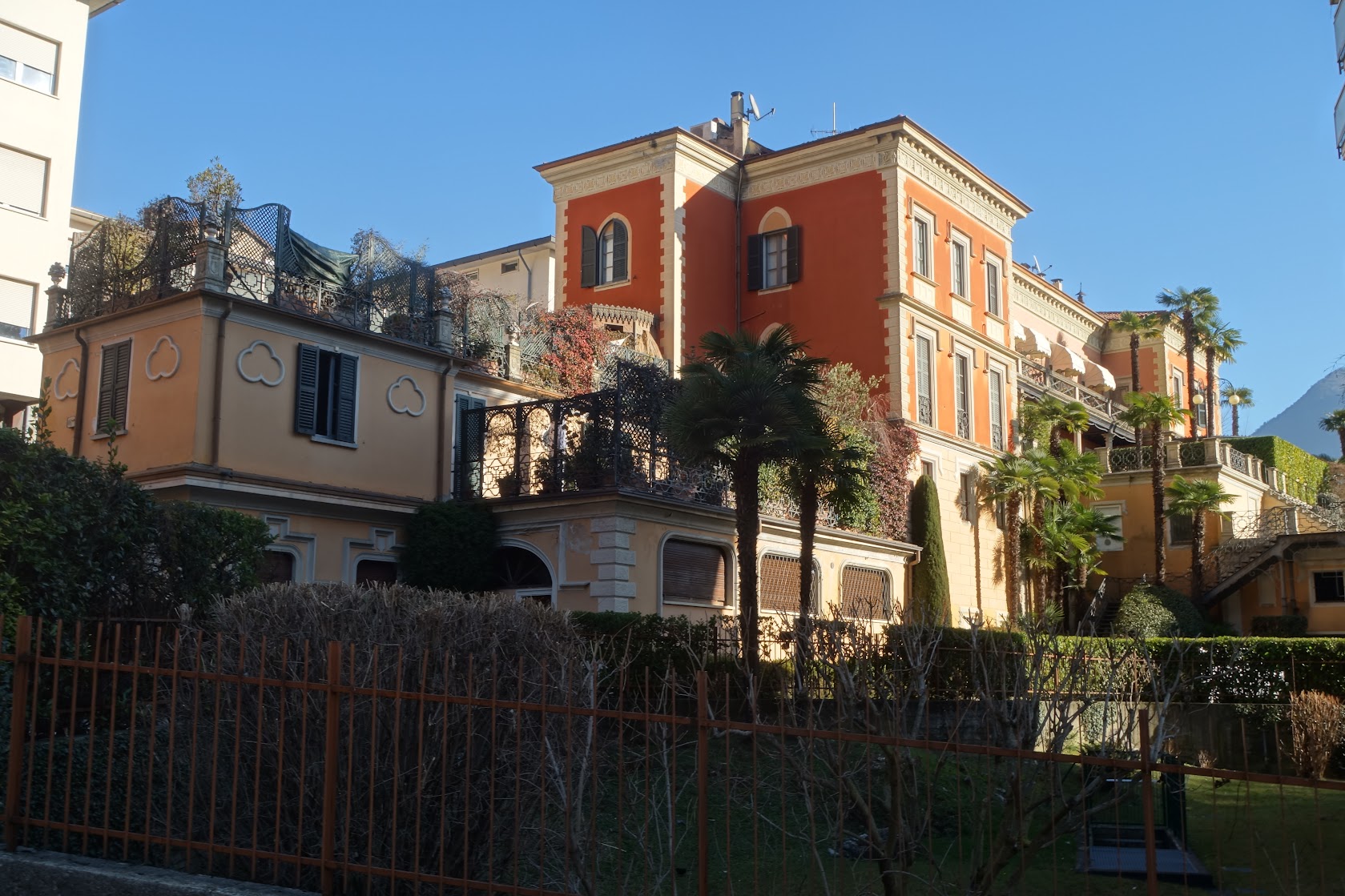
Villa Carminati in Cernobbio was the Border Control Headquarters of the SS for North West Italy. Its strategic location close to the Swiss border meant that it hosted a number of people needing to enter Switzerland during the secret negotiations of a peace settlement.

With his agreement to return as soon as possible from Switzerland, Dick was transferred back to Verona from where on February 28th he was subsequently escorted to the SS’s local headquarters in Cernobbio’s Villa Carminati/Locatelli ready to cross the border at Chiasso the following day.

Dick Mallaby Falls Out of Favour

Dick’s apparently improvised plan for ending the war in Italy started to fall apart the moment he crossed the Italian border into Switzerland at Chiasso at 07.00am on 1st March 1945, because Allen Dulles and his team of agents working for the American OSS had a better plan now known to history as ‘Operation Sunrise’.

allen dulles 2

Allen Dulles seen with John F Kennedy later in life as Director of the CIA

Unknown to Dick or to his boss Jock McCaffery in Bern, or at this stage to Karl Wolff, a plan for bringing together Germans and the Allies to discuss a peace settlement had first been  proposed to Allen Dulles back on February 21st when Dick was under detention at the SD Headquarters in Verona. This plan already had the backing of the Swiss secret services, the sponsorship of some high ranking SS officers and was on the way to being adopted also by Allen Dulles. Karl Wolff was briefed by one of his officers on this fresh proposal on the very day that Dick crossed over to Chiasso. The Americans would have previously been made aware of Dick’s alternative plan and when he was due to cross the border because the SS Officer in command at Cernobbio’s Villa Carminati/Locatelli, Captain Joseph Voetterl, was in fact an American double agent. 

varenna to menaggioDick’s plan was now seen as an amateurish meddling with the inherent danger of confusing the various parties launching Operation Sunrise or worse still, sowing distrust between them. And so it may come as no surprise that the Swiss secret service refused to recognise Dick’s well established  cover as one of their own officers on presenting himself at the Chiasso border control. He was immediately detained and from that date on, effectively silenced and kept out of action. He remained in detention until released on 13th March when he was then able to debrief Jock McCaffery on his various exploits since entering Italy back in mid-February. Under pressure from London, McCaffery returned Dick into Swiss detention on 20th March where he remained until finally released by the Swiss one week later. By that time all the necessary agreements and understandings between the parties of Operation Sunrise had been secured and it only awaited the final approval of the Allied political leaders to activate the proposed armistice agreement. Operation Sunrise was ultimately successful and led to the signing of German surrender on April 29th at the Allied Army Headquarters in Caserta. 
Back in Cernobbio

The SS Border Control HQ in Villa Carminati/Locatelli in Cernobbio was used extensively in these last weeks of the war as a practical location for hosting those senior German officials and the variety of agents and double agents acting as go-betweens in the negotiations for a peace deal. Just as Dick Mallaby stayed there on 28th February, so did others use it as a practical point of departure for or return from clandestine meetings in Switzerland. The American OSS were kept informed of all these comings and goings by their double agent, Joseph Voetterl. 

il-ribelle

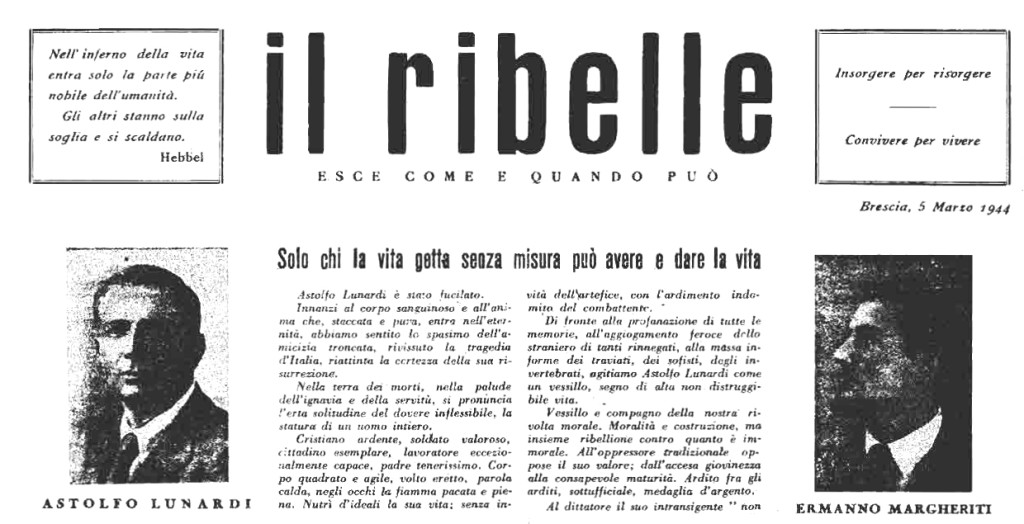
Don Giovanni Barbareschi was one of the young priests who at great risk to themselves published an occasional illegal anti-fascist paper called ‘Il Ribelle’. The majority of those writing for the paper were executed.

Among those invited to the villa to his utmost surprise was the young priest, Don Giovanni Barbareschi, who had been arrested alongside Dick Mallaby back in Lecco on 15th February. Don Barbareschi had been held in prison in Lecco until he was unexpectedly released on 9th March and taken to Villa Locatelli. There he was met by none other than SS-Obergruppenfuhrer Karl Wolff. Wolff asked him to undertake a mission on his behalf to relay a message to the SOE chief in Bern, Jock McCaffery, informing him (and SOE) of his involvement and commitment to the Operation Sunrise peace negotiations that were progressing with the Americans, and of the fate of Dick Mallaby held in detention over the Swiss border. Until that moment, SOE had been given no information on these talks conducted by their allied partners in the American OSS nor did McCaffery know at that time of Dick Mallaby’s fate.

book jacket

Gianluca Barneschi has written a fascinating account of Dick Mallaby’s missions into Italy using information taken from official sources and Dick’s unpublished personal diaries and papers.

McCaffery must have been deeply embarrassed by having been kept ignorant of what had been going on when he duly informed London the next day of the secret American peace plans and of the fate of his own agent, Dick Mallaby. London did not hesitate in giving their approval  for the American OSS to continue as the senior partner in the talks with the Nazi leadership. They also directed McCaffery to suppress any news of Dick’s own links with Wolff or of the proposals put to him. Dick himself was only able to debrief McCaffery three days later in between his periods of Swiss detention.

Conclusion

Dick Mallaby was very reluctant later in life to talk about his exploits during the war. It is almost impossible yet to evaluate to what extent the proposals he presented to De Leo and Wolff were imaginative improvisation on his part or a genuine proposal from British SOE to seek an agreement with the Italian fascists. It is however evident that there was a serious lack of coordination between the two allied secret services and that by the time the war ended, the Americans were very much the senior partner in taking the initiative on shaping the new European order following the collapse of Nazism. 

false id card of don giovanni

The false ID card carried by the young priest, Don Barbareschi

Perhaps the one person with the best view and understanding of all the various peace negotiations at the time was the young priest, Don Giovanni Barbareschi. He would have been involved in Cardinal Schuster’s dealings with Mussolini and Graziani, had accompanied Dick Mallaby on his mission and was briefed by Wolff in the early days of Operation Sunrise.  Don Barbareschi was also very reluctant after the war to discuss what he knew or go into any detail of his time with Mallaby. 


If buildings could talk then the best one to interview would be Villa Carminati/Locatelli since many of the significant players in the complex series of secret diplomatic talks passed through its doors. Villa Carminati/Locatelli was to witness even more drama towards the end of April 1945 when the Como countryside was crisscrossed by eminent allies and enemies playing out the final dramatic act of the Nazifascist occupation of Italy. But that is another story!

Further Reading

For our account of Dick Mallaby’s first mission to Lake Como, read ‘James Bond’ drops into Lake Como.  For more information on what went on within Villa Carminati/Locatelli and the role of American double agent Joseph Voetterl, read Como to Chiasso – Trying to Escape the Holocaust

A documentary film is currently under production on the life and exploits of Dick Mallaby promoted by his son, Vacky Mallaby. Follow this link for a preview in Italian with English subtitles. 

Posted in Events, History, Lake, People, Politics | Tagged , , , , , , , , , , , , , | Leave a comment

Lake Como Boatyards: Luxury Boats

taxi boat cernobbio

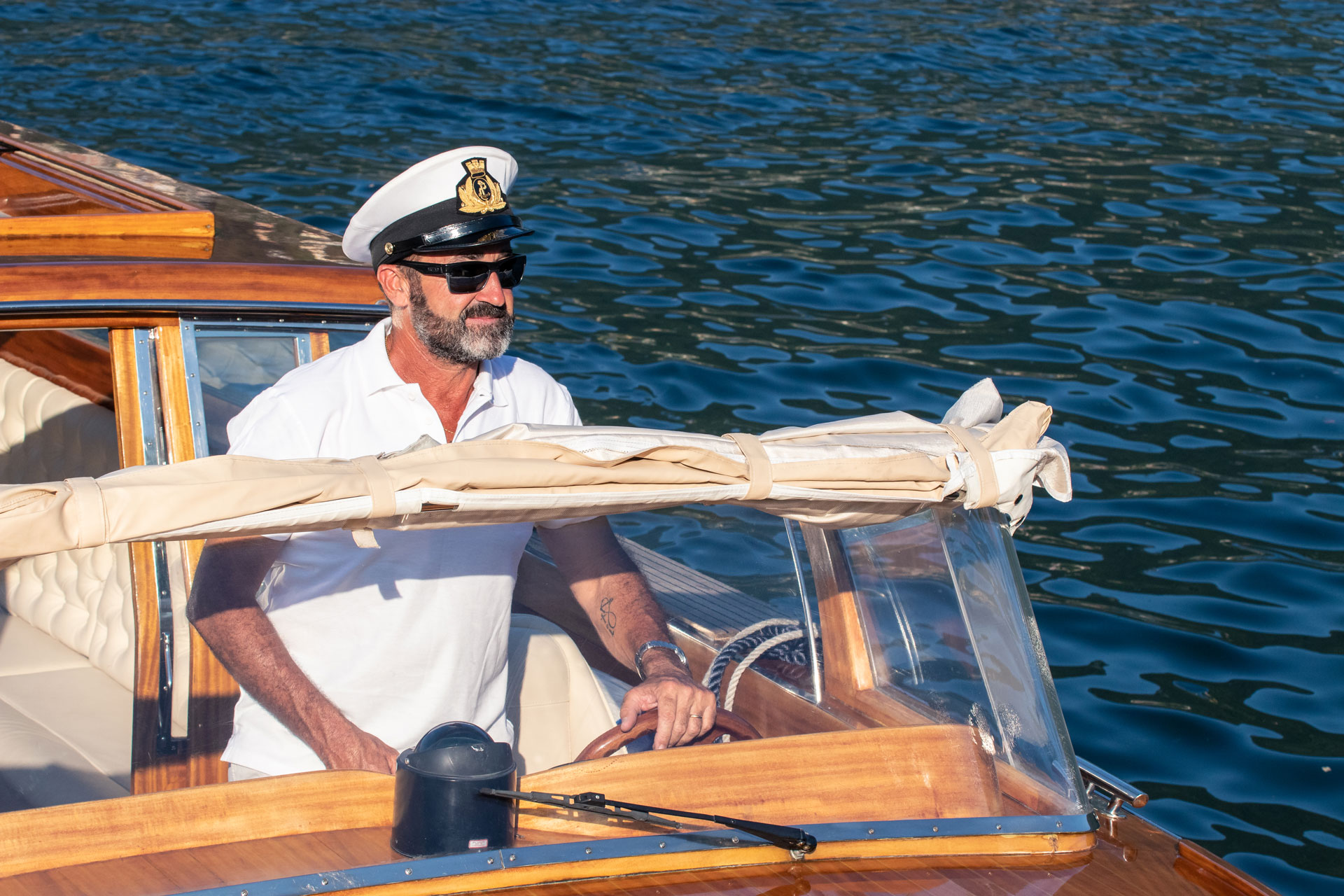
One of the captains piloting a Venetian style water taxi belonging to Cernobbio Taxi Service.

What can be more memorable than a trip in the cabin or sat in the bows of a Venetian-style water taxi as its pilot skilfully and swiftly takes you to or from a lakeside restaurant on a summer evening. Sat on leather upholstery, set amongst brightly varnished mahogany and with sparkling chrome fittings, this luxurious experience may not be cheap but is nowadays at least accessible to many more of us than to our ancestors in years past. Since the middle of the seventeenth century up until today and hopefully well into the future Lake Como’s boatyards have and will be building, maintaining and restoring various forms of these luxury boats. 

water taxi

A ‘Vaporino’ style water taxi on the Sant’Agostino jetty in Como.

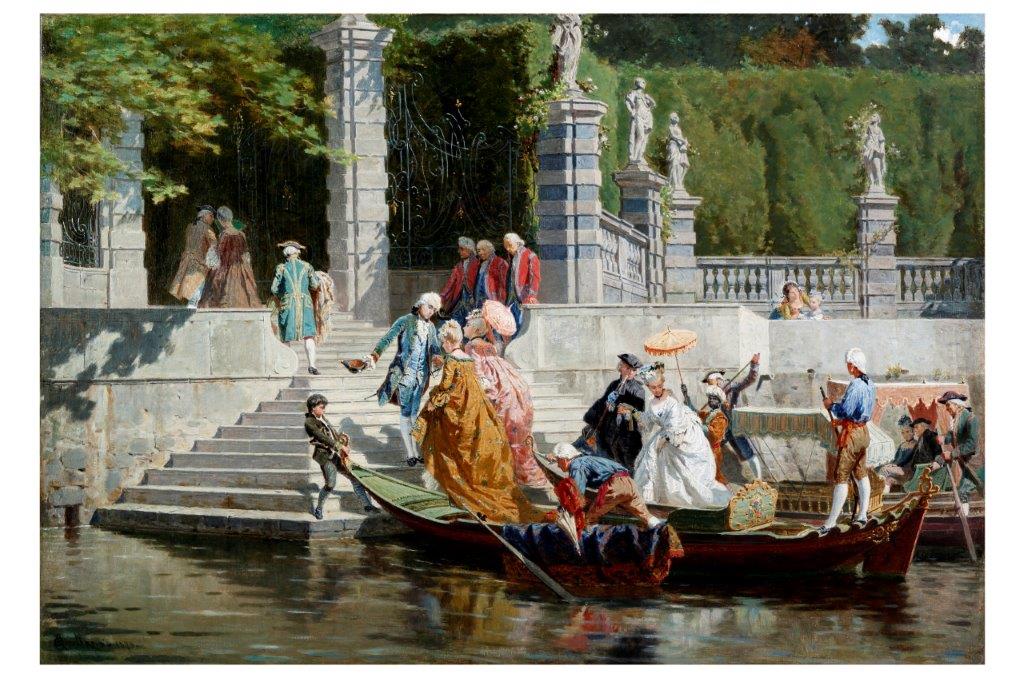
When Romans like Pliny the Younger built their summer villas on the shores of Lake Como, they undoubtedly had boats built to transport themselves in comfort. But no records remain of how they may have been constructed. Instead we must wait until those Italian aristocrats, who settled around the lake in the 18th century, required both a comfortable means of transport and a visible symbol of their status to remain moored alongside their villa’s personal jetty. And, as in the case of today’s water taxis, they looked to Venice for inspiration commissioning local boatyards to construct Venetian-style gondolas adapted to the choppier waters of the lake.

gondola villa carlotta

A Como-style gondola in service at the Villa Carlotta

It was this growing demand for Venetian craftsmanship that persuaded Ferdinando Taroni to move from Venice and establish his boatyard in Carate Urio in 1790. Ferdinando had learnt his craft from the Venetian master craftsman Angelo Albanese. He set about modifying the Venetian design by avoiding the original’s asymmetry, flattening the hull, broadening the flanks, increasing the overall dimensions and adding a rudder.  In making these changes Taroni took inspiration from the traditional fishing boats of the area built to suit the unique conditions of the lake.These enlarged boats were powered by a team of four to five oarsmen often dressed in the livery of their aristocratic employers. 

Ending the journey, coming into RIchond

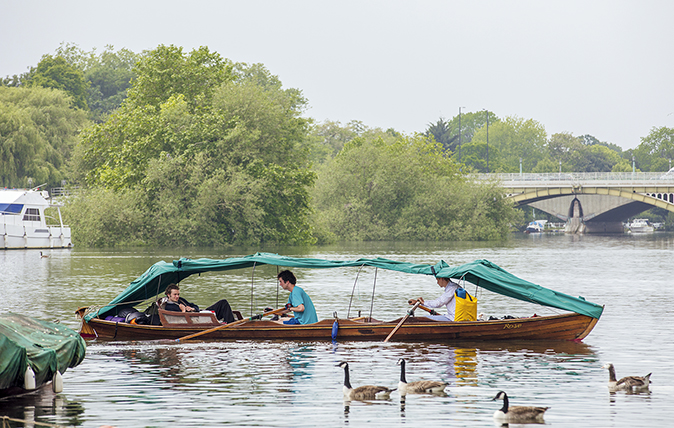
An original British ‘Inglesina’ used to recreate the trip taken on the River Thames as described by Jerome K. Jerome in his novel ‘Three Men in a Boat’ – seen here at Richmond

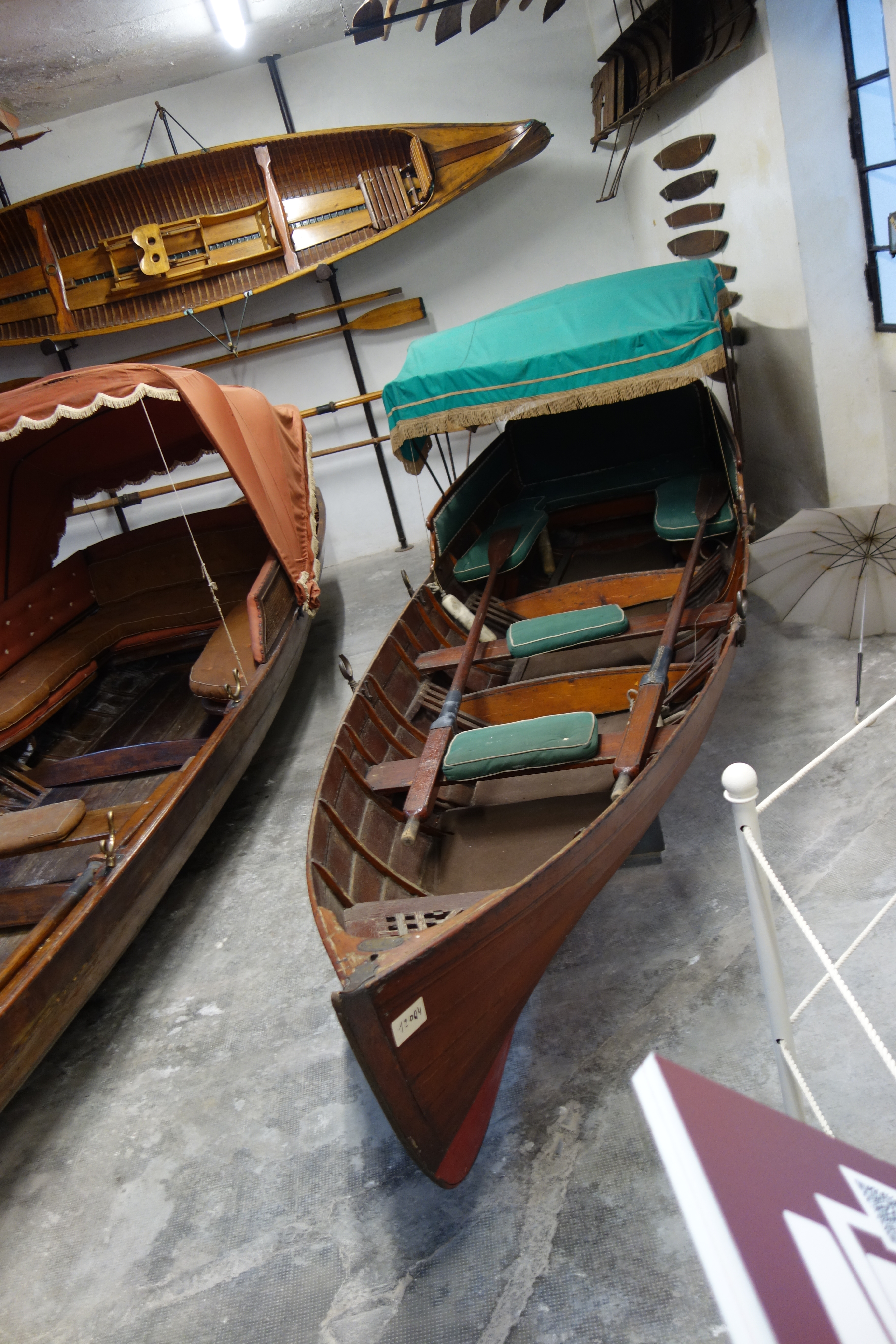
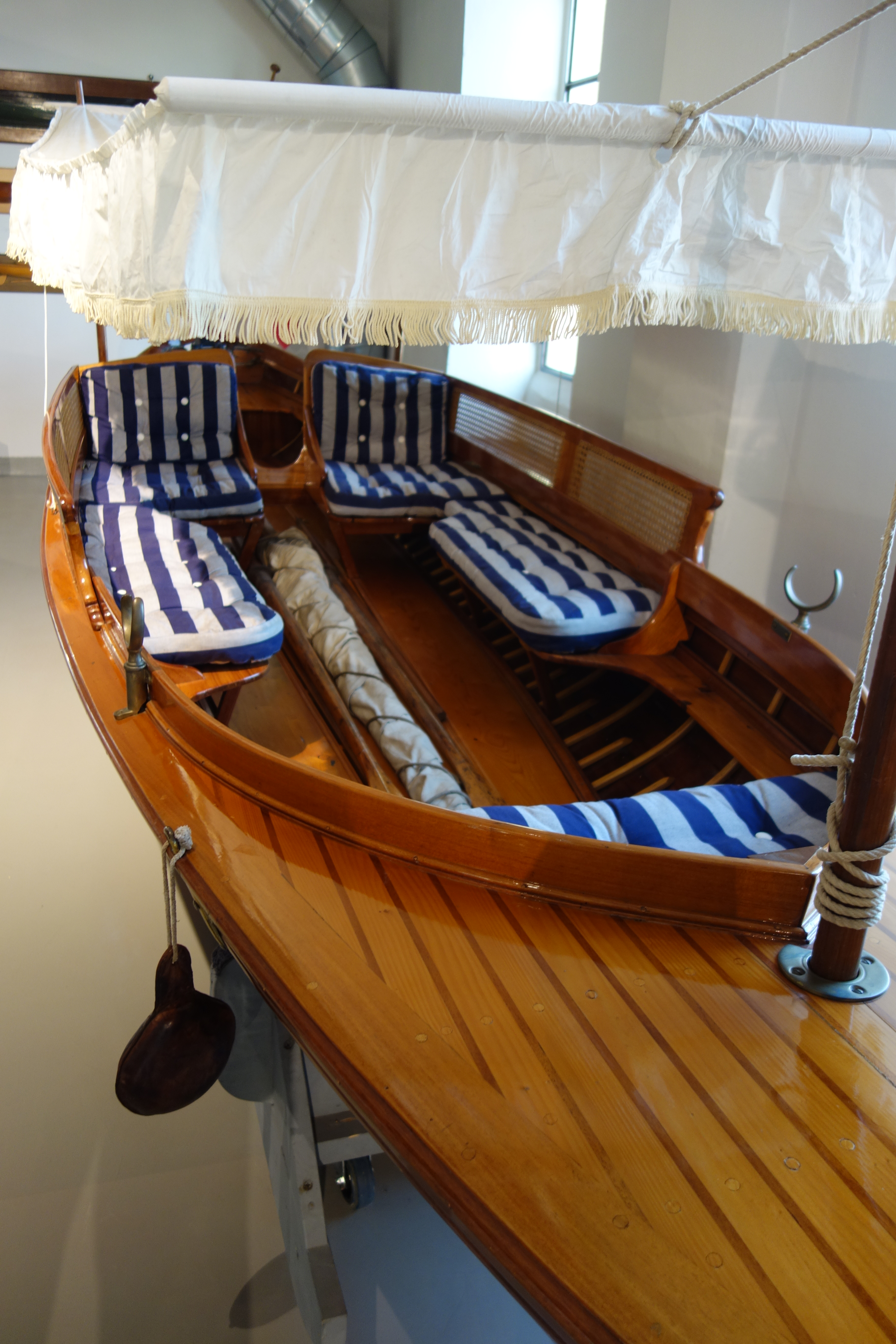
The next major innovation in luxury travel was brought by the English gentry making their Grand Tour of Europe from the start of the 19th century. They introduced the so-called ‘Inglesina’ – a rowing boat designed originally for use on the River Thames. It allowed for comfortable seating at the bow and space for up to two or three oarsmen. The Inglesina also introduced the English preference for using mahogany in the construction of luxury boats – a choice also adopted by the Lake Como boatyards and continued to this day in spite of the growing problems of supply. This type of boat was made famous in the comic novel ‘Three Men in A Boat’ written in 1889 by Jerome K. Jerome. The Lake Como version became very popular also as an early form of water taxi. 

Como-piazza-Cavour-Volta -1914-G

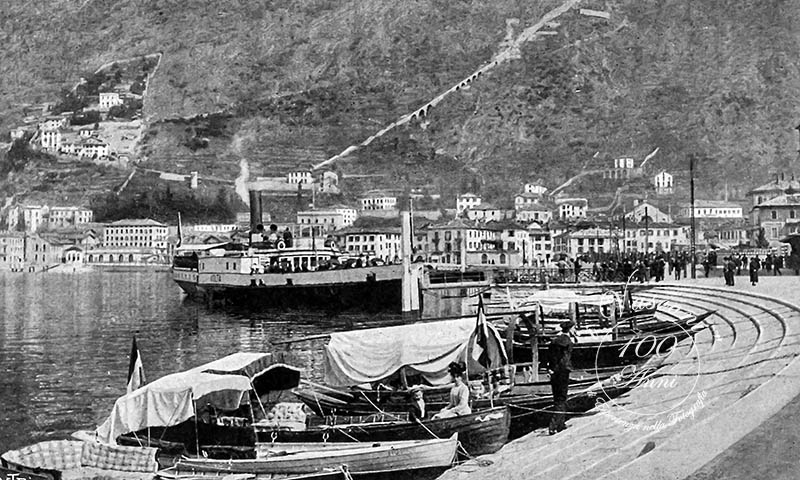
Como, Piazza Cavour 1914 with a row of ‘Inglesine’ water taxis in the foreground. Copyright Collezione Piero Vasconi

Cranchi inglesina

An ‘Inglesina’ on display at the Lake Como Boat Museum. This model was built by the Cranchi boatyard in Cadenabbia.

The Dulcinea on display in the Lake Como International Museum of Vintage Boats is an Inglesina adapted to motorised propulsion. From the 1900s onwards, motorised luxury boats became more common aided by the development of petrol engines such as those of Alessandro Volpi.

dulcinea

The Dulcinea, an Inglesina built by Taroni of Carate Urio in 1920 with a bow adapted to house an outboard motor. On display at the Lake Como Boat Museum.

Volpi, the proprietor of the lakeside Villa Pizzo outside of Cernobbio, established a strong friendship and collaboration with Ferdinando Taroni, the owner of the boatyard in Carate Urio first established by his similarly named ancestor back in 1790. One of the great successes of this collaboration was the so-called Vaporino – a fuel powered luxury passenger boat whose design recalled the steam-driven boats of the past. The Boat Museum in Pianello del Lario has at least two examples, the Quo Vadiz and the Lario, which were moored at the Villa Passalacqua in Moltrasio. Much more recently, the owners of the luxury hotels Il Sereno and Villa Pliniana commissioned the Ernesto Riva boatyard in Maslianico to build a Vaporino to transport their guests.

ernesto riva 2016-07_Vaporina_11

The Vaporino built recently by Ernesto Riva of Laglio and Maslianico for the proprietors of the Il Sereno and Villa Pliniana hotels.

Vaporino Ernesto Riva

The development of inboard and outboard motors dispensed with the need for crews of oarsmen and heralded a new form of luxury vehicle – the so-called runabout. The beauty and popularity of this class of boat was to reach its heyday in the 1950s and 60s when boats such as the Riva Acquarama (built on Lake Iseo rather than on Lake Como) became iconic symbols of luxury and of mid-century Italian design. However, prior to that, the runabout went through a number of developments including use during the 20th century’s two world wars. 

Riva_Aquarama

The iconic Acquarama built by Riva of Sarnico on Lake Iseo. From the 1950s onwards Lake Como’s boatyards also focussed on designing and building similar runabouts which became icons of mid-century Italian design.

When Ferdinando Taroni moved his family business from Venice to Carate Urio in 1790, he set up a boatyard that spawned a tradition of luxury boat building that spread over the lake. From the Taroni yard came the names of Abbate, Mostes and Riva who each established boatyards that still exist to this day. To them we must also add the names of Molinari, Matteri, Cranchi, Colombo and Cadenazzi. While Taroni has now moved over to Stresa on Lake Maggiore, all the others still either produce, maintain or renovate luxury boats on Lake Como.

cranchi mtm

An MTM torpedo boat built by Cranchi of Cadenabbia and converted after the last war for domestic use. Housed in the Lake Como Boat Museum.

siluri-umani

Poster of the film celebrating the exploits of the ‘human torpedoes’ (MTM boats) which successfully disabled HMS York in Crete in 1941.

During the First World War, the Taroni yard in Carate Urio produced 18 anti-submarine boats known as MAS (Motobarca Anti Sommergibile). During the Second World War the Cranchi boatyard in Cadenabbia produced for the Germans a series of MTMs (Motoscafo Turismo Modificato). These, as the name suggests, were runabouts designed to be used as manned torpedoes in that the prow was packed with explosives. The pilot, positioned right at the bow, would jump off the boat once it was locked onto a collision course towards its target. The MTMs had one major success when they managed to disable the British cruiser HMS York near Crete on 25th March 1941. 

With the war over, Lake Como’s boatyards could return to developing those runabouts that have now become such recognisable icons of luxury and design. As mentioned previously, it is the Riva yard at Sarnico on Lake Iseo which has achieved the greatest reputation for this type of boat. However there are two branches of Riva boatbuilders with the original Ernesto Riva yard established in Laglio (and now also in Maslianico) over 250 years ago while Paolo Riva set up in Sarnico in the 1840s. Giacomo Colombo trained in the Como yards of Abbate (Tremezzo) and Cranchi (Brienno and Cadenabbia) before moving to Riva in Sarnico. However he then set up his own yard back on Lake Como in Menaggio where he produced the stylish Colombo 007. The lasting appeal of these runabouts stems from the flair of their Italian designers to combine aspects of ostentatious detailing inspired by the American car industry with the traditional look of mahogany introduced from Britain – all put together through the craftsmanship of local artisans developed and maintained over years of practice.  

colombo 007

The bow of the Colombo 007 built in the Colombo yard in Menaggio in 1964. Housed at the Lake Como Boat Museum.

 All of these boatyards continue to produce super luxury yachts. The Abbate name continues with Bruno Abbate and his Primatist range of yachts with offices on the lake and with production in Sardinia. Cranchi have moved from Brienno to larger yards in the Valtellina at the top end of the lake. Ernesto Riva still have offices in Laglio but have moved production to Maslianico.  Taroni’s yards in Carate Urio and Torreggia have both now been redeveloped as apartment blocks but their production continues at Stresa on Lake Maggiore.  The yards of Mostes Matteri are still operating in Lezzeno. Cadenazzi are still based in Tremezzo. Many of these yards now organise private hire, offer various facilities for the storage and maintenance of boats or undertake renovation of vintage models.

cadenazzi maintenance

Maintenance and renovation work being undertaken by Cantiere Cadenazzi in Tremezzo

Further Reading

The production of luxury boats is only one aspect of the historical heritage of boat craftsmanship on the lake. Read our article on the production of powerboats and sailing dinghies which describes how Lake Como’s boatyards have also gained international renown in this sector. 

mostes pegaso-28-Evo-7

A modern runabout, a Pegaso 28 Evo , the Mostes boatyard in Lezzeno.

As recommended in this previous article, a visit to the Lake Como International Museum of Vintage Boats in Pianello del Lario is the best way to gain an appreciation of the scope, quality and importance of this local industry.

Many of the boatyards mentioned here also provide private hire of the Venetian-style water taxis. Contact information can be found on our page Boat Hire and Water Taxis.

Posted in industry, Lake, Transport | Tagged , , , , , , , , , , | Leave a comment

Como’s Changing Lakefront

Como is justifiably famous for the beauty of its natural surroundings and of its ancient walled city, for the inventiveness and quality of its silk production and for the creativity and skills of its artists and artisans throughout the centuries. The list of positives does not end there but it also ranks as the city with the longest, worst managed and corrupted civil engineering project throughout Northern Italy – a project that saw the imprisonment of its first citizen and which has tried the patience of its residents over the last eighteen years. An end to the sorry saga is now in sight, but the shadow of Como’s administrative shame may well linger for years to come.

finished lakefront

Artist’s impression of the completed Como lakefront once all anti-flood defence works are completed in 2023. Copyright Infrastrutture Lombarde 2018

Long term residents of Como may well have despaired of seeing an end to the project aimed at strengthening the city’s flood defences, known locally as ‘le paratie’ (barriers) . The project was first identified in 2003 but did not actually start until 2008. This delay was just a brief foretaste of things to come when all work was suspended in 2012 as the council and its contractors fell into a long legal dispute. Como’s city council had commissioned the project, secured the budget, appointed directors of work and other specialists from their staff and awarded the contract to SACAIM, one of Italy’s large civil engineering companies based in Venice.  

plan oct 2018 1

Artist’s impression of the enlarged walkway covering the two massive cisterns for capturing run-off from the city. Copyright Infrastrutture Lombarde 2018

But now, 18 years after the project was first mooted and nine years since it hit the buffers, an end is finally in sight. Como will get all of its lakefront back by 2023.  Nor is this just another vain promise since visible progress is there for all to see. And we now also know what our lakefront will look like when we reach the end of this prolonged and tortuous saga.

vasca a

Positive progress can now be seen – July 2021,

Why the Delays?

In retrospect, the project grew too big for the council to manage. But they had allowed it to grow out of hand by seeking to implement a series of modifications to the original contract. This was a typical case of project creep – a risk known to all project managers but one with severe impact on large civil engineering projects of this sort. In fact many of the changes requested by the council may well have had technical merit (and the final solution does seem to have incorporated them). But the way the council sought to commission them was all wrong and caused them and their key contractor legal issues on all sides. 

Not only was the prime contractor concerned about the financing of these changes but they and the council had started implementing them without gaining appropriate planning approvals or going through the correct tendering process. You don’t go changing the profile of the lakefront without first establishing your right to do so. Some personal financial interests in enlarging the project were also implicated prompted by the promise and temptations offered by the ever-growing budget. These led to the start of anti-corruption enquiries.  

Streetscape 2016

This representation of the famous fictional liar, Pinocchio, formed part of Como’s Streetscape 2016 exhibition. Originally Pinocchio was placed facing the city’s council buildings but, to avoid undue controversy, he was turned around to face the barriers barring a view of the lake. The symbolic intent remained unaltered.

The council proceeded even more slowly once the anti-corruption enquiries began, particularly after the first arrest of council officials in 2016. By this stage, the Lombardy Region had finally lost patience with the ability of the Como City Council to restart let alone finish the project. The Region stepped in to take over all responsibility for the project from 2017. However even further time elapsed as the old contractor SACAIM tidied up and left the site before a new contractor could be appointed. 

The new invitation to tender now managed by the Lombardy Region was not even published until July 2019. Further delays put down to the Covid pandemic meant the new contractor, Aria SpA, was not appointed until May 2020. But finally from that date, fixed periods of 21 months for completion of the first phase and a further 11 months for the second phase were published. Promises of biweekly updates to the public were then made and work in earnest recommenced. Now with an end date in sight, a conclusion can finally be envisaged to what had seemed to be Como’s own never-ending story.

The Impact of Delays

passeggiata

Fortunately throughout the works, the beauty of the passeggiata towards Villa Olmo (shown here) and on the other side along Viale Geno were not impacted.

Como’s lakefront runs on three sides with the beautiful Passeggiata from Villa Olmo to the Tempio Voltiano and the lakefront gardens to the west, the Lungo Lario Trento and Trieste passing Piazza Cavour in the centre and finally the stretch running along Viale Geno on the east. It was the central section of the lakefront that was the worst affected by the stalled project. Wooden barriers had been erected along this stretch at the start of the project in 2008 cutting off all views of the lake. These barriers remained in place, in spite of a total lack of activity, until 2015 when the local business organisation, Amici di Como, paid for the temporary renovation of the section running from the Navigazione’s ticket office to the start of the lakeside gardens. However the wooden barriers running from the old ticket office along Lungo Lario Trieste were left in place for yet another two years. Deprived of their lake view, Como’s residents and visitors were instead confronted by these fixed screens still displaying the old posters placed by SACAIM advertising what the end result of this phantom project should look like. 

lake blocked

These wooden barriers running along Lungo Lario Trieste remained in place until 2017 in spite of no work on the defences since 2012.

Italy’s anti-corruption agency ANAC, established in 2012 to prevent corruption in public entities, first began to take interest in Como’s flood defence project in 2015. This led initially to the arrest of two engineers employed by the council to direct the works. Their investigations led to the arrest of a further five officials including the then mayor, Mario Lucini. All seven accused finally faced sentence at the start of 2019 with the main Director of Works, Pietro Gilardoni, receiving a four year sentence and the mayor, Mario Lucini imprisoned for a year and a half. The others received custodial sentences ranging from six months to two years. 

pietro gilardoni

The luckless Pietro Gilardoni, the council’s overall director of works during a court hearing which would result in him receiving a four year custodial sentence.

Needless to say, the image of the city council and its centre-left political administration suffered badly faced with their inability to move the project forward and reinforced by the charges of corruption brought against the mayor and his other appointees. The financial journal ‘Il Sole 24 Ore’ publishes a yearly ranking of council leaders’ approval ratings. When Mario Lucini first took up his post he came 5th in this poll nationally with a 74.9% approval rating. By 2017 he had fallen down to 56th position with a 53.5% approval rating. Even that judgement by Como’s residents seems generous in retrospect.

July 2017

The Region provided funding for tidying up the mess left by the suspended works once they had dismissed the original contractor, SACAIM.

The President of the Lombardy Region was Roberto Maroni, a stalwart of the Lega who no doubt took some delight in putting his political opponents to shame when he and the Region stepped in to take control of the project. He immediately granted budget for the removal of the remaining wooden barriers and restoring parts of the lakefront. Nor did he lose the opportunities offered for gaining some positive publicity as in the case of an article in the Corriere di Como written in October 2016 and  addressed to the citizens of Como. In this he stressed how the council had been entrusted with a budget of €13 million at the start of the project in 2003 but, in spite of the budget rising to €19 million by 2016, nothing had been achieved with ‘works not done and the beauty of the lake obscured from you and the tourists’.

In the council elections of 2018, the centre-left administration was defeated.

The Technical Solution

paratie

Work progressing on installing the barriers (paratie) along the length of Lungo Lario Trieste (July 2021)

The flood defences have two elements to them. The first will be a series of barriers housed within the pavements running alongside the lakefront. These barriers will be made of aluminium. They will be raised by hand up to a range of levels above normal lake height. These barriers (paratie) will run from just before the Funicular station along Lungo Lario Trieste and on to Lungo Lario Trento crossing Piazza Cavour and ending at the start of the lakeside gardens. 

The other form of defence consists of a couple of very large cisterns that will hold run-off water from excessive rainfall which might normally cause flooding in the centre (particularly in Piazza Cavour) when combined with a rise in the water table and high levels on the lake. Drains within a 1.5 km radius of Piazza Cavour will capture this rainfall and direct it into the two cisterns built beside the lake. When flood levels recede, the water accumulated in the cisterns will be pumped into the lake. One of these cisterns known as Vasca B already exists under the gardens opened up by the Amici di Como towards the lakefront gardens. However further work is needed to make it earthquake safe. Work is currently underway at building the other cistern, Vasca A,  beside Lungo Lario Trieste.

le vasche 2

The two cisterns known as Vasca A and Vasca B will collect excessive run-off water from the city centre and store it until lake levels subside

le vasche

Vasca B already exists below the Passeggiata Amici di Como but needs to be made earthquake resistant. Vasca A is yet to be built.

Conclusion

Paratie Dec 2014

Construction of the cistern known as Vasca A stopped in 2012. It will now be completed by February 2022.

Twenty years from conception to completion has to rank as one of the slowest civil engineering projects in the whole of Italy even exceeding the disastrously compromised attempts to complete the A3 motorway in Southern Italy running from Salerno to Reggio Calabria. There are some depressing parallels between these two projects. The A3 motorway extension to Reggio Calabria was initiated in 1997 with a due completion date set for 2003. The actual project was ‘officially’ completed in 2015, a full 12 years behind schedule.  The Como flood defence scheme will also come in12 years behind schedule.  The A3 motorway project became a symbol of local corruption and was widely perceived as showing  the relative backwardness of the South. The European Union at one stage even demanded the return of the money they had invested. The Como project has not attracted nearly the same level of negative attention or opprobrium. Similar levels of corruption and ineffectiveness do not seem to count when experienced in the heart of Lombardy, Italy’s economic power house.  

progetto-paratie-como-6-1200x600

Artist’s impression of the lakefront by Piazza Cavour with the new Navigazione’s ticket office and waiting room.

But, when all is said and done, Como’s residents and visitors can at least look forward with confidence to reclaiming the entirety of their lakefront and they will undoubtedly enjoy the delights of the broad walkway facing on to the lake. All good things are ultimately worth waiting for.

Further Reading

The Lombardy Region has published an informative presentation outlining the history of the anti-flood defence project from which some of the contents have been incorporated in this article. Follow this link to access the full presentation (in Italian).

Como Companion previously published an article entitled ‘Liberating the Lakefront’ on the partial opening up in 2017 that followed on from the Region taking over the project. 

We also featured the work of Pierpaolo Perretta, the artist responsible for the ‘Pinocchio’ statement in Piazza Cavour as part of Como’s Streetscape street art exhibition.

Posted in crime, Lake, People, Politics | Tagged , , , , , , , , , , , | Leave a comment

Hollywood, Gucci and Lake Como

On 17th March (this Wednesday) Hollywood will descend on Lake Como for a day of filming at the Villa Balbiano. They will move on the following day to a nearby location on the lakefront at Azzano di Mezzegra. Both locations are within the Comune of Tremezzina. They may also shoot some footage along the coastal road between Argegno and Colonno. The subject of the film is the Gucci dynasty with an inevitable focus on the most infamous chapter in that blighted family’s history – the murder of Maurizio Gucci on the doorsteps of his office in Milan on 27th March 1995.

arrest of Reggiani

Patrizia Reggiani arrested on January 31st 1997 for commissioning the murder of her estranged husband, Maurizio Gucci outside his Milan office on March 27th 1995.

The director of the film is Ridley Scott, a veteran Hollywood director with such titles as ‘Gladiator’, ‘Blade Runner’ and ‘Thelma and Louise’ to his credit. The film also boasts an array of Hollywood stars including Lady Gaga (whose real name is Stefani Joanne Angelina Germanotta), Adam Driver, Al Pacino and Jeremy Irons. The targeted release date of the film with the working title of ‘The House of Gucci’ is 24th November this year.

Maurizio with Paola Franchi

Maurizio Gucci seen with his girlfriend Paola Franchi. Both he and she had divorced their respective partners to clear the way for their own marriage. The completion of the divorce may have been what instigated Patrizia Reggiani’s plan to murder her husband. She claimed that their daughters’ inheritance would be compromised by the second marriage.

The story of the Gucci dynasty would seem tailor-made for a cinematic epic assuming the plot skips over most of the complex financial arrangements, share dealings and takeover battles that brought the family into internecine conflict right from its foundation in Florence by Guccio Gucci at the turn of the last century.  Instead we can expect the focus to be on the era in which Gucci became one of the world’s leading brands of luxury goods helping to establish Milan as a centre of fashion thanks mainly to the design genius of Tom Ford. As the Gucci brand went from strength to strength at that time, the Gucci family itself actually lost control of their family business. Maurizio Gucci was the ill-fated family member who, in spite of his powerful vision for success, could not convince his financial backers of his ability to realise it. Perhaps of even greater interest to the film’s scriptwriters, he found himself in mortal conflict with his estranged wife and the mother of his two daughters, Patrizia Reggiani nicknamed Lady Gucci or the ‘Joan Collins of Monte Napoleone’. It was Patrizia Reggiani who paid for the assassination of her former husband back in 1995, arranged on her behalf by her good friend and personal clairvoyant Pina Auriemma. In 1997 she received a twenty six year sentence for commissioning the murder leading to her release from Milan’s San Vittore prison seventeen years later. 

Pino Auriemma

Pina Auriemma then at her arrest and now on release from prison. Pina was Patrizia’s longterm friend and confidante but during her trial Patrizia tried to claim that the murder of Maurizio was entirely Pina’s idea. The court found Pina responsible for organising the murder but found Patrizia responsible for commissioning and paying for it.

The full story of the Gucci dynasty has been set out in an excellent book by Sara Gay Forden entitled ‘The House of Gucci: A Sensational Story of Murder, Madness, Glamour and Greed’ – an irresistible cocktail as the book’s subtitle suggests for Hollywood’s scriptwriters. However, in spite of all the glamorous locations cited in the book, there’s only one mention of Como and that is in relation to the silk scarf known as the Flora commissioned by Rodolfo Gucci for Princess Grace of Monaco from local silk printer Fiorio – a business which is now part of the Como-based Canepa Group. In spite of this, Hollywood have decided to include Lake Como as one of the exotic locations where the domestic drama of the Gucci dynasty was played out, to the delight no doubt of all those promoting the lake as an exclusive destination for a luxury holiday or a romantic wedding. 

Fiorio silk scarf

There are no images available of the original Flora foulard designed by Gucci for Princess Grace and printed by the Como company, Fiorio. This example shows Fiorio’s skills in producing sharp colour differentiation when printing on silk.

The two hundred strong production unit along with the director and his actors arrived in Rome and then moved up to Milan where Lady Gaga, playing the part of the young Patrizia Reggiani, visited the hairdresser and became a brunette. They moved to Gressoney in the Val D’Aosta presumably to reconstruct the scenes that took place in reality at Maurizio’s and Patrizia’s Saint Moritz home. Adam Driver is playing the part of the luckless Maurizio who had tried to deny Patrizia access to this second home which she had come to love dearly. 

Adam Driver and Lady Gaga

A publicity shot of Adam Driver (Maurizio Gucci) and Lady Gaga (Patrizia Reggiani) taken on location in Gressoney, Val D’Aosta.
Filming then moved on to the streets of Milan where the director will need to try to recreate the atmosphere of the city in the period between the mid eighties to 1995 when Maurizio was killed. This was a very particular era in Milan’s modern history which has come to be called ‘Milano da Bere’ after a TV ad for the alcoholic drink ‘Ramazzotti Amaro’.

Milano da bere

The TV advert for Amaro Ramazzotti which captured the arriviste culture of Milan in the 80s and early 90s.

This ad seemed to capture what was a new found feeling of general well-being aided by a  consumerism and confidence as the city became a fashion capital. In this optimistic period following (more or less) the end of the string of terrorist attacks and kidnappings known as the ‘anni di piombo’, social acceptance was automatic if you had the money and presented a ‘bella figura’. This was the era when Milan’s growth provided the base for Bettino Craxi’s political power financed through his system of demanding paybacks on the granting of all construction contracts in the city including from Silvio Berlusconi for his satellite development known as Milano 2 financed with Sicilian Mafia money. Maurizio’s murder followed on from the collapse of the Craxi system once brought to light in the series of Mani Pulite (Clean Hands) trials.  Both events marked the definitive end of a particular phase in the city’s socioeconomic development. Let’s hope Ridley Scott can evoke that period as effectively as Federico Fellini did in earlier times for Rome in ‘La Dolce Vita’ – a film title that itself became the catchphrase for  a specific time and place.

Villa Balbiano (1)

Villa Balbiano originally built for the Giovio family but passed on to Cardinal Tolomeo Gallio in the late 16th century.

It’s not clear why Lake Como or the Villa Balbiano have been selected amongst the film’s locations beyond their obvious photogenic attraction. Unlike Gianni Versace who had a holiday villa directly on the lakefront in Moltrasio, Maurizio Gucci preferred his mountain retreat in Saint Moritz. However Villa Balbiano, on the border between Ossuccio and Lenno, is gloriously located away from the main road and directly on the lakefront. It was originally built for the Giovio family at the end of the sixteenth century but was immediately handed over to Cardinal Tolomeo Gallio. It was later bought by Cardinal Durini in 1787 who then commissioned the building of a sister villa, the Villa Balbianello, on the nearby Lavedo promontory.

Gylfi Sigurdsson wedding

Villa Balbiano is a popular location for luxury weddings as in the case of footballer Gylfi Sigurdsson seen here marrying Alexandra Ivarsdottir in 2020.

Villa Balbianello has since become the much better known of the Durini properties due to its use as a location in films such as Star Wars and Casino Royale. The Villa Balbiano is however no stranger to publicity having hosted a number of celebrity weddings over the years.

Inglesina museo barche lariane

For the scenes to be shot on the lake at Azzano di Mezzegra, the film crew have hired three ‘Inglesine’ – the traditional oar driven water taxis of old. This example is housed in the Museo Barca Lariana in Pianello del Lario.

The other chosen location for this week’s filming is the lakefront at Azzano di Mezzegra, also in Tremezzina, for which the production has ordered three ‘Inglesine’ – the traditional man-powered Lake Como water taxis – to be in attendance and a large smoke machine to produce an ethereal mist over the water. 

Grand Hotel Cadenabbia

The Grand Hotel Cadenabbia will open early this season to provide accommodation for the film’s 200 strong production crew.

The arrival of the Hollywood entourage has come as a gift to some of the local hoteliers who have of course suffered a dreadful time due to the pandemic. The Grand Hotel Cadenabbia will open its doors earlier than normal this year to host the 200 strong production unit. Meanwhile the stars of the film have chosen to stay in the ‘exclusive’ enclaves of the Villa D’Este in Cernobbio. Rumour has it that Lady Gaga may copy Jennifer Aniston in staying at the hotel’s Villa Cima annexe. Rumour also suggests that Al Pacino, playing the part of Aldo Gucci, will occupy Robert De Niro’s favourite corner suite on the Piano Nobile of the main building. No rumours surround where Jeremy Irons or Ridley Scott will sleep but I do not expect they will be required to share.

Villa Cima

Villa Cima, an annexe of the Hotel Villa D’Este, in the foreground with the main villa behind.

Films on Lake Como

Lake Como has itself been the star of a number of Hollywood films over the years. Mention has already been made of the Star Wars episode and Casino Royale while recently in 2019 Jennifer Aniston (when not occupying a suite at the Villa D’Este) and Adam Sandler zoomed around the lake overturning a red Ferrari in the whimsical piece of nonsense ‘Murder Mystery’. There is the threat they may return to the lake to make a sequel. In times gone by Alfred Hitchcock used the Villa D’Este and other locations on Lake Como in his 1925  film ‘The Pleasure Garden’. He then came back to Como in December 1926 to spend part of his honeymoon at the same hotel to which he returned on a number of subsequent occasions. 

Innamorato Pazzo

Adriano Celentano and Ornella Muti in the 1981 film ‘Innamorato Pazzo’.

Nor have the attractions of Lake Como been ignored by Italian filmmakers. One of my favourite films is ‘Innamorato Pazzo’ from 1981 starring Ornella Muti and Adriano Celentano. It includes a scene filmed on location in Como’s Villa Olmo in which Celentano, playing the part of a bus driver, is assisted by the bus depot’s musical band in serenading La Muti playing the part of a Princess. Years after Celentano admitted to having a brief affair with La Muti during the production of this film. This was at the time a devastating admission given how Celentano is known for his long standing stable marriage. Celentano, now aged over 80 and still happily married, decided to make Lake Como his home in 2020 by purchasing a villa in Galbiate close to Lecco.

Celebrities Depicting Celebrity

Patrizia Reggiani

Patrizia Reggiani today following her release from prison.

Of course Celentano is not so well known as George Clooney who, in spite of owning numerous properties, still finds time to take up seasonal residence in Laglio where he manages to carve out some sort of life within the confines of his celebrity status. It may be too early in the season for him to be at home to entertain our current batch of celebrity visitors.  They will have to amuse themselves within the confines of the Villa D’Este if they are granted any time away from filming. All of the main ‘celebrity’ locations such as the Gatto Nero in Rovenna are closed due to Covid restrictions nor are they likely to be able to take a casual stroll into Cernobbio unless armed with their ‘autocertificazione’ to present if challenged by the police. 

Celebrity must at times be a hard burden to bear with the limitations it inflicts on personal liberty. Celebrity is also at the heart of the Gucci story. It will be interesting to see how Ridley Scott uses his own band of celebrities to present the life of the ill-fated Guccis. Behind Maurizio Gucci’s celebrity and the image of success lay fear of failure and inadequacy, constant financial anxiety, estrangement from his two daughters, and a jealous wife hell bent on revenge. For the rejected wife Patrizia Reggiani it meant seventeen years in a Milanese prison before being able to return to her husband’s luxury apartment on Corso Venezia that had been originally decorated for the benefit and to the orders of her rival, Paola Franchi. 

Further Reading

The Hotel Villa D’Este in Cernobbio was itself the setting of a celebrity murder that gripped the Italian media in the post war era. Read about it in Murder on the Dance Floor- Italy’s Crime of the 20th Century on Lake Como

The area of Tremezzina, Ossuccio and Isola Comacina holds many attractions for visitors. Read more in:

Ossuccio to Lenno: Up and Down the Perlana Valley

Walking the Greenway and the Antica Via Regina

For me some of the best Italian films depicting the ‘Milano Da Bere’ era are two of the comedies starring the Milanese actor, Renato Pozzetto. These are ‘Un Povero Ricco’ and ‘Il Ragazzo di Campagna’ both available on Youtube in their original language. You can also find ‘Innamorato Pazzo’ on Youtube but, in spite of the use of Villa Olmo as one of the settings, the film is resolutely urban Roman.  Search for ‘Milano da Bere‘ and you will even find the original Ramazzotti advert on Youtube 

Sara Gay Forden’s book ‘The House of Gucci’ is available on Amazon.

Documentaries have also been made of the life of Patrizia Reggiani and can be tracked down on Google.

Gucci stores still exist around the world for those with sufficient disposable income. Fake Gucci bags can still be had from itinerant sellers assuming the beaches will open up again in the summer season.

Filippo Ninni

Filippo Ninni then and now. He was the detective whose investigation led to the arrest and conviction of Patrizia Reggiani, Pina Auriemma and the other accomplices to the Gucci murder.

Posted in crime, Culture, Events, Lake, People | Tagged , , , , , , , , , , , , , , , | 1 Comment

R.I.P. Noir in Festival at Como

Poster, Noir in Festival’s 30th Edition to be held in Milan

In 2016 the annual celebration of detective fiction –  Noir in Festival – moved location from Courmayeur in the Val D’Aosta to Como and Milan. Last December the festival was again held in Como and Milan albeit with a reduced presence in Como. In 2020, due to Covid 19 and perhaps also to a lack of commitment from Como’s city council, the face-to-face events of the festival will be postponed until March and will take place only in Milan. So is this the death of ‘Noir in Festival’ for Como? Let’s hope not but if so, it may well fall as another victim to our current city administration’s lukewarm support  for the arts – hence the ‘noirish’ coffin left by demonstrators on the doorsteps of the Teatro Sociale. ‘Noir in Festival’ does however limp on wounded, restricted at present to featuring only Italian authors and constrained to presenting them only online.

The death of culture in Como?

For me back in 2018 I loved nipping out of the house in the late afternoon of a frosty day during the build-up to Christmas to attend any one of the interviews with Italian and foreign authors. These were held in the delightful Sala Bianca of the Teatro Sociale. This year we must content ourselves with the Festival’s series of online interviews available on their You Tube channel. There are two sets of these  interviews with the first featuring the five finalists for this year’s Scerbanenco Prize and the winner of the readers’ vote. The second set consists of  interviews with four of the most well-established current Italian ‘noir’ authors. All interviews focus on the most recent publications from these authors and seek to gain insight into the inspiration behind plot, protagonists and their setting. 

Most of these authors have their works translated but translations into German, French or Spanish seem more common than in English. Maybe these publisher preferences reflect a greater similarity in ‘noir’ themes across Continental Europe than in Britain where the public might be more attuned to Scandinavian ‘noir’. The recent death of John le Carré does however remind me that he is perhaps the most ‘noir’ of British novelists and certainly his themes of moral ambiguity and hidden duplicity executed within the overall context of state-sponsored exploitation of the powerless match very closely those of Italian noir. 

The Scerbanenco Prize

Giorgio Scerbanenco

This literary prize is named after Giorgio Scerbanenco, a Russian-born writer of ‘gialli’ (detective fiction) resident in Milan whose main output was during the 1960s. 

It is awarded annually to an author of detective fiction written in Italian with a book published within the preceding twelve months. The winner this year was Tullio Avoledo with ‘Nero Come La Notte’. The other finalists included in descending order Francesco Abate with ‘I Delitti della Salina’, Lorenza Ghinelli with ‘Tracce dal Silenzio’, Bruno Marchio with ‘Dove Crollano I Sogni’ and Cristina Cassar Scalia with ‘La Salita dei Saponari’. The readers’ vote went to ‘Psychokiller’ by Paolo Roversi

Tullio Avoledo was this year’s winner of the Scerbanenco Prize

Each of these books respect the broad features of the ‘noir’ genre yet retain individuality in terms of plotting (Roversi’s novel is for instance more of a thriller while Lorenza Ghinelli incorporates some aspects of fable). Many have also established the unique traits of their main protagonists – the detectives – by characterising them across a series of novels. One distinct feature of Italian noir is the importance of location with many of the writers incorporating aspects of their detective’s home town as if it were another character in the plot. This partly is a reflection of the marked regional differences across the country determined by separate cultural, economic and political development over the centuries. Scerbanenco himself gave his adopted city of Milan a starring role in his novels as this quote from his Wikipedia entry records:

His writing, in the best known books, is Milanocentric, seldom if ever referencing other cities and regions of Italy, showing a degree of sympathy and appreciation for the Lombard city and its inhabitants which is rarely to be found in other writers. While denouncing the evils of the rampant consumeristic and greedy way of life taking hold from the 60s onward Scerbanenco always has a warm word for the peaceful, quiet, hard-working Milanese.

Cristina Cassar Scalia with another novel featuring her detective Vanina Guarrasi

Paolo Roversi also sets his novels and his detective Enrico Radeschi in his adopted town of Milan. None of his books appear to have been translated into English. Morchio’s detective is called Bacci Pagano and the action is set in the atmospheric port city of Genoa. His ‘The German Client’ has been translated into both English and German. Tullio Avoledo even stood for election campaigning for autonomy for the North East region of Friuli. His novel ‘The Girl from Vajont’ is available in English. Francesco Abate’s entry is set in Cagliari, the capital city of Sardinia. He has works translated into Dutch. Cristina Cassar Scalia’s novels featuring her detective Vanina Guarrasi are set in Catania. Unfortunately I have only found French and German translations of her books.

Francesco Abate’s I Delitti della Salina

Taking a look at this first set of authors – those who were shortlisted for the Scerbanenco Prize – is one way of noting how noir is developing in Italy. While all these writers retain a local focus in terms of setting, it would be wrong to think they are parochial or that their themes lack universality. For example the Sicilian writer Cristina Cassar Scalia, through her detective Vanina Guarrasi, deploys local Catania dialect in her dialogue. Yet she would see herself in a tradition of other Sicilian writers such as Pirandello and would share Leonardo Sciascia’s maxim that anyone who understands Sicily will understands Italy. (And I can add that anyone understanding Italy, admittedly a very hard task, will understand Continental Europe). The use of local dialect has long been in decline but it acts as a nostalgic symbol of an era before mass consumerism perverted values of community and solidarity. This quote from Valerio Varese’s ‘The Lizard Strategy’ (available in English) illustrates the connection:

[Our detective hero Commissario Soneri].. went to Alceste’s restaurant to find something authentic. He chose not to go into the dining room itself but to linger in the kitchen where the official language was dialect and the aromas provide solid anchorage for an identity which outside he saw dissolving and melting in rivers of cash, cocaine and alcohol. The tortelli d’erbetta…’

Varese’s detective, Commissario Soneri, is based in Parma – a city he feels has sold its soul to consumerism and corruption where the local river may look attractive but ‘there are piles of toxic waste along the river bed’ but one can still at least taste a genuine ‘tortelli d’erbetta’. 

Top Ranking Italian Noir

The second series of interviews feature well-established writers

The second set of ‘Noir in Festival’ interviews featured some of the most established of contemporary Italian noir authors, all of whom have registered international success. The purpose of the interviews is to update us on their latest works which may not yet be available in English. The featured writers were Maurizio de Giovanni, Donato Carrisi, Giancarlo de Cataldo and Marco Vichi

The Bastards of Pizzofalcone, a TV series set in this district of Naples

Maurizio de Giovanni’s novels are set in Naples and feature his detective Commissario Ricciardi who has the unsettling capacity of sensing imminent tragedy. He is also the writer behind the television series ‘The Bastards of Pizzofalcone’.  Donato Carrisi and Giancarlo de Cataldo base their stories in Rome. Carrisi has worked extensively in film and television as well as an author of detective fiction. He runs a course at the U.I.L.M. University on writing noir fiction. De Cataldo was a judge at the Rome Court of Appeal and used his insights into the criminal world to produce his greatest success – ‘Romanzo Criminale’  – a fictional account of the various members of the so-called Banda della Magliana who operated in Rome during the late 1970s. He also wrote ‘Suburra’ depicting the battle for the illicit control of Rome through links between local politicians, the Papacy and organised crime. This was made into a film directed by Michele Placido and now forms the base of a television series on Netflix with the same name.

Actor Francesco Acquaroli in the TV series Suburra plays ex-neo fascist terrorist, Samurai, in a chilling depiction of the banality of evil

Marco Vichi has  written a series of detective novels featuring his Commissario Bordelli and set in Florence in the 1960s. All these novelists have works published in English. Not featured this year but always worth a mention is the noirest writer of Italian noir – Massimo Carlotto. His depiction of noir stems from his harrowing personal experience of being accused and judged guilty of murdering a young woman – charges for which he has finally been exonerated after a lifetime’s struggle with the judicial system. His works have been translated into many languages including English. 

Ex-judge of the Rome Court of Appeal and Noir author, Giancarlo de Cataldo

All these interviews forming the online version of this year’s ‘Noir in Festival’ are available on the festival’s YouTube channel. They are all conducted in Italian. The live events including the film showings will take place later in March in Milan. We hope the festival organisers will overcome the Como city administration’s seeming indifference and return in force at the end of next year. Their absence this year, along with all the other cultural events cancelled due to Covid, has been sadly missed.

Local Como Noir

Shadows on the Lake by Cocco and Magella

In the meantime you may want to console yourself by reading Lake Como’s own detective novels. The married couple Giovanni Cocco, born in Como, and Amneris Magella from Milan have written a series of detective novels set in Como and on the lake featuring their detective Stefania Valenti. One of these – – ‘Shadows on the Lake’  – has been translated into English as well as into French, Dutch and German.  The lake has also proved to be a popular setting for some true crime stories of passion or greed. Our article Murder on the Dance Floor- Italy’s Crime of the 20th Century on Lake Como recounts a post-war high society crime of passion committed in the ballroom of the exclusive Villa D’Este Hotel in Cernobbio. Our other article Lake Como’s Moltrasio Trunk Murder recalls how a young American tourist dispatched his wife on their honeymoon in Moltrasio in a bid to clear his debts.  Previous articles have also covered the Noir in Festival for the years 2018 and 2019. We just hope we can return to reporting future editions from next year in the build up to a Como Christmas. 


Posted in crime, Culture, Events, People | Tagged , , , , , , , , , , , , , | Leave a comment

Noir in Festival – Como 2019

Poster

Noir in Festival this year takes Batman as one of it main themes.

This Friday, 6th December, sees the start of the Como-based section of ‘Noir in Festival’ – an annual feast of crime film and fiction. This celebration of the ‘noir’ genre is into its 29th edition and its the fourth year that Como has co-hosted this festival alongside Milan. Two awards for literature are made or presented during the course of the festival and two for film. Additionally there are interviews with authors and screenings of films in original language as well as opportunities for media-folk to get together. The Como-based events, all of which are free, are held on Friday and Saturday in Villa Olmo. Events continue from Sunday onwards in Milan. The Como events in English are posted on CC’s Calendar but the full programme is available from the festival’s website.

Villa Olmo

The Como-based events for this year’s festival are held over Friday and Saturday 6th/7th December in Villa Olmo. Entrance is free.

Glorious Prizes

Jonathan Lethem

Jonathan Lethem

For literature the winner of the internationally renowned Raymond Chandler Award this year is the American writer Jonathan Lethem. Last year’s winner was Jo Nesbo and in 2017, Margaret Atwood. Jonathan Lethem will be presented with the award on Saturday evening at 21.00 in Villa Olmo.  There is also a prize for Italian novelists named after the ‘father’ of Italian noir, Giorgio Scerbanenco.  

For film an award is made for the best  international film selected out of the six entered for the competition and screened during the festival. This year there are films entered from South America, China, Sweden and USA. The ‘Premio Caligari’  is a prize awarded during the festival to nationally-made ‘noir’. This prize is promoted by IULM (The Free University of Language and Communication at Milan) and so most of these films are screened on their site during the Milan-based part of the festival. However, the mood of the festival is set by a showing on Friday evening at 16.00 in Villa Olmo of Carol Reed’s atmospheric spy story ‘The Third Man’ starring Joseph Cotten and Orson Welles.

Third Man

A still from Carol Reed’s ‘The Third Man’ set in bomb damaged Vienna

The whole mix of special events, film screenings and conversations with authors goes to form an intriguing dive into this most atmospheric of literary and visual genres. Margaret Atwood’s acceptance speech on receiving the Raymond Chandler Award here in Como two years ago, is worth quoting in part for its insight into why the genre remains so appealing:

Margaret Atwood

Margaret Atwood, Raymond Chandler Prize, 2017

 ‘….I am not a crime writer as such – just a writer about human behavior, which includes crimes among all of its other manifestations. Why are we fascinated by such acts? Because we would never do them ourselves, or because we fear we might? In our dreams and nightmares we find ourselves engaged in the most bizarre activities – perhaps that is what crime writing is for us – an exploration of our nightmares. And what lies between us and this nightmare world? Only the thinnest of barriers.’


The Noir genre may have originated with Raymond Chandler and Dashiell Hammett in the USA alongside Hollywood but it seems now to be a truly international genre.  Yet there seem to be some geographical hot spots where ‘noir’ is at its densest. One of these hot spots has to be Italy with strong representation in both film, TV and literature created by a host of writers.  Events in Italy’s recent history have almost made ‘noir’ an involuntary response within a society that has suffered so many moral and emotional traumas through the ‘anni di piombo’ when from 1969 to 1980 there were over 4,200 terrorist incidents. Whilst Italy did face open civil war from 1943 to 1945, these ‘years of lead’ in the 70s and 80s have also been described as a form of creeping civil war with atrocities born out of the shadows and formed out of duplicity, deceit and ambiguity – actions performed by a ‘dark’ state intent on spreading fear, tension and anxiety, a true ‘nightmare world’ to recall Margaret Atwood.. What could be more designed for ‘noir’ than a parallel state apparatus incorporating parts of the army and secret services set upon exploiting political extremists in creating a so-called ‘strategy of tension’? Remarkable but true – this was Italy at the height of the Cold War.

A Series of Anniversaries

Piazza Fontana

12 December will be the 50th anniversary of the terrorist attack in Piazza Fontana, Milan.

70 years ago, Carol Reed’s ‘The Third Man’ was awarded the Grand Prix at Cannes on its release in 1949. The brilliance of that film, with its atmosphere of menace and secrecy located on the front line of a Cold War first emerging from the bomb-damaged cities of eastern Europe, shares inspirational space with Batman at this year’s Noir Festival. Also 70 years ago, NATO was established to coordinate western power responses to the perceived internal or external threats of communism. Fifty years ago on 12 December 1969, a bomb exploded in Piazza Fontana in Milan killing 18 people and injuring a further 84. That outrage, along with a number of bomb explosions in Rome on the same day, saw the opening salvo in Italy’s parallel state’s Strategy of Tension – known as ‘stragismo’. In response to the growing popularity of the Communist party in Italy and the wave of radicalism across Western Europe, ‘rogue’ elements of the right-wing establishment sought to discredit the left and provoke a reactionary response to terrorist atrocities they themselves committed. There is speculation that the Italian secret services, whose direct involvement in terrorism has been established in the courts, kept both NATO and the CIA informed of their actions.  

The ‘Nightmare World’ of Cold War Italy

Judge Salvini

Judge Salvini has spent a good part of his judicial career in trying to establish the facts behind the ‘Strategy of Tension’. 

It took from 1969 to 2005 for the Italian judiciary to finally close its process on the bombing of the Banca Nazionale dell’Agricoltura in Milan’s Piazza Fontana.  By that time, although guilt had been established, no further sentencing was possible due to the passing of time under the statute of limitations. The fault for this does not lie with the judiciary, but rather is down to the success of the ‘occult’ powers committed to frustrating the work of the magistrates and courts through a process known as ‘depistaggio’ – misleading and derailing investigations through witness interference often resulting in verdicts of ‘not proven’ which, as in Scottish law, is not the same as ‘not guilty’ 

The Strategy of Tension

The strategy of tension ran like this. Commit acts of terrorism which appear to be perpetrated by the extreme left. Find an ostensible culprit amongst the left and pressure the magistrates to arrest them. Use neo-fascist extremist gangs to undertake the acts of terror. Use the ‘parallel state’ consisting of parts of the army and the carabinieri along with the secret services to obfuscate justice if right wingers are accused. Exploit the rising levels of alarm in the general public to get increased popularity for an authoritarian anti-communist government or foster acceptance of a right-wing coup d’etat. Extraordinary though this may seem, this is exactly how the Cold War was conducted in Italy backed up by the numerous establishment members of the illegal and fiercely anti-communist P2 masonic lodge. 

Accidental death

Dario Fo wrote the play ‘The Accidental Death of an Anarchist’ following the alleged suicide of one of the two anarchists initially arrested for the bombing in Piazza Fontana. The anarchist,  Giuseppe Pinelli, died falling out of a top floor window at Milan’s police hesadquarters.

The players in this strategy divided into either operational or directional groups. The operational groups were those extra-parliamentary groups of neo-fascists such as Ordine Nuovo strong in Northern Italy and Avanguardia Nazionale with its support more focussed in the south. They undertook the assassinations and bombings. The directional groups were responsible for the overall policy and for providing protection to the operational elements by delaying and misleading the judicial enquiries through a variety of means. The directional groups consisted of SID (the name of the secret service at the time), elements of the army and some elements of the Carabinieri. It is debatable to what extent the directional groups managed to control their operational partners. It is also unclear to what extent the parallel state structure of the directional groups operated with the knowledge of the established state given that both ‘states’ shared membership in the illegal conspiratorial P2 masonic lodge.  

Massimo Carlotto

Massimo Carlotto

If all this sounds fanciful, consider the direct experience of  ‘noir’ writer Massimo Carlotto, author of ‘Death’s Dark Abyss’ (2004). Massimo Carlotto was a student member of one of the left wing extra-parliamentary groups ‘Lotta Continua’ (Continual Fight). He was accused when 19 of murdering a 24 year old female student in Padova. Condemned to a 16 year prison sentence and on the advice of his lawyers, he fled to France to take shelter under President Mitterrand’s refusal at the time to extradite left-wing political prisoners back to Italy. He subsequently moved on to Mexico but was then later expelled and faced re-imprisonment on his return to Milan. There then followed a 17 year fight for his liberty making his one of the longest campaigns in recent history leading eventually to his release granted through  a presidential pardon from Oscar Luigi Scalfaro in 1993. However it was not until 2004 that he finally regained all his civil rights with the courts granting full exoneration of any responsibility for the original crime. With his direct experience as a victim of ‘stragismo’ it is hardly surprising that Carlotto is perhaps one of the bleakest of the current generation of Italian noir authors. Massimo Carlotto had inadvertently breached that thinnest of barriers separating us from nightmare.

Fact Stranger than Fiction

The machinations of Italy’s ‘dark state’ with its cynical readiness at the time to sacrifice its own citizens in order to deliberately raise tension and anxiety within the population at large defies credibility. It also challenges writers of ‘noir’ since fact (doggedly achieved by the heroic dedication of many of the Italian judiciary) has so often exceeded what might form credible fiction.

Giancarlo de Cataldo

Giancarlo de Cataldo

The novels of Giancarlo De Cataldo represent one response to this. In his ‘Romanzo Criminale’ De Cataldo uses his in-depth knowledge as a magistrate in Rome to depict the lives of the common criminals who formed the notorious Banda della Magliana in the late 70’s. These partially cover the procedural aspects of judicial enquiries but Margaret Atwood would appreciate that the main focus is on the characterisation of this group of petty criminals. This novel shares similarities with Marlon James’sA Brief History of Seven Killings’ which also explores the lives of petty criminals caught up as foot soldiers in an orchestrated attempt at political and social destabilisation at the same period but within another bitter theatre of the Cold War – Central America, the Caribbean and Michael Manley’s Jamaica in particular.  Giancarlo De Cataldo’s follow up to ‘Romanzo Criminale’ was ‘Nelle Mani Giusti’ which covers the period of the assassinations of the Palermo magistrates Falcone and Borsellino and the end of the First Republic resulting from the political corruption trials in Milan known as ‘Mani Pulite’. He will be at the festival at 19.00 on Saturday 7th to discuss his latest crime novel ‘Quasi per Caso’ which is set in the mid nineteenth century in Piedmont at the time of the struggle for independence from the Austrian Empire.

Quasi per caso

ITALY COMES IN FROM THE COLD?

Following on from the collapse of the Berlin Wall in 1989, the ‘Mani Pulite’ trials in Milan in the 1990s caused the collapse of the so-called First Republic and marked the end of the Cold War in Italy. Historians have still to disentangle the full scope and impact of the Cold War here but, due to the deep and long-lasting political divisions in the country, some historians have characterised the period as representing a sustained form of creeping civil war running on uninterrupted through the ‘anni di piombo’  and following on from the open civil war fermented by the Nazi Occupation after the Armistice in September 1943. Some suggest that such deep divisions along such polarised political lines require a form of ‘Truth and Reconciliation’ process similar to that conducted in South Africa after the collapse of Apartheid. No doubt the country and its political structures would be strengthened by this but cupboards are still so jammed full of skeletons for this to prove unlikely to happen. And so, Italian ‘noir’ will thrive for the foreseeable future, and we here in Como will at least be able to continue to take pleasure in ‘Noir in Festival’ which must be the only positive but bitter-sweet by-product of such tempestuous times.

Further Reading

The following form the nucleus of the current group of Italian noir authors:

Giancarlo de Cataldo

Gianrico Carofiglio,

Maurizio De Giovanni

Donato Carrisi,

Maurizio Carlotto.

English editions are available for some of the books by all of the above authors.

To understand more about Italy’s ‘anni di piombo’, I would recommend:

Leonardo Sciascia: ‘The Moro Affair

Anna Cento Bull  (University of Bath): ‘Italian Neofascism – The Strategy of Tension and the Politics of Nonreconciliation.’

 Como Companion has previously written about ‘Noir in Festival’ and Italian crime writing in Noir 2018: Moral Ambiguity and Death

Posted in crime, Culture, Events, History, People, Politics | Tagged , , , , , , , , , , | Leave a comment

Como’s Lacustrial Musical Medley

music festival logosThere are so many musical events taking place over the next two months in and around Como. Use Como Companion’s calendar to see exactly when, where and what is on offer. We collate details of most of the musical festivals, concerts or recitals taking place on the lake from a variety of local sources. Whilst we do not claim to be entirely comprehensive, we do recommend using our calendar to plan ahead so that your summer-time diaries do not overlook those not-to-be-missed events.

Here is a quick reminder of what is planned from now until the end of August. Firstly, Estival Jazz – the first weekend of this excellent festival has passed but there are still three nights of Jazz in Lugano’s Piazza della Riforma from this Thursday.

piazzadellariforma

Piazza Della Riforma, Lugano

Other festivals that have already started but still with many events to come include:

villaserbelloni

Grand Hotel Villa Serbelloni, Bellagio

Como Citta della Musica – with the main event of this festival, Donizetti’s ‘L’Elisir d’Amore’ already claiming critical success (last performance this Tuesday 5th July), there are still many other concerts planned for performance in the Arena of the Teatro Sociale or in other locations such as Villa Grumello.

Bellagio and Lake Como Festival – this highly regarded festival of predominantly classical music, with an extensive calendar of events scheduled from late June to early September, kicked off recently at the Grand Hotel Villa Serbelloni. Other locations include Tremezzo, Erba and other lakeside locations.

Our Cultural Events page gives more details of these and all the other annual festivals mentioned in this article.

banda musicale

Corpo Musicale di Rebbio, Piazza Duomo, Como

Many of those smaller musical happenings that are a joy to stumble across almost accidentally when out and about in Como are organised by the comune and are listed under the banner of Como LIVE 100e20. Look for listings under this title in our calendar if you don’t want to leave a specific musical experience entirely down to a chance encounter.

battellobisbino

Battello Bisbino, Tremezzo

More jazz is on offer courtesy of the Tremezzina Music Festival that runs for four nights from 16th to 20th August. All events are free (details as always in our calendar) although the two events on the Steamboat (Piroscafo) Battello Bisbino may well tempt you into trying out one of their great cocktails.

Urban and indie fans have unfortunately just missed the 3 day Wow Festival in Como but country rock fans should make it over to Lake Pusiano for a Lucinda Williams concert on July 19th.

santabbondio

Saint Abbondio, Como

Back to classical music and on a much smaller scale, there are a series of recitals scheduled for early Saturday evenings in the delightful setting of Como’s splendid romanesque church – Saint Abbondio. These recitals come under the title of Vespri d’Organo and details are as always in our calendar.

Finally, since you will just have missed the early dawn recital at 5.00 am today in the gardens of Villa Grumello, why not plan for the late night recital in Cernobbio’s Villa D’Este Hotel on 24th August organised by the Moltrasio-based Circolo Bellini.

Posted in Culture, Events, Gardens, Lake | Tagged , , , , , , , , , , | Leave a comment