A-Bio-Como

As an immigrant from UK, I never cease to feel grateful for the quality and availability of fresh food here in Como. Maybe that abundance is mostly due to our proximity to the Milanese markets which in turn take advantage of the cultivation offered by the extraordinary altitudinal, latitudinal and climatic variations in Italy. Whatever the reason, let’s be thankful and celebrate what Como has on offer to fresh food fanatics.

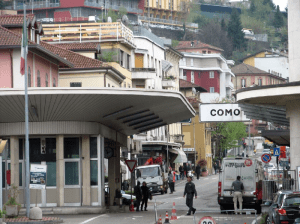
Mercato Coperto

merc COPERTO

Mercato Coperto, Via Sirtori, Como

The Mercato Coperto in Via Sirtori offers a great selection of fresh produce with stalls open on Tuesday, Thursday and Saturday but with some of the shops inside remaining open for the whole week.

mercato copertoThere is a wide range of products on sale including fish and meat stalls, bakers, cheese and salumi as well as fruit and vegetables. It is colourful and lively and well worth a visit even if you are just passing through Como just to experience what food shopping should be about. One of its strengths is the range of stalls and the variety of price/quality options they represent.

Within the Mercato Coperto there is an entire section marked off for local producers some selling local specialities such as lake fish, missoltin and local cheeses whilst others sell locally grown fruit and vegetables or locally reared meat and poultry. Even though some of these producers may be organic, they are all scrupulously ecological having to be based within a defined kilometre range of the city.

Via Cinque Giornate

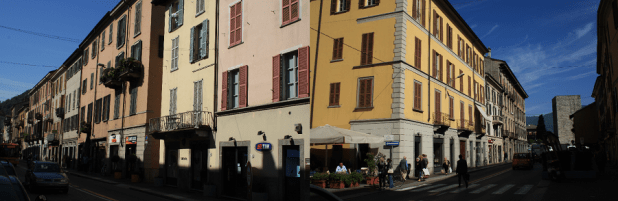
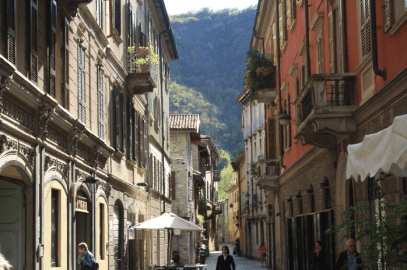
Via Cinque Giornate seems to be the ‘bio’ centre within Como’s old town. There may well be others with a bio offer but here within 20 metres of each other are two rigorously ‘bio’ establishments.

le golose 1

Interior of Le Golose Imperfezioni, Via Cinque Giornate, 49

The first – ‘Le Golose Imperfezioni’ is primarily a bio bakery but with a range of economical and tasty options available for lunch or take away.

Just down the road is ‘La Fonte della Vita’ also with packaged products on sale alongside a range of lunchtime dishes on offer.


bio cafe

Interior of ‘La Fonte della Vita’ Via Cinque Giornate 56

Or you may just want to ensure your mid-morning or after lunch coffee is organic. Both these cafes will provide organic coffee but you could also stroll down  to the cafe at Piazza Mazzini, 16 where you may also be tempted by vegan dishes or pomegranate juices.

caffe bio

Out of town

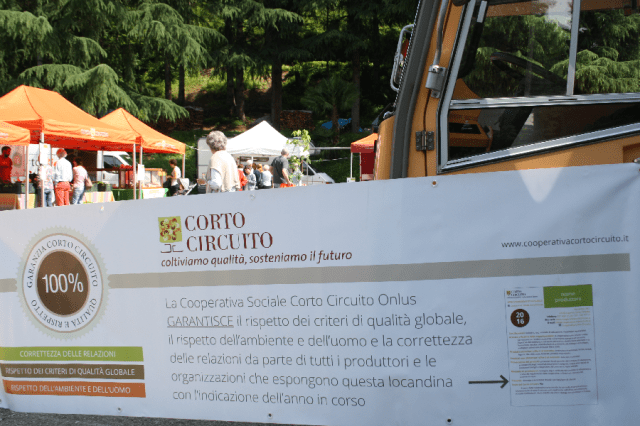
Those looking for certified and fresh bio fruit and vegetables will have to venture outside of the walled centre and either visit the weekly Bio market held on Saturday mornings or make a trip to the shop run by the organisers of the market – the ‘La CortoBottega’ run by the Co-operative Association called Corto Circuito (who also seem to have the franchise for providing refreshments at a number of organised events in Como such as the current Parolario running at Villa Olmo).

Bio market

The market is held on Saturdays from 08.00 to 12.30 in Via Salvadonica 3 which runs off of Via Varesina just after the Gloria Cinema. Here you will find bread, cheese, fruit, vegetables, honey and organic products from further afield such as organic wine and oil.

lacortabottegaBio market 3

The CortoBottega is at the co-operative’s headquarters in Lipomo at Via Grassi 361. It is open on Tuesdays and Fridays only from 15.00 to 19.00.  Corto Circuito can also organise weekly organic food baskets for collection or for delivery.

Bio Supermarkets

Whilst all supermarkets these days have organic sections, there are an increasing number of super or mini markets entirely devoted to organic products. This is my list of those I am aware of but please let me know of any others that I need to list:

  • Mirtilla, Via Borsieri 21, Como
  • Piacere Terra, Strada Statale dei Giovi 5, Casnate con Bernate
  • NaturaSi, Via Pasquale Paoli 80, Como.
Posted in Culture, Food, Places of interest, Sustainability | Tagged , , , , , | 1 Comment

The Three Nautical Graces

3 graces - piroscafi

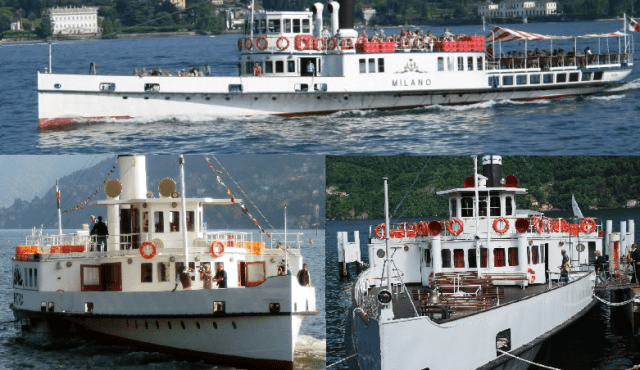
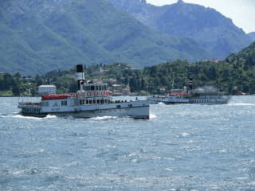
The Three Nautical Graces – Milano (top) Patria (left and Concordia (right)

A trip on Lake Como in any of Como’s three nautical graces will excite the senses and imagination. The combination of setting, fine weather and illimitable style, – with these elements in perfect alignment – will imprint a lifetime memory of charm and beauty.

The setting speaks for itself through the millions of images of lake and mountain through its varied moods and seasons. The weather is as ever in the hands of the fickle Gods but the style of these steamers is at its secular best. The jut of their vertical bows and low-slung lines convey the spirit of their age – fluidity and ease, poise and arrogance, luxury and decadence.

A pair of twins and an elder sister.

milano 1

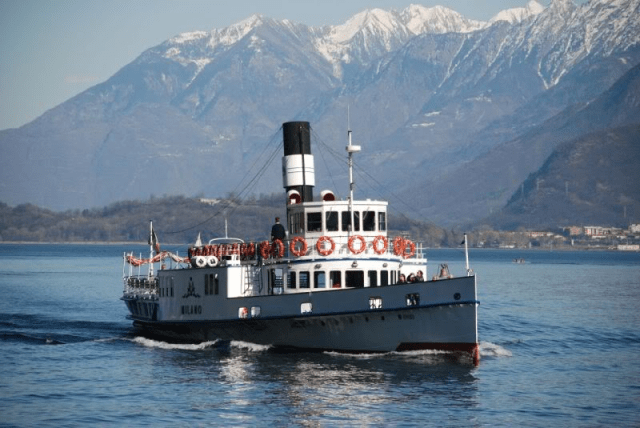
Milano

Milano is the elder sister. She entered service as a lake steamer in 1904 but her engines were converted to diesel as early as 1925 with the unfortunate effect at the time of causing her to tremor. All lake transport was a target for wartime bombing by the allies so Milano laid up hidden under camouflage for a couple of years in the gap between Isola Comacina and Ossuccio. The grand old lady kept running to the Tavernola shipyards for updates and revisions in the 50s and 60s with a complete overhaul in 1989 with a return to regular service from 1991. She has had so many makeovers and face-lifts over the years that little of her original structure remains apart from her lines and the way she lies in the water. She is still in regular service on the Navigazione Laghi’s summer schedule as well as being available for private hire. Follow link for details.

Patria

Patria 1

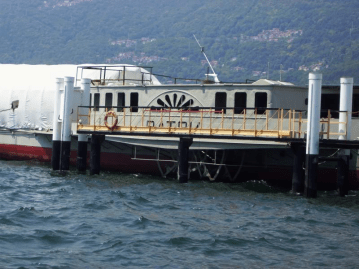
Patria

Patria and Concordia are twins and both were launched in 1926. Wartime was hard on these boats and Patria once came under allied fire causing her to run aground at Gravedona. She was originally called ‘Savoia’ but changed her name on the fall of the fascist regime. The royal house of Savoy had been held responsible for supporting Mussolini and was too closely associated with the fascist regime. ‘Concordia’ on the other hand had the even less imaginative name of ’28 Ottobre’ being the date of Mussolini’s so-called March on Rome. Alongside the multitude of reasons for celebrating the demise of the dictatorial regime, we can also count the renaming of this glorious boat.

patria 4

Patria before her renovation

Patria was last in service in 1990. She was saved from demolition and purchased by the Province of Como, restored and re-opened for the occasional evening cruise and visits from July 2013. Currently she lies docked on the Villa Olmo pier and seems either rarely open or in action in spite of her steam engines having been fully restored.  Her ownership may well pass in to the hands of Navigazione Laghi who hopefully will be better able to exploit her potential.

 Concordia

concordia

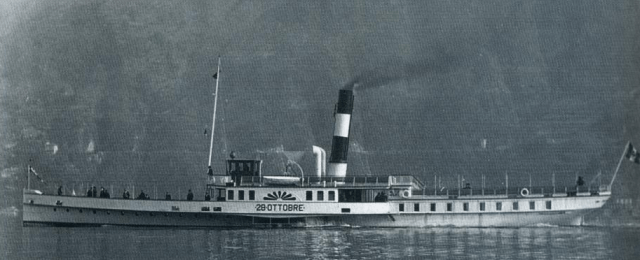
Concordia before her name change

Concordia is undoubtedly the pride of the Lake Como fleet. She originally entered service alongside her twin sister ‘Patria’ in 1926 under her previous shameful name of ’28 Ottobre’. She has been entirely renovated inside and out with full working steam engine and paddles.

concordia collage 1

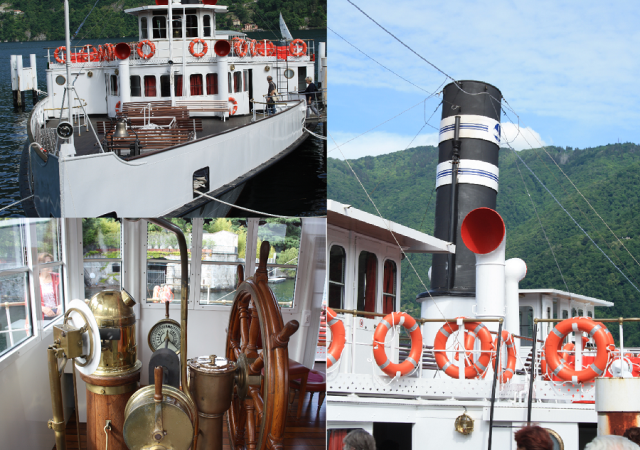
Three aspects of Concordia

The interior has been renovated in the original late ‘Liberty’ style. Thanks to the new replacement boilers, Concordia will under full steam be able to maintain the modern day schedules when she re-enters normal service. She will also be available for private hire. Contact Navigazione Laghi for further information. Her renovation was planned to be completed in time for Milano Expo 2015 but let’s just be grateful that the delay caused by supplier issues and official approvals was no longer than a year. Look out for the plume of smoke from her funnel as her bow cuts through the water when she officially starts service later this month.

concordia interior with engine

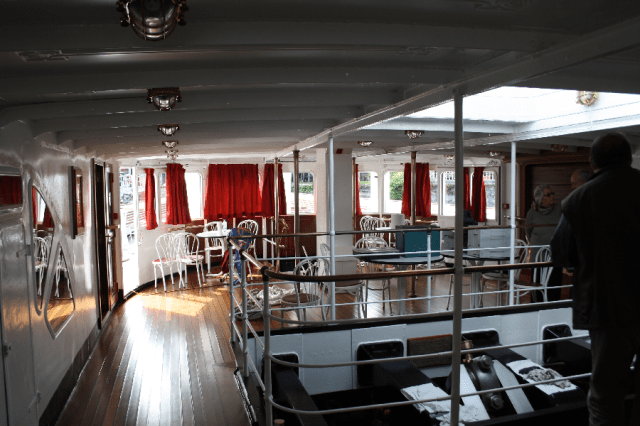
Interior of Concordia with steam pistons bottom right.

Posted in History, Lake, Places of interest, Transport | Tagged , , , , , , | Leave a comment

Como – Its Role in the Birth of a Nation

The Republic Day holiday comes up on June 2nd to celebrate the result of the referendum held on June 2nd 1946 to determine the constitutional form of the Italian state following the overthrow of fascism.  I thought this ‘national’ celebration might provide a sufficient hook to consider Como’s role in the birth of the Italian nation, at a particular moment when it took a radical lead alongside Milan and Brescia in the Lombardy/Veneto insurrection against the Austro-Hungarian Empire.

Piazza Vittoria

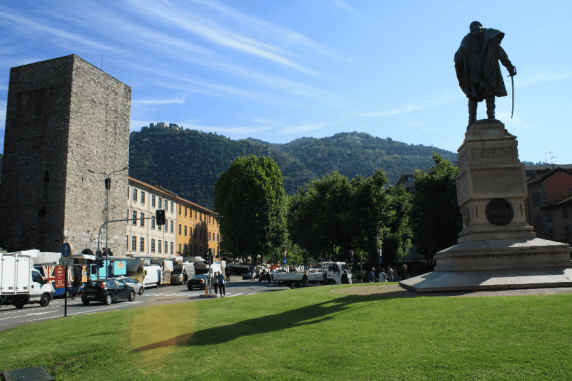
Piazza Vittoria, Como

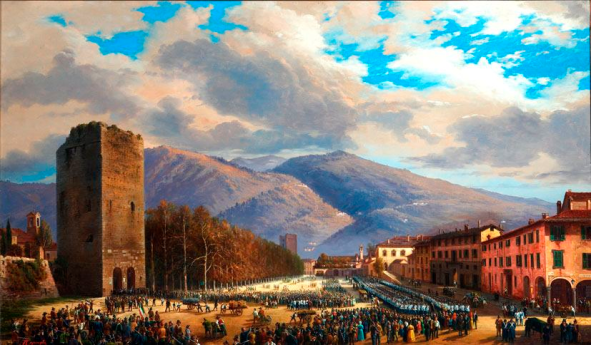
The photo above is taken from behind the Swiss sculptor Vincenzo Vela’s statue of Giuseppe Garibaldi in Piazza Vittoria looking alongside the city walls to the Porta Torre and Viale Carlo Cattaneo.  Now view the painting by Francesco Capiaghi depicting the same area but, as the title states, commemorating a very special event – the surrender of the Austrian army to the Comaschi insurrectionists on the 22nd March in that year of European-wide rebellion, 1848.

Francesco Capiaghi

Francesco Capiaghi – Dopo la resa. Como 22 marzo 1848

Similar popular uprisings referred to subsequently as the 5 days (cinque giornate) famously took place in Milan and for a slightly longer period in Brescia. Como’s uprising was significant – a prelude to the prolonged struggle for independence that would culminate locally in Garibaldi’s defeat of the Austrian army just outside of Como at San Fermo in 1859 – henceforth known as San Fermo della Battaglia.

The Cinque Giornate

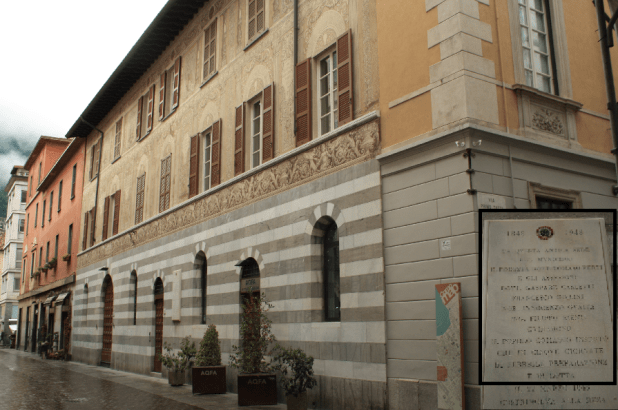
Back on the 18th March 1848, inspired by insurrectionists in Milan, Como citizens began to gather  around the then Town Hall (in renamed Via Cinque Giornate) to demand the setting up of a Civil Guard, a risky  act of open insurrection given the number of Austrian troops in at least 5 separate barracks around the town. However the foreign occupation seemed to unite various strata of civil society from aristocrats, students, artisans alongside the early stirrings of an urban proletariat all under the leadership of their town councillors.

via cinque giornate

The old Town Hall in Via Cinque Giornate, Como. INSET: Plaque commemorating the town councillors who led the revolt.

On the 20th March , physical and moral support for the rebels came from a group of exiles and volunteers from Switzerland who, on arriving at Villa Olmo, faced up to an Austrian army patrol forcing them back into barracks. The rebel numbers were later augmented by a further 500 volunteers and arms arriving by steam boat from around the lake. Meanwhile additional Austrian troops were sent up from Mariano Comense and Cantu to the barracks in the ex-convent of San Francesco (the remaining part of which is now the Spazio Ratti Exhibition Hall). The Austrians demanded the immediate disbandment of the Civil Guard. The demand was ignored.

olmo ratti
Villa Olmo and the San Francesco Convent (now the Spazio Ratti DExhibition Hall)

Later on the 20th, following another attack on an Austrian patrol, the Austrian regiments left the San Francesco barracks to pursue the insurrectionists up Via Milano. However their progress was hampered and finally repulsed by citizens pelting the troops with stones and roof tiles alongside a return of gunfire. They returned to barracks.  Other attempts by the Austrian regiments from the other barracks within the walled  town were also repulsed but both sides suffered injuries and fatalities.

via milano

Westside of Via Milano outside the city walls looking north and south

via giulini

Via Giulini, ex-Trattoria di Soccorso

By 21st March, the Civil Guard had seized 800 rifles from those troops who had surrendered. Emboldened by their success, they attempted to attack the San Francesco barracks but the Austrians responded firmly and it was the citizens this time who were repulsed. The wounded were brought to the Osteria del Soccorso in Via Giulini for treatment. This building still houses a bar/cafe.
By the morning of 22nd March, the Austrian army, holed up in the San Francesco barracks without food (the Como rebels had seized control of the military bakery right at the start of the uprising) and still facing a seriously hostile opposition, were ready to surrender thus giving up their regimental banner to the victors – the civilians of Como.

This was the only regimental banner lost by Austria throughout all the insurrections across Lombardy/Veneto in the tumultuous years of 1848 and 49.

signing the surrender

Plaque on the Garibaldi statue in Piazza Vittoria depicting the surrender of the Austrian regiments


Why 5 days in Como?

The silk industry had not yet been established in Como by 1848. The urban proletariat hardly existed at that time but Como stood out as one of the centres of popular insurrection. Why? Maybe one aspect was Como’s location as a border town, its vicinity to the Swiss Confederation, and the porosity of the borders that not only facilitated smuggling and the passage of exiles but also the exchange of political ideas and propaganda emanating from the many Italians who had fled into Switzerland.

piazza mazzini
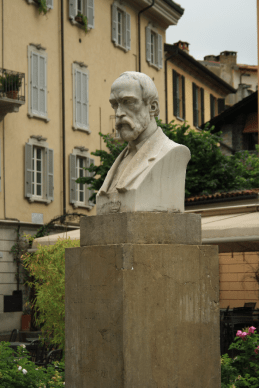
Mazzini’s bust in Piazza Mazzini, Como

And in particular, the influence of one of those exiles – Giovanni Mazzini who through his organisation ‘La Giovine Italia’ had influenced many of the intellectuals and aristocrats in the Como area. He even tried to organise a further uprising in Como in 1849 but unification had to wait a further ten years for the combination of  the House of Savoy, the support of republican France, the political genius of Cavour and the military genius of Garibaldi to finally secure the risorgimento.

5 giornate medal

Medal awarded to participants in the Cinque Giornate revolt.

Capiaghi’s painting and many memorabilia from the ‘Cinque Giornate’ and other episodes in the struggle for independence are on view at Como’s Museo Civico Storico Giuseppe Garibaldi in Piazza Medaglie d’Oro 1. The museum, like all the other civic museums, is open from Tuesday to Sunday from 10.00 – 18.00 with an entry fee of €4.00. Note however that entry is free on June 2nd (Republic Day) and also on June 5th being the first Sunday of the month.

Posted in Culture, Events, History, People, Places of interest, Politics | Tagged , , , , , | Leave a comment

Tribute to Marco Pannella

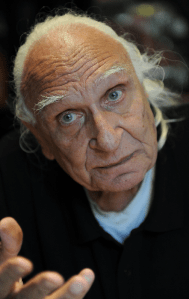
marco pannella

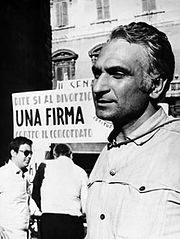
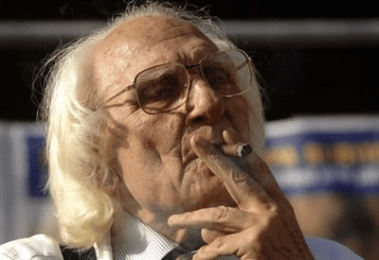
Marco Pannella – Radical Party Politician, 1930 – 2016

Yesterday (19th May 2016) an extraordinary politician died of cancer in a Rome hospital. He was Marco Pannella. Italian politics does not and will not feature heavily on this site but Pannella was special, even inspirational – and he was a rebel  with a long list of causes. His campaigns over the years since he entered politics in 1955 include: fighting for referenda on divorce and abortion,  insisting on true separation of church and state, the legalisation of soft drugs, prisoner rights, euthanasia, the right to conscientious objection and on the international stage against capital punishment, equal rights or any other form of judicial or non-judicial oppression.

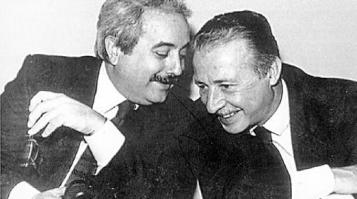
He seemed totally unafraid to take on any power group which led him to imprisonment in Sofia, Bulgaria in 1968 for leafleting against the Soviet invasion of Czechoslovakia and on to countless other arrests and confinements. In my opinion he shares a similar moral stature to  other remarkable figures in recent Italian history such as the magistrates, Falcone and Borsellino.

Falcone and Borsellino

Giovanni Falcone and Paolo Borsellino

He had a strong belief in non-violence and so perfected non-violent forms of protest  like the hunger strike as a means of garnering publicity and ensuring a bigger media impact for him, the Radical Party and Radio Radicale.

marco pannella in 1974 campaigning for the divorce referendum

Marco Pannella, 1974 campaigning for the referendum on divorce

There are ‘buoni’ and ‘cattivi’ in all areas of public life in all countries but I feel  in Italy that the buoni such as Pannella, Borsellino and Falcone (and numerous others, of course) stand out especially for their courage, humanity and essential modesty.

Pannella lived his radical ideals also in his private life within a so-called open relationship with his partner whilst admitting to 3 or 4 significant gay relationships.

I am happy to lead the blog down this brief political diversion to honour exemplary individuals such as Marco Pannella who sit within a truly admirable Italian tradition of service to the oppressed or disadvantaged as evident through modern history;  through from the heroes and victims of the risorgimento,  to Giacomo Matteotti and Antonio Gramsci , the partisan resistance to occupation,  Paolo Borsellino and Giovanni Falcone and all the other opponents  to organised crime, exploitation and corruption.

Pannella 1

Marco Pannella 1930 – 2016

Posted in History, People, Politics | Tagged , , , , | 1 Comment

Up in the Hills – Prehistoric Como

As an escapee from London, I now cannot envisage living in a city where, from its centre, I can’t easily see and reach its green periphery, e.g. Norcia in Umbria but of course particularly Como where, to the east sits Brunate and to the west Monte Croce and the Parco Spina Verde.

centre to brunate

Via Lambertenghi, Como

As you climb out of the town on either side, the sounds of the city, the asthmatic sirens, the general noise of urban activity subside and are replaced by the occasional rustle of a lizard in the undergrowth, bird song and other more contemplative murmurings of nature. And up here is where you will find evidence of Como’s antecedents, who, even in prehistoric times, were attracted to this strategic location and the advantages it offered for trade.  But they were resolutely mountain people since Como’s foundations were not laid down until the Romans developed it in the first century BCE.

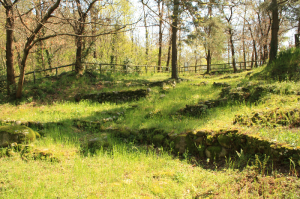
Golaseccan settlement Parco Spina Verde, Como.

Golaseccan settlement Parco Spina Verde, Como.

Recreation of a Golaseccan interior , Parco Spina Verde by the Baita Pianvalle

Recreation of a Golaseccan interior , Parco Spina Verde by the Baita Pianvalle

Within the Parco Spino Verde there is a path laid out for visiting some of these prehistoric sites.

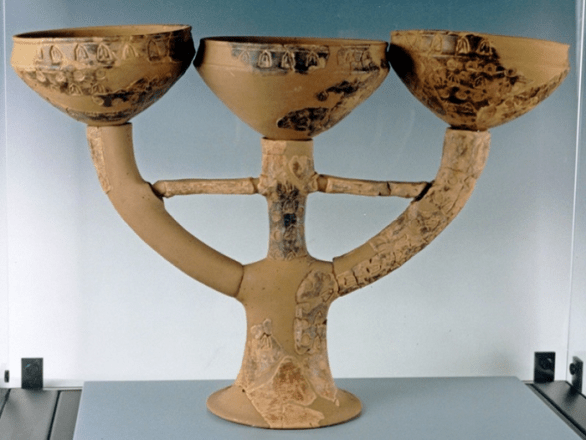
Signage in both English and Italian explains aspects of these bronze age settlements and the Golasecca culture of its inhabitants.  The Golaseccans occupied the arc of the pre-Alps and Ticino canton and prospered through the Bronze to the early Iron Age. They left a mass of material for archaeologists to uncover and, as a result, the Prehistory section of Como’s Archaeology Museum contains a rich collection of Golaseccan artifacts including the three-armed vase shown below.


Three-armed vase with stamped decoration, from Ca' Morta end of 6th century BCE. Museum of Archaeology, Como.

Three-armed vase with stamped decoration, from Ca’ Morta end of 6th century BCE. Museum of Archaeology, Como.

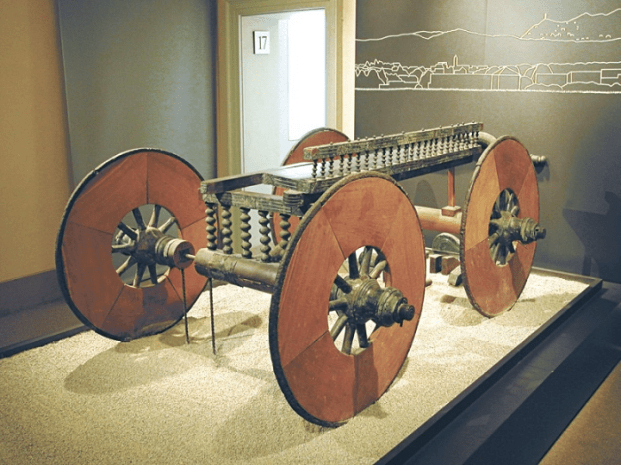
This vase and most of the other finds from this period were uncovered in the series of cemeteries known as Ca’ Morta (House of the Dead)  between modern-day Monte Lucino and Brebbia to the south of Como. The most impressive item on display has to be the funeral cart.

Ca Morta Funeral Carriage

Funerary Cart, Ca’ Morta circa 450BCE. Como Museum of Archaeology.

The museum’s collection is large and significant as befits an area with a rich bronze age heritage  but not all is necessarily displayed to best effect – lighting, signage and language variants could all possibly be improved upon.

Como from the Parco Spina Verde

Como from the Parco Spina Verde

These bronze age ancestors owed their success roughly from the 6th to the 2nd century BCE due to their trading links with the Etruscans to the south, the Venetians to the east and the Celts to the north. The gradual growing dominance of the Celts tended to diminish the ‘international’ trade and the area lost some importance until the Romans established Novum Comum in the 1st century BCE by clearing the swamp and laying the foundations of the modern city as we know it. The establishment of Novum Comum marked the transition from hilltop to lakeside settlement and to an entirely new chapter in Como’s history.

Como's Museum of Archaeology

Como’s Museum of Archaeology

The Archaeological Museum is open from Tuesday to Sunday from 10.00 – 18.00. Entrance costs €4, €2 for the over 65s, €1 for students from 12-18 and free for children under 12. The museum, along with the other civic museums in Como, gives free entry to visitors on the first Sunday of every month.

Posted in History, Places of interest | Tagged , , | 1 Comment

25th April Liberation Day – Como’s Role in the Insurrection

Some of you may not be aware that the last hours of Mussolini’s fascist regime were played out on the banks of Lake Como – and that those few eventful days following the general insurrection on April 25th 1945 would lead to a host of unanswered questions, accusations of complicity and betrayal to one cause or another and divisive historical interpretations that still touch raw nerves to this day.

villa pizzo

Villa Pizzo, Cernobbio, on the promontory from which the bodies of partisans Neri and Gianna were cast into the lake.

The chief mystery concerns the so-called Dongo Treasure – in other words what happened to the money Mussolini was said to be carrying with him when he was seized by the partisans?  What role did Allen Dulles of the American Office of Strategic Services based in Lugano play, why did Winston Churchill come on a painting tour to Dongo so quickly after the end of the war, why did so many of the partisan witnesses to Mussolini’s capture and execution die young, why was the partisan leader Captain Neri and his lover Gianna executed and their bodies cast in the lake just outside of Cernobbio, etc…etc..?

Leaving those questions aside, let’s establish exactly where and what happened on Lake Como following the 25th April 1945 when the CLN (Comitato di Liberazione Nazionale) ordered a general strike and partisan insurrection. Previously on April 20th back in Milan, workers had started a general strike and the partisans an open insurrection. On April 25th, Mussolini was trying to negotiate a peace treaty mediated by Cardinal Schuster with the partisans but the talks broke down and, with the official ending of the German Occupation, Mussolini recognised his fascist RSI (Socialist Republic of Italy) puppet-state was defeated. He leaves Milan for Como along with his wife, Rachele, and many of the fascist ex-ministers.

mussolini map 2

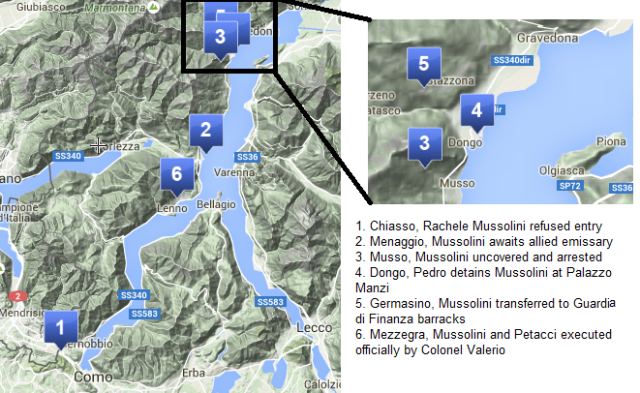
He spends the night of April 25th in Como with his wife who the next morning seeks asylum in Switzerland but she is refused entry when she reaches the border post at Chiasso.

chiasso

Chiasso, border crossing

Also on April 26th, Mussolini now joined by his mistress Claretta Petacci and her brother alongside the fascist leaders of the RSI, joins a column of 200 German soldiers who leave Como aiming to reach the Valtellina by following the western shore of the lake. Their  intention was either finally to reach Germany or to assist Mussolini in setting up a last stand in the Valtellina itself.

Mussolini and the column stop at Menaggio for the night. There has been speculation that Mussolini was waiting there for a secret allied emissary from Lugano but if so, he was disappointed. The column sets out north on the morning of April 27th.

menaggio

Menaggio

At Musso the column is halted by a partisan roadblock where a rock promontory forces the road around a narrow bend. The partisans, heavily outnumbered by the German soldiers, allowed the soldiers to continue on their way but insisted on retaining all Italians including the fascist leaders and  Claretta Petacci with her brother who were travelling under false Spanish Ambassadorial visas. Mussolini had disguised himself as a German soldier but was identified as the partisans checked the convoy.

musso

Musso showing the promontory where Mussolini’s column was halted.

Mussolini is detained by Pedro, the commander of the 52nd Garibaldi Brigade, in the Dongo Town Hall (Palazzo Manzi) and later transferred to the Guardia di Finanza barracks at Germasino for greater security. The Americans had requested that Mussolini, if captured, should be delivered to them alive but the insurrectionists in Milan wanted quick justice.

Claretta Petacci reveals her true identity and insists on being able to accompany Mussolini. Both, at 1.30 in the morning of April 28th, are transported back down the lake with the idea of finding an even  more secure confinement either in Como or eventually in Milan. However news of a militant partisan roadblock in Cernobbio causes the party to change plan and seek temporary shelter in the Bonzanigo district of Mezzegra.

What later happens that day in Mezzegra is the subject of doubt and different interpretation but the official account states that a partisan known as Colonel Valerio, sent by the leadership in Milan, arrives at Mezzegra later in the day and assassinates Mussolini and his mistress outside the gates of the Villa Belmonte. Valerio then goes (returns?) to Dongo and there arranges for the execution of the fascist leaders and Claretta Petacci’s brother. All bodies are then gathered up and carried down to Milan to be displayed in Piazza Loreto.

dongo execution

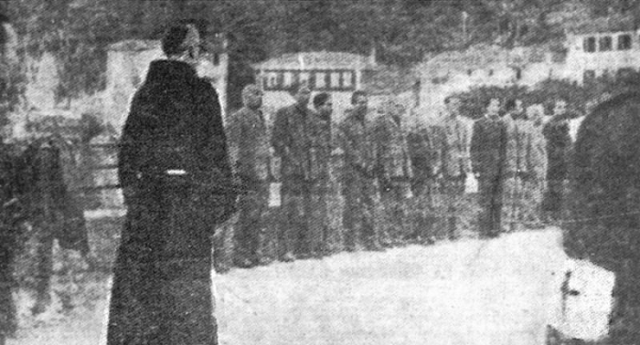
Priest administering last rites to the members of the fascist hierarchy awaiting execution on the lakefront at Dongo.

Modern day visitors at this time of year may find it hard to imagine the raw emotions, the spirit of vengeance and sharp social division when placed in the context of the glorious landscape as it reestablishes its splendour as Spring advances; but the lake did witness these historical events and provided a discordantly scenic backdrop to the final days of Mussolini  and his fascist regime.

dongo town hall

Dongo, Palazzo Manzi in the centre.

If in Dongo, it is well worth visiting the End of the War Museum, housed in Palazzo Manzi where Mussolini was first held, dedicated to the memory of the partisan resistance and insurrection on Lake Como and particularly to the events recounted in this article. The museum is open from 10.00 – 13.00 and then from 15.00 – 18.00 every day except Monday from the beginning of April until the end of September. Entrance fee is €5 reduced to €3 for the over 70s and under 18s. Children aged 11 and under are free. This Monday, on Liberation Day April 25th, the museum will open.

Posted in Events, People, Places of interest | Tagged , , , , | 3 Comments

Baradello Castle Welcomes Swallows and other Summer Visitors

Scastello baradellotanding sentinel over the city and as testament to Como’s eventful past, the Baradello Castle reopens its doors for the summer with one-off openings on Monday 25th April and Sunday May 1st. Thereafter it is open every Sunday from June to the end of September.
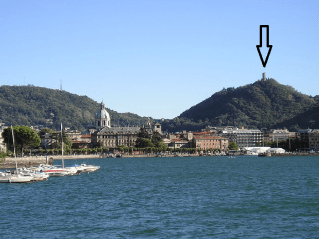
As everyone entering Como from the direction of Milan can appreciate, the castle occupies a strategic position perched on the so-called Baradello hill with a 360 degree view taking in the Po Valley and the foothills of the Alps.


baradello on the hill

Baradello Castle overlooking Lake Como

The site seems to have been occupied from the Bronze Age with the first fortification dating to the 10th century but nothing is too certain until we get to Frederick Barbarossa,  the Holy Roman Emperor who built the castle in 1158 having just pacified Milan. The original construction consisted of the square tower that still remains, a residential palace, a chapel and two large water cisterns built to withstand siege.

Portatorre 2

Porta Torre

The tower and the additional fortifications constructed by Frederick Barbarossa including the Porta Torre and City Walls helped establish the validity of Como as a city independent of Milan and able to define and enforce its own ordinances.  Barbarossa gifted the tower to the city in 1178 and it helped maintain Como’s independence of Milan and the Lombard League up to the 1330s.

A document from 1216 gives some insight on the custodians of the castle. There  was a regular guard of 12 citizens elected to serve for a 6 month period with 2 of them designated as captains. They each had to provide their own armour and were obliged to sleep there at night although only 8 were required to stay over during the day. They had a monthly salary of 30 ‘soldi’ a month. My guess is that, outside of moments of conflict, this was an honorary role.

palio del baradello

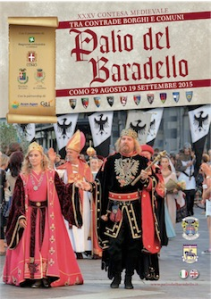
The Baradello Castle also gives it name to the annual Palio del Baradello which is an enactment of the games and triumphal march organised in the summer of 1159 by the citizens of Como as a mark of gratitude to Barbarossa for securing their independence from Milan.

“The city of Como gives him a hearty welcome with great feasts and revel: big banquets, illuminations, contests and equestrian tournaments are organized in his honor”.

See calendar entry for August to see more information on the Palio although details of the event are not yet ready.

Getting back to the Castle, it is open from 10.00 – 18.00 (last entry 17.30) on April 25th, May 1st, and all subsequent public holidays and Sundays from June to September. The entrance fee is €5, €4 for those over 65 whilst children of 13 years and under are free. The interior has been renovated since last year and the exhibition updated with a range of objects found during recent archaeological digs. The exhibition has been organised in conjunction with Como’s Museum of Archaeology. The castle itself is managed by the Parco Regionale Spina Verde who are responsible for marking out the walks. Follow footpath No. 10  from Piazza Camerlata to get to the castle.

Posted in Architecture, Events, People, Places of interest | Tagged , , , , | Leave a comment

Villa Olmo Restoration – Sala del Duca opens to the public

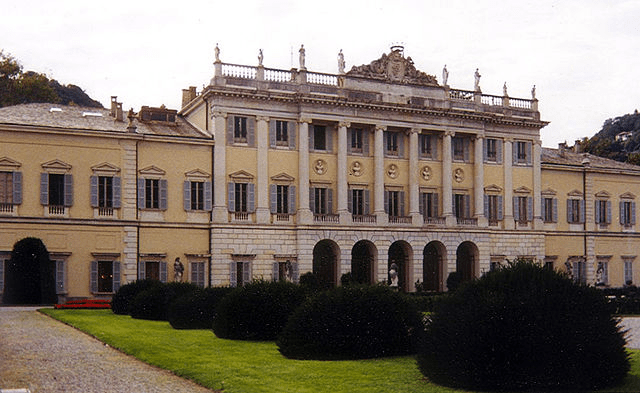
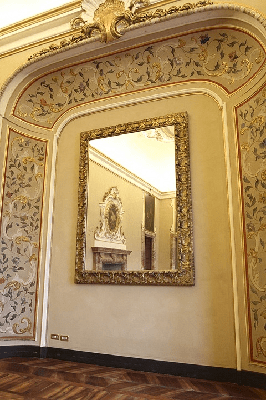
Villa Olmo is the jewel on Como’s lakefront – the most prominent and arguably the most attractive of the villas that line out along the so-called ‘Chilometro della Conoscenza’ from the Villa Saporiti to Villa Sucota – and it is being restored. villa olmo bigThis Saturday (16th April) marks a milestone in the project as the council (owners of Villa Olmo) open up the Sala del Duca on the first floor of the villa to visitors for the first time.
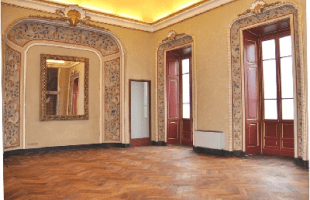
sala del duco med

Each tour is limited to 25 persons, takes about 30 minutes and start from 10.00 on Saturday morning with last entry at 12.00. There should be another opportunity to visit the Sala on Saturday 23rd April but further details are not yet available. Although the room may well be opened on future occasions to the public, it will primarily be available for private or corporate hire.

The Salasala del duca 2 med del Duca is named after the last private owner of the villa, Duke Visconti di Modrone, who used it as his bedroom. The renovated decoration was executed in the neo-baroque style towards the end of the nineteenth century with a large fresco depicting Fortune by Ernesto Fontana.

The restoration of the Sala, partially financed by a contribution from Bulgari, is just one aspect of a project that will be completed by June next year. Included in the project is restoration to parts of the exterior of the villa, to the statues in the park and the monumental fountain, to the botanical gardens and to the massive greenhouses which represent the finest examples of their kind in Lombardy. Also the nearby Villa Saporiti (owned by the Province and occasionally open to the public) will profit from a face-lift to the ground-floor rooms and to its gardens.


Posted in Architecture, Events, Places of interest | Leave a comment

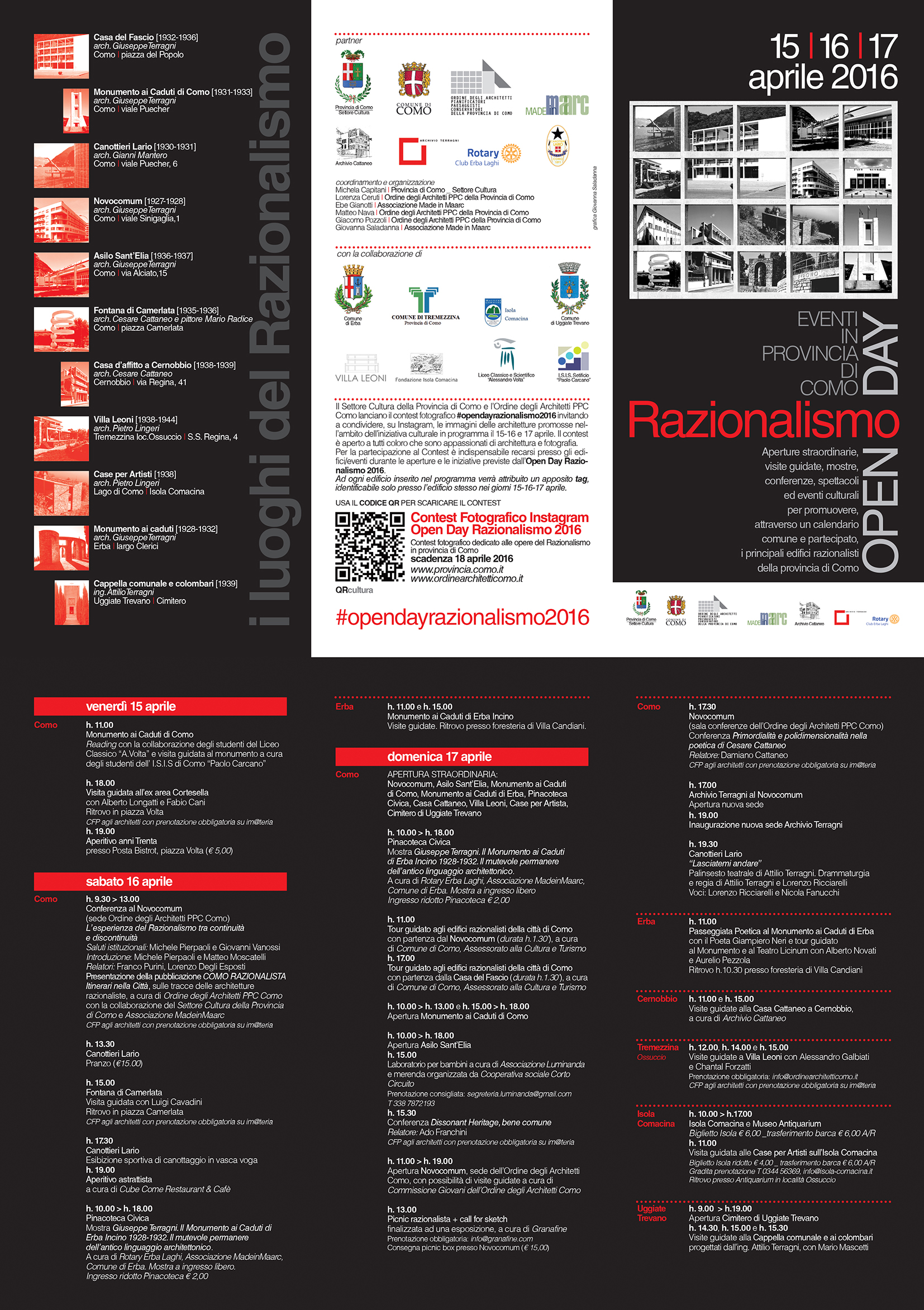
‘Rationalism’ – Open Days from 15 to 17 April

rationalism open dayRationalism – the Italian flavour of Modernist architecture – is particularly well represented in and around Como. Take for example, the Casa del Fascio in Piazza del Popolo – an internationally renowned masterpiece by Giuseppe Terragni (1904-1943), who lived and worked in Como.
casa del fascio ext medium

Casa del Fascio by Giuseppe Terragni, 1936

He and other colleagues have left a rich and varied heritage which the city and provincial authorities and various local architectural associations wish to celebrate for the second year running with a  ‘Razionalismo Open Day’ over the next weekend (15th – 17th April).

casa del fascio medium

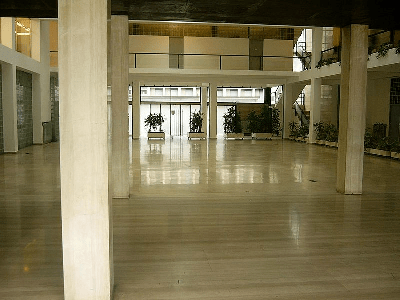
Interior of the Casa del Fascio

This  initiative includes free guided tours of the principal buildings in Como, Erba, Isola Comacina and Cernobbio. Giovanni Vanosi, the Cultural Councillor for the Province described the initiative as ‘… cultural appreciation for the architectural heritage of our area.’ Luigi Caradini for Como Council observed that the Open Day  ‘is an additional stimulus to a cultural tourism to accompany the already well-established appreciation of our landscape.’

diving board medium

Grace and simplicity – the Diving Board at the Como Rowing Club building, Via Puecher, Como designed by Gianni Mantero, 1931.

Open this link to get details of the various events scheduled for the weekend. Unfortunately the guide is not available in Italian but please leave a comment below if you want more information.

Monument medium

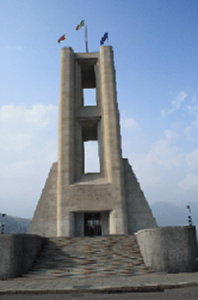
Monumento ai Caduti, Via Puecher Como, Giuseppe Terragni 1933

In addition to the open days, there is an excellent app guide for Android and IOS with maps and audio commentary outlining information on most of the best-known buildings. with an option for English.  Why not also check this link if you actually want to buy a rationalist-style villa.

google-play-badge

app store logo


Posted in Architecture, Events, Places of interest | Leave a comment

Villa del Grumello start of season

Reopening of the Villa del Grumello and Villa Sucota Gardens.

Villa del GrumelloThese two villas on the road from Como to Cernobbio, owned by the Ratti Foundation, have glorious gardens with great views out to the lake and will be open again to the public from Sunday 10th April.

Lake Como does seem to go into hibernation over winter which can be a little disappointing for those visiting in February or early March but then suddenly, with the arrival  of Spring, there is a glorious reawakening palpable in the many parks and gardens that surround the lake. Note in particular Villa Carlotta at Tremezzo and Villa Melzi  at Bellagio, to mention two of the better known gardens.

For those of you who have never seen the parks of these two villas, be assured that a visit is well worthwhile and makes a great continuation to the Passeggiata on the lakefront to Villa Olmo. Cross the pedestrian  bridge at the back of Villa Olmo and turn right into the grounds of Villa del Grumello.

For those who already know the villas, there are some excellent reasons for returning this year given that the park of Villa Sucota will be opened up for the first time. Additionally the Villa del Grumello gardens have been spruced up, more of the greenhouses have been renovated and various pieces of contemporary art have been distributed around the site.

Villa del Grumello gardens

The gardens are open free of charge on Sundays from 10th April from 10.00 – 18.00 and also throughout the month of August.


Posted in Gardens, Places of interest | 1 Comment