Twenty English Artists on Lake Como

Twenty English Artists on Lake Como is the name of the exhibition running from the 13th to 17th November in London featuring all of the output from the art project set up to raise funds for the preservation of the Anglican Church in Cadenabbia.

Interior Anglican Church

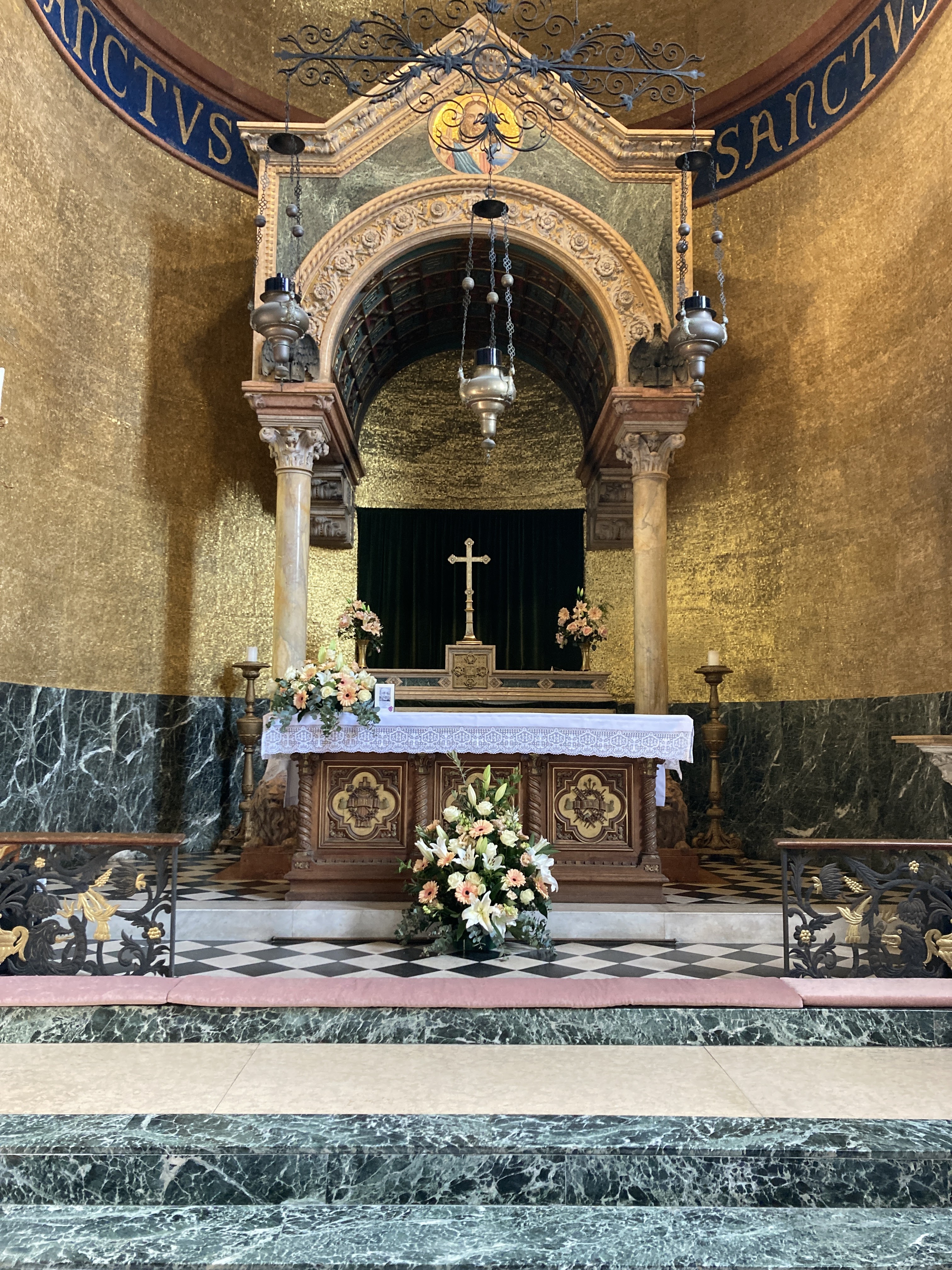
The glorious interior of the Anglican Church in Cadenabbia.

Back in August we published an article entitled ‘Lake Como’s British Enclave, the Anglican Church and Landscape Art‘ which featured the church and described the project to raise funds for its restoration. There was an initial exhibition of some of the project’s artistic output inspired by Lake Como on show last September at Tremezzo’s Museo del Paesaggio. That exhibition contained only a sample of the total output from the art project. The complete collection of new works by the twenty artists invited to the lake last April will now be shown at the Gurr Johns Gallery in London’s Pall Mall (Gurr Johns International, 16 Pall Mall, London SW1Y 5LU).  If in London, do take this opportunity of seeing how this unique mix of established and up and coming artists of varying ages have come to interpret the magnificent landscape in the most fashionable area of the lake around Tremezzina, Griante, Bellagio and Varenna. 

The whole purpose of the art project, organised by the dedicated congregation of the Anglican Church in Cadenabbia, was to secure funds for the much needed restoration of the church and to ensure it remains open to all residents and visitors alike through its season of regular services from May to September. Part of the proceeds from the sale of the items in the London exhibition will be donated to a charity called The Friends of the Church of the Ascension.
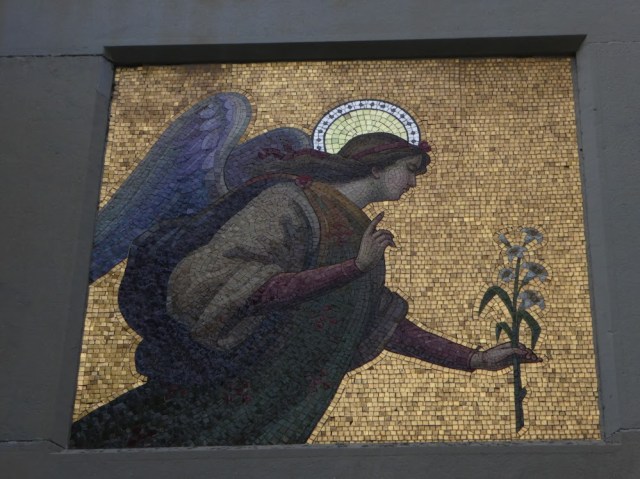
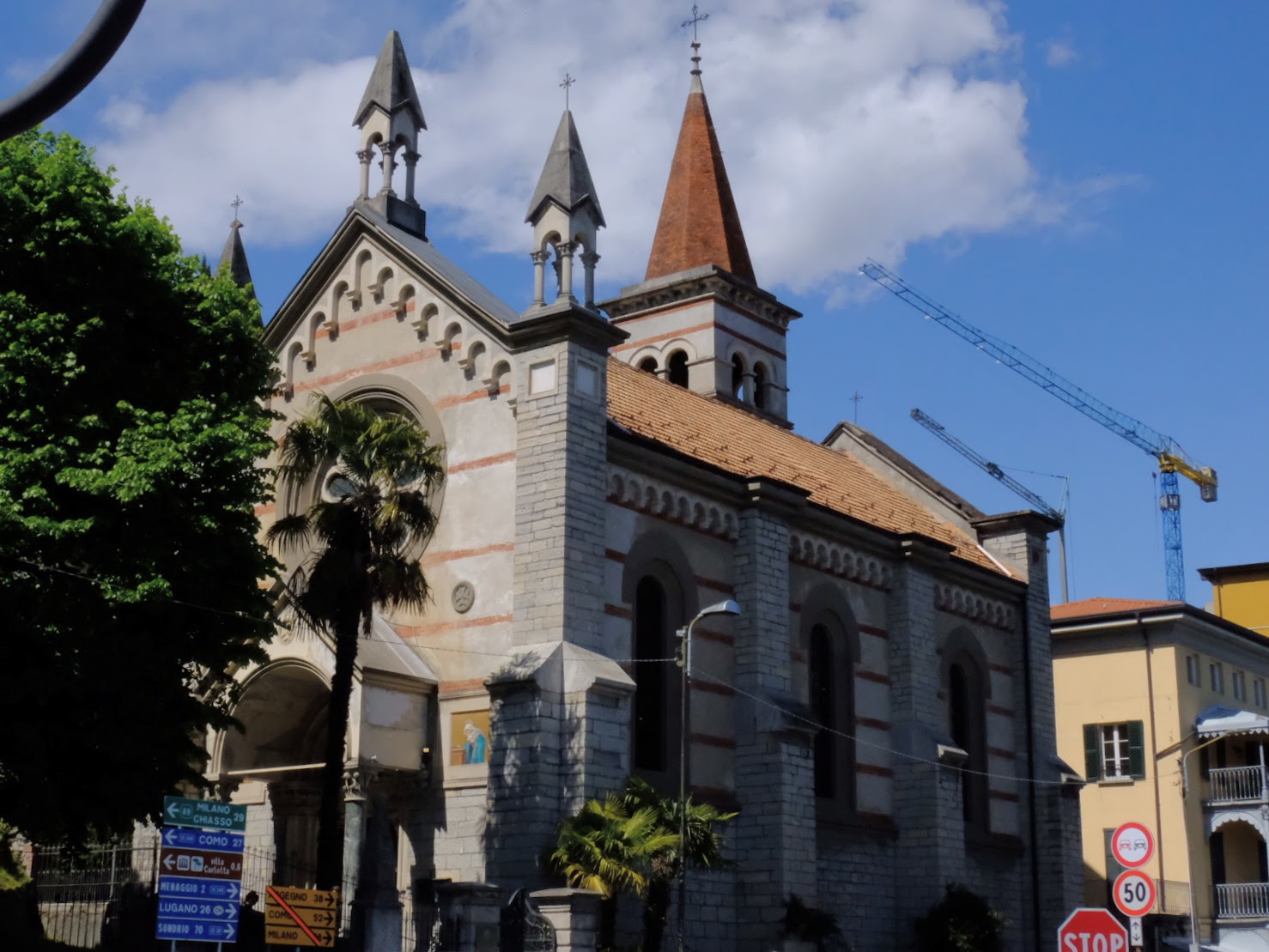
exterior mosaic

One of the two mosaics on the church’s exterior.

For a preview of all of the works on display, download the exhibition’s catalogue and price list from this link – https://www.20artistsonlakecomo.co.uk. I have in turn copied and pasted below from that catalogue the brief biographies of the twenty artists with a single example of what each artist will exhibit. 

The Twenty English Artists

In alphabetical order: 

Alice Boggis-Rolfe
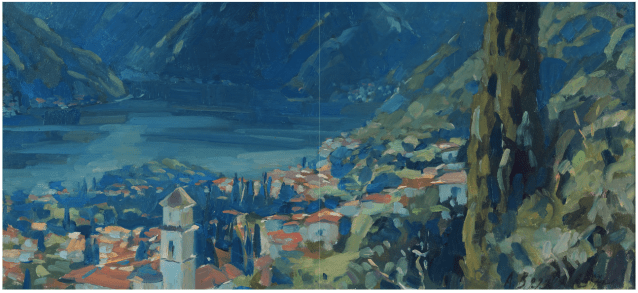
Alice

Alice Boggis-Rolfe. Hazy Afternoon, Lake Como. Oil on panel, 15 x 40cm

Born in 1990, Alice Boggis-Rolfe is a figurative painter. Her subject matter veers from vast open landscapes to quiet, intimate interiors and still-lifes. Trained at Chelsea College of Art and Heatherley’s School of Fine Art, Alice has since held six sell-out solo exhibitions in London and exhibits regularly with the New English Art Club, the Royal Society of Portrait Painters, the Royal Society of British Artists and the Royal Institute of Oil Painters.

Caroline Bromley-Gardner

Bromley-Gardner

Caroline Bromley-Gardner. Raveglio Olive Farm above Lenno. Oil on canvas, 24 x 30cm

One year Foundation course at Bath Academy of Art followed by 3 years study in Florence Italy with Nerina Simi. Working mostly in oil I undertake equestrian and animal portraiture and sculpt in clay to cast in bronze. I also enjoy Landscape and try to capture the connection between the shifting light of sky and landscape and the movement of composition and perspective. 

Hugh Buchanan

Buchanan

Hugh Buchanan. Morning Light, Villa Carlotta. Watercolour, 22 x 15 inches

Hugh was born in Edinburgh in 1958. The city instilled in him a love of architecture which he developed as a student of Drawing and Painting at Edinburgh College of Art. After graduating in 1981 he worked on commissions for the National Trust and in 1987 was invited by the Prince of Wales to paint a series of interiors of Balmoral. In 1988 he was commissioned by the House of Commons to paint four interiors. Hugh Buchanan’s paintings are also in the collections of the Victoria and Albert Museum, Edinburgh City Art centre, the University of Edinburgh, the University of Aberdeen, the Bank of Scotland, the Royal Bank of Scotland, Flemings Bank, Deutsche Bank, and the National Trust for Scotland. In 2002 he was commissioned by the House of Lords to paint the Lying in State of the Queen Mother at the Palace of Westminster.

Nancy Cadogan
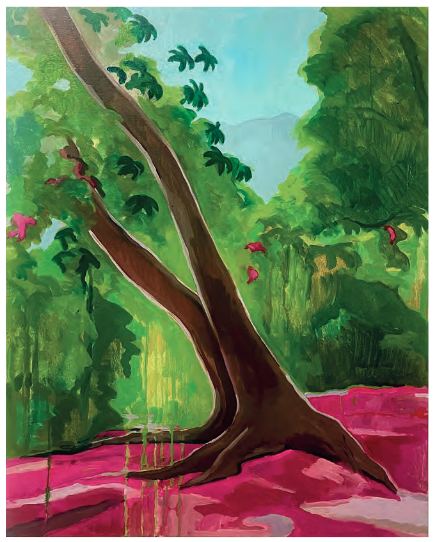
Cadogan

Nancy Cadogan. The Trees at Villa Carlotta I. Oil on linen, 40 x 32 inches

Nancy is a British figurative painter living in the UK. She has been exhibiting her work globally since 2004, and paints from imagination and observation to explore themes of literature, time and still moments. Her paintings invite the viewer to share her joyful appreciation of contemplative observation.

Richard Foster  PPRP. 
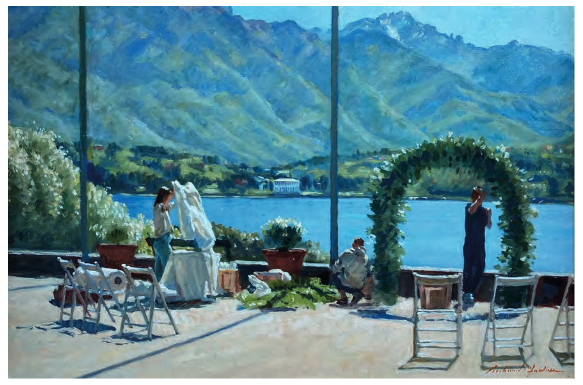
Foster

Richard Foster. Getting Ready for the Wedding. Oil, 40 x 60cm

Richard is a portrait and landscape artist, a member of the Royal Society of Portrait Painters, President 2017-2022 and former Vice President and Hon Treasurer. He spends the majority of his time painting portraits, some in London but many on location. He also likes to have occasional exhibitions of his landscapes. His past commissions include the National Portrait Gallery, Oxford and Cambridge Colleges. 

Timothy Hyman RA

Hyman

Timothy Hyman. He Struggles Twice to Hold the Lake. Oil on board, 27 x 65cm

Painter, writer, curator; born 1946. As well as ten London solo shows, I have published seven books, including most recently (and relevant to this show), ‘Sienese Painting’ (Thames and Hudson, 2003 and 2022). Lifelong commitment to drawing and one of the founding teachers at the Royal Drawing School.

Irma Kennaway 

Kennaway Irma

Irma Kennaway. Griante View, Lake Como. Mixed media on canvas, 50 x 120cm, signed limited edition print.

“I love colour, sunshine and good food, so living in Italy makes sense for me! Florence was the obvious choice after art college at Central St. Martins. Then the lure of Lake Como!” Since graduating from CSM in Fashion & Textile Design, Irma has created for fashion houses including Kenzo and YSL, as well as working on her own playful painting and drawing practice. Today she makes digital art, paints and makes design objects. Irma exhibits regularly and her works are in private collections worldwide.

Lester Korzilius
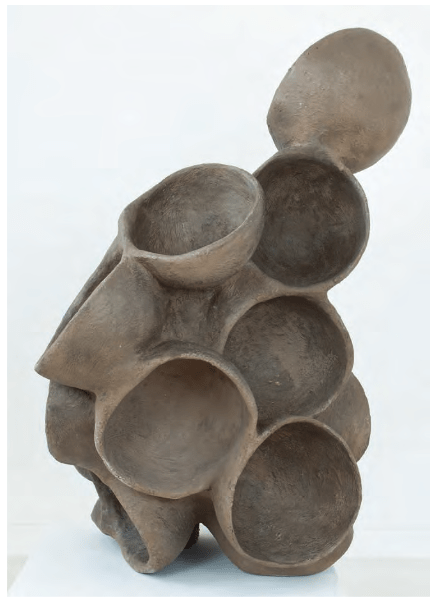
Lester Korzilius

Lester Korzilius. Half Moon Rising. Bronze resin on Jesmonite base, 85 x 55 x 64cm

Lester Korzilius is an artist and architect. He runs his own arts and architecture practice in London. In the arts, Korzilius graduated with an MFA from the University of Sussex/West Dean and an MA in Sculpture from the Royal College of Art. He is a Doctoral student in Fine Art at the University of East London. 

Cathryn Kuhfeld SWE, CAS. 
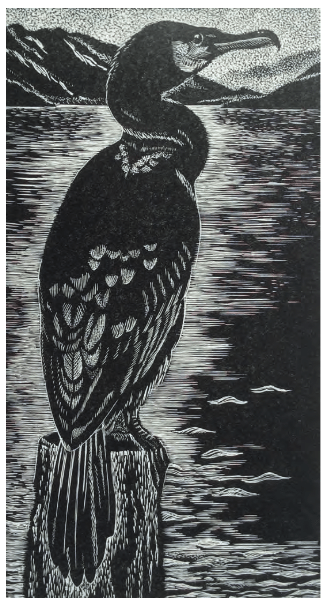
cathryn kuhfeld

Cathryn Kuhfeld. Cormorant on Lake Como II, Watching. Wood engraving, edition of 50, 14 x 7.5cm

Cathryn Kuhfeld is a painter and printmaker who completed her art school studies with a postgraduate course at the Royal Academy Schools. She works with woodcuts & wood engraving and is a member of The Society of Wood Engravers. Her painting subjects range from portraits and gardenscapes to the natural world, the flora & fauna, birds & beasts in and around her studio in Kent.

Peter Kuhfeld  RP, NEAC, CAS. 
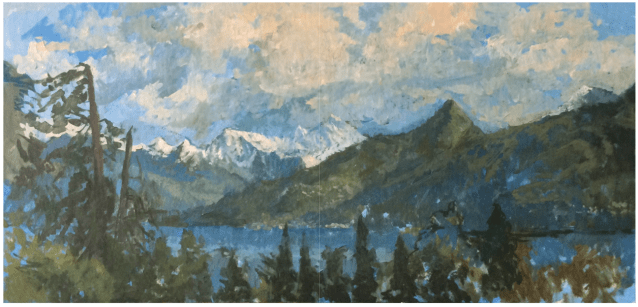
Peter Kuhfeld

Peter Kuhfeld. Morning on Lake Como. Oil on panel, 25 x 50cm.

Peter Kuhfeld is a figurative painter who studied at the Royal Academy Schools London. He is a long-standing member of the New English Art Club & the Royal Society of Portrait Painters where he won the Ondaatje Prize for Portraiture & gold medal in 2019. His great loves are portraiture, interiors, the landscape, and Italy. He has painted extensively in Venice, Florence and Rome, where he is inspired by the architecture and the light. He has had numerous one-man shows & currently exhibits with The Jerram Gallery in Sherborne. Among his notable commissions have been painting the marriage of Prince William & Catherine Middleton at Westminster Abbey in 2011, and painting HM The Queen’s Diamond Jubilee River Pageant in 2012. More recently in 2022 he painted Anita Lasker-Wallfisch MBE as part of the Surviving the Holocaust exhibition at Buckingham Palace. 

Chris Levine 

Chris Levine

Chris Levine. Divine Light at Lake Como. Screen print with diamond dust and luminescent ink, 80 x 60cm.

Chris Levine is a UK-based artist, working in the field of light art. He uses cross-fertilization across many fields including music, performance, installation, fashion and design in a multitude of collaborative projects. He has worked with a wide range of collaborators, including Antony and the Johnsons, Philip Treacy, Massive Attack, Grace Jones, Asprey Jewellers, Mario Testino and has an ongoing relationship with the Eden Project.

Emma Levine
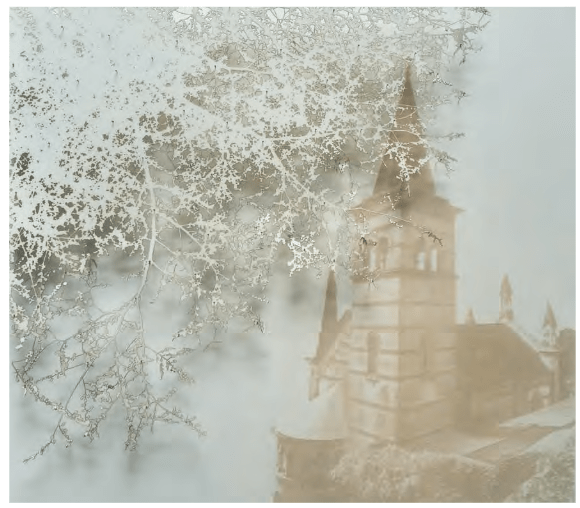
Levine Emma

Emma Levine. Tree of Ascension. Lasercut paper with laser etching and entomology pins, 50 x 55cm.

I am a paper and textile artist working with trees. I search for organic shapes and outlines in trees, landscape, plants, corals and shadows that can be translated into delicate cut paper Braille-like forms. I try to keep the very natural essence of the subject even though the method of cutting is digital and industrial. I use paper and silk as this brings about a cyclical return from pulp to tree, from thread to material. I’ve had numerous exhibitions in London, Miami and Dallas as well as international commissions, with my series embodying a valuable and timely connection to the elements that surround and sustain us.

Ray McInnes
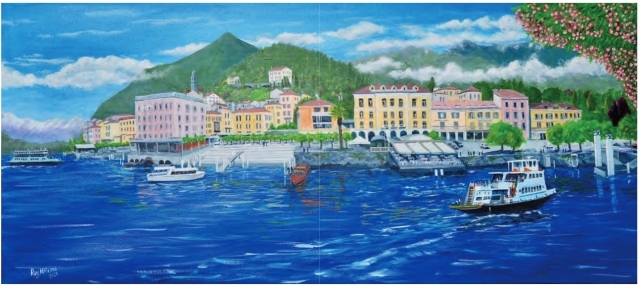
McInnes Ray

Ray McInnes. Bellagio. Acrylic on canvas, 90 x 40cm.

Ray is a retired Anglican vicar from Melbourne, Australia with a lifelong passion as an artist. He works mostly in watercolour and enjoys painting city-streetscapes in a realist/ impressionist style. 

Jonathan Miles 

Miles Jonathan

Jonathan Miles. Ascent. Acrylic on canvas, 84.1 x 59.4cm.

Jonathan has just been made a Fellow at the RCA.

Nina Murdoch
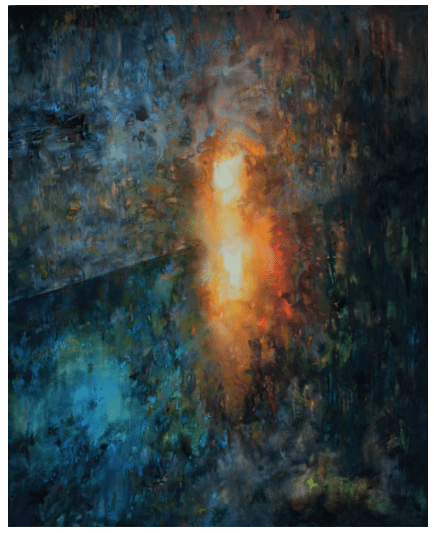
Murdoch Nina

Nina Murdoch. Sophia il Vento. Soft pastel and watercolour on panel, 94 x 75cm.

A painter (Slade and then RA), working mostly on gesso panels with egg tempera, although in the last few years she has increasingly used a combination of pastels and watercolour. Her work is held in the collections of the David Roberts Art Foundation and Hiscox PLC amongst others. Winner of the inaugural Threadneedle Art Prize as well as the ING Discerning Eye Purchase Prize. Solo shows at Marlborough Fine Art, London, and Fine Art Society. 

Abigail Norris
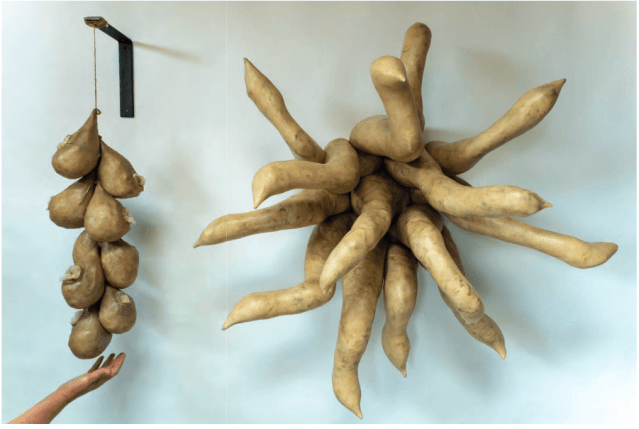
Norris Abigail

Abigail Norris. Bello e Brutto 2023. Latex, polymer, nylon, animal wool, string, PVC MDF, forged steel bracket, 200 x 140 x 50cm.

Abigail recently graduated from the Royal College of Art, where she studied Sculpture. Her work centres around connectedness, transcendence, absence and presence, exploring entangled relationship with self and other living and non-living beings.

Chris Orr MBE, RA. 
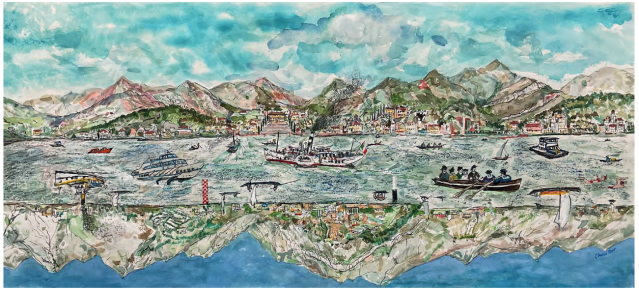
Orr Chris

Chris Orr. Dreams of Lake Como. Watercolour and pencil on paper, 46 x 108cm.

Chris Orr is a painter and printmaker interested in the narratives around him in the landscape and people. He lives and works in London and has been a Professor at the Royal College of Art and taken part in the governance of the Royal Academy on many committees and as the Treasurer of the Royal Academy 2014-18. 

Sarah Quill

Quill Sarah

Sarah Quill. Statue of Artemis, Villa Balbianello. Black and white photograph, 35 x 20cm.

I have worked for many years between Venice and London to create an extensive photographic archive of Venetian architecture, sculpture and daily life. My book Ruskin’s Venice: The Stones Revisited was first published in 2000, with a revised and extended edition in 2015. I give regular lectures, mainly on Venetian subjects, and am a trustee of the Venice in Peril Fund (the British committee for the preservation of Venice). 

Ania Sabet
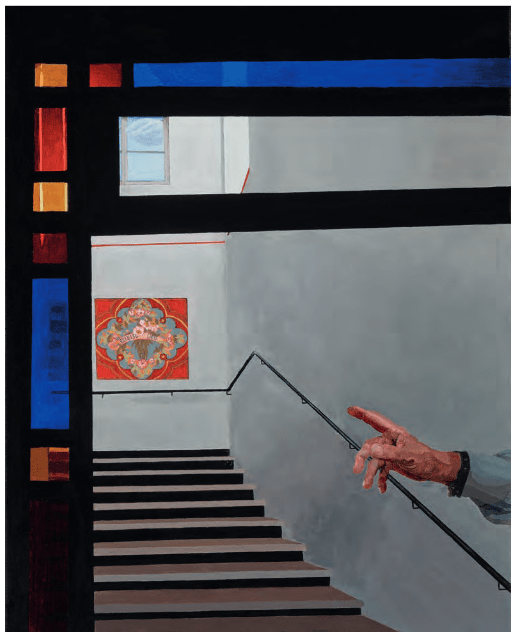
Sabet Ania

Ania Sabet. Excelsis. Oil on canvas, 75.5 x 61cm.

Ania Sabet b.1972, is a British-Iranian artist and a practising doctor who trained at Imperial College and then as an artist at the Royal College of Art. The impulse of her art is motivated by sensations derived from the configuration of situations which are in turn figured by formations that could be described as dreamscapes. 

John Wonnacott CBE, RP.

Wonnacott John

John Wonnacott. The Balcony, Lake Como, Early Morning. Oil on canvas, 91.5 x 122cm.

“I have lived and painted on the Thames estuary in Southend for the past sixty years”. John studied at the Slade, his work has been shown globally and is held in the collections of the Metropolitan Museum NY, The Clark Art Institute USA, Tate, National Portrait Gallery (NPG), Scottish National Portrait Gallery (SNPG), Imperial War Museum (IWM), National Maritime Museum (NMM) Arts Council, British Council and Government Art Collection, among others.

Posted in Art, Culture, Events, Lake, People, Uncategorized | Tagged , , , | 3 Comments

An Expatriate’s Life on Lake Como

Paul’s first book in his autobiographical trilogy describing life of an expatriate settling in Moltrasio on Lake Como. The cover design by Paul met with the initial disapproval of his neighbour for including her underwear on the clothes line.

Paul Wright and his wife Nicola moved from England to Lake Como over thirty years ago. They have faced various challenges and tribulations over this time but have never regretted making that move. Initially they tested the waters by house sitting a friend’s home in Moltrasio and, once they found their venture to be economically viable, went for full expatriate immersion by selling up their home in Surrey in favour of a villa in Argegno. Paul  recorded the couple’s experiences as expatriates in a trilogy of books available on Amazon.

I read the first two titles in the trilogy fascinated to learn how he and his wife responded to the challenge of moving to a different country and what it was about Italy that they found so appealing, and at times, exasperating. I could not help contrasting his views and experiences with those of my own since my wife and I also moved to Italy at around the same time. 

The Expatriate Genre

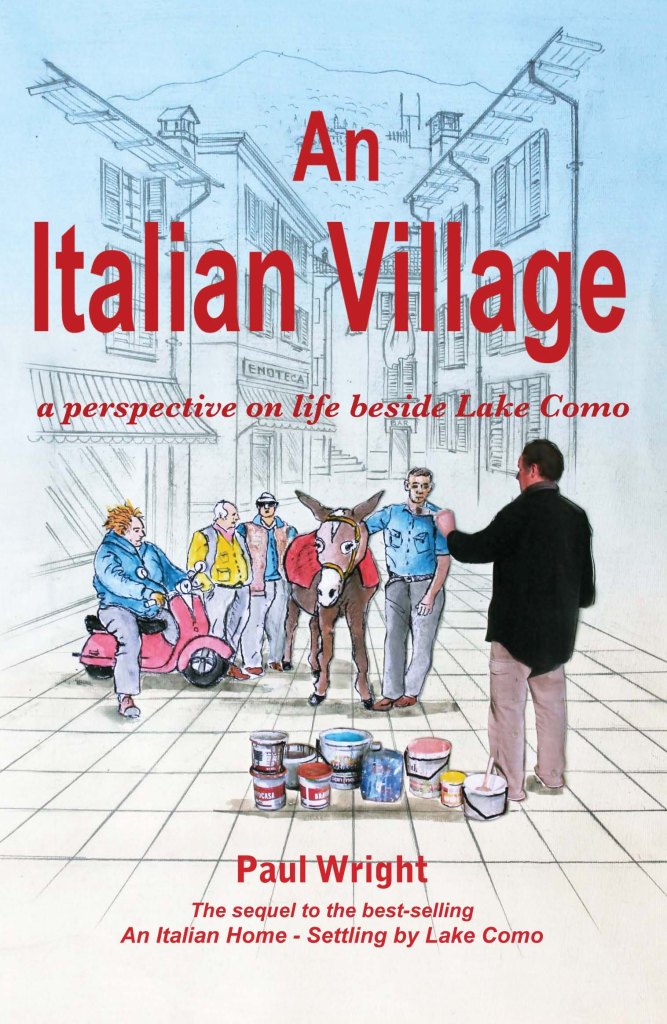
My wife and I first moved to Italy in 1988 while Paul and Nicola moved to Moltrasio from Surrey in 1991. Increasing numbers of people at that time were exploring the possibilities of living abroad within the European Union, a right that was not actually established in law until the signing of the Treaty of Maastricht in 1992. A genre of biographical nonfiction developed on the back of this interest in which the authors recounted their experiences of setting out to establish themselves in a foreign land. The most successful of these was Peter Mayle’s ‘A Year in Provence’(1991). It set in chain this fashion for accounts of foreigners (usually from the cold and wet North) settling in envious sunny rustic environments. I hated Peter Mayle’s book with an almost irrational vehemence. The major irritant for me was the author’s air of self-satisfied smugness that lay behind the rose-tinted cliche-ridden depiction of what had to be a pseudo-reality. It was a journalist’s time-limited project whose principal aim from the start was the production of a best seller. Unfortunately its immense success influenced the tone and voice of many of the others that followed in the same genre. So it was a great relief to me to find that neither of the two books in Paul’s trilogy shared this fault. The first ‘An Italian Home’ describes the challenges and excitement of moving, getting established and becoming acquainted with your new adopted country, home, and neighbours – a dramatic and often traumatic process even if just moving to the next street let alone to a country where you have yet to learn the language. The second, ‘An Italian Village’,  focuses on when the couple were already well established in Italy but needed to move, primarily for economic reasons, from their much beloved Moltrasio to nearby Argegno. Both books have an authentic feel with a sense of honesty and integrity incorporating some amusing incidents and engaging character sketches along the way.  

Watercolour, Moltrasio Centre by Paul Wright

The Expatriate Experience

Expatriates voluntarily expose themselves to a series of challenges of which the most significant must be the ability to communicate. Paul’s wife could speak Italian but he could not. He was not an employee of some large multinational with a workplace in which speaking Italian may have been desirable but not essential. He was and remains a self-employed artist needing to both understand a client’s commission and explain his response to it. They had also moved to Moltrasio, a small village on the west bank of the Como leg of the lake where the locals were more likely to have the local dialect as their alternative language rather than English. And he wanted and needed to become fully integrated within his new social setting. Achieving a degree of functional literacy must be the first hurdle for any immigrant and Paul does not shirk in describing how much a challenge that was – with its detrimental impact on his self-confidence. 

Morning Mist Over the Lake, Paul Wright

Pre-Maastricht, an English expatriate went through exactly the same bureaucratic hurdles in obtaining residency rights as immigrants from any other part of the world. Paul and Nicola had a tough time obtaining the right to stay. Italian bureaucracy has not got the best of reputations.  I had hoped that the UK’s ongoing membership within the European Union would mean never needing to queue up again at the Questura with multiple copies of the correct documents and a ‘marca da bollo’ of the right value. But no, following Brexit, Paul, Nicola and myself now need to return there again to obtain a ‘carta di soggiorno’ which is similar in name and intent to the original ‘permesso di soggiorno’ that they bravely queued up for so many years ago. 

River Telo, watercolour by Paul Wright.

The issue of bureaucracy is though a mental trap for the expatriate since, back in the UK, a British subject has no need to obtain a ‘permesso’ for anything. But a foreign visitor does and their experiences in attempting to gain residency, let alone nationality, have been for years difficult and are only getting worse.  And to make a slow underfunded bureaucracy even worse, the UK government deliberately set about making the immigrant’s experience more unpleasant by instituting the so-called ‘hostile environment’, a phrase that  ex-Prime Minister Theresa May has belatedly come to regret using. As an expatriate/immigrant you are on the powerless side of the bureaucratic battle in whichever country you aim to settle. Until you have secured your rights, the ongoing sense of powerless is yet another blow to your well-being and self-confidence.

Libero Professionista

The River Telo as in the painting by Paul Wright above with Argegno’s famous Roman bridge

Apart from being an author, Paul’s main activity is as an artist specialising in murals as well as using trompe l’oeil effects to decorate furniture. One of his original reasons for leaving leafy Surrey was because UK fell into recession in the early 1990’s causing a major drop in the number of clients. He very quickly gained some commissions on settling in Moltrasio thanks primarily to the contacts Nicola had made years earlier when acting as an au-pair. Paul had immediately learnt the importance of personal introductions in allowing him to market his skills. Back in the UK he had been accustomed to present his portfolio to private galleries as the primary way of gaining commissions. He was told and quickly learnt that this was not a sufficient marketing technique here. In Italy one needs some form of personal contact, an established person who can recommend you to others. I have heard the same point made by other expatriate artists working around Como. Fortunately Paul’s wife’s contacts could provide Paul with the necessary entry amongst interior design architects. 
He worked initially for a Como architect who gained him a number of rich but demanding clients but sadly also introduced him to a less scrupulous variety of business ethics. While cheats and scammers can unfortunately be found everywhere, they seem to stand out to a greater extent in Italy since they exist in direct contrast to the much larger number of selfless, generous people who dedicate time and energy volunteering for all manner of associations and social causes. Paul was being introduced to the Italian world of ‘bravi e stronzi’ or heroes and villains.

Heroes and Villains

Heroes and villains stand in contrast to each other. Villains are essentially sociopathic with the capacity to defraud or cheat without moral qualms. By acting almost entirely selfishly, they debase their human value. Heroes act on behalf of others to increase their quality of life through their organisational or inspirational abilities or simply through selfless acts towards others. Their human value goes beyond price. 
If the defects in Italy’s judicial system provide scope for villains, then the existence of so many voluntary associations also provides scope for heroes. Paul’s villain was the Como architect. His hero was the leading light in the Moltrasio Pro-Loco association. 

Many small Italian towns and villages have what is called a Pro-loco association whose aims are to enhance community life through organising social events or additional services to those provided by the local council. Moltrasio clearly had an inspirational figure behind organising carnival celebrations, Christmas crib competitions as well as coaching the local football team. Involvement with the Pro-loco association certainly helped Paul and his wife to integrate within their adopted community and in exchange Paul came to recognise the exceptional nature of their inspirational leader with his tireless energy.  

Continuity and Change

Paul did not just leave UK due to the recession in the early 1990s but because he felt that UK society had lost an element of ‘continuity’. If I have understood him correctly I believe he refers to a continuity of custom and values, aspects of everyday life that pass from one generation to another made explicit through social events and ceremony. These are definitely aspects that are more identifiable in a small town or village, and Paul certainly seemed to relish living and integrating within a relatively traditional society. However change is a continuous given, and as we get older, the rate of change appears to get ever faster. For expatriates perhaps the most significant positive change since the 1990s has been the Internet and the rise of social media. Phone calls back to family no longer cost an arm or a leg as in the days of metered tariffs. Events in family groups can be shared in real time as with news and current affairs.  Technology has even ameliorated some aspects of the local bureaucracy but by no means all!

The fountain in Argegno’s main piazza became a significant meeting point for Paul as he became acquainted with the band of pensioners who would gather there and in the adjacent bar most days of the week.

Paul and Nicola themselves had to undertake a significant change once they had decided to buy a house on the lake. They found they could not afford what they wanted in Moltrasio but did find what they wanted fifteen kilometres north in Argegno. Their experience of moving and living in Argegno is the subject of Paul’s second book in his trilogy ‘An Italian Village’. 

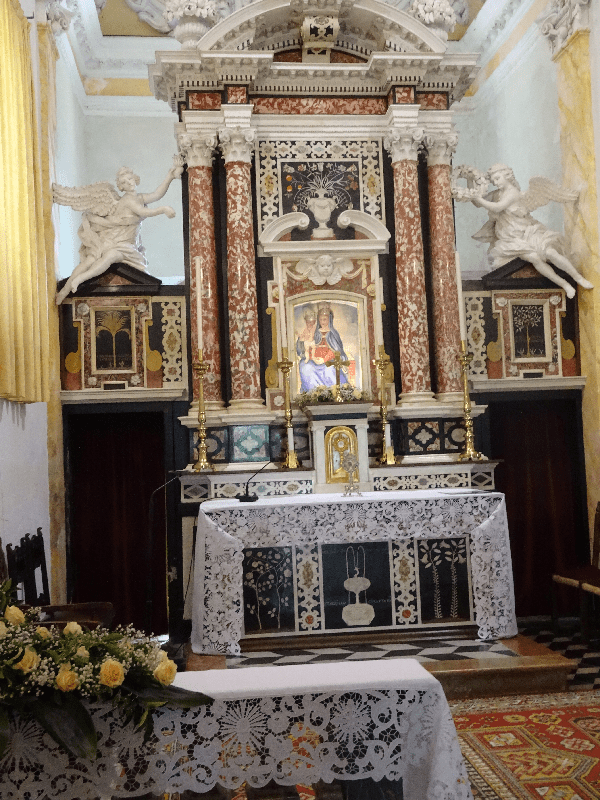
Altar in the Santuario di Sant’Anna, Argegno. with fine examples of stucco, fresco and scagliola work by local artists and craftsmen.

Argegno sits on the lakefront at the start of the Val D’Intelvi which runs horizontally from Lake Como towards Lake Lugano. The Val D’Intelvi has a long tradition in providing artists and craftsmen whose skills have gone to embellish churches all over Eastern Europe and Southern Italy. The first wave of craftsmen, known as the maestri comaschi, constructed churches in the Romanesque style throughout the middle ages. The second wave worked on the redecoration of church interiors during the Baroque period. Val D’Intelvi artists and artisans were used to paint frescoes and design plaster statuary. Paul learnt about the technique perfected by the artisans of Val D’Intelvi called ‘scagliola’ used to give the appearance of marble marquetry on altars.

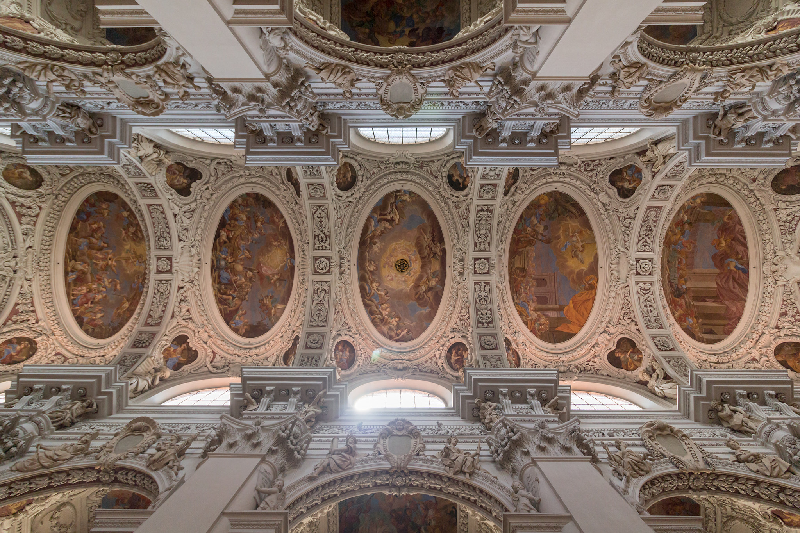
Ceiling of Passau Cathedral, stucco work and frescoes by Val D’Intelvi craftsmen

Paul’s own skills in painting trompe l’oeil murals fitted into the tradition of Val D’Intelvi craftsmanship as did the resulting need to work away from home for prolonged periods. Val D’Intelvi craftsman might work away from home from Spring to Autumn in decorating a cathedral such as that in Passau (Passavia) in Germany. Paul’s Passavia was down on the Ligurian coast where he worked away throughout the summer heat in the company of two builders from Bergamo. Little was he to know that he would be participating in a traditional pattern of seasonal migration established in the area he had chosen as home as far back as the tenth or eleventh century. 

Too Much Continuity

Screenshot from Google Maps showing an inveterate band of pensioners passing the time outside the Bar Milanese in Argegno. Most bars in Argegno do now seem to discourage this less profitable type of customer in favour of the ever increasing number of tourists.

Paul was as keen to integrate as fully in Argegno society as he was in Moltrasio. But rather than involvement in the local pro-loco, Paul’s target here was to become a member of the inveterate band of pensioners that gathered daily around the main piazza’s fountain to gossip and put the world to rights. Most Italian small towns, villages or city districts have at least one location, usually a bar, where retired men gather to while away the hours until called home to eat at midday. Paul’s group in Argegno seemed to consist of retirees from the hospitality industry – from the many bars, restaurants or hotels that for years have met the needs of visiting tourists. As a result many had retained an enhanced interest in eating or drinking or both. They also shared in the migratory instinct of the Val D’Intelvi having spent time at some stages in their careers in working abroad, particularly in the United Kingdom.  

Membership of this select band of societal ruminants required a heavy obligation to maintain a regular appearance around the piazza’s fountain and to accept the unchanging daily pattern of discourse. The repetitive continuity of the ritual discussions and the necessary regular commitment to them became even too much for Paul after a while. Apart from other demands on his time, he found the company was limiting its own horizons, becoming far too focused in time and place. This was just one further level in local immersion and continuity he could not sustain. 

A Lakeside Village, watercolour by Paul Wright

Conclusion

The second book in the trilogy describes life in Argegno where he and his wife finally settle.

Now over thirty years have passed since Paul described his arrival in Moltrasio in ‘An Italian Home’. As a result his account has become slightly historical but perhaps all the more interesting as a result. As mentioned  previously, he writes with honesty and humour avoiding all the standard pitfalls of an expatriate’s viewpoint, such as generalisation and cliché. All the traumas and excitements of the couple’s initial move to Italy were behind them when he describes their move to Argegno in his second book ‘An Italian Village’. It is here where he actually establishes his own home and, no longer over concerned in gaining local acceptance and without further challenges to his self-confidence, he can settle to the idyllic existence he must have had in mind when moving out from Surrey so many years ago. 

For my part, his books engendered a whole series of personal thoughts on the expatriate/immigrant experience simply due to their authenticity – a response in marked contrast to that provoked by ‘A Year in Provence’. I am very grateful to him for that.

Further Information

All of Paul Wright’s nonfiction is available on Amazon and in Kindle editions. He is currently working on a novel set on Lake Como so look out for its publication early next year.

Further Reading

I have previously noted the positive results that can be achieved by small communities with an active pro-loco association, in particular Moltrasio. Please read Moltrasio: The Power of Civic Pride to see why it is well worth visiting this enchanting village.

The Maestri Comaschi and the work of the Val D’Intelvi artists and artisans feature in two previous articles which are Como’s Artistic Tradition – A Pan-European Legacy: Maestri Comacini and Stucco and Scagliola – Two of Como’s Baroque Specialities.

For walks around Moltrasio see Carate Urio to Moltrasio via Rifugio Bugone and for Argegno see Argegno to Argegno: Up and Down the Telo Valley

Moltrasio is characterised as a village of stone and water
Posted in Art, Culture, Lake, People, Places of interest | Tagged , , , , , , , , , | 2 Comments

Como’s Hidden Gems – The Sala Recchi

Sala Recchi Palazzo Lambertenghi

Giambattista and Gianpaolo Recchi – Sala Recchi in Palazzo Lambertenghi

Twice a year the Fondo per l’Ambiente Italiano (better known as FAI) open up some of their own properties and other locations of historical or cultural interest to the general public. These days provide the opportunity to visit many locations in private hands which are not normally accessible. One of these locations in Como this autumn was the Sala Recchi within the Palazzo Lambertenghi on Via Lambertenghi. The Palazzo Lambertenghi was built in 1615 and had the ceiling of one of its key reception rooms on the ground floor painted by Giambattista and Gianpaolo Recchi. The Recchi brothers had their studio on Via Borgo Vico and were key local exponents of Early Lombardy Baroque following the school of Il Morazzone. Their work can be seen in a number of locations in Como such as the Cathedral, the interior of the Palazzo Odescalchi, Palazzo Cernezzi, the Chiesa Di San Giorgio in Borgo Vico, Palazzo Rusca and the Pinacoteca. Beyond Como,  Giambattista’s work can be seen in the eighth chapel of Varese’s Sacro Monte and Gianpaolo’s work is found in Turin’s Palazzo Reale commissioned by the Duke of Savoy. 

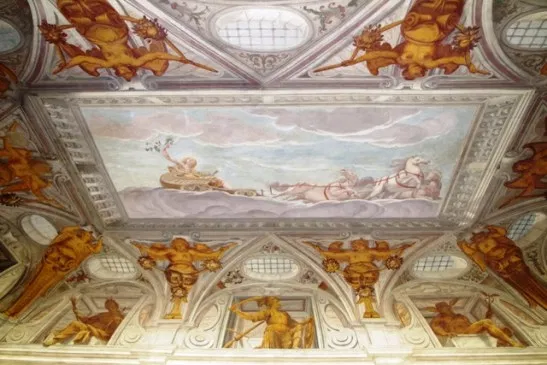
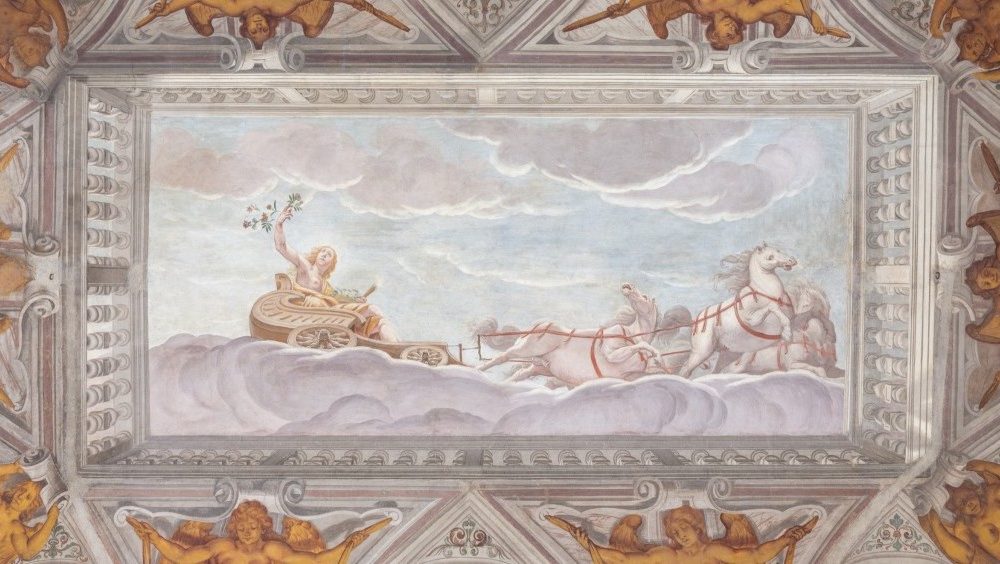
Aurora Sal Recchi

Aurora driving her horse-drawn chariot from east to west, from dawn to dusk.

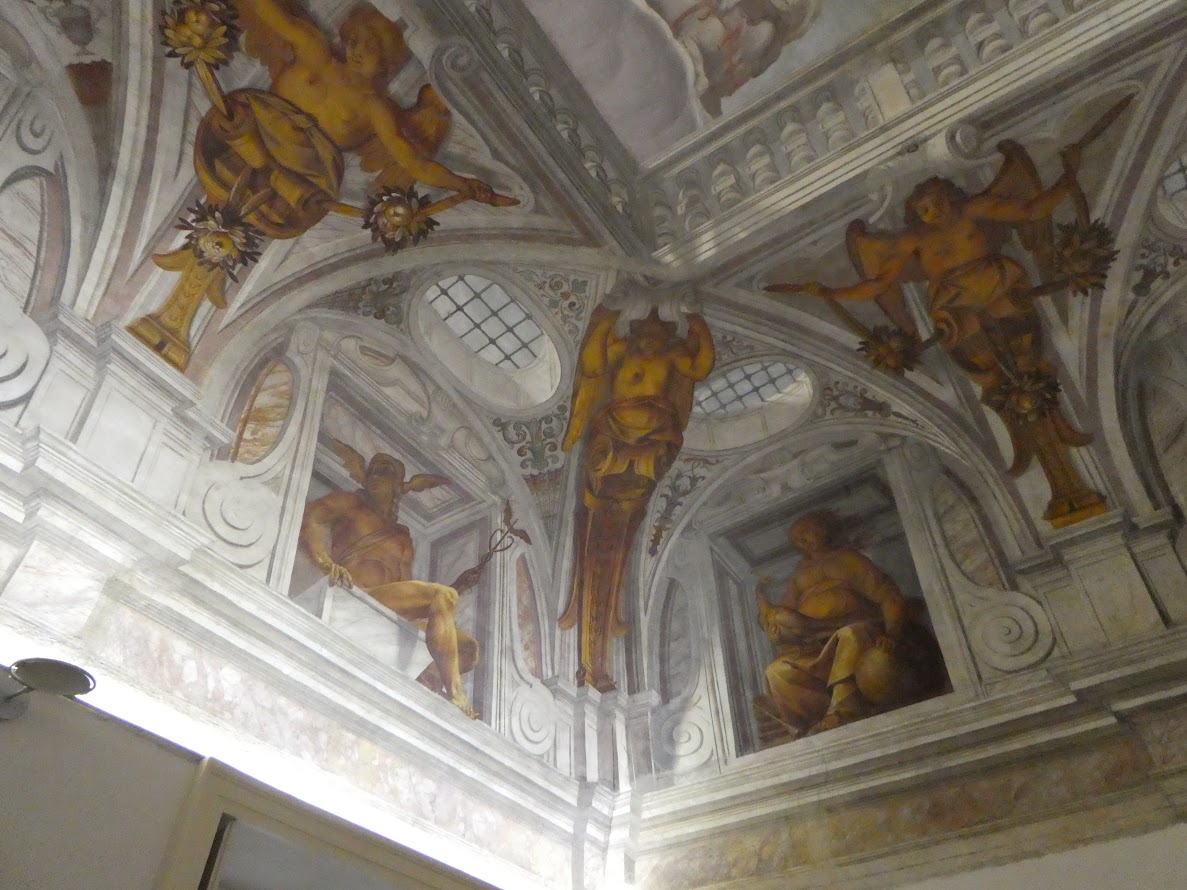
The Sala Recchi with its painted ceiling is undoubtedly one of the many hidden gems that are only occasionally revealed to the public. It is in relatively good condition. Giambattista had an architect’s sensitivity to space and here he used trompe l’oeil to make it appear as if the relatively small room opens up onto a rectangular section of sky. Trompe l’oeil  is also used to give the appearance that the ceiling is pierced by a series of oblong grilled openings to the sky that illuminate ten niches occupied by a classical figures. 

trompe l'oeil

Trompe l’oeil effects including the oblong lighting grilles and the occupied niches.

The rectangular area of sky is occupied by Aurora, the Greek Goddess of Dawn. Here she is depicted driving her horse drawn chariot across the sky from east to west, from dawn to dusk. The theme of time and the passing of days is then replicated in the classical figures within the niches on the south and north facing sides of the room. The Roman Goddess Diana occupies the south easterly niche. Here she is depicted with a moon crescent on her head according to convention. The moon (or ‘luna’ in italian)  represents  ‘lunedi’ (Monday). 

Diana Lunedi

Diana representing ‘lunedi’ (Monday)

The middle niche on the south facing wall houses the figure of Mars, the Roman God of War. Mars refers to martedi (Tuesday). The figure of Mars is dressed in the contemporary costume of a Spanish warrior also sporting the long hair favoured by Spanish noblemen. The Spanish ruled over Milan and Como in the first half of the seventeenth century when the Recchi brothers decorated the Palazzo Lambertenghi. 

Mars Martedi

Mars depicting ‘martedi’

Mercury Mercoledi

Mercury representing ‘mercoledi’

The south west niche is occupied by Mercury, the Roman God of shopkeepers and merchants who represents mercoledi (Wednesday). Moving over to the north side, the north westerly niche holds Jupiter also known as Jove, the Roman God of thunder and here he represents giovedi (Thursday). Apollo occupies the next niche accompanied by Cupid and for reasons that remain unclear to me supposedly through association with Venus, is used to represent venerdi (Friday). The last niche on the north side is occupied by Saturn, the Roman God of sowing and seed. Here he represents Saturday, a much closer association in English than in the modern day Italian ‘samedi’.

The two niches in each of the east and west walls are used to depict the four elements of earth, wind, fire and water. The south east corner houses the depiction of earth. The south west houses wind whilst water sits in the north west niche. Fire completes the set in the north east corner.

By combining the significance of the figures represented in each of the four corners of the room, the fresco portrays an additional symbolic series. The south easterly corner, combining the figures of Earth and Diana, points towards the hills of Brunate which at the time were covered in terraces for the agricultural production of grain and grapes.  The south westerly corner, combining the figures of Wind and Mercury, points towards the commercial district of the old town and its links with Milan. The north westerly corner, combining Jove and Water, points towards the source of water for the Palazzo Lambertenghi arising from a spring in modern day Piazza Garibaldi and a water course along Via Volta. Finally, the north easterly corner combines Saturn and Fire and points towards the Spanish centre of control over the city housed in the Castello della Torre Rotunda that used to occupy the site of the Teatro Sociale.  

north west corner

North West Corner, Water

north east corner

North East Corner, Power

south west corner

South West Corner, Commerce

South East Corner

South East Corner, Agriculture

Further Information

For those interested in exploring more of Como’s baroque artistic treasures, see Early Lombardy Baroque: Fratelli Recchi and Como and Early Lombardy Baroque

For more information about FAI, go to https://fondoambiente.it/

Villa Lambertenghi Gardens

The gardens of the Palazzo Lambertenghi

Posted in Architecture, Art, Places of interest, Uncategorized | Tagged , , , , , , , , , | Leave a comment

Lake Como’s British Enclave, the Anglican Church and Landscape Art

brochure exhibition
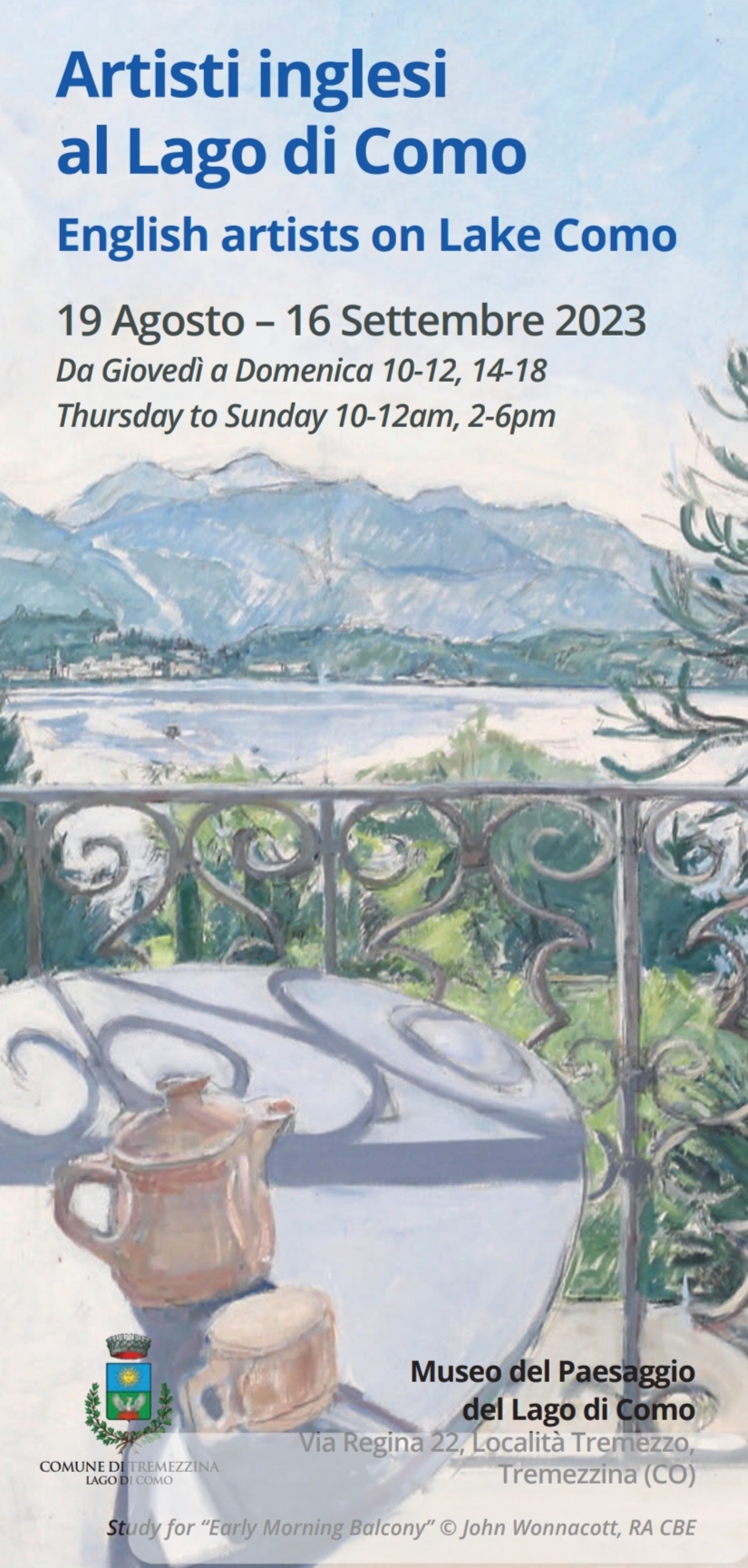
The brochure for the upcoming Art Exhibition in Tremezzo featuring a sketch by John Wonnacott of the view from the terrace of Villa Collina, Griante.

An exhibition of original works by some of the most prestigious contemporary English figurative artists will open on August 19th in Tremezzo. The exhibition will later move to Gurr Johns International Gallery in London where the works will be sold to raise funds for the restoration of Cadenabbia’s Anglican Church.  

The British, Cadenabbia and landscape art have all had a close association from the early years of the 19th century. British visitors and residents have long appreciated the splendour of the lake whose natural beauty has attracted both professional and amateur artists keen to capture its sublime and dramatic aspects. The Grand Hotel Cadenabbia has to this day proved popular with British guests as in the case of Mary Shelley who stayed two months at the hotel on her return visit to Italy with her son in June 1840. Back in April this year a group of twenty contemporary British artists stayed in the Villa Collina in Griante above Cadenabbia to participate in a four day residential course. The results of this art project form the basis of the exhibition opening on August 19th in Tremezzo. The later sale of the works at the London gallery will go to provide funds for much needed restoration of the Anglican church and secure financing to retain the ongoing functioning of the church through its season of regular services from May to September each year. 

The Grand Hotel Cadenabbia established a small Anglican chapel for its many British guests back in the 1880’s. The permanent and temporary immigrant community then set about raising funds through subscription to build their own Anglican church. This was completed in 1891. The well-being of the church was and has always been dependent on the commitment and generosity of its congregation – and right now it stands in need of vital restoration.  

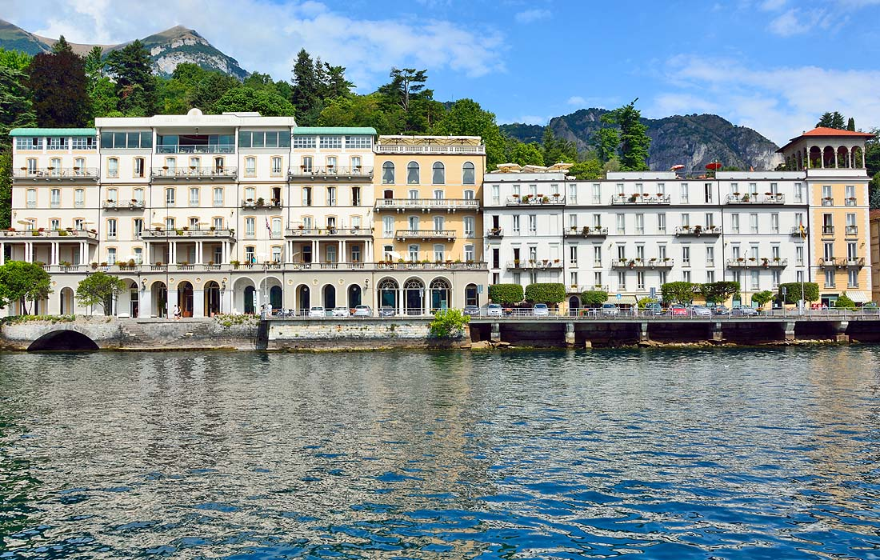
The Grand Hotel Cadenabbia, one of the first grand hotels on Lake Como particularly favoured by British visitors.

The Church 

The Cadenabbia Anglican Church of the Ascension

The International Church of the Ascension, to give the Cadenabbia Anglican Church its full name, is unique in being the only Anglican church on Lake Como.  It holds a religious service in English every Sunday from May to September as well as providing a popular site for christenings and wedding blessings. It also hosts musical events throughout the summer season.  

The church is itself a landmark on Lake Como due to its unique exterior and interior design. The exterior is the only completed work of a young gifted architect, Giuseppe Brentano. He graduated from Milan’s Brera Academy having gained public attention by winning a prize for the design of some of the external features of Milan’s Cathedral. At the age of 25 he was commissioned to design the Anglican Church by the main contributor to the building fund, Mr. Heathcote Long who lived in the nearby Villa Norella. Heathcote Long also gifted the land for the church from out of his villa’s parkland on the lakefront. The church has always seen its role as integrating itself and its congregation within the local community and so it was fitting that Brentano’s design incorporated neo-Romanesque elements from Lombard ecclesiastical tradition.

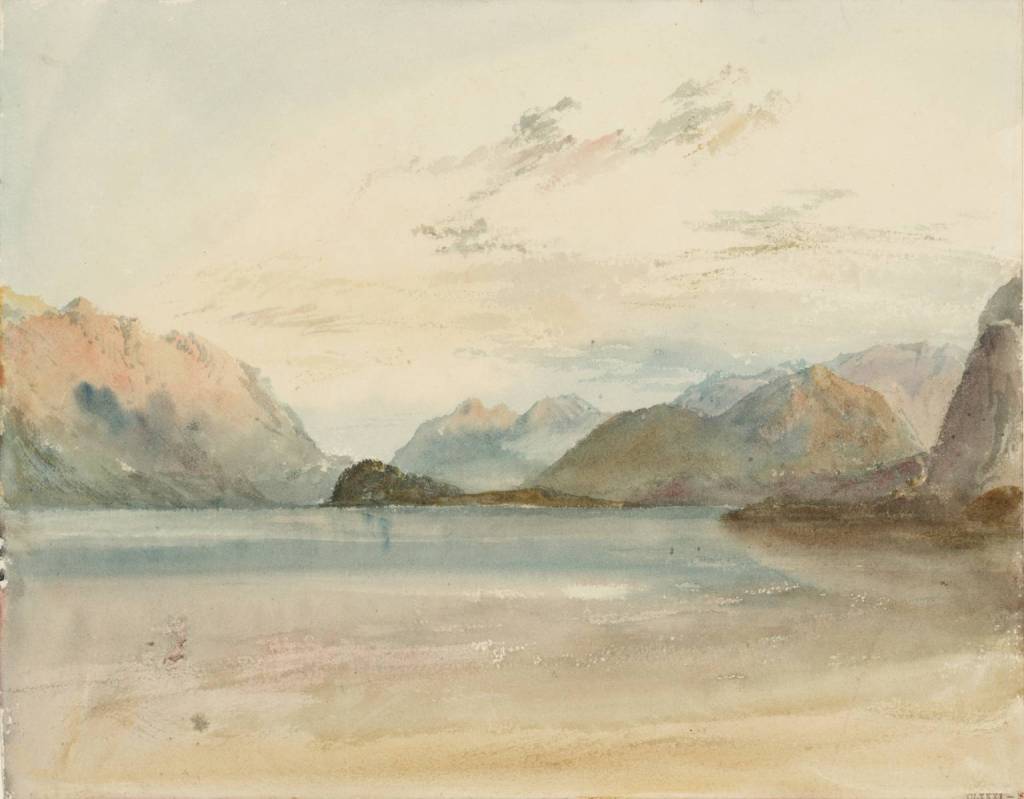
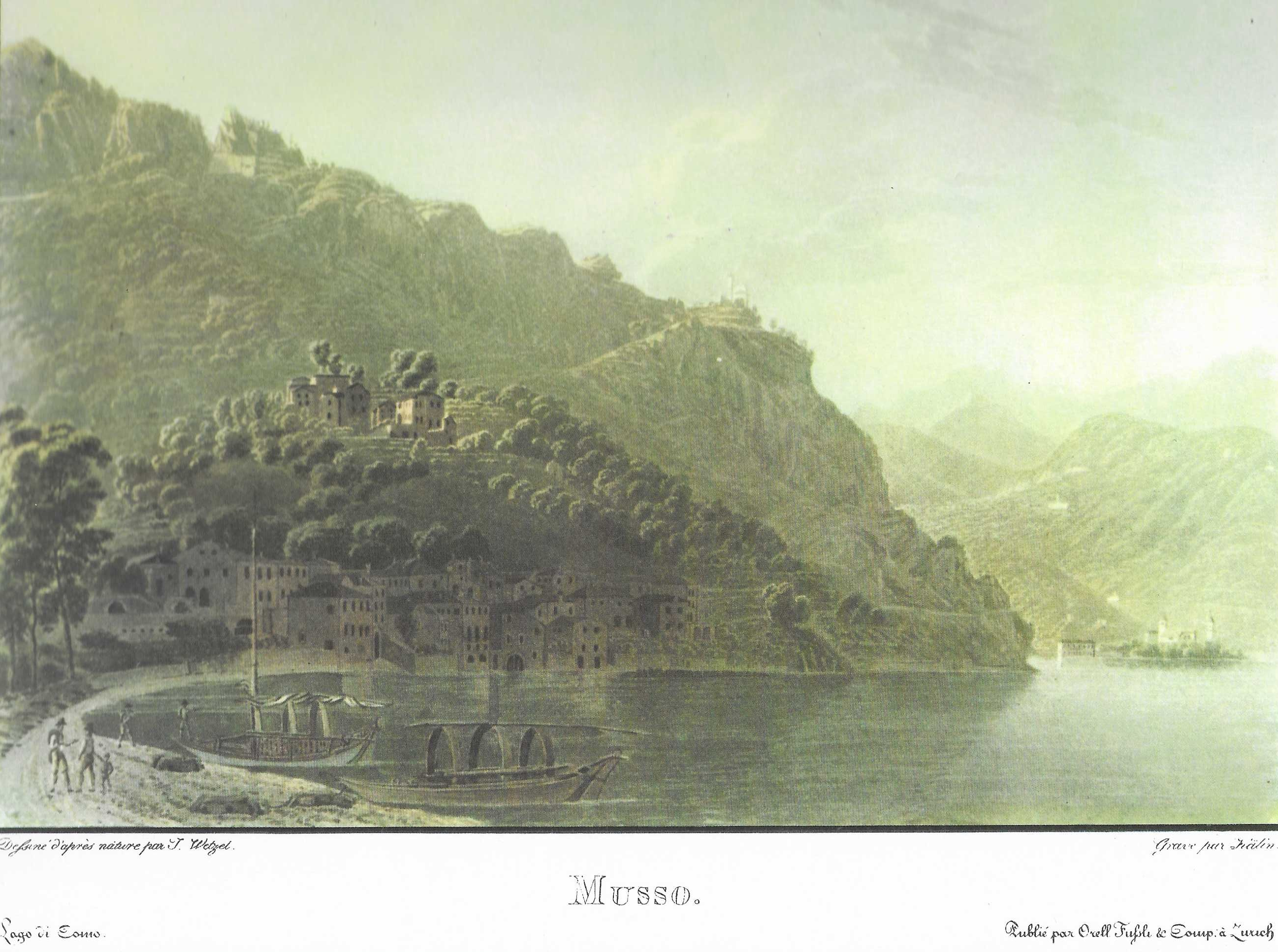
On Lake Como 1819 Joseph Mallord William Turner 1775-1851 Accepted by the nation as part of the Turner Bequest 1856 http://www.tate.org.uk/art/work/D15252

Foundations were laid in 1889 but when Brentano came to visit the site in November of that year, he caught a cold and went on to die tragically young of pneumonia. However the construction was entrusted to a company run by one of Brentano’s uncles who remained entirely faithful to his nephew’s original vision, allowing the young architect posthumously to achieve at least one completed project. 

One of the two exterior mosaics designed and constructed by Murchison.

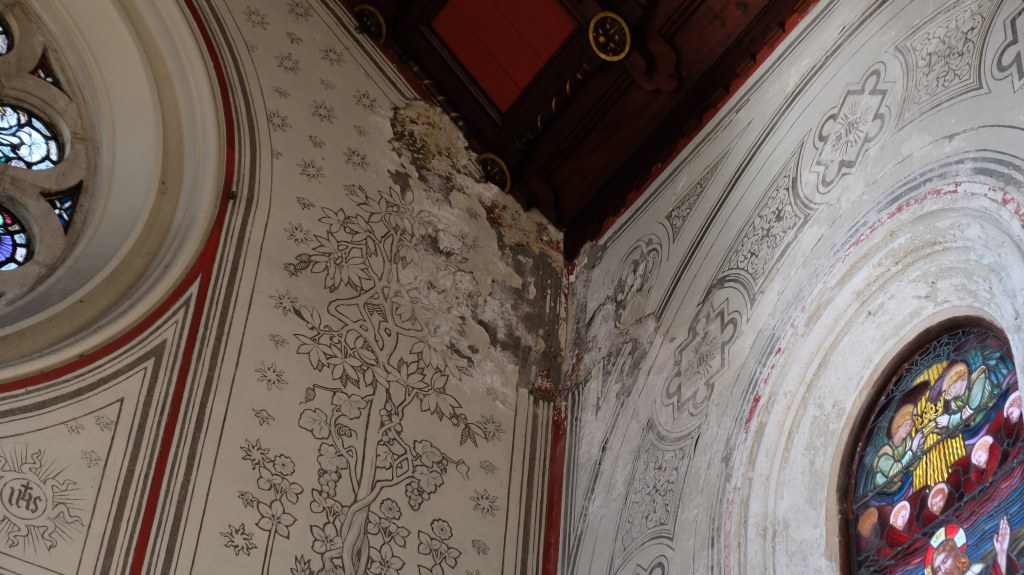
The interior of the church is as distinctive as the exterior but was completed later in the 1920’s with mosaics and so-called ‘sgraffito’ work in the Art Deco style. It was the new owner of Villa Norella, Roderick Falconer Murchison, who was responsible for the exterior and interior mosaic work. His interest in mosaics was further encouraged when he befriended  James Powell, a member of the congregation and owner of Whitefriars Glass in London. Little is known about who designed or carried out the ‘sgraffito’ work of which there are numerous examples around Lake Como. 

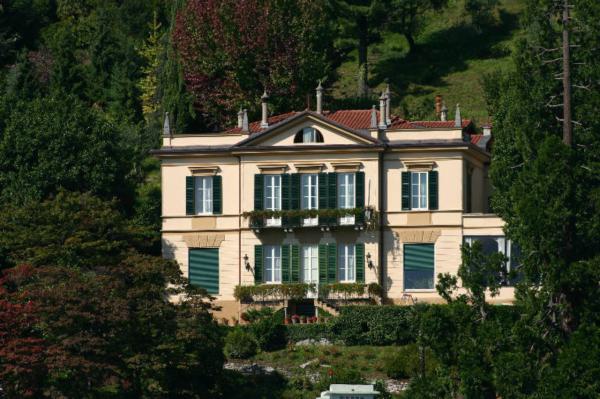
Villa Norella, Cadenabbia, home of Heathcote Long who helped fund the building of the church and gifted the land for its site. It was later occupied by Murchison who designed the external and internal mosiacs.

Restoration 

Not only did the church lose its congregation during the Second World War but it also suffered damage from an allied bomb dropped on return from one of the numerous raids over Milan. The blast blew out the original stained glass and caused damage to the roof and guttering. The church did however reopen in 1948 with clear glass replacement to the windows. The church reached a crisis point in 2016 with a shrinking congregation and continued deterioration to the fabric of the building, Its diminishing funds had already been spent on updating the electrics when the results of the five yearly compulsory survey revealed the need to spend a further 100,000 euros on necessary repairs. Reduced funds and the declining congregation meant the church faced the threat of imminent closure on its 125th year anniversary. 

The interior of the church showing the Art Deco sgraffito work, some of the stained glass and the water damage.

The church’s survival is mainly down to two key factors;  namely the leadership provided by Roger Williams, the church’s vicar from 2016, and the commitment of its congregation. Roger Williams provided four years of continuity during which time the community grew and the congregation took on as much of the renovation work as they could manage by themselves. Meanwhile one of the members of the congregation, Tim Guinness, was considering if the Cadenabbia Anglican Church could replicate a funding project carried out on behalf of St. George’s Anglican Church in Venice. Adopting some aspects of the Venice scheme, another member of the congregation, Jeannie Willan, organised a residential retreat for artists in Villa Collina in 2018. This raised €6,000 which went to restore one of the stained glass windows. This initiative alongside the ongoing leadership and sense of community fostered by Roger Williams led to an enhanced spirit of confidence in their joint ability to tackle the restoration challenges. 

The apse of the church decorated with marble and golden mosaics.

Tim Guinness’s plans for the fund raising art project were further developed and all was set for its launch in October 2020 when fate and Covid struck. Fate came with the death of the church’s inspirational vicar, Roger Williams and  the death of one of the church wardens. Covid meant the cancellation of the project and a further reduction in seasonal visitors. This in turn led to a  drop in the additional income raised through christenings and wedding blessings. The church was barely open at all in 2020 and just for a single month in 2021. Covid’s impact was still felt in 2022 with no increase in the congregation when the next five yearly survey came due. The results were heartening in the sense that the congregation were commended for the work they had been able to undertake since 2016 but it highlighted continued problems with the roof with water ingress damaging the interior.  It also highlighted structural issues with the steeple. Now more than ever was the time to launch the fund raising project delayed since 2020. 

The Art Project

The cultural historian and ex-Director of the Royal Academy of Art Sir Charles Saumarez Smith who introduced the four day artists’ residential course at the Lake Como Landscape Museum.

Tim Guinness took inspiration for the Cadenabbia Art Project from the success of a forerunning fund raiser for St. George’s Church in Venice. This prior project was organised by Tim’s friend and fellow alumnus from Magdalen College, Cambridge, Tim Llewellyn –  previously a Sotheby’s Old Master expert and Art Detective Group Leader. He had launched a scheme back in 2007 inviting up to twenty artists to a residential retreat in Venice from which they would produce works with part of the sale proceeds going to the church’s restoration fund. As Tim Llewellyn said at the time, “We wanted to make an exhibition that would show that Venice is a sufficiently complex subject with a wide enough appeal to provide inspiration to artists representing quite different generations, interests and approaches.”  Many of the artists invited to Venice were Royal Academicians. St George’s Church was consecrated in 1892, one year after Cadenabbia. It too had to close during the Second World War and it too needed funding to repair the roof, stonework and the interior. As its chaplain reported at the time, the church’s priority was its roof “which already leaks in storms,“ as in Cadenabbia.

As in Venice so on Lake Como – Tim Guinness invited twenty British artists with a similar range in ages, backgrounds and styles as those who visited Venice. In fact the starting point for selecting the contributors was to choose some of those who went to Venice back in 2007. Others were then selected to ensure a good representation of both established and upcoming British figurative painters. The final list included such successful names as John Wonnacott and Peter Kuhfeld who have both undertaken commissions for the British Royal Family. The youngest member of the group was Alice Boggis-Rolfe who recently won the Winsor and Newton First Prize for a Young Artist. The local British community was represented by Irma Kennaway who originally came to Como twenty nine years ago as a fabric designer working for silk manufacturer Mantero SpA. 

Self-portrait of Alice Boggis-Rolfe, one of the younger members on the residential course. Copyright Alice Boggis-Rolfe.

The residential course ran for four days with all the artists staying at the Villa Collina in Griante above Cadenabbia. Villa Collina was the favourite summer retreat for West Germany’s first chancellor after the last war, Konrad Adenauer. The course kicked off with an introductory talk at the Villa Mainona given by the British cultural historian Sir Charles Saumarez Smith, who retired back in 2018 as Director of the Royal Academy of Art. He outlined the history of landscape art on the lake and the general cultural heritage of the area.  Further visits were made to some of the well known villas in Tremezzina, Varenna and Bellagio. The group also explored the crests of the mountains overlooking the lake with a stop at the Rifugio Venini at 1,575 metres above sea level beside the summit of Monte Galbiga. Here they learned about some of the darker aspects of local history with the Cadorna line of artillery defences constructed in the First World War and the fate of resistance fighters under Captain Ugo Ricci during the more recent Nazifascist occupation of Northern Italy.

Monte Crocione above Lenno and close to the Rifugio Venini.

In the words of Alice Boggis-Rolfe, “I found it completely beautiful.The perfect trio of mountains, lakes and architecture brought together with abundant gardens inspired me most and almost all of my paintings from the trip are of the relationship between the gardens and the landscape beyond.”

 The Exhibitions

Early morning sun shines from over the Grigne mountains with Bellagio in the middle distance dividing the lake eastwards to Lecco and south to Como.

The four day residential was conceived from the start in collaboration with the Lake Como Landscape Museum (Museo del Paesaggio del Lago di Como) housed in the Villa Mainona in Tremezzo. It is here that some finished output and work in progress will initially be exhibited. Not all of the finished works will be on display at Tremezzo due to logistical constraints but if absent, they will be represented by sketches, photographs and notes illustrating the creative process. The exhibition will also outline the history of the Anglican church and its links with the local and foreign community over time. 

The Villa Mainona in Tremezzo hosts the Lake Como Landscape Museum

All of the finished works will then be on display from the 13th to the 17th November at the Gurr Johns International Gallery in London’s Pall Mall where they will be available for sale. A brochure with prices will be available digitally from marie.ainsby@gafunds.com

Proceeds from the sale will go to fund the urgent restoration work at the church with priority, as previously in Venice, given to the roof repairs to stop further water ingress damaging the interior decoration. Money will also be kept back to give some further continuity in providing regular church services during the long summer season.

Challenges for the Future

Clearly buildings of such elaborate internal design and complex exterior architecture require constant maintenance. The need for adequate funding to cover these needs will be an ongoing challenge for the church’s community. However they have proven time again to possess the energy and capacity to face such challenges with confidence and imagination. 

The late Janet Anderson, Director of Music alongside the organ she restored back in 2013

The church will always be in demand for English-speaking couples wishing to get married on the lake as well as for Anglican christenings. Also the church’s deep ties with the local community will ensure it remains a popular venue for musical events. Back in 2013  the church’s Musical Director, the late Janet Anderson, raised over £30,000 for the restoration of the organ and audiences have since been able to enjoy a number of organ recitals in this beautiful setting.

But the church is only open during the prolonged summer season as is not the case at St. George’s in Venice. This makes it more difficult to find a locum vicar with the right time available. The task has not been made any easier by the UK’s exit from the European Union with the added complexity to employment contracts, work visas and taxation arrangements. Yet here again, the congregation have faced and overcome such issues in the past and, on current form, are likely to continue to do so. 

The heyday of the Grand Tour and the Belle Epoque is now long over but the long running love of the British for Lake Como continues unabated. Cadenabbia’s Anglican Church of the Ascension is a physical and spiritual monument to that cultural and artistic connection and long may it so remain.

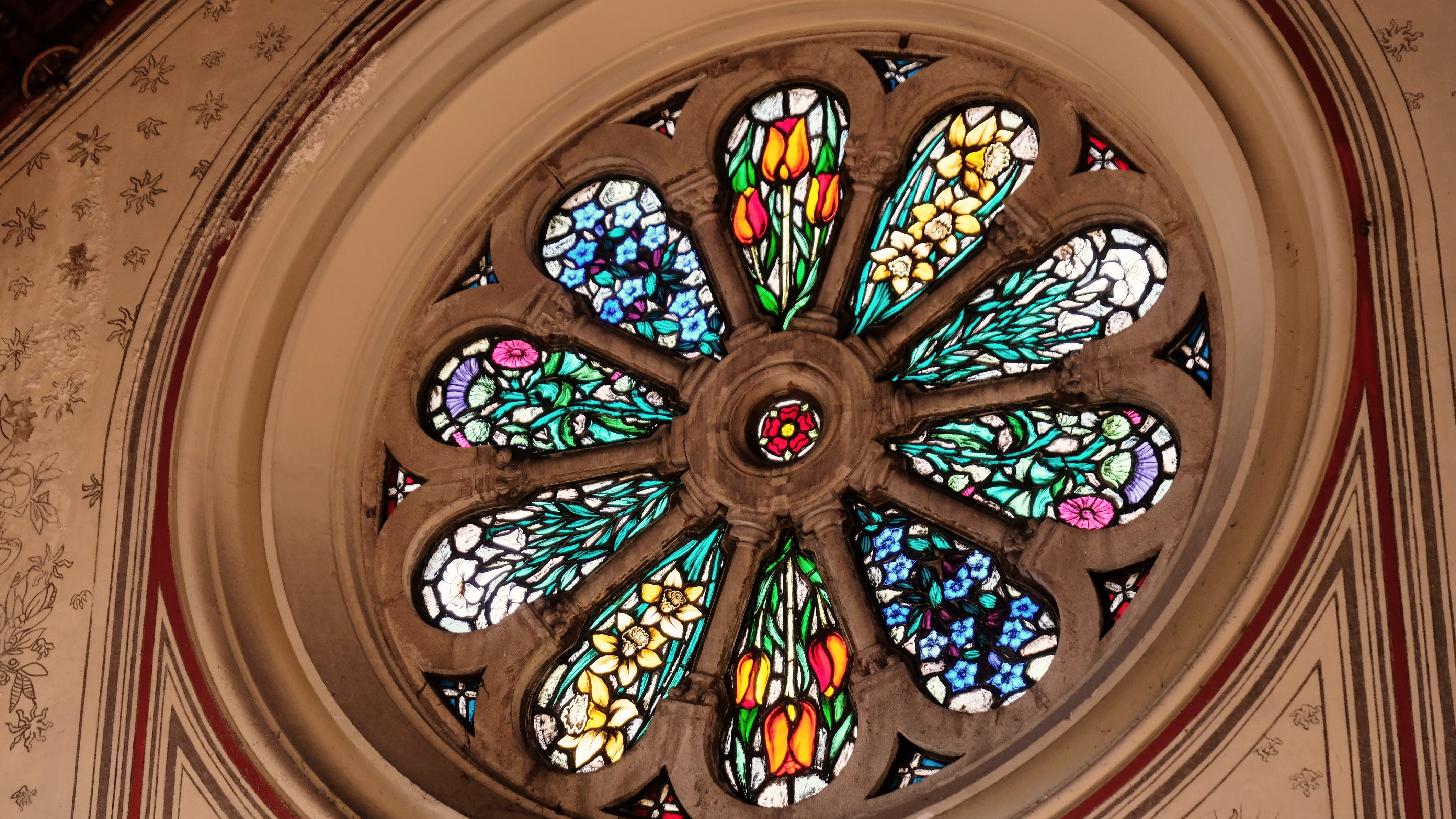
The stained glass rose window restored in previous years thanks to funds raised by the congregation.

Acknowledgements

My thanks are due to Jeannie Willan and Tim Guinness who both gave freely of their time in contributing to this article. 

Further Details

The Cadenabbia Anglican Church of the Ascension is at Via Statale 31, 22011 Griante, CO.  The website is www.churchonlakecomo.com

The Lake Como Landscape Museum (Museo del Paesaggio del Lago di Como) is on Via Regina 22, 22019 Tremezzo CO. The phone number is +39 0344 533023 and the email address is museodelpaesaggio@comune.tremezzina.co.it. 

The Gurr Johns International Gallery is at 16, Pall Mall, London SW1 5LU. 

Further Reading

For those wanting to explore the area of Cadenabbia and Griante on foot, read Walking the Greenway and the Antica Via Regina

For our articles featuring Irma Kennaway read  Como Silk – Memoirs of a Textile Designer   and  Ice Cream and Vespas: Irma Kennaway’s Artistic Odyssey  

For details of a walk on the crest of the mountains above Lenno including an overnight stay at the Rifugio Venini, read Overnight on the Via dei Monti Lariani

Every season reveals a different aspect of the lake’s landscape. Here the snow caps the slopes of Monte Primo as seen from Como.
Posted in Architecture, Art, Culture, Events, Lake, Places of interest, Uncategorized | Tagged , , , , , , , , , , , , , , , , , | Leave a comment

Isola Comacina – A Serene Location with a Tragic Past

isola
Looking back over the lagoon separating Isola Comacina from the mainland villages of Sala, Ossuccio and Campo

Isola Comacina is the only island on Lake Como. Its past glory and tragic destiny results from its strategic position close to the narrow channel in the lake between the promontory housing the Villa del Balbianello and the town of Lezzeno on the eastern shore. Whoever occupied Isola Comacina could control navigation on the lake southwards to Como itself and on to Milan or northwards towards the Val Chiavenna and the Valtellina with their access over the Alps to the river systems of the Rhine and Danube. Isola Comacina was to pay a heavy price for its valued location.

Looking out from the eastern tip of the island to the promontory of the Villa Balbianello.

Nowadays Isola Comacina is a beautifully serene spot totally uninhabited for reasons we will uncover, but well maintained for those visiting its ancient ruins or the three houses for artists designed by Pietro Lingeri. These three houses were built in 1939 for the Milanese Brera Academy of Art to whom the island had been entrusted by the Italian state. The island is only 600 metres long by 200 metres wide and so is very easy to explore. It is a mere 250 metres from the mainland with the point of embarkation at Ossuccio’s Antiquarium (a mediaeval hospital). The Antiquarium forms part of the complex around the Chiesa di Santa Maria Maddalena whose bell tower is one of Lake Como’s iconic structures. A visit to the island is highly recommended not just for the archaeological and architectural aspects but also because it’s a calming tranquil spot isolated from the sometimes frenetic mainland with glorious views up, down and across the lake. 

Map of Isola Comacina

Isola Comacina’s distant history is still visible amongst its ancient ruins, as with the mosaic of a fish dating back to the 5th century within the Baptistry alongside the Church of John the Baptist. The frescoes within this same structure date from within the 8th and 9th centuries. The ruins of the Basilica di Sant’Eufemia date back to their origin in the 7th century. The basilica would later be remodelled in the Romanesque style in the 11th century before it and all the other religious buildings and walled defences were destroyed in February 1169.

Isola Comacina in the Early Mediaeval Era

The Baptistry was first built in the 5th century with later additions in the 8th and 9th.

Walking around the tranquil island today, it is hard to imagine it as the vibrant religious, political, and military base it was back in the 11th century. Its role might be compared with Baghdad’s  ‘Green Zone’  in that it provided a secure environment for the military, religious and cultural elite and also a safe area for the residents of its hinterland on the shore, namely Colonno, Sala, Ossuccio and Campo, to retreat into in times of danger. Its monastery, castle and numerous churches were all enclosed within defensive walls with a naval fleet on hand to patrol and protect access from the lake.

5th century mosaic within the Baptistry

Its defences, none of which survive today, were originally built by the Romans and later enlarged under Byzantine rule in the 6th century to strengthen what was known as the ‘Linea Greca’ whose primary purpose was to protect Como. In addition to the island itself, the other two elements of defence were Como’s city walls and the Torre Baradello standing sentinel over the Pianura Padana. In the 520’s Isola Comacina was commanded by the Byzantine Captain Francilione who held out against the Lombard invasion from Germany for twenty years. Francilione controlled considerable territory on the lake until gradually he was forced back into his stronghold on the island. The Lombards were unable to mount an invasion across the mere 250 metres of lake but did maintain a siege of the island for six months before coming to an agreement with Francilione granting him free passage to the Byzantine capital in Ravenna. 
Ruins of the Basilica di Sant’Eufemia

The island then went on to prosper under the culturally and religiously benign rule of the Lombard Queen Teodolinda and beyond until the start of the 12th century.  Its fortunes then took a dramatic change on the outbreak of the ten years of warfare between Como and Milan in 1118. 

Isola Comacina in the 10 Year War with Como

In 1118 Milan declared war on Como seeing it as a trading rival and resenting Como’s ability to extract duties on goods passing through its territory and on the lake. Isola Comacina decided to side with Milan and set about building seven galleys to transport troops down for an attack on Como in the following summer. Wars in those days were conducted as seasonal affairs with fighting restricted to the summer months.  In 1119, the island duly disembarked its seven galleys of troops in Laglio who then preceded to march south as far Cernobbio where they were met by Como’s cavalry on the banks of the River Breggia close to the modern day Villa Dozzio. Round one went to Como. 
The ruins of the Chiesa Santa Maria col portico

The next season’s fighting (1120) saw galleons from Isola Comacina team up with ships from Menaggio, Nesso and Gravedona to descend the lake and await the outcome of a land battle between the Milanese and Como troops. The outcome was a treaty and an agreement to cease hostilities until the next warring season of August 1121. Como used the time granted them to build up their own fleet of galleons and then duly launched them against Isola Comacina provoking a naval battle in the waters between the promontory of the Villa Balbianello and Lezzeno. Como won the battle following it up two days later by returning to destroy the rest of the island’s fleet. They returned yet again that summer to lay waste to the towns of Campo, Sala and Colonno whose inhabitants fled to seek safety within Isola Comacina’s defences. Como ended the season of 1121 with a successful attack on Bellagio. 

One of the three artists’ residences built in 1939 by Pietro Lingeri

In 1124, Como made two attacks on Isola Comacina which ended with Como making an offer of peace once they had again sacked Campo. The island refused the peace offer provoking Como into laying waste to the nearby towns of Mezzegra, Colonno and Menaggio.  Como’s run of good fortune against the much larger community of Milan could not  last for ever particularly once Milan enrolled other cities such as Pavia, Cremona and Lecco to join their cause. Como was finally and convincingly defeated in 1131. The victors tore down the city’s walls, sacked all buildings other than the churches, convents and monasteries, and forbade trade and markets. Como as a functioning city did not exist for the next thirty years, and Isola Comacina could relax with its local enemy vanquished.

Federico Barbarossa

Como’s south facing city walls with Porta Torre, built by Federico Barbarossa..

The fortunes of both Isola Comacina and Como itself would take another turn on the arrival in Italy in 1158 of the recently appointed Holy Roman Emperor, Federico Barbarossa. The purpose of his first armed invasion of Northern Italy was to persuade the Milanese to recognise his dominion over the city. In achieving this he also forced Milan into restoring freedom to the cities of Como and Lodi.  He then meted out the same destruction on Milan as the Milanese had inflicted on Como thirty years previously. Namely its defensive walls were torn down and most buildings apart from churches, monasteries and convents were destroyed.  With her new powerful ally, Como’s ill-fortune was reversed with Barbarossa investing heavily in the city’s defence against attacks either from Milan or from any of Milan’s allies on the lake.  He rebuilt Como’s Torre Baradello and the city walls of which over 70% still stand today. He then turned his mind to the last element in the ancient Byzantine ‘Linea Greca’ – Isola Comacina.

Monastic complex of Saints Faustino and Giovita

The story goes that in 1162 Barbarossa sailed single handed to the island and simply shouted over to the islanders to surrender. Barbarossa had established such a ferocious reputation that the islanders immediately complied without argument. The island’s submission to Barbarossa’s authority was sufficient for him but not for Como.  The Comaschi were intent on bloodthirsty revenge for the island’s allegiance to Milan during the ten years war. 

The Destruction of Isola Comacina

In February 1169 a force from Como allied with troops from the semi-independent state of the Tre Pieve (Gravedona, Dongo and Sorico) attacked the island causing the nuns from the monastery of Saints Faustino and Giovita and all the priests and acolytes of the island’s churches to flee to Varenna. Every building was then burnt and destroyed and the defensive walls pulled down. Also, contrary to the established rules of war at the time, the destruction included the monastery, the Basilica and the six other churches.

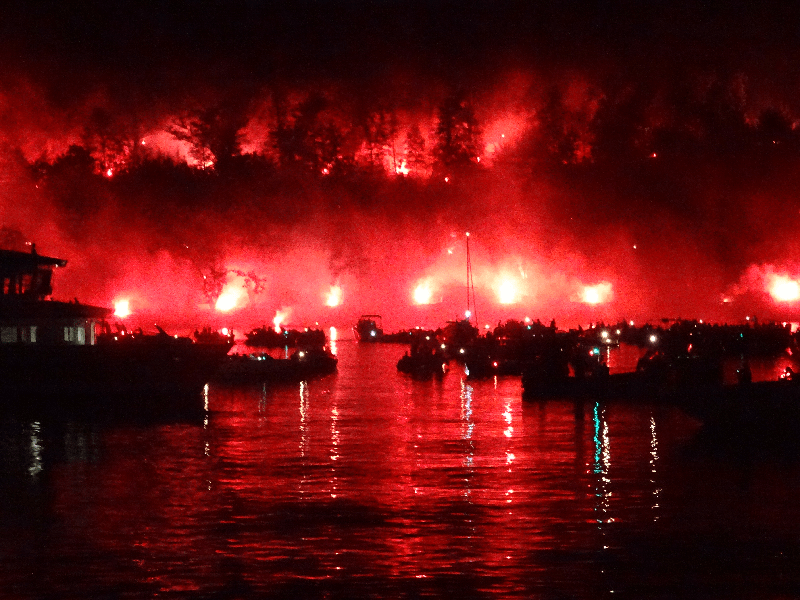
Sagra di San Giovanni, Isola Comacina. An annual firework display re-enacting the sacking of Isola Comacina by Como in the 12th century

 Following this complete destruction of all habitations on Isola Comacina, Como’s Bishop Anselmo Della Torre cursed the island in the following terms:

‘The bells will never ring again, stone will not be set upon stone, no one will ever host you again, on pain of violent death.’ 

Anselmo Della Torre

The curse was not entirely effective in that the Benedictine Convent of Saint Faustino may have been established back in 994 but the current building was constructed after the massacre of 1169. The same goes for the current Church of Saint John the Baptist which was built towards the end of the 15th century on top of the ruins of the original church destroyed in 1169. It was subsequently remodelled on Baroque lines in 1635 with the bell tower added in 1675. 

The Church of Saint John the Baptist

However the island did remain mostly unoccupied for the next 750 years, until it fell into the ownership of the King of Belgium who passed it on to the Italian Royal Family in 1919. However even now, there seems a reluctance for anyone to live on the island in spite of the three studios for artists built for the Brera Academy. 

Historical Re-enactments

St. John the Baptist is the patron saint of the island and his saint day is celebrated on June 24th. It is on or near this date (the last Saturday in June) when the fatal destruction of the island back in February 1169 is re-enacted in a massive spectacular firework display which engulfs the entire length of the island. The Sagra was suspended for two or possibly three years but it was held again this year, as another welcome sign of local recovery from Covid. The event is so popular that the roads to Colonno, Sala and Ossuccio are practically impassable for hours. One excellent option for travelling from Como and viewing the Sagra is going on the cruise organised by the Navigazione specifically for the event. 

The Palio del Balbianello kicks off in September with the re-enactment of the arrival of Federico Barbarossa in March 1159

While the Comaschi may not be so proud of their unprincipled destruction of the island so many years ago, they are delighted to remember and re-enact the arrival in March 1159 of their saviour from Milanese oppression – Federico Barbarossa. The Palio del Baradello is a series of events and activities intended to mirror the festivities laid on for Barbarossa when he landed on the shores of Como. It is held from the end of August to the beginning of September. As with Isola Comacina, the celebrations are not held on the actual anniversary of the original event but are timed to coincide with the local saints day with Como celebrating Saint Abbondio’s day on August 30th.

Visiting Isola Comacina

The island has a distinct still atmosphere of its own resulting partly from its relative isolation but also by the ample evidence amongst its ruins of its tragic past. For the last three years the island has been off limits to visitors since its single landing stage was deemed unsafe. Fortunately the landing stage has now been repaired and visits were permitted again from this April. 

Tickets for the boat crossing and entry to the small museum cost €6 and are on sale within the Antiquarium.

Research Sources

Ettore Maria Peron’s book Storia di Como, published in 2017 by Edizioni Biblioteca Dell’Immagine was invaluable in writing this article.

The bell tower of the Chiesa di Santa Maria Maddalena
Posted in Architecture, Art, Culture, Events, History, Itineraries, Lake, Places of interest | Tagged , , , , , , , , , , , | 4 Comments

Shopping In and Around Como

Ally
Photo courtesy of Ally Shop, one of the exclusive designs from this women’s wear designer with her boutique in Piazza Mazzini.

There are so many good motives for living in or visiting Como but one that we have not yet featured is the shopping! So to address that lack here are three different but excellent options, namely:

  1. Meandering around the boutiques of Como’s ‘centro storico’
  2. A trip to the heart of Italian fashion design in Milan
  3. A day out at Serravalle Designer Outlet.

Como 

vitani
Via Vitani, Como.

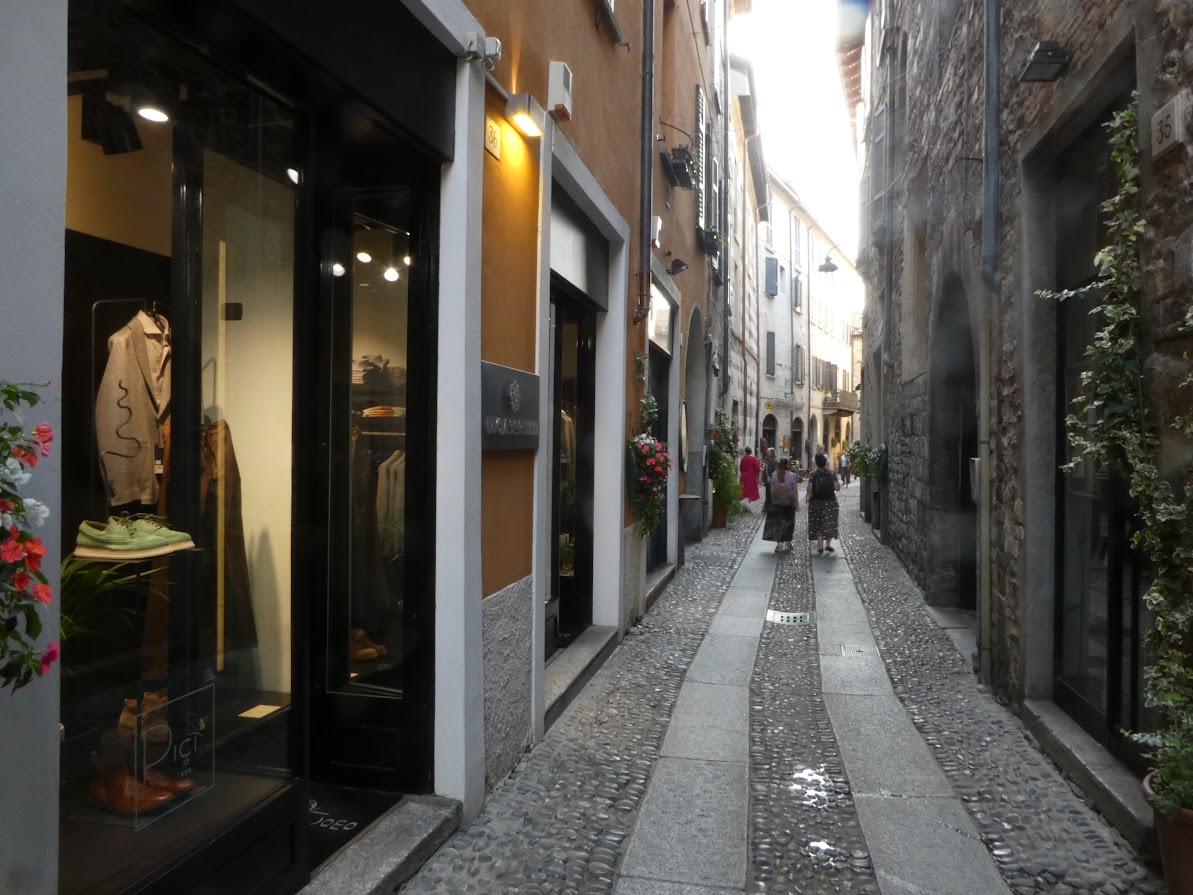
Shopping in the historical centre of Como combines the pleasure of ambling around its ancient streets while indulging in relaxed window gazing. Como has for years maintained a policy of keeping its retail stores relatively small so as to encourage a greater variety of boutiques. There are no department stores in the centre apart from Coin in Via Boldoni. Instead you will find representative branches of many international chains like Max Mara, Benetton, Marina Rinaldi or Stefanel. You are also bound to come across the ubiquitous Tessabit, a local company set up seventy years ago and still managed by members of the local Molteni family. If all Tessabit branches were brought together they would form an extensive retail space but they have embodied the Como idea of maintaining relatively small individual multi-brand boutiques each slightly differentiated in terms of style and content but all committed to the high end of the market. 

There are a number of separate Tessabit boutiques in the centre of Como. This year they celebrate 70 years under the direction of the Molteni family.

The real advantage of the focus on boutiques is the variety of styles and fashions represented not least due to the many small independent retailers who are encouraged to a) differentiate their particular customer offer and b) apply their own knowledge and links with Italian suppliers to stock items unlikely to be found on a normal High Street. These independent outlets can be found in nooks and crannies across the old centre. 

Alessandra Binda, in her shop ‘Ally’ on Piazza Mazzini. All the garments on offer are designed and produced by her.

One of these independents is worth mentioning for the quality of their offer and to illustrate the variety and the gems that adventurous shoppers can find in Como. Ally, on the southern corner of Piazza Mazzini and Via Diaz, is a top-end women’s fashion shop specialising in cashmere for her winter collection and Como silk for summer.  All of the items on sale are designed and produced by the shop’s owner, Alessandra Binda, which makes her boutique particularly unique.

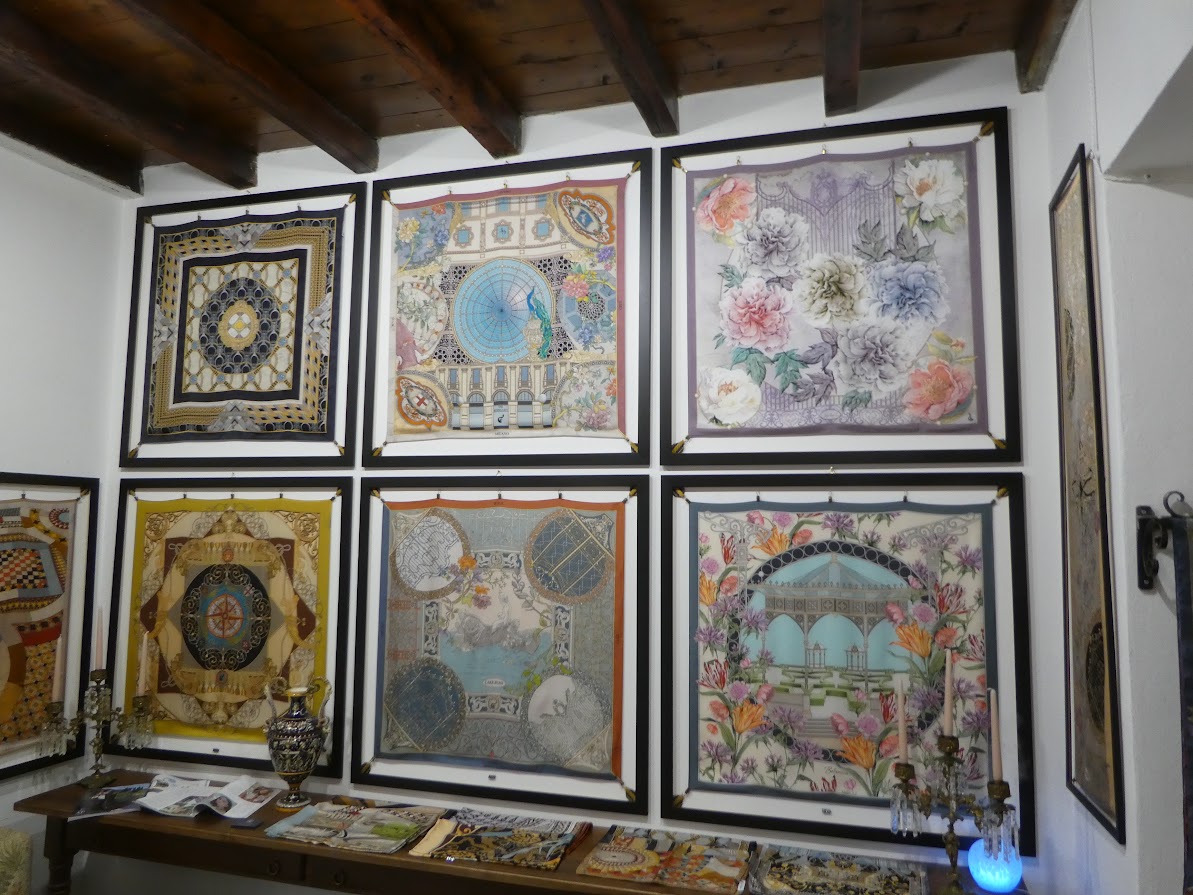
Como remains the most important European centre for silk printing and finishing. As a result there are at least three shops in the centre selling silk items made in Como. They are A. Picci in Via Vittorio Emanuele, Inseta (InComo) near to the Porta Torre, and the recently established and fascinating Grand Tour Lake Como on Via Adamo del Pero. Inseta InComo also has a factory outlet store outside of the town centre in Via Pasquale Paoli as does Larioseta in Via Asiago in the Tavernola area. 

Silk scarves designed by Kaos Design of Nesso and printed and finished in Como at the Grand Tour Lake Como in Via Adamo del Pero.

Milan 

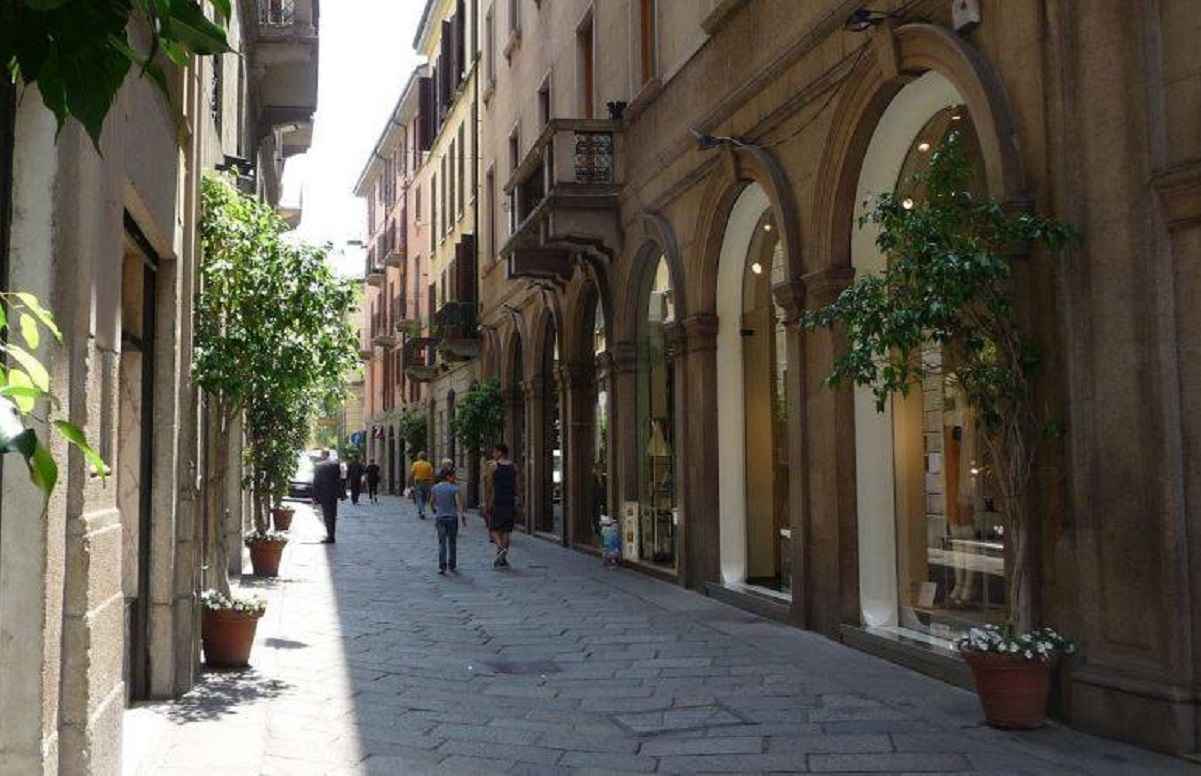
Via Della Spiga, Milan – one of the streets of fashion boutiques in Milan’s Golden Triangle

When a young American fashion designer, Tom Ford, came to Milan in 1990 to work for the House of Gucci, he not only transformed the fortunes of the ailing fashion house but also contributed to transforming Milan into one of the world’s most famous centres of fashion. The various fashion houses established or reinvigorated in those years are all focussed in a relatively small well defined area sometimes referred to as Milan’s Golden Triangle. The triangle is formed by Via Della Spiga, Via Sant’Andrea and Via Montenapoleone. There are so many good reasons for making a trip down to Milan where a look around the Golden Triangle can for example be combined with visiting the fine art collection in the nearby Brera Academy. No-one expects to stumble across a bargain in Milan’s most fashionable quarter but you will find the best of Italian fashion design.

Serravalle

But if you take a day trip out to the Serravalle Designer Outlet you will find numerous bargains in the stores of those same Milan fashion houses, or in any of the other luxury brands represented there. Serravalle is Europe’s largest luxury designer outlet which has itself been so well designed as to make a visit there relaxing and enjoyable even for people like myself who are reluctant shoppers. On a personal note, I had never previously been able to appreciate the concept of shopping as a leisure activity but Serravalle has shown me how it’s done! 

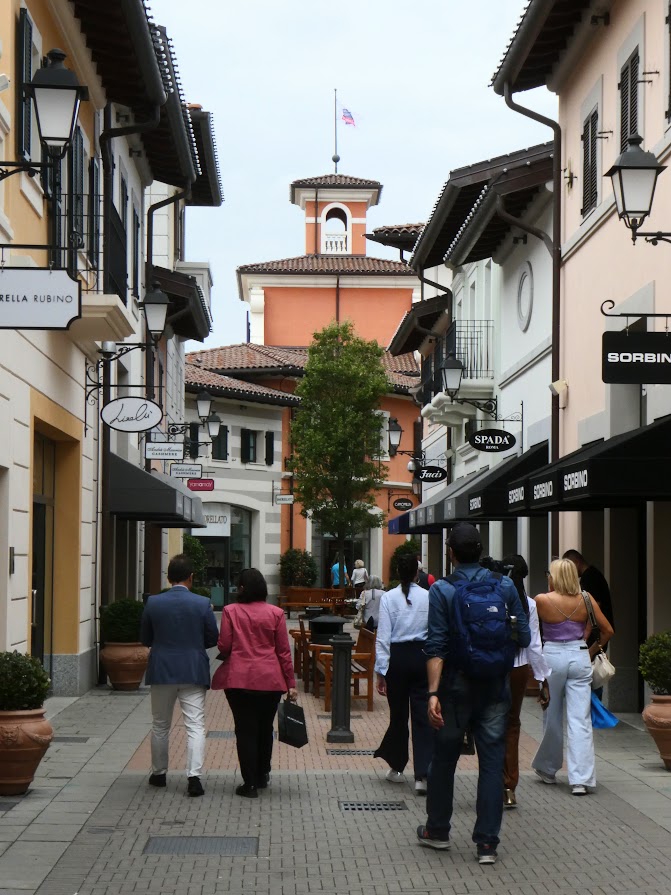
Serravalle Designer Outlet recreates the feel of a stroll down Milan’s Via Della Spiga or Como’s Via Luini.

They claim up to 70% less on standard retail pricing and describe themselves in their own words as having ‘ all the endless glamour you’d expect for a shopping destination only 50 minutes from Milan, one of the world’s most prestigious fashion capitals. It is a shopping heaven, offering an unmatched collection of Italian and international luxury brands – such as Gucci, Prada, Fendi, Saint Laurent, Balenciaga, Valentino, Off-White, Jimmy Choo and many more, and incredible services all year round. Guest services include 14 restaurants and cafes, free parking, Shuttle bus service from main cities, free wifi, guest lounge, hands free shopping and a children’s area play area and waterpark. Serravalle Designer Outlet is also the gateway to explore Monferrato, its gastronomy and wine, including the distinguished Gavi, produced in the hills surrounding the Centre.’

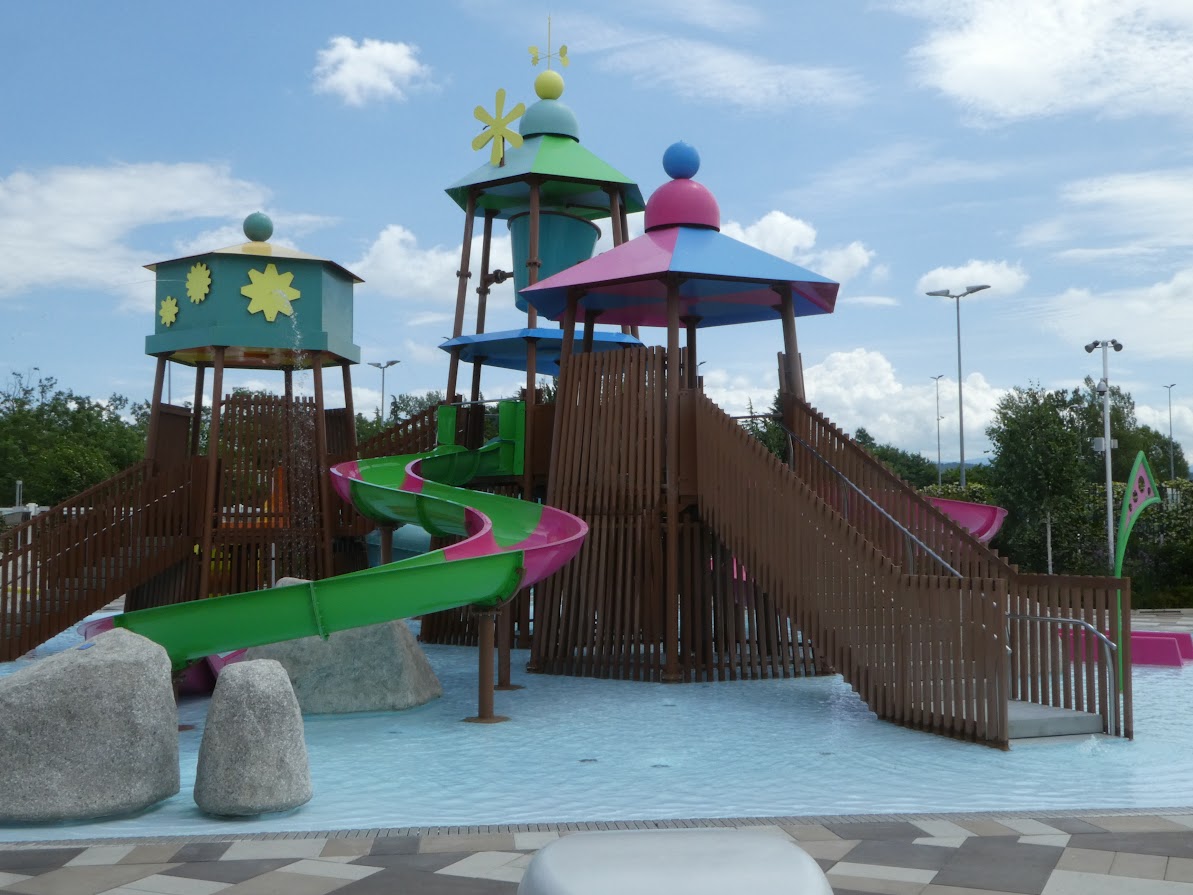
The water park is open on weekends. It is one of the attractions to keep children happy while parents shop!

I visited Serravalle as one in a small invited group of fellow bloggers. I was definitely out of my customary environment not being known as a natural shopper. I was however sincerely impressed by the range (not just clothing) and quality of the shops present and, more importantly for me, by how well the outlet has been designed and signposted. Our hosts talked about the quality of the ‘shopping experience’ as might be expected from marketing professionals but by the time we left I had not only bought into the ‘leisure concept’ but also concurred over the quality of the ‘experience’. I came away feeling both relaxed and rewarded from my day out from Milan.
Spacious, well signposted and maintained – a faux village paradise for shoppers.

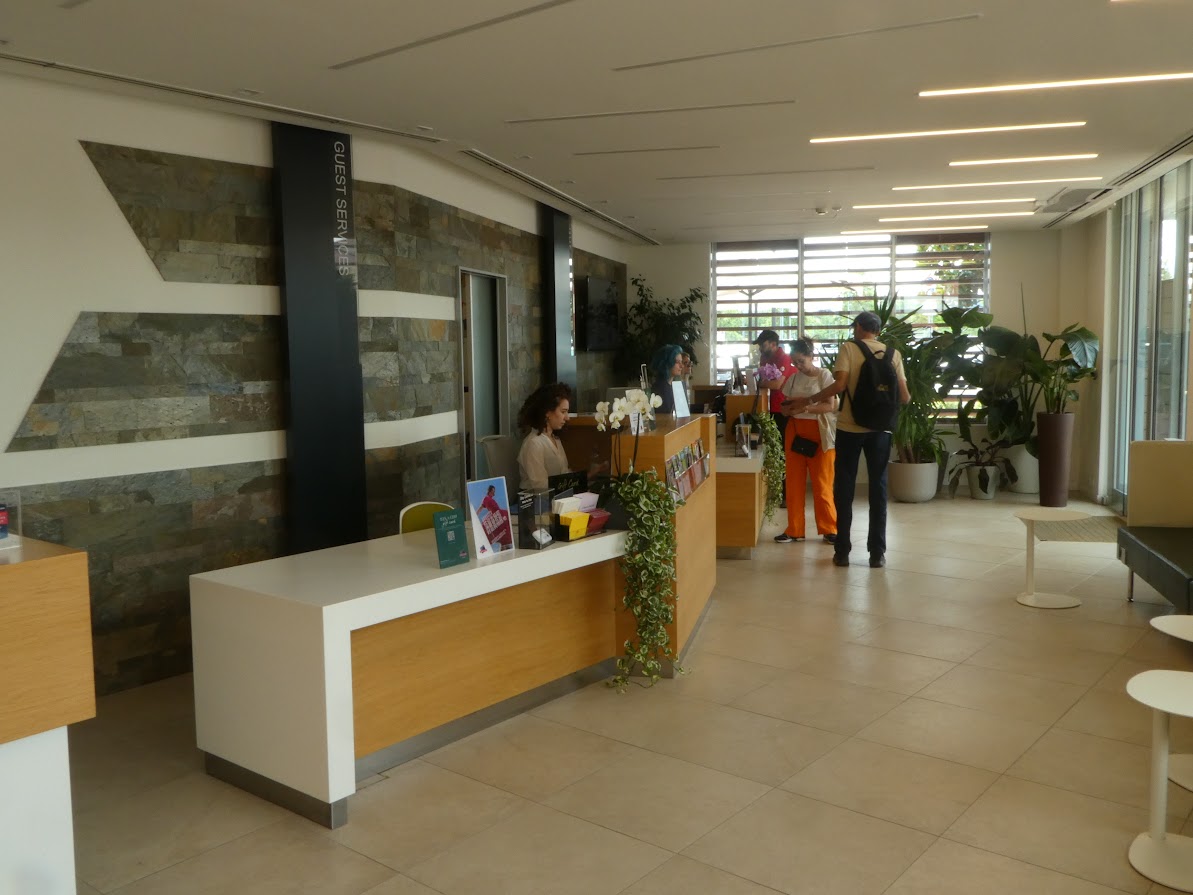
A visit to Serravalle is definitely an excursion – with all the facilities on site to meet most needs during the day. It is not a shopping mall. It is more of a faux village of entirely pedestrianised streets opening onto spacious piazzas with shaded seating areas for those taking time out. The overall architectural style of the two storey buildings might be characterised as Italy meets Las Vegas – but then most eyes are more likely to be focussed on the ground floor shopfronts. There are play areas for children and an Aqua Park with water slides which is open every weekend. They even offer a baby sitting service. When you first enter the village there is a reception area where all the facilities and additional services are explained including how foreign visitors can reclaim tax, with repayments processed within a mere 40 seconds. One slight compensation for UK’s ill-advised exit from the EU is that British residents can now also claim tax free refunds when shopping not just here but also in Milan or Como.  
The Serravalle Designer Outlet reception is there to orientate visitors and outline the various services on offer.

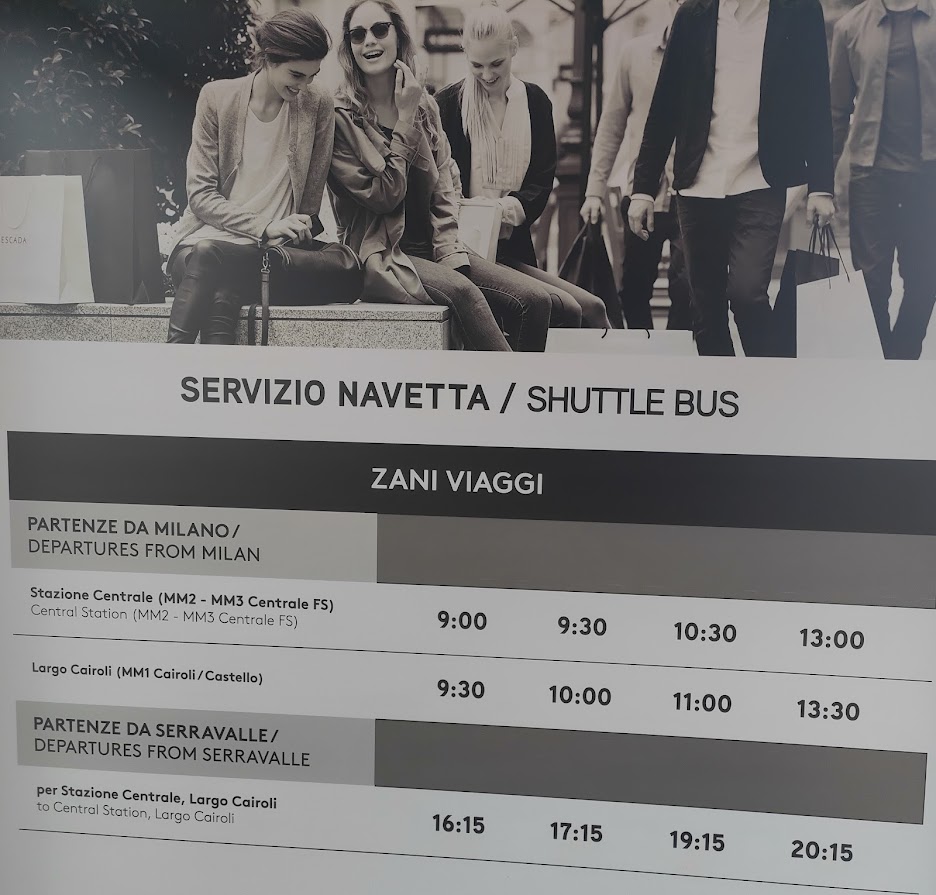
For those visitors with the financial means, Serravalle provides services such as a guest lounge where one can recuperate with a glass of spumante at any time during the day. Or use their app for so-called ‘hands free’ shopping whereby all purchases are gathered up from wherever bought and delivered back to the lounge. A useful service for all visitors is the economical shuttle bus with departures from Milan’s Stazione Centrale at various times in the morning with a return at the end of the day. 

The shuttle service to and from Milan’s Central Station is convenient and costs €22 for the round trip.

Whilst there is an undeniable and inevitable element of artificiality in a shopping centre that has not grown organically such as those of Como or Milan, Serravalle is however proudly located in place if not in time. It does act as a sort of gateway to the foothills and vineyards of Monferrato which are a visible backdrop as you walk around the site. It is a mere 10 kilometres from the heart of local wine production in the Comune of Gavi. The restaurant and wine bar where we lunched, LeDolciTerre, stocks 200 labels of Gavi and Monferrato wines and offers a cuisine based on local dishes. The outlet is also a keen supporter of local tourism and it promotes a large range of activities through a group called THINKSERRAVALLE as a fellow member of this local tourism consortium.  

As guests of the Designer Outlet, myself and fellow bloggers ate at Ledolciterre, a wine bar and restaurant that proudly presents up to 200 of the local wines primarily made from the Cortese grape including those from the nearby Comune of Gavi. They also offer local dishes and a collection of Novi chocolate from nearby Novi Ligure.

…and Others

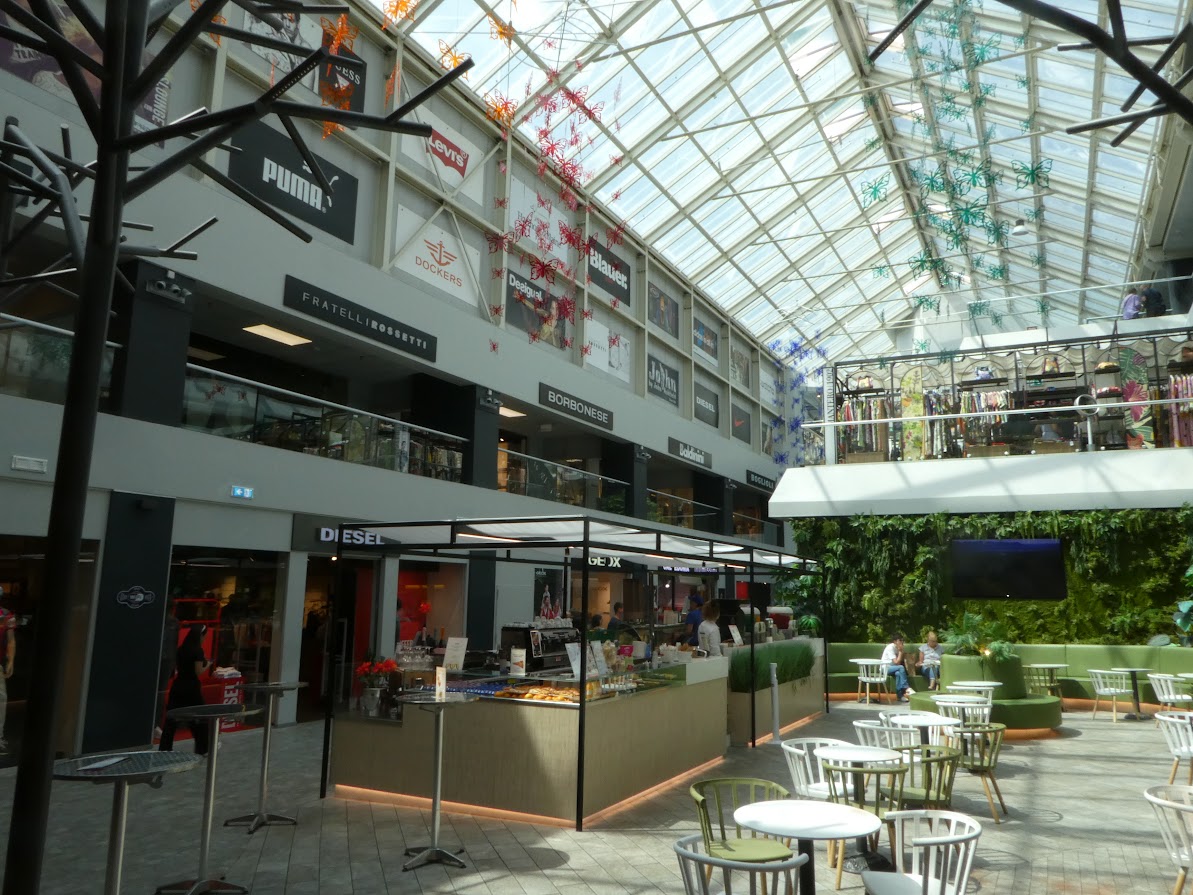
Visitors to Como may also be interested in visiting the Foxtown Discount Centre in Mendrisio, a town about 15 kilometres over the Swiss border. Here, as at Serravalle, there are a large number of famous name discount outlets with prices and discounts clearly shown on product labelling. However the shopping ‘experience’ is entirely different from that at Serravalle. For a start, Foxtown is an enclosed indoor covered mall which I found distinctly claustrophobic particularly on a warm summer’s day. The corridors do open up into a couple of floor to rooftop atriums but they do not dispel the overall sense of constricted space. Many of the retail units are quite small and ceiling heights low. This may all be irrelevant to an ardent bargain hunter but it does matter in terms of ‘experience’ and the likelihood that you would want to spend additional time in exploring the area. The signposting is inadequate and the numbering of the different retail units seems to lack any logic. Foxtown did not come over to me as somewhere I would want to linger, and in marked contrast to Serravalle, there was nothing in the centre to retain my interest. I am sure however that my comments are unlikely to deter seasoned and determined shoppers who may well not be disappointed in their search for a bargain.  

Foxtown is laid out as a covered multi-story shopping mall with a somewhat claustrophobic feel in spite of the atriums as seen here.

Further Links

Como: Both Tessabit and Ally have an online presence where their goods can also be purchased. Silk scarves can be bought online at Grand Tour Lake Como but the two partners, Massimo and Davide, pointed out how the true beauty and quality of the craftsmanship can only be fully appreciated by a visit to their shop where they are also delighted to explain the separate elements in their original designs. More information on the two silk factory outlets is available from InSeta InComo and LarioSeta.

Serravalle: Go to their website to get a complete list of the shops in the Serravalle Designer Outlet, information on all the transport options to and from the site and the various packages available with added services and discounts. Purchases can also be made online and delivered to your home. 

To better appreciate what the area around the Serravalle Designer Outlet and Monferrato has to offer, visit the ThinkSerravalle site. Those considering staying in the area might want to take advantage of a voucher scheme backed by the Piedmont Region which pays for two nights of a consecutive four night stay in a variety of local hotels and B&Bs. The site gives details of this voucher scheme along with wine tours, family activities and cultural and sporting visits. 

Mendrisio: Bargain hunters entering Switzerland can plan their visit in advance via the Foxtown site. The area of Mendrisio itself is well worth exploring in particular the Park of the Breggia Gorge and the churches and vineyards around Castel San Pietro.

Fashion Bloggers

I hope this brief intro to shopping options in and around Como proves of interest to some but I cannot admit to being too knowledgeable about fashion so do check out the blogs by the three other accomplices with whom I visited the Serravalle Designer Outfit, namely Celia and her site http://milanostyle.com, Hellen whose site gives some general information on living in Milan – https://www.girlinmilan.com/, and finally Eva who combines being a fashionista with competitive swimming at https://www.themermaidfashion.com/

New stock arriving, Via Rusconi, Como.
Posted in Fashion, People, Places of interest, Shopping, silk, Uncategorized | Tagged , , , , , , , , , , , , | Leave a comment

Fables, Legends and Folkore: A Walk to the Devil of Blevio and other Erratics

Pietra Nairola 1
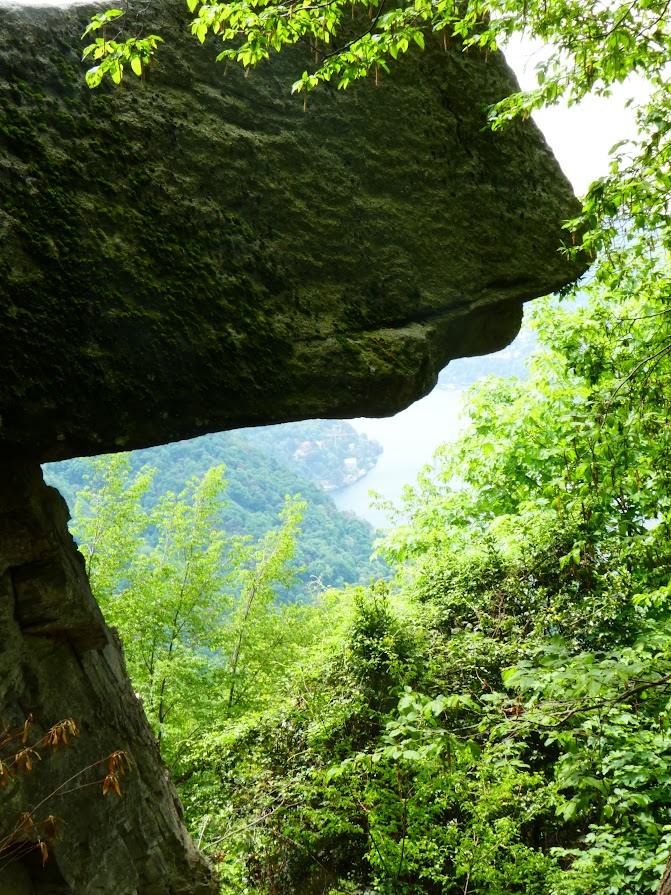
The Pietra Nairola, a National Monument above Blevio where legend has it that the Devil threw a ball to and back from a neighbouring glacial erratic.

Those ancient ancestors who inhabited the hills around Lake Como could offer no logical explanation as to why massive rock boulders, formed entirely from rock unknown in the area, should have been placed so randomly around the countryside. With their intimate knowledge of their own environment but almost total ignorance of all that lay beyond it, they could only offer up magical notions for the presence of what we now call glacial erratics – also known locally as ‘trovanti’. 

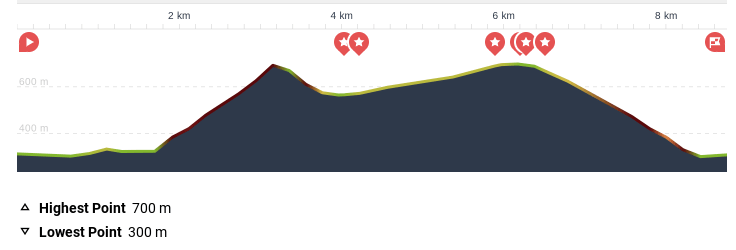
The area around Blevio and Torno is particularly rich in glacial erratics and three of the larger and better known examples can be visited on or nearby the mountain path from Brunate to Monte Piatto, above Torno. A description of that walk can be found at Como to Torno Revisited. However the description below is of a circular walk that sets out to view at close quarters each of these erratics, namely the Pietra Nairola (The Devil of Blevio), the Sasso del Lupo and the Pietra Pendula. 

Glacial Erratic Legends

Until geologists had established that these anomalous boulders had been brought down and deposited by glaciers in retreat, the local population sought more fanciful explanations for their presence. Many of the boulders became the sites of pagan cults associating them with the presence of either malign or benign spirits believing that the rocks had enveloped these spirits who continued to exercise their influence over the surrounding territory. As pagan beliefs became fused with early Christianity the stones would often be considered the playground or altars to the Devil as with the Pietra Nairola, the first erratic on our route below. Here the old belief was that the Devil played a form of diabolic football with the spirit of a neighbouring boulder now no longer present. As time passed the local population sought to fully Christianise these sites as in the case of Pietra Nairola which became associated with a sighting of the Virgin Mary prompting the nearby construction of the Cappellina Monte.

The Val Masino on the northern slopes of the Valtellina is the source of the three large boulders brought down by glaciation and deposited on the path between Blevio and Torno.

Around Torno some of the glacial erratics were adapted to become human sepulchres, known as ‘massi avelli’. Our circular walk from Torno described in Torno Circuit: Piazzaga and Monte Piatto passes by at least three of these prehistoric sepulchres. 

Of the erratics on this route, the Pietra Nairola is nothing less than a national monument while the Pietra Pendula at Monte Piatto is well known for looking like a giant mushroom. Between the two is the Sasso del Lupo which, in folklore, was the cave of a vicious wolf who would jump out of his lair to ensnare any passing child who was known to be naughty or disobedient. A number of other erratics can be seen along the path taken from Blevio to Monte Piatto.

Starting our Walk

Since this is a circular walk, it could be joined at any point along the route with easy access from either Blevio or Torno. I chose to start it right by the Cappellina del Tue in the area of Torno known as Perlasca, setting off along the road south towards Como now bypassed by one of the series of tunnels on the state highway. After about 300m along the main road, once in the Comune of Blevio and before the gatehouse of the Mandarin Oriental Hotel on the right, take the path climbing off to the left marked by a signpost for the Strada Regia. 

Route of the circular walk starting from the Cappellina del Tue in Perlasca, on the southern edge of Torno.

Mediaeval Blevio

Once you have climbed above the level of the main road below, the path levels out to pass through the various old mediaeval clusters of Blevio  starting with Colombaio and then passing through Lera, Cazzanore until you arrive at Castello. From here we commence a reasonably arduous climb on the so-called Scalotura – a series of steps climbing up the Valle di Sorto.

Mediaeval Blevio

Cappellina Monte

With some relief the long climb up the Scalotula ends at the Cappellina Monte with its shrine dedicated to the Madonna and Child. Here you are invited to rest awhile taking in the spectacular views south down the lake towards Como. There is also a water fountain and some thoughtful person has even left a bowl for dogs. The chapel is at a crossroads with the main path from Brunate to Monte Piatto intersecting the path up towards the Pietra Nairola.

The Cappellina Monte

Pietra Nairola

The Pietra Nairola is a further 400 metres from the chapel continuing the ascent from Blevio but on a less defined path than before. It is therefore a significant diversion from the main path but worth the effort when you eventually reach this extraordinary massive boulder seemingly cantilevered in suspension over the hillside. It is a national monument but I have no idea what goes to qualify the status of this erratic rather than any of the others in this area. It might possibly be due to the legends associated with it and thus its importance to the local inhabitants. It was undoubtedly a significant site for pagan ritual as evidenced by the efforts of later generations to Christianise the area through the sightings of the Virgin Mary. 

The origins of the boulder have been traced to the granite mountains in the Val Masino on the northern slopes of the lower Valtellina, brought down to rest above Blevio by glaciation.  

Sasso del Lupo

Lake Como viewing south from the Cappellina Monte

Descending down from the Pietra Nairola back to the Cappellina Monte, we pick up the path towards Monte Piatto. This path follows the contours around the mountainside and so comes as a pleasant change from the steep climb up the Scatotula. Not long after leaving the chapel, the path crosses a terrace with a single stone monolith at its centre and many other erratics lying like sleeping giants in the woods nearby. 

The massive erratic soon appears overhanging the path offering no escape to any poor child judged sufficiently naughty or disobedient to entice the wolf from out his lair. The erratic’s dimensions are impressive – 20 metres long by 10 metres wide and 8 high. This rock is, like the Pietra Nairola and the yet to be seen Pietra Pendula, also originally from the Val Masino. 

The Sasso del Lupo hanging over the path to Monte Piatto

Monte Piatto and the Pietra Pendula

With the wolf’s lair behind us, there is no further obstacle to arriving safely at Monte Piatto. This is a sizeable mountain community, where, depending on the time of year, there are two options available for eating and drinking – the Crotto Piazzaga Restaurant and the Agriturismo ‘La Casa di Alba’.  I followed a circular route to take in the Pietra Pendula which passed by the gardens of the Agriturismo and on to the terrace around the church. From this terrace there is a great view of the lake looking north. 

The Pietra Pendula is impressive, appearing as if a giant mushroom. The massive granite boulder rests on a pedestal of local limestone rock which has apparently been carved out to accentuate the rock’s fungal profile. Its vital statistics are 2 metres wide, 4 metres long and 3 high. 

The Pietra Pendula with the initials P.P. carved The Pietra Pendula with the carved initials P.P.

The circular route returns us to the stepped path that leads down to Torno. Rather than follow this path down to the lakefront, our route follows the Via per Someana before turning left on the Via per Rasina – both of these are not roads (or ‘via’ as we may know them) but paths accessible only by foot or mountain bike. 

The Via per Rasina climbs gently up above the main centre of Torno with a good view down over the town centre and the lake until reaching our original point of departure by the Cappellina del Tue.

Lake Como looking north from the terrace of the church in Monte Piatto.

Summary

Time: 2 hours 50 minutes

Distance: 8.74 km

Climb: 540 metres

Descent: 550 metres

Torno from Via per Rasina 1

View down on to Torno from the Via per Rasina

Posted in Folklore, Itineraries, Places of interest, Walks | Tagged , , , , , , , , , | Leave a comment

Lake Como’s Condottiere – The Marquis of Musso

medeghino

Gian Giacomo de Medici, detto Il Medeghino

Gian Giacomo De Medici was born in 1495 in Milan as the eldest son of Bernardino De Medici and Cecilia Serbelloni. His family was not related to the better known Medici of Florence. He was the eldest of Bernardino and Cecilia’s ten children.

The family background was modest. His father acted as a tax and debt collector to the Duke of Milan, Massimiliano Sforza, to whom he also owed money. When the French captured the dukedom in 1515, they imprisoned Bernardino and confiscated all his possessions leaving the family destitute.  Yet by the time of Gian Giacomo’s death in 1555, he had himself become a marquis, the Serbelloni family had become ennobled, his brother had become Pope Pius IV and his sister had given birth to the future Cardinal Carlo Borromeo – all thanks to Gian Giacomo and his career as Il Medeghino, one of the most successful condottieri in the Renaissance period.

musso print

Print by Franz Hegi of a painting by Johann Jakob Wetzel published in ‘Voyage Pittoresque au Lac de Como’ in 1822.

Late Renaissance in Lombardy

sant eufemia 1

Il Medeghino’s castle in Musso was fortified from the port up to where the Church of Saint Eufemia now stands. This promontory gave him a view north and south down the lake, and the fortifications made it invincible. The castle was eventually destroyed by the army of the Swiss Federation once Il Medeghino had signed a peace treaty with Francesco II Sforza in 1532.

In spite of all the artistic and scholarly achievements of the renaissance, the late fifteenth and early sixteenth centuries in Italy were highly unstable. This was due to the competing interests of those seeking to gain territory and control over the host of individual dukedoms and city states across the country. The major contestants were the Papacy, the French royal family, and the Spanish who also had possession of the Holy Roman Empire. Caught in this complex web of intrigues and alliances were the dukedoms themselves such as the Sforza in Milan, the Venetian republic, the Swiss Federation and the Grisons. The Grisons were not fully integrated into the Swiss Federation until the 1520s and were constantly seeking to extend their territories down the Valtellina and the Val Chiavenna so as to gain control over the top end of Lake Como. For the French or Spanish, the main prize locally was dominance over the Dukedom of Milan in the possession of the Sforzas. Lake Como was of strategic value commercially and militarily since it provided the best means for transporting troops and goods to and from Milan. The lake’s transport links were vital for trade across the Alpine passes with Germany and beyond. Local commercial rivalries between cities like Como and Torno were exacerbated by rival military alliances with the French, Swiss or Spanish. The result was almost constant warfare between the major cities on the lake with each seeking to maintain a sufficient navy to protect its commercial interests and see off their rivals. These local navies would from time to time be supplemented by troops and ships provided by either the French or Spanish depending on to whom each town had pledged allegiance. These troops would also be supplemented by mercenaries mainly recruited from Germany or the Swiss Federation – the so-called Lanzichenecchi. These were in turn supplemented by kidnapped members of the local population and the bands of brigands and pirates who profited from the overall state of anarchy.

Condottieri

Federico de Montefeltro

Federico de Montefeltro, the Duke of Urbino in a portrait by Piero della Francesca. Federico had the bridge of his nose surgically removed to restore his field of vision once he had lost his right eye in battle.

Out of this environment of constant warfare and complex allegiances emerged the figure of the condottiere – a military leader able to command an army for hire usually serving one of the major powers but often themselves connected to a dukedom or granted the control of one or more of the major renaissance cities, For example, Alessandro Sforza was a condottiere in the early fifteenth century who, while serving the Papacy, was granted the Dukedom of Milan. Federico di Montefeltro was another condottiere who gained the Dukedom of Urbino. Other famous condottieri include Cesare Borgia who supplemented his role as a cardinal and son of the Pope by retaining under military power a massive principality in Central Italy in support of the Papal States.  

Il Medeghino

Il Medeghino was such a condottiere who rose from his modest background as the son of a bankrupted debt collector to become the Marquis of Musso and Count of Lecco. He maintained an iron grip over both legs of Lake Como from 1523 to 1532. He was able to control almost all of the commercial and military traffic to and from Milan and the major routes over the Alps. He was one of the last of the great condottieri in the 16th century. But his career started off as a mere but brutal delinquent in the pay of the Dukedom of Milan as a hired assassin. 

view north

This view from within the Giardino del Merlo in what would have been inside Il Medeghino’s castle at Musso shows how he had vision of any of the Grisons’ ships descending from the Val Chiavenna or Valtellina.

As a mere delinquent, Il Medeghino killed his first victim at the age of sixteen. He fled Milan to avoid justice and joined up with one of the largest bands of pirates and kidnappers operating on Lake Como under the leadership of a Giovanni il Matto (Giovanni the Mad). Here he gained an early apprenticeship in how to exploit the anarchy arising from the continual conflicts between the French, the Spanish, the Swiss Federation and the Grisons. Giovanni il Matto was the son of Antonio il Matto. Antonio had established his base for piracy in Dongo, a town just beyond Musso on the western shore towards the top end of the lake. Pirates operated both from Dongo and Sala Comacina menacing commercial traffic on the lake and raiding lakeside towns to supplement their income by demanding ransoms for kidnapped prisoners. They were able to flourish by allying themselves whenever it suited with any one of the rival armies. Antonio il Matto was killed in September 1517 but piracy continued under his son, Giovanni who harassed the towns of the Tre Pievi for a further two years, aided by a still young Il Medeghino.

Note: The Tre Pievi was a semi-independent territory covering the top end of the lake with Gravedona, Dongo and Sorico in particular. It was established as a result of the Treaty of Constance in 1183 between Federico Barbarossa and the Lombardy League. It existed for a further 400 years.

Francesco II Sforza

Francesco II Sforza, the Duke of Milan and the last in the Sforza line.

In 1521, Giovanni il Matto was appointed Prefect of Lake Como by Francesco Sforza, the Duke of Milan, who then commanded him to take over control of the city of Como. Como was allied to the French whilst the Duchy of Milan was allied to the Spanish. Giovanni led his fleet of pirates incorporating some German mercenaries provided by Sforza to land in Borgo Vico. Here he waited in the hope that the Rusca faction (anti-French) within the city might aid his assault. However the French Governor repulsed Giovanni and his pirates with his own mixed army of Swiss mercenaries, Lombardy bandits and a few Como residents. Giovanni was captured and beheaded along with his brother in Griante just north of Cadenabbia on the westerns shores of the lake. 

Il Medeghino had learnt a lot from these early years of apprenticeship both in terms of military strategy and political acumen. He re-allied himself with the Sforzas who, in 1524, granted him the Signoria of Musso in perpetuity. It is suggested that he tricked his way into gaining control of Musso by substituting the sealed letter from Sforza which he had been entrusted to deliver to the castle’s governor. In any event, he quickly set to optimising the defences of the castle and its port and building up his fleet of ships. When also granted the Signoria of Lecco, he had control of both legs of the lake and, as importantly, access to the outlet of the River Adda which provided a navigable link towards Milan. He took on the French and the Grisons causing them to retreat back up the Valtellina and the Val Chiavenna. As his power and control of his territory increased, he became increasingly independent of any of the major powers. At one stage, with the Grisons seeking peace with Milan, he even captured their ambassadors on their return from peace negotiations and held them to ransom. 

Grissons attempt on Musso

Fresco in the Castello Medicea in Melegnano depicting a Grisons attack on Il Medeghino’s Castle of Musso.

By 1525, Il Medeghino had become an out and out pirate freely operating from Musso in capturing ships, seizing their merchandise, imprisoning their passengers whether fellow nationals or foreigners and putting their freedom up for ransom. He rebuilt the tower at Olonio with its command over the mouths of the Val Chiavenna and Valtellina and extracted duty on all goods that passed. He extracted the price of 500 gold ducats (scudi) from the Grisons just to grant them a licence to trade. As an example of his ransom income, he is said to have obtained 4,000 gold ‘scudi’ as a ransom for a noble Milanese called Girolamo da Carcano. (An average yearly income at the time has been estimated as from about 10 to 15 scudi). 

The First Musso War

looking south

Looking south from the Castle of Musso, Il Medghino would have had ample warning of any ships coming up from Como or Lecco.

When the Spanish attacked his castle and port in Musso, Il Medeghino put a blockade on Como causing many of its citizens to flee to Mendrisio or Lugano. He also blocked all traffic at Lecco. The Spanish were forced into peace negotiations which were  finalised at the Treaty of Pioltello on the 31st of March 1528. Under the terms of this treaty il Medeghino was granted total control of the lake except for a 10 mile zone around Como, but including Menaggio, the Tre Pievi, Valsassina, and Lecco as far down as the bridge across the Adda. Inland he was granted control of the Valmadrera, Vallassina, and the castle of Monguzzo. On Lake Lugano he was given Osteno and Porlezza. In exchange he promised to allow merchants free access across all his territories as previously granted to the Grisons. Il Medeghino now dealt directly with the Spanish Holy Roman Empire without reference to their other ally, Francesco II Sforza and the Dukedom of Milan. The castle in Monguzzo became his own personal prison and, perhaps to reflect the commercial value of his Musso empire, he now coined his own currency. He himself became the entirely independent Marquis of Musso and Count of Lecco. 

Il Medeghino's fiefdom 1528 (1)

The shaded areas show the territory under Il Medeghino’s control following the Treaty of Pioltello.

But all good things come to an end, and Il Medeghino’s fortunes changed following the Treaty of Cambrai on August 3rd 1529. This treaty temporarily ended war between France and the Holy Roman Empire and, as a result, confirmed Spanish control over the Sforza’s Duchy of Milan. Charles V, the Spanish king, now wanted to return Il Medeghino’s fortress at Musso into Sforza hands. Il Medeghino did not accept this and resisted all attempts by the Milanese to seize control over his dominion over Lake Como. The pressure from the Sforzas  built up even further following their signing of an alliance with the Grisons and the Swiss Federation in March 1531.

quinquereme

The five ranks of rowers in a quinquereme following a Roman design.

Together they dismantled Il Medeghino’s tower at Olonio with him having been branded a rebel by the Sforzas. His response was to set out building up his troops and his navy ravishing the lakeside towns to gather in food and capture men to row his growing fleet. He now had twenty two boats in his fleet but supplemented these by building some additional quinquereme ships based on the Roman design with their five levels of rowers. He did not wait to be attacked by the fleet being put together by the Sforzas in Como but went immediately on the offensive.

The Second Musso War

As Il Medeghino’s relationship with Francesco II Sforza worsened, so did that with the Grisons. Partially this was due to the Grisons adopting protestantism in 1525 and Il Medeghino’s previous military support alongside his brother, the future Pope Pius IV, to the catholic cantons within the Swiss Federation. But the murder of the Grison’s ambassador Martino Bovellini, captured by Il Medeghino’s men in Cantù on 3rd March 1531 on his return from Milan, hastened the conflict. This provocation was swiftly followed by Il Medeghino’s attack up the Valtellina with a force of mercenaries and Spanish soldiers left without employment following the Treaty of Cambrai.  Il Medeghino won a conclusive victory against the Grisons at Morbegno in the Valtellina on the 23rd march 1531. The Grisons lost between 300 to 500 men at the cost of a mere couple of Il Medeghino’s soldiers. 

Bellagio and Varenna

Another of Il Medeghino’s naval battles off the coast of Bellagio and Varenna, in the Castello Medicea at Melegnano.

The protestant forces in the Swiss cantons and the Grisons, with some assistance from the Spanish in preventing Il Medeghino from replenishing his supply of mercenaries, replied by attacking and seizing Porlezza. They were prepared to assist Francesco II Sforza on the condition that the Duchy ceded all claims to the Val Chiavenna and the Valtellina to the Grisons. The Duchy then took to the offensive against Il Medeghino’s castle in Monguzzo.

lanzichenecchi

‘Lanzichenecchi were Swiss mercenaries employed by all sides in the Renaissance conflicts. While the Spanish did not intervene directly in the Second Musso War, they did prevent Il Medeghino refreshing his numbers of mercenaries from Switzerland.

While the war on land was not going well for Il Medeghino, he had more success on water. His fleet continued to outmanoeuvre that of the Duchy of Milan. The Swiss fleet, attempting to blockade Musso, also suffered losses from a series of successful sorties. The Grisons and the Duchy then tried to seize control of Lecco and break Il Medeghino’s links between that city and his base in Musso. Over the two days of the naval battle of Lecco, Il Medeghino captured the Duchy’s colonel, Alessandro Gonzaga and caused Gonzaga’s 1200 soldiers to flee. The following day he forced the retreat of the entire Grisons contingent while fighting with a mere 100 men.  

 But his luck did not hold out when on 13th February 1532, his brother Giovanni Angelo de’Medici, the future pope Pius IV, was captured. To secure his brother’s release, Il Medeghino entered negotiations with Francesco II Sforza.

From Marquis of Musso to Marquis of Melegnano

Il Medeghino negotiated an honourable and favourable peace with Milan. He agreed to cede all his territory on and around Lake Como including his castle in Musso. In exchange he was made the Marquis of Melegnano, a small town to the south east of Milan. He was also awarded the sum of 35,000 scudi and an annual income for life of 1000 scudi and a total amnesty from any legal action against either himself or his followers. The Swiss destroyed the castle at Musso and extracted a promise from Francesco Sforza that the Milanese would never re-occupy or rebuild it. 

castello Mediceo

The Castello Mediceo in Melegnano

Il Medeghino occupied the castle in Melegnano, now known as Castello Medicea,  and commissioned its redecoration with a series of frescoes that included scenes from some of his famous battles such as those of Musso and Lecco.

frescoes castello Mediceo (1)

The frescoes in the Castello Mediceo have been recently restored.

Il Medeghino continued his career in Piedmont for a number of years as one of the most successful condottiere of the 16th century. His sister Margherita married Count Gilberto Borromeo and she had a son who went on to become the sanctified Cardinal Carlo Borromeo. His cousin Gabrio Serbelloni was ennobled and his brother went on to become Pope. It was this brother who commissioned a massive sepulchre designed by Leone Leoni in Milan’s cathedral for Il Medeghino on his death in 1555.  Conversely Francesco II Sforza had died much earlier in 1535 without heirs and so brought to a close the era of the Milanese Sforzas.

Medeghino tomb Duomo di Milano

The tomb of Gian Giacomo de Medici ‘Il Medeghino’ in Milan’s Duomo. The sepulchre was commissioned by Il Medeghino’s brother, Pope Pius IV and designed by Leone Leoni.

Further Information

At Musso, the Museo di Musso contains a model reconstructing the castle as developed by Il Medeghino. The grounds of his castle have now been converted into a botanical park called the Giardino del Merlo. There is also an agriturismo named Il Medeghino on the road up towards the Chiesa Sant Eufemia. There is even a boat hire company calling itself Il Medeghino but based in Como. It and many other boat hire companies are listed at Boat Hire and Water Taxis

sant eufemia 2

The Church of Saint Eufemia in the grounds of the old Castle of Musso

At Dongo, I can highly recommend the Museo della Fine della Guerra relating the last days of the war and the historic events that occurred in Dongo at the time including the capture of Mussolini and the execution of the fascist leaders on the Dongo lakefront. The audio commentary is available in a variety of languages and includes some fascinating first hand accounts of those last days by some of the participating local residents and partisans including Michele Morandi (nome di guerra ‘Bill’) who personally arrested Mussolini and is also said to have participated in Il Duce’s execution in Mezzegra. 

In Melegnano, the Castello Medicea, with its renovated series of frescoes depicting il Medeghino’s famous battles, is now run by FAI with opening times on Saturdays and Sundays from 10.00 till 18.00.

musso coin

One of the coins issued by Il Medeghino from the Musso mint.

Posted in History, Lake, People, Places of interest | Tagged , , , , , , , , , , , , , , | 1 Comment

Como’s Manifesto for Wellbeing

teatro sociale 2

The WOHASU Summit occupied the Teatro Sociale for three days last March, an event which saw the launch of the Como Wellbeing Manifesto.

No doubt a short break in Como will do wonders for your wellbeing, but the major outcome of the recent World Happiness Summit held over three days in the Teatro Sociale might just result in a more long lasting effect  – with global impact. The World Happiness Summit (WOHASU for short) staged its fifth year anniversary event outside of Miami for the first time. Running from Friday March 24th it filled the auditorium and galleries of the Teatro Sociale for three days. Supplementary events were held in the Villa Olmo, the Tempio Voltiano and the Hotel Palace. 

karen guggenheim

Karen Guggenheim, founder of WOHASU

WOHASU was founded by Karen Guggenheim, a Californian with relentless energy and positive determination. Her brief biography states she is ‘a pioneer in the global happiness movement, a leader in promoting the science behind wellbeing to an international audience, and a motivational speaker inspiring people about how to grow post trauma and rebuild a life focused on passion, purpose, and happiness.’ Over the years she has ensured this annual event attracts leading academics, psychologists, business consultants and others to contribute to how we can place the importance and achievement of happiness (or wellbeing if you prefer the term) above personal goals such as achieving wealth or social advancement and supplanting business objectives limited to increasing shareholder value. The list of international contributors to this summit was impressive; their presentations covering both theory and practise ranged from personal to social well-being, even extending out to planetary happiness! Both presenters, coaches, volunteers and the hundreds of participants from all over the globe seemed, above all, to be very happy visiting Como and experiencing this significant event. 

auditorium

The stalls, boxes and gallery of the Teatro Sociale were full throughout the three days of the summit.

Why did WOHASU come to Como?

Villa Olmo

Villa Olmo where the pre-summit dinner was hosted by WOHASU for its speakers, sponsors and selected guests.

Como is a beautiful city within a stunning natural setting. Awareness of its charms increases year by year judging by the number of visitors to the city and the lake, and up till now it has been able to meet the needs and expectations of its guests. But for this summit, the city had to show a commitment to the values of WOHASU for it to become the location of choice for 2023. And that commitment came in the form of its major sponsor, DHL Express and more precisely, its European CEO, Alberto Nobis.

nobis

Alberto Nobis, CEO of DHL Express Europe relating his personal experiences as a manager which have come to convince him of the need and benefits of happiness in the workplace.

Alberto lives in nearby Brunate, and, with pride in DHL’s achievement of being designated ‘World’s Best Workplace’ in 2019, and a strong personal commitment to making work a happy place born out from his own bitter experience, he was determined to bring the summit to his adopted city. Fortunately his vision was shared by our recently elected mayor, Alessandro Rapinese, who granted use of the Teatro Sociale for the 3 day event – the first time the theatre had hosted a multi-day conference of this sort. Alessandro also extended a warm welcome in an address at the start of the conference which included his own aphorism that happiness stems from ‘not what you have but how you think’. Bravo Signor Sindaco!

rapinesi

Alessandro Rapinese, Mayor of Como seen showing a group of visitors around the town hall, Palazzo Cernezzi.

The Manifesto

Versailles outside of Paris has gone down in history for the signing of the treaty following the First World War in 1919. Utrecht in Holland is likewise known for the treaty in 1713 ending the War of Spanish Succession. Let’s hope Como goes down in history for the declaration of the Como Well-being Manifesto of 2023, presented at WOHASU by Lord Richard Layard, a Labour peer in the UK’s second parliamentary chamber, the House of Lords. Under the slogan ‘Let’s put wellbeing first’ he presented this manifesto as a call to action to influence politicians, educationalists, businessmen and us as individuals to ‘reappraise the goal of our society… the goal should be people’s wellbeing – their enjoyment of life, their sense of satisfaction and of fulfilment.’  The appeal was made to gather as many signatories to the manifesto so as to influence policy makers, whether in government, education or business, to take wellbeing more seriously and to take its measurement as the primary indication of their institution’s success. 

como manifesto

Richard Layard presenting the Como Wellbeing Manifesto.

Science and Measurement

It was interesting to note that many speakers took care to underline the academic credibility of their subject firstly by describing the study of wellbeing as a science and as a consequence, emphasising the importance of the collection and analysis of related data. Prior to this summit, the 10th annual edition of the World Happiness (unrelated to WOHASU) Report was published applying measurement criteria that have by now gained academic acceptance. This report ranks countries according to the overall stated happiness of their population. Finland headed the list in 2020 whilst Afghanistan and Lebanon were deemed to host the least happy populations. 

HPI Index top countries

The Happy Planet Index adds the ecological footprint to its calculation and ranking of countries for wellbeing in that it shows levels of efficiency in producing good lives.

The criteria adopted by the World Happiness Report does not take into account the ecological health of the country – in other words, how happy is their corner of the planet.  This aspect is however incorporated into the so-called Happy Planet Index which was presented at the summit by its founder, Dr. Nic Marks.

nic marks

Dr. Nic Marks

This index is calculated using standard data and applying the following simple formula. Take the measure of a country’s wellbeing  and multiply it by the country’s average life expectancy and then divide this total by the country’s ecological footprint. Some interesting results arise form this formula with the predominance of Scandinavia now surpassed by Central and South America with Costa Rica heading the list.  Latest data is from 2019 and this is their headline summary: ‘Notably, Central and South America dominate the Happy Planet Index, with 8 of the top 10 highest ranking countries from the region. However, there has been a decline in wellbeing in several countries in South America, including Brazil.’ Nic Marks summarises his index as revealing how efficient different countries are in producing good lives. 

Out of interest, UK came 14th in 2019 ahead of all other European countries except for Switzerland, but I feel confident in saying that it will by now have gone right down the table due to recent data showing a decline in life expectancy and issues over public health provision. Italy comes in at 40th just above Sweden brought down in spite of good life expectancy and wellbeing by a low score for its ecological footprint. Como’s immediate neighbour, Switzerland,  comes very high in the table at 4, attributable perhaps to its proximity to Como! 

volunteers

Volunteers managing the registration of visitors and speakers to the summit.

Personal Happiness

volunteers 2

“Smile please, we are happy!”

I was lucky to be selected to volunteer at the summit allowing me not only to attend presentations when not actively required to help but also to make the acquaintance of many of the 70 or so other volunteers from all over the globe. There was a particularly large contingent of Ukrainian volunteers, many of whom as women had immigrated out to neighbouring countries such as Poland, Hungary or Germany. We all had our own specific areas of interest within the broad scope of happiness studies with many of my Ukrainian colleagues seeking methods and strategies to reinstate positivity and hope amongst their fellow citizens brought down by the anxiety for family and friends or indeed by the trauma of wartime brutality. They all seemed to display immense resilience and also joy in their endeavour to find ways to alleviate their own and others anxieties. I can only wish them well. 

For my part I was so grateful to hear the message that business or government must turn away from a single-minded obsession with growth. After all, isn’t it this which has led our planet to the brink of self-destruction, and isn’t the major cause of stress and anxiety in work attributable to the relentless desire to increase shareholder, rather than stakeholder, value?

Conclusion  

stress

It is beyond me to provide a full account of this three day event but I hope I have managed to convey some degree of  its significance, the quality and variety of its speakers and the positive atmosphere generated amongst its volunteers and participants. It was thanks in great part to Alberto Nobis that WOHASU, on deciding to cross the Atlantic from Miami, landed in Como this year. I expect that another European or possibly South American country will be selected for next year’s event. However Como may leave a lasting legacy if we all sign and support the Como Wellbeing Manifesto. See the link below. 

And let’s give the last word to the concluding paragraph of that manifesto which states:  

‘We can build a happier world  – with sustainable wellbeing and much less misery. But we will only do it if that is really our objective. So let’s measure wellbeing. And let’s make it the objective of every organisation and every individual. There could be no more inspiring purpose for our lives.’

 Lord Richard Layard

And as a postscript, let’s recall the words of the ex-Head of the UK Civil Service, Gus O’Donnell when he remodelled Karl Marx’s memorable call to action in stating ‘ you have nothing to lose but your misery.’

Further Information

More information on WOHASU can be found online at https://worldhappinesssummit.com/

Details of the World Happiness Report and Index are at https://worldhappiness.report/ed/2022/

The Happy Planet Index is at https://happyplanetindex.org/

If you have in any way been prompted to consider the issue of happiness and wellbeing do visit  to review and hopefully sign the Como Wellbeing Manifesto by going to https://worldhappinesssummit.com/como-wellbeing-manifesto/

backstage

Backstage at WOHASU – making it all work.

Posted in Culture, Events, People, Politics, Sustainability, Uncategorized | Tagged , , , , , , , , , , , , , | Leave a comment