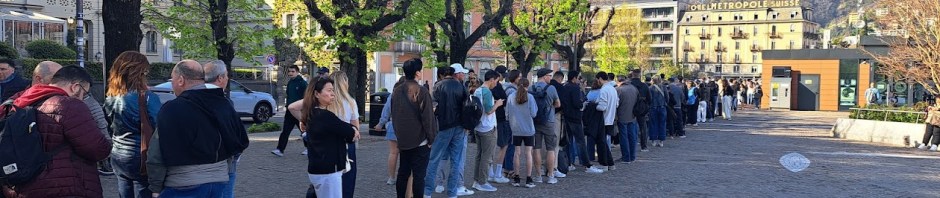
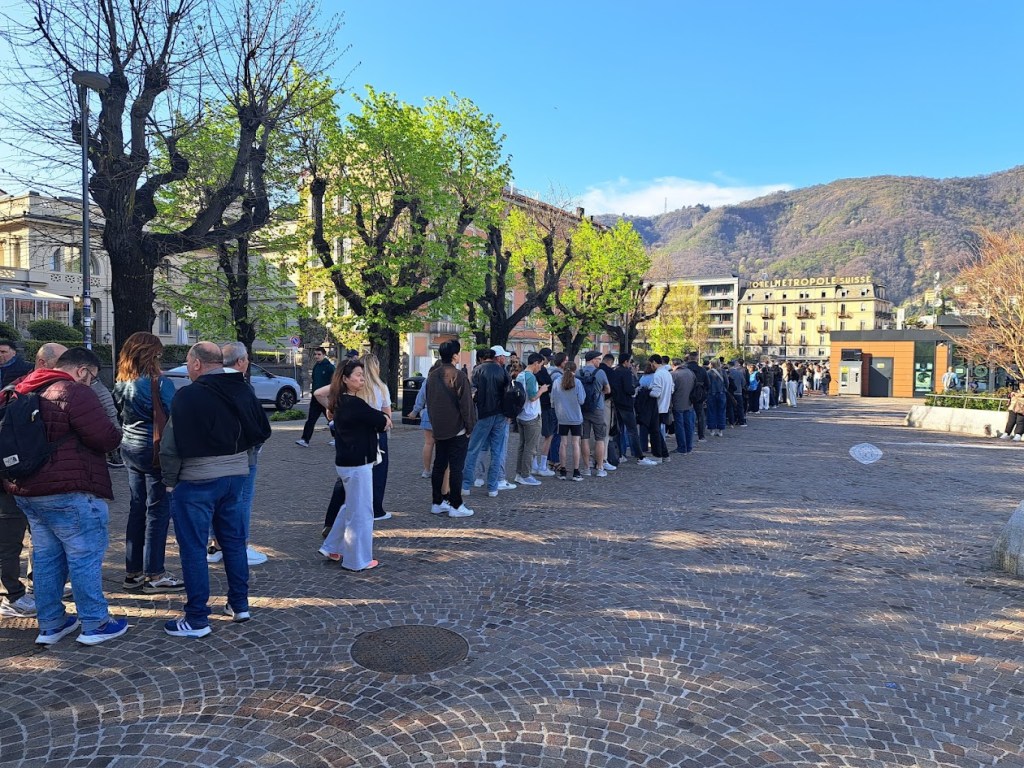
Como and its lake are suffering from overtourism. The problem is in no way exclusive to Lake Como and shares the common aspect of a potential clash of interests between residents and visitors, with both groups competing for the use of limited resources. Tourism has always been an important part of Como’s economy but for years it was subordinate to the interests of the local textiles industry. However the tourism boom in recent years has overturned that balance and is impacting life in the city in a whole variety of ways – most of which are deemed negative for residents but positive for the tourist trade. Como is in a phase of fundamental socio-economic transition and fears are growing over the city’s ability to retain a balance of interests that would avoid conflict and ensure that this new predominant source of income remains sustainable.

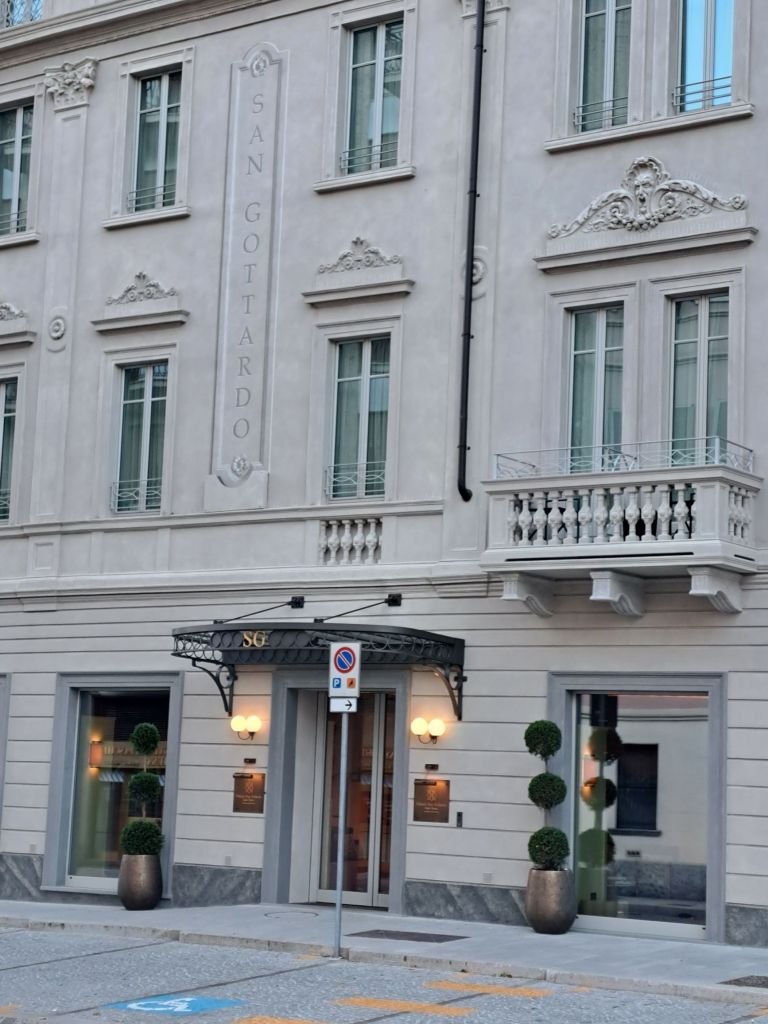
Tourism on Lake Como has seen massive injections of capital over recent years, coinciding not by chance with the purchase of the Como football club in 2019 by the Indonesian Hartono brothers. As we reported in Como 1907: The Mouse and the Lake, the Como 1907 project has at its heart the promotion and exploitation of the so-called Como ‘brand’ extracting financial value from the image of the territory. These recent injections of capital have mainly been used to upgrade hotel accommodation increasing the number of beds in the super luxury category and, also adding the facilities needed to extend the traditional holiday season – so-called ‘destagionalizzazione’. This means anticipating the start of the tourist season before Easter and extending it beyond September. The recent reopening of the San Gottardo Hotel in the centre of Como is just one example of the increase in super luxury beds as are the plans of the Villa D’Este group to expand their offer in Cernobbio and Como. Many hotels have closed their doors temporarily to allow for luxury refurbishment that will provide their guests with every comfort even during those inclement days in autumn and winter. Hotel Imperiale in Moltrasio is one example of this as is the Grand Hotel Cadenabbia. While the number of 4 to 5 star rooms increase, there has been a corresponding drop in the number of traditional three star family run establishments that used to characterise hotels on the lake. These more modest establishments lack the capital to become ‘boutique’ or to expand their facilities to keep clients contented indoors over a chilly autumnal day. For those visitors who can neither afford the 4 star establishments nor can find 3 star availability, there is the massive growth in short term rentals.
This investment is bringing results in terms of visitor numbers but in possibly an unexpected way. 2025 saw 6.8 million overnight stays on Lake Como, a figure up by 10.5% on 2024. But these visitors are not as yet all upgrading to the luxury hotel sector. The total number of hotel nights declined in 2025 by -1.1% on top of a -0.3% fall in 2024. Instead the growth in numbers is in the non-hotel sector, namely short term rentals and bed and breakfast with an increase of 5% on 2024. If hotels provided for 2.48 million visitor nights, almost double that number, 4.28 million, were overnight stays in the short term and B&B sector. And that is a problem.
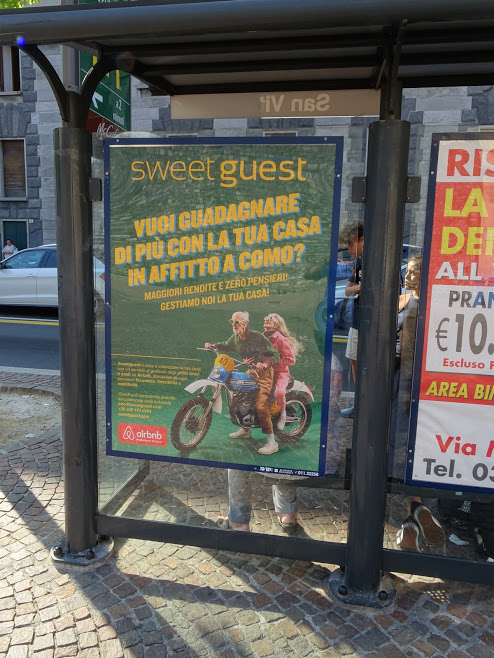
Aesthetically the renovation of buildings like the San Gottardo is a positive step after the years in which it remained an unoccupied eyesore in Como’s city’s centre. But the parallel trend in the decline of cheaper hotels on the lake and the resulting growth in short term rentals has brought about one of the main points of conflict with residents. For this growth has resulted in a drop in the properties available for long-term rent. The impact of this is most marked in the historical centre where Como may soon become like the centre of Varenna where only a handful of full time residents remain. This trend in converting from long to short term rental is now accelerating and bringing with it a change in the shops, bars and restaurants – less provision for fulltime residents and more for short term visitors. And short term rental visitors do not spend a large amount of money. Even with the increased visitor numbers, overall visitor spending declined by 10% in 2025 compared with 2024.
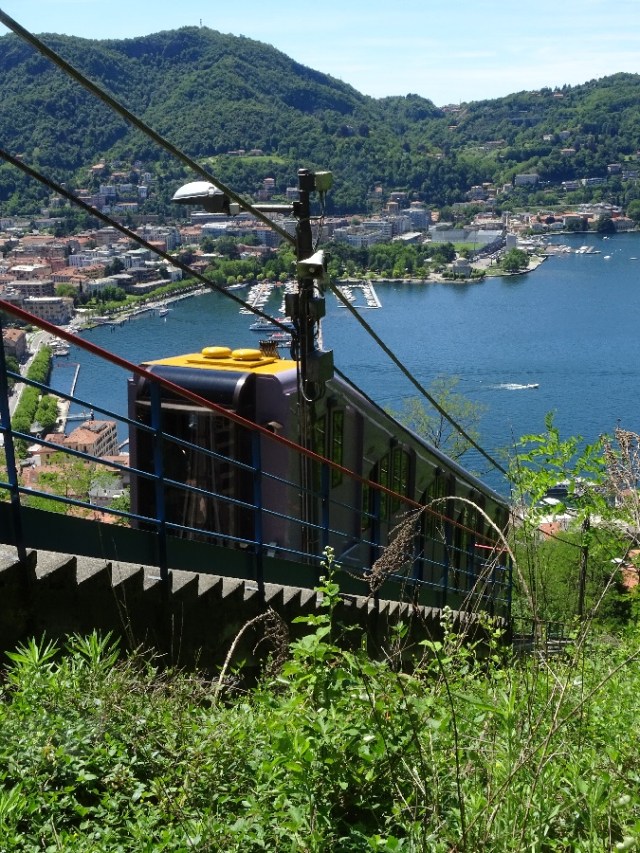
The other major local issue arising from tourism is transport – an issue impacting both residents and visitors alike when confronted with the difficulties in getting from A to B on the lakefront. Throughout the summer months you may have to spend hours trapped in an endless queue if travelling between Argegno and Menaggio on the west side of the lake. The narrow streets passing through Colonno, Sala Comacina, Ossuccio and Lenno get easily blocked with tourist traffic – particularly by those large coaches carrying visitors up towards Tremezzina. The attempt to alleviate pressure by building a series of tunnels to bypass these obstacles is set to become a true civil engineering fiasco with completion of the road works now pushed back to 2032. Como’s ‘branded’ qualities of peace and tranquility begin to wear a bit thin if stuck sweltering in a car, or crammed nose to nose in an overcrowded bus, or waiting an hour to get a ticket for the lake ferries. These issues affect all users but are particularly critical for residents commuting to work or trying to get to or from school. For them it’s a critical problem but even for other residents, who in the past may have enjoyed taking a ferry out for an evening along the lake, are now more likely to think twice before submitting themselves to a prolonged wait to purchase a ticket. For some residents these pressures on the transport infrastructure are a fundamental issue – for others it represents a restriction on movement, a reduction in the sense of liberty to choose and to enjoy what is fondly referred to as ‘our lake’.
Como – From Production to Hospitality
Giuseppe Doria, the President of the local cultural association Circolo Culturale Europeo Willy Brandt (circolowillybrandt.it), recently published an opinion piece in La Provincia, the local newspaper, in which he discussed how our territory will need to be governed now the local economy is dominated by the hospitality sector. He identifies the passing of the baton from the textiles ‘elites’ (those within and beyond politics with the power to bring about economic, social and political change) to the hospitality elites. He sees the local economic model transitioning from the traditional one based on ‘production’ to the Como 1907 model of image and ‘attractiveness’ now marketed as the Como ‘brand’. The former production model built a local middle class committed also to playing a social and civic role in the territory. For them, Lake Como was not the mere backdrop for their economic activity but an integral part of their project.
For Doria, the new economy also has its elites but they are not guiding the economic model. Instead they are adapting to it, exploiting opportunities as they appear. For them the territory presents itself as a platform for development – identifying wherever value can be added to the Como ‘brand’. Doria is keen not to dismiss the validity of this new form of capital investment but is concerned that monetising our landscape comes without the means locally to distribute and consolidate the advantages it may bring.
Doria concludes his article by pointing out the risk of Como becoming a ‘destination city’ meaning a city that functions better as a destination than as a community. His challenge to the elite is to ensure a balance so that ‘attractiveness’ converts into solid jobs, valid training, supporting infrastructure and the development of local expertise. He hopes the new elite will commit to managing the resources derived from ‘attractiveness’ for the benefit of current and future generations of local residents.
Doria’s analysis gives a valuable insight into what is meant by sustainable tourism – a tourism that does not hollow out the communities it embraces but ensures their ongoing health and prosperity.
Overtourism – A Common Theme
Overtourism as a topic arises unprompted in many discussions amongst residents. This concern is also reflected in the number of articles dedicated to the subject in La Provincia, the local newspaper. Of particular interest has been the involvement of the Catholic church, who, at least at a senior level tend these days to be very circumspect in making anything that appears as a comment on civil politics. Less reticent are the local priests, particularly those whose parishes have witnessed the most growth in tourism over recent years – such as Don Italo Mazzoni, whose parish covers Lenno and Ossuccio.
Don Mazzoni’s parish also covers the uninhabited yet picturesque Isola Comacina, where every year on the last Saturday in June a massive firework display re-enacts the sacking of the island by Como back in 1169. This was an act of punishment for the island’s alliance with Milan against the Holy Roman Emperor, Federico Barbarosso. The event is now celebrated every year as the Sagra di San Giovanni.

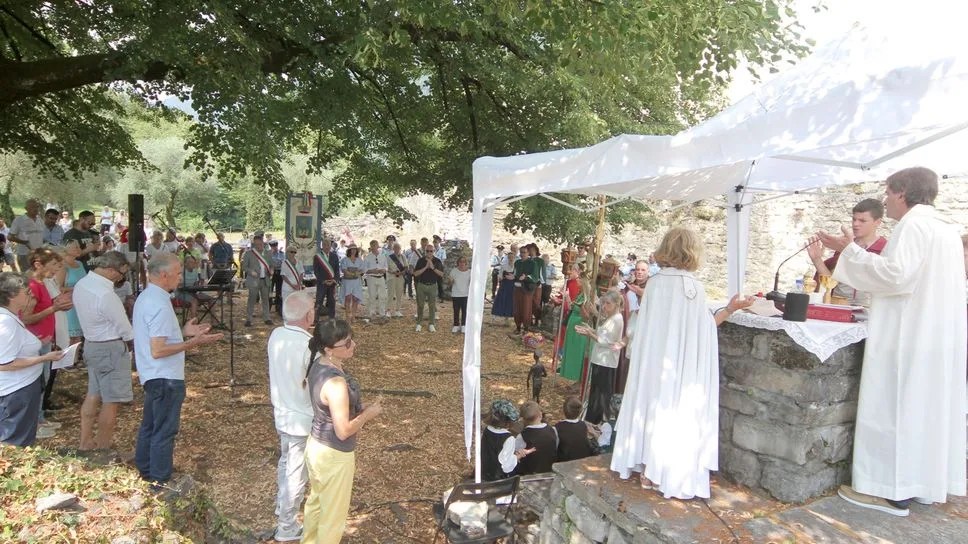
Don Mazzoni used the occasion of the Sunday Mass held the week before the Sagra di San Giovanni to address the issue of overtourism directly. He posed the rhetorical question as to whether we are aware that we have become consumers of our territory rather than its custodians. With this he posed the same issue of sustainability raised by Giuseppe Doria. He continued,” Are we aware of the stress on our villages? …… Everything is more expensive, from houses to food. Everything is sellable, everything is buyable.” And for the visitors he noted, “ I see tourists yearning for contact and relationships. This is why we need a tourism of encounters.” It’s important to note that it is visitors also who suffer the effects of overtourism, and Don Mazzoni’s observation in this respect is profound.
His comments provoked a considered response from Luca Leoni, the President of the association of hoteliers within Confcommercio. He stated, “Don Mazzoni’s statements capture the precise situation that many municipalities have been dealing with in recent years. There are a couple of considerations that need to be highlighted regarding tourism. Hotels, with some closures and some major renovations, have seen a decline in bed capacity. At the same time, non-hotel accommodation has increased dramatically. We have always considered this increase to be a threat. Regulations are needed without further delay, because there is a risk of losing the heart and soul of a town.” He continued, “I believe that the huge “holiday home” bubble is coming to an end and that soon a good number of these homes will once again be available to locals, but also to teachers, nurses, and other workers who currently lack a home. It’s unfortunate that in the meantime, historic city centers have lost some of their distinctive features, starting with neighborhood shops. Don Mazzoni’s call to action is an important one.” There are no tanglble indications to support Leoni’s optimism in this respect.
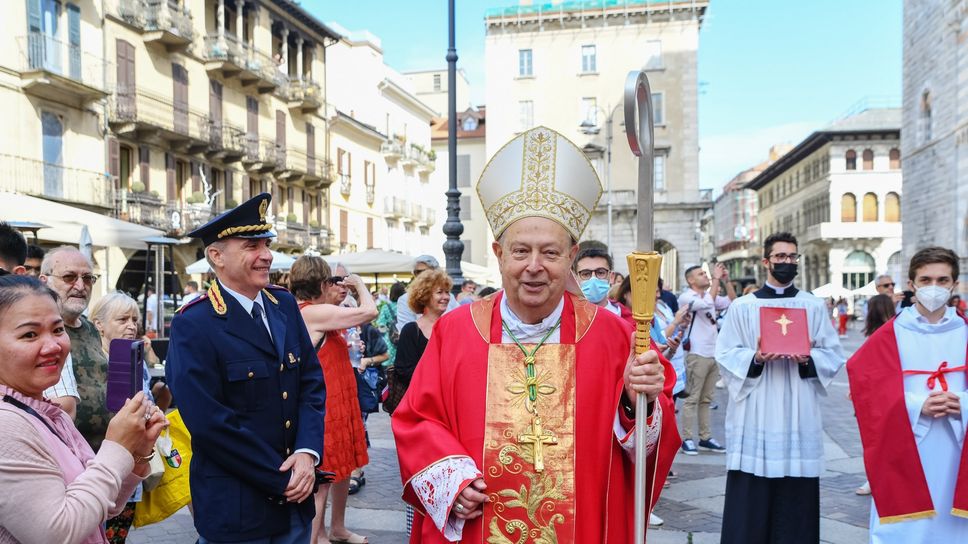
Even the Archbishop of Como, Cardinal Oscar Cantoni, made a measured but critical addition to the tourism debate when commenting on the world wide diffusion of the Como ‘brand’. He was speaking in Brienno at a mass to celebrate the 40th anniversary of the local priest, Don Paolo Barocco’s time in the parish. He had recently returned from a conference of cardinals in Rome where, on introducing himself to others as coming from Como, he noted ,” Everyone was in awe and responded, ‘Oh, Lake Como, how beautiful.‘ He commented, “Let’s start praising the Lord for this beauty He gives us. And let’s preserve this beauty, without exploiting or wasting it. “ Although this comment falls far short of any direct criticism, the Cardinal made a significant observation on the worldwide spread of Como brand marketing and of the need to avoid the mere exploitation of ‘attractiveness’.
The follow-up comments from Brienno’s priest, Don Paolo Barocco, go beyond Cantoni’s measured words to state, “I believe that ‘let’s preserve this beauty, without exploiting and ruining it’ needs no further emphasis. A large portion of our lake is certainly struggling with what is now called overtourism. We risk losing part of our identity. Tourism certainly brings significant economic benefits. We need the right balance. So much has changed in recent years, and many homes have been transformed into B&Bs in the name of business. We are powerless in the face of these dynamics. We can highlight them by asking those in charge to pay the utmost attention to the future of our lake and our territory.“
The intervention of the church in recent days has ensured the overtourism debate will continue and will at some point, force a response from local politicians and other business leaders. There is at least clear recognition that things are currently out of balance.
Image and Reality
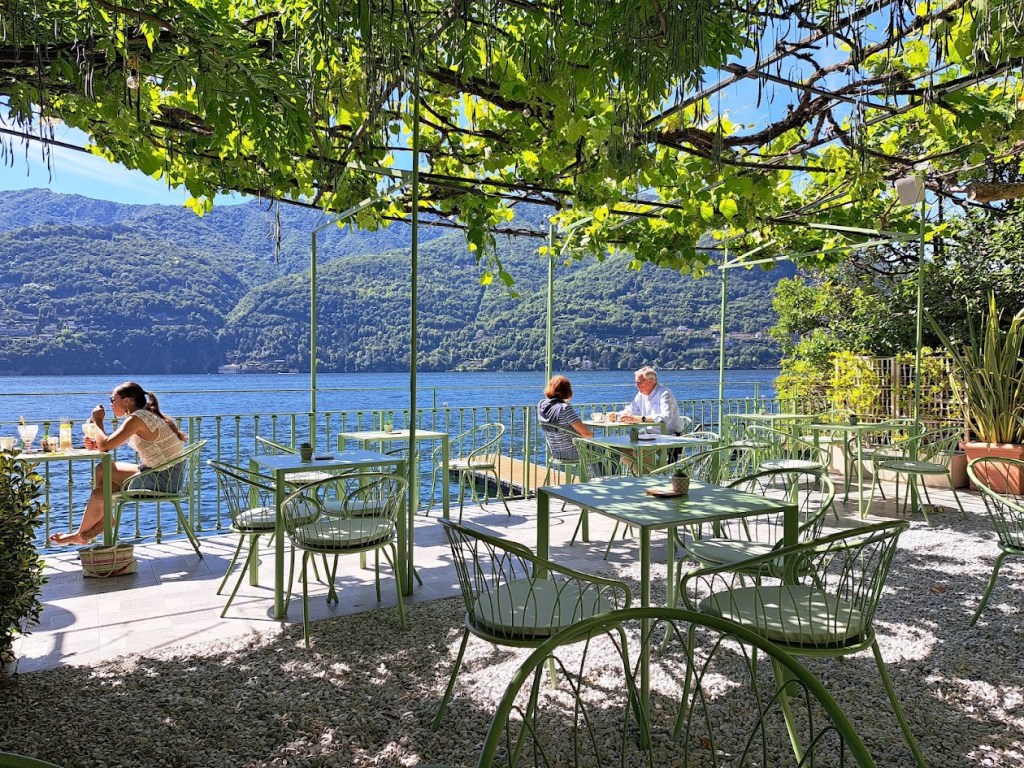
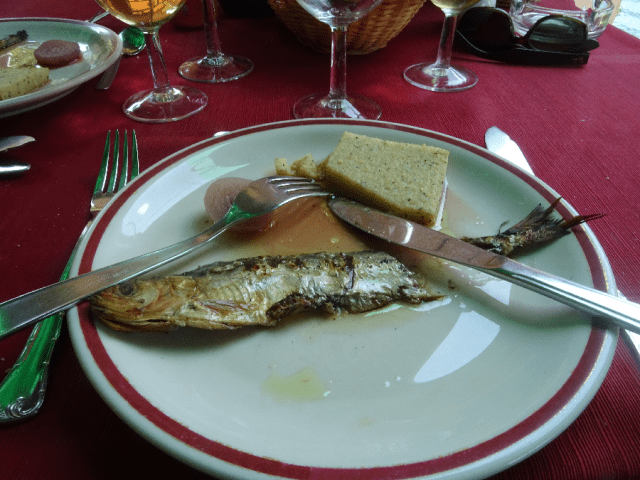
Residents by definition confront the reality of living on Lake Como alongside an appreciation of its attractiveness. That reality would include for most people a pride in local culture in its widest sense – from an appreciation of its history and its artistic, architectural and literary heritage to a recognition, if not a wholehearted appreciation, of the individuality of the local cuisine. Most tourists would have been drawn to visiting Como by the image projected by its branding – an image of an unequivocally beautiful location where any visitor can also be photographed with this rich man’s paradise as the backdrop. The reality already encompasses this image but the image must also seek to reflect the reality.
While much of the blame for the imbalance in housing falls upon the untrammelled growth in short term rentals, the validity of an image of Como that respects territorial identity and cultural heritage is the responsibility of the ‘brand’ promoters- those investing most in the massive capital injection into hospitality over recent years. Statements from these high-end promoters of tourism on Lake Como make reassuring reference to their respect for local traditions and culture but their sincerity is not always confirmed by their actions.
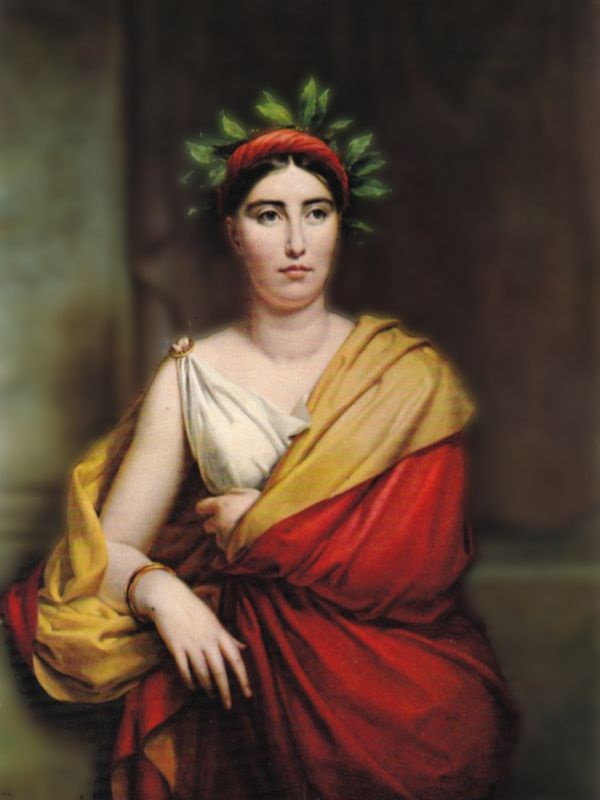
To illustrate this lack of sincerity, let’s take the example of the Mandarin Oriental Hotel in Blevio, bought by the Hong Kong based luxury hotel chain back in 2018. On opening, they decided to rename the hotel in line with their corporate branding and to jettison its previous name as the Casta Diva Resort – a name linked to one of the most famous local female cultural figures of the 19th century – Giuditta Pasta. The site had been associated with Giuditta Pasta since she moved into the neighbouring Villa Roda in 1827. The current building near to it was built in 1904 and named Villa Roccabruna. When this building was in turn converted into a hotel it was named Casta Diva in memory of the aria in ‘Norma’ written for Giuditta Pasta by Vincenzo Bellini. Bellini had been a regular guest at the Villa Roda making the crossing to Blevio from his holiday accommodation in Moltrasio. Giuditta Pasta is one of Como’s most illustrious daughters not just for the fame achieved across Europe but also for her courageous stand in support of national Italian independence as when she bravely sang the forbidden national anthem broadcasting it from the heights of Brunate to be heard across the city. Needless to say, none of those associations with local culture and history were as important to the new hotel owners as promoting their own brand recognition.

Conclusion
Como is undergoing a fundamental transition from an economy based on production to one based on hospitality. Currently there is no clear discernible way how this transition will be sustainable. The needs of visitors are beginning to conflict with those of residents. The marketing of a Lake Como ‘brand’ at the heart of the hospitality sector is threatening territorial integrity from the cost of food, housing and other services and putting the authenticity of the area’s local history and culture under pressure. Overtourism has become a subject of daily discussion and has even been recognised as an issue by local church leaders.
The Province of Como continues to attract growing numbers but that growth is not translating into stable economic value. The problems are an uncontrolled growth in non-hotel accommodation, an inability to extend the tourist season beyond its traditional dates and a reduced amount of visitor spending – all at the cost of radical change to our town and city centres, strains on the transport infrastructure and a housing crisis. And if these problems persist, and knowledge of them spreads across the global media, the efforts to promote a positive Como ‘brand’ will become further divorced from reality.

Further Reading
Read Como’s Famous Daughters: Giuditta Pasta for more on this famous local opera star.
Read Fatal Accident on Lake Como: The Soldiers’ Story for more on the tragedy of Gina Mussolini and the British soldiers who accompanied her on a fatal crossing from Villa Roccabruna after the war.
For our take on the Como 1907 project read Como 1907: The Mouse and the Lake
To read about Como tourism in the past read Lake Como and the Grand Tour


Beautifully written and so informative- thank you Julian!
LikeLike
Really well written, Julian. I do enjoy reading your articles.
You are so right about the problems with tourism. We have had our
little apartment in Como for 21 years now and over that time the visitor
numbers have increased enormously to the point where it is difficult to
believe the length of the queues for the boat tickets and the funicular,
as you mentioned. We were there in May and took the bus a couple of
times. Firstly, up to Pianello to visit the Museo della Barca Lariana
(extremely interesting – you could maybe do an article about it!) and
secondly to Blevio to walk a section of the Strada Regia to Torno. In
both cases we only got a seat because we got on in Como at the beginning
of the line. Add in the odd person trying to get a suitcase the size of
a Smeg fridge onto the bus and it’s no wonder they are overcrowded.
There is little point in going to Bellagio in the summer, as it is
swarming with tourists. In fact, last year we did another part of the
Strada Regia from Molina to Pognana Lario, had a beer in Peppo’s Bar and
bought our tickets for the bus back to Como, which did not bother to
stop as it was absolutely packed. Just as well the boat calls in at
Pognana…
It is nevertheless not difficult to get away from the tourist places,
particularly if you like to walk. But the city is certainly aiming more
for the high-end tourists and weekenders. The building above the BNL
Bank is going to be super luxury apartments, as I’m sure you know.
Even so, for all the above moans, we always look forward to returning
and next trip I have in mind to try a couple of your recommended places
to eat, such as in the Via Milano and the Trattoria del Grifo near Lenno.
Kind regards.
MONICA
LikeLike
Our sincere thanks to Como Companion for featuring the Circolo Willy Brandt and its reflections on the future of our city. We truly appreciate the opportunity to contribute to the dialogue within Como’s international community.
LikeLike