Lake Pusiano, Cypresses and Wallabies

pusiano and resegone

Lake Pusiano with the village of Pusiano on its northern shore and Mount Resegone in the background.

At the foot of majestic Lake Como a string of much smaller lakes stretches out between Como itself and Lecco – each possessing their own charm.  In order from west to east they are Lake Montorfano, Alserio, Pusiano, Segrino, Annone and Garlate. They were all formed as retreating glaciers left morainic deposits that dammed up the streams and rivers descending from the Alps. Such is the case of Lake Pusiano formed by the River Lambro.

Lake Pusiano

passeggiata pusiano

The park along the banks of the lake in Bosisio Parini is a popular spot for a weekend passeggiata

fishingNormally the surface of Lake Pusiano is particularly still perhaps due in part to its maximum depth of 27 metres – compared with the 425 metre maximum depth of Lake Como. This gives a perfect surface for the various rowing clubs in the area, including our own Canottieri Lario, to use it as their main base for training and competitive racing. The sense of tranquillity evoked by its calm waters is further emphasised by its contrast with the dramatic backdrop of Mount Resegone behind Lecco. All go to make Lake Pusiano, known as the Pearl of Brianza, a popular location locally for a relaxing weekend passeggiata or for a picnic along its shores.
Isola dei Cipressi

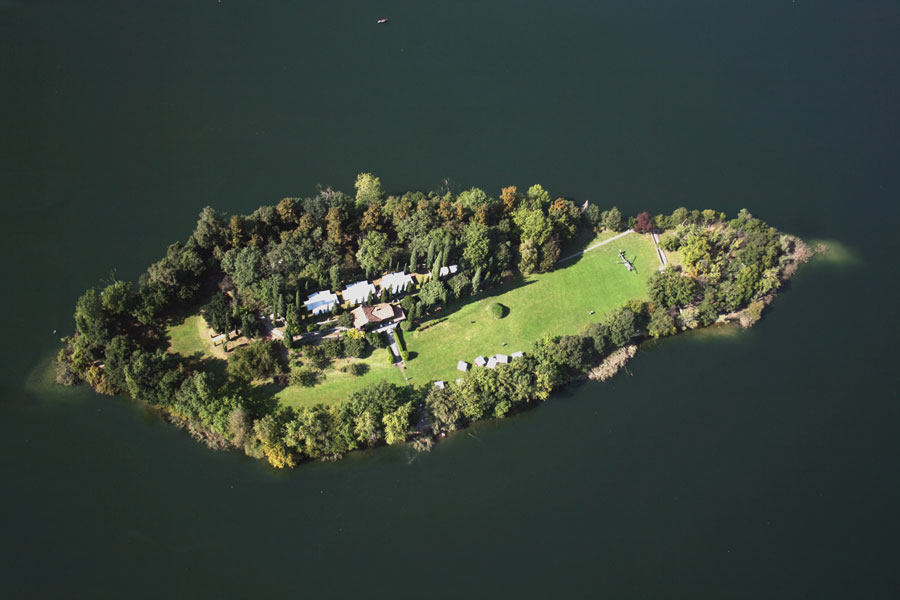
Adding further to the lake’s charm is the small oval-shaped island off its northern shores known as Isola dei Cipressi, so named after the one hundred and thirty monumental cypress trees growing there. Its literal ‘isolation,’ whilst remaining within shouting distance of the mainland, makes the island in some ways comparable to Isola Comacina, at least in terms of its atmosphere if not its scale. Gerolamo Gavazzi, the current owner of the island, identifies precisely what this magical quality is in the opening sentence of the preface to his book dedicated to his island. He states, “Islands have always held a strong fascination. The surrounding water creates a sense of protection for those within their shores, and a sense of adventure for those who view them from afar.”

Isola-dei-Cipressi

The oval shaped Isola dei Cipressi with its 130 cypress trees and abundant wildlife.

Unlike Isola Comacina, Lake Pusiano’s island was never the site of full time occupation after the demise of the original Neolithic residents who lived there around twelve thousand years ago. Its changes of ownership from the Middle Ages to today reflect the various changes in the dominant power of the time.

pusiano mirror

Lake Pusiano, the Pearl of Brianza

From the 14th to the 17th century it was owned by one branch or other of the church. The aristocratic Carpani family, who came to own large tracts of land around Erba, took ownership of the lake and island from 1483 and also set about building the splendid Palazzo Carpani in Pusiano. From the late eighteenth century, the lake, island and palace passed on to the Molo and D’Adda families who owned it until the early 19th century when it was passed on to a series of viceroys representing either the Austrian or French domination of Lombardy. It became the property of the local municipality of Bosisio in 1869 but was sold five years later to the ancestors of the current tenants, Antonio and Egidio Gavazzi – wealthy silk industrialists from the nearby Valmadrera. The state took ownership, as with all internal waters, in the 1920s allowing former owners rights of tenancy as in the case of the Gavazzi family who still retain tenancy of the island to this day.

The main commercial interest of the different owners over the years was in the granting of fishing rights and the obligation by law to guarantee a certain level of supplies of fish to Milan. 

Palazzo-Carpani-Beauharnais-Pusiano

Palazzo Carpani in Pusiano – originally built in 1688 by Bartolomeo Carpani and once the summer home of Prince Beauharnais.

The island of course was also a glorious summer retreat but it never offered any truly comfortable overnight accommodation until relatively recently. Perhaps its best known historical occasional resident was Prince Eugene of Beauharnais, the stepson of Napoleon, who served as the French viceroy to Lombardy from 1805 until 1814. He was a young, handsome and heroic military commander renowned for his numerous amorous adventures. He spent much time in the Palazzo Carpani in Pusiano as well as on the island where he had a small one room structure built there for his ‘convenience’. 

EugeneBeau

Prince Eugene of Beauharnais, Duke Leuchtenbergh and Prince of Eichstadt, Napoleon’s stepson and Viceroy of Italy from 1805 to 1814.

Beauharnais’s one room shelter was later extended, and an ice house built within the ground. In 1831 a fish canal was built running the width of the island’s eastern end. This served as a place to deposit caught fish, preserving them alive until required. 1831 also saw a change in fortune for the grand Palazzo Carpani which was then converted into a silk spinning and weaving factory. A general decline began to set in symbolised by the felling of the island’s original set of cypresses that had been planted in the 1770s by the Marquis Giuseppe Antonio Molo. 

Looking at the lake and visiting the island today you would not believe that both had reached a sad state of neglect and decline by the 1970s and 80s. The River Lambro and the lake had been allowed to become heavily polluted with domestic and industrial effluent. No-one seemed to care about enforcing the local by-laws governing local planning, fishing or general maintenance of the area. The island had become a dumping ground for waste. All started to improve from 1991 when local laws started to be enforced, controls were placed on abusive building and strict fines imposed on any household or business allowing untreated waste into the waters. The Gavazzi family undertook a massive programme for clearing the island, replanting the trees and returning the environment to its former status as a favoured spot for migrating birds. 

isola

Isola dei Cipressi

Fish stocks in the lake have also returned to former levels in terms of overall quantities but the numbers of the favoured quality varieties such as trout and perch have not yet fully recovered.  

A Gulp of Cormorants, a Creep of Tortoises and a Troupe of Wallabies

crane

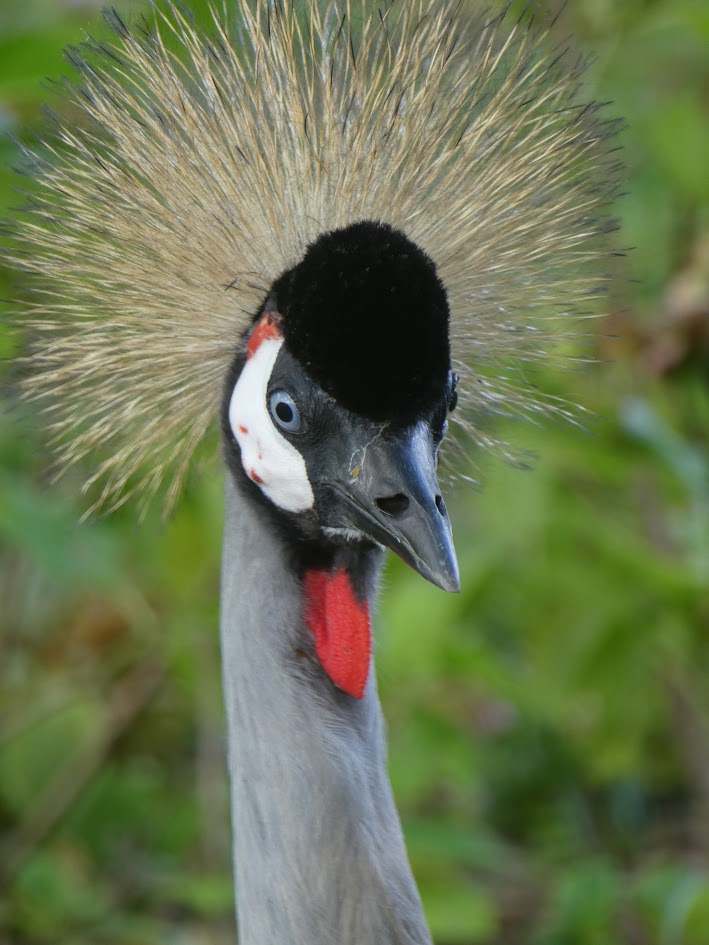
A pair of African Crowned Cranes patrol the island

Isola dei Cipressi is now the permanent home for a pair of African Crowned Cranes who majestically stroll the grounds with their heads held high. They share company with a pair of peacocks and a considerable number  (a ‘creep’ to use the appropriate collective noun) of tortoises, some of which are quite sizeable. They are joined by a large flock (a ‘gulp’) of cormorants who nest over the winter months and, as result, lay down a carpet of guano that reinvigorates the gardens. And until relatively recently they were all joined by a ‘troupe’ of wallabies – the diminutive cousins of kangaroos. This troupe was 13 members strong but unfortunately the Italian state had them classified alongside their relatives as dangerous and so they were removed. 

In 1991 the zoo in Milan closed and Gerolamo Gavazzi agreed to rehouse their two wallabies on his Isola dei Cipressi. There they flourished so well that numbers grew to thirteen until 30 years later a court order demanded their ‘exile’ to a reservation in the Province of Grosseto in Tuscany.

WALLABY

Wallabies are related to kangaroos but are much smaller and less aggressive.

The order was forcefully contested at every stage but the final decision of the Appeal Court in Rome (the Corte di Cassazione) upheld their eviction. The fate of the wallabies reached the attention of the national media and, with the support of the local newspaper, a petition called upon the Minister of Health to put a stay of execution on their removal. All to no avail since the underlying official concern was the closeness of the troupe to the island’s visitors with the risk they could act as agents in transmitting viruses from wild animals to humans. Essentially the wallabies were victims of the paranoia over virus transmission resulting from Covid and its devastating impact on Italy and worldwide. 

Further Information

The days of degradation of the lake, its island and the Palazzo Carpani are long past. One section of the lake covered in reeds is now marked off as a nature reserve, its waters are clean and full of fish. The Palazzo Carpani has received massive investments in recent years from charitable funds to restore it to its glory days during the time of Prince Eugene of Beauharnais. It now houses the municipality, local library and other local institutions. Ville Aperte Brianza open it to the public twice a year. Visitors are also welcome to the Isola dei Cipressi by contacting the Pro Loco Bosisio Parini who organise transport and catering if needed. The rowing clubs still take advantage of its still waters to train their athletes and hold competitions whilst the cormorants thrive by feeding on the lake’s abundant stock of fish. 

tree house

Gerolamo Gavazzi had this tree house built overlooking the lake for the pleasure of his family

Websites: Bosisio Parini Pro Loco, Isola dei Cipressi, Palazzo Carpani.

Bosisio Pro Loco can be contacted via prolocobosisio@gmail.com

Link here to the other Brianzolan lake featured in Como Companion  –  Lake Montorfano, which we describe as a glorious spot for wild swimming.

segantini

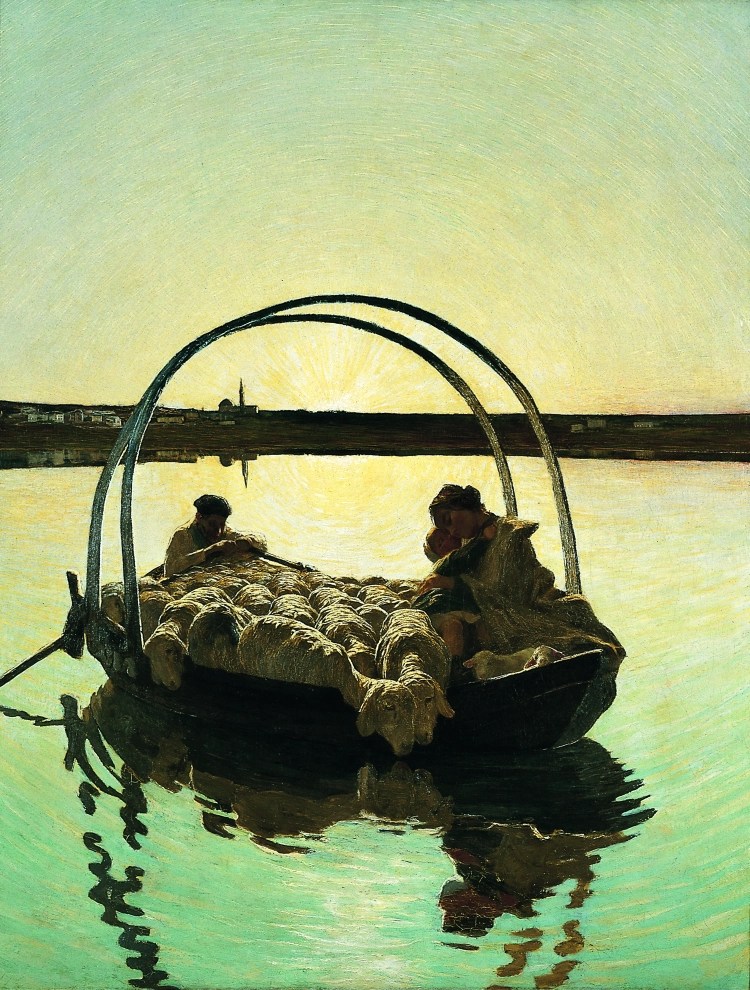
‘Ave Maria a trasbordo’, Giovanni Segantini 1886. Segantini moved from Milan to Pusiano in 1881. One of his best known pictures is this depiction of a lucia loaded with sheep on Lake Pusiano with the village of Bosisio Parini in the background. The painting now hangs in the Segantini Museum, Saint Moritz.

Posted in Gardens, History, Lake, Places of interest, rowing, wildlife | Tagged , , , , , , , , , , , , | Leave a comment

Lake Como and Leonardo’s ‘Mona Lisa’

monnalisa2-k2TF-U433406666798772HE-1224x916@Corriere-Web-Milano

The ‘Mona Lisa’ by Leonardo Da Vinci on display in the Louvre.

The two most renowned artists of the Italian Renaissance are Michelangelo, employed by the Medici of Florence, and Leonardo Da Vinci employed by Ludovico ‘Il Moro’ Sforza, Duke of Milan. During Leonardo’s time in Milan he became well acquainted with the River Adda and the lake and mountains around Lecco. So much so that, on his return to the area in the early 1500’s he decided to set two of his best known paintings amongst the landmarks on Lake Como’s eastern leg. At least this is where many experts now identify the landscape depicted in the background of the ‘Mona Lisa’ and his ‘Virgin of the Rocks‘.

LOM13G1-Monnalisa

Identifying the geological features which locate the background to the picture in the valley of the River Adda and on the Lecco leg of Lake Como

Back in May this year there was a flurry of publicity around the claims made by an American cultural geologist Ann Pizzorusso stating she had identified the background setting of the Mona Lisa. She identified the background to the picture as depicting Lake Garlate, and the Azzone Visconti Bridge which stands at the northerly end where this lake joins Lake Como at Lecco. Her arguments for making this claim are based on the geological formation of the rocks and mountains surrounding the lake as shown on both the left and right hand sides of the portrait. These are typical karst formations that can be found in soluble limestone mountains such as Mount Resegone, Le Grigne and Monte San Martino in the Province of Lecco. 

Leonardo_Da_Vinci_-_Vergine_delle_Rocce_(Louvre)

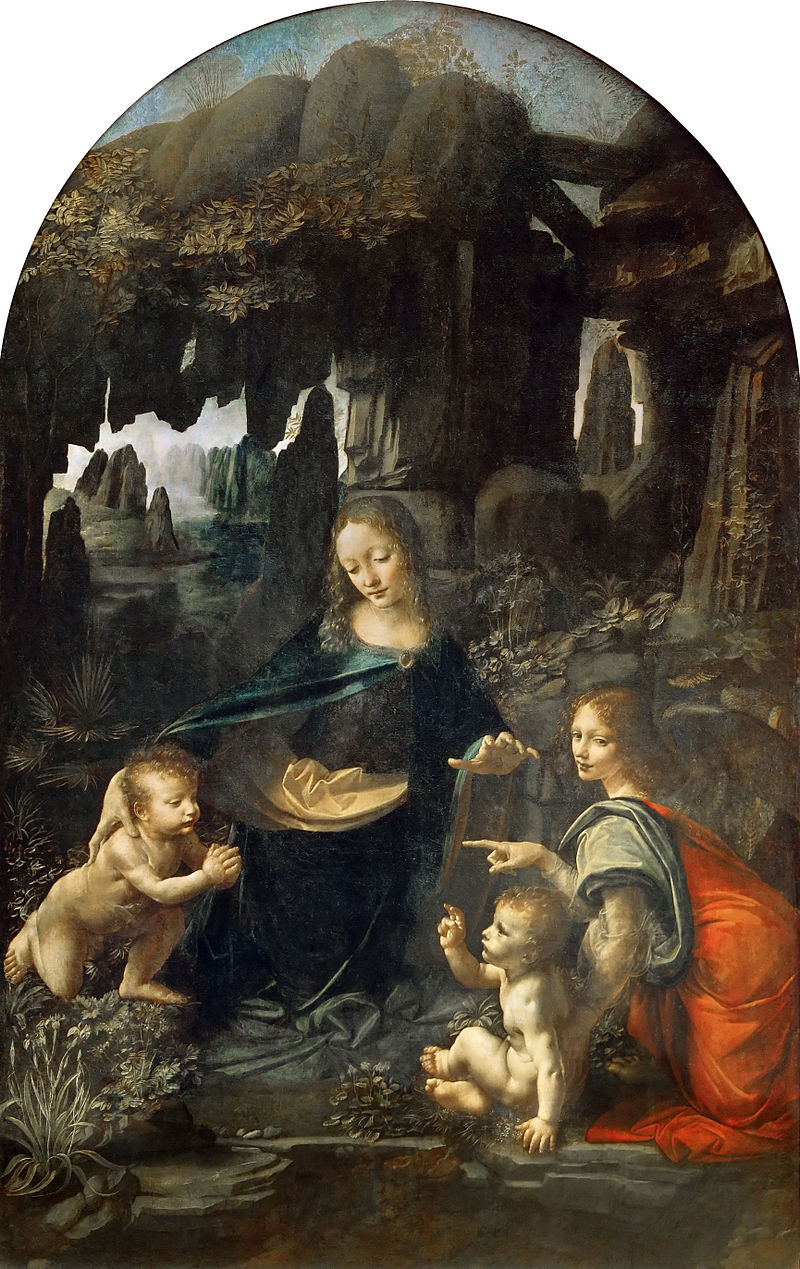
Leonarda Da Vinci’s ‘Virgin of the Rocks’ held in the Louvre.

Ann Pizzorusso also places Leonardo’s ‘Virgin of the Rocks’as set amongst the limestone peaks behind Mandello Del Lario. Her analysis was published in her bookTweeting Da Vinci’ published in 2014. Her theory is based on the knowledge that Leonardo did not invent either vegetation or landscape in his works. On this basis she dismisses the version of the Virgin of the Rocks held by the National Gallery in London as a copy of the original held in the Louvre since only the Paris-held version references actual vegetation, typically that to be found in the Lecco area,  rather than the fantastical vegetation depicted in the National Gallery version.  

Ann Pizzorusso’s flamboyant recent declaration of the setting used in the background to the ‘Mona Lisa’ was reported widely from the USA in the New York Post, to Italy in the Corriere della Sera and in UK’s Guardian and even the Daily Mail – but she was merely giving further weight to similar conclusions arrived at in former years by a series of Italian academics – most notably, Riccardo Magnani. Magnani, now aged 61, is a graduate from the prestigious Università Bocconi in Milan. Although he graduated in finance, he has since become a respected Leonardo expert. He published his theory on the setting of the Mona Lisa back in 2017 claiming that ‘the truth is under the eyes of all capable of looking without any cultural training’. He is categorical in claiming the lake is Lake Garlate with the Azzano Visconti Bridge at its head looking north to the mountain ranges behind Lecco. 

Doppia-Monnalisa

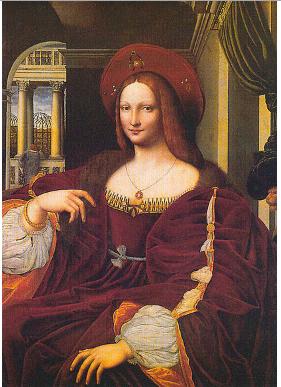
Leonardo’s ‘Mona Lisa’ on the left alongside Francesco Melzi’s version entitled ‘ Ritratta di Dama’ on display in Madrid’s Prado Gallery

Magnani’s theory on the setting of the Mona Lisa was further supported by another Leonardo expert, Luca Tomio who presented a very similar analysis in a convention in Milan in October 2018. Tomio claimed that the view in the painting’s background is seen from a vantage point above Vaprio D’Adda. What has helped all three of these experts in determining the Lake Como setting was a comparison of Leonardo’s original with a copy made by his friend and student (and possible lover), Francesco Melzi. Melzi’s version is known as ‘Ritratto di Dama’ and is on display in Madrid’s Prado Gallery. Tomio dates both this and the Leonardo original as being painted between 1511 and 1512 when master and student returned to Lombardy to stay in the Villa Melzi in Vaprio D’Adda.  He also believes both works share a similar style of depicting mountains as can be seen in other studies by Leonardo of Mount Resegone and Le Grigne completed in the summer of 1511.

isabella-daragona1

Isabella D’Aragona Sforza

But who is the actual subject of the ‘Mona Lisa’ portrait. In the same way there have been different theories put forward for its setting, there is also debate about who is actually represented with the enigmatic smile. Leonardo’s portrait is better known in Italy as ‘La Gioconda’ because some believe it depicts Lisa Gherardini – the wife of a wealthy Florentine merchant called Francesco Del Giocondo. If the painting really is of Lisa Gherardini, then the Lake Como setting is entirely inappropriate. However an alternative theory is that the portrait depicts Isabella d’Aragona Sforza – the niece of the King of Naples, Ferdinando I d’Aragona and the wife of Il Moro’s son, Gian Galeazzo Maria Sforza. Theirs was a diplomatic marriage intended to secure agreement between the Napolitan Bourbon dynasty and the Dukedom of Milan. Whether the painting was completed around 1503 or 1512, in either case Isabella would have been widowed since Gian Galeazzo died early in 1494, and she would have been either 33 or 42. Further evidence placed in support of the Lake Como theory is the similarity of the Mona Lisa’s hairstyle to the fashions of the day in Lombardy. Photography work carried out in Paris by Pascal Cotte has also revealed twelve pins in the Gioconda’s cap which again was a tradition around Lake Como at the time. 

lucia

Lucia Mondella, the heroine from Lecco from Alessandro Manzoni’s ‘The Betroved’ (I Promessi Sposi)

Leonardo Da Vinci had moved to Milan in 1483 and  worked for Ludovico Sforza until 1499 on many of the civil and military engineering projects sponsored by the Sforzas. He is said to have returned to Lombardy on future occasions as in his stay in Villa Melzi in 1511. The waterway via the River Adda  linking Milan to Lake Como was critical for both transporting goods and irrigating the agricultural land in the Pianura Padana. Leonardo designed ferries to cross the river and was involved in studies for improving the river’s overall navigation. These included the Paderno Canal (Naviglio di Paderno) designed to circumvent one of the non navigable sections of the river and also linking the Martesana Canal to the network of canals within Milan itself. He thus knew the area well from Milan up to the Lecco side of Lake Como. His Codice Atlantico makes reference to the mountains around Lecco and to Mandello del Lario in particular. He is believed to have put forward ideas for building a canal to run alongside the River Lambro running out from Lake Pusiano down to Milan. While we may never know for certain who is the subject of Leonardo’s masterpiece or whether it references the landscape of Lake Como or Florence, it remains indisputable that the Adda Valley and Lecco’s mountainous sides of Lake Como are singularly beautiful and a fitting subject for an artistic genius such as Leonardo. 

000_foglio-911_atlanticobis-1024x714

A page from Leonardo’s monumental Codice Atlantico showing notes on improvements to the navigability of the River Adda.

Further Information

More information on the valley of the Adda is available from https://www.ecomuseoaddadileonardo.it/ and https://turismo.parcoaddanord.it/punti_di_interesse/muva-museo-della-valle-delladda/

Cartina-Ecomuseo-grafica-Emilia-Penati-724x1024

Some of the attractions to be found along the cycle path following the banks of the River Adda.

Posted in Art, Culture, History, Itineraries, Lake, People, Uncategorized | Tagged , , , , , , , , , , , , , , , , | Leave a comment

Fatal Accident on Lake Como: The Soldiers’ Story

gina

Gina Ruberti

In ‘Love, War and Death on Lake Como’ (published January 2023) the Companion described the tragic drowning of Mussolini’s daughter-in-law, Gina Ruberti, on the night of 3rd May 1946. She was in a party of five who had gone out for a boat ride that evening. Only two of them returned alive. Apart from Gina, the party consisted of three British Army officers and the Italian fiancee of one of them. Following further research, in part prompted by some additional information provided by the daughter of one of the victims, I can now give a more accurate and complete account of what happened that evening, focussing more on the fate of the three British Army officers. The additional evidence of what happened that night comes from a military police report compiled soon after the tragedy and in the statements made by the only two survivors and their rescuers.

Setting the Scene

Festa della Liberazione - Sindaco

Como’s Mayor addresses the rally celebrating Liberation Day 2018

The German Occupation of Northern Italy officially ended in May 1945. By one year later, the allied army of occupation had managed to establish supervision of the liberated zone bringing to an end the period of extrajudicial killings meted out by some of the partisan bands on fascist sympathisers and Nazi collaborators. Good order was in the hands of the British Town Major No. 62, Major A.T. Gray, R.A. who worked to this end in collaboration with the key local representatives of the Italian State – the Prefect of the Province of Como and the Questore (Police Chief). 

medloc 1

The Medloc Story

British Army engineers were working alongside both Italian and German technicians in seeking to repair the industrial and transport infrastructure so badly damaged through allied bombing raids. 

Regular members of the British Eighth Army, who had been fighting in Italy since the invasion of Sicily in 1943, were being repatriated back to the United Kingdom. From as early as 25th July 1945, the Army had been able to set up so-called MEDLOC trains running from Milan to Calais via Switzerland to bring the troops home. MEDLOC stood for Middle East Direct Line of Communication. The Milan service ran up to four trains containing a total of 3800 troops a day at its peak. By February 1946, MEDLOC departures from Milan’s Central Station were down to two a day, Services also existed to bring troops stationed across Italy to Milan – these were called MEDLOC Feeders.

Milan May 3rd 1946

It was on the Medloc Feeder train that left Naples for Milan on 3rd May that two British Army Majors made their joint acquaintance for the first time. The elder was Major Poole, 40 years old, serving in the Royal Army Ordnance Corps. He was the OC (Officer in Command) of the Medloc feeder. The younger officer in his twenties was Major R. G.Parker. On arriving at Milan, Parker, accompanied by Poole, checked into the Excelsior Gallia Hotel just across from the station on Piazza Duca d’Aosta. He was billeted there to wait further orders as to when he would be repatriated on a MEDLOC train leaving Milan for Calais. 

Excelsior

The Excelsior Gallia, Milan. Now part of the Marriott Group.

As previously agreed, Major Parker met up at 13.30  with a good friend of his – Captain T. V. Coffin who served in the Army Recovery Company of the Royal Electrical and Mechanical Engineers (REME). Captain Coffin mentioned that he kept a motor launch moored in a boat house on Lake Como and he would be delighted if the two officers would accompany him and his Italian fiancee that evening for a cruise on the lake. Majors Poole and Parker enthusiastically accepted and agreed to meet Captain Coffin again at the hotel at 20.00.

Captain Coffin’s fiancee was the 28 year old Marchioness Isabella De Marchi. They  had become engaged six months previously. She had been expecting the boat trip would just be for the two of them and so was surprised, and possibly disappointed, to learn that they would be accompanied by the two British officers previously unknown to her. All four set out from the Excelsior Gallia shortly after 20.00 with Captain Coffin driving the Opel Kadett requisitioned from the Wehrmacht and officially assigned for his and his driver’s use. He had given his driver, Private Gilbert, the evening off. 

Torno

Villa-Roccabruna-istituzionale-low

The Villa Rocca Bruna, subsequently the Hotel Casta Diva and now known without reference to its history as the Mandarin Oriental.

Captain Coffin’s boat was kept moored in the boat house belonging to the Villa Rocca Bruna in Blevio (subsequently known as the Hotel Casta Diva but now rebranded as the Mandarin Oriental). When the party arrived at the villa, the men attended to refuelling the boat whilst Isabella entered the villa to invite her friend, Gina Ruberti, to join the party. Gina was taken by surprise by the invitation and took some persuading to join Isabella but finally agreed seeing how her friend would welcome additional female company. Captain Coffin was in turn surprised but made no objection to another passenger joining the party.

Hotel Vapore

The Hotel Vapore has a splendid terrace overlooking the lake

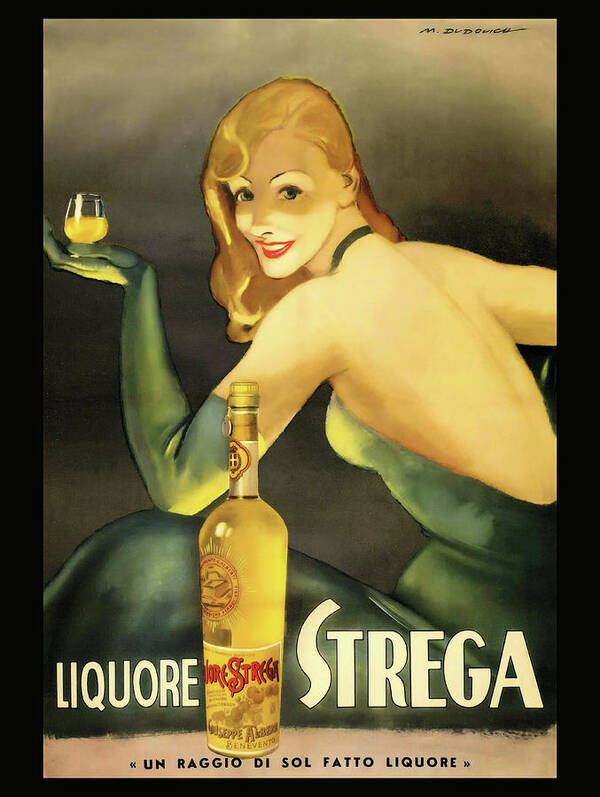
Their first stop was at the nearby Hotel Vapore in Torno where they all disembarked and stayed for no more than thirty minutes – time for  each of the men to drink a Strega (a fashionable liquor) and for Isabella to drink a vermouth. Gina did not drink anything.

Moltrasio, 21.30

At around 21.30 they decided to cross the lake to Moltrasio and stop off at the Hotel Imperiale. Here the men stood drinking Stregas at the bar while Isabella had a coffee and a cognac and Gina sat drinking tea. There would later be some dispute as to how much the men drank but Isabella would later testify ‘I do not know how much drink the three men had, I am sure none of them were drunk.’

Hotel Imperiale

The Hotel Imperiale in Moltrasio

The party did not stay long with the skies darkening and the threat of a storm growing. Having settled the bill following some disagreement with the hotel management, the party set out to return to Blevio. Isabella later reported hearing a grating sound as the boat left the dock. This led to speculation that the hull suffered some damage at this stage but this theory was later discounted.  

Lake Como

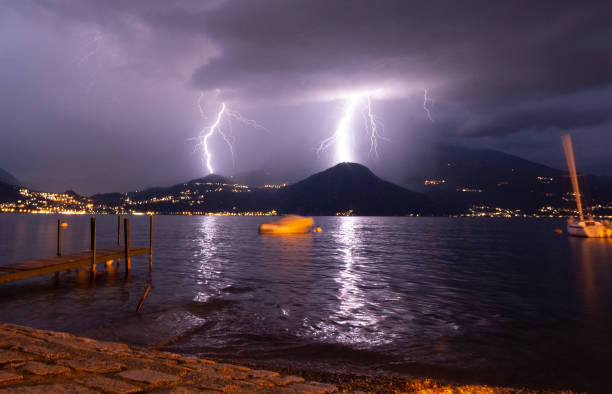
Lightning strikes at night in Lake Como, as seen from Varenna

Lightning strikes at night in Lake Como, as seen from Varenna

Isabella and Gina were sat in the stern of the boat as they made their crossing when both realised their feet were getting wet. Captain Coffin told them to move up from the stern and sit on top of the engine housing at the prow. However the water level continued to rise at an ever faster pace. Major Poole looked around for some utensil to bail out the water but, without anything available, took up Major Parker’s suggestion to use his own shoes. With the engine at that point stalling, Captain Coffin tried to console his two women passengers whilst urging Major Parker to use the oar to try to keep the boat moving forward. However Parker had only managed about six strokes of the oar when there was a cataclysmic roar as the engine fell through a rent in the hull causing the boat to sink rapidly. The two women jumped into the water from the bow. Captain Coffin jumped in from the right hand side with Major Parker  jumping from the left. As he surfaced onto the choppy waters, he heard a woman’s voice and swam towards it. 

Torno, 23.15

50 year old Enrico Corti was returning home to Via Bensi in Torno when at around 23.15 he heard cries above the sound of the thunderstorm coming from on the lake. He launched a rowing boat with two neighbours, Franco Timoteo and Salvatore Bianchi, and set out in the direction of the cries. After ten minutes, and thanks to a flash of lightning, they saw Isabella De Marchi and rescued her from the water.  Just a few minutes later they came across Major Parker seriously weakened by ingesting fuel oil and in a state of total exhaustion. They continued briefly to search for the three remaining members but paused to get the two survivors back to the Hotel Vapore in Torno. They then returned on the lake to resume their search but without any luck.

Major Parker was treated on the spot by a British military doctor and admitted to hospital in Como. He was later transferred to hospital in Milan in very poor shape. He did eventually recover and return to England.

Aftermath

Lake Como Carate

Autumn mist on the lake at Carate. The lake has many varied moods particularly outside of the summer season.

At 11.00am on the following day, Salvatore Bianchi saw the body of a woman floating about three hundred metres off from the Villa Rocca Bruna. He retrieved the body which was brought into the villa to be identified later that day  by Guido Ruberti, Gina’s father. 

Captain Coffin’s military tunic was recovered from the lake near Blevio on 5th May. Both sleeves were turned inside out as if in a hurried attempt to take off the tunic. All pockets were unbuttoned and empty causing investigators to believe that someone had taken out all valuables before casting the jacket back in the water. Major Parker’s tunic was also found intact with no missing contents. The only other item to be recovered was a War Department duffle coat that had been worn by Isabella.

There was no sign then or since of the bodies of Major Poole and Captain Coffin. 

The Accident Investigation

The Military Police investigation published its report on 18th May 1946 having interviewed and taken statements from all witnesses and the two survivors. It did not directly blame any of the party for the accident and also included comments from Isabella that sought to minimise blame on Captain Coffin for allowing the boat to be overloaded and refuting the suggestion that the men had drunk heavily during the trip. 

strega-1940--high-resolution-digitally-enhanced-marcello-dudovich

Contemporary advertising for ‘Strega’ (Italian for witch) – the drink favoured by the British Officers on their night out.

The report did suggest some blame on Captain Coffin for not seeking to get the boat officially requisitioned by the British occupation authorities as was the legal requirement for all boats operating on the lake. If done, the boat would have been submitted to an overall safety check by the local REME workshop. Private Gilbert, Coffin’s driver, testified that Coffin had owned a boat moored in Padova which had undergone a series of repairs to its hull. It was then found that these repairs and some mechanical adjustments had been done the previous February in Padova by German Workshop 938. It had then been transported by road to Lake Como, put on the water and given a four hour test by Hauptmann Wilhelm Trippe from the Padova 938 Workshop. The mechanical adjustments might well have included the fitting of a Ford V8 engine into the boat which was approximately 6 metres long by 1.5 metres broad. 

The boat had been moored in the boathouse of the Villa Rocca Bruna from May 1st as witnessed by the caretaker of the villa, Luigi Invernizzi. Luigi was himself a keen boatman with a licence to pilot boats on the lake. He had looked over the boat with interest on its arrival and believed that the motor engine installed was too heavy for the bodywork of the boat. Craftsman Bennett from the local REME workshop claimed the boat was overloaded.

Thus in putting together the likely causes for the tragic sinking, the conclusions were:

  1. The boat was fitted with too heavy an engine.
  2. Multiple repairs had been undertaken to the hull, and the scraping noise reported by Isabella as the party left Moltrasio was most likely the sound of the woodwork beginning to crack.
  3. The boat was overloaded. There were five people on the boat and it was reported that two of the party, Majors Parker and Poole were stout men weighing just over 100 kg. (16 stone). 
  4. The surface of the lake was very choppy.
  5. The rescue attempt by Enrico Corti and his colleagues was hampered by the dark and the raging storm.

Major Parker also believed that the engine had fallen through the hull of the boat and that this had caused the rapid acceleration in its sinking. 

Breva by Cranchi 1933

The ‘Breva’ motor launch built in 1933 by Cantiere Cranchi on Lake Como would have been similar in size and design to the boat owned by Captain Coffin.

Isabella’s claim that ‘none of the men were drunk’ was challenged in the statement from the Assistant Manager of the Hotel Imperiale on duty on the night of the tragedy. He stated that the three officers standing at the bar had each consumed within a relatively short period three double shots of Strega (the 40° liquor). They had then disputed the bill and finally agreed to pay once a ‘sconto’ had reduced it to Lit. 1,000 (the equivalent of 40 euros). While this level of consumption may not have affected the fate of the boat, it may well have hindered the officers’ capacity to survive in the water, firstly by making it more difficult for them to remove their heavy army tunics and secondly to maintain the effort needed to stay afloat. Isabella did in fact report both seeing Major Poole in the water and hearing him cry out, ”I can’t stand this any longer.”

Reference

National Archives Catalogue  Number WO 32/22184: Report by Special Investigation Branch, Corps of Military Police, Central Mediterranean Forces. 18th May 1946.

Posted in Events, History, Lake, People, Uncategorized | Tagged , , , , , , , , , , , , , , , | 3 Comments

Lake Como’s Prizewinning Olive Oil

azienda agricola

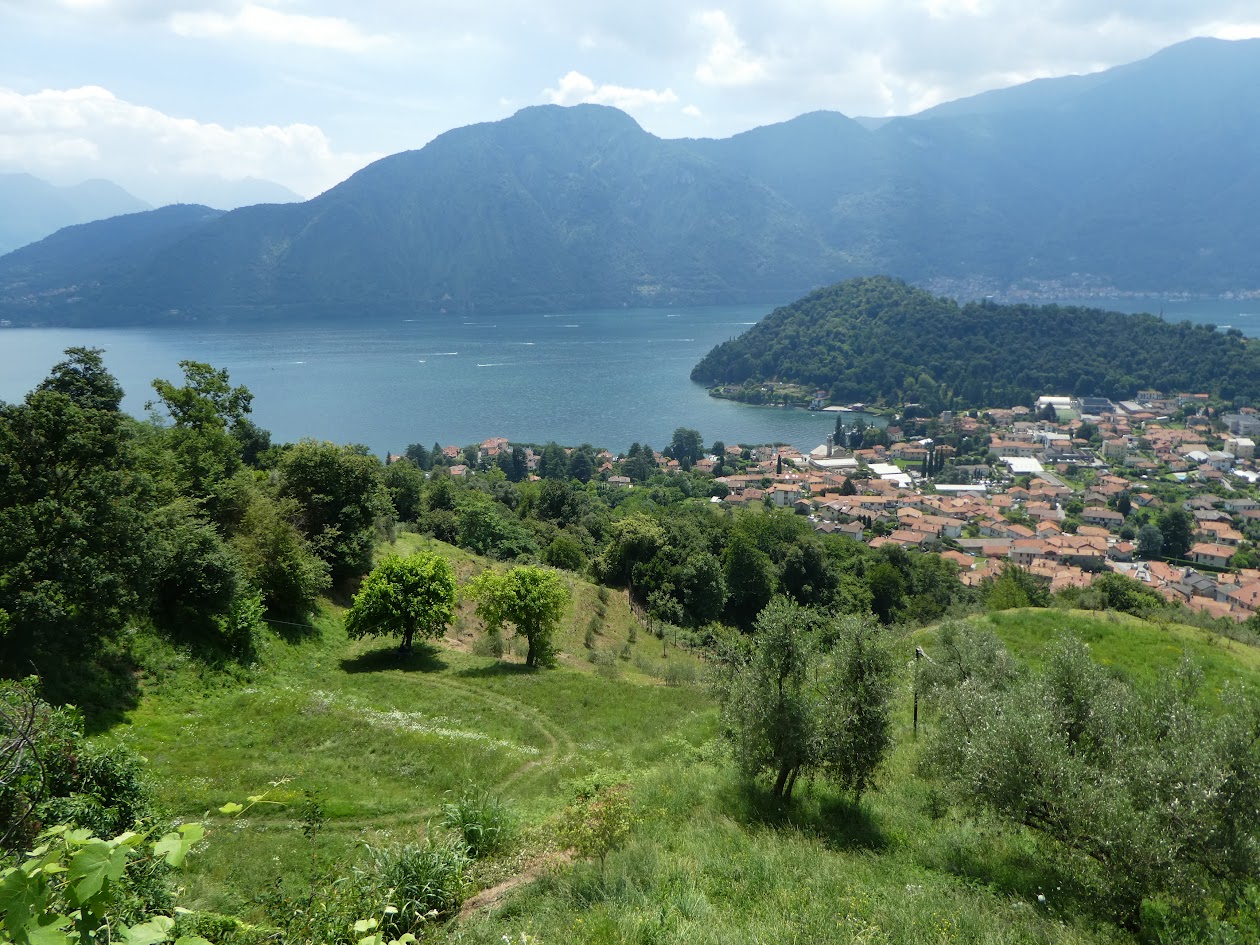
Looking down on the farmhouse and cottage of the Azienda Agricola Roveglio above Lenno with Isola Comacina in the background.

Lake Como is one of the most northerly points for olive oil production thanks to the lake’s microclimate. And the highest concentration of olive trees on the lake is in the municipality of Lenno, on the western shores nestled in the bay beyond the Villa Balbianella. And overlooking the town of Lenno at 385 metres above sea level, a small holding of twenty acres has consistently produced an olive oil that has won world class prizes – it is the Azienda Agricola Roveglio. 

prizes

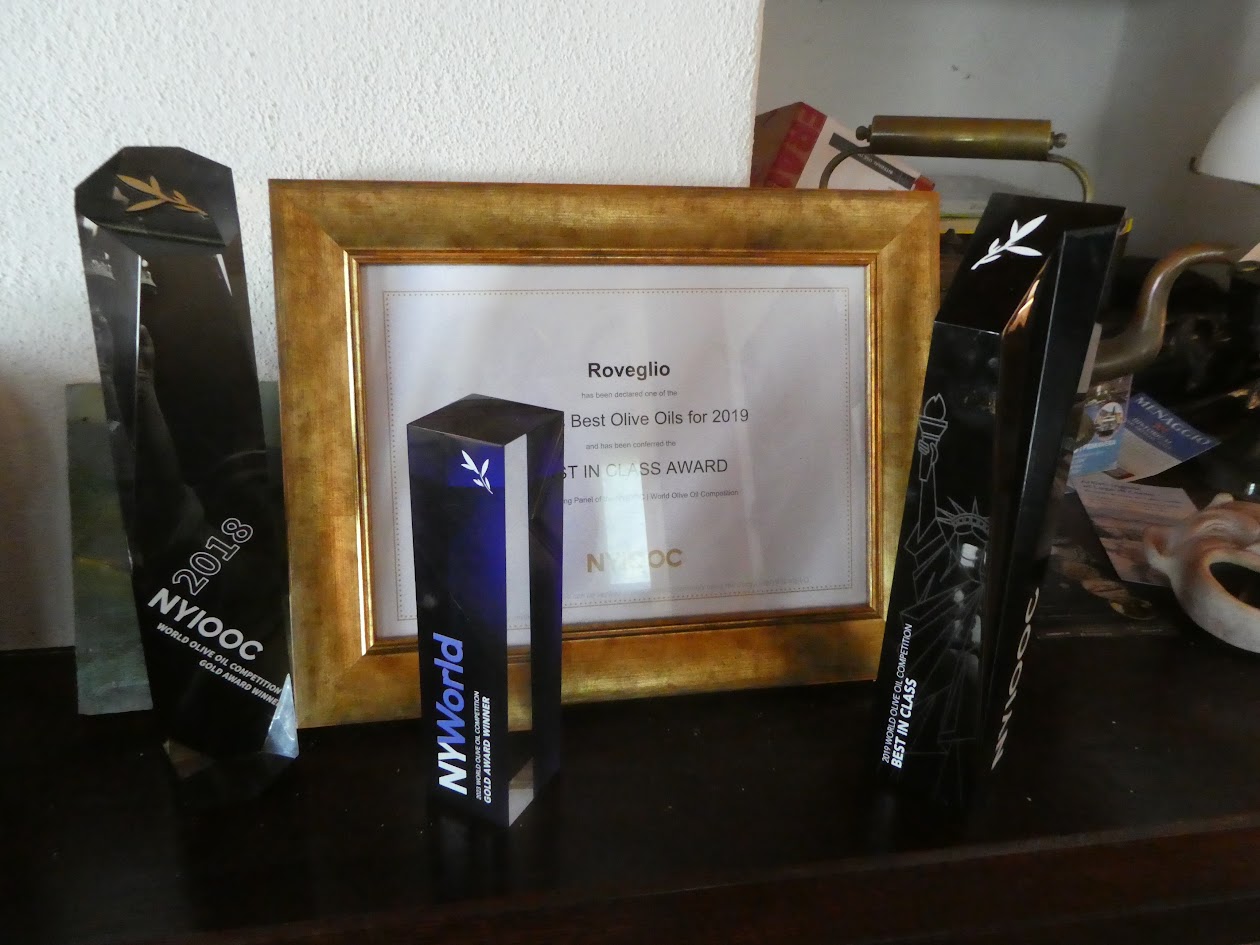
Some of the prizes and certificates awarded to Roveglio’s olive oil by the New York-based NYIOOC.

Let’s first establish the Azienda’s prize winning credentials: awarded NYIOOC Gold Award in 2018 and 2022, NYIOOC Best in Class in 2019 and Athena Gold in 2021. The NYIOOC World Olive Oil Competition, based in New York, describes itself as ‘the largest and most prestigious olive oil quality contest. Its annual list of award winners is the authoritative guide to the world’s best olive oils and the dedicated producers who craft them.’

abbazia dell'acquafredda

Another view down from Roveglio with the Abbazia del Acquafredda in the foreground. The grounds of the abbey would also have been an olive orchard but has since become overgrown.

The small Roveglio estate was founded around the farmhouse built in 1802 which passed into the current owner’s family back in the 1880’s. The present family owner is Paul Willan who inherited the farm twenty years ago. His full name reveals his aristocratic Anglo-Italian roots – the Conte Cavaliere Paul Nazzari di Calabiana Willan or, in shortened form, Paul N. di C. Willan. On taking over the management of the farm he set about investing in olive oil production recognising that a small producer like himself can only really gain commercial success by developing a specific niche within the market. Paul’s niche is aimed at true aficionados who appreciate precise differentiation and superior quality. Fortunes are hard to make in this business and Paul’s modest goal is to continue to provide a living for the local couple who live and work on the estate and to increase production sufficiently to cover his investment and break even. He has clearly met with some success in differentiating his oil but the challenges lie in sustaining improved production, as we shall see. 

view from roveglio balbianello

Looking down from Roveglio onto the Balbianello peninsula and the bay of Lenno.

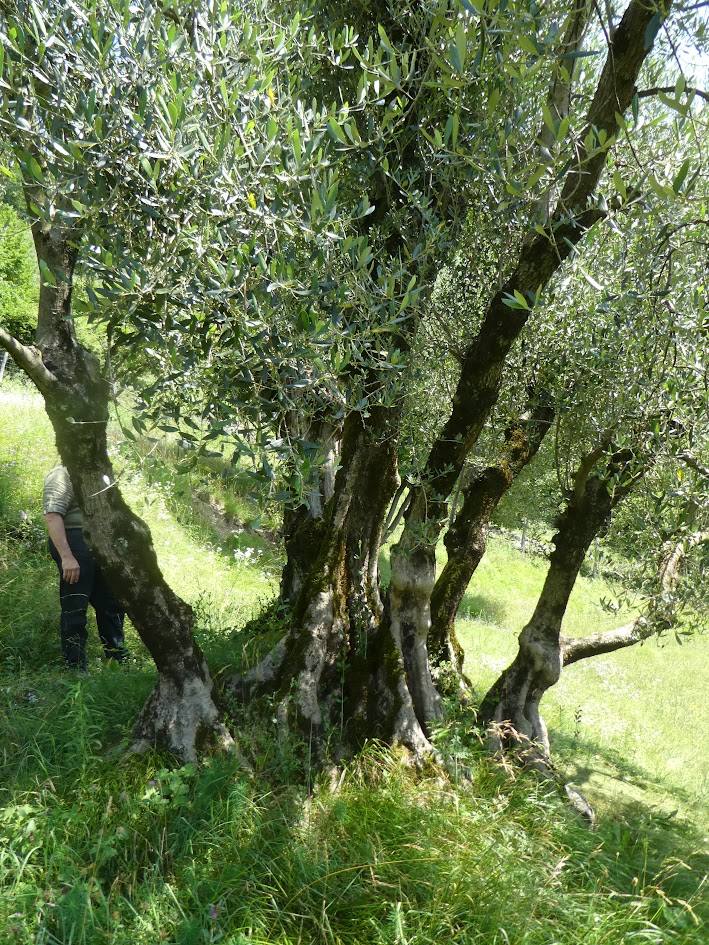
Lake Como was colonised by the Romans from the time of Julius Caesar. They in turn sought to supplement the indigenous Golasecchi and Gallic tribes by bringing  in many people from other parts of the empire such as Greeks to build ships for lake transport and farmers to produce olive oil and wine. So olive trees have been established around Lenno and on other towns around the lake for a long time. Many of Paul’s trees are over a hundred years old and the very oldest, affectionately known as ‘Nonna’ (or Grandma), is estimated as being from 700 to 1000 years old. Olive trees die from the centre but produce new shoots from the outer trunk. The girth of an old lady like Nonna can thus grow very broad.

nonna

‘Nonna’ is the oldest olive tree on the estate and is said to be between 700 and 1000 years old.

Roveglio’s Market Niche

A small olive producer might just choose to sell on their harvest to a much larger local producer such as Vanini or seek to establish a unique but tiny niche for themselves in what is a very large market. Paul has taken on this latter strategy and, as the prizes confirm, has met with success. Olive oil aficionados, like whisky connoisseurs and similar, look for ever increasing degrees of differentiation going way beyond blend or single malt or, in the case of oil, blend or monovarietal.  The variety of Roveglio oil is known as Frantoio which happens to be the most common variety found around Lenno.  It is also labelled as oil from a single estate and is yet further differentiated by where it was cultivated on the estate – either from the trees on the lower field – campo basso, or those on the upper field – campo alto, since even the slight elevation difference impacts the microclimate which in turn influences the oil’s flavour. 

new trees campo alto

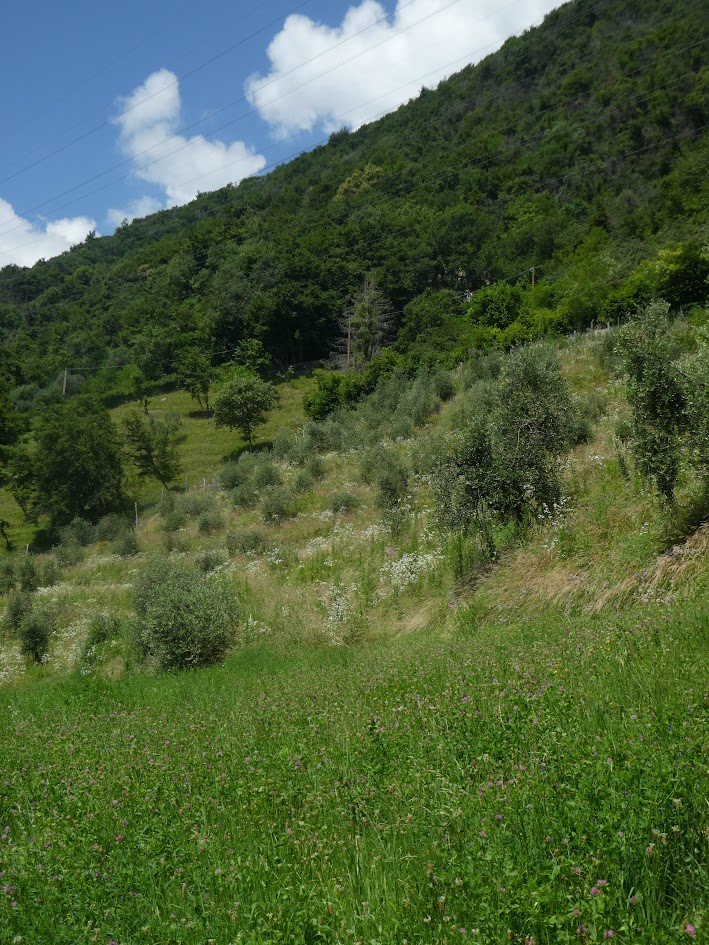
Some of the younger trees planted by Paul in the Campo Alto. Note the meadow in the foreground rich in wild flowers due to the lack of chemical treatment.

In deciding on how to restock the farm (he has plans to plant an additional 700 trees over the next few years) Paul is applying another degree of differentiation by cloning from his own centuries old stock. Look out for the term ‘plurisecolari’ on labels that identify oil originating from ancient stock.

mama

‘Mama’ is over 300 years old and she is the source for the cloning from ancient stock that is now used for all the saplings now being planted to increase the azienda’s oil production.

The tree known as ‘Mama’, which is itself over 300 years old,  is the source for the new generation of clones. The process is managed by a company in Tuscany. It takes five years from seed before the saplings are moved back from Tuscany to be planted on the estate. They then require a further five years before they start to bear fruit. The idea behind returning to ancient varieties is to some extent similar to the way grain producers have been reintroducing ancient strains in a bid to find more natural means of combatting the challenges of disease and climate. 

Campo Basso and Campo Alto

campo basso and Lenno

The estate’s Campo Basso produces oil with the DOP (Denominazione di Origine Protetta) accreditation.

Walking around the estate you cannot help notice it is entirely unlike many of the olive groves in Sicily or Puglia in that here the grass and meadow grows high around the trees. This is because there is no need to keep the ground clear since all aspects of cultivation are done by hand. Nor is any use made of artificial pesticides, fertilisers or weed killers. Paul has not gone to the extent of seeking Bio classification in that it makes no commercial sense for his scale of operation but he has got his produce from Campo Basso certified as DOP – Denominazione di Origine Protetta.

DOP is a European Union certification that identifies a high quality Italian product from a known region where the traditions of production are guaranteed. Extra virgin oil from Lake Como must not exceed a maximum total acidity of 0.5% and is usually much lower. It is known for a balance of bitterness and spiciness and a long persistence on the palate and for its easy digestibility.

ecologu

Roveglio produces ‘Mille Fiori’ flavoured honey from bees gathering pollen from the many wild flowers on the estate.

For the oil from Campo Alto, Paul has decided instead to put its reputation to the test in front of forums such as the NYIOOC World Olive Oil Competition. Dedicated olive oil aficionados take note of prizewinners on these web sites and will seek to acquire a bottle or two. The Campo Alto is where Paul’s best oil is produced. Being just a few metres above Campo Basso it is slightly cooler through the hot summer months. The midday Breva wind also helps to restrain high temperatures and thus prevent too strong a production of oleocanthal which gives more southerly oils their peppery burning aftertaste at the back of the throat – a taste not favoured by all aficionados.

Climate Change

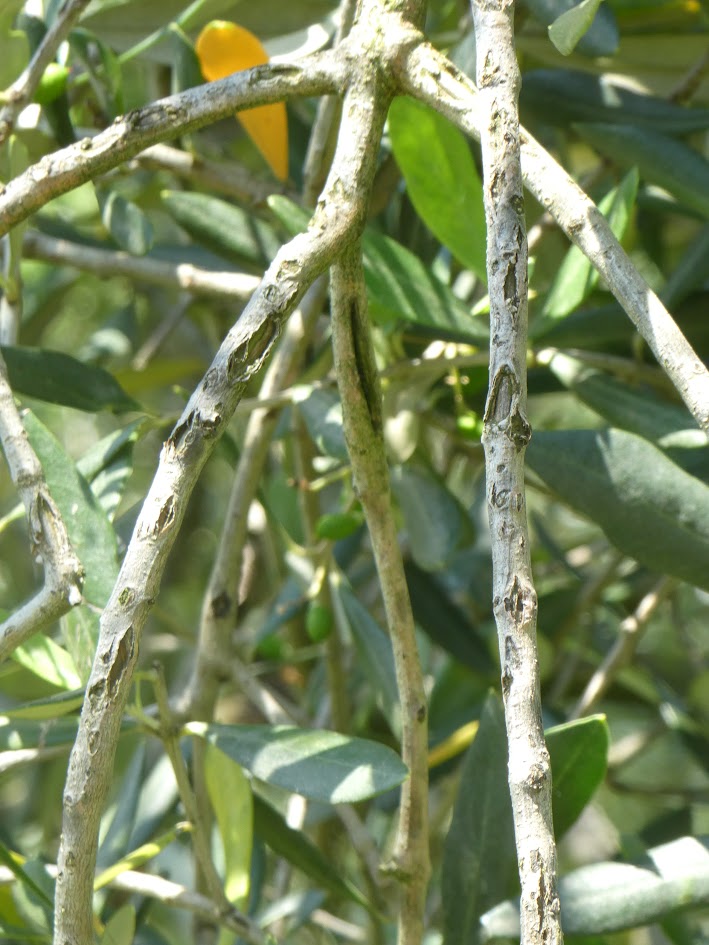
In the list of the Roveglio’s prizes, you may have noted no achievement for 2023. This is because the whole harvest was destroyed by hail storms earlier in the year. The increasing frequency of violent storms around the lake area is just one impact of climate change. The overall annual average rainfall on the lake has not changed but the pattern of precipitation has with an increase in the frequency of strong storms. The runoff from these storms has caused extensive damage to many lakeside towns in recent years including at Laglio and Brienno.  But it is when the storms are accompanied by hail that serious damage can be done to agricultural crops. Hail either knocks off the flowers before the fruit is set is or, later in the year, damages those young fruits that have managed to get established. It also has a more insidious affect – by damaging the tender bark on the olive tree’s branches, it creates an open wound that allows for infection by a disease known locally as  ‘la rogna’ (mange in English) but more commonly as Olive Knot Disease.

hail damage

Hail damages the tender bark on the olive tree’s branches which then allows the Olive Knot virus to establish itself.

La Rogna or Olive Knot Disease

Much publicity has been given to a disease that threatened to decimate the olive oil orchards in Southern Italy, Greece and Spain. This viral infection is called Xylella fastidiosa or Xfp for short. It causes a condition called Olive Quick Decline Syndrome (OQDS) and from 2013 to 2022 it threatened  to reduce European olive oil production by 95%. It was introduced to the area around Salerno in Puglia back in 2008 by insects arriving on a coffee plant from Costa Rica. It was subsequently spread from tree to tree by insects and by the Spittlebug in particular.

The massive economic threat to the Southern Mediterranean regions posed by Xfp’s impact on olive oil production prompted a coordinated response from the European Union to determine how to tackle it. The disease is now being successfully managed through a common containment strategy combined with good husbandry, use of insecticides to reduce spittlebug eggs and bio fertiliser.

rogna

Olive Knot Disease results in the development of cancerous knots around the lesions on damaged branches. The disease’s bacteria live in these knots and can be easily spread from tree to tree unless defensive measures are taken.

But the same success cannot be said for ‘la rogna’. Although now well established in Northern Italy, it has not attracted the same level of investment and attention as Xfp – possibly due to the much smaller scale of production in comparison with the south. It is a microbial infection with the scientific name Pseudomonas Savastanoi. The bacteria enters the tree wherever it finds wounds on the trunk or branches. Such wounds could be caused by pruning, various mechanical activities such as harvesting or by frost. Around Lenno, the major cause for opening up the trees to infection is damage from hail storms. 

Once infected, the tree develops growths or knots along the exposed areas of its branches. These knots then tend to reduce the tree’s vigour and can lead to defoliation and dieback. The bacteria pores live in the knots and can very easily be transported from one tree to another by humans or insects. 

Antibiotics have been found to be effective against the disease bur are not available within the European Union for plant agriculture and are unlikely to be until there is absolute proof that no trace of antibiotic is passed into the fruits and thus on to human consumption.  And so the only available strategy is to seek to manage affected trees and seek to contain spread.

Paul had to root up and destroy sixty of his worst affected trees last year. He also takes all possible measures to ensure pruning tools are disinfected and that those harvesting disinfect their hands before moving from one tree to another. He keeps hoping that more research will come up with other management options, such as the pruning or removal of knots in the dry season when the bacteria are least active. But for now, la rogna represents his greatest but not only challenge.

Further Challenges

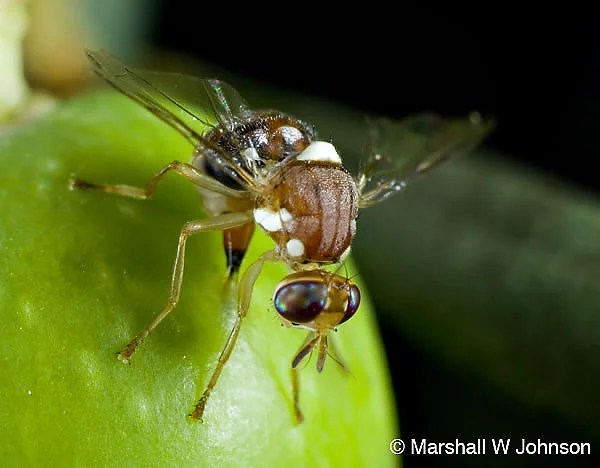
01_olive_fruit_fly

Olive Fruit Fly

As all gardeners will recognise, agricultural production is wrought with challenges. The additional challenges faced by Paul on his estate, and for all those other producers in our area, include the threat of insect invasion.  Particular problems are caused either by the Brown Marmorated Stink Bug (Cimice Asiatica) or the Olive Fruit Fly. The stink bug feeds on ripe fruits and so effects their quality. The Olive Fruit Fly’s behaviour is more devastating in that in summer it punctures the surface of the ripe fruit to plant an egg under the surface. This egg then grows into a larva that burrows within the fruit before ejecting itself in autumn to pupate on the ground. An affected fruit is identifiable by the holes made either when the egg is injected into or the larva leaves the fruit. It is critical that such fruits are identified before they go to be milled since they have a very unpleasant bitter taste that contaminates the flavour of the oil if they pass unnoticed.  With quality of taste a prime concern, you can be sure that Roveglia’s harvest is carefully examined before it goes for its cold pressing at Vanini’s mill. 

Olive Fruit fly numbers are kept down by using pheromones to attract them into insect traps. However, if numbers are relatively low, the use of pheromones becomes counter productive in that they may attract more insects to the area with a certain number of them avoiding capture. The Lombardy Region employs a single expert on olive tree husbandry who visits a couple of times a year to advise on various matters and as to whether it makes sense to use the pheromone treatment for the current season. 2024 is a non-pheromone year. 

Tasting the Oil

From Rifugio Boffalora

The view from the Rifugio Boffalora looking over to Monte Galbiga

The yearly production of Roveglio oil is 1200 litres which is shared fifty/fifty between Paul and the tenant farmers working his estate. His target is to reach an annual production of 6,000 litres without, of course, making any sacrifice to quality. He will be adding a further seven hundred trees to the estate over the next few years and so sees this as a realistic target on the assumption that the challenges do not become any greater. The impacts of climate change and the resulting increase in Olive Knot Disease are the most worrying and there is always the threat that a bad hail storm could wipe out a whole year’s production in a single go. 

Alle Darsene di Loppia

The lakeside restaurant ‘Alle Darsene di Loppia’ in Bellagio

But the success of the enterprise is in the tasting. At present it is not possible to buy Paul’s olive oil either  directly from the estate or from any nearby shops. It can however be tasted up at the Rifugio Boffalora directly above the Sacro Monte di Ossuccio. It is also served in the delightful lakeside restaurant at the southern end of the Villa Melzi gardens in Bellagio- the Ristorante Alle Darsene di Loppia. 

Staying on the Estate

roveglioThe estate is also open for visitors to stay in the renovated cottage that sits close to the farmhouse. The holiday rental activity is managed by Paul’s wife, Jeannie, who can be contacted through their website at lake-como-holiday-home.co.uk.  Not only does the estate (and the rental house in particular) have outstanding views over Lenno and the lake, it is in the most perfect position to view the annual Sagra di San Giovanni staged on the last saturday of June on Isola Comacina. The Sagra  reenacts  the 12th century destruction of Isola Comacina by troops from Como in a spectacular firework display. And of course there is always the prizewinning oil to sample and the estate-made cheeses produced by Antonella who works the farm throughout the year alongside her husband. The milk comes from the estate’s own herd of goats and from a neighbouring herd of cows. 

Further Information

Both Jeannie and Paul Willan are active members of the congregation of the Anglican Church in Cadenabbia. They are involved in ongoing initiatives to raise funds for the church’s maintenance and restoration which we have described in the following articles:  Twenty English Artists on Lake Como and Lake Como’s British Enclave, the Anglican Church and Landscape Art


Posted in Food, Lake, People, Uncategorized | Tagged , , , , , , , , , , | Leave a comment

Como’s Olympic Rowers: Past and Present

image-5-8-768x1024
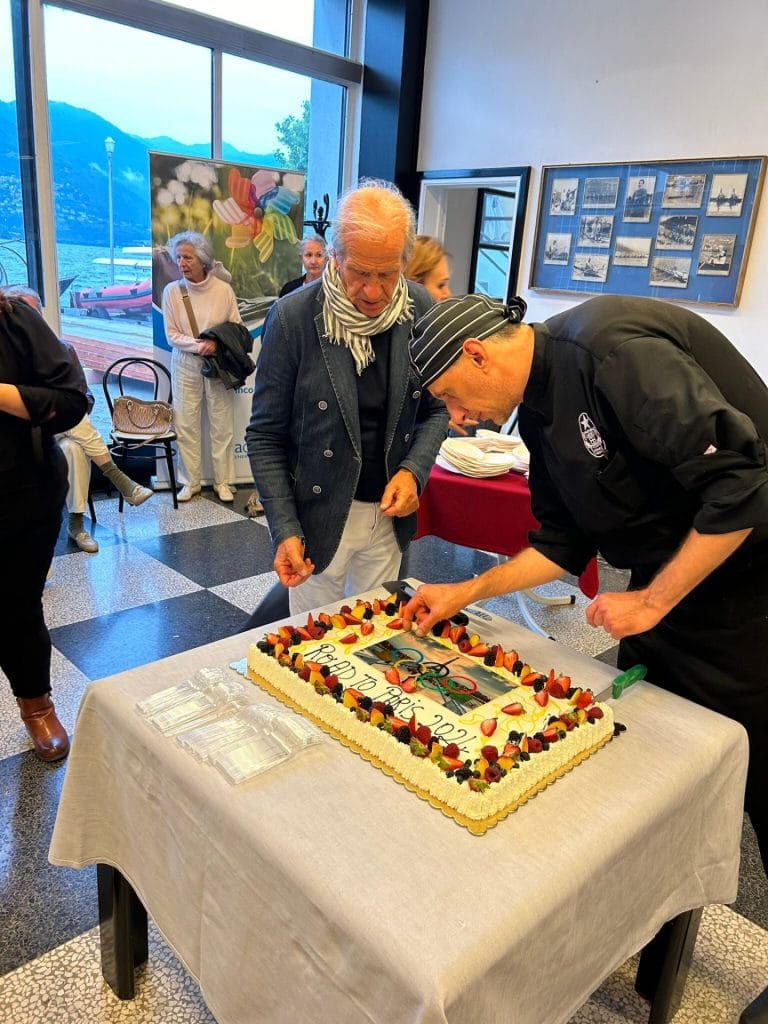
Leonardo Bernasconi looking over the cake at a recent event at the historic club house of the Canottieri Lario celebrating the success of three of the club’s athletes and its Technical Director in gaining their places at the 2024 Paris Olympics.

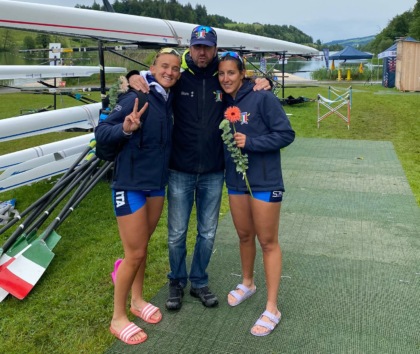
On the 27th July  three athletes from Como’s rowing club, Canottieri Lario, and a further three from the neighbouring Canottieri Moltrasio will be leaving for Paris to compete in the 2024 Olympics. The three Comaschi are Aisha Rocek, Giorgia Pelacchi and Jacopo Frigerio. The Moltrasini are Elisa Mondelli, Matteo Della Valle and Davide Comini. They will be accompanied by Stefano Fraquelli, Canottieri Lario’s Technical Director who is the National Italian Rowing Team’s Female Coach – a position he also held at the 2020 Olympics hosted in Tokyo in 2021 (due to Covid). 

Aisha Rocek, Stefano Fraquelli and Giorgia Pelacchi

The representation of six athletes and a national coach from neighbouring clubs on Lake Como is a source of great local pride. The six athletes all hold ‘doppio tesseramento’ or double club membership in which they not only belong to the local ‘canottieri’ but also to national teams. Aisha belongs to the Gruppo Sportivo (G.S.) Carabinieri, otherwise known as the Fiamme D’Argento. Giorgia is a member of the G.S. Vigili del Fuoco, aka Fiamme Rosse. Elisa is a member of the G.S. Guardia di Finanza, aka Fiamme Gialle whilst Jacopo, Matteo and Davide belong to the G.S. Polizia di Stato, aka Fiamme Oro. 

 All the athletes with the exception of Davide are in the rowing eights with Davide rowing in the coxless pairs. Look out for the first elimination round scheduled for the 29th July with the possibility for the losers in that round to retry for the finals on the 1st August. The finals themselves take place on the last day of the games – 3rd August. Let’s hope we see some of our local athletes there!

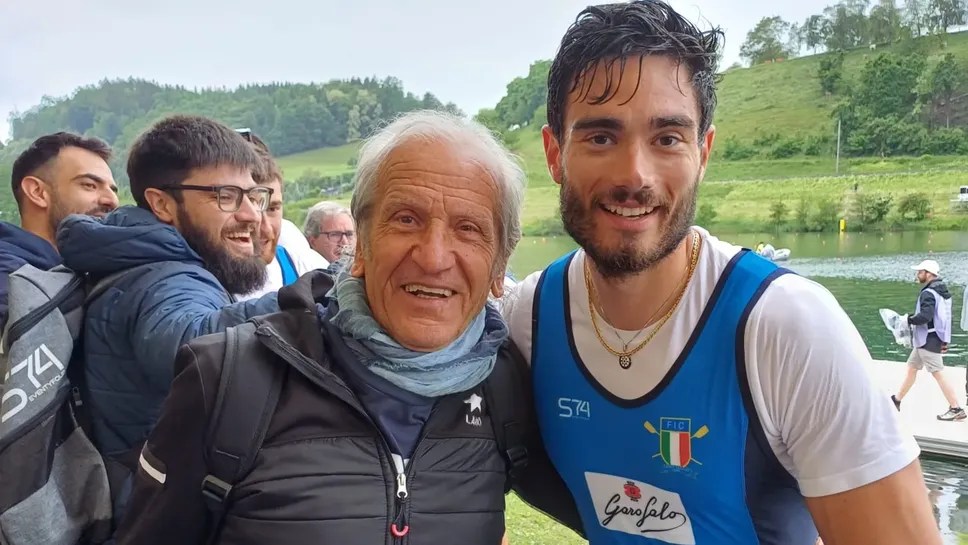
Leonardo Bernasconi, President of Canottieri Lario and Jacopo Frigerio

 This will be the first time at the Olympics for all these athletes except for Aisha Rocek who participated in the Tokyo Games in the coxless pairs. For Elisa Montelli and for her companions from the Canottieri Moltrasio, her participation at the Olympics will be particularly poignant. Her elder brother Filippo was due to row in the Tokyo games but was struck down with bone cancer in 2020 and tragically died the year after. 

Filippo Mondelli, brother of Elisa – Filippo died tragically young in 2021. A fund in his honour to finance research into bone cancer has been created called ‘Io Sono Filippo’
Sara Bertolasi and Claudia Wurzel

Whilst there are a particularly high number of local rowers representing the nation this year, there has been a tradition of consistent participation from Canottieri Lario in each of the Olympics since 1996.  One of the Canottieri Lario’s greatest stars, Sara Bertolasi was in the coxless pair at London in 2012 and at Rio di Janeiro in 2018. In fact, her participation in London with Claudia Wurzel represented the first time in Italy for a coxless pair to come out of the same rowing club without the ‘doppio tesseramento’. 

 Sinigaglia’s Heritage 

 Of course the greatest hero in the name of the club is that of Giuseppe Sinigaglia, the man who gave his name to the nearby football stadium and who is the subject of various memorials around Como. Sinigaglia joined the Canottieri Lario in 1903 having been expelled from the Ginnastica Comense for ‘ill-discipline’. From 1906 onwards he started winning national and European awards culminating in his greatest success on 4th July 1914 at Henley-on-Thames where, as the first Italian ever to participate, he won the Diamond’s Skulls, deemed to be the equivalent of a world championship title.

Memorial to Giuseppe Sinigaglia on the wall of the Stadio Sinigaglia

 As with Filippo Mondelli, Giuseppe Sinigaglia’s life was cut tragically short. He fell in action on 10th August 1916 fighting on the Carso front against the Austrians in the Italian bid to seize Gorizia. He and the futurist architect Antonio Sant’Elia were the two best known citizens of Como to fall during the Great War. They and others are commemorated by the War Memorial designed by Giuseppe Terragni and built within metres of the Canottieri Lario’s clubhouse. This clubhouse and the neighbouring football stadium – the Stadio Sinigaglia – were designed by the rationalist architect Gianni Mantero in 1931 and built with funds partially provided by Giuseppe Sinigaglia’s mother.  Giuseppe Sinigaglia has thus come to symbolise both achievement and sacrifice to the people of Como and to the members of the Canottieri Lario. His memory also stands as an inspiration to those six young athletes who will shortly be heading out from the lake to participate in a world class competition in a bid to perform their best for the national team. They have all already achieved so much yet with so much more to achieve before them. 

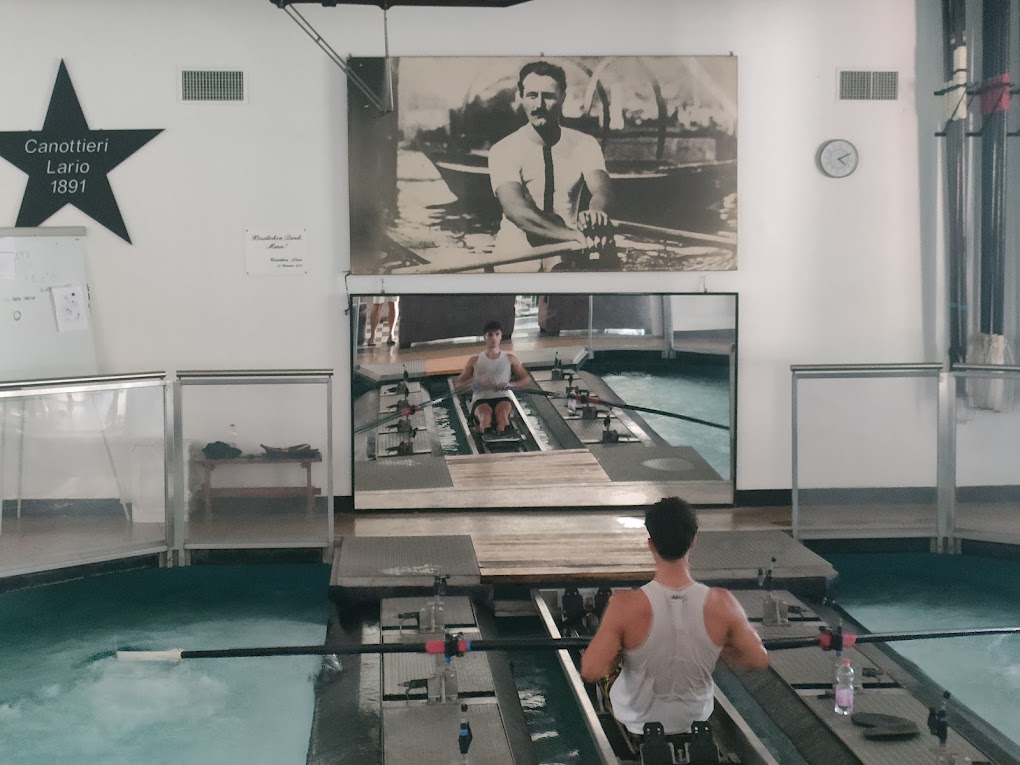
The image of Giuseppe Sinigaglia in front of the athletes practising in the ‘Vasca Voga’ at Como’s Canottieri Lario on Viale Puecher.

Other mentions

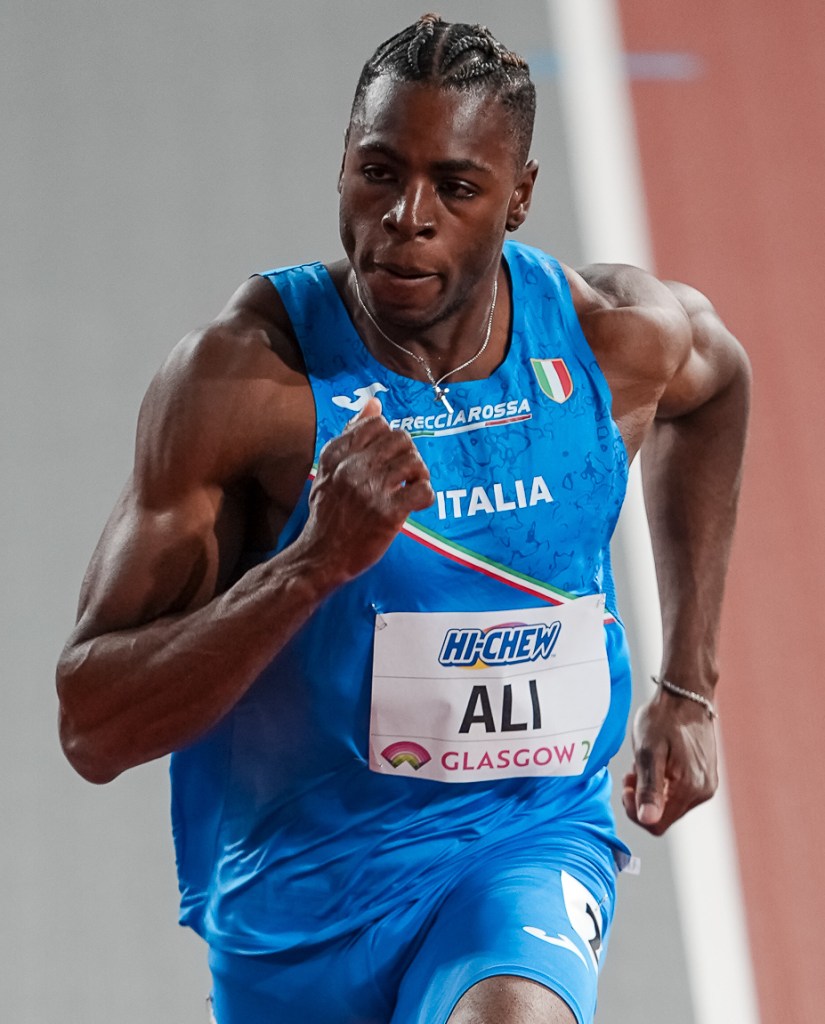
Moving on from rowing to track events, look out for Chituru Ali also going to Paris to run in the 100 metres sprint. Chituru was born and brought up in Albate on the southern edge of Como as the child of a Nigerian mother and Ghanaian father. His recent record puts him as the second fastest man in Italy after Marcell Jacobs so he is well worth looking out for. We wish him and all the other Comaschi athletes the best of success and well deserved fame. 

World Athletics Indoor Championships Glasgow 24, Chituru Ali (ITA) in 60 m | 1-3 March 2024 | Glasgow (SCO) Emirates Arena | Foto: Francesca Grana/FIDAL

 Further Reading

 We featured an article on the Canottieri Lario back in June 2017.

The Rationalist architecture of the Stadium area was covered in Como’s Rationalist Architecture 1: Around the Stadium


Posted in Events, Places of interest, rowing, Sport, Uncategorized | Tagged , , , , , , , , , , , , | Leave a comment

Como’s Nostalgia For…..Wash Houses

foto exhibition
Exhibitions such as this alongside the restoration of some old wash houses reveal an almost nostalgic interest into a recently lost world

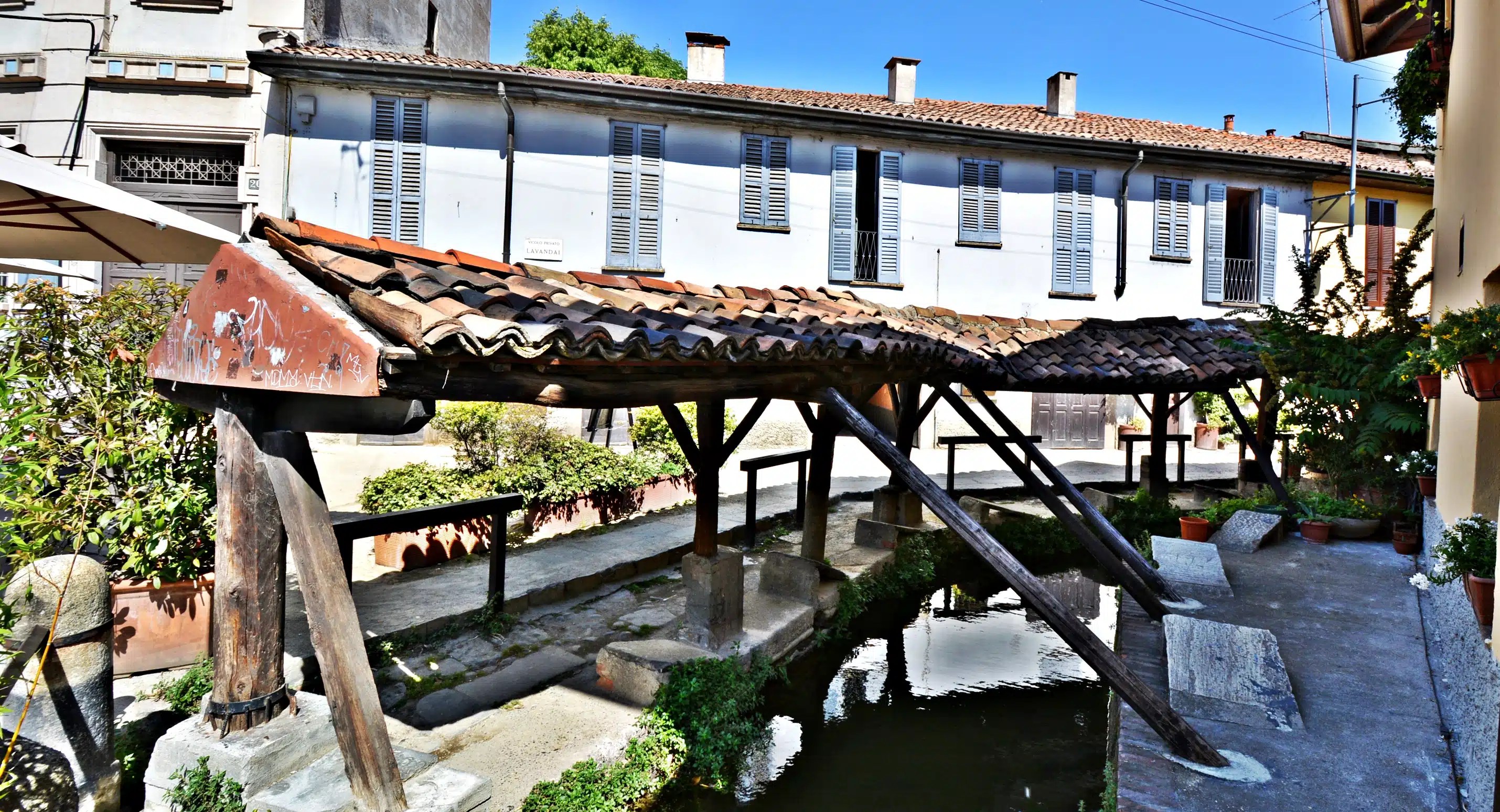
The wash house (Lavatoio in Italian) is a common architectural feature across Italy and no less so in the mountain communities around Lake Como. Technological and social changes have rendered them almost entirely redundant yet many still remain and a significant number have even been renovated and restored.

lavandaie in como
This photo from the early 1900s shows women knelt behind an ‘asse’ used as a scrubbing surface. This was the technique used when washing directly in the lake (in this case in Sant’Agostino, Como)

Doing the laundry was at one time a social act performed in the open alongside and with the help of your neighbours. The local ‘lavatoio’ still holds a strong symbolic value in many villages as a monument to civic pride and as a reaffirmation of civil solidarity. There may also be a nostalgic element amongst more elderly citizens who can look back to a time when their villages were more densely populated with the majority sharing the same rhythm of life dominated by domestic and agricultural chores. 
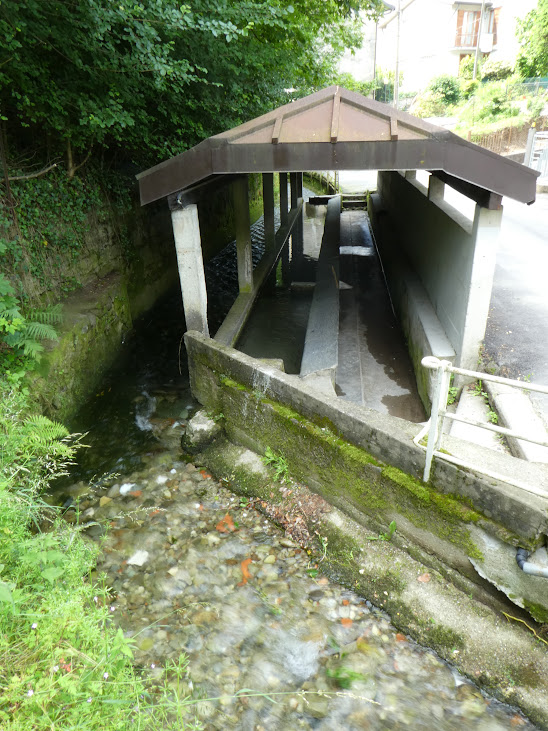
The renovated lavatoio in Albate

There are about 70 villages around the lake in the Province of Como and each would originally have had an average of four wash houses. Four of them – Argegno, Campione, Colonno and Sala, had none with laundry being done directly in the lake. Some of them have either been removed (as in Brunate, Zelbio, and Gera Lario), or converted into store rooms or shelters as in Livo. Many remain abandoned but a significant number have been restored thanks to the enthusiasm of local ‘pro-loco’ associations and signposted as sites of socio-anthropological interest.
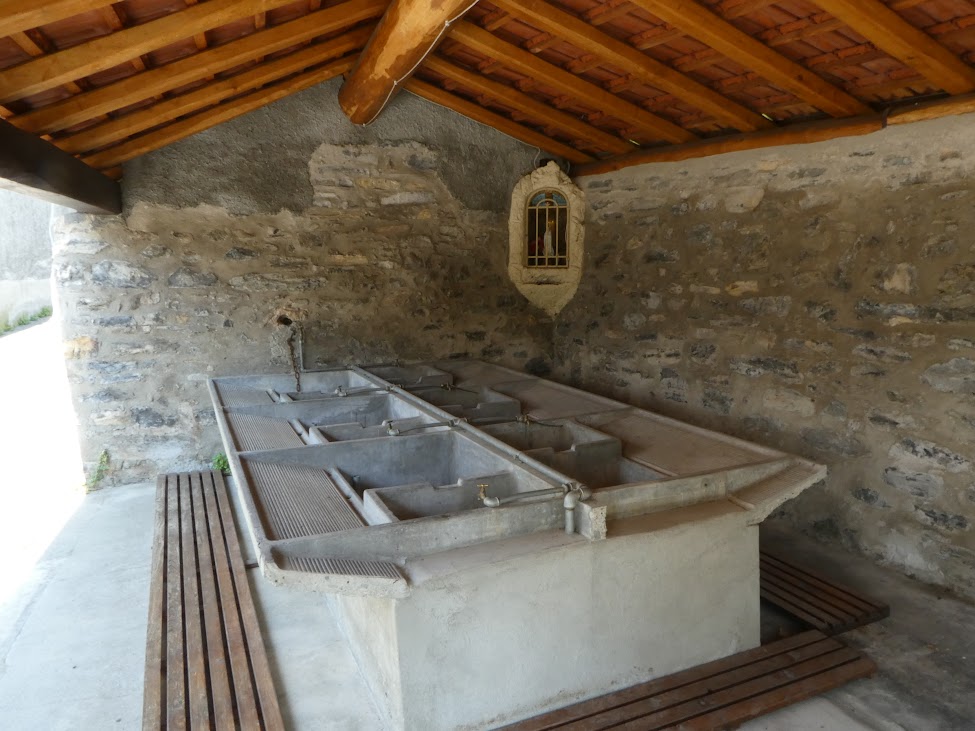
The renovated lavatoio in the Cernobbio district of Olzino with pre-fabricated basins, and the unusual addition of a religious shrine.

Three Vital Functions

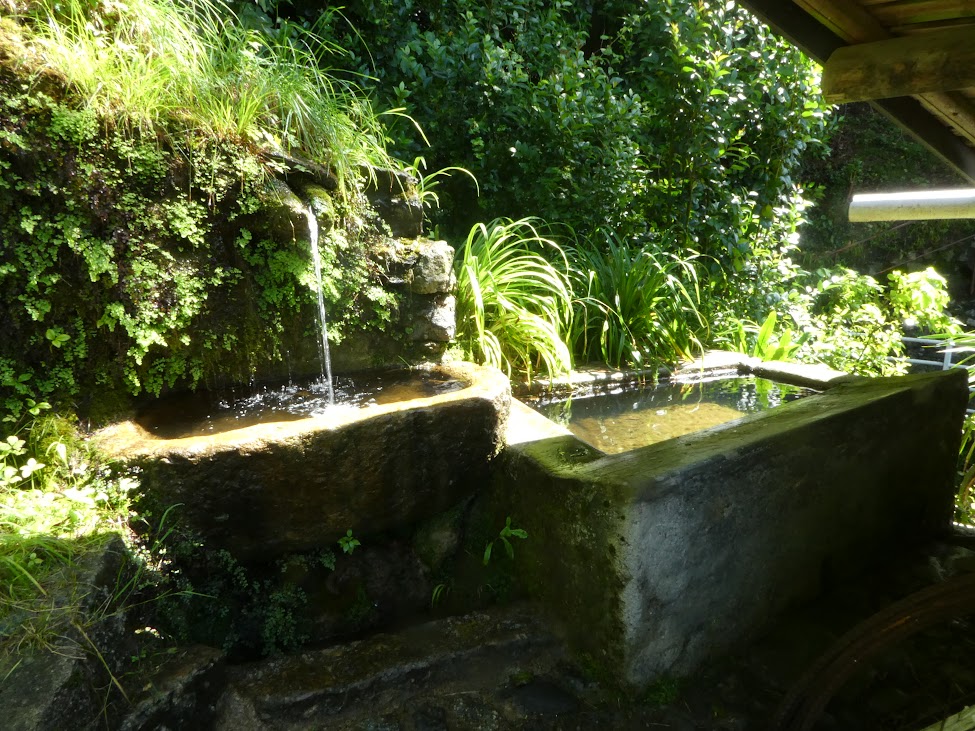
Before the provision of mains water and well before the invention of domestic washing machines, village people needed access to water for their own domestic use, for laundry and in addition, for watering their livestock every morning and evening as they were walked to and from their daytime pasture.

OLYMPUS DIGITAL CAMERA
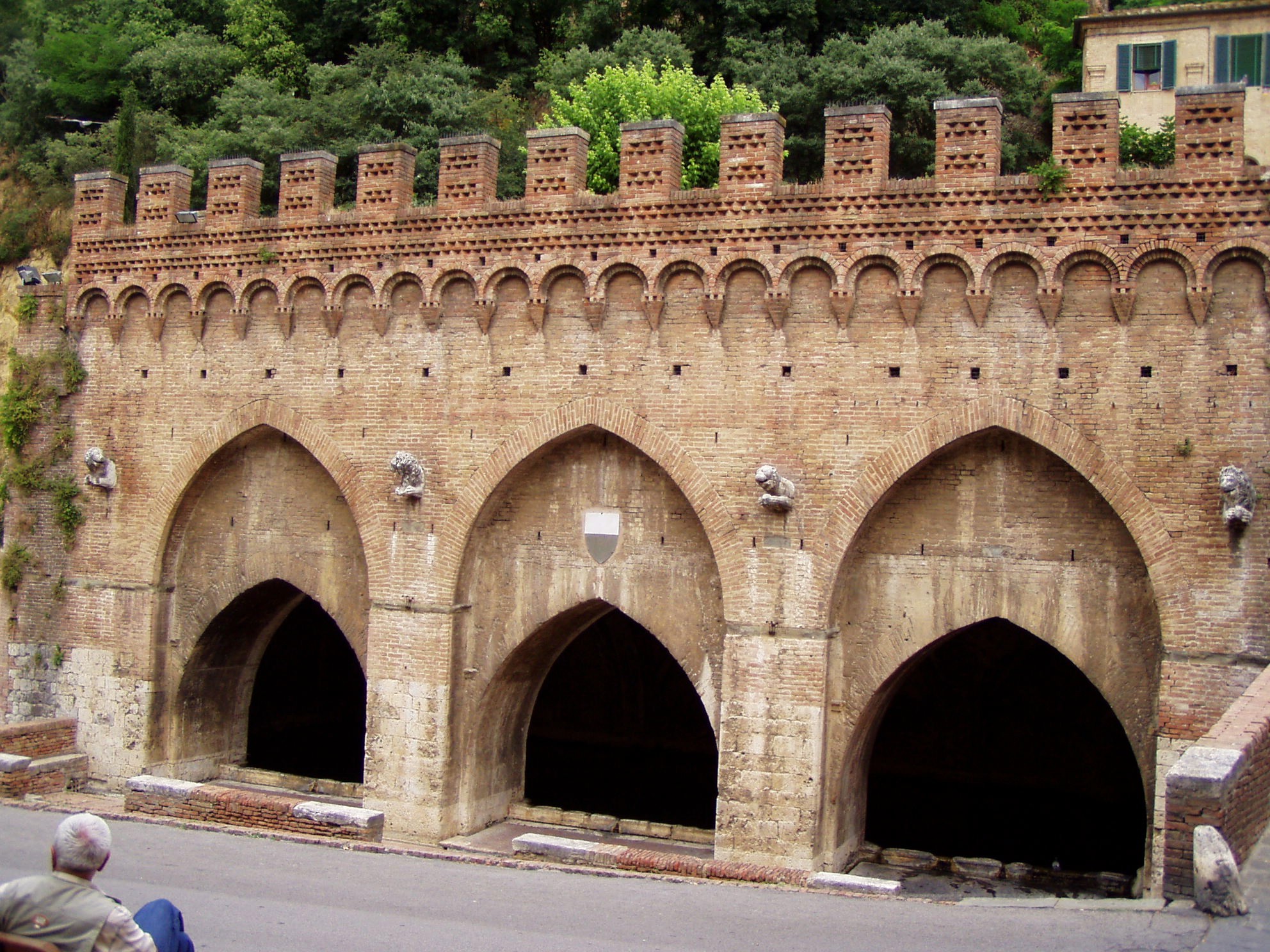
The wash house in Fontebranda, Siena, founded in 1081 and completed construction in 1193.

One of Italy’s earliest and most elaborate wash houses is the Fontebranda in Siena. This is first mentioned in 1081 and was extended in 1193. The three arches represent the three uses made of the water. The first container provided drinking water with the second providing a drinking trough for animals. The third container was used for laundry. The structure has become famous not just for its architectural value but due to its mention in the 30th Book of Dante’s Divine Comedy.
The lavatoio in Molina, Faggeto Lario

None of the lavatoi in our region match the architectural splendour of Fontebranda but those at Tavordo di Porlezza, Brenzio and Molina are of architectural interest. 
Although the needs for drinking water for inhabitants and animals was always a requirement, the need for a communal wash house only emerged once relatively wealthy families became established within the mountain communities. They paid others to wash their linen for them and thus established the role of the washer person – lavandaia (feminine) or lavandaio (masculine). It was often a wealthy patron who provided the funds for building the local lavatoio. 

The lavatoio in the Vicolo dei Lavandai in Milan.

Whilst most users of the wash houses were women, this was not exclusively so. For example the use of the lavatoio in the Vicolo dei Lavandai alongside Milan’s Naviglio Grande was reserved to members of the Confraternità Lavandai di Milano. This society was set up in the 18th century with Saint Anthony of Padua as their patron saint and its members were only men. The lavatoio itself is now registered as a national monument forming just one of the hundred wash houses that used to exist alongside Milan’s three major canals – the Grande, Pavese and Martesana. Around the corner from the lavatoio there is a traditional Milanese restaurant called ‘El Brellin’ which is the name in dialect of the wooden structure on which the washers would perch lined up alongside the stone slabs for scrubbing.  The restaurant occupies the site of a ‘drogheria’ which used to sell the soap and scrubbing brushes used by the lavandai. The men were only replaced by women during the last war. The wash house became purely ornamental after the 1950s. 

The single basin lavatoio in Camnago Volta

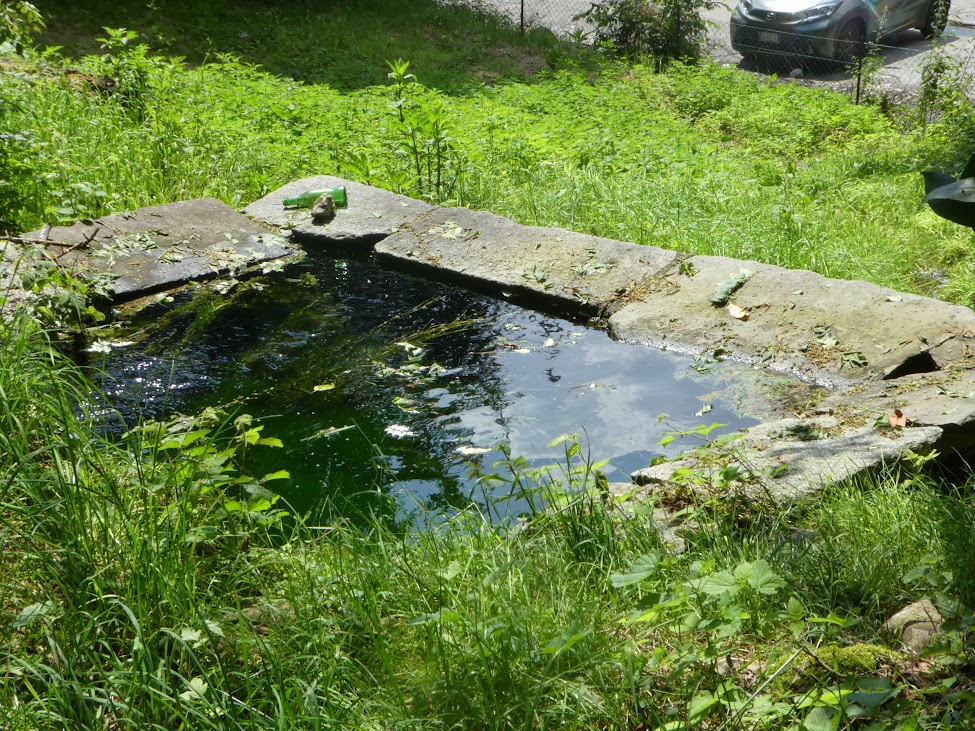
 The early lavatoi often consisted of a single basin either made from stone slabs or hollowed out from a single stone block. Palanzo has a single stone lavatoio constructed in the 16th century alongside the more complete and fully restored version built in 1852. Other single stone basins can be seen in Dizzasco, Camnago Volta and at the end of Via Valgioera in Garzola below the San Donato Sanctuary. 
The lavatoio in Garzola below the San Donato Sanctuary

 Apart from these early examples, the great majority of local wash houses were built in the 19th century and most often by the women of the village. It was the custom for most men to emigrate seasonally for work in the various specialist building trades developed around the lake and the Val D’Intelvi. They would be absent from home from April through to the end of October leaving it to the women to tend the animals, wash the linen of their wealthy neighbours and construct the wash houses paid for with the patronage of a rich local.

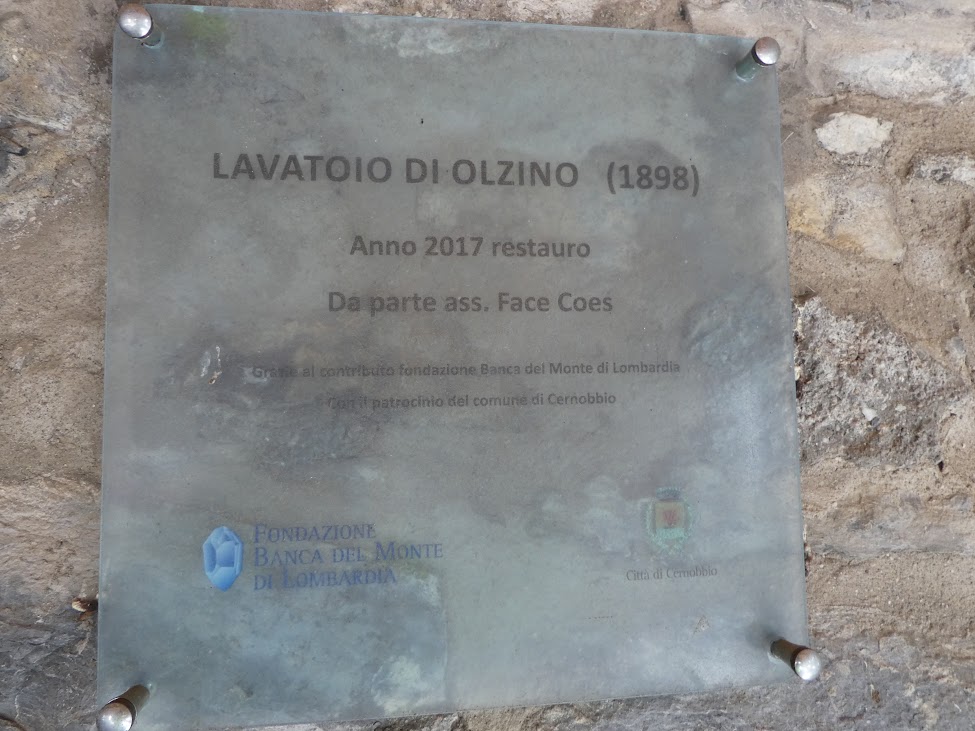
The plaque marking the restoration of the lavatoio in the district of Olzino in Cernobbio paid for with contributions fom the Fondazione Banca Dei Monti di Lombardia

 Granite was a popular stone used to cap the basins and placed at an angle of 45 degrees to aid scrubbing. Apart from around San Fedelino at the top end of the lake, there are no local sources of granite around Lake Como. However use was made of the large number of granite boulders brought down by glaciation from the Valtellina and deposited when the glaciers retreated at the end of the Ice Age. Use was also made of whatever stone was available locally given that at least twenty communities in the Province had mines. White marble came from Musso and black marble from Varenna, and the ubiquitous Moltrasio limestone (used extensively in dry stone walling around the lake) could be found all around the lake, not solely in Moltrasio itself. 

The renovated lavatoio in Moltrasio

 After the last war, a great number of wash houses were built. They made use of pre-fabricated concrete units instead of stone and little attention was paid to aesthetic appeal. Concrete was said to provide a better surface for scrubbing and the individual units were more efficient although spartan in appearance. Technology was however beginning to have an impact firstly with the wider distribution of piped water and much later by the increasing numbers of domestic washing machines. Life in the mountain villages was also changing with better road links to the industrial centres encouraging a move off the land and into factories. 

The unrestored lavatoio in the Como district of Lora

 Village life was going through radical change and the rhythms and customs of the old communal life were being fundamentally altered. No longer was doing the laundry a social act. No longer did the wash house provide a meeting point to share news and comment. No longer in winter did villagers have to dip chapped hands into ice cold water to scrub linen clean. But for many communities, their restored (and unused) lavatoi provide a sentimental monument to both the suffering and the solidarity of the past – to a time when life was hard and there was a need to work together to endure it. 

Posted in Architecture, Culture, Folklore, History, Lake, Places of interest, Uncategorized | Tagged , , , , , , , , , , | 1 Comment

Como 1907: The Mouse and the Lake

In May this year ‘Como 1907’ was promoted into the top league of Italian football – Serie A. It was only five years ago when Como was languishing in the bottom league – Serie D, and 21 years ago since the club last managed to be in Serie A. This dramatic change in fortune can be attributed to what the BBC has defined as ‘the most interesting football project in Europe’ – a project inspired by Disney and starring the lake. What is that project and how did it come about? 

stadio sinighalia

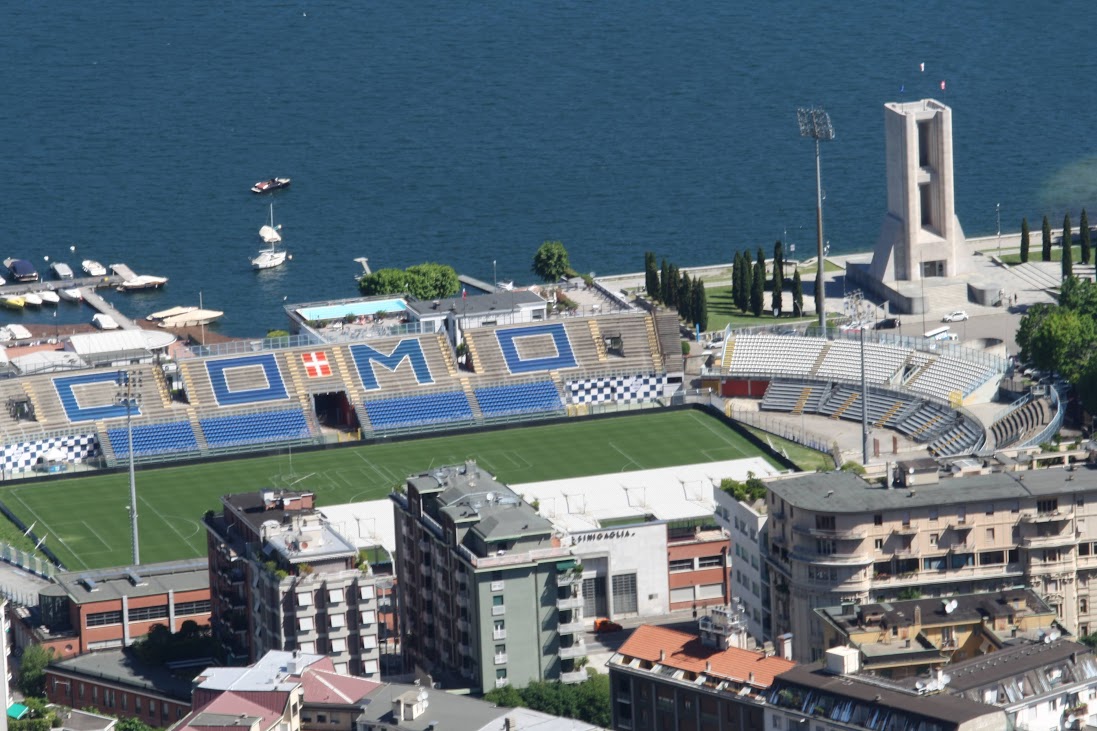
Como’s Stadio Sinighalia looks out over the lake. It is just one of a number of modernist buildings in the area including the Canottieri Lario and Terragni’s War Memorial designed in honour of Antonio Sant’Eglia and Novocomum.

Since the 2002-2003 season, when Como was last in Serie A, the club has faced a number of vicissitudes and just a few triumphs. In fact it was declared bankrupt the year after leaving Serie A. It faced bankruptcy again in July 2016 when it was put up for sale by auction. However no-one came forward to buy it until the price was dropped for the fourth time in March 2017 when finally it sold for a mere 237.000 euros to Akosua Puni Essien, the wife of the Ghanaian footballer Michael Essien who had played for Chelsea, Milan and Real Madrid. Unfortunately Mrs. Essien did not turn out to be the saviour all were hoping for since the players received no wages after the first three months and bills for the rent and maintenance of the stadium and training grounds went unpaid. Rather than raise the club from Serie C to B. as Mrs. Essien had promised, she failed to secure the payments needed to keep the team within the league. Como Calcio was back being declared bankrupt by June 2017 for the third time this century. 

un-anno-fa-lady-essien-resta-il-mistero-horror_e69445ea-287e-11e8-9d83-56ce82673ae6_900_512_v3_large_libera

Mrs Akosua Puni Essien bought the club back in 2017 but unfortunately could not secure funding to cover the club’s running costs.

A group of knights in shining armour then appeared over the Atlantic from Miami in the shape of the Nicastro Group headed by Massimo Nicastro, an ex-Bocconi graduate who migrated over to Miami in the 1990s as an entrepreneur and property developer. His knowledge of Italy, and Como in particular, allied to his sharply honed American-style entrepreneurial instincts led him to see the value of the club ‘as a sort of Via della Spiga of football. Football set in a panorama of beauty, which could act as a driving force for a lot of other things’. And it was perhaps the ‘other things’ rather than the dismal sporting record of the club that persuaded the Indonesian Hartono brothers (said to own assets worth up to 18 billion euros) to buy into Nicastro’s sales pitch.  In 2019, with Como 1907 now in the hands of the richest proprietors of Italian football, all was set to launch the sort of project Nicastro must have had in mind.

como-1907-como1907-calciocomo-promozione-serei-a-serie-a-combo

Scenes of jubilation both on and off the pitch after the match against Cosenza ended in a draw guaranteeing the club’s promotion into Serie A.

The Project

464px-Logo_Como_1907_2019

Como 1907’s logo. The club was established back in 1907 by a group of partners from the Canottieri Lario.

Como 1907 as from 2019 is owned by the London-based company Sent Entertainment which in turn is owned by Global Media Vision Ltd., an Indonesian company belonging to Robert Budi and Michael Hartono. Dennis Wise, former England International, came in as the Sporting CEO and another Indonesian, Mirwan Suwarso, was made responsible for operating the project as a whole without direct responsibility for the sporting side. He has described Sent Entertainment’s business concept for Como 1907 as an experiment linking sport, business and landscape – a sort of ‘boutique’ club within the unique setting of Lake Como where all these three elements are brought together by what might be called the Como ‘brand’. 

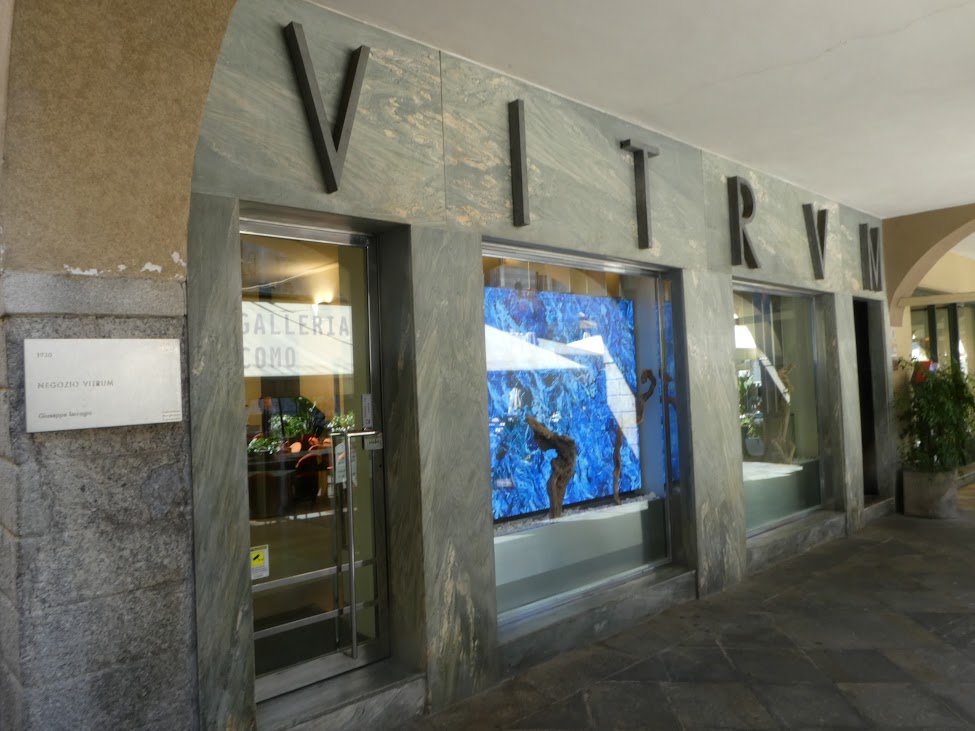
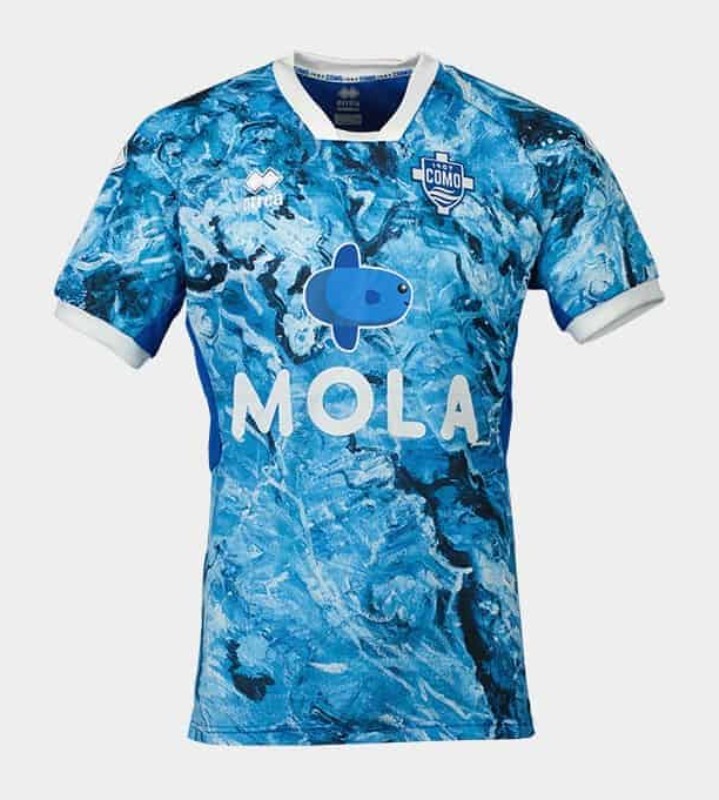
Suwarso’s challenge in his own words was ‘to transform a football club from a structurally loss-making company to a profitable business. Sustainability cannot exist in football without linking the events of the team to those of the city and the territory.’ But money helps and the Hartonos immediately started investing in both the team, the stadium and the overall business concept. They acquired a sports centre in Mozzate (half way between Como and Varese) for 3 million euros. They returfed the pitch and then set about extending and replacing the stadium’s seating and investing in the VAR technology required for Serie A matches. The organisation of the business was restructured into four divisions: Como Retail – shops and merchandising, Como Property – stadium and training grounds, Como Academy – the youth team and Como Entertainment – organising sponsorship events, fund raising and general celebrations! They have a merchandising outlet in Via Olginati and  a more upmarket ‘concept store’ in the iconic Vitrum shop front originally designed by Giuseppe Terragni, on Piazza Duomo. The concept store is currently running an exhibition of works inspired by the lake by the artist Golnaz Jebelli. Her lake artwork was also used by the Indonesian couturier, Didit Hediprasetyo to design Como 1907’s current kit.

vitrum

Galleria Como is the concept store partnered with Como 1907 and owned by couturier Didit Hediprasetyo

The project can be divided into two main areas, commercial and sporting. The sporting aspect under Dennis Wise has seen constant improvement since the 2018 takeover with the club rising to Serie B for the last three years before promotion to Serie A at the end of this season. It is judged as 40% done. The commercial project is however still only 20% complete in spite of raising revenue from merchandising from a starting point of 90,000 euros per annum before the Hartono take-over to 1.35 million in 2022 and 3.9 million in 2023. Apparently a Como 1907 branded bag is now on sale at Harrods, a result of the club’s partnership with the Milanese bag maker Brics. More prosaically, the club has also partnered with the Piedmont-based mineral water company, San Bernardo and promoted a limited series featuring the artwork of Ester Maria Negretti – a local artist specialising in lake landscapes whom we have featured in a couple of articles over the years.

Como

Ester Negretti is a local artist with a studio on Via BorgoVico. One of her favourite subjects is Lake Como.

The club has also ensured they launch projects of value to the local community and in support of charities such as the opening of a Children’s Community. In their own words:

On and off the pitch, Como 1907 is dedicated to being engaged members of the local community, working with other local enterprises to build prosperity.

We want to be world class in every sense: a world class club playing world class football in a world class setting, surrounded by world class partners, businesses and a world class sense of community.

Ultimately, everyone in Como is connected by our love for the region. Como 1907’s goal is to work to strengthen the bonds between us for the good of the community and all its businesses. That means reaching out way beyond Como to the world, to invite global solutions to our specific challenges and ambitions.

leukemia charity

Como 1907 made a

These hyperbolic expressions calling on the club to ‘reach out to the world’  or ‘invite global solutions’ required a revolutionary change to this previously modest provincial club. Key to achieving such a global image was securing international stars such as Cesc Fabregas and Thierry Henry as shareholders committed to the project and the long term sustainability of the club’s success. Fabregas came on board in 2022 and briefly starred as a player for a single season before taking on the coaching of the youth team, the Primavera.  The symbolic importance of Fabregas joining the club was made explicit by one of Italy’s prime sports journalists, Gianluca di Marzio: ‘Fabregas is in Como to become a point of reference for the club, in terms of increasing its professionalism, but not only. For the outside world it is an important signal, a leap in quality for the Como brand.

Curva-del-Como

Local fans organised in the ‘curva’ to celebrate their team’s promotion.

The Coup D’Etat occurred on 12th November 2023 with the controversial dismissal of the coach Moreno Longo soon after he had secured Como’s away victory against Ascoli. The official announcement stated:

The paths have separated between Como 1907 and Moreno Longo. The search for a new coach begins immediately, with Cesc Fàbregas and the coaching staff taking on the duties on an interim basis.

After several months of strategic planning, the Como 1907 board decided that dynamic change was in the club’s best interest. Longo joined Como in September 2022 and helped the team avoid relegation, finishing in 13th place last season. Cesc Fàbregas, who currently coaches the Primavera del Como 1907, will have his first training session on Wednesday morning.

Mirwan Suwarso, official representative of the ownership group, commented: “We thank Moreno Longo for his hard work and dedication, especially for managing the team after a difficult period last season. However, we want to embark on a new path that we hope will give greater emotions and fun to the Como fans and beyond. We hope to be able to make a new appointment for the coaching role in the near future. We thank the fans for their understanding and unwavering loyalty and support. As always, Forza Como”.

football shirt

The team’s shirt with the lake-inspired design by Golnaz Jebelli

However Fabregas was without a full coaching licence so could only fulfil the role for a very limited period. It was Thierry Henry as shareholder and consultant who recommended the club secure  the services of Osian Roberts, Patrick Vieria’s previous assistant coach at Crystal Palace. While Moreno Longo was maintaining the club’s fortunes midway up the table of Serie B, it was Roberts who, by the end of the same season, had secured the club’s promotion to Serie A. The revolution also brought about some changes and acquisitions of players to suit the style of play favoured by Roberts. But it was Fabregas who provided the metaphysical magic dust –  in the words of Suwarso ‘ the change of mentality … a new way of being, he gave us a DNA.’  

Suwarso described the Como 1907 project in the following terms in an article in the Gazzetta dello Sport: ‘ Our project takes Disney as it reference: theme parks, films, studios, media and merchandising.’ He outlined the project’s ambitions as “we think we will reach a value of one billion (euros) between sports, media, structures, merchandising and tourism … Today we feel included in the city, we work for the community, we no longer feel like guests”.  

The Challenges

Sent Entertainment may still be learning how to conduct business in provincial Italy. The much vaunted extension of the 1000 seats to the stadium remain unusable since their planning application was attached to another stadium improvement – the extension and strengthening of the lighting towers. The modification to the north western tower still awaits approval due to its closeness to the Como Aero Club and the potential risk to low-flying seaplanes. If they had submitted separate plans the additional seating would now be in use. The directors of Sent Entertainment might look at the disastrous project for strengthening the city’s flood defences with some trepidation since this project started in 2008 and has still to be completed. And given the need to make some rapid changes to the stadium, the club must not get ensnared or run any further foul of the city’s numerous planning and building regulations.

stadio entrance

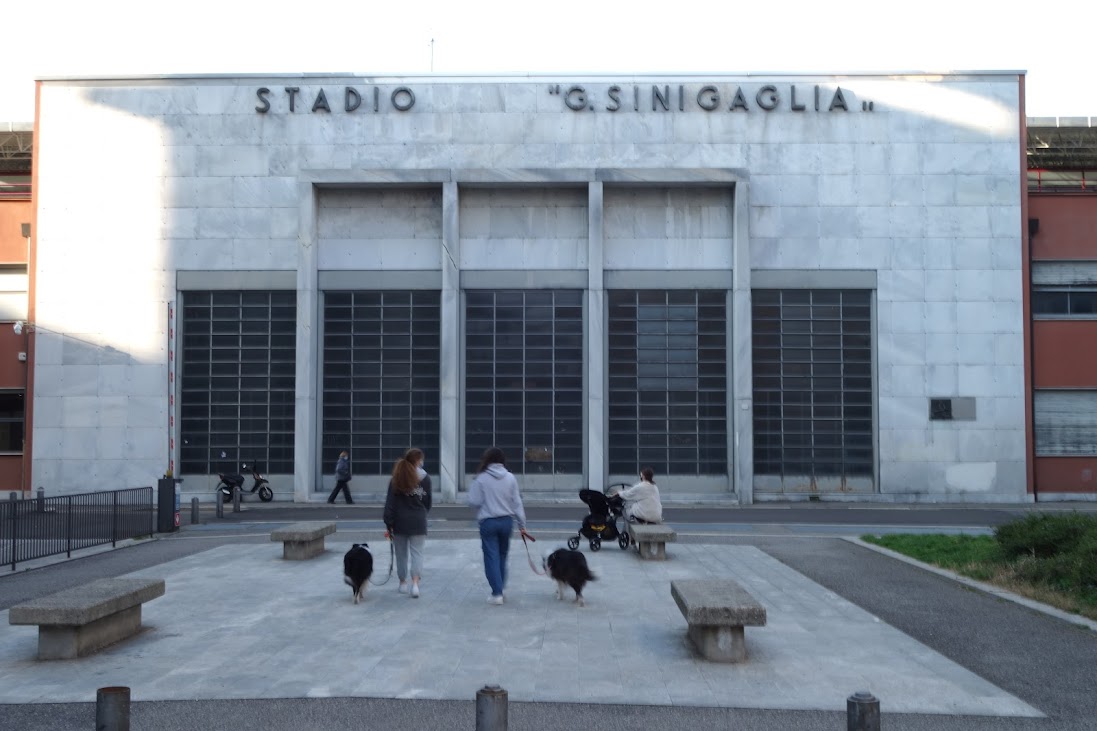
The Stadio Sinigallia requires updating and enlargement to cater for the crowds expected to attend Serie A matches. Sent Entertainment are ready to submit their plans for this to the Como Municipality in the near future.

The stadium is perhaps their largest challenge. It is both an asset in terms of its location overlooking the lake and a problem due its inability to house the number of visiting fans expected at Serie A matches. And with a transport infrastructure currently unable to manage tourists, how will these away fans get to and from the stadium without paralysing the city and engaging the entire manpower of the local and state police forces.

Queueing for the boat to Bellagio

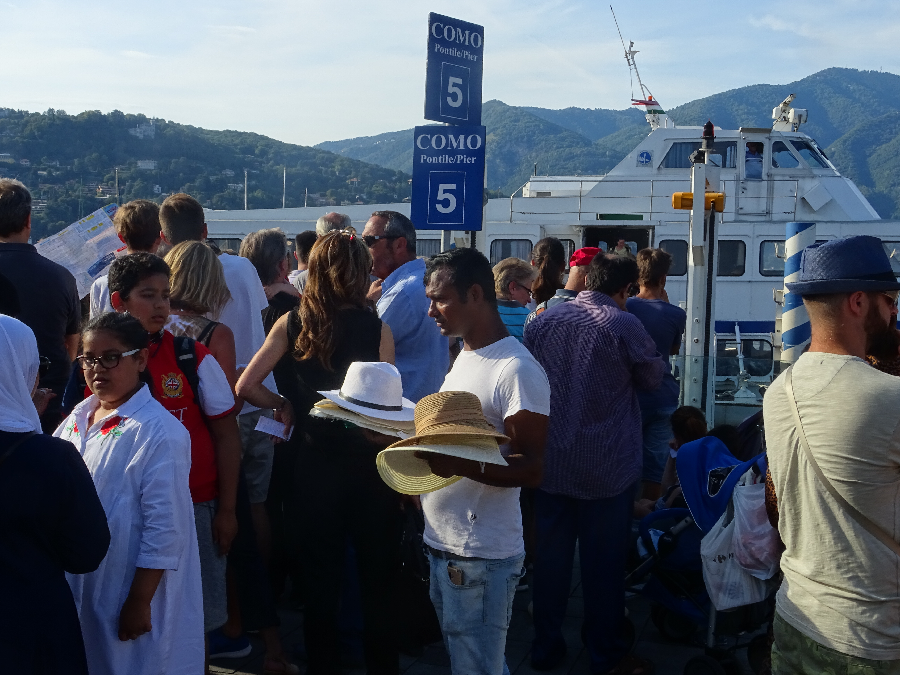
Queue for the fast boat to Bellagio

Above all, can Como actually accommodate more visitors? It is already challenged by the number of day visitors attracted to visit the town for a brief excursion on the lake. Serie A matches will attract many more and day visitors bring little economic benefit to the town in contrast to the challenges they bring in terms of the burden on infrastructure and services. 

Comaschi are of course delighted by the club’s success this season and no doubt Sent Entertainment’s executives are well received within municipal circles who must be relieved that the days of bankruptcy are over BUT….The Hartono brothers have given Como 1907 a metaphorical heart transplant, a new chance of life, yet, given the alien source of this vital organ, there is the possible risk of rejection. Assuming the club sustains its position in Serie A, the major risk of local rejection may come from the promotion of its brand of tourism. 

Sustainable Tourism

how-many-disney-parks-are-there-hero

Mickey Mouse in Disneyland

Suwarso, as quoted above within his reference to Disney, makes the role of tourism an explicit element in achieving his billion euro profit target. Disney has the Mouse and Como 1907 has the Lake. As additional confirmation of the centrality of landscape to the Como 1907 project, Suwarso, as quoted by journalist Alec Cordolini in his article for Rivista Undici, states ‘I don’t deal with football and I don’t get into football matters, but when they ask me who the most important player in the team is, I always answer the Lake.’ But what sort of tourism will Como 1907 attract and will the financial benefits be shared beyond the club and its commercial partners? 

lake charms

The charm and beauty of Lake Como, from Careno

A key element of Como 1907’s brand is the landscape (i.e. the Lake) and if the Lake is the club’s star player then fundamentally the project is about extracting financial value from our landscape – or, more precisely, from the image of the landscape as it is perceived within the Como brand. In this case, the DNA provided by stars such as Fabregas will serve to globalise and endorse that brand. And the ongoing success on the pitch will ensure ongoing publicity for that brand. Whilst Golnaz Jebelli’s lake-inspired artwork reflects the different moods and subjective impressions of the lake, the lake ‘brand’ is a more one-dimensional image of a rich man’s dramatic but benign playground.

como bag publicity

The Lake Como fantasy entrapped within the Como bag.

The Como brand is of course a nebulous concept which we explored in a recent article on the challenges of tourism in our area. It is also a fragile concept that can easily be damaged by its own success, and no way as yet, is it oriented towards sustainability. The definition of sustainability for a football club is very different from the meaning of sustainability for a landscape and a territory. 

Conclusion

Getting to the heart of the Como 1907 project is partly about trying to understand some of the forms modern capitalism takes in extracting value from selling dreams. Ticket and merchandising sales might represent the actual point when value is realised but behind those ‘goods’ are the stoked up desires to participate, if only vicariously, in the ‘Como’  appeal, which itself has to be nurtured and promoted as passionately as the football team itself through branding. Como 1907 is indeed an interesting project and I wish the club continuing success. But I also hope that they will treat this success with a sensitivity towards the territory that they are promoting as fervently as their team of players – and consider the sustainability of the environment alongside the sustainability of the team’s success.

merchandising shop

Forza Como!

 Sources

The main source was an article in the online sport magazine Rivista Undici written by Alec Cordolcini and published on 11th May 2024.

Further Reading

We have written two previous articles featuring the work of Ester Maria Negretti. They are Ester Maria Negretti – Como’s’Traditional’ Contemporary Artist and Ester Negretti One Year On – With Menaggio in Mind

We have also written recently about the challenges of tourism in Como Tourism Post Covid as well as presenting its history in Tourism on Lake Como – Then and Now and exploring Como: The Potential for Cultural Tourism

Posted in Art, Lake, Sport, Uncategorized | Tagged , , , , , , , , , , , , | Leave a comment

An American in Venice (via Como)

Logo-60EIA_PartNaz-RGBOn April 18th Sonja Christoph and husband Alessandro left Como to travel by train to Venice for the day. This was just one of the many, and one of the shortest of journeys undertaken by Sonja in her moves from her native Florida USA to Como via Heidelberg, Munich and London. But perhaps, for all that, this was one of the more personally significant journeys taken until now – she was delivering her artwork entitled ‘Frames of Reference’ for display in the Venetian Biennale. 

img-20240505-wa0000

Alessandro delivering ‘Frames of Reference’ from Como to the Biennale.

We first interviewed Sonja shortly after her arrival in Como back in 2019 and we wrote up her story to that date in the article Fairy Tales, Wanderlust and Landing in Como which described her work as an artistic illustrator. Her most significant commission up to that point had been the series of illustrations used to decorate the walls of the Michelin starred Chef Kevin Fehling’s  5 star restaurant on board the MS Europa. Her subsequent artistic journey has now led to an equally prestigious achievement with the Venetian based  Donà dalle Rose Foundation nominating her work for inclusion within the Republic of Cameroon’s Pavilion at this year’s Venetian Biennale. 

img-20240505-wa0001

Sonja at the Opening Ceremony of the Cameroon Pavilion in the Palazzo Donà dalle Rose, Venice.

The overall theme of this year’s Biennale, defined by the Brazilian Director of Visual Arts Adriano Pedrosa  as ‘Stranieri Ovunque’ or ‘Foreigners Everywhere’ chimes perfectly with Sonja’s own history as an intrepid migrant stepping out from her parental home in Florida, USA to settle initially in Germany, then on to England and now to set up her family home just outside Como in Fino Mornasco. Our newsletter loves celebrating the presence of foreigners on the shores of the lake and supporting their appreciation and integration within the fabric of our adopted home. It is therefore particularly pleasing to report and celebrate when any one of our migrant community makes a social or cultural contribution to our host country. 

Frames of Reference

Frames of Reference’ is the title given to Sonja’s artwork on display at the Palazzo Donà dalle Rose which hosts the Pavilion of the Republic of Cameroon for this 60th edition of the Venetian Biennale. Her work will be on display in the Pavilion for the duration of the Biennale from 20th April until 24th November.

img-20240416-wa0000

‘Frames of Reference’ by Sonja Christoph, 2024

Sonja herself describes the work as ‘A life story. MY life’s story….sketched out frame by frame in a spiralling journey that moves from city to city, country to country from childhood to adulthood to motherhood through moments of love and loss, joy and grief.’ 

At its heart is a self-portrait presented without any attempt at flattery with an image seemingly caught in an unguarded moment in a mirror that also reflects a domestic background with an empty armchair behind Sonja’s right shoulder. This self portrait is itself contained within three illustrated frames and an outer frame of dense black. 

artwork detail

Detail ‘Frames of Reference’.  Bottom right hand corner with the three inner frames.

The inner frames illustrate aspects of Sonja’s life to date combining both real and fantasy elements. Each of the three frames represent a specific phase in Sonja’s life with the inner black background frame representing childhood in Vero Beach, Florida. The middle frame represents migration initially to Germany and then on to London with love, marriage and motherhood. The outer frame represents more recent times on moving to Como and contains a reference towards the top left corner to the creation of the artwork itself. 

img-20240505-wa0005

‘Frames of Reference’ by Sonja Christoph as it is displayed in the Cameroon Pavilion at Palazzo Donà dalle Rose.

Those already familiar with Sonja’s work will recognise this piece as a continuation of her development as a visual storyteller. But with the significant difference that this time she herself is the subject of the story. For her, the story, or anyone’s story, starts with an absence of light which is why the outer frame is painted using a particularly dense black paint that absorbs hardly any light. From there inwards the picaresque episodes vary in shades of light or dark. As she describes it:  ‘A story can only begin with the absence of light. Frames of Reference’ is a spiralling journey that invites viewers inward on an adventure that plays out in shades of light and dark, joy and grief, love and loss…’   And at the heart of the piece is that haunting self-portrait which, like most self-portraits, is primarily about mood and emotion with the backstory to that mood represented by the empty armchair symbolising family loss. 

It is often said that we all have a story to tell and Sonja’s storytelling in ‘Frames of Reference’ reinforces that truism. But there is something in this piece’s structure that gives it  a universal quality, not necessarily due to the content since each of our stories are individual. Instead its power comes from reflection – a stark mirror image of a significant moment framed within a complex narrative of life. And it encourages us as viewers to take on, if only momentarily,  a mirror-like moment for our own self reflection – how did we get here and where are we going. This reaction may be particularly strong in others such as Sonja who are migrants, strangers in a foreign land. For me, that almost imperceptible reflective reaction is what marks this as a successful work of art and why it has rightly earned its place within the Cameroon Pavilion of the Biennale.

The Journey to the Biennale

Sonja’s journey to the Biennale started the moment she set out for Europe from Vero Beach, Florida. The family trip to Venice on 18th April to present her picture and to attend the public opening event at the Palazzo Donà Dalle Rose does however mark a significant milestone in her maturing as a woman and as an artist,  It takes thought and courage before committing to the production and public showing of a self-portrait, not least one accompanied by so much autobiographical detail. 

pavilion banner invite

Cameroon Pavilion Invite, Biennale 2024

The commissioner and curators of the Cameroon Pavilion at the Biennale (Serge Achille Ndouma,Sandro Orlandi Stagl and Paul Emmanuel Loga Mahop) have added to the overall exhibition theme of ‘Strangers Everywhere’ by giving the Cameroon Pavilion the title of NEMO PROPHETA IN PATRIA – No-one is a prophet in their own land’.  They thus opened up consideration of the positive effects produced by an intellectually active diaspora of citizens able to achieve more by migrating elsewhere. To quote from its own press release the Cameroon Pavilion ‘presents itself as the “Pavilion of Wonders”, where projects by local and international artists come together to celebrate the courage of those who have never abandoned their ideas, regardless of the recognition obtained locally, ambitiously looking towards a deserved international horizon. A Pavilion where differences are considered wealth and where no one feels like a “stranger”.’

Sonja’s ‘Frames of Reference’ fits so well within this brief with her migrant’s story and her courage to tell it. 

02_Hako-Hankson_Days-of-celebration_Acrylic-and-Indian-Ink-on-canvas-200-x-200-cm_Courtesy-of-the-artist-Primo-Marella-Gallery-copia-1

Cameroonian artist Hako Hankson’s work at the Pavilion, ‘Days of Celebration’. Acrylic and Indian Ink on canvas 200 x 200cm. Courtesy of the artist Primo Marella Gallery

Sonja’s Journey Beyond the Biennale

Exposing  your life story to public scrutiny and criticism and its presentation as self-portrait is a courageous act, and one that represents a significant step in maturity for an artist such as Sonja. It is natural that this watershed in her artistic development did not happen without moments of fear and self-doubt. 

She has commented on both the rational and irrational fears felt in anticipation of the opening of the exhibition – fear of sharing intimate aspects of her life, fear of how the work will be received and fear of being judged as an essentially self-taught artist against the backdrop of so many talented professionals displaying at the Biennale. 

Circe_Offering_the_Cup_to_Odysseus

‘Circe Offering the Cup to Odysseus’, J W Waterhouse

But the success of ‘Frames of Reference’ goes to show that Sonja has developed a valid structure for combining portraiture with storytelling. The most interesting portraits are those which have to some degree or other an implicit story behind the image. Sonja’s own favourite artist J W Waterhouse – a late Victorian English artist – followed in the Pre-Raphaelite tradition of either illustrating known legends or imbibing their works with symbols that, once interpreted, provided a narrative to accompany the image. Sonja is doing the same in a way that is her own and in a style that reflects her interest in fable and fantasy. 

sant abbondio

Visual storytelling, episodic illustration and graphical framing – as in these 14th century frescoes decorating the apse of Como’s Basilica di Sant Abbondio.

She intends now to work further on this winning formula. I was given a preview of some framed portraits in progress of characters Sonja has come to know and admire in and around Como. I look forward to when these too will be put on display to the general public. 

In The Meantime

IMG-20240506-WA0001

Sonja Christoph and the other members of Canottieri Lario’s Vogalonga crew – Venice 2023.

Sonja will soon be returning to Venice once again on the 18th May but this time to participate as a member of Como’s rowing club – the Canottieri Lario – as a member of the team participating in the Vogalonga. The route of this 30 km non-competitive race takes in a  grand part of the Venetian lagoon.  It starts in the San Marco Basin, then on to the passage in front of the islands of Sant’Elena, delle Vignole, Sant’ Erasmo and San Francesco del Deserto, to arrive at Burano and then, skirting the islands of Mazzorbo, Madonna del Monte and San Giacomo in Paludo, to Murano, crossing its ‘Grand Canal’, and finally returning to Venice, where, passing through the Cannaregio canal and the Grand Canal it reaches the finish line, located at Punta della Dogana in front of San Marco. All this must be completed within six hours – truly invigorating but equally exhausting! In addition to Sonja’s contribution to the Biennale, her involvement with Canottieri Lario’s entry in the Vogalunga goes to show her level of integration and commitment to her adopted country and home on Lake Como. 

Every Migrant Tells A Story

biennale-arte-24-banner2Foreigners are everywhere and migrant stories may possibly be richer if not necessarily  more significant than everyone else’s life story. We don’t all get to tell our  story or find the means like Sonja to give it a form of universal relevance. Some of the poorest migrants, who undoubtedly have the most difficult and significant stories to tell, are more often deprived of a voice and of ready means to integrate meaningfully and profitably within their host countries. But, as the Biennale proclaims, migrants are everywhere and we would all profit by listening to their stories and valuing their real and potential contribution to the social, cultural and economic life in their adopted countries. 
Further Information

Sonja’s website: https://www.sonjaillustrates.com/ and Facebook page 

Biennale dates: From April 20th 2024 until November 24th 2024

Address of the Palazzo Donà dalle Rose: Cannaregio, 5101, 30121 Venezia VE

img-20240505-wa0004

Sonja and Alessandro at the Pavilion’s Opening Ceremony held in the Palazzo Donà dalle Rose

Posted in Art, Culture, Events, People, Uncategorized | Tagged , , , , , , , , | Leave a comment

Swimming in Lake Como 2024

traversata-lago-di-como-1

At the end of June, there is an annual mass swim across the lake from Torno to Moltrasio organised by Moltrasio’s Rowing Club.

Each year we publish the data on the cleanliness of the water across the twenty two beaches or lidos on the Como leg of Lake Como. The official collection of data starts mid to late April so the results quoted below are from last year’s season (2023). Out of the 22 sites tested, 2 had no data for unknown reasons, one was deemed ‘good’ and the remaining 19 were classified as ‘excellent’ for swimming. These results provide a resoundingly positive reply to those questioning if Lake Como is safe for swimming. Details are reported below.

The EU’s Bathing Water Directive

portale acque

Go to portaleacque.salute.gov.it to access the latest data on the level of bacteria in water sampled from Lake Como’s beaches

All the countries within the European Union apply the standards defined in the 2006 Bathing Water Directive. These require member states to monitor rivers, lakes  and beaches regularly, to report their results and immediately publicise closure whenever any specific location fails to achieve acceptable levels. There is a broad range of poisonous bacteria that can enter the water either from sewage, water treatment centres or as agricultural or industrial run-off. Beyond causing gastroenteritis, they may also lead to very serious conditions such as meningitis. Rather than test for the wide variety of possible bacteria, the tests focus on identifying the number of units of just two microorganisms, e-coli and intestinal enterococci. Levels of these provide a good indication of general levels for the other harmful bacteria. Units are measured per one hundred millitres with any number below 1000 acceptable for e-coli and below 500 for enterococci. Depending on results, the water from each site is then classified as being either excellent, good, sufficient or poor.

Water Temperature

como swimming club

Como Nuoto used to organise a competitive swimming race across the lake. Let’s hope it is reinstated now that the fate of the swimming club is more secure.

The Lake Como swimming season runs from June to September. During these summer months, the average temperature of the surface water on the lake does not fall below 20°C.  The actual average summer temperature of the water is 23.2°C with June at 21.3°C, July at 24.1°C, August 24.2°C and September at 20.4°C. In contrast the winter average is a mere 5.8°C and currently (April) it stands at a bracing 13°C. 

Lidos and Beaches

Faggeto lido

The lido at Faggeto Lario pictured off season in uncharacteristically high wind.

Those not familiar with Lake Como may be initially surprised at what is defined as a beach here, particularly if they have the seaside in mind where beaches are often more extensive areas of pebble or sand. While there are more open areas of beach to the north of the lake, with accompanying facilities and water sports, the southern end is more rugged with mountains regularly running down to the water edge. So any flat, sandy or grass area on the lakeside could be given the sobriquet ‘spiaggia’. However only those beaches with at least the bare minimum of services are included in the water quality monitoring programme. This does not mean that the ‘unofficial’ beaches are any less clean. In fact, since they are more likely to be away from the larger areas of population, they can safely be assumed to share the general high level of water  cleanliness found elsewhere.

Spiaggia Careno

The ‘spiaggia’ or beach at Careno, just below the romanesque church of San Martino. This beach is not monitored for water quality but is located between two of the cleanest monitored beaches on the lake.

Lidos provide more services in exchange for an entry fee. All offer sunbeds and  umbrellas with a bar service. Most also include changing cabins and showers. Although some occupy quite a small area, e.g. the lido at Faggetto Lario, they offer an experience similar to their seaside equivalents. 

The Data

geno lido

The lido in Viale Geno

The table below shows the figures for the two lidos in Como – Villa Olmo and Villa Geno – for the tests done over the swimming season (June to September).  Colour has been added to the row for the tests done on 28th August because the results are anomalous being much higher than all the other tests done but still within the levels deemed acceptable for swimming. Most other sites on the lake also recorded higher figures for that week in August probably due to levels of rainfall beyond the capacity of the local purification plants to manage entirely satisfactorily.  When such weather events occur, the impact on water quality is worse close to the larger centres of population such as Como.

table 1

The Winners

punta spartivento

The beach at the tip of Bellagio is the second cleanest on the Como leg of the lake.

As mentioned previously, there are no losers last year in that all beaches sustained results within acceptable levels of bacteria across the whole season BUT there are winners. 

By totalling the figures in the two columns across the five testing dates per location, we have devised a simple ranking of beaches with the best achieving the lowest overall score. The top three places all go to beaches on the eastern side of the Como leg of the lake. The overall winner is Rosina beach in Nesso, very closely followed by the Spartivento beach in Bellagio. Third place is shared by the lido in Faggetto Lario and the Salice beach in Lezzeno. So the very cleanest beaches are all on the Bellagio side of the lake. 

Detailed figures for these four winners are shown in the table below.

winners table

Note here how figures for testing on the 28th August are higher than the average but not to the same extent as in Como itself. 

Lenno

Lenno’s lido is the cleanest on the western shores of the Como leg of the lake.

The cleanest beach on the western shores of the lake was at Lenno Lido (5th in overall ranking), followed by Cernobbio Villa Erba. Then came Tremezzina Parco Teresio, Colonno Lido and Sala Comacina. Argegno Lido is next but this has a swimming pool for those not wishing to bathe directly in the lake. Moltrasio follows. This beach was closed last year and recently bought by the Hotel Imperiale who will reopen it again this season. The last two in the list are Laglio Tenclu and Ossuccio Ospedaletto. This latter beach is in a truly delightful location facing on to the northern shores of Isola Comacina. But its results are nothing like as impressive as most others with an E-Coli reading for August almost tipping the unacceptable level at 850 units per 100ml.

Ossuccio Lido

The lido at Ossuccio. This is a delightful setting and the water is within acceptable bacterial limits but it does come at the bottom of our crude system of ranking.

scoring tableThis table shows the ranking of all the beaches and lidos tested in our area. The figures in the right hand column are simply the sum of all the data collected over the five occasions during the swimming season. For the details, please go to the Portale Acqua site.

Conclusion

Overall wild swimmers can feel confident in finding clean water in Lake Como if entering the lake at any of the listed public beaches and lidos.  There are a number of locations where swimming is actually prohibited. This is either because the location is close to the outlet of a purification plant, such as in the tempting beach area behind the Tempio Voltiano in Como, or because it is near a landing stage for boats. The lake does not suffer from any significant chemical pollution since most of the land on the surrounding mountain sides is not cultivated and bacterial pollution is kept well under control as year on year data goes to show.

The Beach

The beach area behind the Tempio Voltiano is NOT a permitted swimming site since it is at the mouth of the Cosia river and just downstream from the city’s waste water purification plant. It does look very tempting on a hot sunny day but it is not safe.

Posted in Lake, Places of interest, Uncategorized | Tagged , , , , , , , , , , | Leave a comment

Como Tourism Post Covid

lake charms

The charm and beauty of Lake Como

Covid dealt a blow to tourism throughout 2020 and 2021, only allowing for a reduced season from June in 2022. The restrictions on travel over this prolonged period created a pent up demand that saw record numbers of tourists visiting the lake in 2023. Expectations are high this year of achieving similar results but last year’s success has brought its own challenges. What is more, the traumatic restrictions on liberty over Covid lockdown seem to have had an impact on what visitors now look for from a holiday. Lake Como’s natural charms are secure but does Como possess the necessary infrastructure, professionalism and will to meet the challenges of success, to safeguard and publicise the qualities of the ‘brand’ and  to satisfy the evolving demand for ‘experiential’ tourism?

The Impact of Covid

Lombardy was the worst affected region in Italy to be impacted by the Covid pandemic. Within the region, the province of Bergamo suffered the greatest number of fatalities. The mortality rate in the province of Como was less but tourism here was hit badly since it receives a high percentage of foreign visitors and their travel was more restricted than domestic visitors during the brief periods when lockdown measures were eased. 

Overnight stays in Lombardy

Table A (top) shows numbers of domestic visitors to Lombardy in 2019 (dark blue) and 2020 (light blue). Table B shows numbers for foreign visitors.

Table A above shows the figures for domestic visitors to Lombardy in pre-Covid 2019 (dark blue) compared with 2020 (light blue). Table B makes the same comparison but for foreign visitors. Domestic visitors even managed to achieve similar numbers in August 2020 to the same period in 2019 but this was far from the case for foreign visitors. Eight out of ten visitors to the province of Como come from abroad.

The Recovery

Last year, 2023, saw a massive recovery in visitor numbers across Lombardy with a 25% increase compared with pre-Covd 2019. Lombardy had 51 million visits of which 44 million stayed overnight. Of the overnighters, Milan was the most popular destination with 18.8 million total nights followed by Brescia with 13.1 million. The province of Como came third with 4.6 million closely followed by Sondrio with 4.4. million. Whilst foreign visitors to Milan represented 66% of the total, the figure for Como was 85%.The average length of stay in Como falls below the regional average at 2.7 days (2022 data) which shows little improvement over the 2.5 days registered back in 2014. 

oplus_34

The lake retains its charms over the usually dry and sunny days of mid winter.

Day visits to Como – either by foreigners staying elsewhere or by those residing in the Milanese conurbation – doubled from 2014 to 2022 to arrive at a total of 3.9 million. 

Como’s restaurateurs, hotels and holiday home owners were very pleased to see a record-breaking recovery in visitor numbers last year but the persistent difficulty in increasing the average length of stay and the high proportion of day visitors suggest there are some challenges ahead, in addition to  protecting ‘the brand’.

The Brand

Why do an increasing number of people want to visit Lake Como? What in marketing terms is its brand, and to whom does it appeal? 

Villa Balbiano (1)

Villa Balbiano originally built for the Giovio family but past on to Cardinal Tolomeo Gallio in the late 16th century.

There are a surprising number of Russian oligarch residents on Lake Como who tend usually to keep a low profile.  But Mikhail Kusnirovich, 57 year old entrepreneur and owner of the GUM shopping mall on Moscow’s Red Square, recently afforded a rare interview to the local newspaper ‘La Provincia’. He has owned a second home in Tremezzo adjacent to the Villa Balbiano since 2005. He and his family fell in love with the lake for its ‘tranquillity, convenience, good climate and the unique colours of its lake and sky’. This may be a fair description of the Lake Como ‘brand’ if we also include an element of exclusivity (literally meaning ‘to exclude’). This brand definition may apply less to the northern end of the lake (Alto Lago) where the topography allows for more camping sites and beach facilities but is entirely accurate for the high end tourism focussed on the area between Menaggio, Varenna, Bellagio and Tremezzina whose facilities are primarily accessed via the city of Como itself. 

oplus_34

Breakfast ‘alla americana’ in Como’s Piazza Cavour.

The natural beauty appeals to all visitors no matter how short their stay but the tranquillity and exclusivity appeal primarily to visitors from abroad (8 out of 10 visitors) with the highest numbers coming from Europe (Germany, France, Netherlands and United Kingdom). In recent years there has also been a big increase in visitors from America and particularly from Asia and the assumption is that these two will see the biggest growth in the future. 

But Mikhail Kusnirovich foresees some problems with growth.  In expressing his concern for the number of parties held over the season in the neighbouring Villa Balbiano he commented, “Two parties per season represents exclusivity. Two parties per day transforms a ‘Ferrari’ into a utility vehicle, “ resulting in the “loss of peace and tranquillity”. He went on to say “Lake Como must stay as a dream location, leaving those who visit with the wish to return. If it turns into a Miami Beach, this changes the rules of engagement…Don’t ruin its enchantment.” 

lake lunatics

Calm and tranquillity at risk from displays of excessive exuberance!

No doubt famous seasonal residents like George Clooney have given a massive hand in marketing the Como ‘brand’ but an unmanaged increase in visitor numbers may well kill off this particular golden egg-laying goose. Back in October 2023 rumours circulated that the Clooneys were putting their Villa Oleandra in Laglio up for sale based on Amal Clooney’s apparent preference for France. Their solid denial came as a massive relief to local businesses but the mere threat illustrated the fragility of the brand image.

The Challenges to Lake Tourism

The geography of the lake does not lend itself to mass tourism. The number of visitors in 2023 saw previously unknown pressures put on the area’s transport infrastructure via land and lake. There are 45 licensed taxis able to operate in Como and available to take visitors from the railway stations to their various destinations within and beyond the city. These were not enough.  Many hotels and holiday home owners had to make their own arrangements for getting their guests to and from the 240 hotels and 6,000 holiday homes on the lake. 

Concordia

Pride of the Navigazione’s fleet, the restored steamboat Concordia

In 2023 up to 5,800,000 people were transported on the lake in the boats of the Navigazione Laghi  – more than those travelling on either Lakes Garda or Maggiore. Unfortunately the Navigazione suffered technical issues with at least two of their high speed boats intended to transfer visitors quickly to Bellagio, Tremezzina or Menaggio. Long queues developed in front of the Como ticket office in spite of the possibility of purchasing tickets online (a service not sufficiently publicised). 

oplus_34

The bus fleet may well boast latest full electric members presented in front of the Tempio Voltiano (the father of electricity) but the narrow roads present an insurmountable challenge to increasing passenger volumes.

The bus routes (C10 for the west side of the Como leg of the lake and C30 for the east to Bellagio) were overwhelmed.  Although there may be the possibility of increasing the number of journeys if staffing levels permit, there is no option to increase the size of the buses given the nature of the roads. Travel was further impacted by the traffic jams caused by large vehicles trying to negotiate the narrow roads on the sections of the Via Regina from Colonno to Lenno. 

The numerous transport issues caused frustration to visitors and residents alike and certainly threatened the sense of ‘calm and tranquillity’. 

The Como municipality recently approved the issuing of an additional 23 taxi licences to bring the total number up to 68 but these may not all be granted in time for the current season. This is the first change in the number of taxi licences granted since the 1970’s – such is the pace of change on Lake Como.  The Navigazione Laghi have brought two more high speed boats into operation this year and they hope to avoid further technical issues. Little though can be done to improve bus services other than some tinkering to improve integration with other transport services. 

High end tourism requires well qualified staff to meet the levels of knowledge and service demanded by discerning visitors. Staffing across most industrial sectors, but particularly in the tourism and hospitality industry, has been a problem post Covid. Back in pre-Covid 2019, 30% of appointments in the tourism sector on Lake Como had been difficult to fill. That has now risen to 51% whilst the average across all sectors has risen to 45%. 10% of the workforce in the province  – a total of 31,300 people – are employed in the tourism industry working within 7,636 different establishments – a total that has increased by a mere 1.2% over 2022. Many new establishments are hoping to open their doors in the near future but the challenge will be to find the numbers of appropriately qualified staff to work in them. 

Current Tourism Objectives

oplus_34

Climate change is encouraging the lake’s cormorants to stay on over the winter months but will ‘deseasonalising’ also work for foreign visitors?

Other than managing the issues raised above, the local tourist industry has set itself two main objectives. The Italian term for the main one is ‘destagionalizzazione’ a clumsy term equally clumsily translated as ‘deseasonalising’ or in other words, seeking to extend the season beyond its historic span from April to October. Some of the larger hotels have managed to stay open recently throughout the year or with an additional opening over the Christmas period but the majority do not. 

oplus_34

Christmas in Como is atmospheric. The days are ususually dry but the climate is not so favourable in early spring and late autumn.

Opening from late autumn to early spring means equipping your hotel sufficiently to keep your guests comfortable and entertained. The investment needed can be considerable and the modifications may also require prolonged closure. The vast majority of hotels on the lake are family-run businesses less able than the national or international chains to cushion these costs. Possible result? A decline in family run establishments in favour of chains. The chains are more able to manage the investments needed either to ‘deseasonalize’ or to set up any of the high end luxury units that the market now favours. But any attempt to increase the length of the season beyond the long balmy days of a prolonged summer runs into the realities of the climate. November in particular is usually a particularly wet month with the risk of incessant rain falling for four or five days at a time. So much for the ‘good climate’ espoused by Kusnirovich as part of the lake’s enchantment. The same risk of rain applies to spring as experienced this year over the Easter break. 

IlSerenoHotel_PatriciaUrquiola_cPatricia-Parinejad_2979_LOW-1024x682

Staircase of the hotel Il Sereno in Torno whose interior and exterior were designed by Patricia Urquiola – an example of one of the latest high end luxury hotels.

The Italian term for the other main objective is ‘delocalizzazione’ offering an equally clumsy translation as delocalising. What this represents is the aim of spreading the distribution of visitors beyond a focus on the  Menaggio-Varenna-Bellagio-Tremezzina  area and out of the city of Como itself. Apart from the recent and planned openings of some luxury hotels in and around Como (for example in Torno, Moltrasio and Brunate) this may mean seeking to develop new forms of tourism pointing to some possible future trends.

The Future

sentiero-viandante

The multi day walk on the Via del Viandante on the Lecco leg of the lake

We can assume that high end tourism is set to increase in the near future with a greater presence of international hotel chains opening relatively small luxury units more adapted to providing comfort all year round. 

One trend that might favour delocalisation is the post Covid move to what is called ‘experiential tourism’, namely holiday breaks designed around specific activities such as cycling, walking, cultural studies and food and wine tours. Lake Como is well qualified to provide for all these forms of holiday activity. Two long multi day walks flank either leg of the lake  – the Via del Viandante on the Lecco side and the Via Francigena Renana  running down from Coira (Chur), through Chiavenna to and beyond Como. And there are of course other scenic one or two day options for walking in the neighbouring mountains. Much more could be made of the cultural and historic heritage of the region but the potential is there. If we think of Lake Como as the gateway to the Valtellina then we can also boast a fine tradition of viticulture with a local cuisine to match. The large increase in holiday home rentals over hotels means there are many more visitors looking to eat out and in search of local traditional food. 

Pizzocheri

Nothing can beat the simple pleasure of a well made plate of pizzocheri and a glass of everyday wine on a hillside hike.

The current estimates for the numbers of people engaging in one form or other of experiential tourism in Europe are as follows: 4.8 million in France, 5.6 million on Germany and 7.1 million in the United Kingdom – with Italy favoured as a destination. The potential is there. A growth in experiential tourism would support delocalisation and could potentially bring revenue to the string of small communities based in the mountains up from the lakeside. It would definitely increase the average length of stay and It would also democratise local tourism and counter the trend towards Como becoming a millionaires’ playground. 

Posted in Culture, Food, Itineraries, Lake, Sustainability, Transport | Tagged , , , , , , , | 1 Comment