Palanzo on Show: A Pilgrimage to Serenity

Palanzo

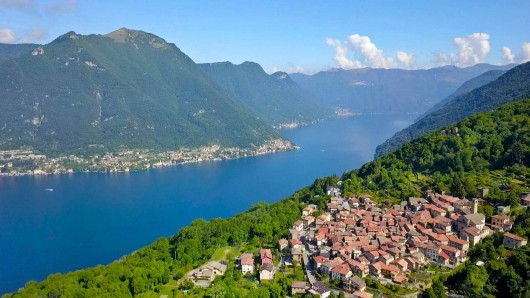
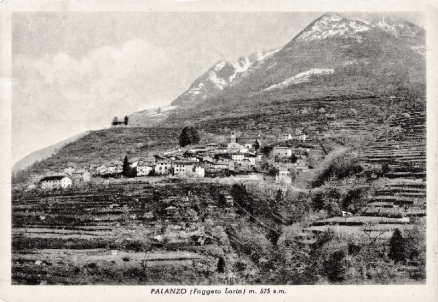
View of Palanzo from above Molina, courtesy of the Amici del Torchio di Palanzo

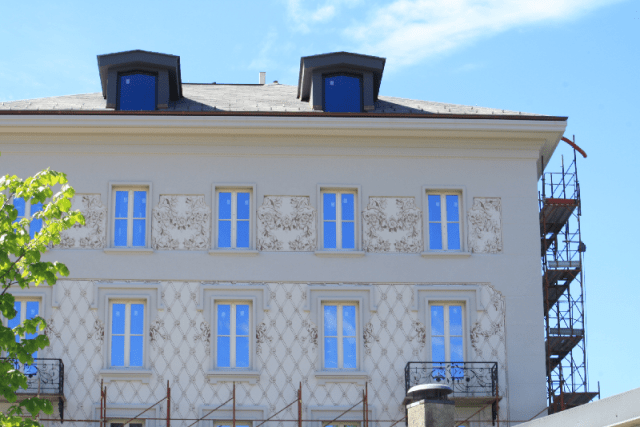
Within the comune of Fagetto Lario, on the road from Como to Bellagio and suspended about 300 metres above lake level, are three small medieval towns – each as beautiful as the other. From the lake you see them nestled in the mountainside in a string above Faggeto starting with Molina to the south, Lemna in between with Palanzo at the end.

Palanzo 5

Ancient portico in the heart of Palanzo

Palanzo has decided this year to show off its very particular appeal to a broader audience than usual by holding an exhibition and various events over the three weekends between 15th and 29th June. It’s an artistic event designed to celebrate the town’s unique virtues. And quite rightly so since all three of these towns possess a singular quality of peace and serenity, with Palanzo perhaps exceeding its siblings through a touch more beauty in its architecture and in the advantages of its natural setting.

Il Torchio

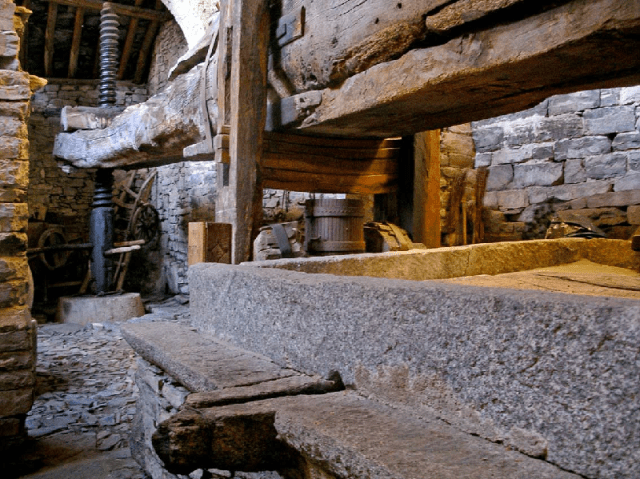
The medieval wine press (il torchio) lies at the physical and spiritual heart of the town. Courtesy of the Amici del Torchio di Palanzo

The exhibition is staged in various parts of the small town and curated by Roberto Borghi and Stefano Ceresa. They have produced a fascinating guide to the exhibition which can be downloaded in PDF format. I was particularly impressed by the written introduction to the guide by both curators. Stefano Ceresa cites the importance of the old wine press at the centre of the town (which dates from 1572 and is a national monument) as almost representing the original soul of the community. He mentions how the town is surrounded on all sides by impressive dry stone walled terracing used in the past for the production of grain and fruit and for the extensive cultivation of black grapes. Many of these walled terraces remain although agricultural production has ceased to be important and wine production a distant memory. But the wine press (il torchio), and the soul of the town, lives on.

Terracing

An example of the extensive dry stone wall terracing to be found surrounding Palanzo. This example is on the stretch of Strada Regia to the north of Palanzo in the direction of Pognana Lario.

terracing 2

Palanzo when all the terraces were intensively cultivated. The decline in agriculture has transformed the hillsides around the lake since the 1940s.

I have often mused to myself as to what is the best elevation for viewing the lake. Is it on the lakefront itself, or half way up the surrounding hillsides or viewed from way above when walking on the crest of the mountains? I have come to believe that Palanzo and its sisters share the ideal, more or less at two hundred fifty metres above the lake level. At this height the lake is not so far down to not be in constant sight, yet it is away from the more intense commercial activity or the numbers of people to be found at lakeside, particularly in the summer months. It and they are also very much welded into the mountainside with Monte Palanzone rising to over one thousand metres behind them.

Cascata Palanzo

Waterfall on the walk towards Pognana.

Roberto Borghi’s introduction in the ‘Palanzo in Mostra’ catalogue identifies how Palanzo’s reality is defined by the three physical factors of sky, lake and mountain with rock and water forming the vital elements. Buildings and terraces are made from locally quarried stone. Water is present in the abundance of the lake and also in the streams, springs and waterfalls that surround the town. He goes on to introduce the exhibition in the form of a metaphor where the artworks on display form a type of glossary to Palanzo, the story. And if Palanzo is a story, the routes to follow from one set of exhibits to another form the narrative lines. Water for Borghi is the main protagonist in this metaphorical story of Palanzo with an implicit, actual and symbolic presence.

Palanzo 3

Maybe I have now been living in Italy long enough to become accustomed to the type of  metaphysical hyperbole in Borghi’s description of the town, but I believe Palanzo warrants it. Palanzo (and her sisters) deserve both the hyperbole and strangely enough, the meta-physicality. Borghi describes the work of one set of exhibitors, the Como-based visual installation co-operative ‘OLO Creative Farm’ as representing a pilgrimage to the town. It’s true to say that when you enter Palanzo you leave one world behind and enter a different reality, one that Borghi sees as being mysterious, silent, thoughtful inspiring contemplation, as shared with the pace and reflection of pilgrimages in the past. He admits that all this serenity may not be to everyone’s taste, and certainly it may not be so easy to live in such a community if unaccustomed to the silence of its indolent rhythm. And who knows, maybe that serenity starts to fade as new arrivals become more accustomed to the place and aware of the various forms of intrigue commonly found in most societies. But he totally captures the spirit of the town to those of us visitors willing to be impressed.

Palanzo 1The exhibition itself consists of six different sets of works displayed across the small town. All of the works are relevant to Palanzo in one way or another – as Borghi says, providing a glossary or a set of footnotes to the town. The catalogue suggests an ‘itinerario espositivo’ that starts off with the sculpture by Como-born Carmen Molteni on two sides of the large doors to No. 3 Via Stretta. Moving on to a courtyard by the town’s wine press you see the large canvases depicting Palanzo’s view down onto the lake. These are the work of Milan-born Alberto Colombo who now has his studio in nearby Torno.


The Bar Dolores is the only bar in Palanzo and so it is not hard to imagine how central it must be in the social life of the town, particularly for those whose working life is over and who have the time to meet and talk. Borghi describes it as ‘Simenon-esque’ Photographer Jeanette Muller, Swiss-born and resident in Como Province, has taken a series of images of some of the bar’s former and current habitues and these are on display here.

Sentieri Palanzo

Palanzo lies on the Strada Regia with paths also up to the summit of Monte Palanzone and the Rifugia Riello

Palanzo does boast a very small but well maintained library and this now houses the exhibition of photos taken by the members of the OLO Creative Farm collective when on their ‘pilgrimage’ from their base in Como to Palanzo.

lavatoio

The ‘lavatoio’ – Palanzo’s communal laundry facility used in the days before domestic washing machines.

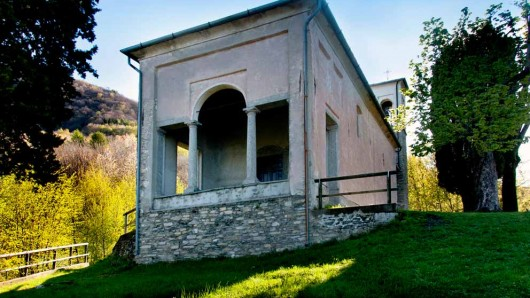
So many towns and cities in Italy retain the communal laundry facilities known as ‘lavatoio’. These are no longer used but they seem to be preserved, if not intentionally, to provide a collective reminder of a not-so-distant past where everyday life was materially much poorer but socially richer. Palanzo boasts a particularly fine and extensive example of a lavatoio, and it has been used to display the sculptures by Milan-born Ornella Piluso, better known as Topylabrys in the art world. The final installation is the sculpture by Roberto Biondi in the portico of Chiesa della Madonna del Soldo. His suspended empty frames look down onto a view of the lake which is itself framed by the arches of the church’s portico – a work which exploits the unique qualities of Palanzo’s natural setting.

Madonna del Soldo

The Chiesa della Madonna del Sordo, on the southern edge of the town with a view over the lake.

Palanzo 6

To accompany the exhibition, a series of events have been organised for each weekend starting on the 15th June and ending on the 29th. Visit the site of the organisers, the Associazione Amici del Torchio di Palanzo, for more information on these events, about the Torchio itself or on the other events they organise throughout the year.

Palanzo can be reached from Como on Bus C31 but note that no buses operate there on Sundays. Alternatively, if you have time to enjoy a walk taking in all three of these medieval towns, read our article on the stretch of the Strada Regia starting from Torno and ending at Pognana.

Posted in Architecture, Art, Culture, Events, Itineraries, Lake, Places of interest, Uncategorized | Tagged , , , , , , , | Leave a comment

Exercising Outdoors – Some Options

Total Fit 3

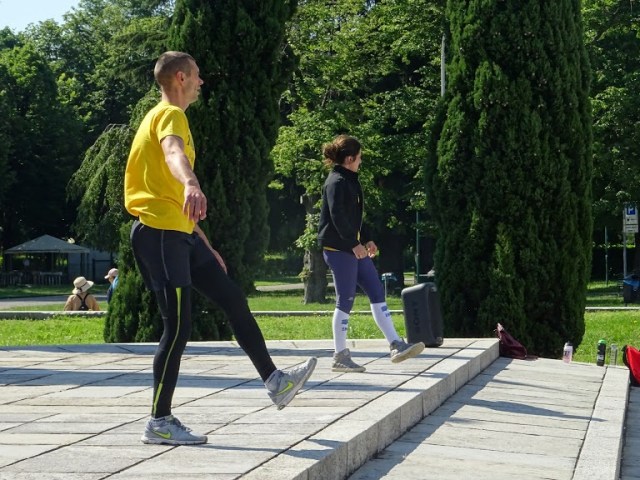
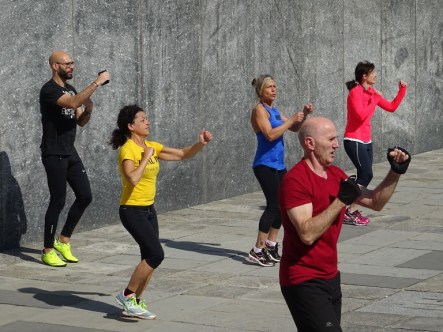
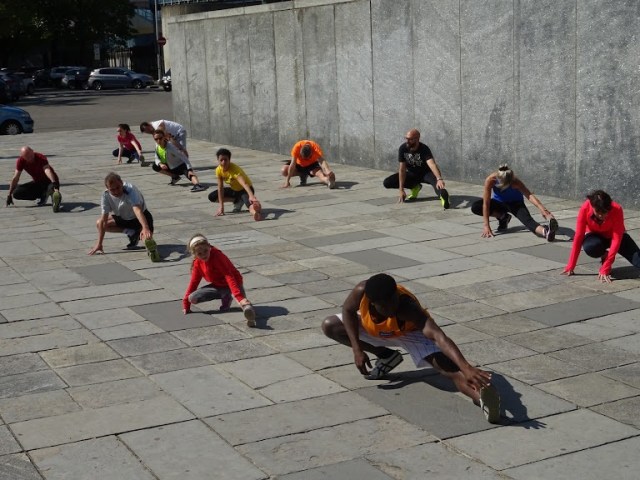
Total Fit’s instructors lead a group through their exercise programme beside Como’s Monumento ai Caduti.

Most of us recognise that physical activity is good for us – but exercising indoors can be unappealing particularly when the weather improves as at this time of year. So here are three main and some supplementary options for exercising outdoors under guidance and in the company of others.

Total Fit

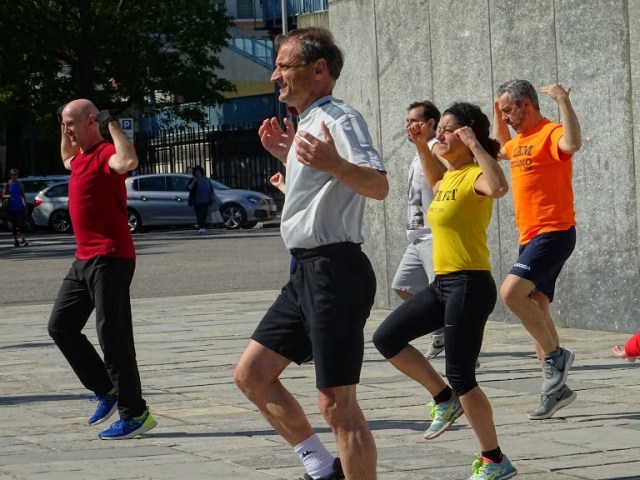
Total Fit 1If you pass by the Monumento ai Caduti (the War Memorial) along the lakefront you may well see an animated group, ranging from between ten to twenty people, being led through a work out to the accompaniment of a reggaeton soundtrack. These classes are run by Total Fit. Their website introduces themselves as follows:
‘We aim to appeal to those who do not want or are unable to subscribe to a classical fitness centre where you are left on your own during your training without options for stimulus or support. With us instead you will find a welcoming and enjoyable environment.’

The website (in Italian) also includes this illustrative video which captures some of the excitement and energy I witnessed when passing by the other day.

Total Fit 4

Total Fit have a three point approach to wellness, namely through exercise, nutrition and what they refer to as integration. Their holistic philosophy is something participants can take on, explore as profoundly as they wish or alternately, ignore in its entirety. Theirs is a well-established organisation that has been running for the last three years in which time they have built up a following of over sixty clients.  They are associated with Herbal Life, the nutrition and dietary supplement company. They do state that those who sign up with them are entirely free to pursue any recommended lifestyle goals as far as they wish. Nor are they obliged to purchase supplements from Herbal Life if they prefer not to.

Total Fit 5You can just drop in at the Monumento dei Caduti on one of their outdoor sessions held, weather permitting, from 09.00 to 10.00 on Mondays, Wednesdays or Fridays and from 10.00 to 11.00 on Saturdays. There are also two evening sessions held in the same location from 20.00 to 21.30 on Tuesdays and Wednesdays. One session will cost you €10. When weather does not permit, sessions (at the same times) are held in the gym of the Scuola Media ‘Ugo Foscolo’ on Via Borgo Vico. All ages, abilities and aptitudes are welcome with courses designed for three levels of participation – base, intermediate and advanced. Each level has its own focus for achievement with base level directed at posture and breathing, intermediate at strength and resistance while advanced incorporates cardio and muscular definition. Scroll down to the end of the article for their contact information.

MammaFit logoMammaFit

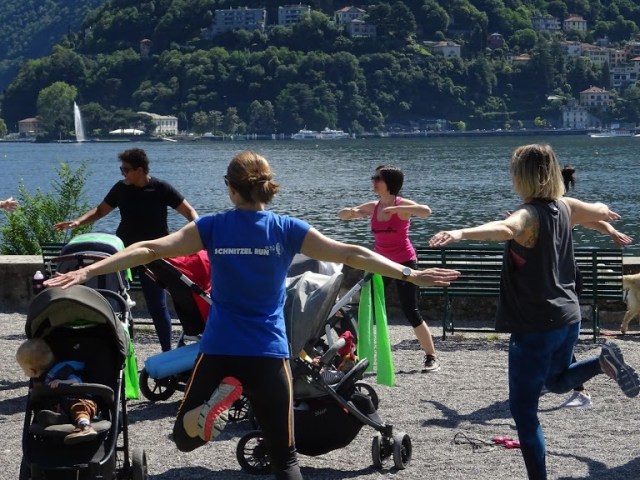
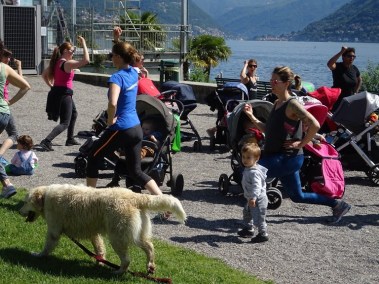
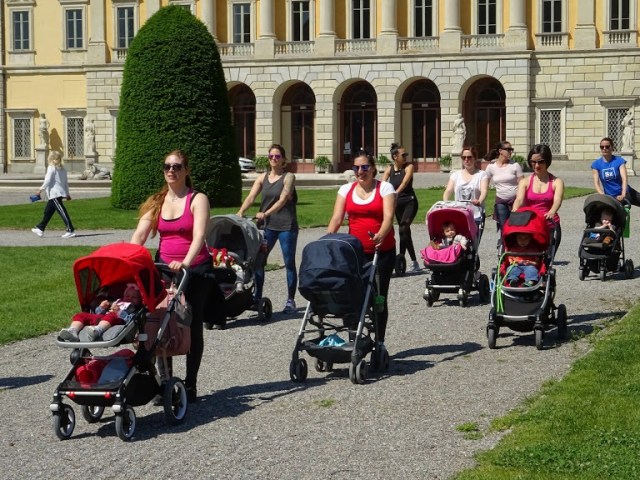
Total Fit aim to hold their exercise sessions outdoors as far as possible for both the physical and mental benefits of direct contact with nature. The same commitment to exercising in a natural environment is shared by our next group – MammaFit.  If you were to continue your walk from the Monumento ai Caduti, along the lakefront walkway to the gardens of Villa Olmo, you may well see a group of young women, with their babies in buggies, being led through an exercise programme designed specifically for postpartum mothers.

Mammfit 1MammaFit is an Italian organisation set up to offer vital support to mothers looking to get back into shape after giving birth. But its much more than a standard exercise class. Its an opportunity to get together away from the home, to undertake exercises designed specifically for the needs of a new mother and of course, to share thoughts, ideas and information amongst a peer group facing the same sort of emotions, concerns and challenges.
Mammfit 7

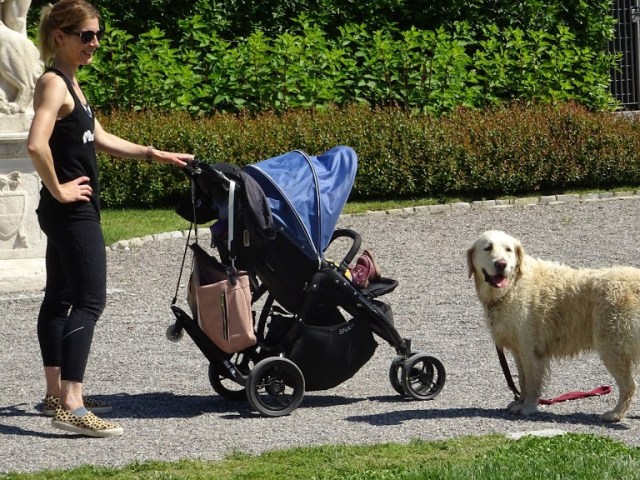
Katy Rose, leader of the Como group of MammaFit with baby and dog.

The Como group meet in front of Villa Olmo, on the lakefront close to the Lido bar on Tuesdays and  Fridays at 10.30, weather permitting. They are led by qualified personal trainer and osteopath Katy Rose who is originally from the UK. Her group is truly international consisting of both Italian and foreign mothers. As with Total Fit, the instruction is given in Italian but language really is no barrier and of course, Katy can always clarify in English if necessary.

Mammfit 3Recent mothers are recommended to join the programme approximately forty days after the baby’s birth and maintain it for about twelve months or as long as the babies are happy to stay sat watching in their buggies. In fact, the babies all seem totally intrigued as they watch the circle of mothers pass by their push chairs. The activity has a calming effect on everyone, including Katy’s beautiful dog!
Katy’s personal journey from Guildford in Surrey to Como is fascinating and she shares some of the similar qualities I discovered when recently interviewing Sarah Aller, Como’s New York artist – a determination to make a success of living as an ex-pat by embracing Italian life for its positives and of course, managing the negatives! Sarah happens also to be one of Katy’s MammaFit participants.

Mammfit 4Katy started leading the Como group back in 2016 having completed her training with MammaFit in 2015. She was looking for an activity that allowed her to continue her interest in physical activity while caring for her new-born child. Now into her fourth year, she is again accompanied by her second child but also thinking of the needs of mothers with toddlers. For them, she has devised her own programme held indoors called ‘Back in Shape‘. Contact information for MammaFit and Katy is at the end of the article.
Pratiqiamo logoPratiqiamo

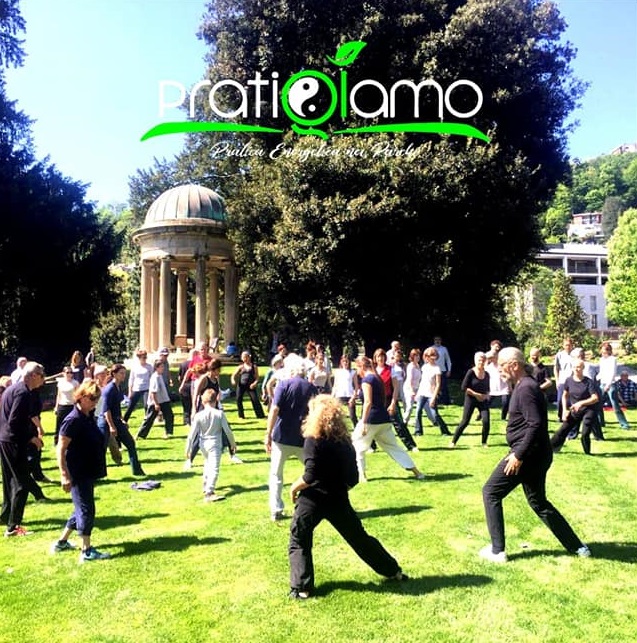
June in Como is the ideal month for outside physical activity – the heavy rains of spring have stopped, the sun is shining but the temperatures have not yet risen too high. It is just the right time to participate in the totally free ‘pop-up’ activities organised by Pratiqiamo which start on Monday June 17th.  All the groups mentioned here pay attention beyond the physical to embrace the mental and social advantages of participating in outdoor activities. For Pratiqiamo these aspects, alongside the ethical, are fundamental to their philosophy based as it is on the principles of the Chinese art of Qi Gong from which are derived Tai Chi and other martial arts. As was explained to me by Francesca Cervellino, Pratiqiamo’s activity coordinator,  Qi Gong is basically about listening to your body and learning how to use our internal energy.

pratiqiamo 1Pratiqiamo is a loose grouping of like-minded professionals who volunteer their time to offer a month long programme of physical activity in the open, for free.  They range in age from 30 to 70 and come from a variety of different disciplines including dance and sport as well as the martial arts. They eschew publicity as much as they reject formal organisational structures, marketing or any other aspect of commercialism. However, by following their Facebook page and getting your details into their WhatsApp group via Francesca, you will receive all the practical details as to where and when they are meeting.
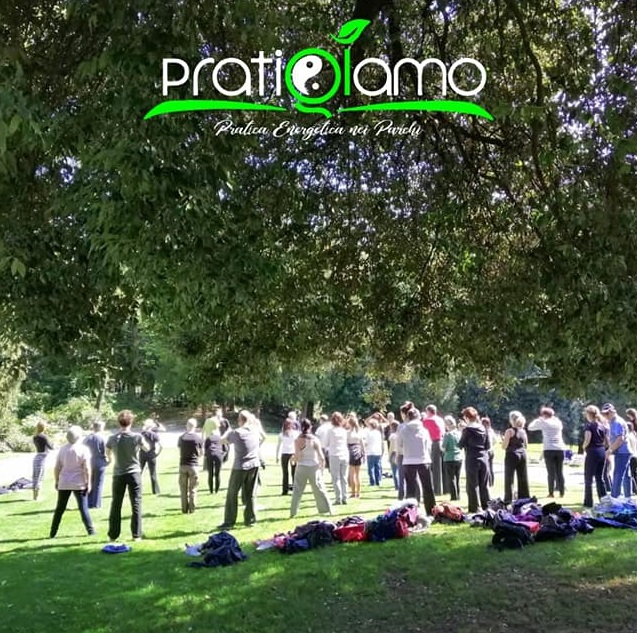
pratiqiamo 2For them, being outdoors and surrounded by nature is of primary importance hence their name Prati-Qi-Amo (translated as Fields-Qi Gong-I love) but also sounding like ‘pratichiamo’ – we practice. They like to locate their activities within Como’s different parks  and public spaces with the intention of reclaiming these as places for communal enjoyment. Some of Como’s parks away from the lakefront can be somewhat neglected and certainly underused. Pratiqiamo aim to assist the reintegration of these overlooked areas back into social urban life.
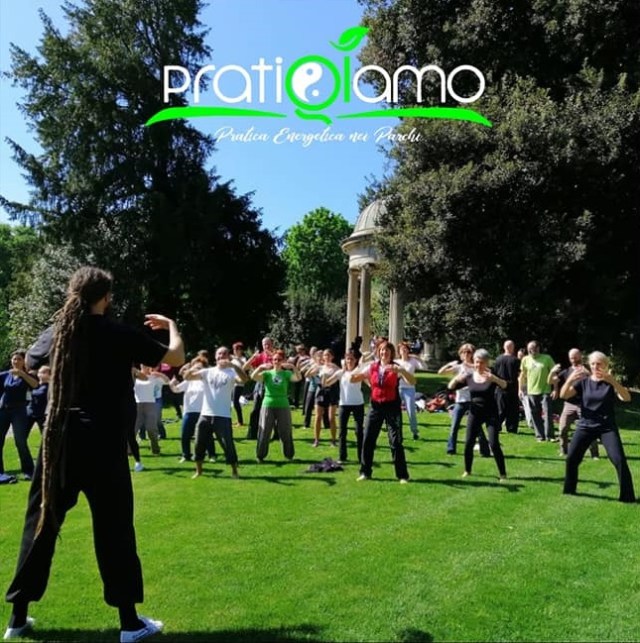
pratiqiamo3Their group activities are not highly structured. Each session is normally ‘guided’ (not taught) by three or four leaders. They seek to assist all participants, no matter what age, level of experience or capacity, to find their individual source of energy. Language is not a barrier. Francesca speaks English but, as with the other physical activities described here, communication is as much about being led by example as through verbal explanation.
Pratiqiamo’s programme (if it can be called as such) runs for just about a month starting on Monday June 17th. They may also hold one or two additional events at other times of the year. Follow their Facebook page to get information on the start of their activities or you may also contact Francesca directly. If you have time free in June or are visiting Como during this month, get your name and details into their WhatsApp group so you know where to be and when. Contact details can be found at the end of the article.

Row-In-Fit

Gerosa Twins Provincia di Como

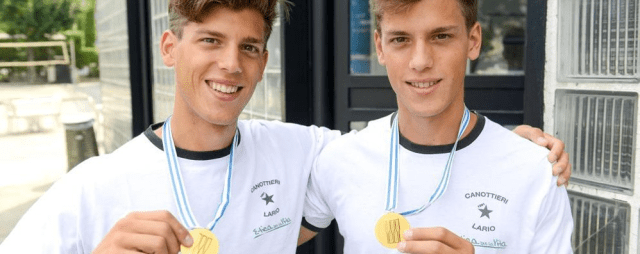
The Gerosa twins, instructors for the evening classes in rowing for adults known as Row-In-Fit. Photo courtesy of the Provincia di Como.

Right alongside the Monumento Ai Caduti is the club house of Canottieri Lario, Como’s very successful rowing club. They too offer classes for adults aged typically from twenty five to sixty and above. These are not strictly outdoor courses since they run in the evenings from autumn through winter until spring.

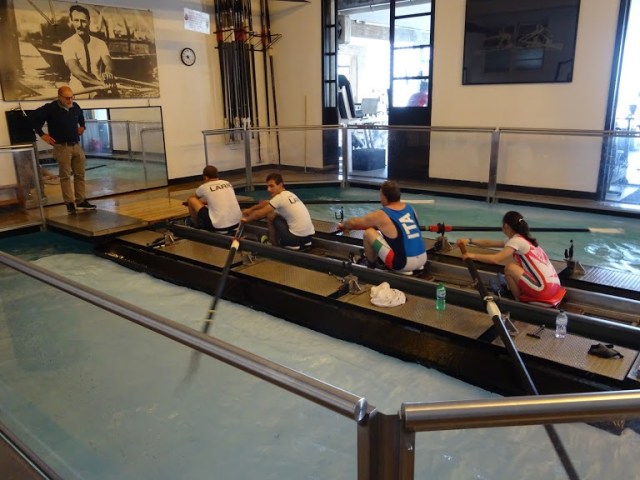
vascavoga

The Vasca Voga at Canottieri Lario

They make use of the club’s gym and the ‘vasca voga’ – one of the unique features of the club which allows teams to practice rowing indoors.  They do also go out on the lake on occasion if weather permits. These evening classes have been running for the last seven years and they offer a great way for participants to test out if rowing could be an enjoyable physical activity for them. In many cases, this proves the case since usually about half of the courses’ participants go on to join the club.  Instructors such as the Gerosa twins, are both qualified and experienced rowers.

Summer Activities for the Young

June sees the start of the long summer holidays which bring the annual challenge for parents to find activities to keep their children occupied and happy.

Horse Riding

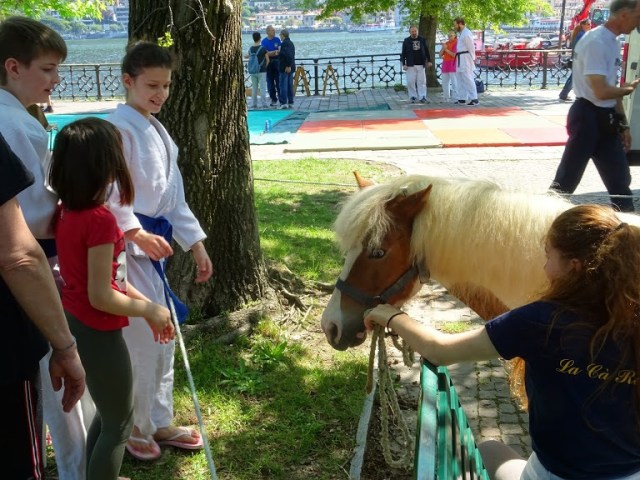
Red House Horses

One of Red House Horse Riding Club’s ponies being introduced to an adoring public.

The Red House Riding Club, based in Senna Comasco on the road out of Como towards Cantu, organise two weeks of summer camp with a daily programme running from 09.00 to 17.00. If days horse riding and helping out in the stables with an international group of children might be of interest, contact long-time English ex-pat resident Roz on +39 338 3405 954 for more information.

Football School

The soccer school run by the famous Portugese team, Benfica, hold soccer training camps for children and young people in Olgiate Comasco from 10th to 14th June, in Giubiasco from the 17th to 21st June and a residential course in the Valtellina from 30th June to 5th July.

Contact Jorge Pinto (Portugese also speaking Italian, Spanish and English) on +39 349 385 0344 for more information. You can also visit their website.

Varied Sports

rugbycomoGo to our Sport page for details of a number of other organisations offering courses for adults and children. Check out the Como Rugby Club who will be facing a touring team from Ireland later this month and are also holding an open day for children born between 2008 and 2015 this Saturday (8th June) from 15.30-17.00 at the Centro Sportivo Belvedere on Via Longoni.

Contact Details

Total Fit

Website: http://totalfit.it/ 

Facebook: @totalfit.it

Contact name and number: Marta Garlaschelli +39 333 241 7952

MammaFit

Website: http://www.mammaf.it/

Facebook: @MammaFit

Contact name and number: Katy Rose +39 392 533 7036

Pratiqiamo

Website: https://www.facebook.com/pratiqiamo/

Facebook: @pratiqiamo

Contact name: Francesca Cervellino, message her via Pratiqiamo’s Facebook page and send your telephone number to her to get included in the WhatsApp group.

The first week’s schedule of Pratiqiamo’s activities are also listed on our calendar and future dates will also be included when known.
Row-In-Fit

Website: http://www.canottierilario.it/

Facebook: @canottierilario

Contact name and number: Call +39  031.574720 Mondays to Fridays 09.00 to 12.30 and 14.00 – 18.00


Posted in Events, Gardens, People, Sport, Uncategorized, Wellness | Tagged , , , , , , , , , , , , , | Leave a comment

Swimability 2019: Lake Como’s Clean Water

Bellagio

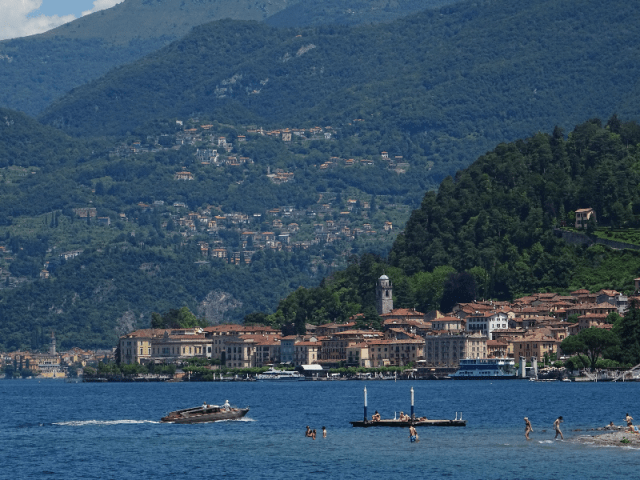
Bellagio’s Beach – one of the cleanest on Lake Como

A new article with the data for the 2020 Swimming Season is now available following this link. But do read on for general information on the lidos and beaches on the Como side of the lake.

Looking down into the clear waters of the lake on a warm summer’s day always invokes the desire in me to jump in and swim! There are few simple pleasures that beat bathing in cool, clean fresh water. Yet, no matter how it looks, can we be sure the water is safe for swimming? As in 2018, I am pleased to say that, for 99% of the public beaches on Lake Como, the answer is a very definite yes. And I can say that with full confidence since water quality is checked every month from April to the end of the swimming season at the start of October.

carena

The inviting water at Careno

Overall Results

I have checked the latest data for the eighteen beaches monitored on the Como leg of the lake from Griante on the west bank and Bellagio on the east to Como itself. One of these, the Spiaggia Rivabella Crotto at Lezzeno, was closed last year due to unacceptably high levels of pollution. It starts this year with good figures well within acceptable limits. The beach at Laglio is not recorded since it remains technically closed due to construction work on the lakefront.

Laglio

Laglio’s beach currently officially closed due to construction work on the lakefront.

All the others are swimmable with most recording only trace evidence of bacteria. Those close to the more dense areas of population record higher figures, such as Como’s beach at Villa Olmo or Lenno’s at the Spiaggia San Giorgio. However they are both well within safety levels. Dense population does not necessarily mean higher figures since the Rivetto beach at Bellagio and the Argegno lido register some of the cleanest water on the lake. The one site which did record high figures at the start of Spring but which have since come down is the beach within the old galloping track of Villa Erba. This beach, used by the Cernobbio Sailing Club, is near to where the River Breggia enters the lake. Possibly a fault in Chiasso’s water treatment plant or meteorological conditions caused a temporary escape of pollutants. The figures have since come down but are still the highest for all the beaches reviewed.

Canottieri 2

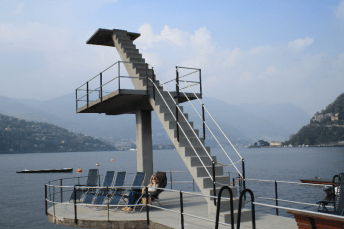
Unfortunately this magnificent but impractical diving platform designed by rationalist architect Gianni Mantero in 1930 for the Canottieri Lario clubhouse remains unused.

There was talk last year of beginning to monitor the quality of the water at the lido on Viale Geno but no figures are yet available. This lido is very close to the Como Swimming Club who organise an annual swim for professionals across the lake to Cernobbio. I doubt they would be prepared to organise this if swimming from their site was deemed to be dangerous. The annual swim across the lake from Torno to Moltrasio for amateurs will also go ahead this year on Monday evening July 22nd.

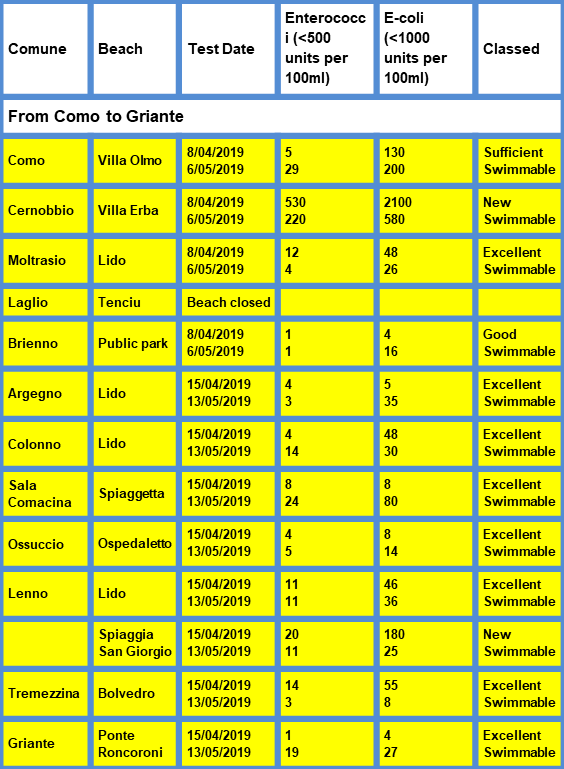
Detailed figures for 2019 are included in the table below.  For those of you wanting details of the beaches either at the top end of the lake or on the Lecco leg, please refer to the government website following this link, and enter in the name of the Comune, e.g. Abbadia Lariana. Ensure you enlarge the map sufficiently to make evident the individual beaches in each comune and then click on your preferred location. Since there are only two months’ data for this season, the classification of excellent, good or acceptable is based on last year. You need to check the actual results to evaluate the current state.

Portale

Screen shot from the Italian Government’s water portal site where data on levels of pollution at both salt and freshwater beaches are reported.

From Como to Griante

The hot weather does tempt some people to enter the water by the Tempio Voltiano in the lakeside park. Unfortunately this is also where the Cosia river enters the lake having passed by Como’s water treatment plant just up the road. This is also not an official beach and it is not a good idea to swim there. Instead there is the lido on Viale Geno although there is no data for this yet.

carate urio

The beach at Carate Urio

The other monitored site is the lido in the park of Villa Olmo where swimming is approved. Going north, the beach in the ex-galloping track of Villa Erba is not the cleanest but the strange thing is that this part of the lake is not actually accessible to the general public. Go out beyond Cernobbio to Moltrasio and you will find an excellently clean lido. Carate Urio has a popular beach on a lawn in front of the church but it is not monitored. Laglio’s beach remains closed due to ongoing construction work on the lakefront.


brienno 1

Brienno’s beach is actually a platform built over the lake with a bar on the terrace above.

You then arrive at Brienno which is my favourite location for swimming on the west side of the lake. Brienno’s beach is within the small public park on the northern edge of the town. It consists of a couple of platforms built on the mountainside over the lake with a bar offering sun beds and umbrellas if required. The bar provides all necessary facilities alongside simple dishes like rice or pasta salad and sandwiches. The water quality is monitored and is good. Brienno itself is a delightful little town of old fishermen’s dwellings linked by a maze of narrow streets. It is not on the main tourist map so remains pleasantly relaxing throughout the summer.


brienno 2

Brienno

On from Brienno, Argegno’s lido is excellent. Colonno’s beach is also very good. Lenno has three monitored beaches. All are well within acceptable standards but not as good as Argegno or Tremezzina to its north. Finally, the last beach reviewed is Griante which started off with a very low result and will hopefully regain it soon. It too though is well within safe limits.

From Como to Bellagio


carena beach

Careno’s beach is below the Romanesque bell tower of San Martino

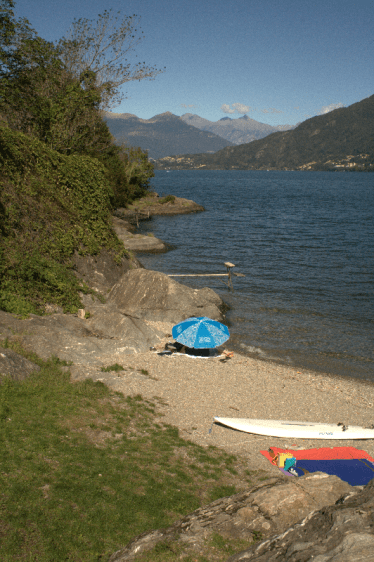
The first beach to be monitored on the eastern side of the Como leg is at Faggeto Lario. Its results are good but not as good as Nesso, the next monitored beach on the road north. It has excellent results. Between Faggeto Lario and  Nesso there is an unmonitored beach which happens to be my favourite spot for lake swimming on this side. It is Careno. The water here may not be monitored but I can assure you that it looks and feels good. Also there are no dense areas of population nearby least of all in Careno itself which is a very small town. This is a beautiful place to come and lounge in the shadow of the Romanesque bell tower of San Martino. The beach consists of a grassy area, and, if the level of the lake is low, a gravelly section. There are no public facilities here. However, if you have wisely booked lunch at the nearby Trattoria del Porto (call +39 031 910195 for reservations), you should be able to use their facilities. The restaurant specialises in lake fish and offers a fixed menu that usually includes two of Lake Como’s traditional local delicacies – missoltini and perch fillets with rice. There are not a large number of boats stopping at Careno but the schedule does allow you to arrive in good time to sunbathe and swim, eat, digest and then return home. Here you have all the ingredients for a perfect lazy excursion well off the normal tourist track – a spot that, like Brienno over the water, remains delightfully quiet and calm also in high summer during the week.


carena restaurant

Trattoria del Porto – specialises in lake fish at Careno.

Lezzeno is the next town on the road to Bellagio. Here there are two monitored beaches with the Spiaggia Rivabella Crotto being the only one in our area closed last year due to unacceptable levels of pollution. This year, however, its results are very good. The neighbouring beaches in Lezzeno at Bagnana and Salice have always been excellent. Finally we arrive at Bellagio’s beach at Rivetto – and just like Griante at the end of our western stretch, this beach is one of the cleanest recorded in our area.
careno beach 2

Leaving Careno beach on the boat back to Como

The EU’s Bathing Water Directive

Rezzonico Beach

The beach at Rezzonico, a beautiful lakeside village north of our area near San Siro.

All the countries within the European Union apply the standards defined in the 2006 Bathing Water Directive. These require member states to monitor rivers, lakes  and beaches regularly, to report their results and immediately publicise closure whenever any specific location fails to achieve acceptable levels. There is a broad range of poisonous bacteria that can enter the water either from sewage, water treatment centres or as agricultural or industrial run-off. Beyond causing gastroenteritis, they may also lead to very serious conditions such as meningitis. Rather than test for the wide variety of possible bacteria, the tests focus on identifying the number of units of just two microorganisms, e-coli and intestinal enterococci. Levels of these provide a good indication of general levels for the other harmful bacteria. Units are measured per one hundred millitres with any number below 1000 acceptable for e-coli and below 500 for enterococci. Depending on results, the water from each site is then classified as being either excellent, good, sufficient or poor.

Detailed results

Here are the latest figures for those beaches close to Como.

Table 1

Table 2

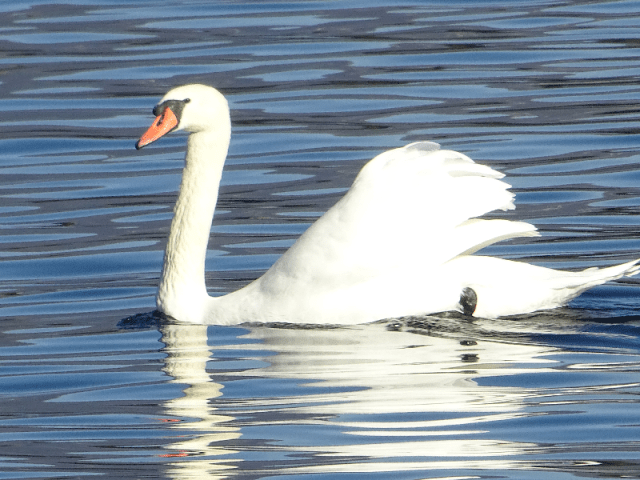
swan


Posted in Lake, Places of interest, Uncategorized | Tagged , , , , , , , , , , , , , , , , , , | 2 Comments

Villa Platamone – An ‘Aristocratic’ Bed and Breakfast

Portico and park

Villa Platamone Portico and Park

The holiday lodge built in the 1820s for Michele Platamone, the Duke of Cannizzaro and Prince of Lardaria, has now been restored to former glory and opened today for the first time to paying guests. This glorious neo-classical home is the latest offer in  luxury holiday accommodation in Como. It is also available as a stylish venue to host special events.

From the dining room

View from the Dining Room to the Great Room and on to the Winter Garden. Public space in Villa Platamone

The villa has been lovingly restored by ex-pat couple Katy and Alex who have realised their ambition of renovating and sharing this dream of a villa.  You are invited to share their truly beautiful home if you would like to experience its nineteenth century opulence matched with modern day comforts and convenience. The Villa Platamone opened for reservations today, 15 May 2019 exclusively via their website.

The Sicilian aristocrat Michele Platamone (Duke of Cannizzaro, Prince of Lardaria and Rosolini, Count of Sant’Antonio, Baron of Roccapalumba, Cipolla, Imposa and Longarini, Signore of Buscaglia, Ritibillini, Almidara and Sannini) had renowned architect Luigi Clerichetti build this holiday home for him in the gardens of a monastery suppressed during the Napoleonic era. Clerichetti designed a number of villas for the aristocracy in Lombardy and the Swiss Canton of Ticino. His urban villas such as the Villa Ciani in Lugano were mostly built in the fashionable neo-classical style as is the Villa Platamone.

Villa Ciani

Villa Ciani in Lugano, the neo-classical ‘capolavoro’ of Villa Platamone’s architect Luigi Clerichetti

He also designed many of the aristocracy’s rural retreats in the eclectic romantic style borrowed from the United Kingdom as with the Villa Bignami on the lake on the border of Tavernola and Cernobbio. Built above the eastern edge of Como’s old town looking up towards Garzola, the villa was designed both externally and internally to suit the needs of a commissioning aristocrat with a two-line string of titles to his name.  

Villa Bignami

Villa Bignami by architect Luigi Clerichetti on Lake Como at the mouth of the Breggia as it enters Lake Como on the border between Como and Cernobbio.

For Katy and Alex it has been a long road both physically and metaphorically in getting to this grand opening. They originally lived in Moscow but left there thirty years ago for Israel and then on to numerous countries around the world. However, having holidayed on the lake, they gradually came to focus their gaze on Como. Initially they just bought a holiday home up in Argegno but Katy started to explore the feasibility of establishing some form of hospitality business nearby. It was only on seeing Villa Platamone that her ideas took final shape – a shape determined by the building itself. For Katy recognised that the villa would make a beautiful family home yet with plenty of space and the potential to offer top end luxury bed and breakfast accommodation. Hence was born her dream of restoring this grand villa to former glory and sharing it with family and guests.

Great Room Fireplace

The Great Room

Most of the ground floor is public space with only the professionally equipped and spacious kitchen marked out as private. Guests are encouraged to make use of the billiards room, the Winter Garden with its stunning frescoed ceiling, the dining room and the immense Great Room with its imposing fireplace. Each of these rooms lead out onto the patio and park and the swimming pool on its south facing flank.

The villa can house up to fourteen guests within four suites and two double rooms. The suites are all on the first floor, all individually decorated and furnished but in a classical style in keeping with the neo-classical design of the villa.

Terraces

Private terraces with views over the villa’s park

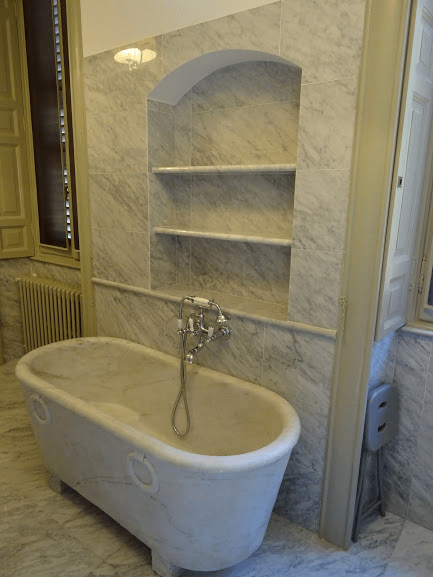
Every effort has been taken to use the original fittings wherever possible as in the case of the deep marble bath adorning one of the suites. Most of the suites have access to a private terrace. The villa’s website details the exact decor, facilities, and disposition of each suite. Such huge care, attention and cost has gone into the renovation and decoration of the villa that Katy feels it is not an appropriate environment for young children. I could appreciate her point of view after my visit.

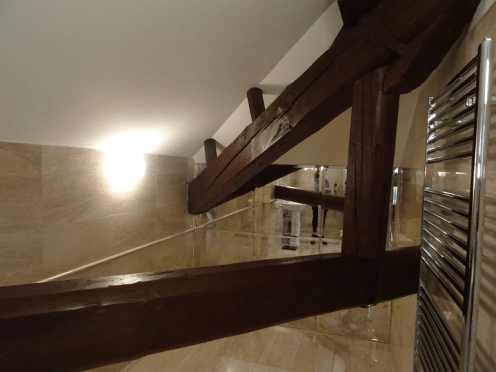
The conversion of the attic space gave Katy the opportunity to go for a more contemporary design making creative use of skylights whilst incorporating architectural features such as the immense timber beams supporting the roof. The attic also houses the gym and the sauna.

Beams

Wood, marble and chrome – this bathroom on the top floor incorporates the beams supporting the roof.

Suite

What truly impressed me was the quality of the restoration work. No expense could have been spared. The restoration of the Winter Garden’s floral frescoed ceiling or the delicate marquetry in the small room that runs off from the Billiard Room go to show how much love has been put into revitalising this architectural gem. It is exceptionally rare to find such extensive early nineteenth century interiors so faithfully restored and available for public viewing and enjoyment.

Marble bath

The Principe Suite bathroom has an original deep-fill marble bath

Winter Garden Ceiling detail

Gold leaf detail around the ceiling rose in the Winter Garden.

Winter Garden statuary

Winter Garden Statuary

Winter Garden Ceiling fresco

Winter Garden Floral frescoed ceiling

It surprised me to hear that the villa itself was not under the Soprintendenza delle Belle Arti although the villa’s park is. The Soprintendenza is a well-meaning organisation designed to ensure the integrity of Italy’s immense architectural and artistic patrimony. This means that no changes can be made to the parkland surrounding the villa without the express approval of the Soprintendenza.

three hundred year magnolia

The park includes this 300 year old magnolia

Who knows what may or may not have been allowed if their jurisdiction had also covered the villa itself. Buildings like the Villa Platamone cost a lot to restore and maintain and, with a lack of public funding available, one way such treasures will be preserved for the future is by placing them in the hands of those entrepreneurs who can cover the high costs of sympathetic restoration. Yet they also need to be at liberty to modify such buildings to produce sufficient revenue. Villa Platamone is lucky to have found a couple prepared to restore her to former glory out of pure love and respect for the building and out of a  genuine desire to share her glory with others beyond their family.

If you would like to be one of the first to experience this marvellous addition to Como’s options for luxury accommodation,  go to the villa’s website for more information and to make a booking. Large discounts are available for this opening season. Early birds may get up to a 40% discount by entering the code VPLAUNCH2019 on their booking form. Katy intends to keep the villa open to guests until the end of October, opening again over the Christmas period before restarting next year’s season from the end of March. For more great images of the villa and its park, use the Instagram hashtag #villaplatamone or @villaplatamone to view their Facebook page. Send any queries you may have to contact@villaplatamone.com or call Katy on  +39 031 249922.

Swimming Pool

The swimming pool on the south facing side of the villa.


Posted in Architecture, Culture, Gardens, History, Uncategorized | Tagged , , , , , , , , , | Leave a comment

Torno’s Santo Chiodo & Conflicts with Como

Torno from P di Stefano

Torno seen from Piazza santo Stefano, a district of Cernobbio

This Sunday, May 5th, will see the annual blessing and evening procession through the town of its ‘Santo Chiodo’ or sacred nail – no less than one of the nails used in the crucifixion of Jesus. You may well ask how come this small lakeside town with a present day population of about 1250 should boast within its church of St. John the Baptist, one of the four nails from the cross. You may well not believe the story I am about to tell – we are after all dealing with folklore here – but many ‘Tornaschi’ do and they, joined undoubtedly by other more sceptical folk, will nevertheless take part in this annual celebration starting off in the Chiesa di San Giovanni Battista, the second of Torno’s churches lying to the north of the port.

Interior 2

Interior of Chiesa di San Giovanni Battista. The Santo Chiodo is kept in a chest behind the altar.

Campanile 1

Bell tower of the Chiesa di San Giovanni Battista

The maths around the number of known crucifixion nails does not exactly add up – but some of the nails may well have been subdivided. The original nails were appropriated in 327 to 328 from the Holy Land by Elena, the mother of the future Emperor Constantine.  Apparently there were four and not three as was established in Christian iconography by Giotto. However, once Elena had returned to Rome, she only made direct use of two of them by incorporating one within the diadem surrounding her son Constantine’s helmet and the other for the bit in the bridle of his war horse. Both nails were intended as a charm to protect her son in battle.


The four Santi Chiodi are nowadays most commonly believed to be in Rome, Milan. Monza and in the Cathedral of Colle di Val d’Elsa in the Province of Siena. The one in Rome is said to be part or all of the nail used as a bit in the bridle of Constantine’s horse. It is housed in the Basilica of the Holy Cross in Jerusalem which was built on Empress Elena’s original residence. The one in Milan is said to have come from Rome at the time of Saint Ambrose. It is now kept in a tabernacle high above the altar in Milan’s Duomo. It used to be brought out for possession every 3rd May but the procession now takes place annually on the Saturday before September 14th.

Corona Ferrea Monza

Corona Ferrea, used in the coronation of Kings of Italy up until the nineteenth century.

The Monza nail is incorporated into the Corona Ferrea, an early medieval crown used from the time of the Lombard Queen Teodolinda to crown the Kings of Italy. It is now housed in the Museum of Monza Cathedral. There are two conflicting stories of how it came to Monza in the first place. The one version states that the Corona Ferrea is none other than the diadem mounted on Constantine’s helmet. When the western empire collapsed the diadem was carried over to Constantinople but was then claimed by the Ostrogoth King Theodoric who went on to become the second ‘barbarian’ King of Rome from 493 to 526. His summer residence was in Monza which is to where the byzantines duly sent it. The less colourful version is that Pope Gregory I gave it to the Lombard Queen Teodolinda whose palace was in Monza as thanks for establishing Monza Cathedral and for converting the local population to Christianity.

Alleys Torno

Torno’s ancient alleyways

The fourth nail in Colle di Val d’Elsa, near to San Gimignano, is twenty two centimetres long and is described with confident precision to have been used to pin down Jesus’s left foot. It was in the ninth century and in the hands of a French priest who, having made his pilgrimage to Rome and been given the nail by the Pope, died on his return journey at Viterbo. On his deathbed he entrusted the nail to his secretary or travelling companion, a priest from the Colle area.

However, up until the end of the nineteenth century, pilgrims from across Europe would travel to Torno to venerate the Santo Chiodo. Torno gained its nail from a German bishop named within Italy at least as Alemanno. In 1099 Alemanno was travelling back from a crusade in the Holy Land and seeking to pause his journey at Como. That was not possible since Como was embroiled at the time in a civil  micro-conflict reflecting the macro-conflict between Pope Gregory VII and the Holy Roman Emperor Henry IV.

Romweg 1500

Detail of the ‘Romweg’ (Rome Road) map published in 1500 orientated south to north with Como boxed. It showed the pilgrim routes across Europe from Edinburgh to Rome

Lake Como formed part of the medieval super highway back to Germany known as the Romweg and Alemanno needed to set sail.  He therefore took the shortest diversion possible by making his way to Torno. He was travelling with one of the nails from the cross and also with a limb from one of the victims of Herod’s slaughter of the first born.

Stucco ceiling

Detail of stucco decoration and frescoes within the church

Alemanno’s onward journey the next day had to be postponed due to a heavy storm. Similar storms hampered his progress over the following days such that he took this to be a divine sign that the nail had found its natural home. He thus entrusted it to Torno and then, with storms abating, travelled on to Germany. No further mention is made as to what happened to the baby’s limb.

The story or fable of Torno’s Santo Chiodo was not verified in writing until 1677 when  Domenico Rusca, a Cistercian monk and member of Como’s powerful Rusca dynasty, cited how his ancestor Lamberto Rusca passed by Torno in 1126 before proceeding on to give battle against Isola Comacina. This was again part of a larger conflict but this time between the Holy Roman Empire and the Lombardy League led by Milan. Como supported the Emperor; Isola Comacina supported the Lombardy League. Lamberto went to Torno to gain protection in battle from the nail – just as Elena had hoped for her son Constantine. The nail worked to Lamberto’s advantage on this occasion even though Torno was actually allied with Isola Comacina during this conflict.

Sagra di San Giovanni

Sagra di San Giovanni, Isola Comacina. An annual firework display re-enacting the sacking of Isola Comacina by Como in the 12th century

The nail crops up again in the difficult history between Torno and Como. Back in the fifteenth century, these two towns were intense rivals. Torno had a population of 5000 (down to 1250 nowadays) and Como was slightly larger with 7000 (more like 70,000 nowadays). Both owed their prosperity to the wool trade. Torno was also strategically placed at the neck of the entrance to the ‘primo bacino’ on the lake. They used this location to demand duty and tolls from those wanting access to Como. So once again in a micro version of a macro European conflict, Como went to war against Torno and sacked it in 1515. They returned in 1522 to totally destroy the town. The townspeople were dispersed up the lake. During this destruction, a soldier stole the nail and carried it off to his home town of Bergamo. However he soon sought to return it when his family began to suffer a whole series of serious mishaps.

Doorway

Bas-relief by Rodari brothers above the doorway to Chiesa di San Giovanni Battista

In time the citizens of Torno returned, restored their church and then ensured that no-one could ever again steal their nail. It was encased in a chest secured by seven locks whose keys were separately held by six local families and the town’s priest. It was only thirty years ago when the priest decided to take custody of all seven keys. The chest with its seven locks sits today behind the altar. The priest will open all locks this Sunday and the nail will be presented to the local worshippers. The nail makes another appearance on the last Sunday in June, close to Saint John the Baptist’s Saint Day. On this occasion it is immersed in water held in a copper shell.  The water is then blessed and distributed to the ill and infirm of the town. Some have said that the water has curative properties.

Altar

Right from the start, the verification of the story behind the Santi Chiodi cannot be proven so this is primarily a story of folklore which still however has relevance to some locals to this day. Torno’s claim to possess one of the four nails from the cross does not have the following it used to have. Large numbers of pilgrims no longer visit Torno for the nail.  Most modern day tourists are also probably unaware of the nail and of its importance to this small lakeside town.  Its legacy is however to have given Torno a delightful small church with beautifully rich baroque decoration on the inside. With its splendid Romanesque bell tower, renovated in 1962 and the facade carved by the Rodari brothers restored in 1999  (on the nine hundredth centenary of the nail), the church has now been designated a national monument. It is well worth a visit.

Garden of Remembrance

Garden of Remembrance behind the church leading down to the town’s cemetery.


Posted in Culture, Events, Folklore, History, Places of interest, Uncategorized | Tagged , , , , , , , , , , | Leave a comment

A Castle in Distress: Tiina to the Rescue

carimate 2

Carimate Castle, Province of Como

Carimate Castle has fallen upon hard times. It has been unoccupied and unmaintained since 2014. Now, long-time Carimate resident Tiina Hiekkaranta, also known locally as the (Finnish) Countess of Carimate, and her husband Timo want to save it. They have constituted a core team of professionals with a plan for restoring the castle to and beyond its former glory – but they could use some help!

Tiina

Tiina Hiekkaranta, aka Countess of Carimate

The castle is up for sale, and, given its failure to reach its reserve in former auctions, comes offered at a knock-down price. Yet even if this 7,335 square metre property with a 5.2 hectare park attached, all dating back to the 1300s, was to be sold for a penny, it might still be too risky. That is unless you have the imagination to visualise the immense opportunities, the professionalism to realise them and the commitment to sustain the vision no matter what. Tiina and team believe they have exactly what’s needed – with the help of an angel or two!

Take a look at the Castle in this video link showing just what an architectural gem it is and how it looked back in 2014 before it had suffered damage through lack of maintenance and a leaky roof.

Head and Heart

south west tower

The South West Tower seen from the former moat

Angels will have to go for this plan with head and heart. But the heart won’t need too much convincing because the charms of Carimate and its castle will soon seduce. Would you not want to rest your head for a night or two where the Holy Roman Emperor Maximilian I chose to stay for a week in 1493 and again in 1496? Or to walk in the castle’s forest where this avid hunter chased deer and boar? Or to consider as you climb the south westerly tower that you are occupying the same spot as Giuseppe Garibaldi and the Savoy King Victor Emanuele II when they reviewed their troops amassing for the 3rd of the Italian Wars of Independence?

The castle is sited on a rise above the plain along the Antica Via Regina which was the main medieval route from Milan to Germany via Como and over the Splugen Pass. There was a castle on this site since around 800 –  the former castle was destroyed in 1149 in the conflict between Como and Milan. The current castle dates back to 1345 when the feudal estate was acquired by the Visconti family, the lords of Milan. They built it as a form of holiday retreat, a hunting lodge and a fortification. Its strategic position on the route north was recognised by Caterina Visconti who in the 1380s  added the moat and drawbridge bearing the distinctive heraldry of the Visconti family. The small town of Carimate then developed around the fortified site.

stemme

The drawbridge carries the emblem of the Visconti family, lords of Milan throughout the middle ages. The viper devouring a human form is known as the ‘Biscione di Milano’ and can be seen on historic buildings throughout Lombardy, including at the exclusive Villa Pliniana on Lake Como.

Its location in those days was highly strategic, positioned as part of a defensive outer ring for Milan. It is equally strategic today but, thankfully, not for its defensive qualities other than as a retreat on the edge of the Milanese hinterland. It lies within one of Western Europe’s most densely populated and wealthy areas with easy access by air and by road or rail from Switzerland or along from the Veneto and through Bologna. Carimate’s strategic advantage is now strictly commercial. Yet it retains those qualities of peace and tranquillity originally recognised by the Visconti back in the 1300s when they made it their ideal holiday retreat. Nowadays that recreational quality is enhanced by being surrounded by five golf courses, one of which is directly on the doorstep – literally at the bottom of the garden – and being within striking distance of Lake Como, the Formula 1 venue in Monza, the various trade fairs held by Fiera Milano at Rho, San Siro – the home of AC Milan , etc. etc..

Making Magical Music

Moving on from the 1300s, the Visconti family finally left the castle in 1795 on the death of Ludovico Visconti who died intestate. It was then passed on to a Como family, the Arnaboldi. In 1874 Cristoforo Arnoboldi undertook extensive renovations giving the castle its current profile by adding gothic features and the crenelated roofline. That family eventually sold up in 1954 since when the castle has been through a varied set of fortunes.

Carimate 1

The rear of the Castle showing Cristoforo Arnaboldi’s Gothic renovation including the crenellated roof-line.

The height of these fortunes was decidedly between 1977 and 1987 when the castle was the site of one of the most successful recording studios in modern times – Stone Castle Studios. This enterprise was the brainchild of Antonio Casetta who had a precise and compelling vision. He set about investing in the latest technology and forming a creative environment where artists, session musicians, studio technicians could all get together to share in the production process. For him, the quality of the environment was everything – somewhere where all contributors to the creative process could come together temporarily to work in calm isolation and without negative distractions.

stone castle composite

Tony Casetta, creator of Stone Castle Studios and the album cover to Lucia Dalla’s ‘Come è profondo il mare’ – a work of genius produced in these studios.

The results were phenomenal. Practically all the great names of Italian popular music recorded here – the Pooh, Lucio Dalla, Fabrizio de André, Antonello Venditi and Pino Daniele amongst many others. The studio’s reputation and the qualities of its setting also attracted international stars such as Paul Young and the UK pop group ‘Yes’ who chose Carimate to record ‘Big Generator’. In the end, it was the financial management that let the studios down.

Tony Casetta’s formula for creative success was investing in technology and revolutionising the creative process. Tiina’s team similarly see investing in technology and revolutionising the concept of service as being the way to transform the castle into an exclusive resort.

A Return to Excellence

Front elevation

Front elevation, Carimate Castle

Tiina and her husband have put together a team of professionals consisting of hoteliers, architects, estate agents, restauranteurs and lawyers all committed head and heart to restoring Carimate Castle back to and beyond former glory. Tiina knows the castle intimately having previously worked for the former proprietors as a sales angel when it was a luxury hotel. She foresees it reopening as a hotel but with a mix of residence apartments in addition to the guest rooms. Latest technology will be deployed for air and water heat control. An excellent kitchen will be managed by the owners of the renowned local restaurant ‘Il Torchio’. Financial costings and estimates are in the hands of Tiina’s husband with his years of experience working in the financial sector. The window of opportunity is now open with the second auction scheduled for May 15th.

carimate 3

The Grand Entrance to the Castello di Carimate.

If you could be one of the angels Tiina and team are looking for, please contact her in the first instance on tiina.hiekkaranta@gmail.com . If you know of any potential angels, please do pass this article on. This gem of a building has been left unloved for far too long and both it, and its little town, deserve better.

grand hotel milano

The Grand Hotel Milano at Brunate – another luxury hotel being renovated and reopened after years of neglect as top end tourism booms in and around Como and Milan.

Posted in Architecture, Culture, History, Music, Places of interest, Uncategorized | Tagged , , , , , , , , , | 1 Comment

Sarah Aller: Como’s New York Artist In Residence

Sarah

Sarah Aller in her studio on Via Ciceri, Como

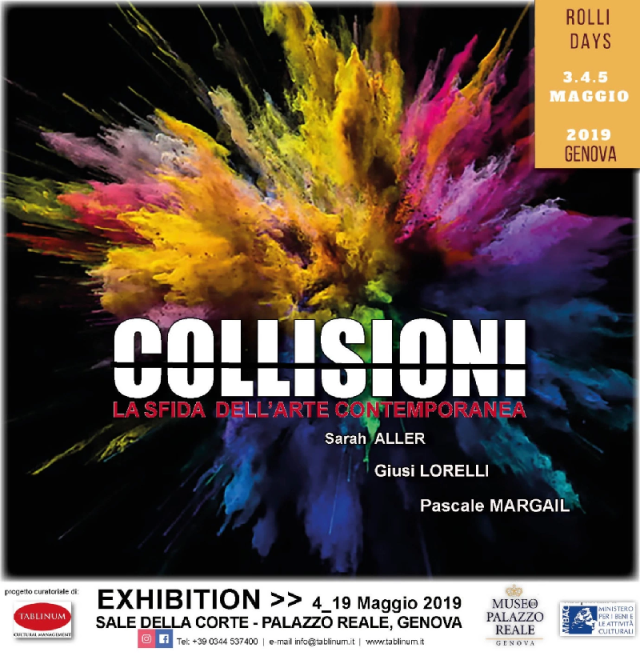
Sarah Aller has been living and working as an artist in Italy for the last eight years. I only became belatedly aware of her work recently due to some publicity for her upcoming participation in the ‘Collisioni’ exhibition to be held in Genoa’s Palazzo Reale at the start of May (details below). So there was no time to lose in learning more about this talented member of our local ex-pat community.

We met in her studio on Via Ciceri – a space shared alongside a Herbal Life office where her works displayed on the walls took me directly on a visual voyage via Paris to New York – an immediate affirmation of Sarah’s international background and of her love for urban settings.

Team Mates

‘Team Mates’ Sarah Aller. A pair of trapeze artists ascend over a neighborhood street, playfully stretching the width of the canvas. This original, 3 color stencil is sprayed over a collage of digitally manipulated, image transfer photographs. The transfers are adhered over a mixed media background revealing collaged and painted textures underneath. The viewer is nearly at eye level with the pair, engaging with their movements as they hover low over the street, almost touching ground. The piece relates to team work and reliance on those around us.

Sarah was raised and educated in New York where she also attended art school. She might best be considered a New York artist given how she incorporates iconic images of that vibrant city in many of her works. However she doesn’t limit herself to any particular setting and has incorporated images of both Genoa and Como into her backgrounds in honour of one of her favourite Italian cities and of the city where she has chosen to live. Her New York connection has gone down well for her here in Italy.

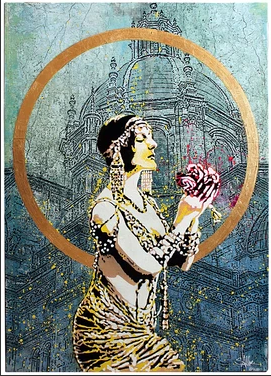
The Beauty

The Beauty, Sarah Aller. Original stencil, image transfer collage, gold leaf and acrylic on canvas. Como Cathedral is shown in the background.

It provokes interest on the part of Italian clients who also frequently ask how she came to be living and working here – “Why did you choose Como?” In Sarah’s case, it was a choice made for family reasons but one she in no way regrets, although she retains fond memories of her time spent in Turin. It was love and adventure which brought her to Italy opening up a decidedly positive chapter in her life in which she feels she has discovered her unique voice as an artist.

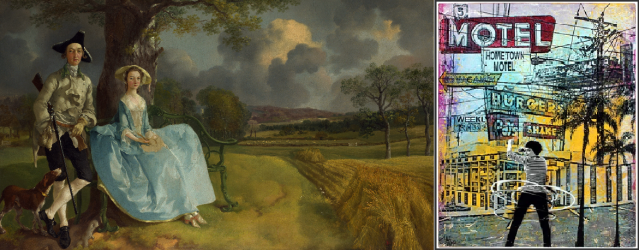
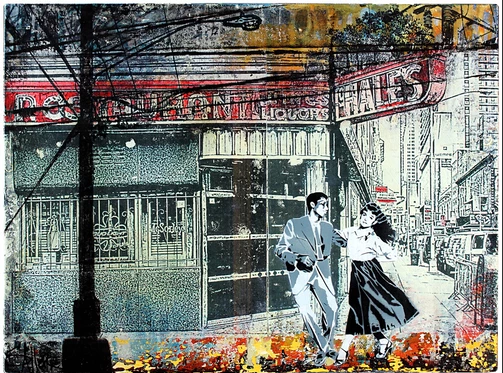
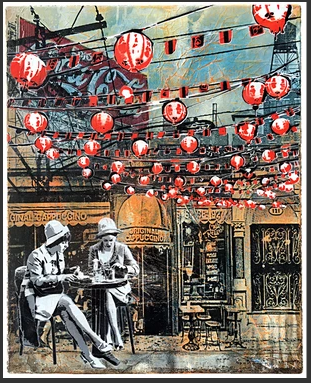
That artistic voice is expressed in multi-layered mixed media pieces on canvas. They consist of a background (predominantly urban) overlaid by subjects – a technique which conveys a slight disconnect between the subjects and the context in which they are placed. I compare this with ‘Mr and Mrs. Andrews’, that famous ‘old master’ by Thomas Gainsborough showing an aristocratic couple posed within and showing off their country estate. The point of his painting was the total integration of subject and setting. However Sarah’s technique lightly detaches her subjects from her backgrounds. I got the fanciful idea that this might be a reflection of modern mobility or possibly of the inevitable dislocation inherent in ex-pat life. Leaving my fancies aside, the technique does allow her to objectify her backgrounds so they offer an independent element to how we the viewer wish to read them.

Mr and Mrs Andrews and Hometown Shake

Mr. and Mrs. Andrews by Thomas Gainsborough, Hometown Shake by Sarah Aller.

Her subjects are also in a slight time warp with their retro feel revealed in costume, pose or activity. Many of her subjects are children or young people involved in activities such as dance, sport or games. They are caught in active poses with their dynamism contrasting with the static urban background. Sarah once worked as a Montessori teacher and this interest in childhood is certainly evident in her work.

Street Games

Street Games by Sarah Aller. Image transferred over collage with acrylic on board.

The urban backgrounds often complement this retro feel with Sarah admitting that she loves images of New York in the shabby 1970s or Paris in the bohemian years of the 1950s (when it so happens, the city had a sizeable population of ex-pat American writers, artists and musicians). This same spirit beyond shabby chic leads her to be intrigued by Genoa’s extensive but still mostly run-down Centro Storico or the Quartieri Spagnoli in Naples. She need only add the Ballarò district of Palermo to complete a trilogy of atmospheric Italian urban environments. The urban images used for her backgrounds are transferred from her own photographs.

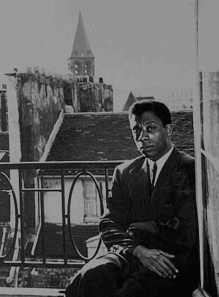
James Baldwin Paris

James Baldwin, American author of ‘Giovanni’s Room’ and ‘Another Country’ in Paris in the 1950s.

Her attitude to her own personal setting seems to be flexible and adaptable. She would love her son to go to university here but, despite that and the fact that she loves living here for now, she foresees a time when she would prefer to be closer to her parents. Whatever the future brings, she considers this to have been a formative time here in Italy seeing her mature as an artist by becoming more certain of her artistic style, more confident in the application of technique and finding her distinctive ‘voice’. She does not attribute this to any particular local influence but more a part of the normal ageing process. She interestingly characterised her time in her twenties as the period in which she discovered what she did not want to do. Whilst now, having got rid of the irrelevancies, she can focus on what she does want to do.

Try to Take Her Out

‘Try to Take Her Out’ by Sarah Aller. Monoprint, image transfer collage, original stencil and acrylic on canvas

I asked about her particular techniques with some trepidation knowing that some artists like to keep a firm lid on trade secrets. Instead Sarah welcomed the topic stating how her clients, apart from wanting to know why she is here, are also very interested in how her work is put together. She is more than happy to tell them. Her on-line catalogue is also more expansive than most on how each piece is constructed. She uses image transfer for creating both the background and the subjects. This is done from bonded carbon photocopies (laser and not ink-jet) using solvents or gel as a medium to dissolve away the paper to leave the carbon image on the canvas. Her backgrounds may also have been previously prepared using collage. For her subjects, apart also from image transfer, she now tends to use a lot of stencils which are either produced by hand from photocopies or cut on a plotter. The stencils are also a practical way to speed up production. In all cases, the starting point is a digital image of the intended final result although the finished work may sometimes differ due to unforeseen effects of the layering process.

Big Apple Pie

Big Apple Pie by Sarah Aller. Digital collage, image transfer, original stencil and acrylic on canvas

Many of her canvases are complex in terms of actual content but, in my opinion, it is this that makes them go beyond just being ‘interesting’. She goes for contrasts. If the subject is a simple design, the background tends to be full of detail, and vice-versa. The images she selects carry their own connotations beyond their context on the canvas. Both subject and background convey the sort of iconic force often found in street art. Add the visual impact of collage to this and we get works with a dense set of implied but unspecified meanings. The layering achieves a blend of visual complexity and symbolic immediacy. I can only characterise the overall effect as being as if we the viewer are being presented with a story contained within the canvas. We are given hints about the potential protagonists in this story, the time frame in which they operate and the urban environment they inhabit. There’s enough there for us to fill in the gaps and construct the rest.

Coffee Downtown

Coffee Downtown by Sarah Aller. Monoprint, image transfer collage, original stencil and acrylic on canvas

If art can help us sort and make sense of the constant bombardment on our visual senses, then it has value. At their best, Sarah’s stories perform a function not dissimilar to the way our brains perform a subconscious ordering of experience through dreams. My theory goes that the best of her works present the viewer with elements that spark synaptic links with our individual visual memories and provoke an instinctive ordering of them within a narrative of our own making – in other words, they are therapeutic!

Why not put my crackpot thesis to the test and go and see Sarah’s work for yourselves at the exhibition in Genoa. The exhibition is organised by Bellagio-based Tablinum Cultural Management under the title ‘Collision – The Challenge of Contemporary Art’. It runs from May 4th to 19th in the Sala della Corte of Genoa’s Palazzo Reale. She is also represented by Eye Contemporary Art who will exhibiting some of her work at the upcoming Affordable Art Fair in Hampstead, London, being held from 9th to 12th May. Back on Lake Como, you can also see Sarah’s work exhibited in Menaggio from Tuesday July 16th to Sunday July 28th. Sarah is contactable through her website which also outlines the work she does on commission.

CollisioniI hope we can persuade Sarah and family to stay on in Como. It’s great to discover another talented artist within our local ex-pat community and I look forward to seeing how her work progresses. The signs are positive – she has taken up her new studio space and is already thinking of how this will give her the scope to get ‘bigger and messier’ as she herself puts it.
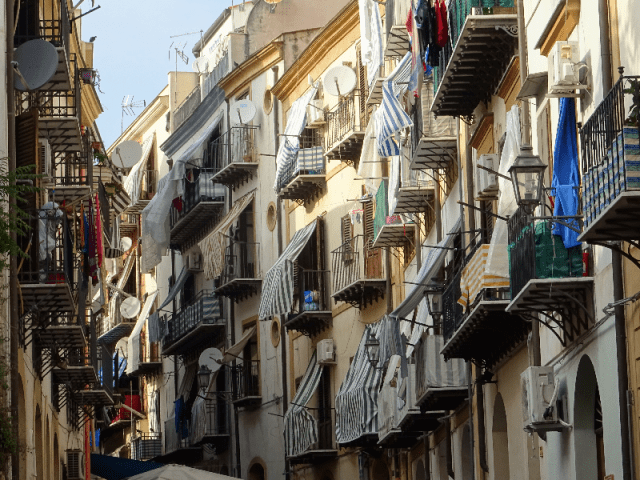
Palermo

A Palermo Urban Landscape – Ballarò


Posted in Art, Culture, Events, People, Uncategorized | Tagged , , , , , , , , , , | Leave a comment

Torno Circuit: Piazzaga and Monte Piatto

This article has now been moved to Torno Circuit: Piazzaga and Monte Piatto

Posted in Folklore, Itineraries, Lake, Restaurants, Uncategorized, Walks | Tagged , , , , , , , | Leave a comment

Como’s Four Seasons – 3: Spring, New Start, New Apps and New Plans

Pruning

Pruning the trees around the Tempio Voltiano

Spring in Como is like Spring everywhere except that it is more so!  As new natural life brings a chromatic change to the city’s surrounding hills, a new commercial life begins with the start of the tourist season. And thanks to the city’s Chamber of Commerce, that commercial life will be supported by a great new app and website for planning a stay on the lake, but more of that later.

The rebirth of nature and commerce comes together with the re-opening of the major gardens on the lake, namely Villa Carlotta on March 22nd, Villa Melzi on March 23rd and Villa Monastero which has actually been open from January. These are all up in that mid-lake triangular tourist hotspot between Tremezzo, Varenna and Bellagio.

Villa Erba

The gardens of Villa Erba, Cernobbio,  are open for a few specific days in Spring and Summer.

A novelty this year is the opening to the public on a few occasions of the gardens to Villa Erba in Cernobbio, the childhood home of the Italian film director, Luchino Visconti. Garden lovers need to take note of the dates of these rare openings – from 22nd to 28th April and then on the 23rd and 24th July.

Funicular Brunate

Cable car to Brunate

Also by now those hotels which close over the winter will have re-opened their doors. Some will have spent part of their closure in undertaking maintenance and refurbishment. At least once a year the cable car to Brunate must close for essential maintenance but the timing of its closure is never easy given the year-round need of residents and also the increase in winter tourists. Past years have seen closures in Spring as demand begins to increase but this year for once all the work started on 11th March was finished by the 23rd – one day ahead of schedule!  


The Brunate cable car has opened just in time to host long weekend queues – another sure sign that Spring has arrived along with the acrobatic flight of swifts above the town and even more queues at the ticket office for the lake boats or outside the ice cream parlours. Much as I like Spring, I do not like queues so it was great to hear that the Navigazione Laghi will finally allow for the online purchase of tickets, possibly. The new online system is scheduled to be available for ‘tests’ from this April. So yet another bastion of technological reticence is looking towards a new start this year. As for the funicular, their tickets are not date stamped so purchase a few whenever you reach the ticket window and avoid the queue next time.

Boat queue

Queuing at the ticket office for the lake boats

The influences of nature and interests of commerce also combine at this time of year in the local section of the covered market on Via Mentana. The covered market is a great resource for Como residents but also makes for a lively and interesting place for anyone to visit.

local market

Local market on Via Mentana

Local producers have one of the halls reserved just for them. The range of local produce on offer includes meat, lake fish, cheese, and honey as well as fruit and vegetables. However this year’s unseasonably dry Spring may reduce the quantity and quality of some of their products. The weather this year has been wonderfully sunny but that is not all good news. Local agriculture and farm production across the Pianura Padana is suffering. No corner of paradise, even Como, can remain entirely immune to global issues.

Fontana di Villa GenoSpring is the season that brings new hope, new enthusiasms and new projects. The Villa Geno fountain was switched on again recently to vigorously project its jets of water in greeting to those arriving in Como by boat. The entry to Como is so much more beautiful by boat than car. This lakeside fountain and Daniel Libeskind’s sculpture ‘The Life Electric’ on the Diga Foranea Piero Caldirola are two virile symbols of the  city’s energy.

That energy is mostly dedicated to the city’s  pursuit of its commercial interests which of course, are not all based on tourism. Half of local income still derives from the long-established silk industry and the critical importance of its skills in textile design, silk printing and finishing. Many local companies as well as international exhibitors come to show their designs at the Comocrea Textile Design Shows held in Cernobbio’s Villa Erba.

Bernini Comocrea Autumn 2018

Local textile design studio Bernini exhibiting at last autumn’s Comocrea Textile Design Show at Villa Erba

The Spring edition of the Textile Design Show, held this year on March 25th and 26th, showcases textile designs for the 2020/21 Autumn and Winter collections. An autumn edition of the show has proposals for the following year’s Spring and Summer collections. A further textile show dedicated to home furnishings is held this year from 15th to 17th April and is also hosted at the Villa Erba. These trade shows stand testimony to the quality and importance of Como’s heritage in textile design.

Blossom

Cherry blossom and the gradual greening of the mountainside woods by San Donato Sanctuary on the way up to Brunate show Spring is well established.

Spring is also when many make new plans and arrange their visits in the future. For those of you planning a visit to Lake Como, the Chamber of Commerce has brought out a new official Internet site and an app for Iphone and Android to accompany it.

Tourism logo

Logo of he official Lake Como Tourist Office

There are already a range of apps and sites describing Lake Como, including of course Como Companion, but this official version is truly comprehensive covering both legs of the lake. It is also well designed with a difference in the contents of the app and the Internet site so as to make best use of the different means of access. Use the Internet site for your initial research. It is great for getting an overview of what the area has to offer. Once focussed in on your preferred destination, use the app for some more precise planning or getting information when on site. The app is intelligently designed with mobility in mind for referencing different types of information, locating it on a map with multiple overlay options and providing a direct link via telephone contact. Since the Internet site and apps are sponsored by the Chamber of Commerce, we can feel fairly confident they will ensure information is maintained and kept updated.

Infopoint

Last year Como’s local tourist office in town moved from its clearly visible location at the base of the Broletto to a spot hidden between Piazza Duomo and Piazza Cavour – but never mind, the new official Internet site and app offer good compensation!

Although the official site and app contain an impressive range of reference material, it does not offer a calendar of events or full descriptions of local walks or stories of our local history and culture. For this there is no better resource than Como Companion. For example our calendar already has a listing for all of the events in both the Lake Como International Music Festival and the Como Citta della Musica Festival. We list all other music festival events as soon as they get published on the net. Look also at the list of Internet sites included on our Home page which contain information in English about Lake Como.

Camellia closeup

A Como Camellia

For those of us lucky to be here all year round, Spring means new timetables on the buses and lake boats, less polenta and other heavy winter dishes in the local restaurants (except for those in the mountains), more choice in eating out if living in one of the small lakeside communities, more musical and cultural events, more eating outdoors, green and not brown mountainsides, more flowers starting with camellias, then azaleas, honeysuckle and wisteria before summer brings oleander. So for the oleander, for swimming in the lake, and other outdoor pleasures, we must wait for the next season, Summer.

spring bee

Posted in Culture, Events, Gardens, Lake, silk, Uncategorized | Tagged , , , | Leave a comment

The Como Group of Artists – ‘Astrattisti Comaschi’

A Cultural Round Trip from Como to Paris via Milan


Carla Badiali Catalogue

Carla Badiali (1907-1992) was a leading member of the Como Group of abstract artists. Her general catalogue was compiled by Luigi Cavadini and published in 2007 by Silvana Editoriale.  I am truly indebted to Luigi for his help when I was researching this article.

‘In the 1930’s Como was the working base of four out of a total of ten Italian abstract artists of international renown’  – Luigi Cavadini, art exhibition curator, author and expert on modern and contemporary art.

When I first moved to Como five years ago, I  soon became aware of the city’s ‘rationalist’ heritage. Giuseppe Terragni’s Casa del Fascio (1932-6), built in a prominent position on an open piazza behind the Duomo, is a modernist masterpiece. His equally bold Monumento ai Caduti (War Memorial) (1931-3) on the lakefront, inspired by the visionary designs of  Antonio Sant’Elia, provided further evidence of something unique in the cultural genes of this city. However what took me longer to discover was that, during this period of bold architectural innovation, a group of Como-based artists had established themselves at the forefront of the abstract art movement in Italy and Europe.

The core members of this Como Group were Manlio Rho (1901-1957), Mario Radice (1900-1987), Carla Badiali (1907-1992) and Aldo Galli (1906-1981).  I wanted to understand how such a significant group of avant-garde artists emerged from a city with a total population of no more than sixty four thousand in those early years when the group first became productive.  

Manlio Rho, Giuseppe Terragni, Renato Uslenghi, Mario Radice

From left: Manlio Rho, Giuseppe Terragni, Renato Uslenghi, Mario Radice ©edixxon.com

My initial interest in the group was sparked by visiting the recent exhibition of the work of Manlio Rho at the Silk Museum. This is  entitled ‘The Sense of Colour – In textiles and art’ and was curated by Luigi Cavadini and Francina Chiara It runs  until the end of the month (March 2019). I had always been aware of a vibrant contemporary art scene here in Como (see CC’s articles on Ester Negretti, Irma Kennaway and Adriano Caverzasio)  and had wondered if this may stem in part from the influence of  the local textile industry and the design requirements of their clients – the major fashion houses. The Manlio Rho exhibition explores that link directly.

Como’s Cultural and Industrial Background in the 1930s

Industrial archeology

Behind Via Borgovico

The main industry in Como then and now is silk. The skyline of the city in the 1930s was dominated by tall chimneys rising from the power rooms of the numerous factories that lined the city’s water courses such as the Cosia river. The silk industry had started in the 1860s and would reach its heyday after the last war until the start of its relative decline in the 1970s. However silk finishing is still a major industry and, although most of the factories have moved out beyond the city’s periphery, training and employment of textile designers is as important now as it was back in the 1930s. 

The city had also become the centre of activities of some young and highly innovative architects who shared Terragni’s  interest in the ideas of modernism born out of the Italian Futurists whose architectural vision had been codified by Como’s own Antonio Sant’Elia who died tragically young in the First World War.

Transatlantico

Photo taken in 1943 showing the contrast between Terragni’s rationalist building on the left and Caranchini’s eclectic style structure on the right. The wheat field in the foreground was there due to the wartime stipulation to turn all vacant land over to food production.

Terragni and his contemporaries like Pietro Lingeri (see the artists’ houses on Isola Comacina) named their style as ‘rationalist’ seeking to minimise all unnecessary or non-functional elements to focus on form and spatial structures. The contrast between this new rationalism and the contemporary eclectic fashion, with its numerous decorative elements, could not have been starker as the photo above shows.

Art and Architecture

Art and architecture

The interior of Terragni’s Casa del Fascio (1932-6) and the abstract composition by Mario Radice (Composition 3 Bars, 1938-40) are put together here to underline the shared interest in simple forms, geometric shapes and plain colours.

Terragni’s vision for the Casa del Fascio did not just cover the internal and external architecture but also furniture design and the internal and external artistic decoration. He himself designed the chairs for the board room but asked Mario Radice to decorate the walls with a bold series of abstract frescoes.

terragni chair

Giuseppe Terragni’s chairs for the Casa del Fascio

Radice’s design left space for a full-sized photographic image of Mussolini to be displayed prominently behind the head of the table. This led to the frescoes becoming a target of anti-fascist revenge once the regime had collapsed in 1945 when the building was taken over as the local headquarters of the Communist Party.  The frescoes were destroyed but have since been restored and the space previously occupied by the image of Il Duce now bears the insignia of the Guardia di Finanza, the current occupants and custodians of the building.

Mario Radice also collaborated with another local rationalist architect, Cesare Cattaneo, in the design of the ‘Fontana di Camerlata’. This sculpture was originally produced by Cattaneo and Radice in 1935-6 for display in Milan’s Parco Sempione (behind the Castello Sforzesco) for the 6th Milan Triennale. However it was destroyed during allied bombardment of the city but it too was subsequently reproduced in 1960 at its originally intended location on the roundabout at Ca’ Merlata on the southern edge of Como. It was designed as a monument to road traffic – in line with futurist ideals and well before the growth in traffic led to associated problems outweighing advantages. The four horizontal circles were intended to house directional signs pointing the route either to Varese, Cantu, Milan or Como.

fonte di camerlata

Fontana di Camerlata by Cesare Cattaneo and Mario Radice

The rationalist architecture of Terragni, Lingeri, Cattaneo and others influenced the Como Group’s approach to form and structure and on simplifying those elements to ensure focus on what might be of the greatest interest or importance. This may  have contributed to their interest in geometric shapes and simplified colour palettes.

Paris – the Intellectual Capital of Europe

Courb dominante by Wassily Kandinsky, 1936

‘Courb dominante’ 1936 by Wassily Kandinsky

At the same time, well away from Lake Como over the Alps, the predominance of Paris as the centre of European intellectual fervour and creative innovation was being further enhanced by the influx of progressive artists from Berlin and Eastern Europe. Amongst those artists escaping Nazi harassment in Berlin was Wassily Kandinsky,  one of the pioneers and principal theorists of abstract art.  Here, within the liberal spirit of the city, he continued to develop and complete an aesthetic theory that placed a primary focus on shape and colour to achieve its effect. Awareness of his work and that of other Paris-based  avantgarde came to the attention of the Como Group through their links with fellow artists linked to Milan’s Galleria Il Milione, established in 1930 in the Brera district.

Soldati

Atanasio Soldati

This gallery put on exhibitions of avantgarde artists including Kandinsky and provided a focal point for Milan-based abstract artists such as Atanasio Soldati (1893-1953) and Luigi Veronese (1908-1998). Both Manlio Rho and Mario Radice exhibited there and collaborated with the gallery to stage exhibitions of European modern art in Como, notably in an exhibition held at Villa Olmo in 1936 which included works by them and by Carla Badiali. Soldati and Veronese had travelled to Paris and both went on to join the Paris-based Abstraction Creation Group. Another frequent exhibitor at Il Milione was Osvaldo Licini (1894-1958) who had lived in Paris until his return to Le Marche in 1926. He too was involved in abstract art at the time although he interestingly went on to reject the notion of ‘rationalism’ in art.  The Galleria Il Milione also had a bookshop and published a monthly newsletter ‘Il Bollettino del Milione’ which both spread interest and awareness of what was coming out of Paris as well as providing for an exchange of ideas between those artists based in Milan and those on the lake.

Art and Applied Art

Manlio Rho Self-portrait 1921

Manlio Rho, Self-portrait 1921

Manlio Rho trained as an accountant and worked as such within the silk industry for up to fifteen years. During this time he was developing his artistic skills as a figurative artist through evening classes and by assisting in the studios of local professional fine artists. He then applied his artistic skills along with his industrial knowledge to textile design. Three out of the four core group members (Manlio Rho, Carla Badiali and Aldo Galli) would all apply their artistic skills in service to Como’s silk industry designing textiles for some of the most demanding clients in the fashion trade.


Chromatic composition and colour theory were central to the applied art of the textile designer and the most influential publication on this from Paris was the monthly ‘L’Officiel de la couleur des industries de la mode’. The cover designs shown above were undoubtedly influenced by the interest in abstract art at the time. Manlio Rho’s studies of colour applied in his abstract compositions  were done in parallel with the colour combinations used in his textile designs. The recent exhibition of his work at the Museo della Seta includes examples of this direct link. What is more, Rho also applied his studies of geometric form and structure to both his fine art and to his textile designs for Parisian clients such as Givenchy.

Rho, Composition No.20 1935

Composition No. 20 by Manlio Rho, 1935 with a colour palette from the autumn range in ‘L’Officiel de la Couleur’.

Rho functioned successfully in the two worlds of fine art and industry through his capacity to transfer his own artistic skills and inspiration into valid industrial projects with their own set of inherent technical and financial constraints. 

Female Nude by Manlio Rho, 1932

Female Nude by Manlio Rho 1932-3, Charcoal on paper. This sketch reveals the quality of Rho’s figurative skills and also his ability to achieve fine gradations of shading – a skill which he increasingly applied in his abstract art as it developed and managed to recreate, although at some cost, in his textile designs for the Givenchy fashion house.

Como’s Artist Studios

friends

This image is enlarged and displayed on the top floor of Como’s Pinacoteca showing the ‘brotherhood’ between Como’s artists and architects.

The historic centre of Como is contained within the medieval city walls and the lakefront – an area encapsulating a grid of narrow cobbled streets offering quick and easy access to all points on foot or bike. Within this confined space were located most of the key artists studios at the time. Giuseppe Terragni’s studio was on Via Independenza. Manlio Rho’s studio was nearby on Via Porta. Both these studios were centres for the free exchange of ideas within a relatively close circle of friends and associates. Maybe the contained geography of the city and the ease in which colleagues could meet and share their innovative ideas on architecture, art and design helped nurture the birth of the Como Group. All of the artists had a range of interests and skills so not only did most also work on textile designs but they maintained an interest in sculpture and architecture. The architects for their part were also interested in fine art and design. Terragni himself was a reasonably accomplished figurative painter. This studio structure in Como had not only been critical in teaching this new generation the fundamental skills of painting but led also to the propagation of the new ideas. For example Manlio Rho encouraged Carla Badiali when she was working in his studio to undertake her first studies in abstract art.  Her success may well then have encouraged Rho himself and Mario Radice to follow similar paths. Aldo Galli developed his particular ideas and interests once he was working in the studio set up by Carla.  A second generation of artists like Alvaro Molteni (1920-2015) also came out of Carla’s studio. 

From Figurative to Abstract Art

Carla Badiali Abstract

Carla Badiali

All the members of the Como Group learnt their artistic skills traditionally through the disciplines of figurative painting. Nor did they later abandon interest and application of the skills in perspective and projection born out of the Renaissance. They saw their interest in geometric and mathematical composition as deriving from originators like Piero della Francesca. It appears though that it may well have been Carla Badiali to be the first to make the switch from figurative to abstract output by taking up and working on the ideas emanating from Manlio Rho’s studio. A contemporary commentator Luigi Zoccoli  stated the following;


‘Employed as a textile designer at the Ditta Castelli and Bari from 1927 to 1932, she had already been devoting herself to painting, having contacts with Como artists. It was one of these, Manlio Rho, who in the year before she resigned from Castelli and Bari [1931] urged her to try some initial abstract studies developing on the experiences of Soldati, Veronese and Licini’ (Members of the Milan-based Il Milione group).

If Zoccoli is correct then Carla must be considered the founding member of the abstract group and the one whose initial actions encouraged both Manlio Rho and Mario Radice themselves to move over from figurative art in the following year. She went on to establish her own textile design studio in that same year out of which would later emerge the final core member of the group – Aldo Galli.

Carla Badiali’s Studio


Badiali design

Artwork and design by Carla Badiali, 1934-6.

Unlike Manlio Rho, Carla Badiali never sought to incorporate her abstract compositions into her textile designs. The two remained entirely separate activities but both flourished freely within her studio which operated from 1932 until 1963 with a period of closure due to the war from 1943 until 1948. Her studio was immensely successful and over the years produced a series of iconic designs for the Paris-based fashion houses. She ran the studio in a unique way always maintaining a rigid demarcation between fine art and design. Her custom was to bring a halt to all design work mid-afternoon, and to dedicate the rest of the day to fine art. She took pains to ensure that the working environment was conducive to creative reflection by providing a tranquil somewhat otherworldly atmosphere with classical music playing softly in the background.  No doubt this sensitivity to the quality of the working environment was appreciated by the last core member of the Como Group – Aldo Galli.


aldo galli 1950 disegno per rilievo 1953

Bas Relief 1970, Aldo Galli.  In a private collection recently lent to the Pinacoteca Civica di Como.

Aldo’s talents and his importance as an abstract artist were recognised much later than those of the others. His first personal exhibition was not held until the 33rd Venice Biennale held in 1966 even though his personal move from figurative to abstract art started in 1937. He had moved back from Milan to Como in 1932 to become quickly acquainted with Manlio Rho and Carla Badiali. As with Carla, his initial exploration of abstract art was through sculpture. Aldo had originally wished to train as an architect but his precarious financial situation prevented this from happening. He was never as financially secure as the other members of the group and this led him to taking on a number of applied art activities in addition to textile design such as picture restoration before gaining a belated recognition for his fine art. He learnt his craft as a building decorator and restorer through evening classes. He then gained further knowledge of fine art techniques when working as a textile designer for Carla and profiting from her studio’s parallel interest in abstract art.

Why here in Como?

In attempting to answer the question, why here in Como, we have identified a) the heritage of rationalist architecture b) the influence of the silk industry c) the geographic proximity of Milan and the cultural and commercial links with Paris  and d) the very compactness of Como with the easy transfer of ideas and influences across the studios. However these factors do not entirely explain the concentration of individual talent within such a small city. A partial answer to this might lie in the educational and training opportunities available locally.

salon des nobels carducci.png

Salon des Nobels, Istituto Carducci, Viale Cavallotti, Como.

None of the members of the Como Group came out of the established art academies like the renowned Accademia della Brera in Milan. They were all more or less self-taught taking advantage of both formal and informal sources of additional training, to supplement skills gained in the applied art of textile design. The teaching of textile design had been established in Como from the end of the 1800s. Carla Badiali attended the Istituto di Setificio in 1923 to learn design and then went on to extend her fine art skills by ‘sitting with Nellie’, in other words, learning directly from experts. As mentioned previously, Manlio Rho trained and worked as an accountant. Even though he came to teach design at the Istituto Setificio in later years, he learnt his artistic skills through evening classes and supplementary lessons at the Istituto Carducci in Viale Cavallotti. The Istituto Carducci, still open today, was set up by a silk industrialist Enrico Musa in 1903. Its aim was, and still is, to provide access to general culture and vocational disciplines for the local population. Here he attended both drawing classes and a course for what was described as the ‘decorative industries’ which included modules on perspective, the geometric aspects of planes and solids, projections as well as figurative drawing.

Scuola Castellini

Entrance to the Scuola Castellini on Via Sirtori. The school for arts and crafts was established in 1879 and still offers full time and evening classes in fine and applied art  skills.

Aldo Galli instead started by taking evening classes at the Accademia della Brera in building decoration where he learnt and applied a knowledge of classical design emblems. He applied these skills working on some of the decorative features of Milan’s Stazione Centrale. His name is now given to the Como branch of the IED (European Institute of Design) where students can study some of the skills he acquired in his individual way such as design and picture restoration.

So most of these artists had a formal education that covered aspects of applied art, primarily textile design. Their skills in fine art were mainly acquired by ‘sitting with Nellie’ – working and learning in the studios of local established figurative artists.

Politics and Abstract Art

In France and Germany, abstract art and other avantgarde movements of the 1930s had traditionally been associated with left-wing politics, hence the Nazi denunciation of ‘decadent’ art. However in Italy and Como, the art appeared either apolitical, or, as in the case of Mario Radice’s frescoes, was denounced by the left due to collaboration with the fascist regime. Giuseppe Terragni’s brother Attilio was appointed ‘Podestà’ of Como in 1934. The Podestà was essentially the city mayor – the  un-elected central government’s local ruling representative.  No doubt this political connection helped Giuseppe gain his commissions, but his association with the fascist regime led to a post-war reaction on the left that led to a delay in the full recognition of his skills and significance as a modernist architect.  Carla Badiali however was a committed anti-fascist. Her studio had closed down from the moment of Nazi occupation in 1943 until after the war. She moved her studio to Milan where she associated closely with the resistance and used her figurative skills to falsify documents to aid escaping Jews and political dissidents.  There in 1944 she married Alessandro Nahmias, a long time friend from a Jewish family in Como. He  had gone underground working for the resistance in Milan.  The couple were captured later that year and he was deported to Mauthausen labour camp whilst Carla was imprisoned in Milan’s San Vittore Prison from which she later managed to escape by feigning  illness. Alessandro was one of the few deportees to Mauthausen who returned alive but in ill-health to Italy after the war. Carla reopened her studio in Como in 1948.

Conclusion

The combination of a set of circumstances and people in a specific place and time to produce a phenomenon like the Como Group has to be considered rare and its occurrence must ultimately be as unpredictable as a win on the lottery.  Como had its cultural and industrial background which no doubt went some way to facilitating the rise of talent.  The individual artists were all highly committed and talented. The scope for learning and the opportunities to share ideas were plentiful. These days Como may be better known internationally for its tourism based on the glories of the local landscape. Yet this – the one dimension mostly ignored by the abstract artists – is only one of this city’s multi-faceted appeal.  No doubt, like the hoard of roman gold unearthed here recently, the city will come to reveal even more surprises to me as time passes.

Woodcut Aldo Galli

Engraving, Aldo Galli. Galli was the one member of the group who combined some aspects of natural and urban landscapes in some of his more ‘metaphysical’ compositions.

Acknowledgments and Further Information

Luigi Cavadini

Luigi Cavadini in the library of his studio on Via Natta.

My thanks go to Carlo Pozzoni (Carlo Pozzoni Fotoeditore) for his advice on where to learn more about the group.

Luigi Cavadini is a true expert and gave his time freely and generously. His studio on Via Natta houses a large library on art and architecture of great value to researchers. The website (http://www.uessearte.it/) details many of his publications and current activities.

More information on textile design is available from the Museo Didattico della Seta on Via Castelnuovo 9, and from the Fondazione Antonio Ratti at Villa Sucota, Via per Cernobbio  19, Como.

The top floor in the Pinacoteca Civica di Como on Via Diaz 84, Como  houses a collection of 20th century art from Como with examples of the work of all four Como Group members.


Posted in Architecture, Art, Culture, History, People, silk, Uncategorized | Tagged , , , , , , , , , , , , | 3 Comments