If rowing was as popular as football then Como would be at the top of Seria A! Positioned third in national rankings last year, Como’s Canottieri Lario is on a roll making its own media storm. But let’s step back a bit……

View from the restaurant terrace along the lines of the ‘rationalist’ diving board
Como was originally established not because Julius Caesar loved the landscape but for its strategic importance at the base of a waterway that gave easy access to the alpine passes and thus to the edge of his empire. So, along with the skills of the local carpenters, shipbuilders and sail makers, the prowess of its rowers grew and was highly appreciated. And to this day, there are rowing clubs based in all parts of the lake that have turned a previous physical necessity into a sport rooted in the traditions of the area.

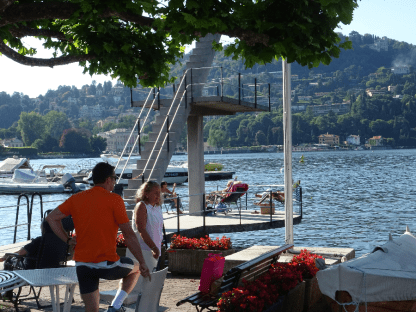
From the terrace looking east to the War Memorial and Brunate
One of the most successful of these clubs is our own Como-based Canottieri Lario which, with respect to the town’s Roman origins, uses the Latin name for the lake in its title along with its Latin motto ‘Parant Fortia Pectora Remi’ which I believe means ‘Build strong chests to row’.
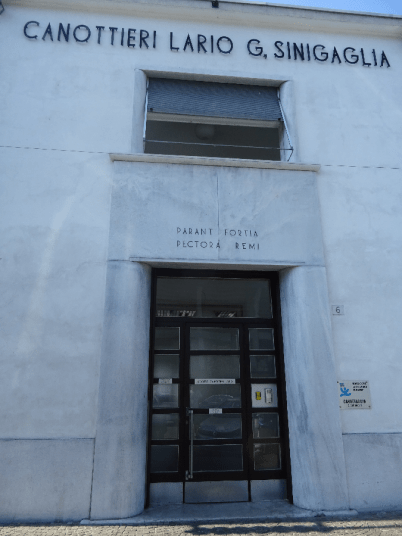 Beyond the park and the Tempio Voltiano, marked at its start by the architect Terragni’s striking Monumento ai Caduti, is the area of Como given over to sport and athleticism. As you walk down Viale Puecher, the football stadium is on your left, with the Canottieri Lario on your right. Beyond the Canottieri Lario there is the more affluent-looking Yacht Club and then, finally at the end of the road with a hangar on the left and its seaplanes launched on the right, there is the internationally renowned Como Aero Club.
The club house with its bar and restaurant can boast of having one of the most enchanting views in Como encompassing parts of the town, the mountains that surround it on three sides, the first ‘basin’ of the lake and an infinity of sky. For ages, this gem of a location, with its more than century-old dedication to rowing athleticism and sporting excellence, has been happy for people to just take it or leave it as they may wish.
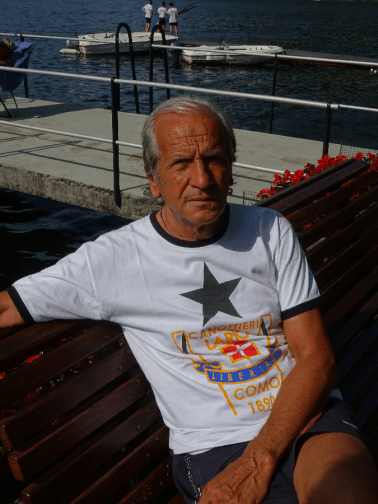
President of Canottieri Lario, Leonardo Bernasconi
But a definite wind of change is transforming this previously reticent association – for example, the bar now hosts a Thursday night cocktails special that is proving very popular. Yet the more significant development is the way the club is now actually publicising its considerable rowing achievements with its new president, Leonardo Bernasconi, putting communication at the forefront of the new administration. The Canottieri Lario is no longer content to keep quiet either about its sporting accomplishments or about all else it has to offer. A veritable media storm by Como’s standards now keeps us informed through Twitter, Facebook and Instagram of recent successes and near-future fixtures. As a member of the club and sensing this renewed energy, I was keen to take advantage of my membership to waylay Leonardo and put some questions to him about the club and its past, present and future.

From left: Arianna Noseda, Nicole Sala, Leonardo Bernasconi, Aisha Rocek, Georgia Pelacchi at Milan’s Idroscala
CC: Leonardo, what in your opinion is the fundamental purpose of the rowing club?
LB: It’s to bring young people together to instruct and inspire them to the maximum degree so they leave us with heads high and with the values that will enable them to engage in society at large with good sense – ready to enter the adult world, the world of work, with a positive sense of self and respect for others. These are our values in addition obviously to seeking sporting excellence.
CC: Anyone visiting the club site here will see people of all ages using the facilities from young to old. This must be quite unique.
LB: True, here we have all groups represented from youngsters onwards. Perhaps we don’t have so many members in the 35-50 age range but we are seeing what we can do about that!
CC: What is there here for youngsters and teenagers?
LB: We cannot cater for those below 9 years except when accompanied by their parents at the swimming pool or beach ball since it is not allowed for the very young to participate in athletic sport. But children from 9 to 13 are very important to us since they can participate in our CAS course which runs from the start of the school year until the end of May.

Canottieri Lario is an accredited CAS ‘Centro di Avviamento allo Sport’ for rowing and Leonardo views the course that runs for pupils from the 4th year Elementary to 3rd Year Media as the lifeblood for finding and nurturing sporting talent.
LB: Our coaches on the CAS course watch carefully to see how the youngsters progress with us and when they see those who show some promise in the sport, they talk to the parents to suggest they may wish to stay on after the course ends as athletes and members of the club. Every year about 15 to 20 youngsters stay on as young rowers. This, for example, is the way that the World Champion Gerosa twins (Davide and Lorenzo) learnt with us. The CAS courses are a great source of talent.

CC: I have noted that there are a number of elderly members here.
LB: We have over 300 members within the 70 to 90 year age range. They provide the solid base to our club and we value them greatly. Many are actually ex-rowers including a 90-year old ex National Champion. These ex-rowers remain closely attached to the club.
CC: Given many recent successes both nationally and internationally, I was wondering where the club ranked in terms of success.
LB: We are ranked third in Italy based on last year’s results – and bear in mind that those in first and second place are linked to the armed services and so have considerably greater resources to call upon. Our ‘star’ was the double Olympian Sara Bertolasi. I have already mentioned the Gerosa twins who brought back three world titles to the club and I should also mention Riccardo Coan.
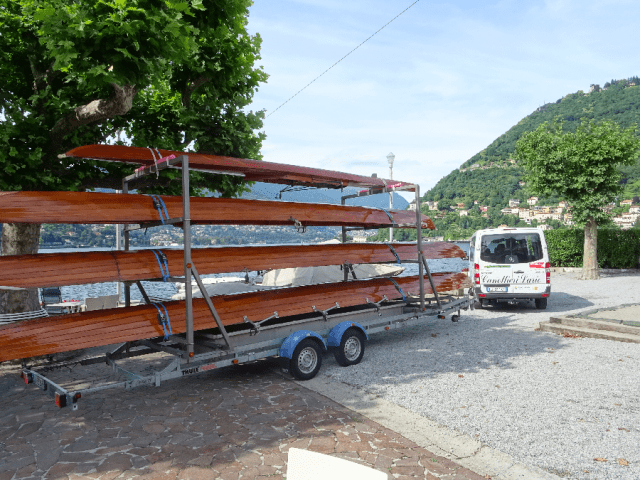
The club owns a collection of vintage boats
CC: Which nearby club does Canottieri Lario compete with the most?
LB: Definitely Moltrasio, even though I am from Moltrasio originally – Moltrasio is a great club. When we won Bronze in the European Cup, Moltrasio won the gold thanks to Filippo Mondelli who is their star, even though he did start out with us.
 CC: Given that you have already had much success, do you have any particular objectives remaining for this year?
LB: Yes – it is to win the Festival dei Giovani, practically speaking the national championship for youngsters. This year it is being held on Lake Pusiano where our athletes train. The meeting is on 14th, 15th and 16th July. When I became president back in December I asked our coaches that, since we have won most other prizes, could they do their best to bring the Festival dei Giovani back to Lario.
The athletes from Canottieri Lario do not actually train on Lake Como – the water is often too turbulent. Instead they use Lake Pusiano, about 5 kilometres out of Como on the road to Lecco. Lake Pusiano is very calm and has excellent facilities for the athletes. The club does however use Lake Como for introducing youngsters to rowing or for the occasional rower like myself who enjoys nothing more than going out onto the lake and looking back on the town and its setting.

The club has an internal ‘vasca voga’ under the image of Giuseppe Sinigaglia
CC: I have noted that the club and for that matter, the football stadium are named after Giuseppe Sinigaglia. Who was he and why is he important to the club?
LB: A true athlete – over 2 metres tall who, along with many other prizes, won the Diamond Challenge Sculls World Championship at Henley in 1914. Last year we in the club honoured the 100th anniversary of his death by putting on an exhibition of his artifacts at the Brunello. He died in action during the Great War – we have got film of his funeral where over 2000 people followed the cortege down Via Borgo Vico – exceptional turnout for those times. He was a great athlete and a patriot.
My last question to Leonardo was to ask him why in his opinion someone should consider joining the club.
LB: I always reply when asked this question that there are many people from Como who pass in front of our building here without having any idea of what goes on beyond those front doors. So I tell friends and all I may meet to just come here and see for themselves what’s here. We are in an amazingly beautiful setting, with our swimming pool, gymnasium, and sauna. What better way to spend a Sunday than to eat on the terrace or just to play cards, meeting up with friends for a chat.
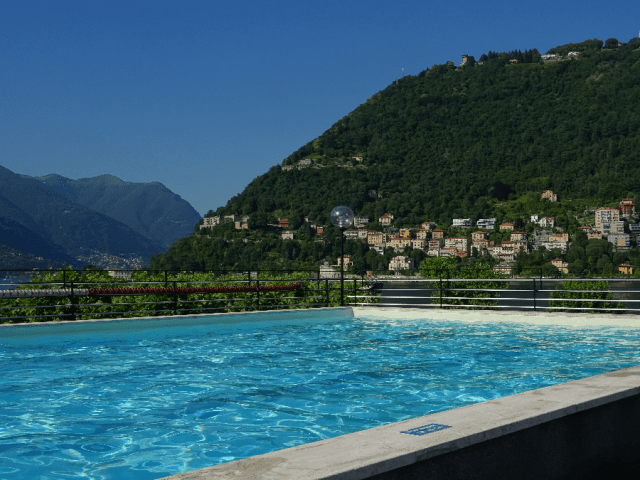
The club’s swimming pool on the first floor terrace
From my point of view I have always found the rowing club unpretentious, welcoming and relaxing. I wish the new president well and above all, I hope the coaches and athletes between them manage to bring back those desired prizes from the upcoming Festival dei Giovani at Lake Pusiano in July.
Some Key Future Events:
Festival dei Giovani – Lake Pusiano, 14th – 16th July. More information is available on this link to their website.
Trofeo Villa D’Este – Como, 30th September. Rowing regatta with races of 3000 and 6000m from Como to Cernobbio hosted by Canottieri Lario. Information in English from http://www.trofeovilladeste.it/eng/home.php
Contact Information
Address: Viale Puecher, 6, 22100 Como
Tel. 031 574720
Restaurant 031 3385283
E-mail: info@canottierilario.it
Social Media:
Website: http://www.canottierilario.it
Facebook, Twitter and Instagram: @canottierilario.it
P.S. Leonardo Bernasconi’s hope of coming first in the medal classifications at the Festival dei Giovani on Lake Pusiano came true. For the first time in the club’s history, Canottieri Lario came first in the medal tally having picked up 11 golds, 9 silver and 7 bronze. This was an amazing achievement both by the athletes themselves and their coaches. With so much young talent in the club, all looks good for the future.





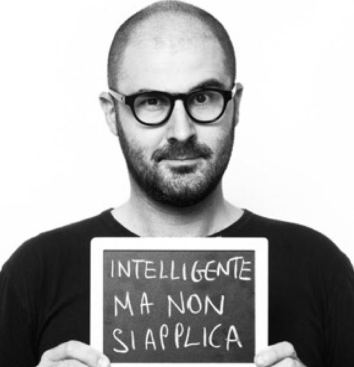

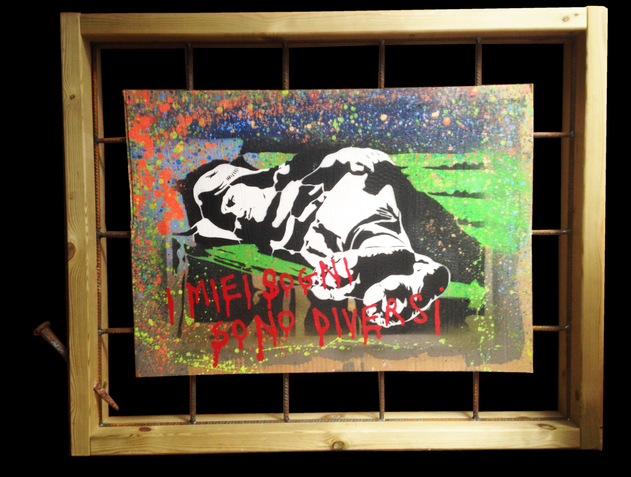

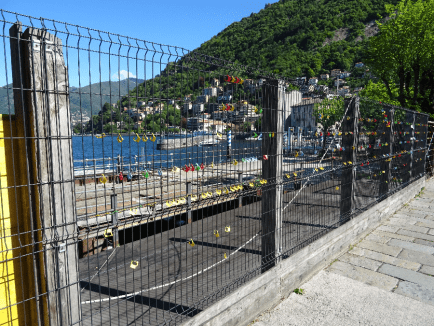
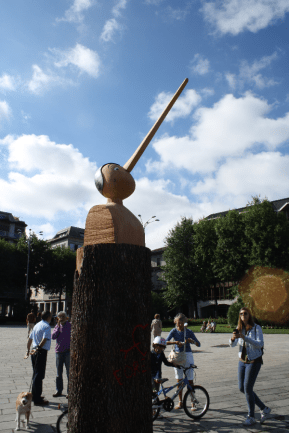 After this success but before the Region finally started to dismantle the fencing, Mr. Savethewall was invited to participate in last year’s Streetscape (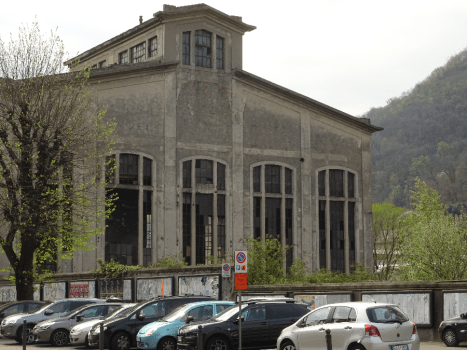







 CC: My favourite all-time film is ‘Cinema Paradiso’ where the Philippe Noiret character (the cinema’s projectionist) urges his young friend to spread his wings, uproot his ties to his much-loved town of birth, and seek his fortune in the big wide world. Yet by realising this dream the young protagonist loses his links to his roots, to his young love and to the world in which his character was formed – this conflict over which path to take must be within many (if not all) expats’ experience. What in your opinion makes for a successful expat? What made you want to integrate here? What helped you integrate? Did you manage to maintain bonds with your town and country of birth? Have you lost out in any way by not being grounded in one specific place and culture.
 I feel like my 100% self in Como. I even joke sometimes that I have no filters when speaking Italian partly because it’s hard to over complicate things when you don’t have 100% mastery of the language! I don’t think I’ve lost out in any way by not being grounded in one specific place although sometimes I do think that I would like to be more stable in one place or the other and have decided that it will be Como. Ten years is a long time to be flitting and now I think I’m going to make Como my full time base. That’s the plan anyway. I have one hundred percent bonds with Ireland. For example I’m back here at the moment working on a contract and it’s like I never left. I go to work, I meet friends, see my family.





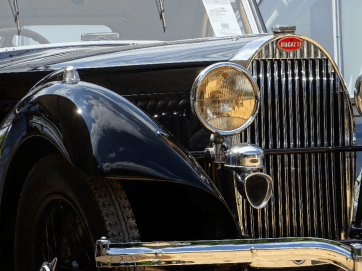


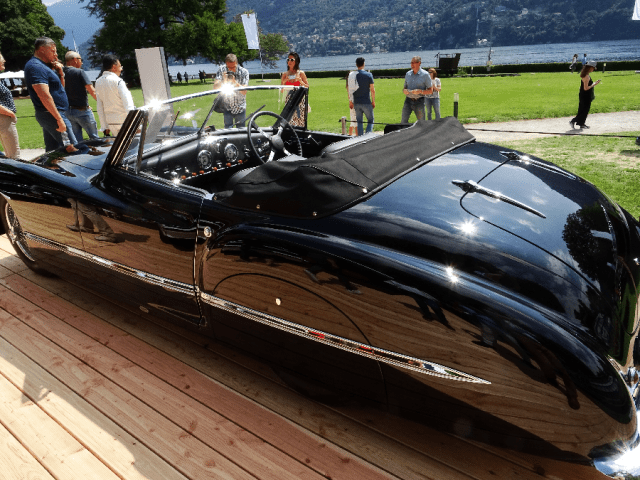
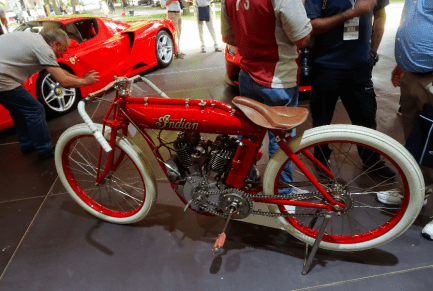 An additional factor this year is the biennial auction of up to 70 vintage cars by Sothebys. These cars (and some vintage motorbikes) are all on view in the gardens of Villa Erba on Friday. Entry on this first day is free. The auction takes place on Saturday evening and so the cars are also on view throughout that day alongside an exhibition of vintage motorbikes and a special feature on vintage BMW coupes in the main pavilion. There is an entrance fee on Saturday (€10) and Sunday (€16) although tickets do cost less if purchased online.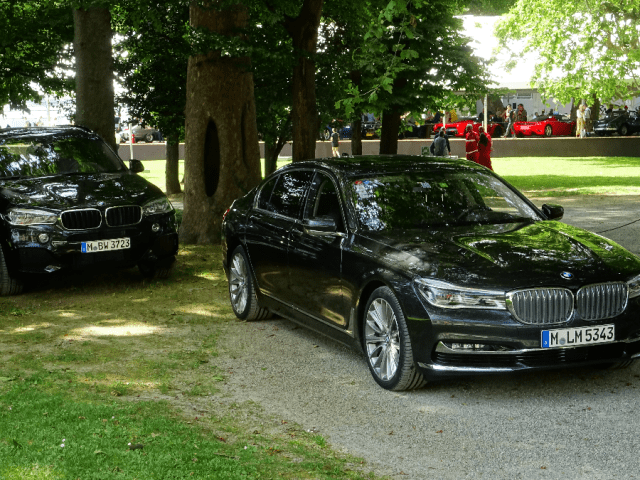



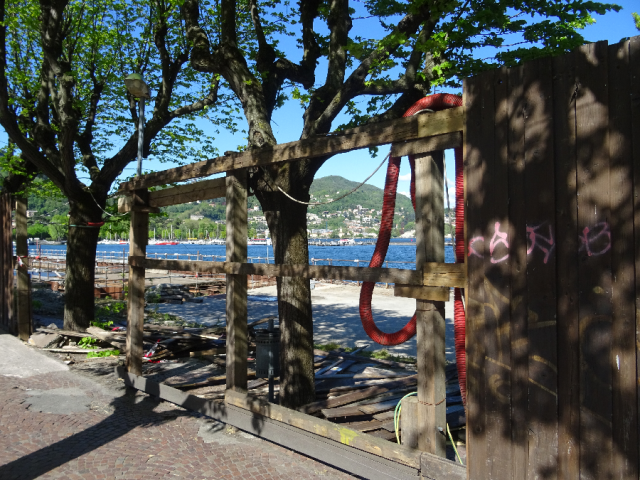
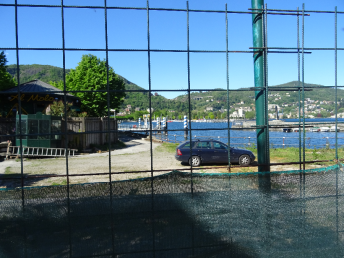
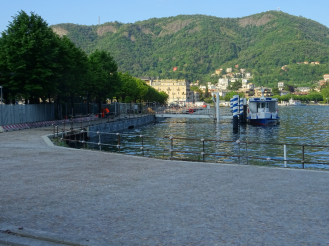
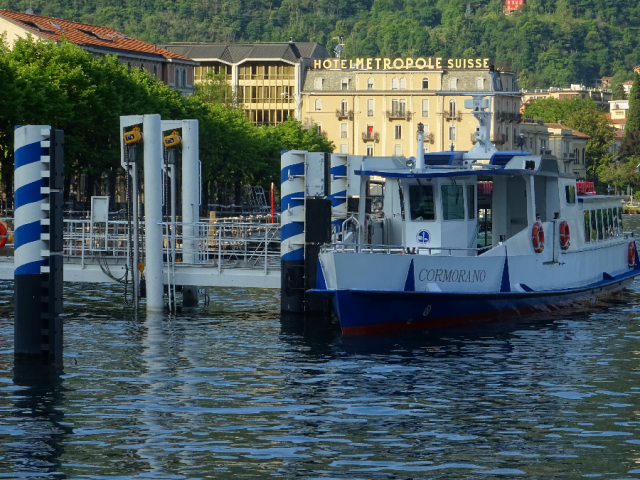
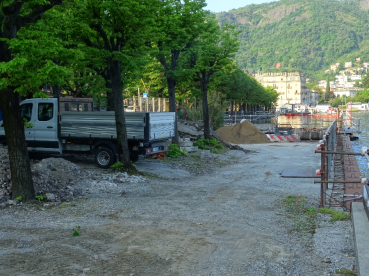
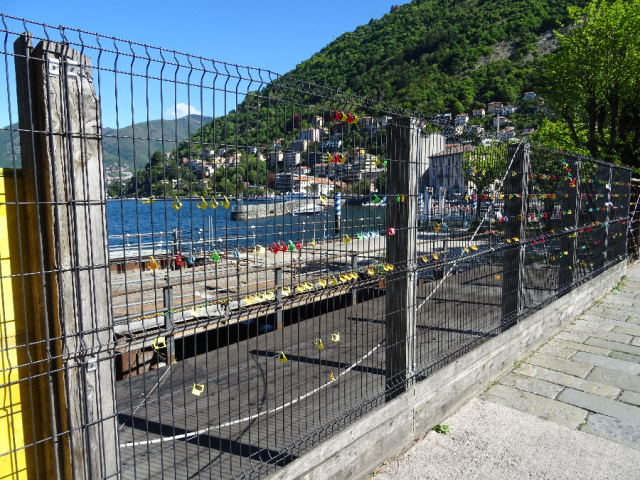
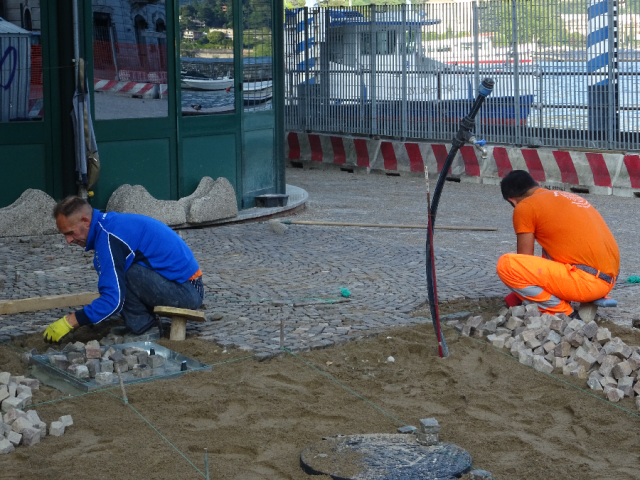
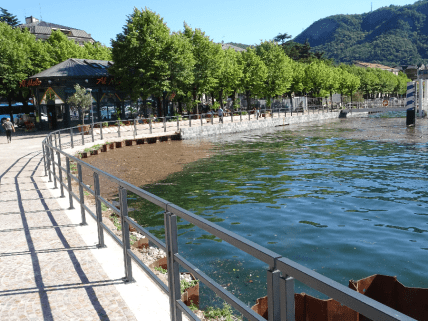
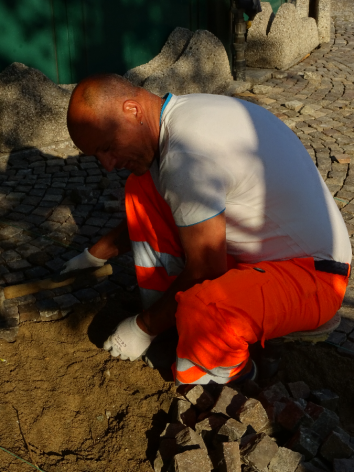 This story of the ‘paratie’ is indicative of some of the less favourable aspects of Italian civic life but I can identify at least two positive aspects. Firstly, it is at least reassuring to see the state showing some sensitivity to public opinion (and financial common sense) when under pressure from those who finally managed to overcome a marked propensity for patience and political inertia! Secondly, the prolonged denial of public access to the lakefront has emboldened a pair of local swans to make their annual nesting home there. One of the springtime pleasures for local residents has been to see the swan eggs hatch and see their cygnets grow. The swans will however have to move elsewhere now that —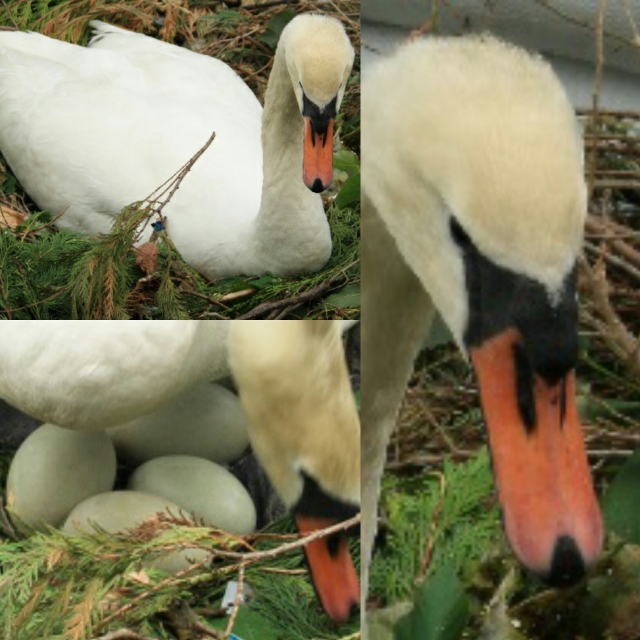


 e American allied army immediately took over the Hotel Metropole Suisse as their headquarters. It had only hours before been the local HQ for the German Wehrmacht but the remains of the German army had made their way that day to the border crossing at Chiasso where they were allowed to surrender to the Swiss authorities once all arms were given up.