As an escapee from London, I now cannot envisage living in a city where, from its centre, I can’t easily see and reach its green periphery, e.g. Norcia in Umbria but of course particularly Como where, to the east sits Brunate and to the west Monte Croce and the Parco Spina Verde.
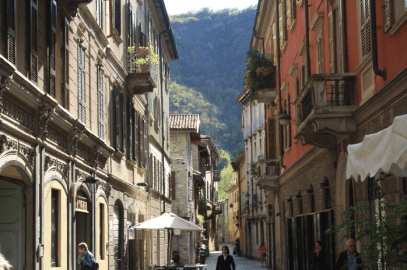
Via Lambertenghi, Como
As you climb out of the town on either side, the sounds of the city, the asthmatic sirens, the general noise of urban activity subside and are replaced by the occasional rustle of a lizard in the undergrowth, bird song and other more contemplative murmurings of nature. And up here is where you will find evidence of Como’s antecedents, who, even in prehistoric times, were attracted to this strategic location and the advantages it offered for trade. But they were resolutely mountain people since Como’s foundations were not laid down until the Romans developed it in the first century BCE.
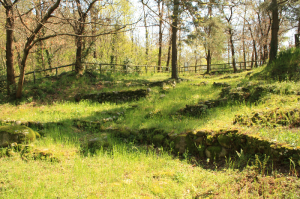
Golaseccan settlement Parco Spina Verde, Como.

Recreation of a Golaseccan interior , Parco Spina Verde by the Baita Pianvalle
Within the Parco Spino Verde there is a path laid out for visiting some of these prehistoric sites.
Signage in both English and Italian explains aspects of these bronze age settlements and the Golasecca culture of its inhabitants. The Golaseccans occupied the arc of the pre-Alps and Ticino canton and prospered through the Bronze to the early Iron Age. They left a mass of material for archaeologists to uncover and, as a result, the Prehistory section of Como’s Archaeology Museum contains a rich collection of Golaseccan artifacts including the three-armed vase shown below.
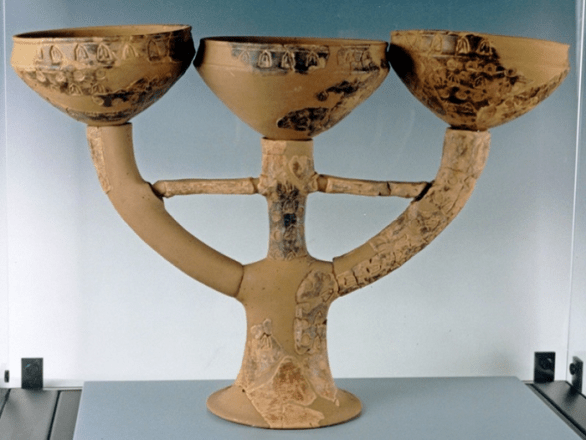
Three-armed vase with stamped decoration, from Ca’ Morta end of 6th century BCE. Museum of Archaeology, Como.
This vase and most of the other finds from this period were uncovered in the series of cemeteries known as Ca’ Morta (House of the Dead) between modern-day Monte Lucino and Brebbia to the south of Como. The most impressive item on display has to be the funeral cart.
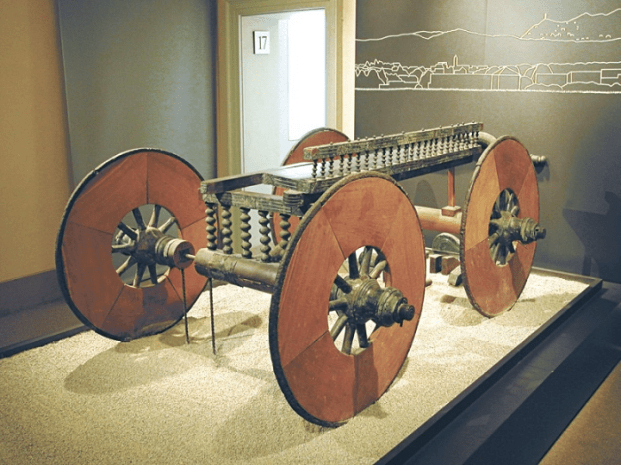
Funerary Cart, Ca’ Morta circa 450BCE. Como Museum of Archaeology.
The museum’s collection is large and significant as befits an area with a rich bronze age heritage but not all is necessarily displayed to best effect – lighting, signage and language variants could all possibly be improved upon.

Como from the Parco Spina Verde
These bronze age ancestors owed their success roughly from the 6th to the 2nd century BCE due to their trading links with the Etruscans to the south, the Venetians to the east and the Celts to the north. The gradual growing dominance of the Celts tended to diminish the ‘international’ trade and the area lost some importance until the Romans established Novum Comum in the 1st century BCE by clearing the swamp and laying the foundations of the modern city as we know it. The establishment of Novum Comum marked the transition from hilltop to lakeside settlement and to an entirely new chapter in Como’s history.

Como’s Museum of Archaeology
The Archaeological Museum is open from Tuesday to Sunday from 10.00 – 18.00. Entrance costs €4, €2 for the over 65s, €1 for students from 12-18 and free for children under 12. The museum, along with the other civic museums in Como, gives free entry to visitors on the first Sunday of every month.
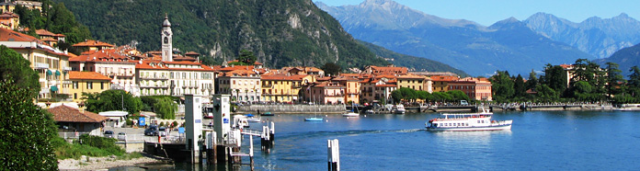
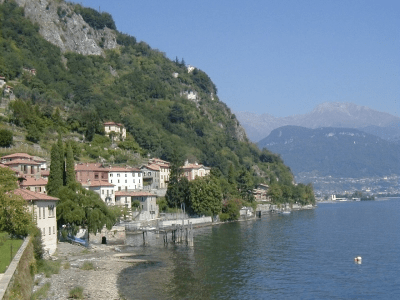



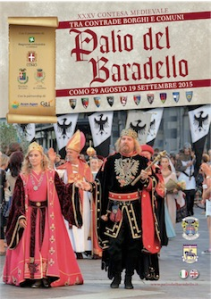
 tanding sentinel over the city and as testament to Como’s eventful past, the Baradello Castle reopens its doors for the summer with one-off openings on Monday 25th April and Sunday May 1st. Thereafter it is open every Sunday from June to the end of September.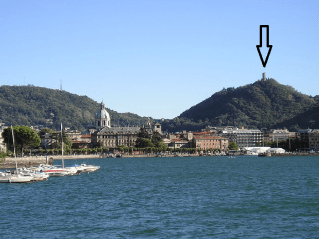

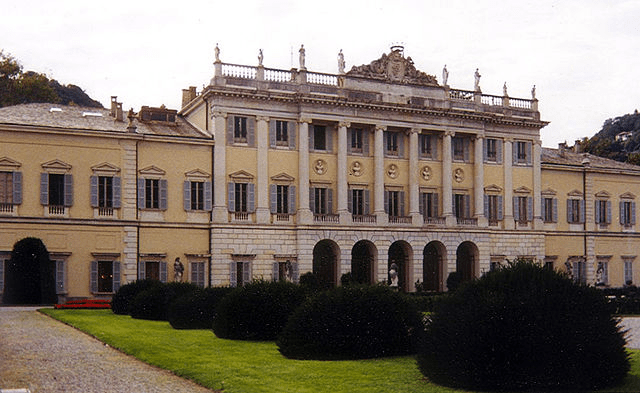 This Saturday (16th April) marks a milestone in the project as the council (owners of Villa Olmo) open up the Sala del Duca on the first floor of the villa to visitors for the first time.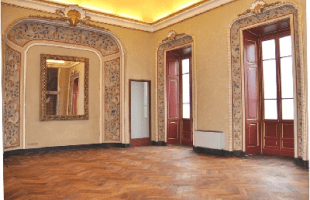
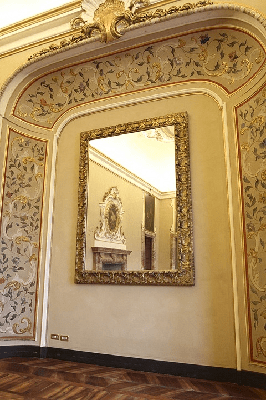 del Duca is named after the last private owner of the villa, Duke Visconti di Modrone, who used it as his bedroom. The renovated decoration was executed in the neo-baroque style towards the end of the nineteenth century with a large fresco depicting Fortune by Ernesto Fontana.
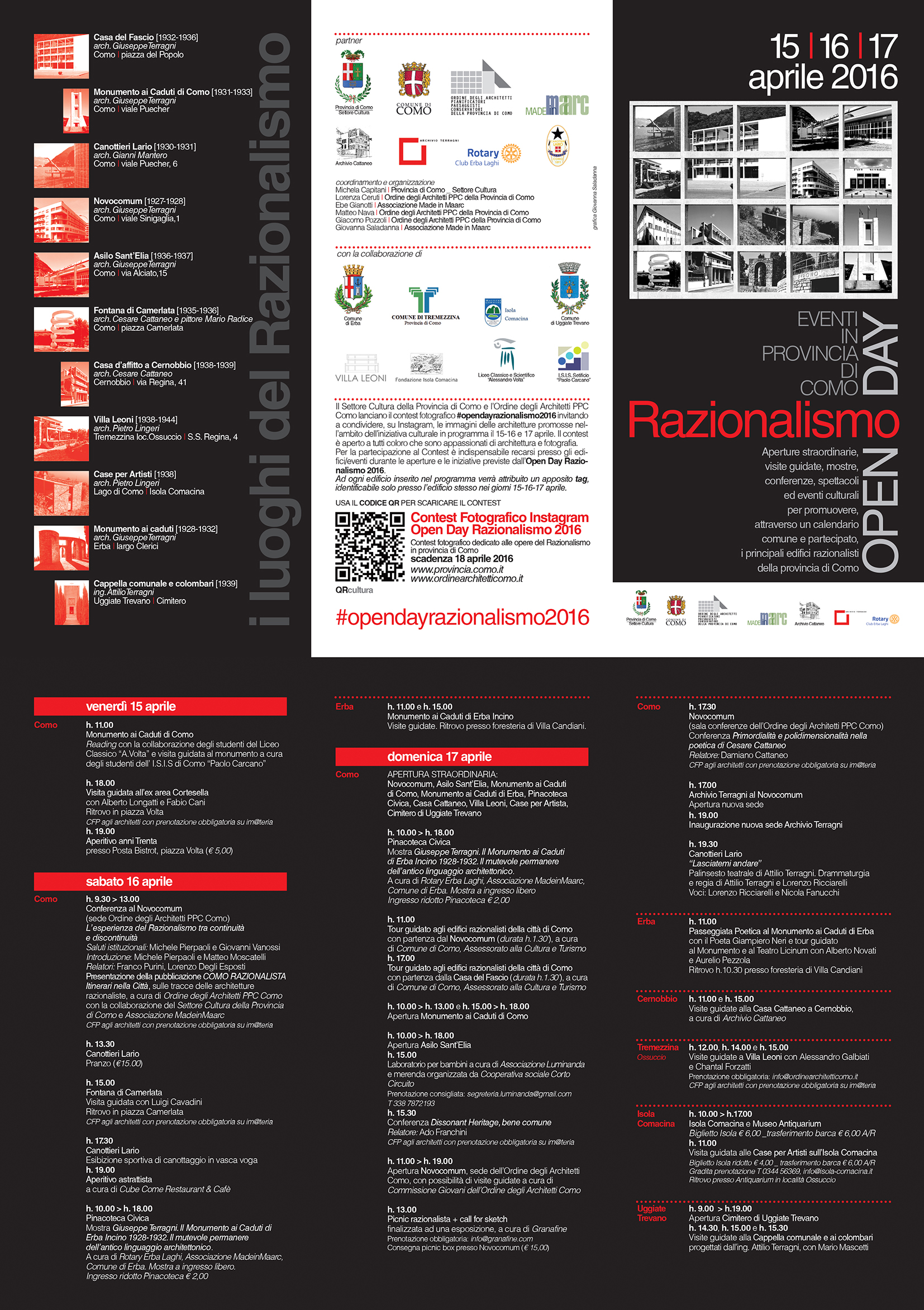
 Rationalism – the Italian flavour of Modernist architecture – is particularly well represented in and around Como. Take for example, the Casa del Fascio in Piazza del Popolo – an internationally renowned masterpiece by Giuseppe Terragni (1904-1943), who lived and worked in Como.
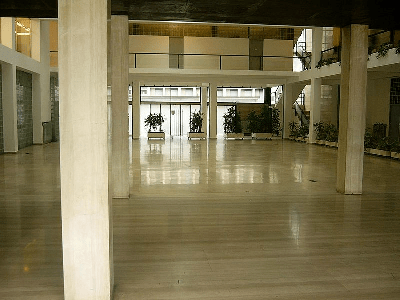

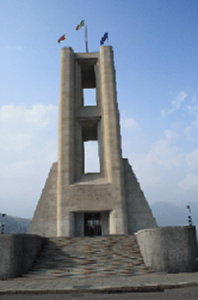


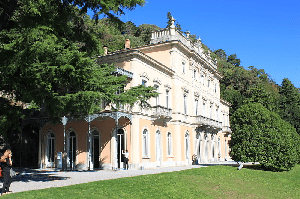 These two villas on the road from Como to Cernobbio, owned by the
 With Spring now well established and our centralised heating systems about to be turned off, we can definitely sense summer is just around the corner. Use the Como Companion to help plan your summer in Como. Check out our
 Welcome to The Como Companion. This site will grow into a newsletter in English for residents and visitors to Como, its lake and surroundings. Congratulations to those of you who join us from the start – I am certain you will see the site rapidly grow in content and usefulness.