

Looking down on the farmhouse and cottage of the Azienda Agricola Roveglio above Lenno with Isola Comacina in the background.
Lake Como is one of the most northerly points for olive oil production thanks to the lake’s microclimate. And the highest concentration of olive trees on the lake is in the municipality of Lenno, on the western shores nestled in the bay beyond the Villa Balbianella. And overlooking the town of Lenno at 385 metres above sea level, a small holding of twenty acres has consistently produced an olive oil that has won world class prizes – it is the Azienda Agricola Roveglio.
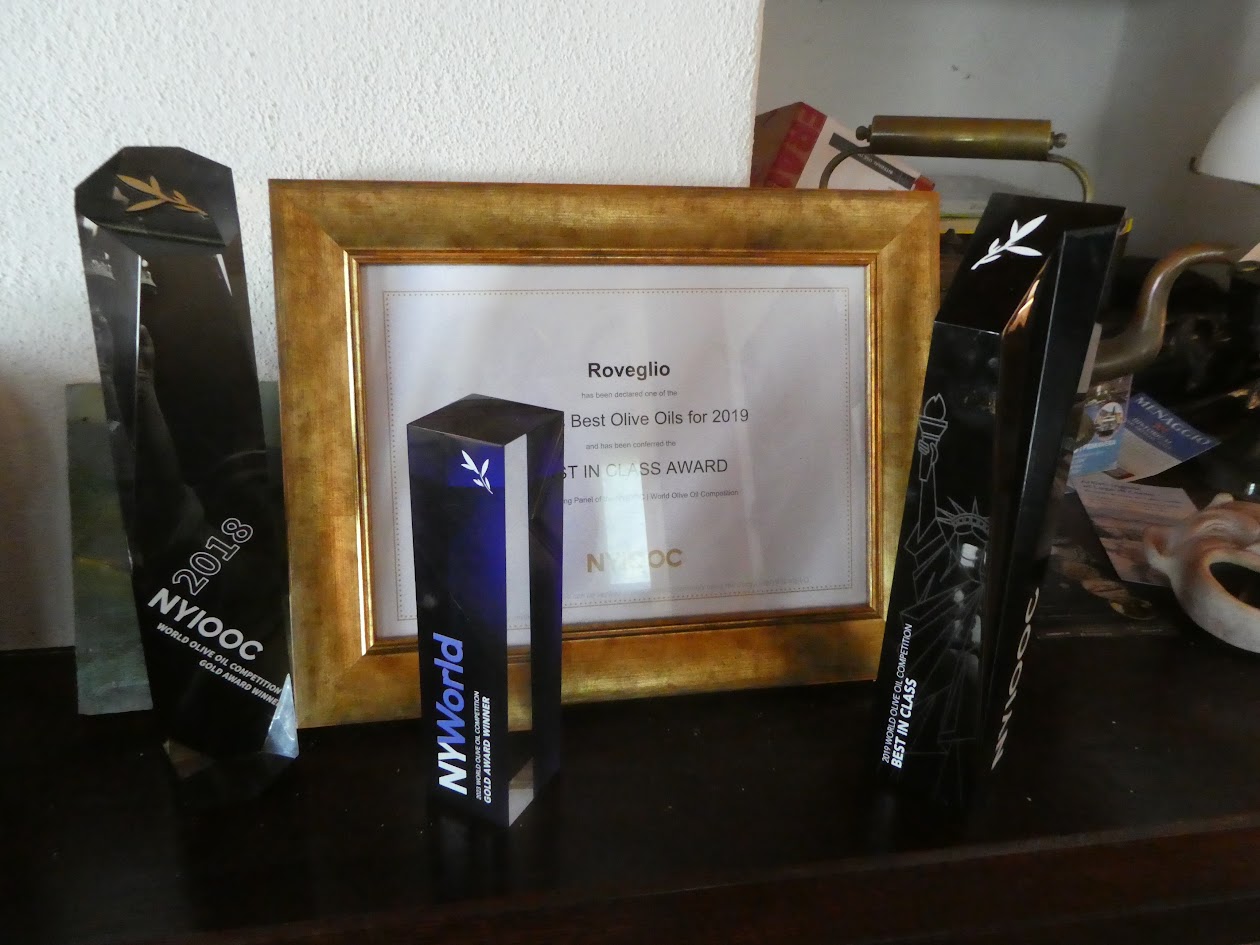
Some of the prizes and certificates awarded to Roveglio’s olive oil by the New York-based NYIOOC.
Let’s first establish the Azienda’s prize winning credentials: awarded NYIOOC Gold Award in 2018 and 2022, NYIOOC Best in Class in 2019 and Athena Gold in 2021. The NYIOOC World Olive Oil Competition, based in New York, describes itself as ‘the largest and most prestigious olive oil quality contest. Its annual list of award winners is the authoritative guide to the world’s best olive oils and the dedicated producers who craft them.’

Another view down from Roveglio with the Abbazia del Acquafredda in the foreground. The grounds of the abbey would also have been an olive orchard but has since become overgrown.
The small Roveglio estate was founded around the farmhouse built in 1802 which passed into the current owner’s family back in the 1880’s. The present family owner is Paul Willan who inherited the farm twenty years ago. His full name reveals his aristocratic Anglo-Italian roots – the Conte Cavaliere Paul Nazzari di Calabiana Willan or, in shortened form, Paul N. di C. Willan. On taking over the management of the farm he set about investing in olive oil production recognising that a small producer like himself can only really gain commercial success by developing a specific niche within the market. Paul’s niche is aimed at true aficionados who appreciate precise differentiation and superior quality. Fortunes are hard to make in this business and Paul’s modest goal is to continue to provide a living for the local couple who live and work on the estate and to increase production sufficiently to cover his investment and break even. He has clearly met with some success in differentiating his oil but the challenges lie in sustaining improved production, as we shall see.

Looking down from Roveglio onto the Balbianello peninsula and the bay of Lenno.
Lake Como was colonised by the Romans from the time of Julius Caesar. They in turn sought to supplement the indigenous Golasecchi and Gallic tribes by bringing in many people from other parts of the empire such as Greeks to build ships for lake transport and farmers to produce olive oil and wine. So olive trees have been established around Lenno and on other towns around the lake for a long time. Many of Paul’s trees are over a hundred years old and the very oldest, affectionately known as ‘Nonna’ (or Grandma), is estimated as being from 700 to 1000 years old. Olive trees die from the centre but produce new shoots from the outer trunk. The girth of an old lady like Nonna can thus grow very broad.
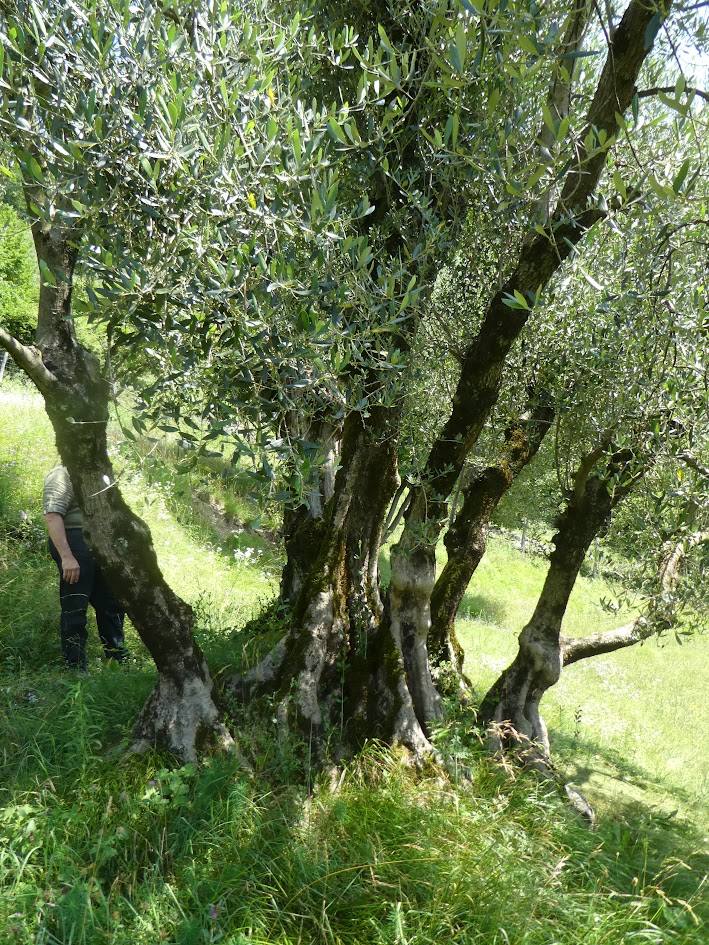
‘Nonna’ is the oldest olive tree on the estate and is said to be between 700 and 1000 years old.
Roveglio’s Market Niche
A small olive producer might just choose to sell on their harvest to a much larger local producer such as Vanini or seek to establish a unique but tiny niche for themselves in what is a very large market. Paul has taken on this latter strategy and, as the prizes confirm, has met with success. Olive oil aficionados, like whisky connoisseurs and similar, look for ever increasing degrees of differentiation going way beyond blend or single malt or, in the case of oil, blend or monovarietal. The variety of Roveglio oil is known as Frantoio which happens to be the most common variety found around Lenno. It is also labelled as oil from a single estate and is yet further differentiated by where it was cultivated on the estate – either from the trees on the lower field – campo basso, or those on the upper field – campo alto, since even the slight elevation difference impacts the microclimate which in turn influences the oil’s flavour.
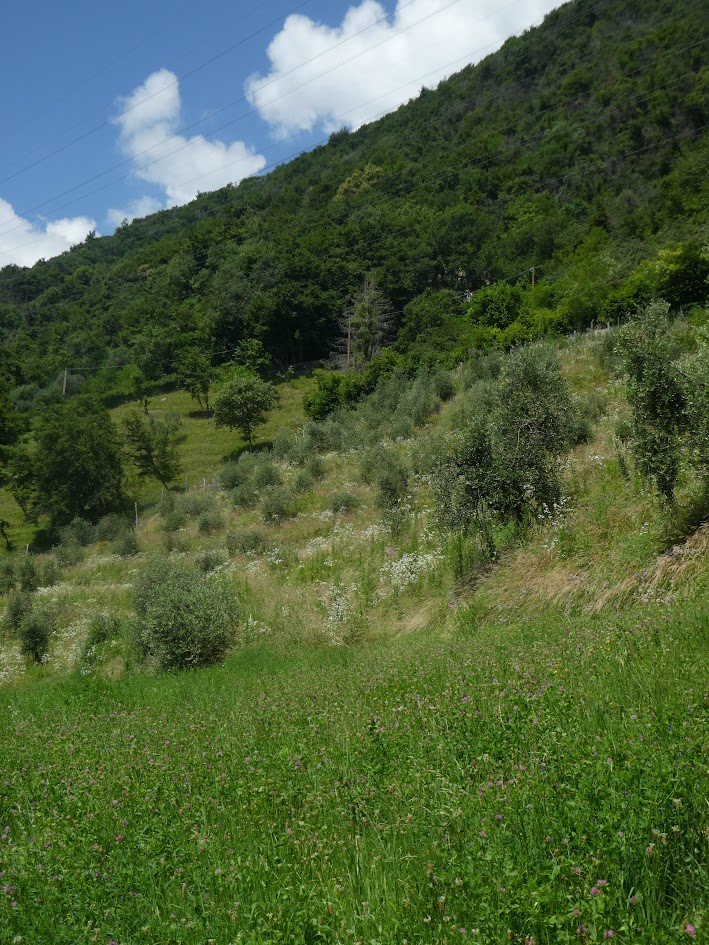
Some of the younger trees planted by Paul in the Campo Alto. Note the meadow in the foreground rich in wild flowers due to the lack of chemical treatment.
In deciding on how to restock the farm (he has plans to plant an additional 700 trees over the next few years) Paul is applying another degree of differentiation by cloning from his own centuries old stock. Look out for the term ‘plurisecolari’ on labels that identify oil originating from ancient stock.
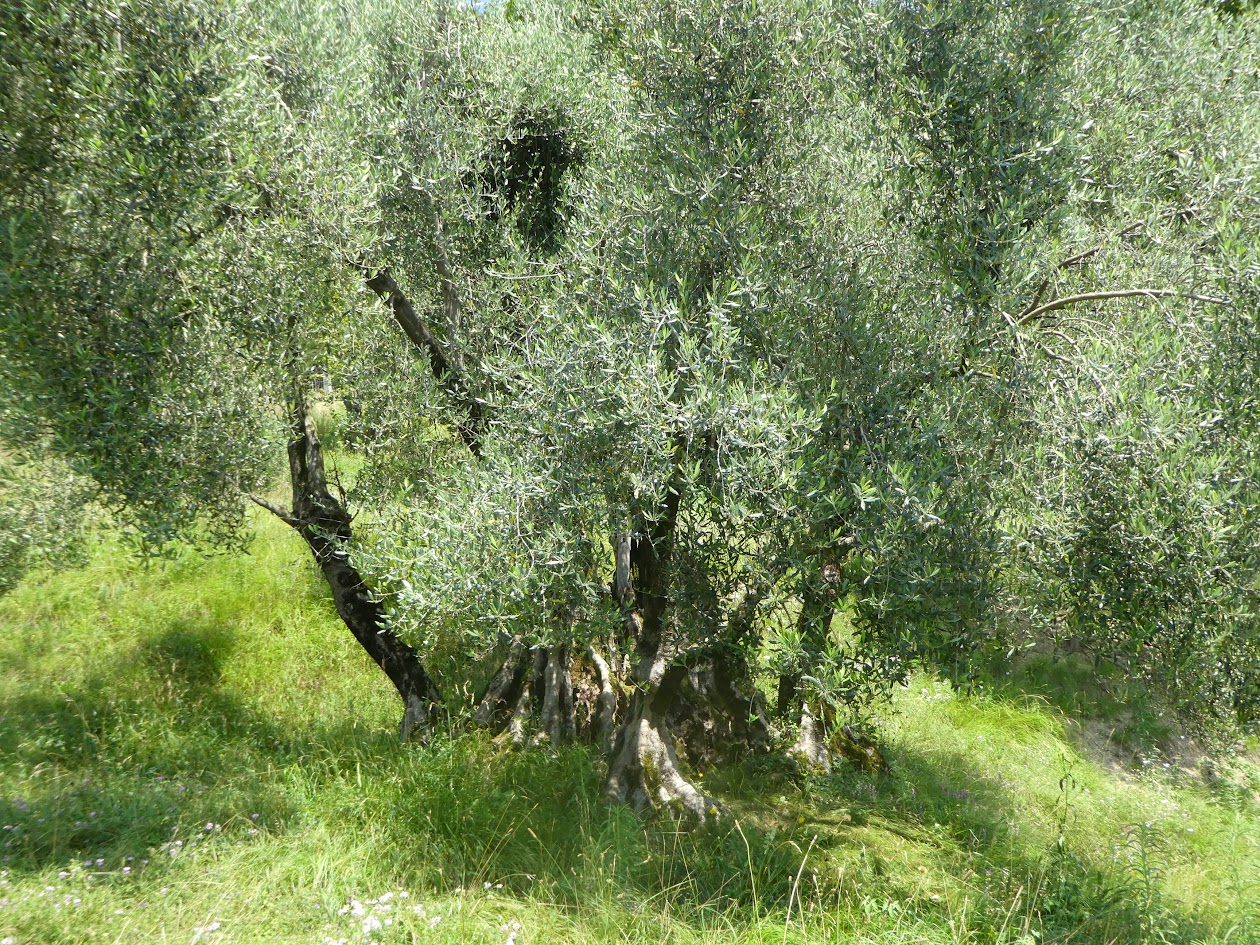
‘Mama’ is over 300 years old and she is the source for the cloning from ancient stock that is now used for all the saplings now being planted to increase the azienda’s oil production.
The tree known as ‘Mama’, which is itself over 300 years old, is the source for the new generation of clones. The process is managed by a company in Tuscany. It takes five years from seed before the saplings are moved back from Tuscany to be planted on the estate. They then require a further five years before they start to bear fruit. The idea behind returning to ancient varieties is to some extent similar to the way grain producers have been reintroducing ancient strains in a bid to find more natural means of combatting the challenges of disease and climate.
Campo Basso and Campo Alto
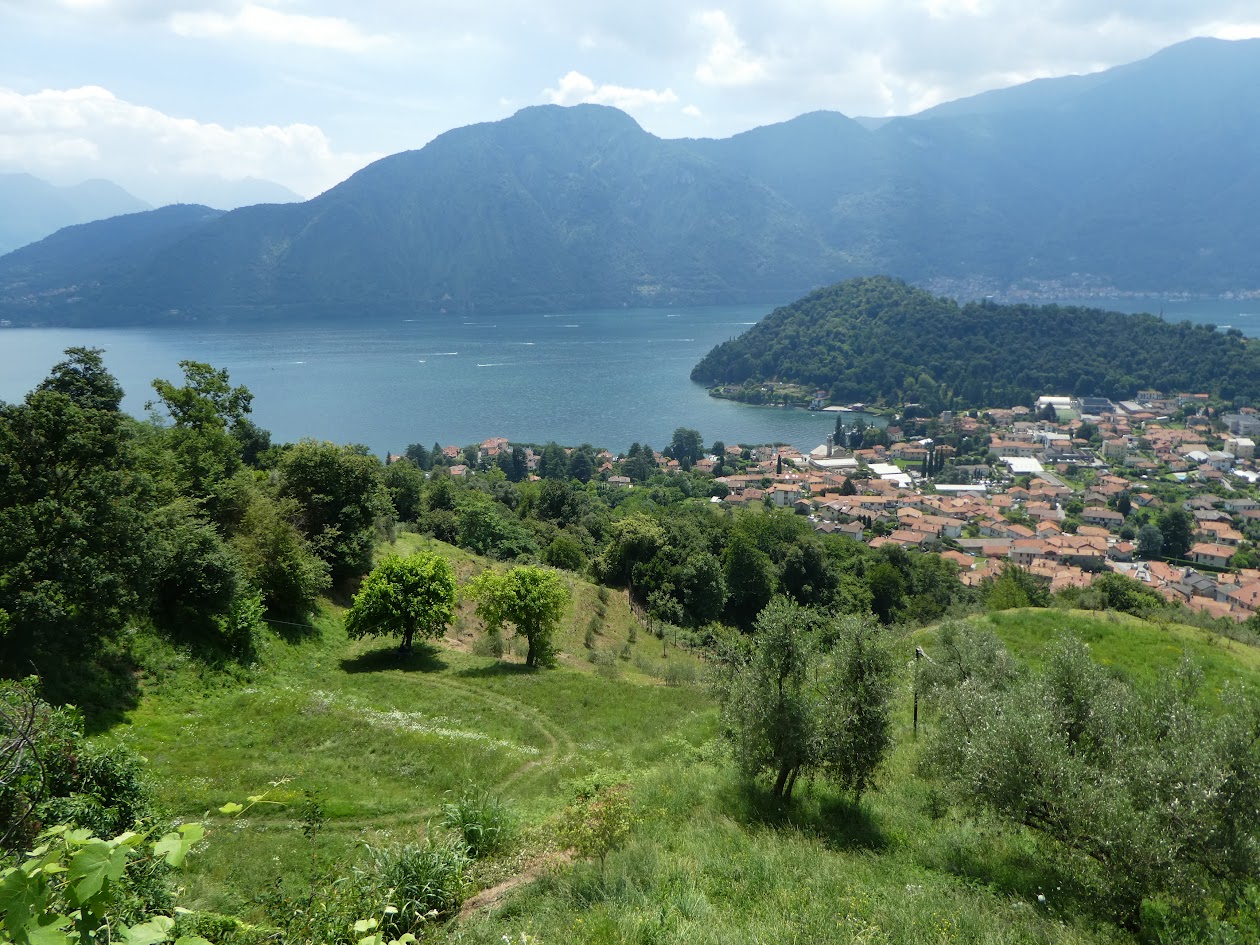
The estate’s Campo Basso produces oil with the DOP (Denominazione di Origine Protetta) accreditation.
Walking around the estate you cannot help notice it is entirely unlike many of the olive groves in Sicily or Puglia in that here the grass and meadow grows high around the trees. This is because there is no need to keep the ground clear since all aspects of cultivation are done by hand. Nor is any use made of artificial pesticides, fertilisers or weed killers. Paul has not gone to the extent of seeking Bio classification in that it makes no commercial sense for his scale of operation but he has got his produce from Campo Basso certified as DOP – Denominazione di Origine Protetta.
DOP is a European Union certification that identifies a high quality Italian product from a known region where the traditions of production are guaranteed. Extra virgin oil from Lake Como must not exceed a maximum total acidity of 0.5% and is usually much lower. It is known for a balance of bitterness and spiciness and a long persistence on the palate and for its easy digestibility.

Roveglio produces ‘Mille Fiori’ flavoured honey from bees gathering pollen from the many wild flowers on the estate.
For the oil from Campo Alto, Paul has decided instead to put its reputation to the test in front of forums such as the NYIOOC World Olive Oil Competition. Dedicated olive oil aficionados take note of prizewinners on these web sites and will seek to acquire a bottle or two. The Campo Alto is where Paul’s best oil is produced. Being just a few metres above Campo Basso it is slightly cooler through the hot summer months. The midday Breva wind also helps to restrain high temperatures and thus prevent too strong a production of oleocanthal which gives more southerly oils their peppery burning aftertaste at the back of the throat – a taste not favoured by all aficionados.
Climate Change
In the list of the Roveglio’s prizes, you may have noted no achievement for 2023. This is because the whole harvest was destroyed by hail storms earlier in the year. The increasing frequency of violent storms around the lake area is just one impact of climate change. The overall annual average rainfall on the lake has not changed but the pattern of precipitation has with an increase in the frequency of strong storms. The runoff from these storms has caused extensive damage to many lakeside towns in recent years including at Laglio and Brienno. But it is when the storms are accompanied by hail that serious damage can be done to agricultural crops. Hail either knocks off the flowers before the fruit is set is or, later in the year, damages those young fruits that have managed to get established. It also has a more insidious affect – by damaging the tender bark on the olive tree’s branches, it creates an open wound that allows for infection by a disease known locally as ‘la rogna’ (mange in English) but more commonly as Olive Knot Disease.
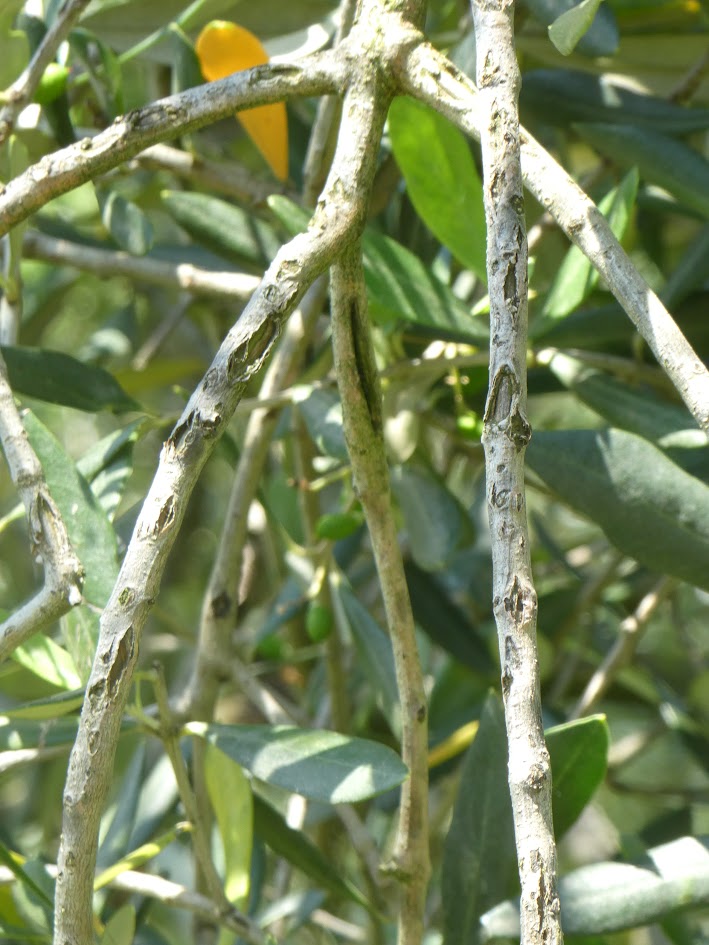
Hail damages the tender bark on the olive tree’s branches which then allows the Olive Knot virus to establish itself.
La Rogna or Olive Knot Disease
Much publicity has been given to a disease that threatened to decimate the olive oil orchards in Southern Italy, Greece and Spain. This viral infection is called Xylella fastidiosa or Xfp for short. It causes a condition called Olive Quick Decline Syndrome (OQDS) and from 2013 to 2022 it threatened to reduce European olive oil production by 95%. It was introduced to the area around Salerno in Puglia back in 2008 by insects arriving on a coffee plant from Costa Rica. It was subsequently spread from tree to tree by insects and by the Spittlebug in particular.
The massive economic threat to the Southern Mediterranean regions posed by Xfp’s impact on olive oil production prompted a coordinated response from the European Union to determine how to tackle it. The disease is now being successfully managed through a common containment strategy combined with good husbandry, use of insecticides to reduce spittlebug eggs and bio fertiliser.

Olive Knot Disease results in the development of cancerous knots around the lesions on damaged branches. The disease’s bacteria live in these knots and can be easily spread from tree to tree unless defensive measures are taken.
But the same success cannot be said for ‘la rogna’. Although now well established in Northern Italy, it has not attracted the same level of investment and attention as Xfp – possibly due to the much smaller scale of production in comparison with the south. It is a microbial infection with the scientific name Pseudomonas Savastanoi. The bacteria enters the tree wherever it finds wounds on the trunk or branches. Such wounds could be caused by pruning, various mechanical activities such as harvesting or by frost. Around Lenno, the major cause for opening up the trees to infection is damage from hail storms.
Once infected, the tree develops growths or knots along the exposed areas of its branches. These knots then tend to reduce the tree’s vigour and can lead to defoliation and dieback. The bacteria pores live in the knots and can very easily be transported from one tree to another by humans or insects.
Antibiotics have been found to be effective against the disease bur are not available within the European Union for plant agriculture and are unlikely to be until there is absolute proof that no trace of antibiotic is passed into the fruits and thus on to human consumption. And so the only available strategy is to seek to manage affected trees and seek to contain spread.
Paul had to root up and destroy sixty of his worst affected trees last year. He also takes all possible measures to ensure pruning tools are disinfected and that those harvesting disinfect their hands before moving from one tree to another. He keeps hoping that more research will come up with other management options, such as the pruning or removal of knots in the dry season when the bacteria are least active. But for now, la rogna represents his greatest but not only challenge.
Further Challenges
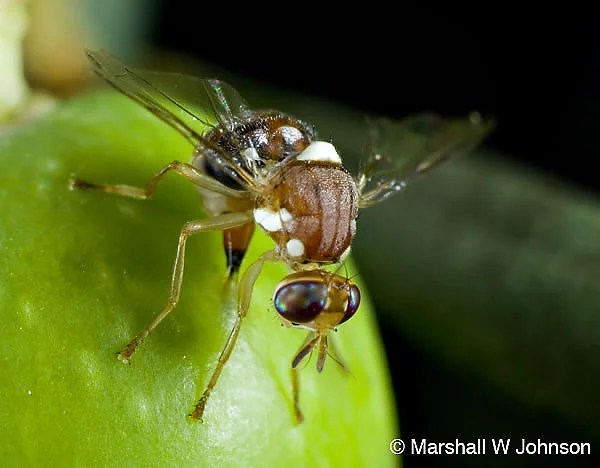
Olive Fruit Fly
As all gardeners will recognise, agricultural production is wrought with challenges. The additional challenges faced by Paul on his estate, and for all those other producers in our area, include the threat of insect invasion. Particular problems are caused either by the Brown Marmorated Stink Bug (Cimice Asiatica) or the Olive Fruit Fly. The stink bug feeds on ripe fruits and so effects their quality. The Olive Fruit Fly’s behaviour is more devastating in that in summer it punctures the surface of the ripe fruit to plant an egg under the surface. This egg then grows into a larva that burrows within the fruit before ejecting itself in autumn to pupate on the ground. An affected fruit is identifiable by the holes made either when the egg is injected into or the larva leaves the fruit. It is critical that such fruits are identified before they go to be milled since they have a very unpleasant bitter taste that contaminates the flavour of the oil if they pass unnoticed. With quality of taste a prime concern, you can be sure that Roveglia’s harvest is carefully examined before it goes for its cold pressing at Vanini’s mill.
Olive Fruit fly numbers are kept down by using pheromones to attract them into insect traps. However, if numbers are relatively low, the use of pheromones becomes counter productive in that they may attract more insects to the area with a certain number of them avoiding capture. The Lombardy Region employs a single expert on olive tree husbandry who visits a couple of times a year to advise on various matters and as to whether it makes sense to use the pheromone treatment for the current season. 2024 is a non-pheromone year.
Tasting the Oil

The view from the Rifugio Boffalora looking over to Monte Galbiga
The yearly production of Roveglio oil is 1200 litres which is shared fifty/fifty between Paul and the tenant farmers working his estate. His target is to reach an annual production of 6,000 litres without, of course, making any sacrifice to quality. He will be adding a further seven hundred trees to the estate over the next few years and so sees this as a realistic target on the assumption that the challenges do not become any greater. The impacts of climate change and the resulting increase in Olive Knot Disease are the most worrying and there is always the threat that a bad hail storm could wipe out a whole year’s production in a single go.

The lakeside restaurant ‘Alle Darsene di Loppia’ in Bellagio
But the success of the enterprise is in the tasting. At present it is not possible to buy Paul’s olive oil either directly from the estate or from any nearby shops. It can however be tasted up at the Rifugio Boffalora directly above the Sacro Monte di Ossuccio. It is also served in the delightful lakeside restaurant at the southern end of the Villa Melzi gardens in Bellagio- the Ristorante Alle Darsene di Loppia.
Staying on the Estate
 The estate is also open for visitors to stay in the renovated cottage that sits close to the farmhouse. The holiday rental activity is managed by Paul’s wife, Jeannie, who can be contacted through their website at lake-como-holiday-home.co.uk. Not only does the estate (and the rental house in particular) have outstanding views over Lenno and the lake, it is in the most perfect position to view the annual Sagra di San Giovanni staged on the last saturday of June on Isola Comacina. The Sagra reenacts the 12th century destruction of Isola Comacina by troops from Como in a spectacular firework display. And of course there is always the prizewinning oil to sample and the estate-made cheeses produced by Antonella who works the farm throughout the year alongside her husband. The milk comes from the estate’s own herd of goats and from a neighbouring herd of cows.
Further Information
Both Jeannie and Paul Willan are active members of the congregation of the Anglican Church in Cadenabbia. They are involved in ongoing initiatives to raise funds for the church’s maintenance and restoration which we have described in the following articles: Twenty English Artists on Lake Como and Lake Como’s British Enclave, the Anglican Church and Landscape Art


 The Como Companion