

Giambattista and Gianpaolo Recchi – Sala Recchi in Palazzo Lambertenghi
Twice a year the Fondo per l’Ambiente Italiano (better known as FAI) open up some of their own properties and other locations of historical or cultural interest to the general public. These days provide the opportunity to visit many locations in private hands which are not normally accessible. One of these locations in Como this autumn was the Sala Recchi within the Palazzo Lambertenghi on Via Lambertenghi. The Palazzo Lambertenghi was built in 1615 and had the ceiling of one of its key reception rooms on the ground floor painted by Giambattista and Gianpaolo Recchi. The Recchi brothers had their studio on Via Borgo Vico and were key local exponents of Early Lombardy Baroque following the school of Il Morazzone. Their work can be seen in a number of locations in Como such as the Cathedral, the interior of the Palazzo Odescalchi, Palazzo Cernezzi, the Chiesa Di San Giorgio in Borgo Vico, Palazzo Rusca and the Pinacoteca. Beyond Como, Giambattista’s work can be seen in the eighth chapel of Varese’s Sacro Monte and Gianpaolo’s work is found in Turin’s Palazzo Reale commissioned by the Duke of Savoy.
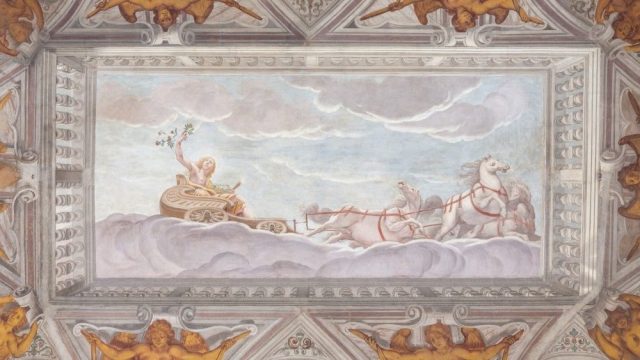
Aurora driving her horse-drawn chariot from east to west, from dawn to dusk.
The Sala Recchi with its painted ceiling is undoubtedly one of the many hidden gems that are only occasionally revealed to the public. It is in relatively good condition. Giambattista had an architect’s sensitivity to space and here he used trompe l’oeil to make it appear as if the relatively small room opens up onto a rectangular section of sky. Trompe l’oeil is also used to give the appearance that the ceiling is pierced by a series of oblong grilled openings to the sky that illuminate ten niches occupied by a classical figures.
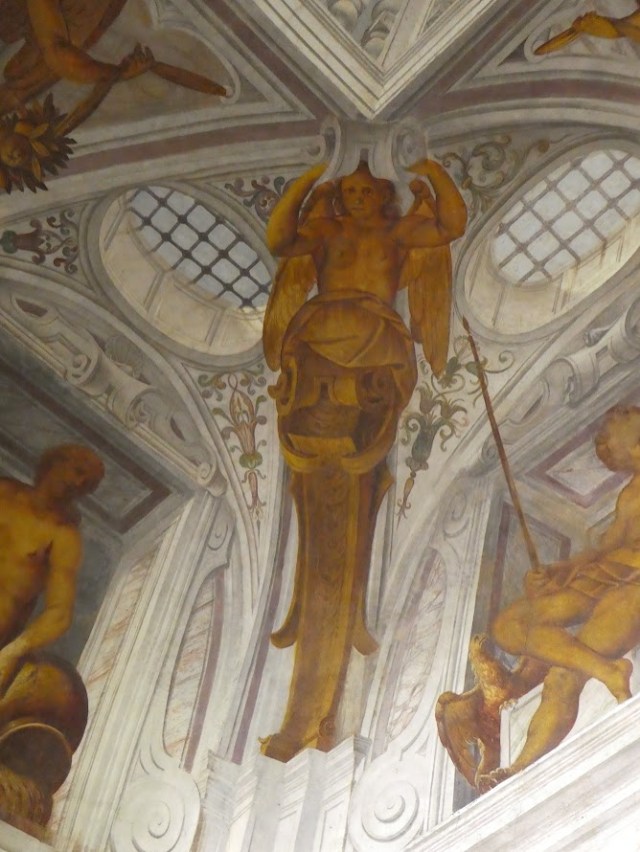
Trompe l’oeil effects including the oblong lighting grilles and the occupied niches.
The rectangular area of sky is occupied by Aurora, the Greek Goddess of Dawn. Here she is depicted driving her horse drawn chariot across the sky from east to west, from dawn to dusk. The theme of time and the passing of days is then replicated in the classical figures within the niches on the south and north facing sides of the room. The Roman Goddess Diana occupies the south easterly niche. Here she is depicted with a moon crescent on her head according to convention. The moon (or ‘luna’ in italian) represents ‘lunedi’ (Monday).
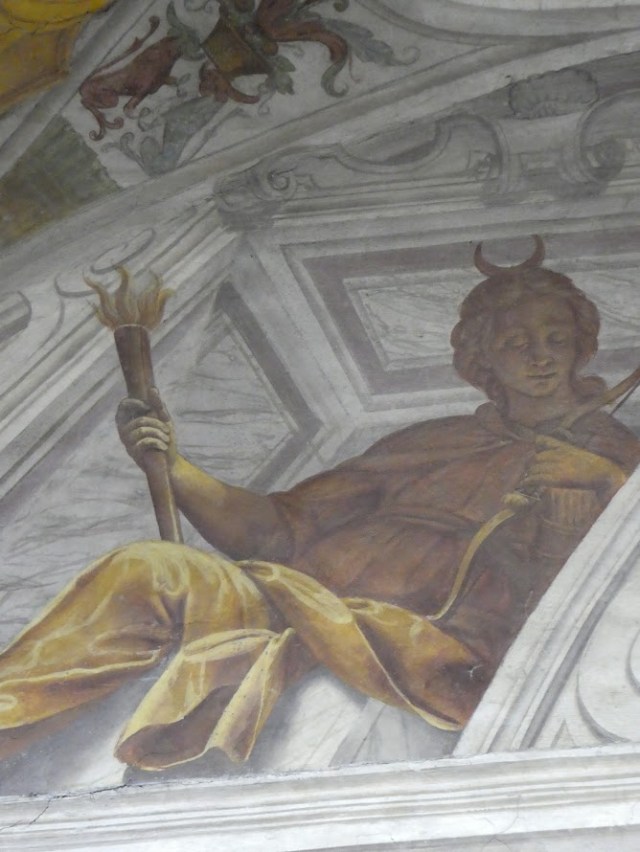
Diana representing ‘lunedi’ (Monday)
The middle niche on the south facing wall houses the figure of Mars, the Roman God of War. Mars refers to martedi (Tuesday). The figure of Mars is dressed in the contemporary costume of a Spanish warrior also sporting the long hair favoured by Spanish noblemen. The Spanish ruled over Milan and Como in the first half of the seventeenth century when the Recchi brothers decorated the Palazzo Lambertenghi.
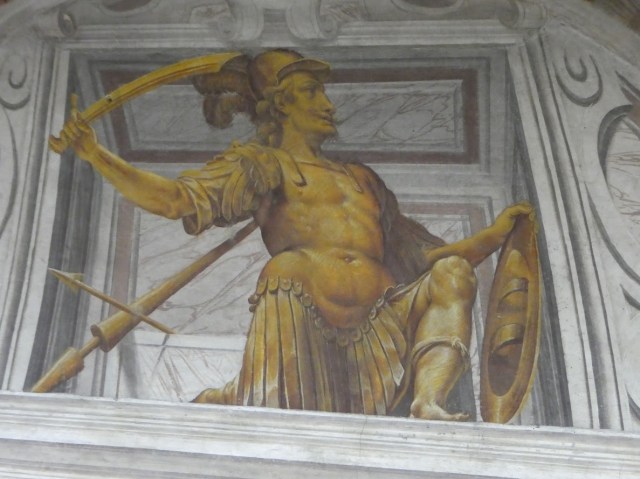
Mars depicting ‘martedi’
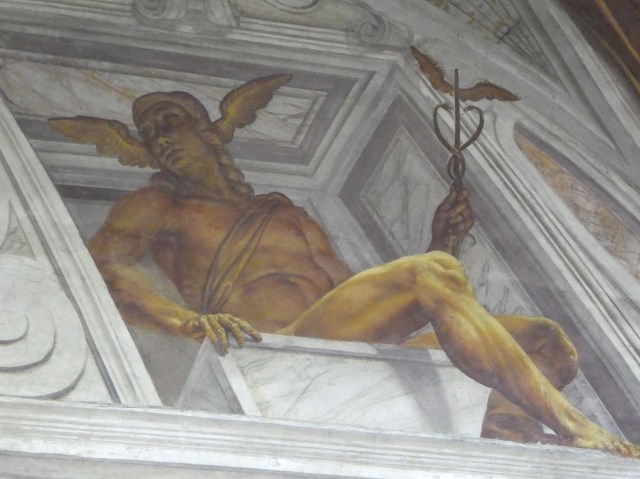
Mercury representing ‘mercoledi’
The south west niche is occupied by Mercury, the Roman God of shopkeepers and merchants who represents mercoledi (Wednesday). Moving over to the north side, the north westerly niche holds Jupiter also known as Jove, the Roman God of thunder and here he represents giovedi (Thursday). Apollo occupies the next niche accompanied by Cupid and for reasons that remain unclear to me supposedly through association with Venus, is used to represent venerdi (Friday). The last niche on the north side is occupied by Saturn, the Roman God of sowing and seed. Here he represents Saturday, a much closer association in English than in the modern day Italian ‘samedi’.


The two niches in each of the east and west walls are used to depict the four elements of earth, wind, fire and water. The south east corner houses the depiction of earth. The south west houses wind whilst water sits in the north west niche. Fire completes the set in the north east corner.


By combining the significance of the figures represented in each of the four corners of the room, the fresco portrays an additional symbolic series. The south easterly corner, combining the figures of Earth and Diana, points towards the hills of Brunate which at the time were covered in terraces for the agricultural production of grain and grapes. The south westerly corner, combining the figures of Wind and Mercury, points towards the commercial district of the old town and its links with Milan. The north westerly corner, combining Jove and Water, points towards the source of water for the Palazzo Lambertenghi arising from a spring in modern day Piazza Garibaldi and a water course along Via Volta. Finally, the north easterly corner combines Saturn and Fire and points towards the Spanish centre of control over the city housed in the Castello della Torre Rotunda that used to occupy the site of the Teatro Sociale.
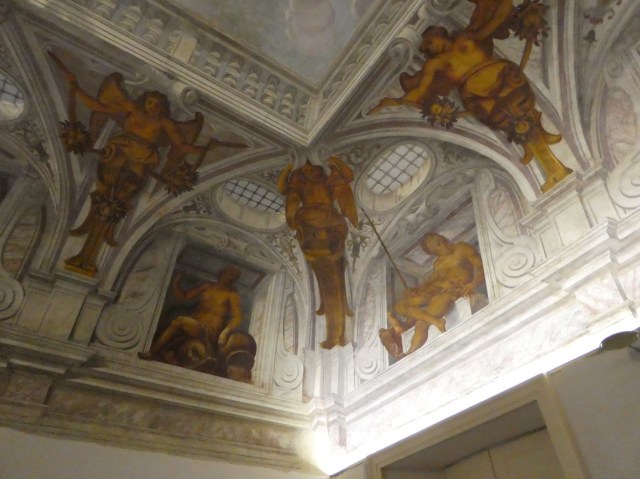
North West Corner, Water

North East Corner, Power
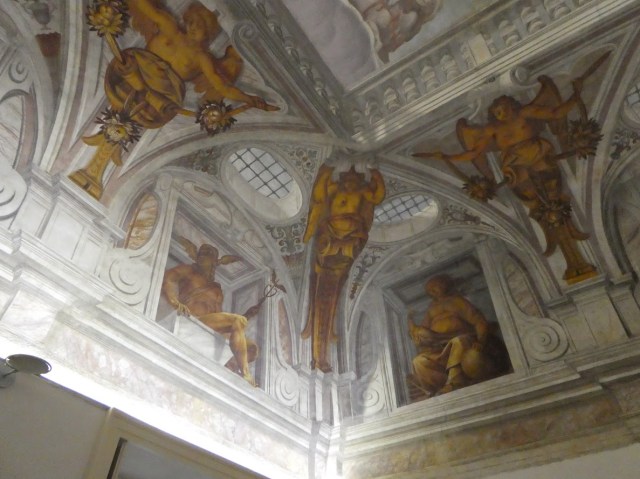
South West Corner, Commerce
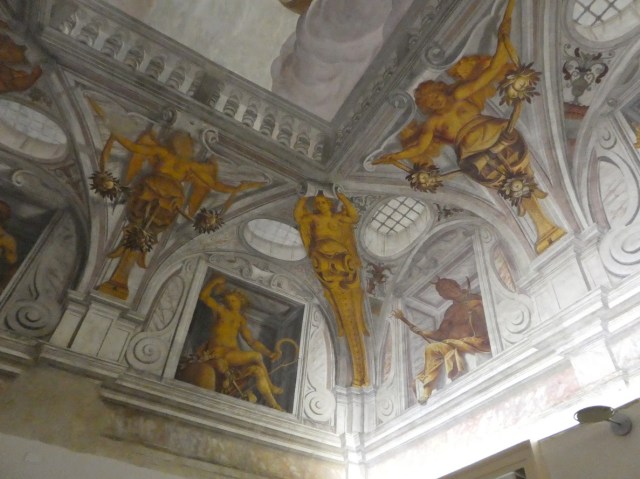
South East Corner, Agriculture
Further Information
For those interested in exploring more of Como’s baroque artistic treasures, see Early Lombardy Baroque: Fratelli Recchi and Como and Early Lombardy Baroque
For more information about FAI, go to https://fondoambiente.it/
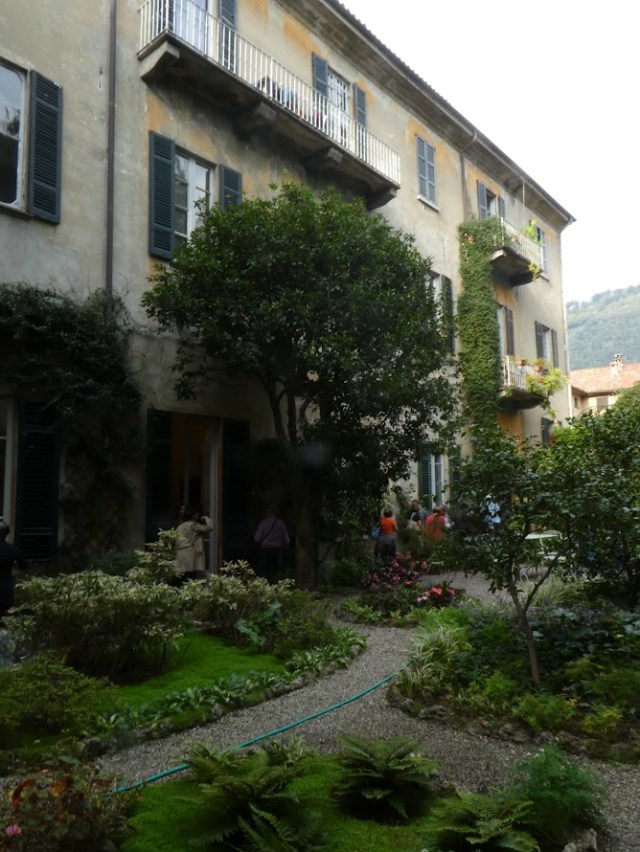
The gardens of the Palazzo Lambertenghi


 The Como Companion