’
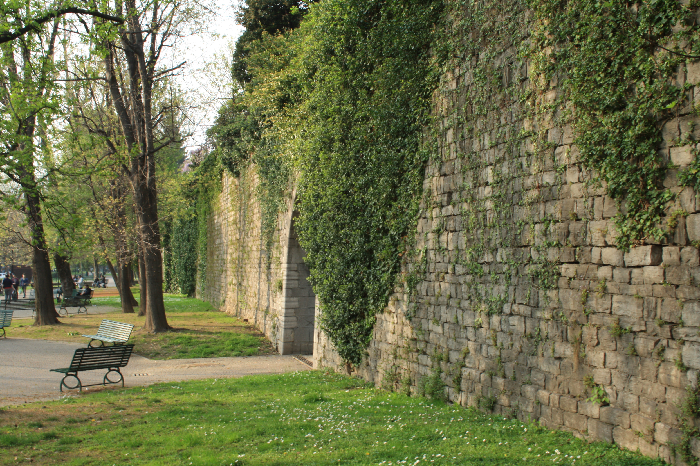
Moltrasio stone was used to construct the Roman walls and the currently standing Barbarossa walls built in the 1200s
Moltrasio stone was the dominant building material used in and around Como from Roman days until the turn of the twentieth century. It is found at the heart of most buildings even if some may have then be adorned with a veneer of render or a dressing of Musso and Varenna marble.

Doorway to the villa opposite the Prefettura on Via Volta showing the use of black and white keystones around the entrance way, rendering on the walls and Moltrasio stone underneath.
Nothing more characterises the appearance of a town than the type of building materials used in their construction. Think of UK cities like the granite of Edinburgh or those Cotswold villages with their warm shades of sandstone. Or contrast the ancient russet brickwork in the centre of cities like Parma or Mantova in the Val Padana with the grey stone of the villages along the shores of Lake Como. And this local characteristic extends beyond the village centres through the lengths of dry stone walls supporting ancient terracing.
What Is Moltrasio Stone

Strata of Moltrasio stone over the border in the Parco delle Gole della Breggia
Moltrasio stone is a sedimentary rock formed over many years from deposits on the ancient sea bed. These strata of limestone, some containing fossils of ammonites or other sea creatures, are ideal for quarrying since they can be relatively easily cut into blocks for construction. Scientifically known as the Moltrasio Formation, the rocks were mostly developed in the Lower or Middle Sinemurian stage of the Lower Jurassic, as a result of tectonic changes impacting shallow water deposits on the south western edge of the Alps. The formation extends into the Canton Ticino in Switzerland and up to the area of Lake Lugano.
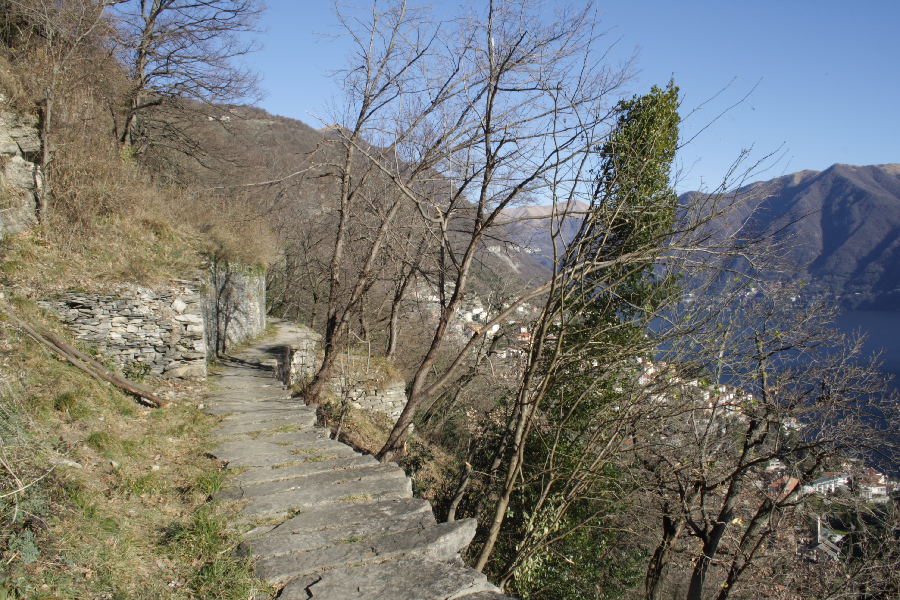
Sentee di Sort – Ex-limestone quarries above Moltrasio.
Moltrasio stone is therefore not only found in Moltrasio. It was quarried on both sides of the Como leg of the lake up to Argegno on the western side and Lezzeno on the east, but the area where the rock is best formed for use in construction is around Moltrasio and Carate on the west and between Torno and Nesso on the east. The quarries around Moltrasio and Carate are no longer exploited with the only remaining excavation taking place at Careno by the company called Gandola Srl.
In the Villages

Palanzo, village of stone
If visiting a village such as Palanzo above the lake shore in Faggetto Lario, you will be hard pressed to find more than a handful of buildings built or faced with any other material. The same goes for the medieval centres of most other villages sitting just behind the shoreline along the length of the lake. Alongside the preservation of ancient street patterns and paths, the use of Moltrasio stone ensures a remarkable uniformity in the form and feel of these ancient communities. However these are locations where the majority of visitors are less likely to venture being attracted for the most part to the shores of the lake itself where the bourgeoisie and aristocrats had built their stylishly designed sumptuous villas rigorously rendered in painted stucco. Take a town like Blevio for example, with its row of wealthy ‘stuccoed’ residences overlooking the lake and its series of bare stone districts strung out above.
In Como
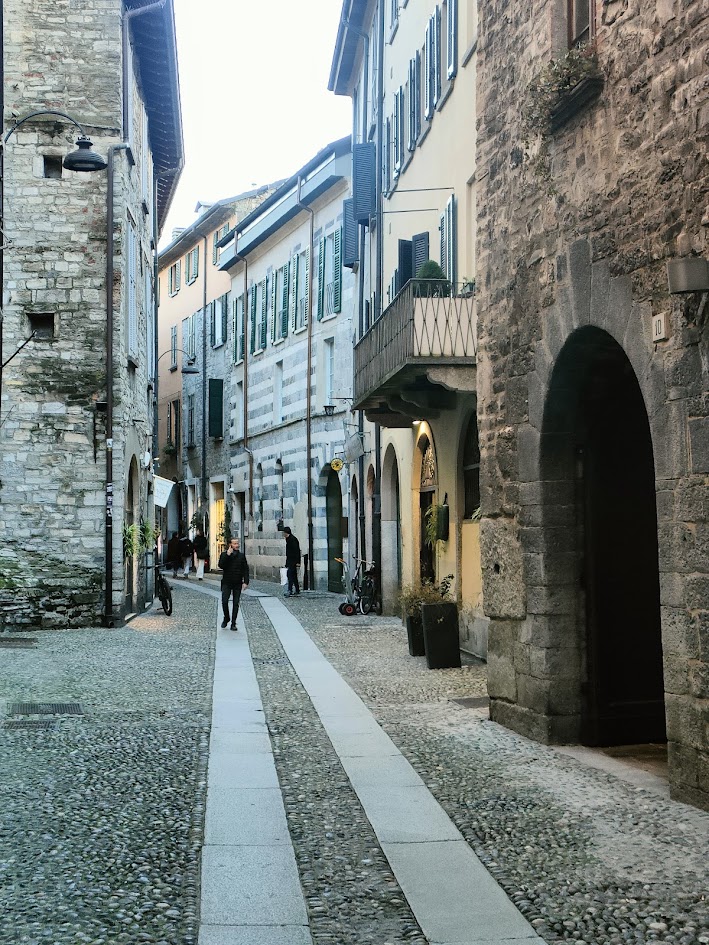
Via Vitani, the only remaining part of the medieval quarter known as Cortisella with villas in Moltrasio stone and one dressed in corresponding shades of Musso and Varenna marble.
The most obvious and visible Moltrasio stone structures in Como are the city walls and their defensive towers. Less visible below street level are the Roman baths built with Moltrasio stone. A walk down Via Vitani (the oldest street in Como) will give you an idea of how ubiquitous Moltrasio stone would have been in medieval Como. But more prestigious materials were required for structures like the Duomo with its mosaic of coloured marbles. As also on the Broletto and surrounding the entrance ways into the aristocratic villas where the contrasting colours of Musso (white/light grey) and Varenna (black/dark grey) marble give a banding or chequered effect. While most of the city’s aristocratic villas were faced with a layer of stucco, the more prosaic Moltrasio stone remains at the heart of their construction.
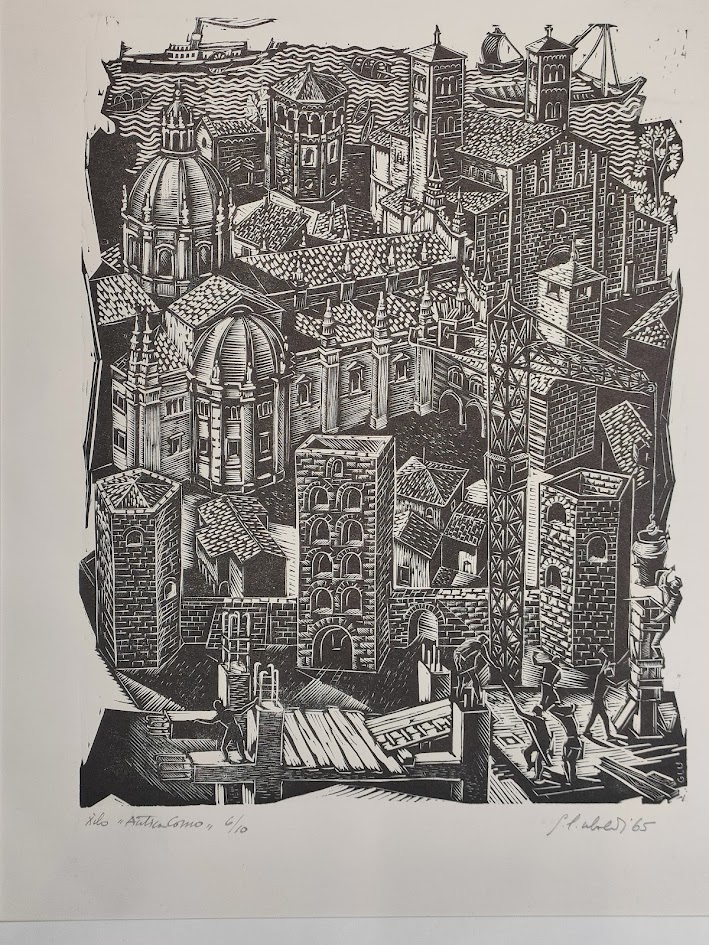
Print by Gian Luigi Uboldi featuring the city’s main structures of architectural interest.
Only in relatively recent times has stone been replaced by reinforced concrete, first introduced in Como by local architect Federico Frigerio in the construction of the Politeama in 1920.
In the country
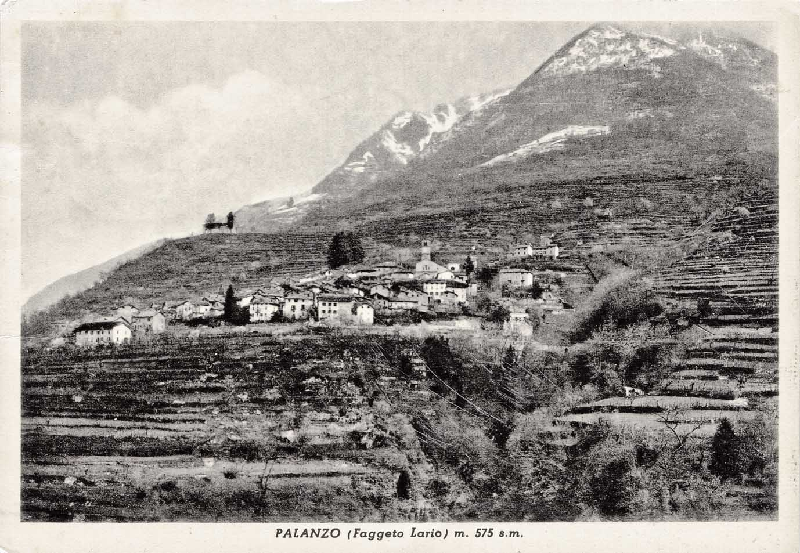
Palanzo when all the terraces were intensively cultivated. The decline in agriculture has transformed the hillsides around the lake since the 1940s.
The hillsides surrounding the lake would have looked very differently a mere eighty years ago before the major migration from the land to the towns after the last world war. Then the miles of terracing were constructed and maintained to maximise the acreage of productive agricultural land. And those terraces were (and are still) held in place by dry stone walls made from Moltrasio stone. Although some of these terrace walls are no longer clearly visible from a distance, they remain in place as a characteristic feature of our landscape. Their maintenance is not only vital for ensuring ongoing access to hillside walks and paths but also for preserving a key element of the local heritage. There is always the risk that the knowledge and skills required for dry stone walling get lost over time, and so we should praise the work of voluntary associations such as Miledù, based in Civiglio, who are committed to passing on the necessary skills to future generations and to playing their part in maintaining the countryside.
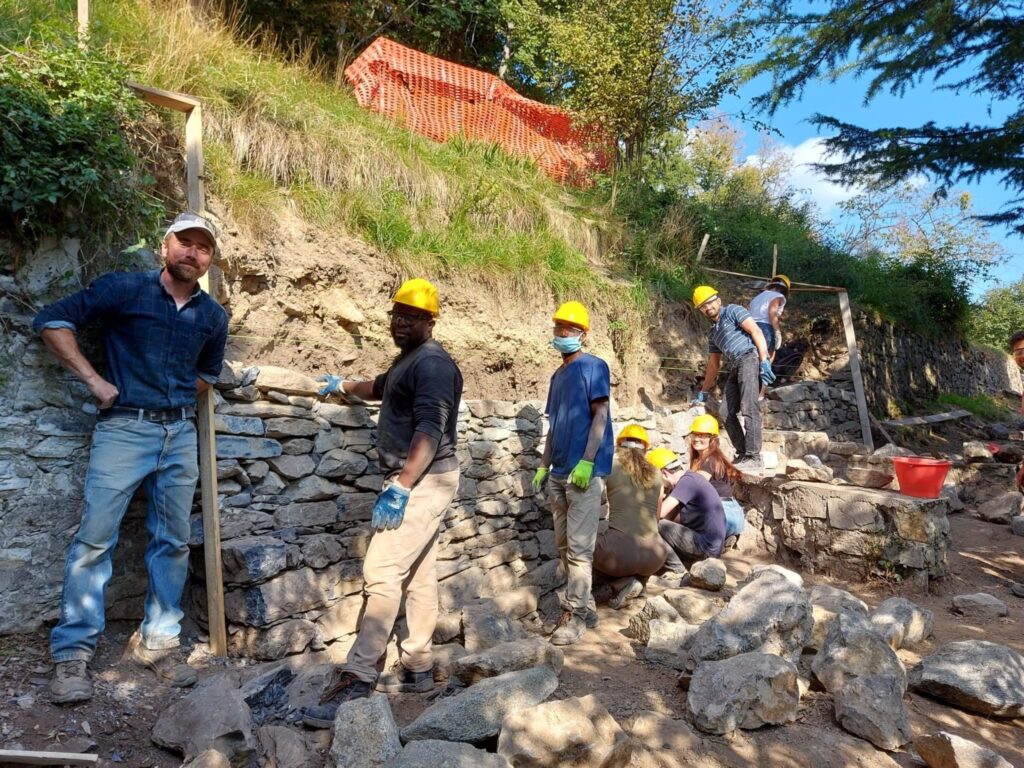
Volunteers from Miledù working on dry stone walls.
Sentee di Sort
This pathway linking Rovenna above Cernobbio to Moltrasio passes one of the largest of the old Moltrasio quarries. Sentee di Sort translates roughly from Como dialect into ‘path of the terraces’. Apart from offering delightful views over the lake, it also lets you see the extent of the old workings and the paths, obviously made of Moltrasio stone, laid down to transport the rock down to the town for onward shipment on the lake.
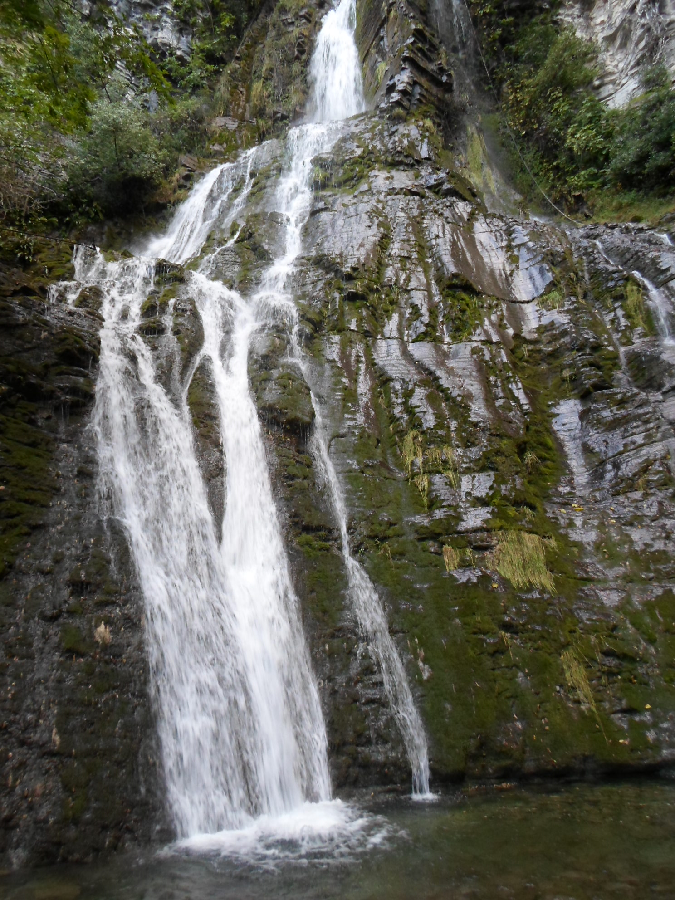
Motrasio – Cascata di Cam
Moltrasio represents itself as a town of water and stone and you will appreciate both these aspects by following the Sentee di Sort by turning off to the left on your arrival in Moltrasio to take in the waterfall known as the Cascata di Cam.
Moltrasio’s Stone Ecological Museum (Ecomuseo del Sasso)
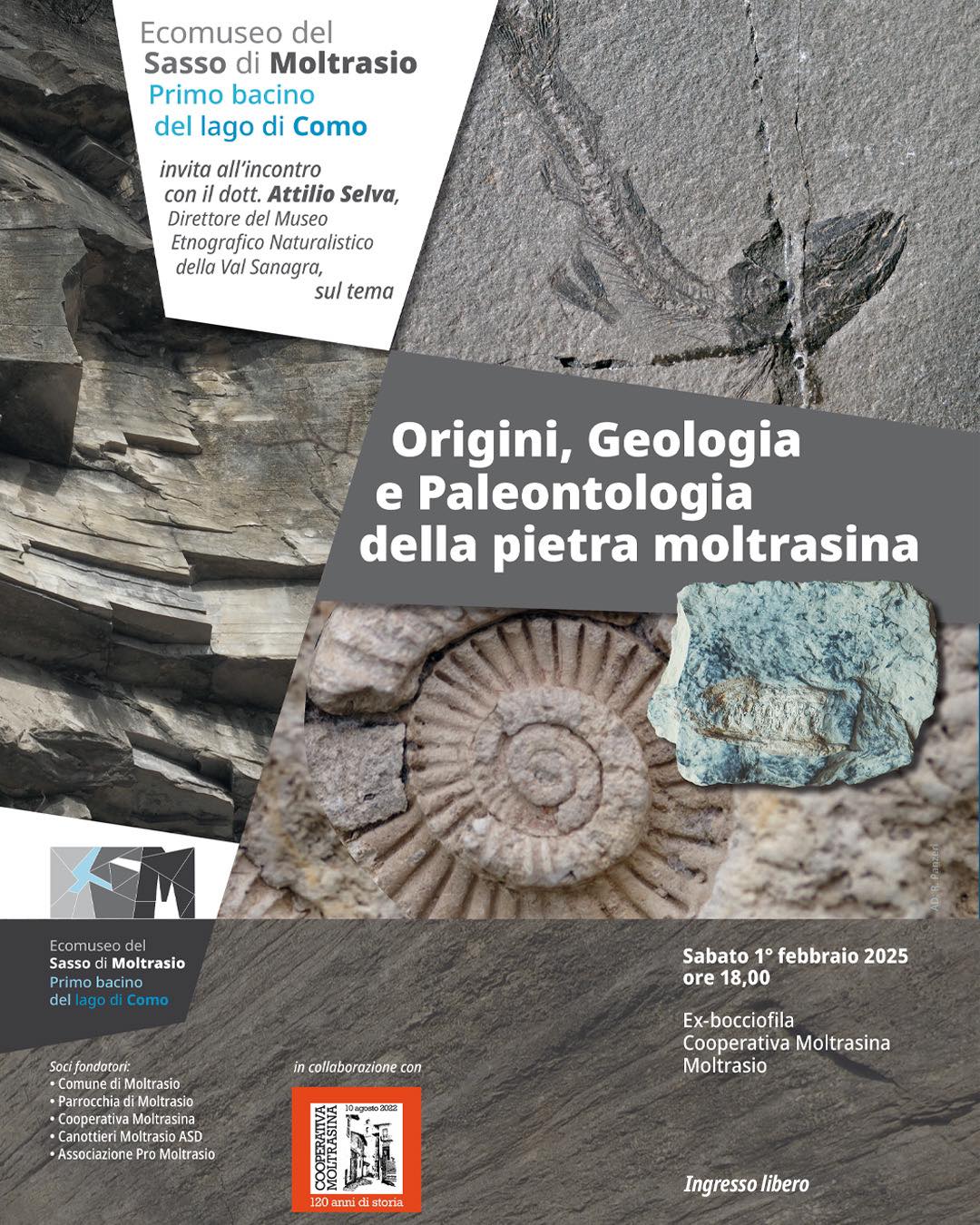
Poster advertising one of the presentations organised by the Ecomuseo di Sasso di Moltrasio
We have already noted in a previous article how active Moltrasio’s local residents are in their ‘Pro-loco’ association in promoting the attractions of their delightful small town. They have now gone one step further in seeking to preserve knowledge and awareness of their local culture by forming the so-called ‘Ecomuseo del Sasso di Moltrasio’. An ‘Ecomuseo’ is not a traditional museum enclosed within four walls. Instead its a virtual reality animated by a voluntary association which aims to study, conserve, present and spread knowledge of their local artistic, social and cultural patrimony. Look out for notices on their Facebook page advertising their meetings and tours to this end. Without a physical heart, it is primarily the enthusiasm and commitment of its local volunteers that makes an Ecomuseo a reality. And Moltrasio’s residents are particularly active in promoting the attractions of their town.

Members of Pro Moltrasio demonstrating the traditional techniques for quarrying Moltrasio stone at the old quarry in Cavirolo during a FAI Open Day
Moltrasio is a fine example of a town where the full range of tourist facilities and attractions are available. At the top end of the market, the Villa Passalacqua is perhaps the most luxurious hotel on the lake with the Hotel Imperiale also seeking to cater to the lake’s image of an exclusive playground for the rich. But there still remain more affordable and accessible family hotels such as the Posta, of the type of establishment traditionally available to visitors over the past years. However those visitors who are prepared to make the climb up the steep set of stairs away from the shore will discover so much more within this medieval town of stone and water.

The flower beds at the side of the Broletto in Como are lined with Moltrasio stone quarried in Careno by Gandola Srl. They use modern techniques of extraction and finish to meet a variety of needs.
Further Information
More information on current quarrying can be found at Gandola’s website.
Follow this link for the Ecumuseo del Sasso di Moltrasio’s Facebook page.
Miledù is a social cooperative engaged in a number of activities in support of sustainable tourism and preservation of local rural culture. Visit their site for more information.
Good food at acceptable prices can be found at the Cooperativa Moltrasina
Further Reading
We have featured Moltrasio in the following articles:
Moltrasio: The Power of Civic Pride
Moltrasio: The Power of Civic Pride
The Sentee di Sort is described in greater detail in Sentee di Sort (From Rovenna to Moltrasio).
We have also described two other walks that start or finish at Moltrasio:
Carate Urio to Moltrasio via Rifugio Bugone.
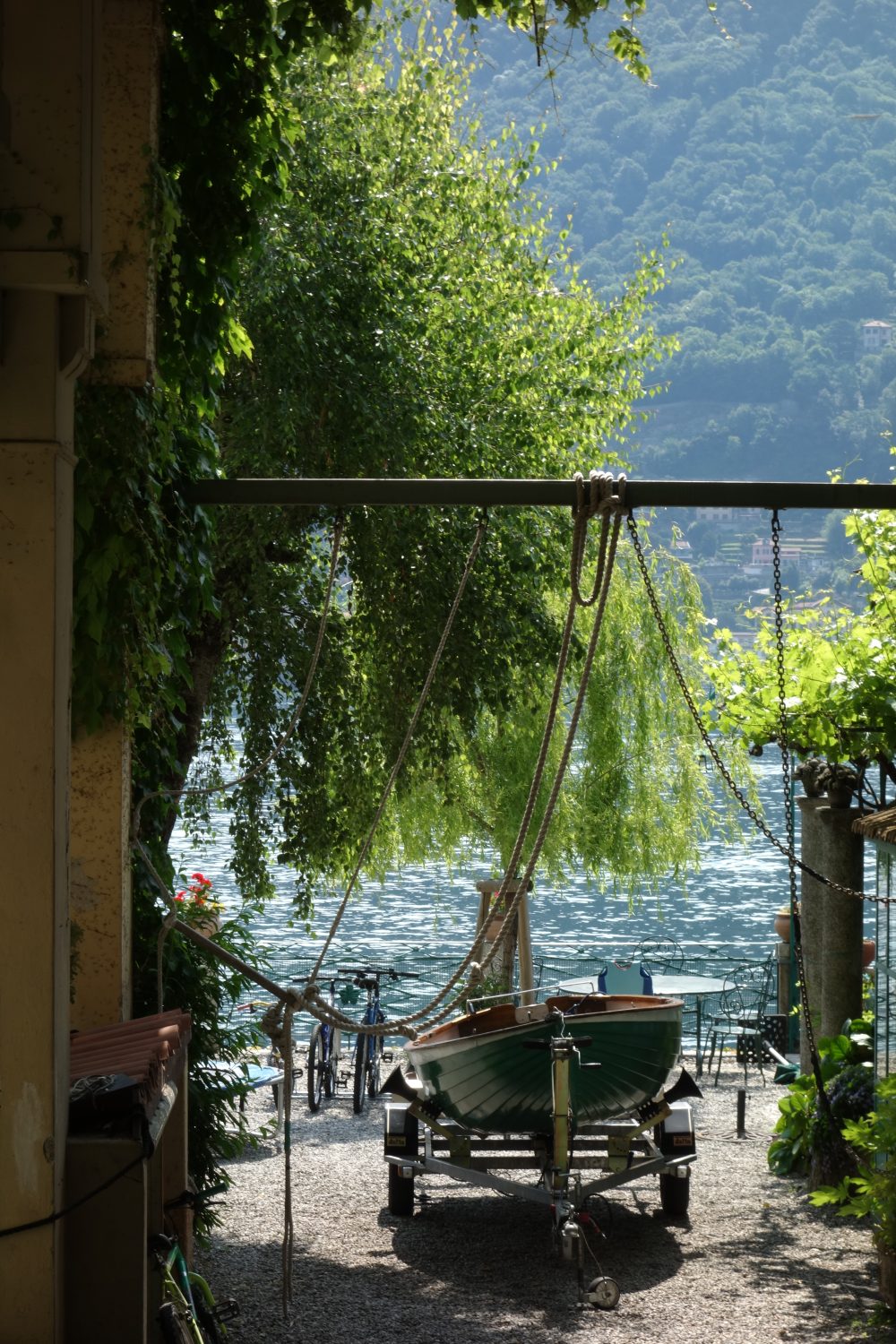
Moltrasio dream


 The Como Companion
another great piece. Thanks. Our village (Colonno) is also almost entirely made up of Moltrasio stone.
LikeLike